

The first machines, the first workshops
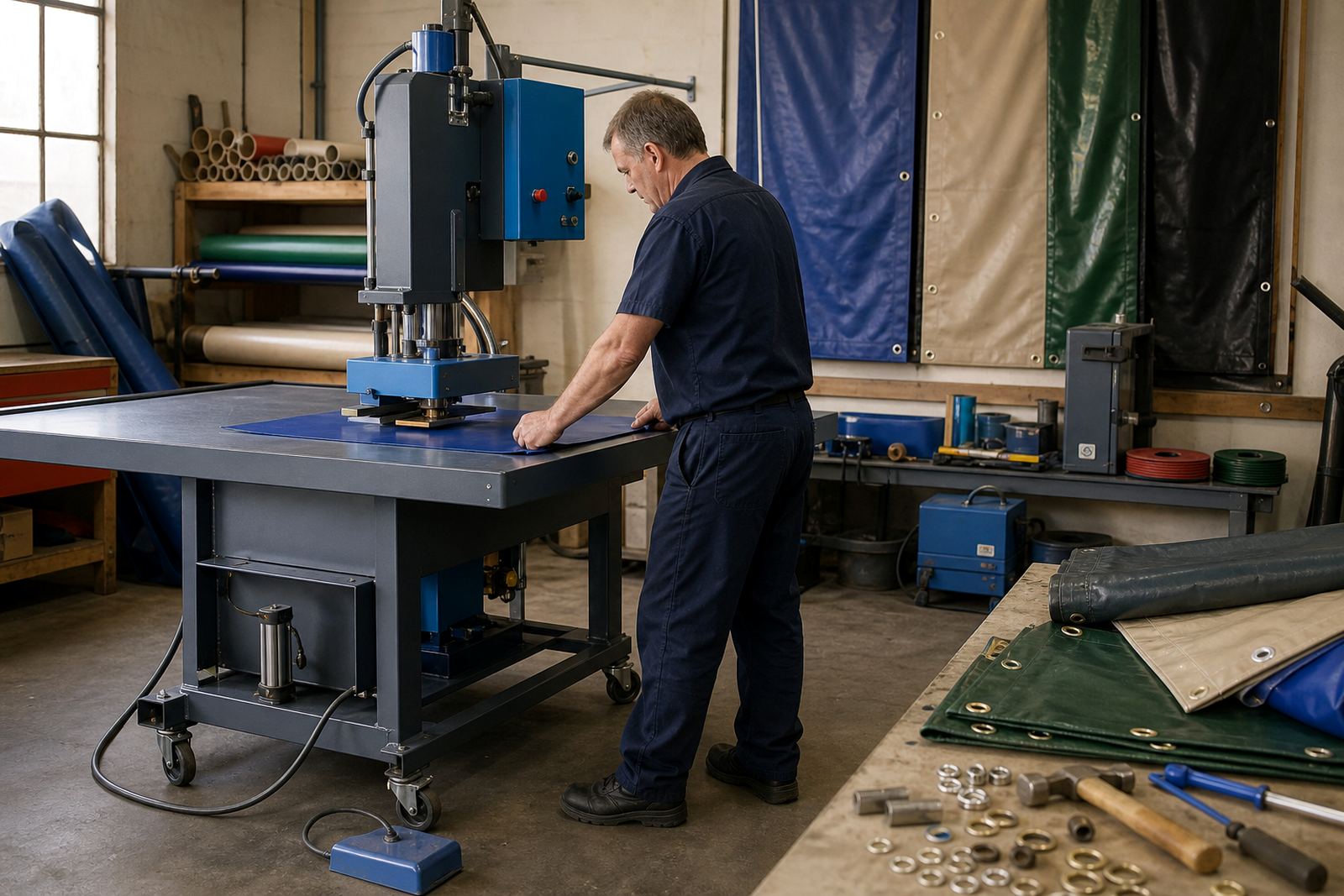
In a Germiston workshop, a fabricator lines up PVC-coated material, checks the weld, and keeps the work moving because the seam has to hold. That practical scene shapes PVCWelder’s work in Ekurhuleni and across South Africa. The business enters the market in 2005, serving tarpaulin shops, banner makers and tent makers who need equipment that joins and finishes PVC-coated fabrics neatly. Every machine has to cope with pressure, repeat use and the demand for strong, even results.
That early work shaped the business around the real jobs in the trade: high-frequency welding for strong, consistent joins on coated fabrics, and hot-air or hot-wedge welding where long runs, hems and reinforced edges need controlled heat and steady feed. The team learned to speak in the language of the workshop, not from a showroom, but from the bench, the frame table and the machine floor.
How the craft around PVC welding grew
As signage, display and event work expanded, so did the range of seam details required by customers. A banner edge might need a hem that sits straight under tension, a tent panel may need a clean overlap seam, and a tarpaulin job can call for keder attachment, eyelet reinforcement or a combination of all three. PVCWelder’s work grew alongside those demands, supporting fabricators who needed equipment and guidance that matched the material.
High-frequency welding has its place where a neat, sealed seam is required on compatible PVC-coated fabrics, while hot-air and hot-wedge systems are used for continuous seams, hems, lap joints and edge finishing. The practical side of the trade matters just as much as the machine itself: electrode condition, roller alignment, temperature control, dwell time and pressure all affect the finish. A machine can be well built, but if it is not set correctly the seam tells the story very quickly.
The customers who shaped the work
The customer base has always been made up of businesses that work with material every day and need dependable output. That includes tarpaulin makers producing covers and sheet goods, banner shops finishing display pieces, and tent makers handling larger fabrication jobs where seams must remain tidy under handling, folding and weather exposure. In coastal areas like Durban, humidity can affect material handling and storage, while inland workshops in Johannesburg, Pretoria and Bloemfontein often focus on throughput and repeat accuracy.
Across South Africa, clients rely on the same basics: clean welding, correct tooling and machines that can be serviced without guesswork. The team has also supported operations in Cape Town, Boksburg and Benoni, where the work may range from small run jobs to regular production batches. The requirements change from site to site, but the need for consistent seam quality stays the same.
- Tarpaulin panels and repair sections
- Banner hems and reinforced edges
- Keder strips for track fitting
- Eyelet work for tie-down and display use
- Seam testing and adjustment after setup
How the team works today
Today the business is led by Mandla Mnisi with a team that covers sales, service, installation, training and support. Alicia van der Merwe manages sales enquiries and product matching, Sibusiso Abrahams handles fault finding and preventative servicing, Johan Mkhabela leads installations, Thandi Mokoka coordinates operator training, and Lebo Motsepe keeps parts and support moving. That structure matters in a trade where one weak point can stop production for a whole day.
The work is handled from Germiston with support across Johannesburg, Pretoria, Durban, Cape Town, Bloemfontein, Boksburg and Benoni. Machine installation, commissioning, tooling alignment, electrode refurbishment, roller replacement and site callouts all fit into the same practical approach: get the machine set correctly, keep it safe to use, and make sure the operator understands the settings before production starts.
Safety, servicing and the habits that keep production moving
Welding machines for PVC-coated fabrics need regular attention, not only when something goes wrong. Servicing often includes checking heat delivery, clamps, pressure systems, rollers, electrodes and feed alignment, then testing the seam under working conditions. Good maintenance also helps reduce operator strain and limits the risk of damaged fabric, burnt edges or inconsistent bonding.
Operator safety is part of the history of the business too. Hot tooling, moving parts and compressed force need proper guarding, correct setup and trained use. The team has seen how a workshop changes when operators know how to set the machine, recognise early wear and work in a tidy area. A machine that is serviced properly is usually easier to use, easier to trust and less likely to drift out of tolerance.
- Preventive servicing for routine wear and inspection
- Fault finding when seams fail or heat is inconsistent
- Tooling alignment for straighter, cleaner output
- Parts supply for worn rollers and damaged components
- Service plans for workshops that run busy schedules
What the history means for customers now
The story of PVCWelder is tied to practical work, not showpiece language. It is about helping South African fabricators produce durable seams, neat hems and reliable fittings on the materials they use every day. That history shapes the way the team advises customers now: with straight answers, workshop knowledge and a steady eye on what the machine must do on the floor.
For businesses working with tarpaulins, banners and tents, the value lies in equipment that suits the job and support that understands the trade. From Germiston out to the rest of the country, the business remains focused on high-frequency and hot-air welding equipment, the details of seam quality and the service that keeps production moving.
If you are comparing seam types, checking whether a machine suits your fabric or planning a new setup, the enquiry form on our contact page is the way clients get through to the team.