

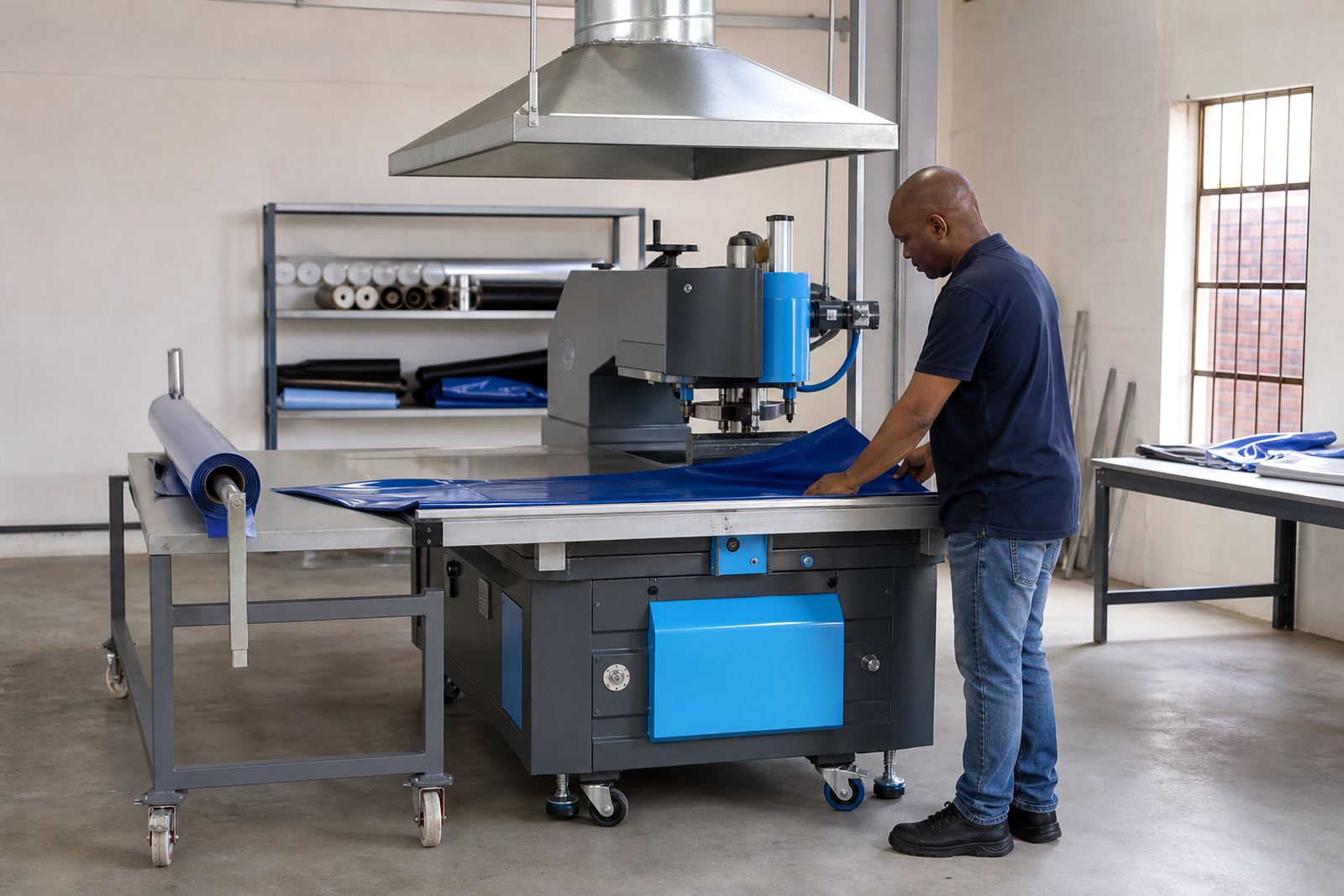
Choosing the right weld for the job
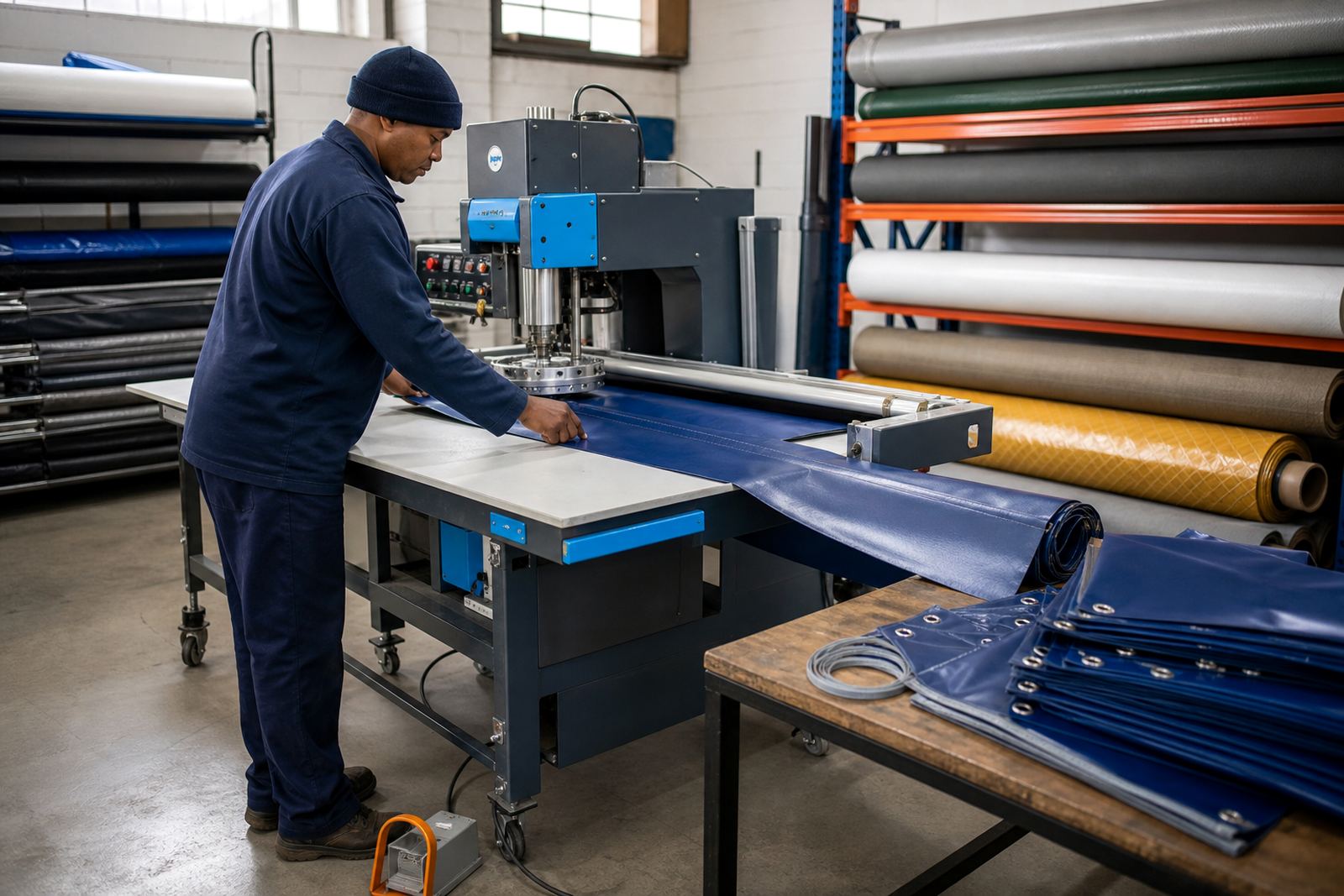
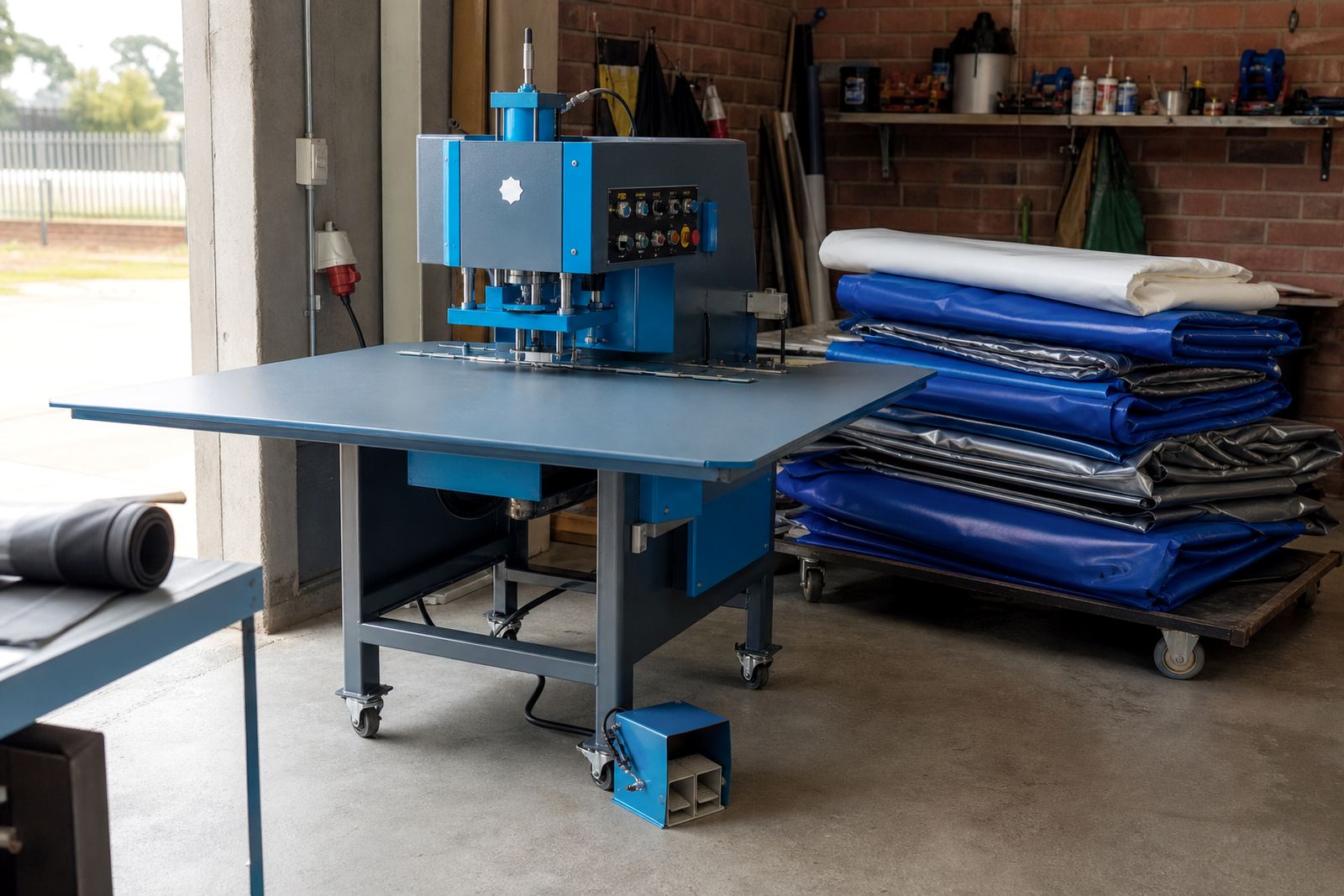
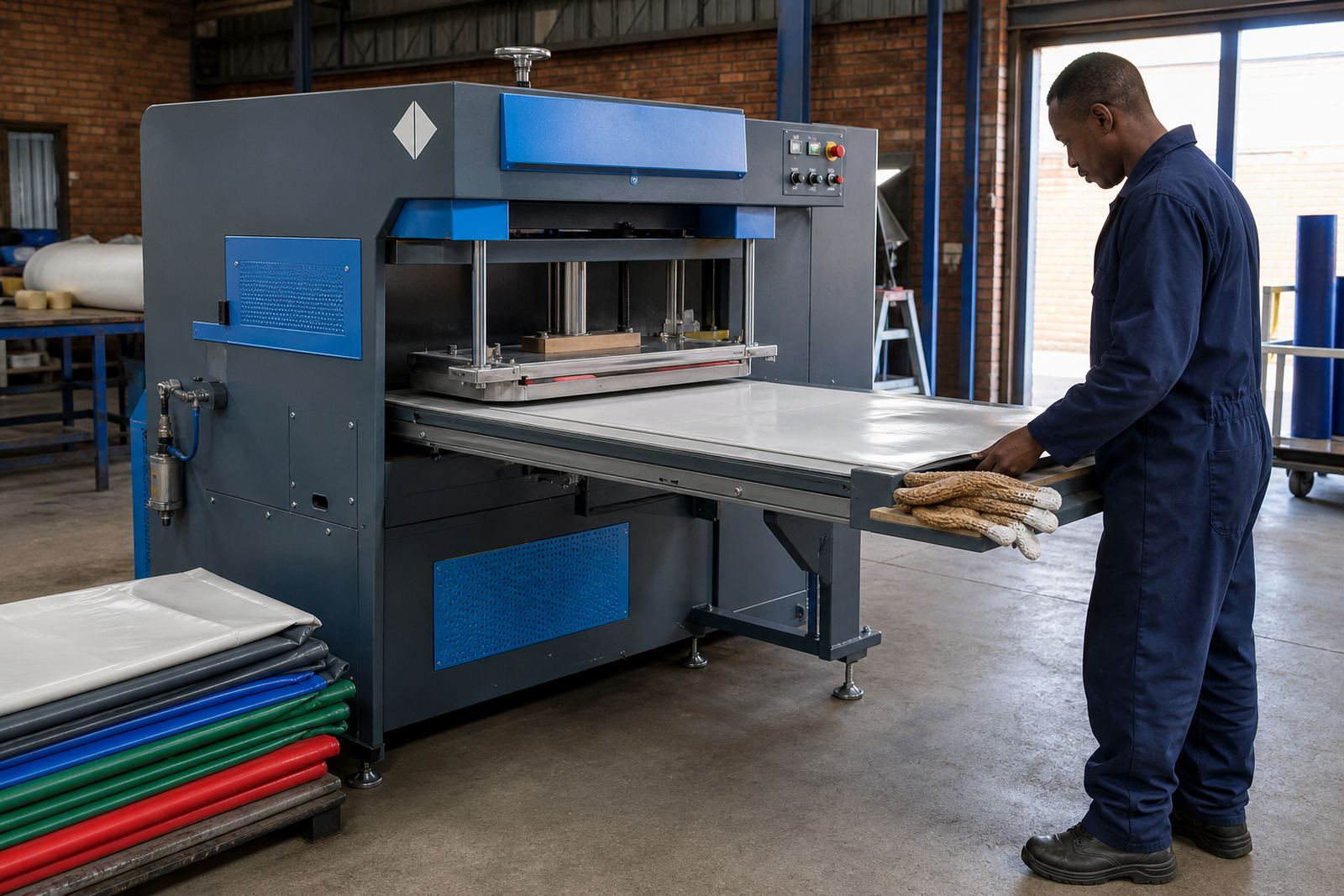
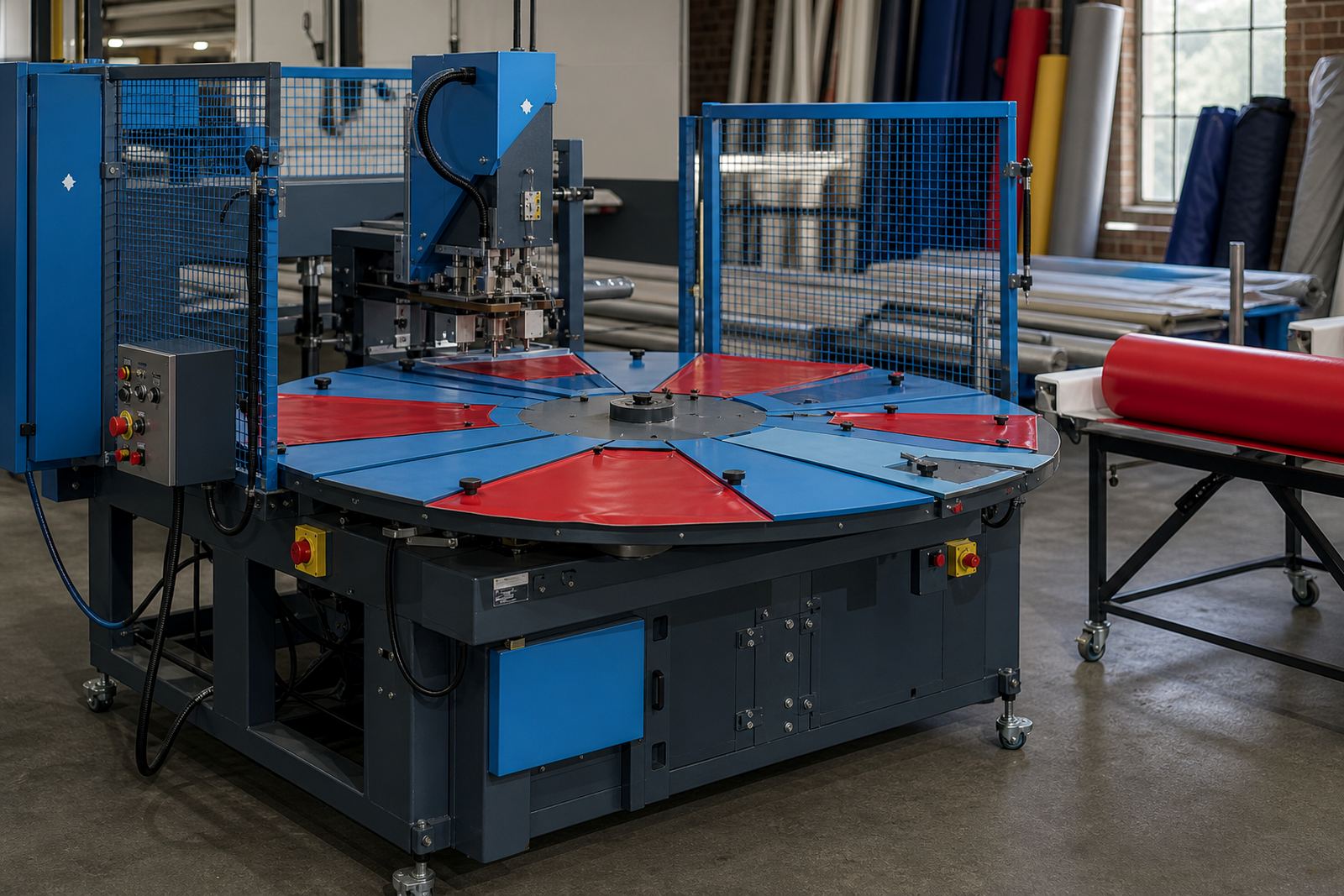
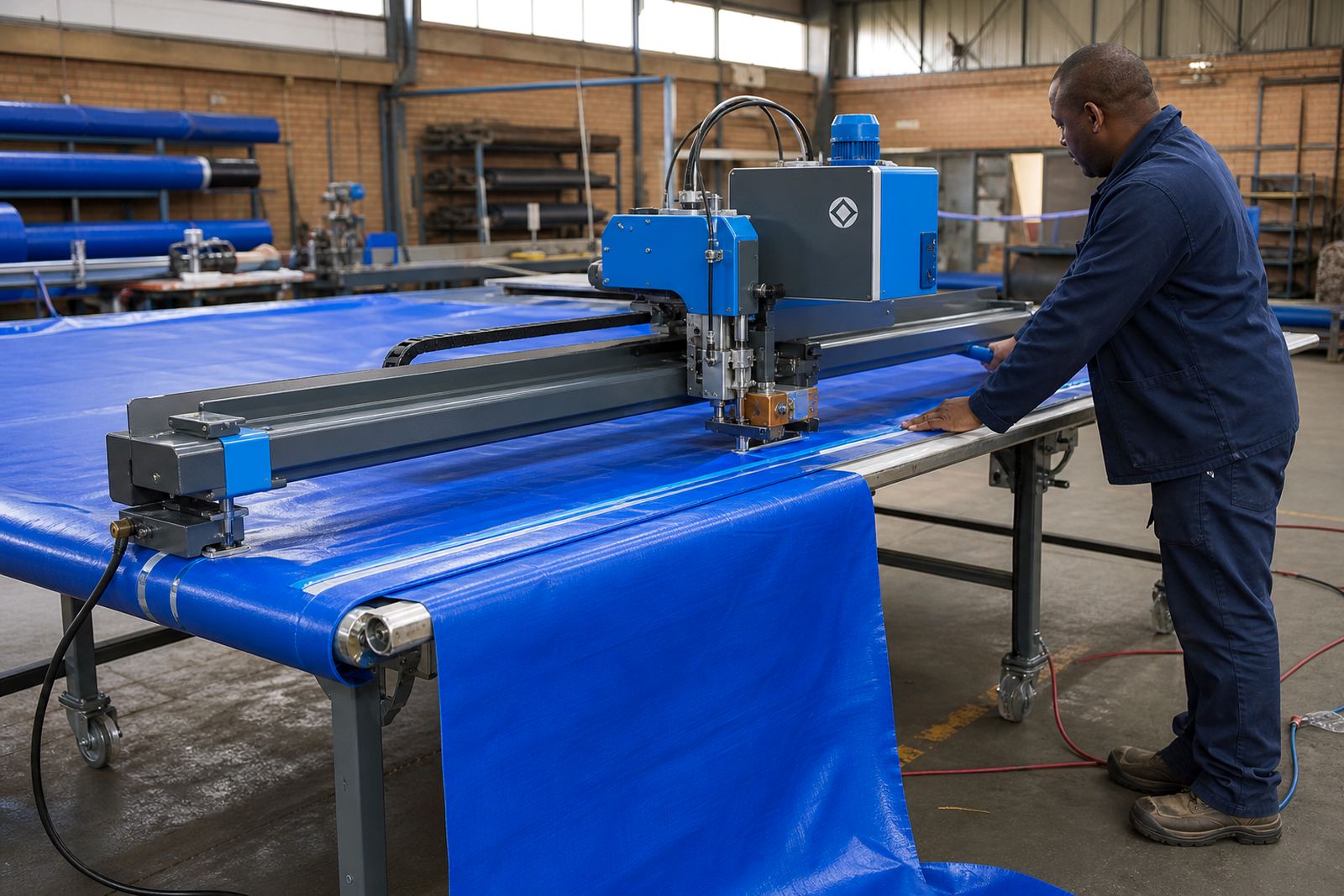
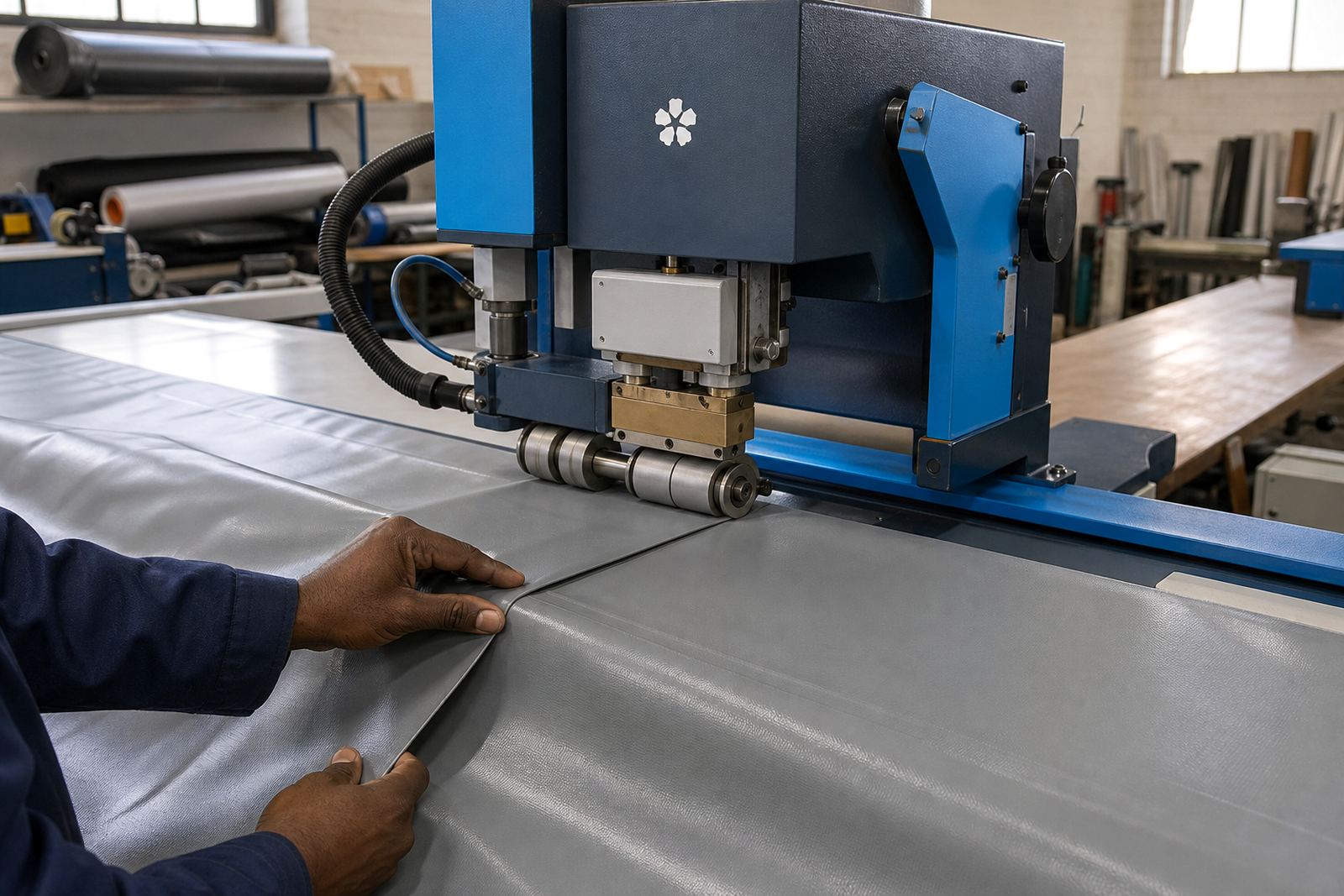
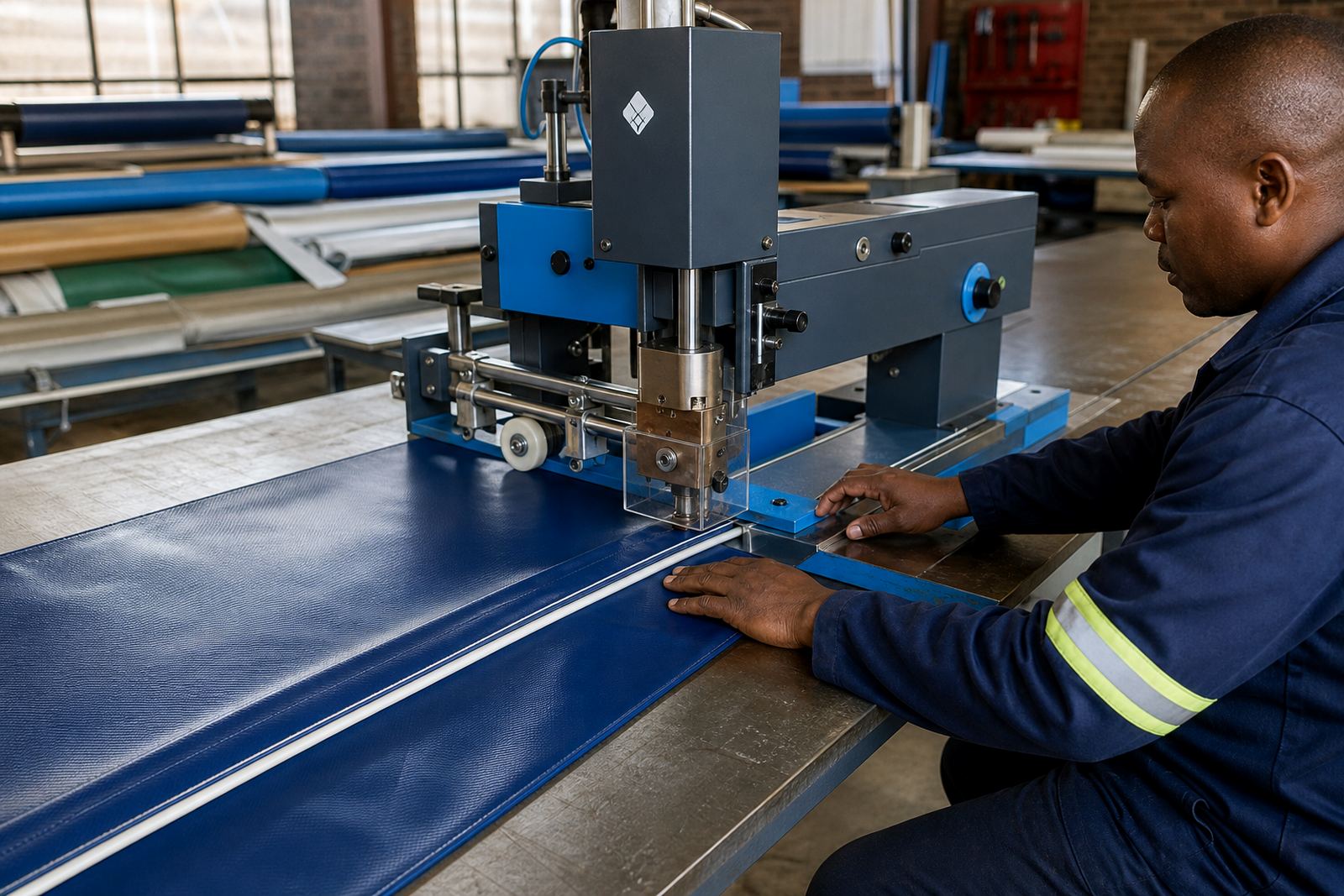
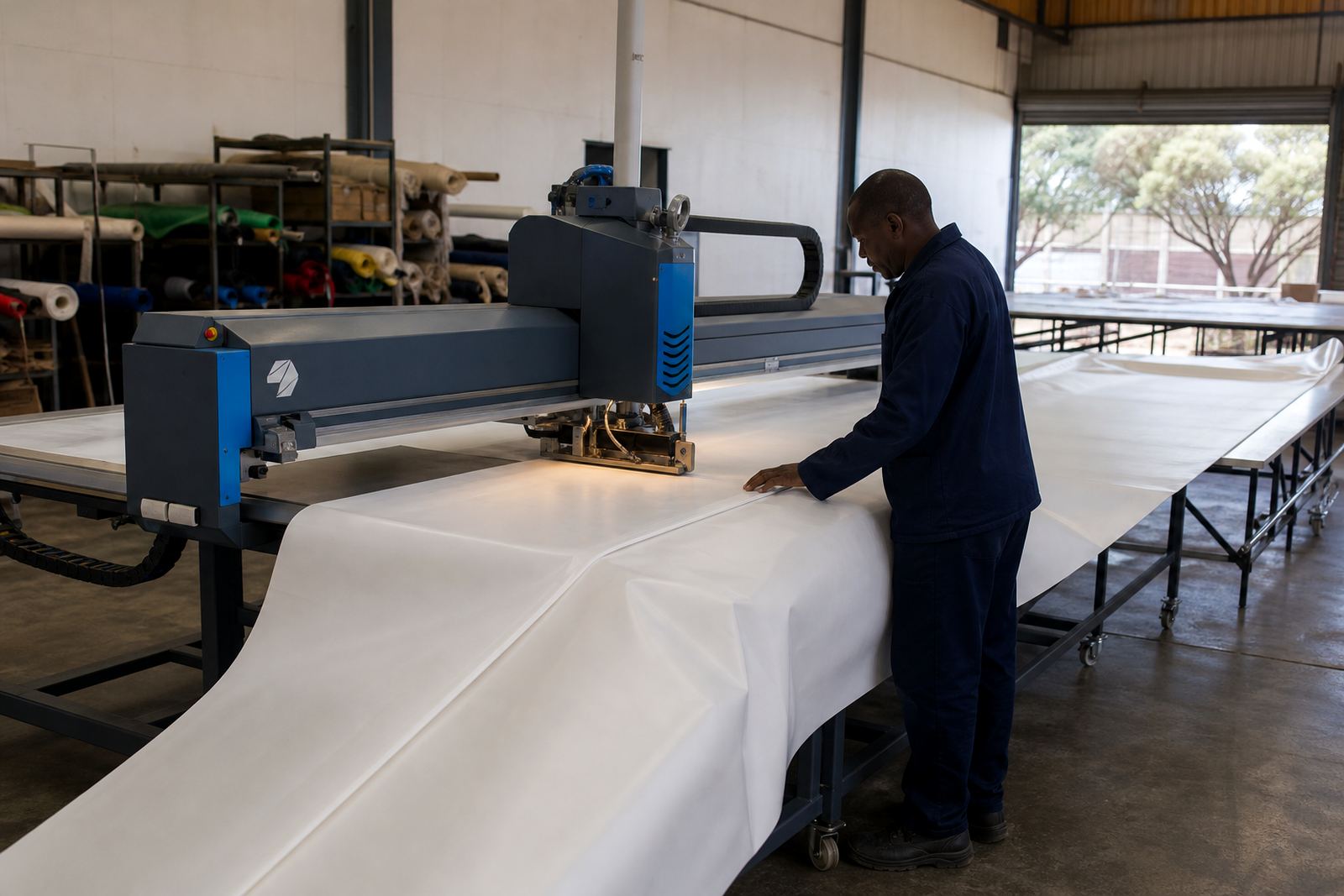
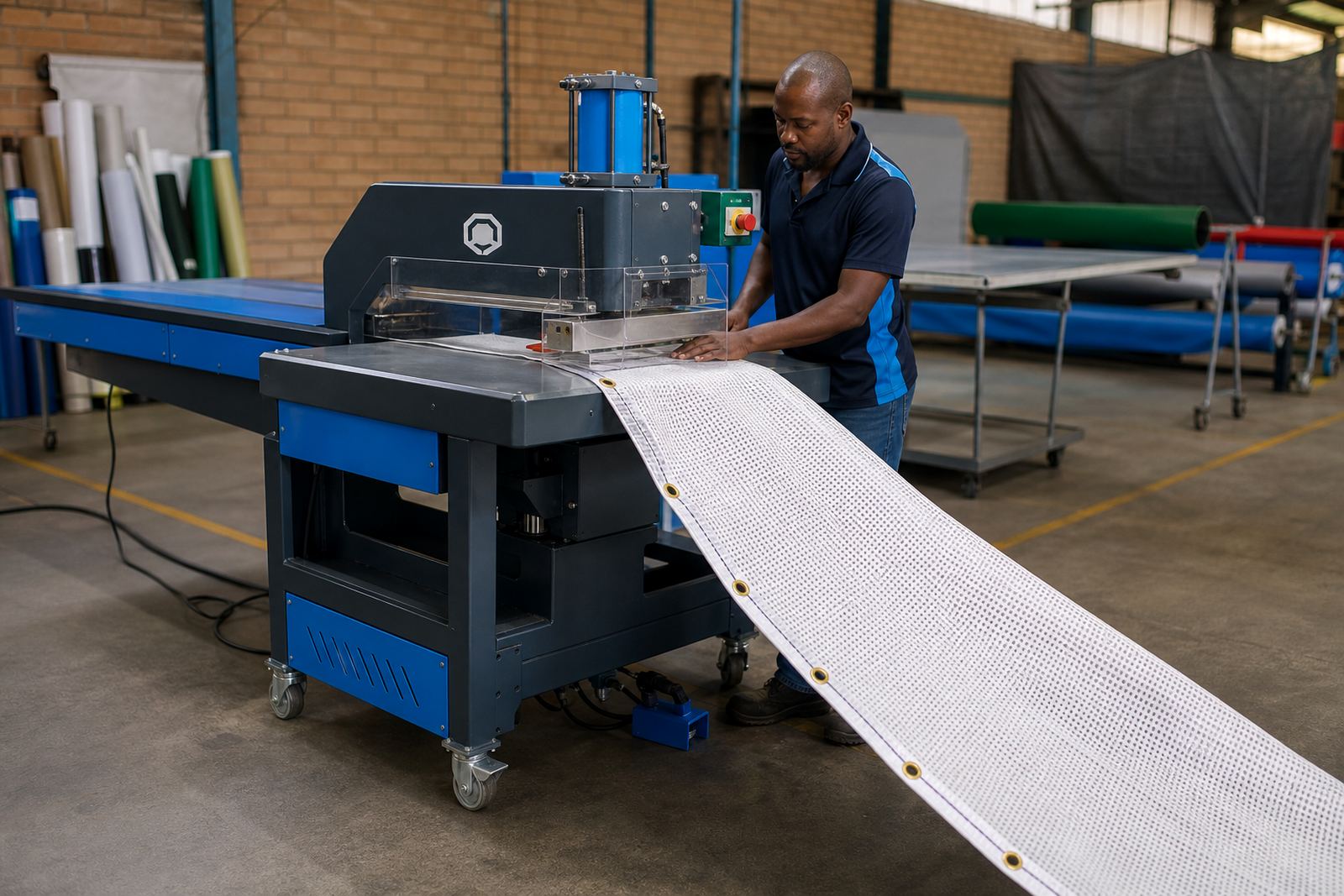
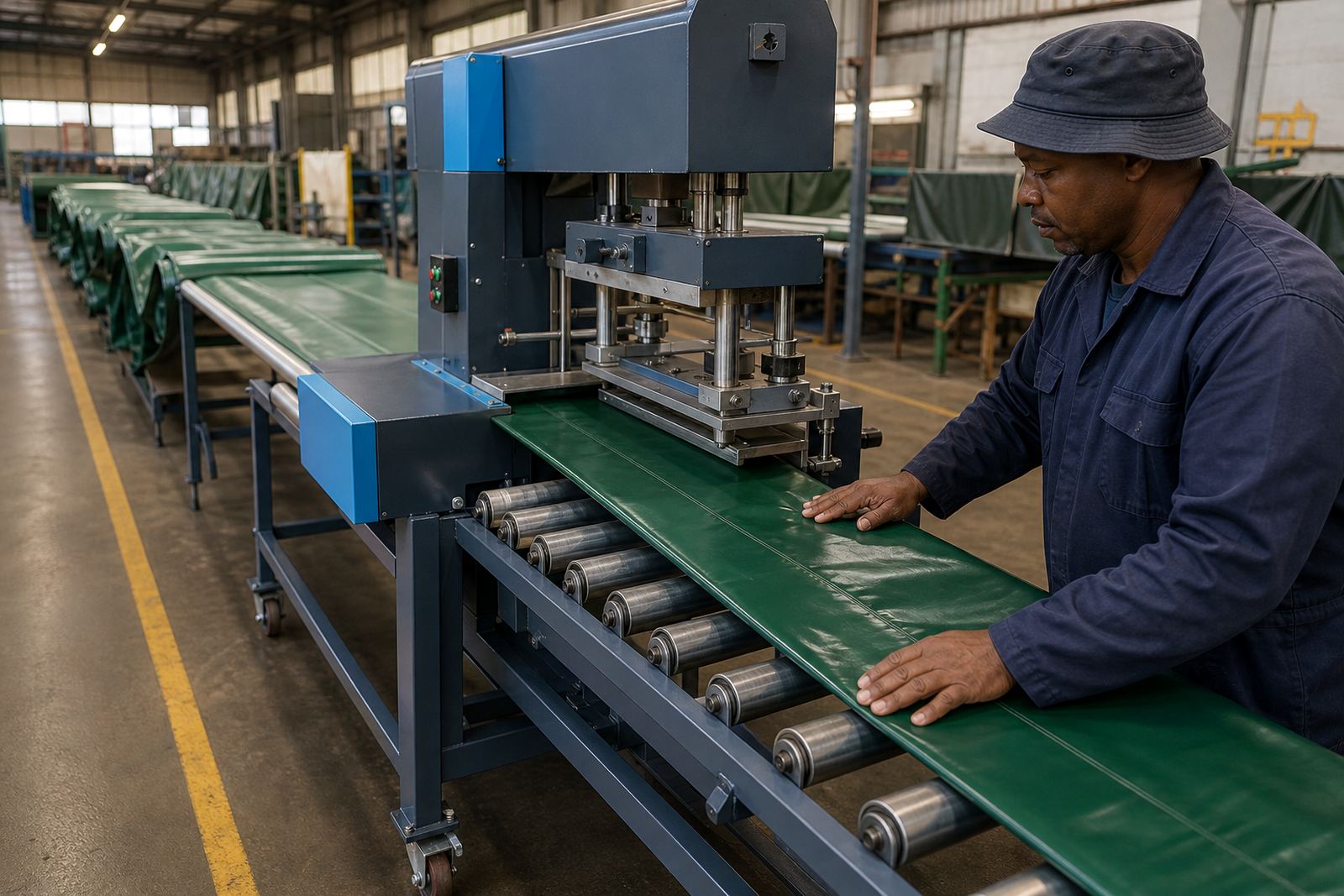
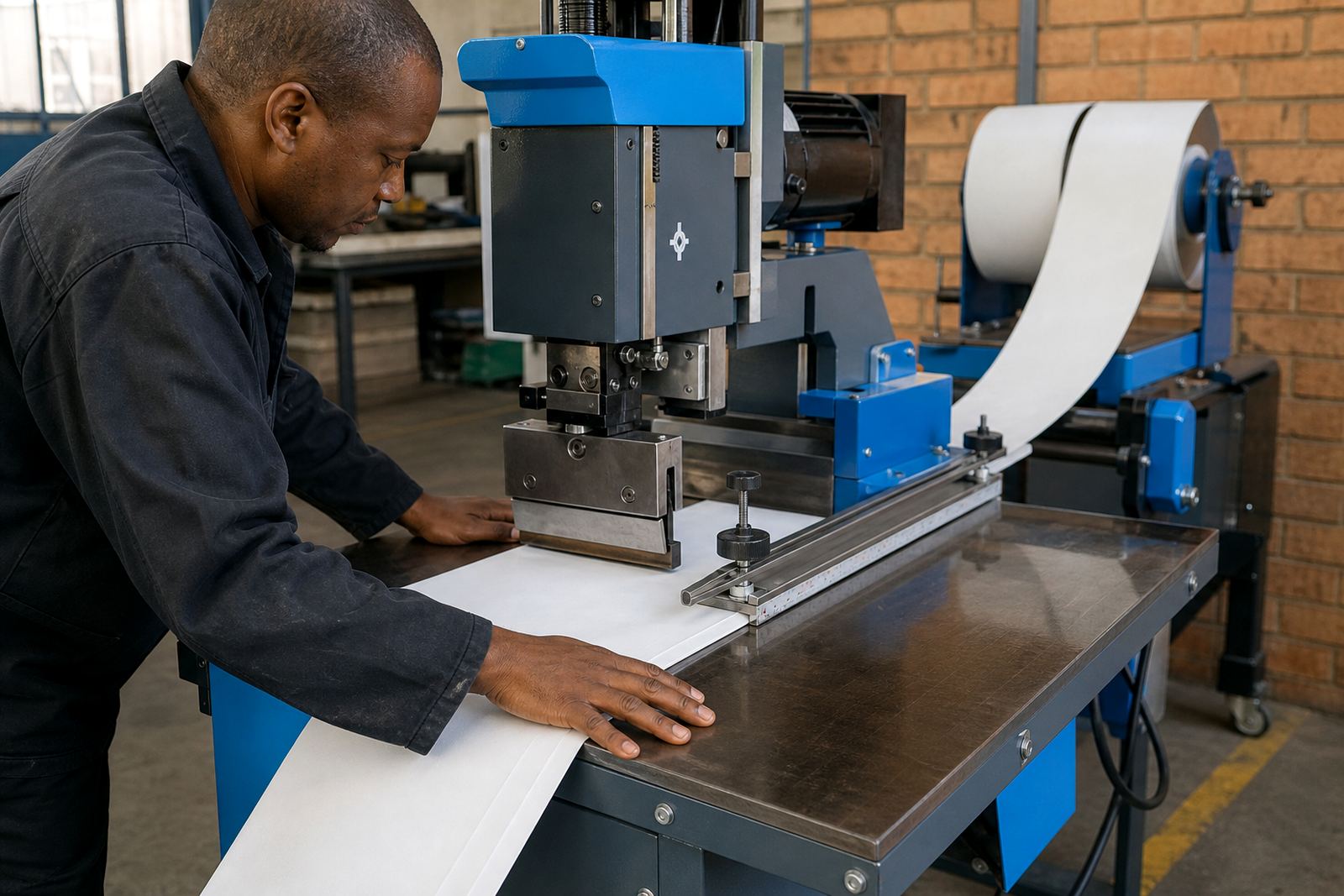
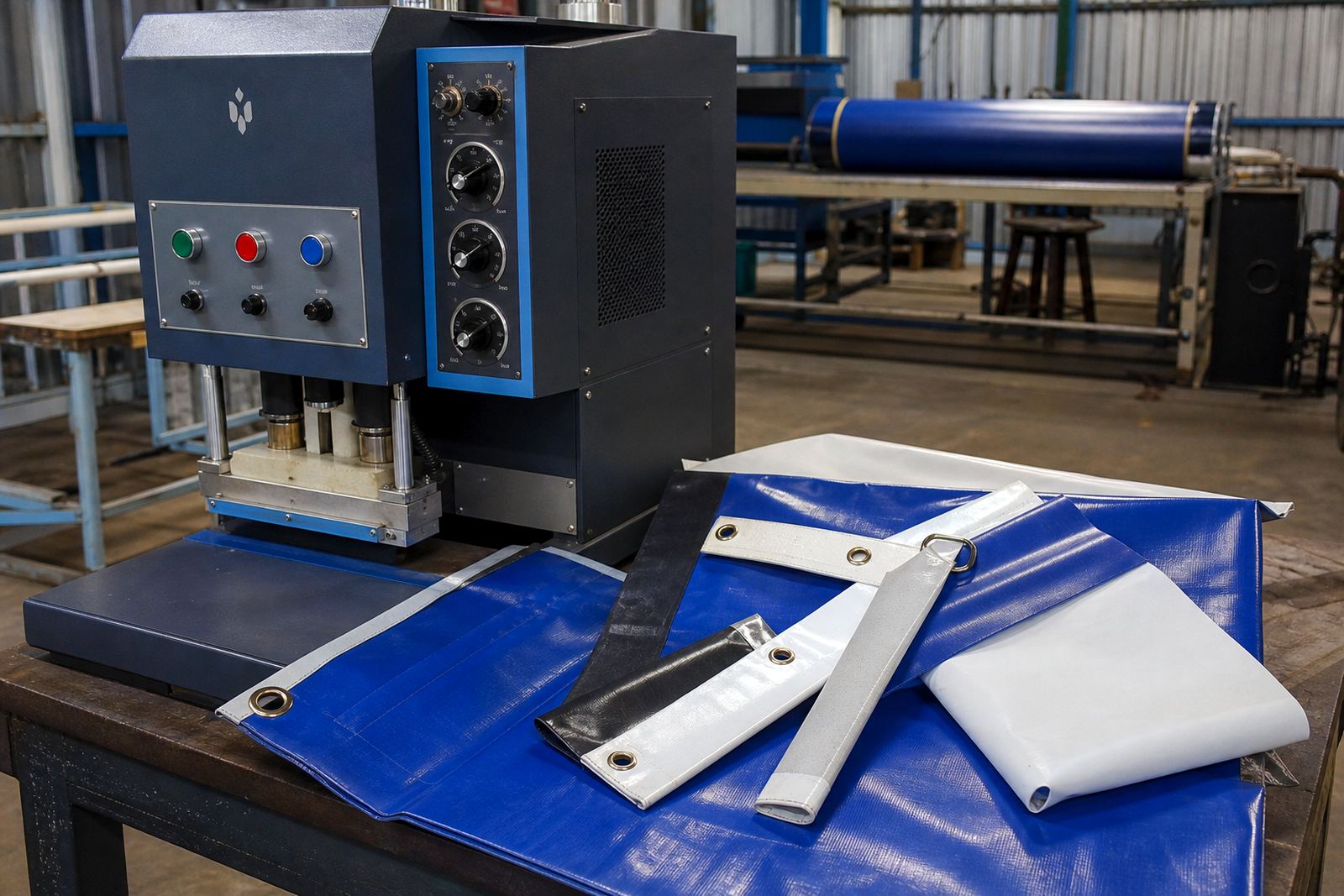
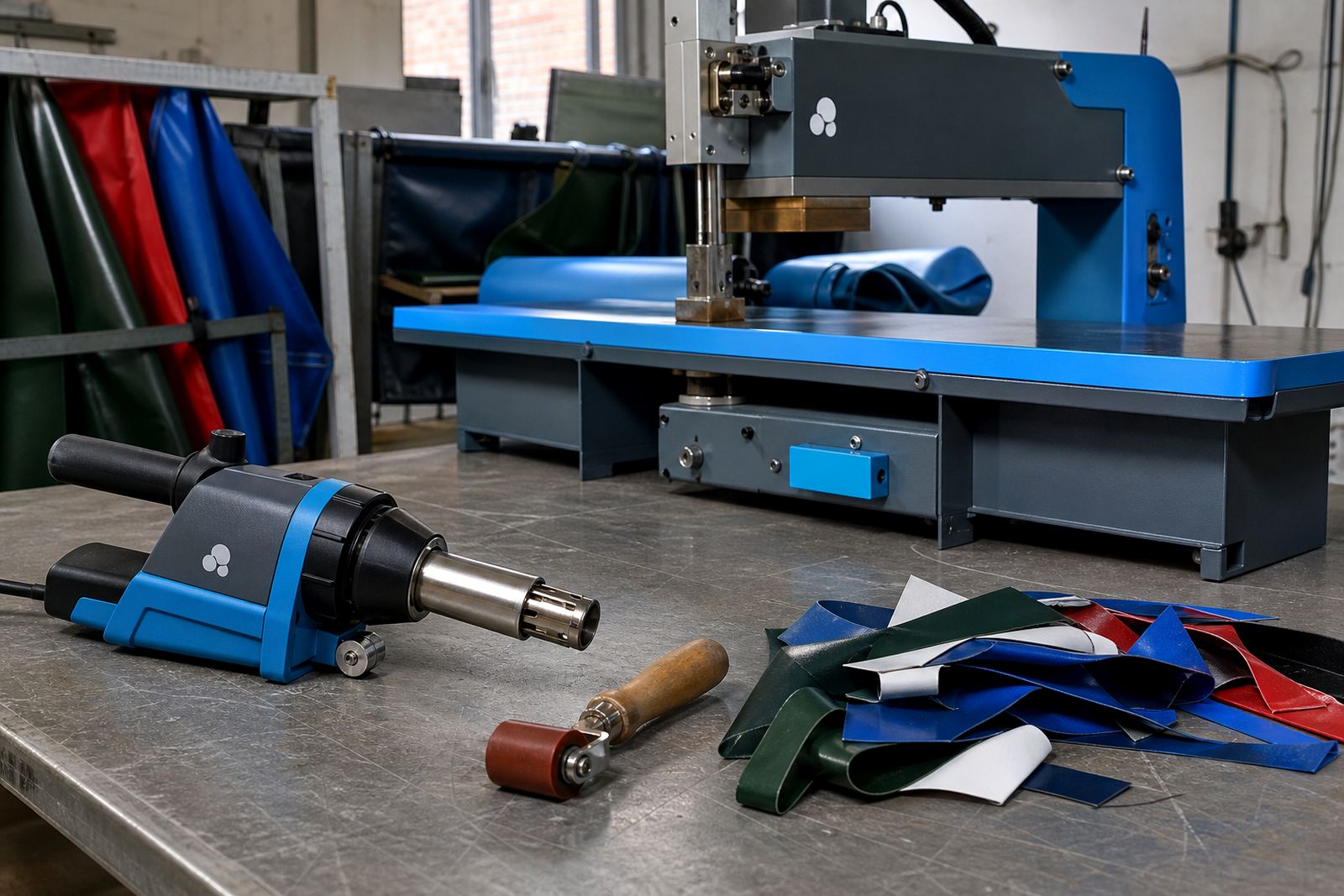
Different jobs call for different seam methods. High-frequency welding is used where a clean, repeatable bond is needed on PVC-coated fabric, while hot-air and hot-wedge machines suit longer production runs on tarpaulins, covers and shaped work. The right choice depends on fabric weight, seam width, output volume and the type of finish required at the edge.
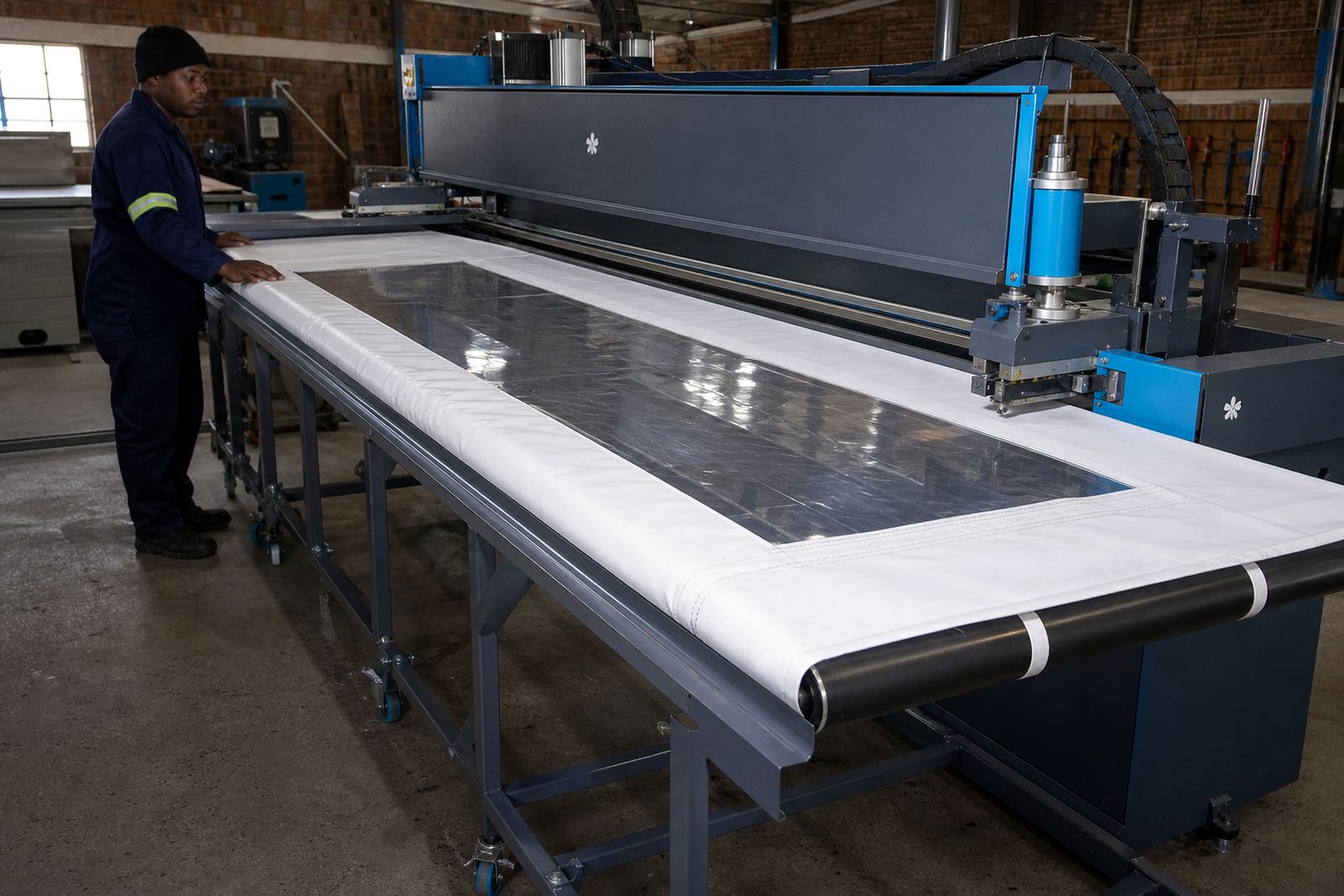
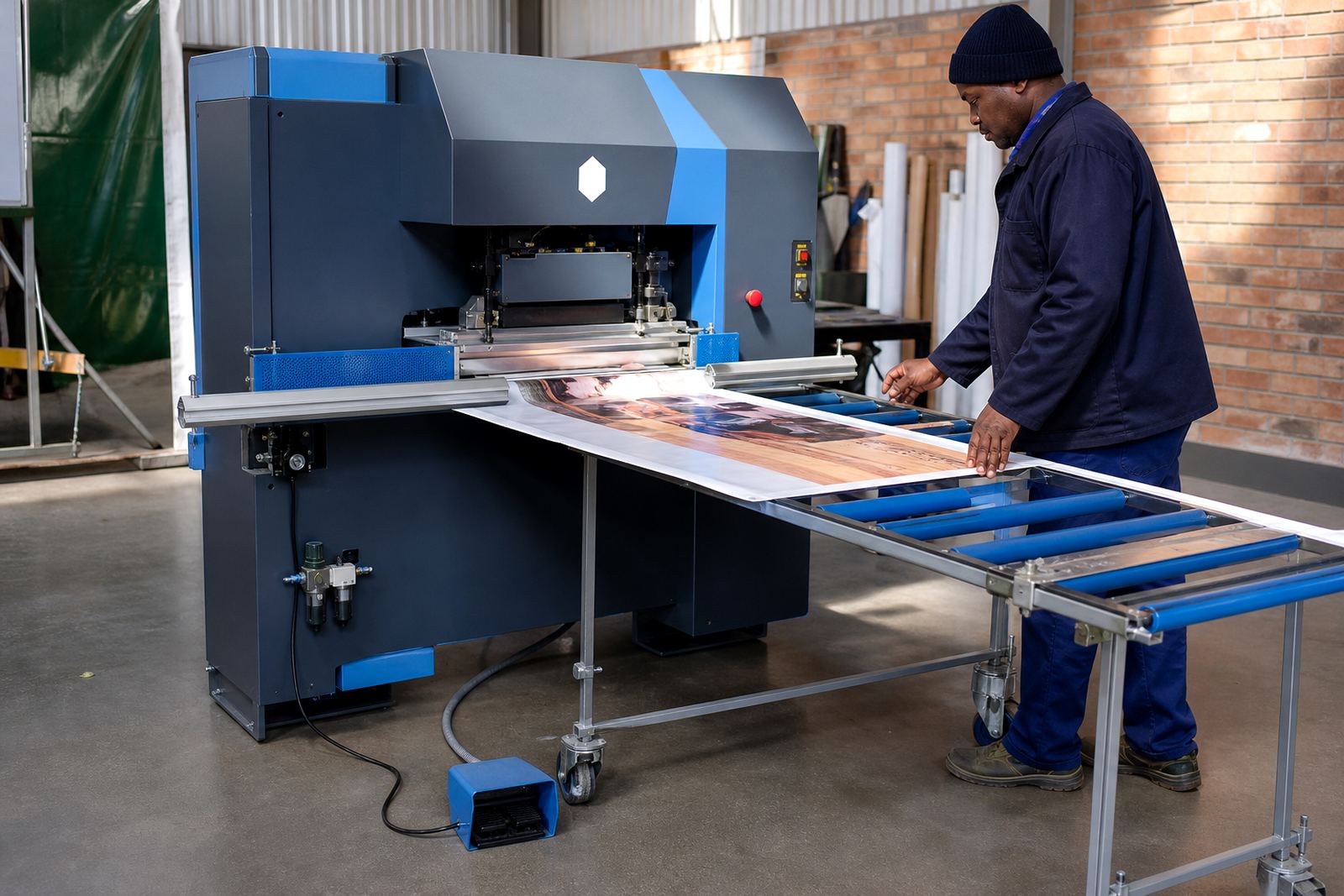
For banner work, straight seams, hems and reinforced pockets must hold their shape without distortion. For tents and large tarps, weld alignment matters just as much as heat control, especially where wind load and handling put extra strain on the finished panel.
Seams, hems and fittings that hold up in use
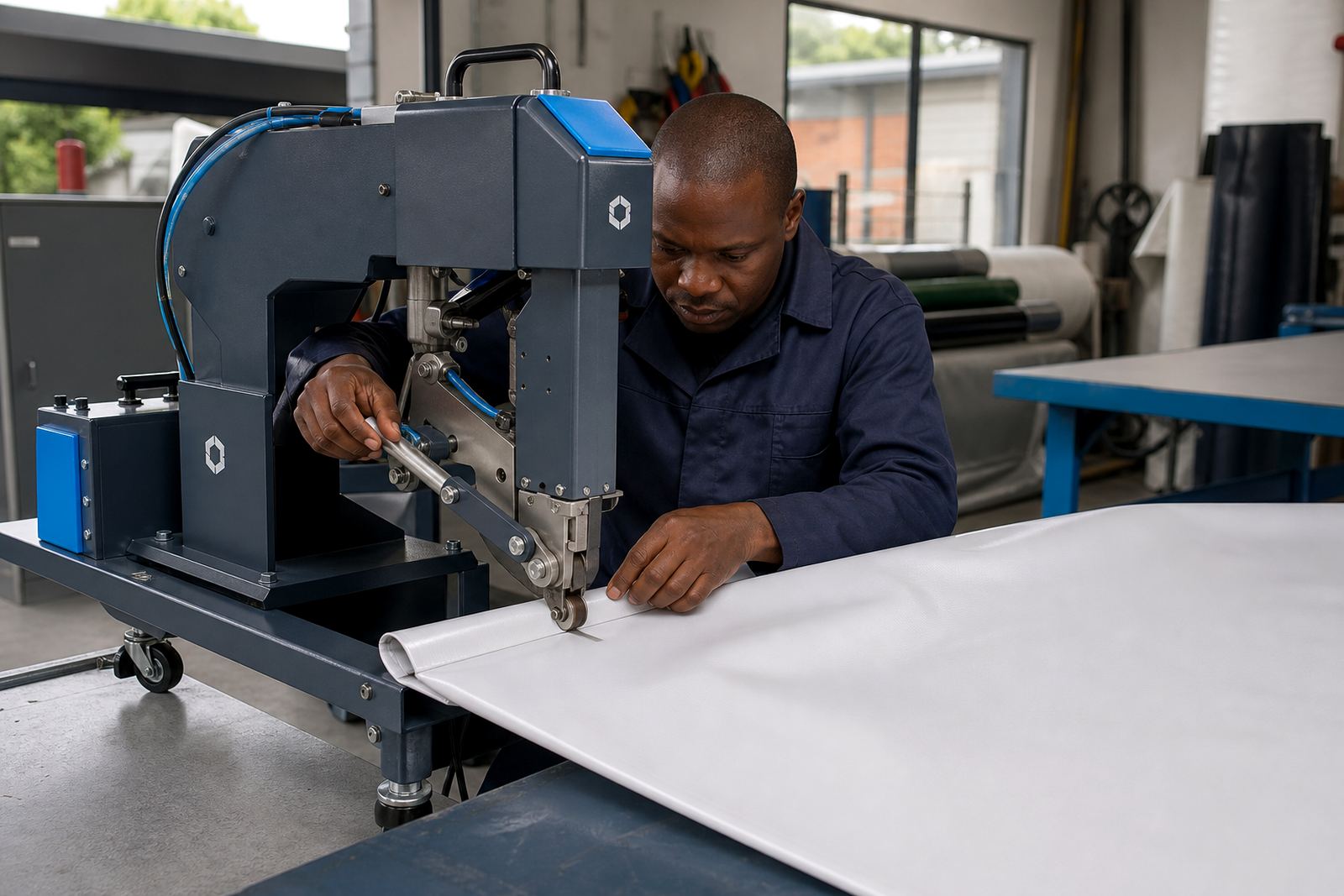
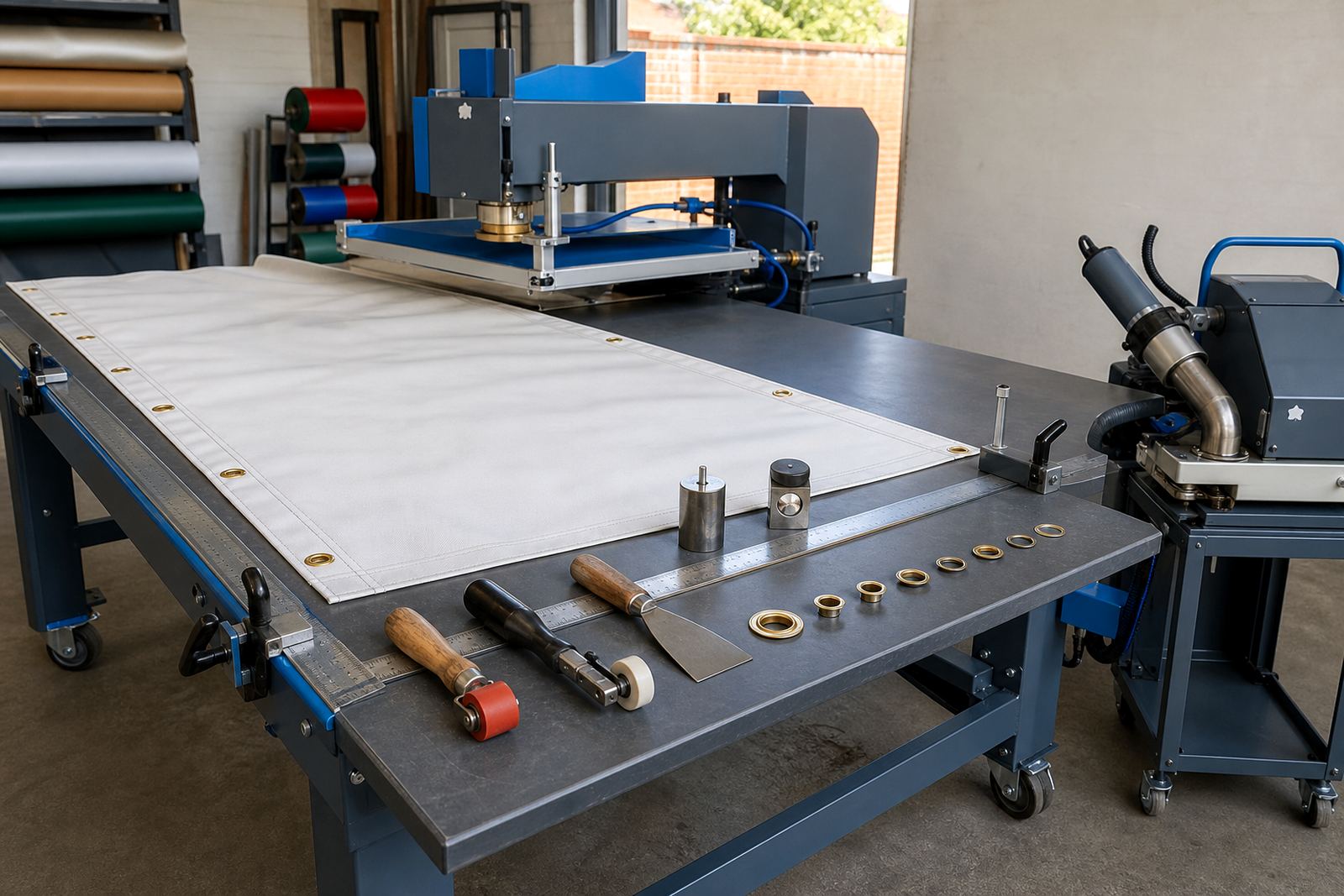
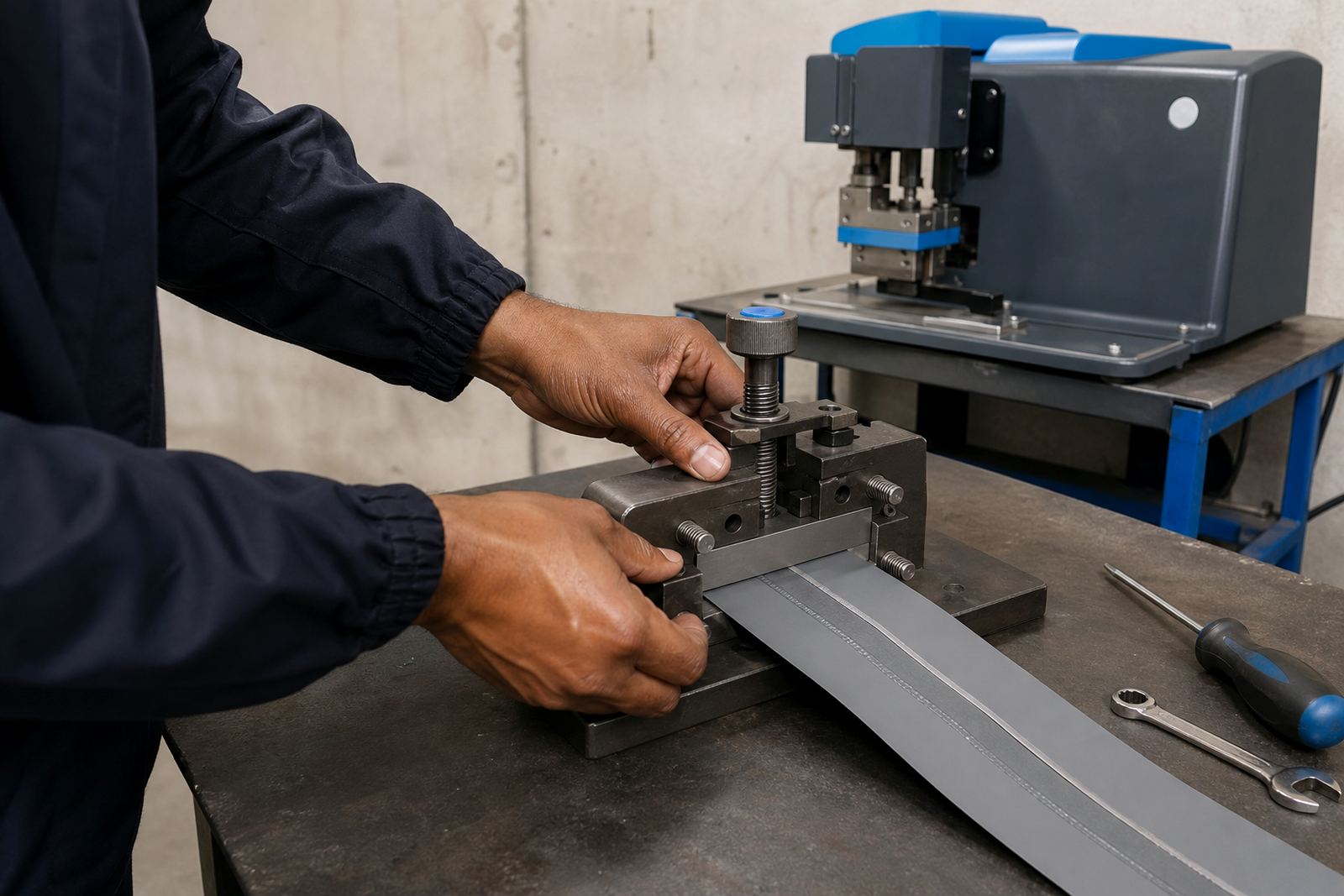
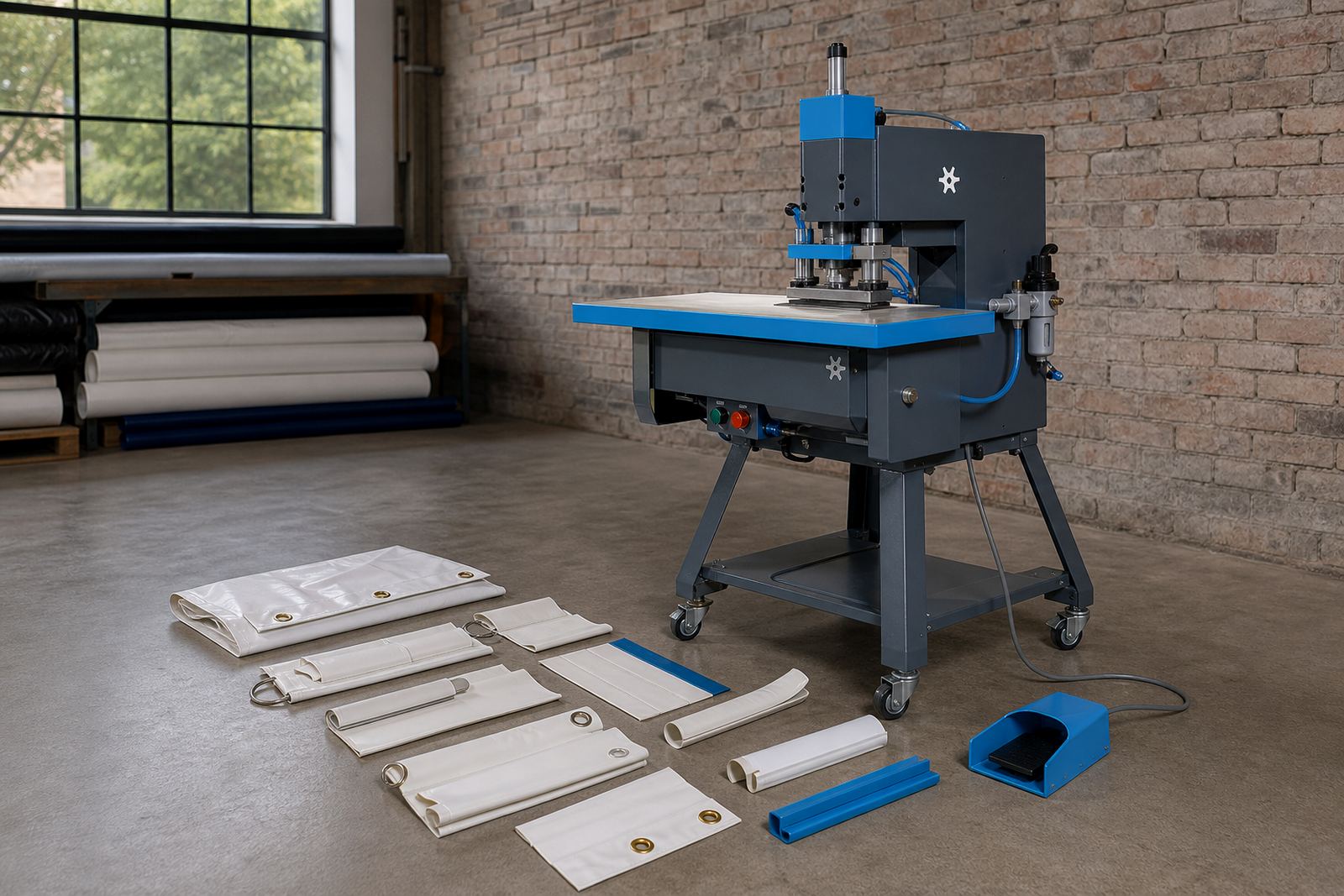
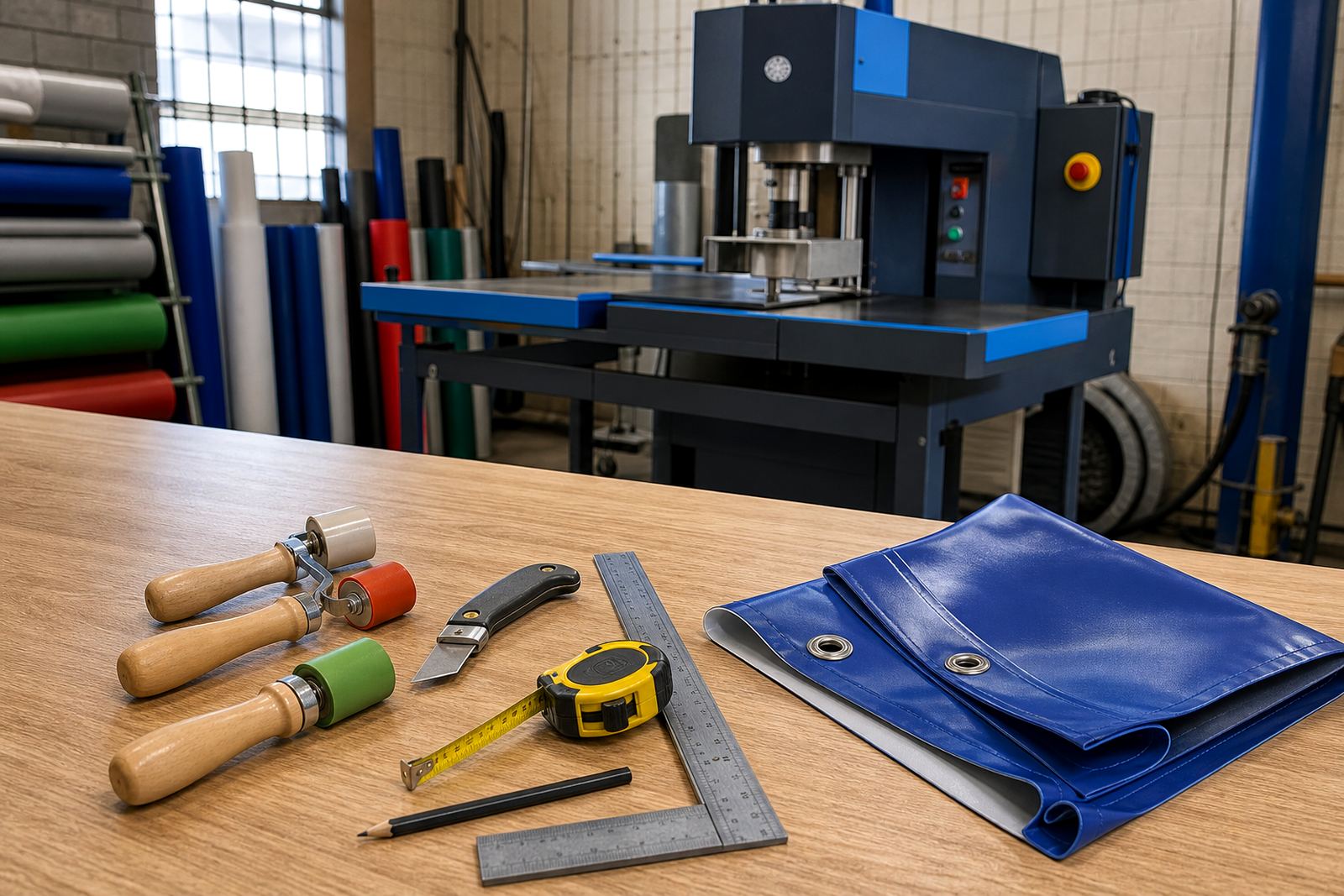
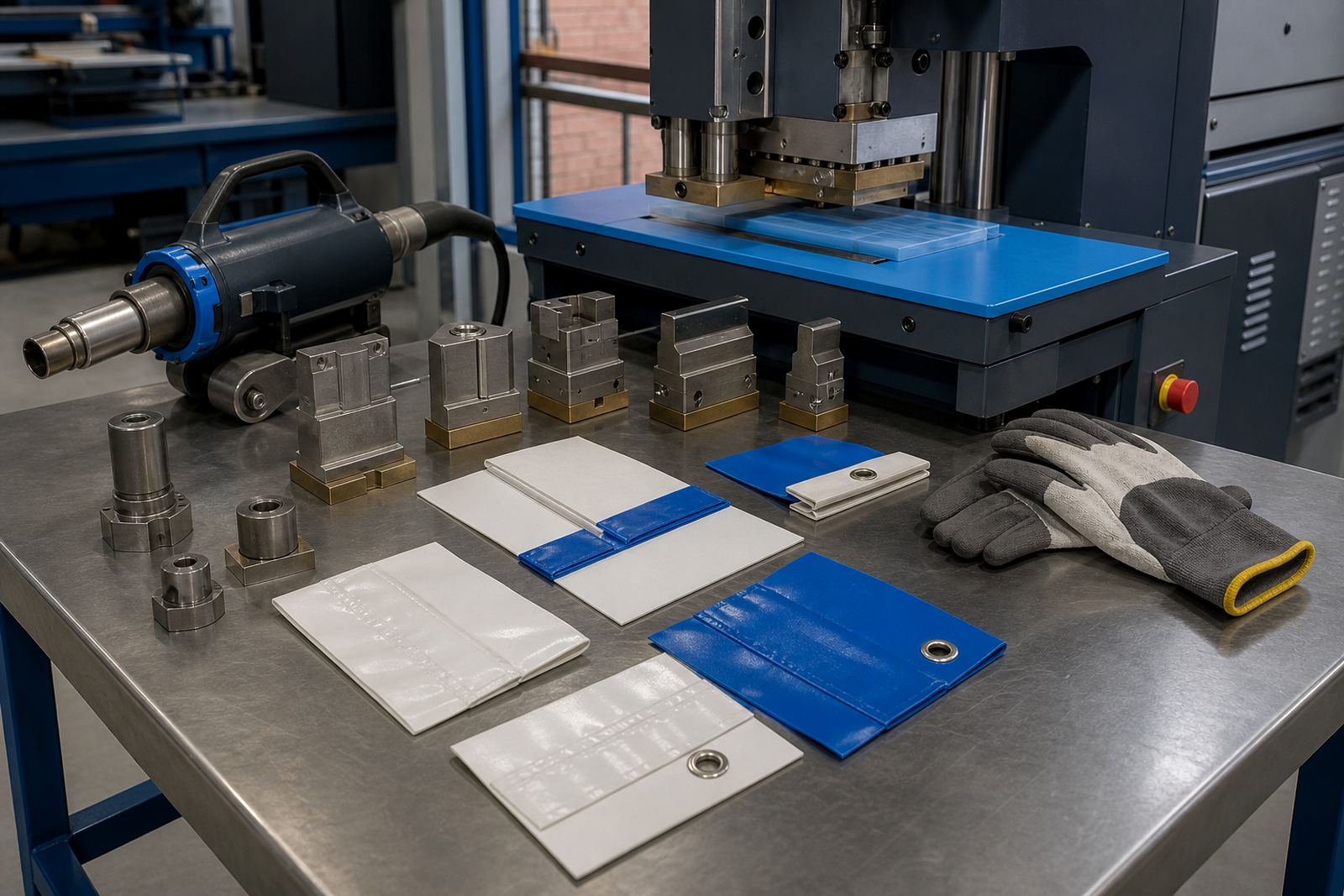
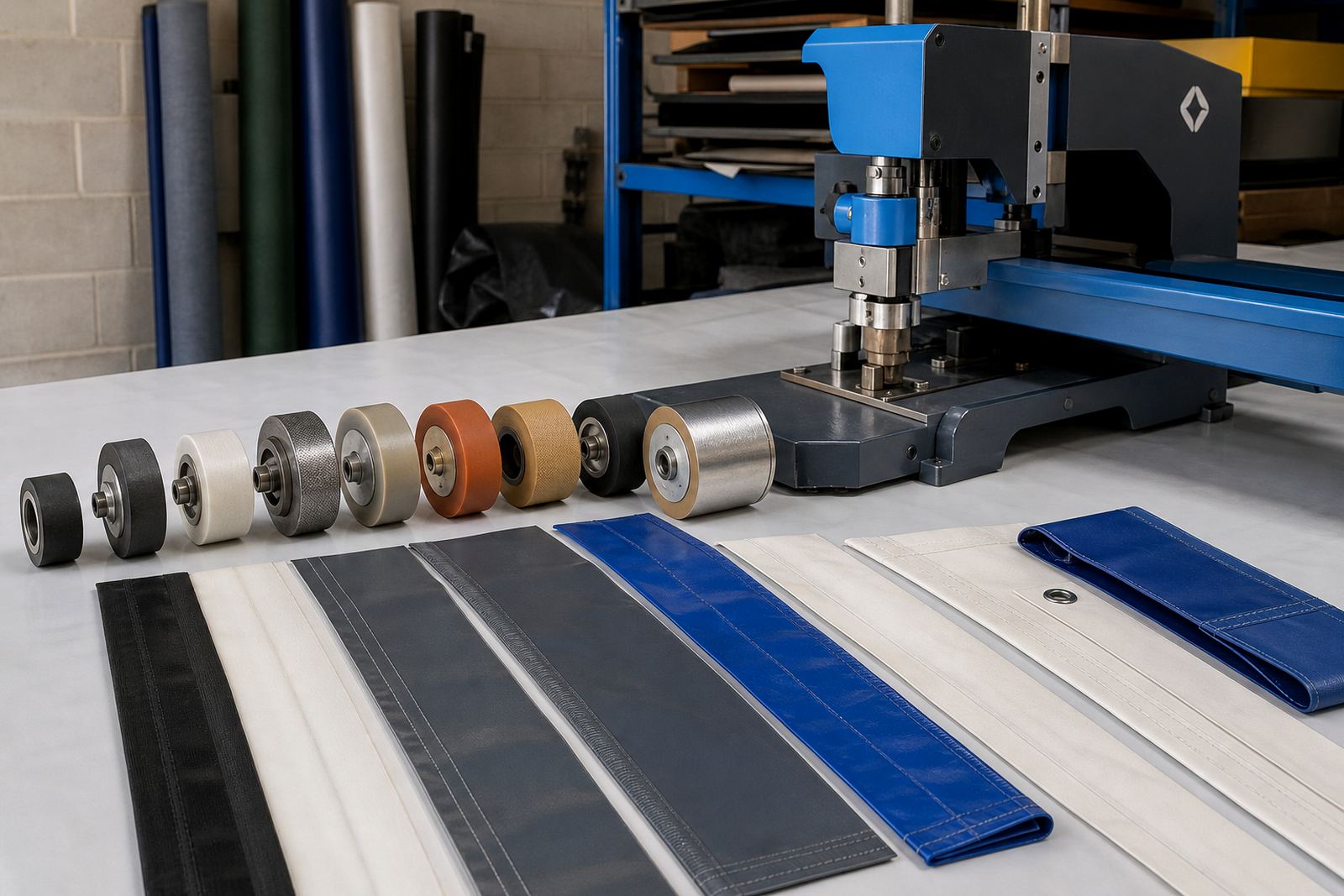
Tarpaulin and banner makers often need more than one finish on the same job. A panel may need a flat seam in the centre, a folded hem at the edge and a reinforced corner for eyelets. Keder edges must sit evenly in the channel, while eyelet areas need extra support so the fabric does not tear under tension.
Equipment choice affects the look and strength of each finish. Correct pressure, dwell time and roller setup help reduce scorching, weak spots and uneven feed marks. That matters on jobs going out to Johannesburg workshops, Durban sign shops and Cape Town production floors where the final article is handled every day.
Handling equipment for workshop flow
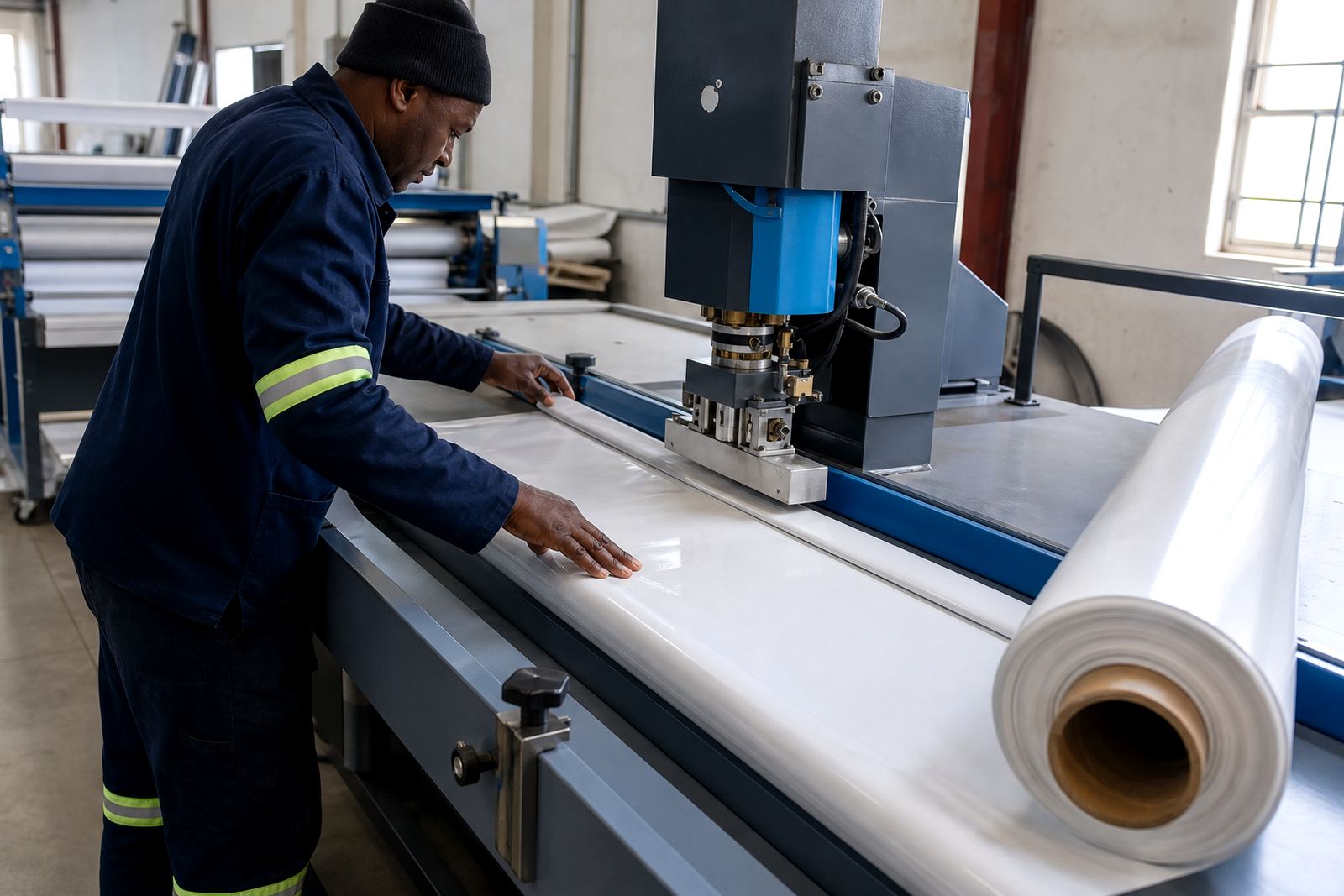
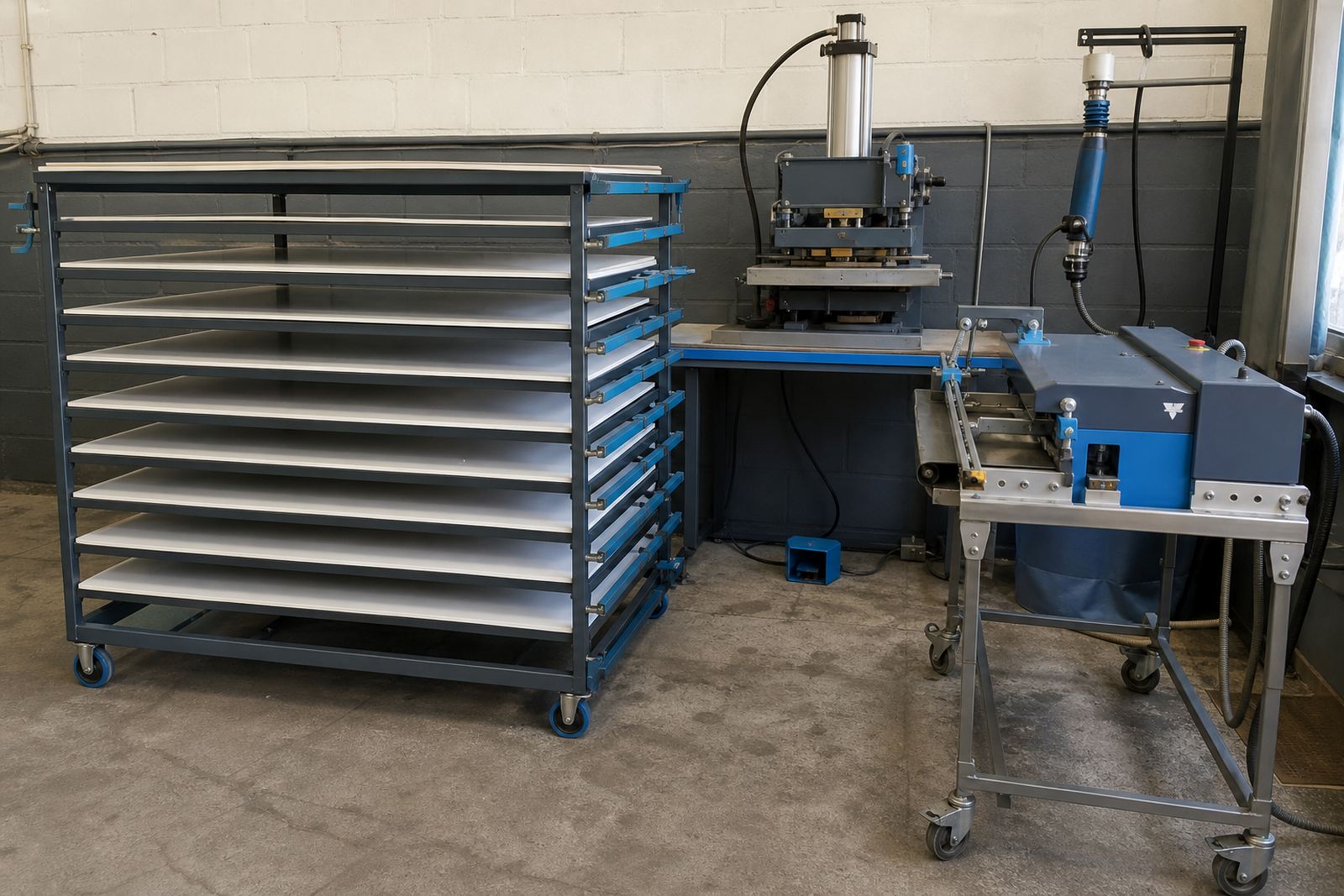
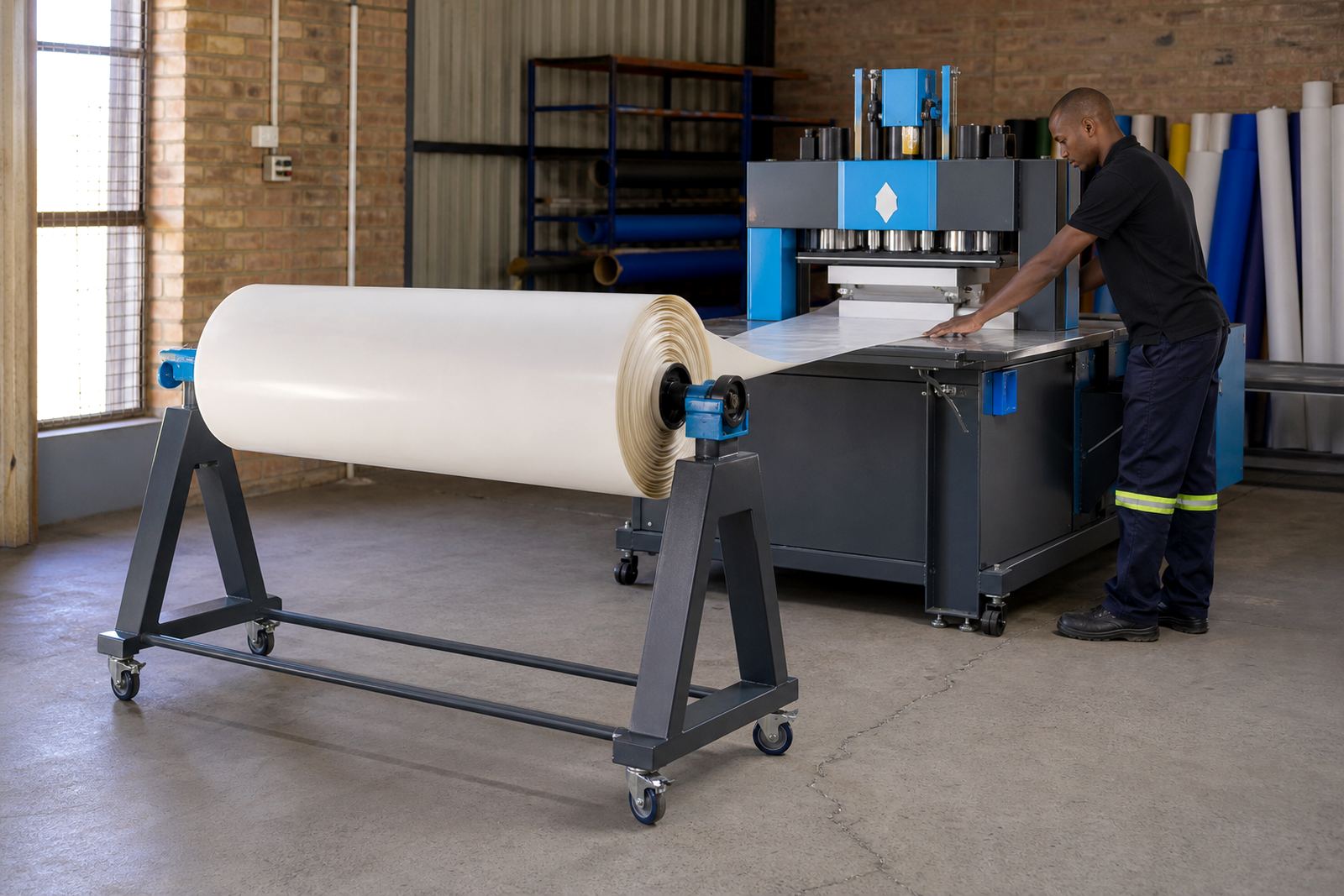
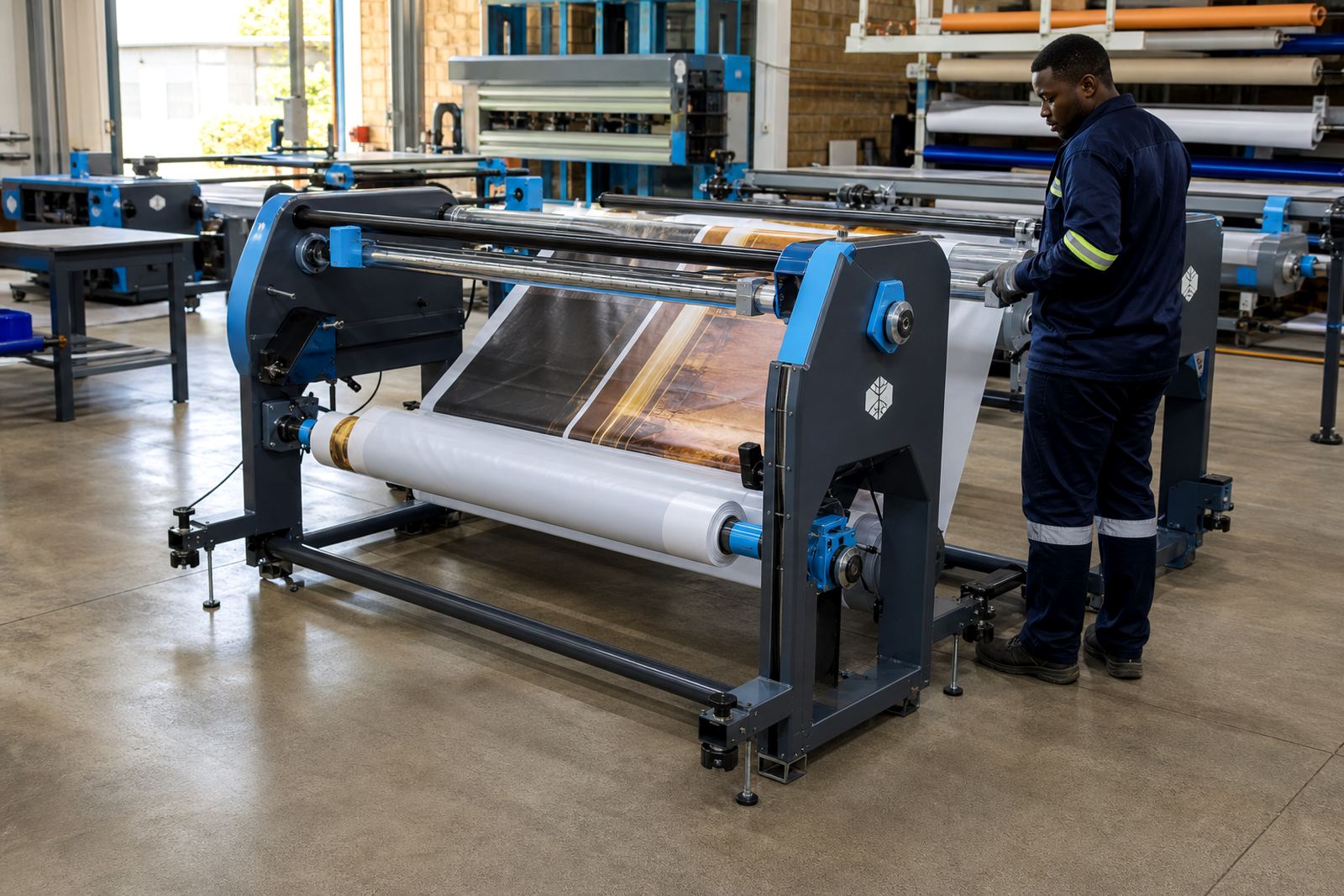
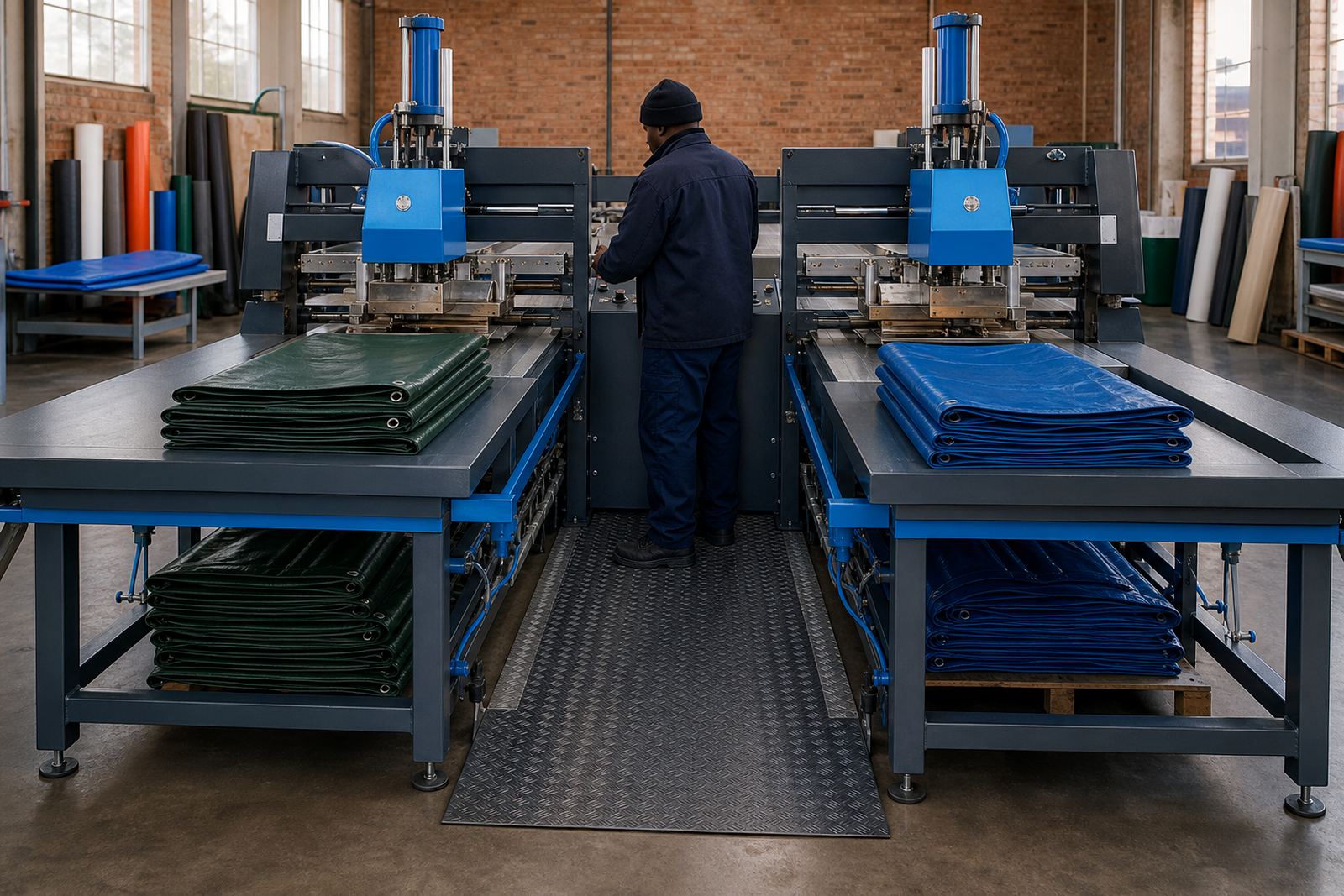
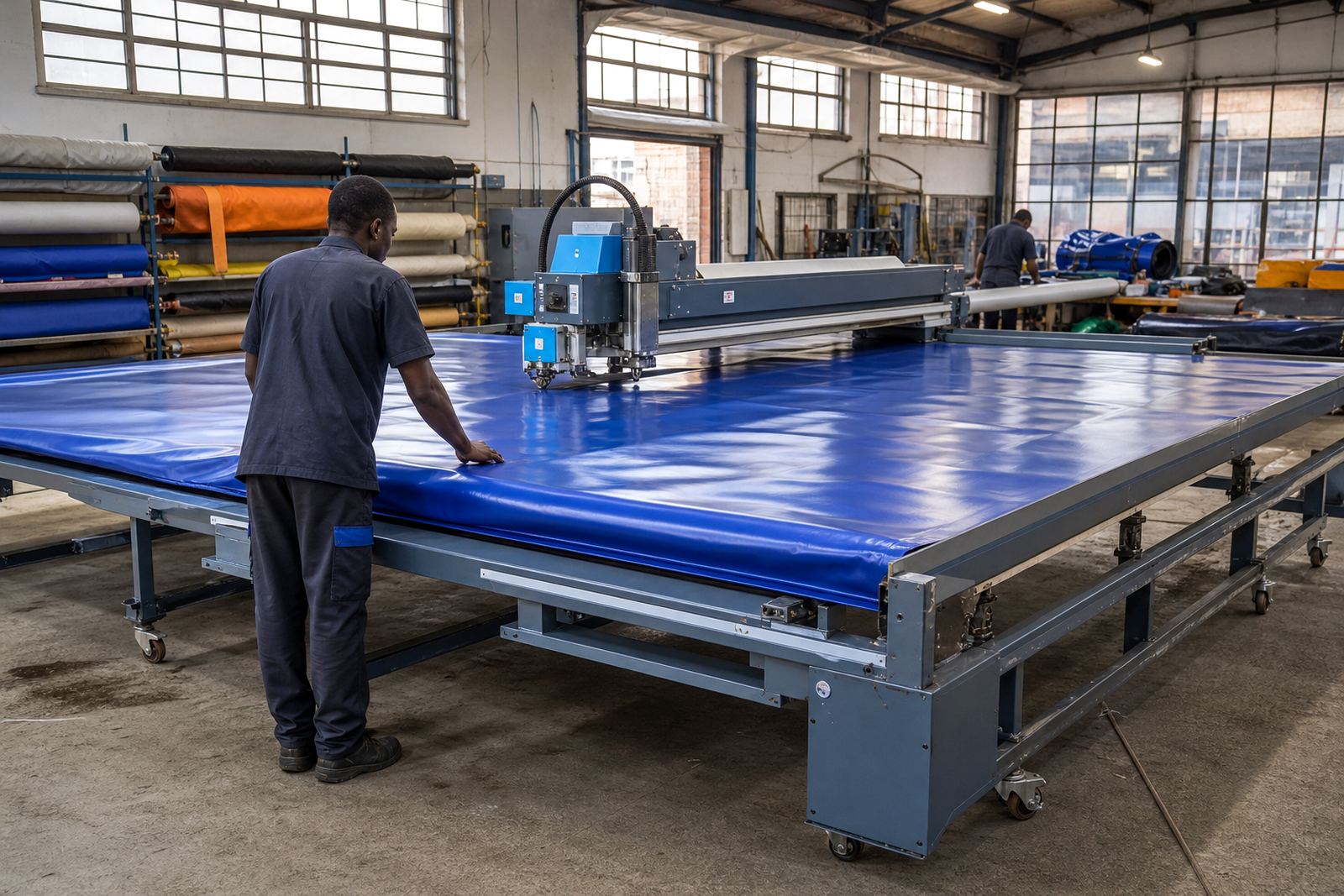
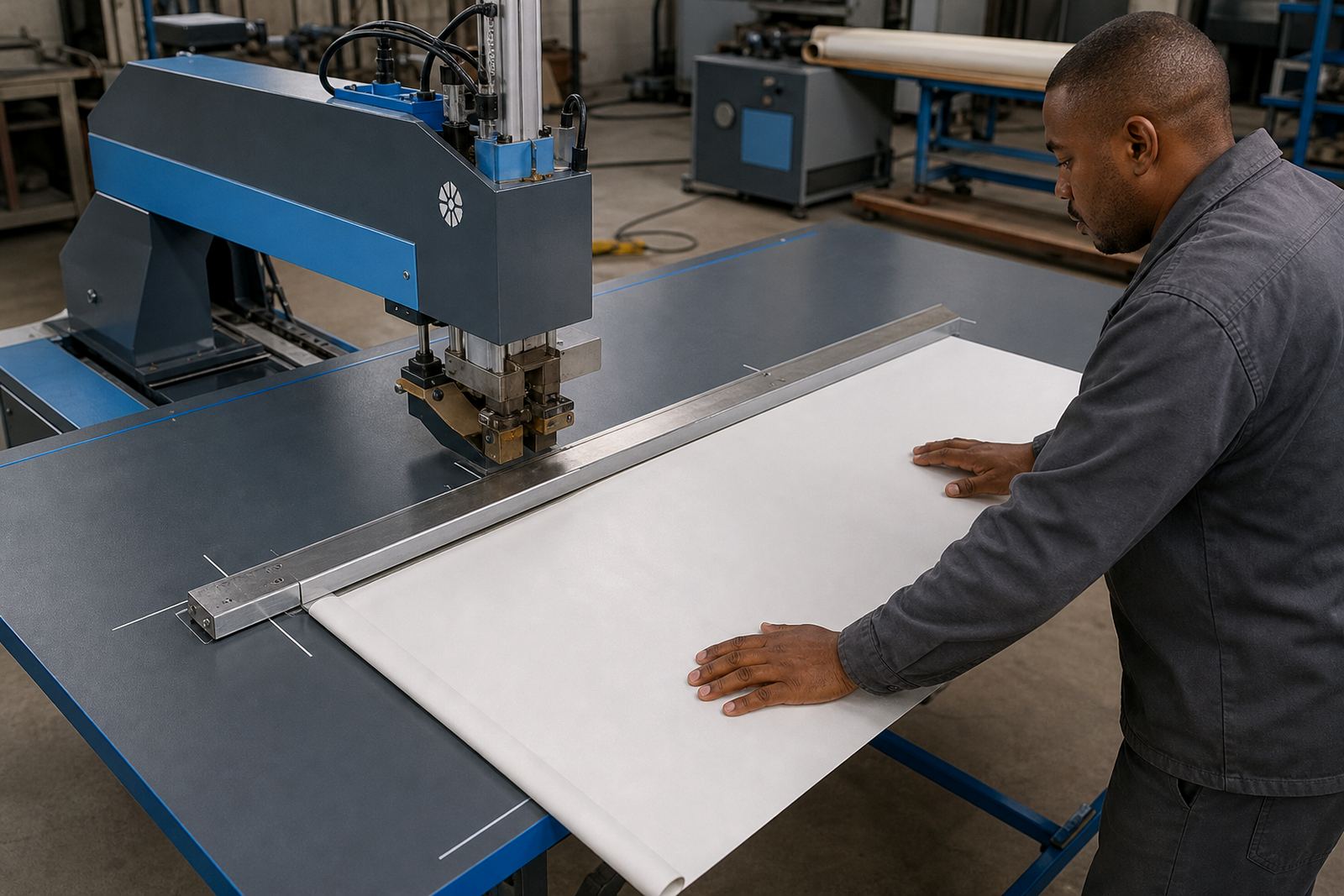
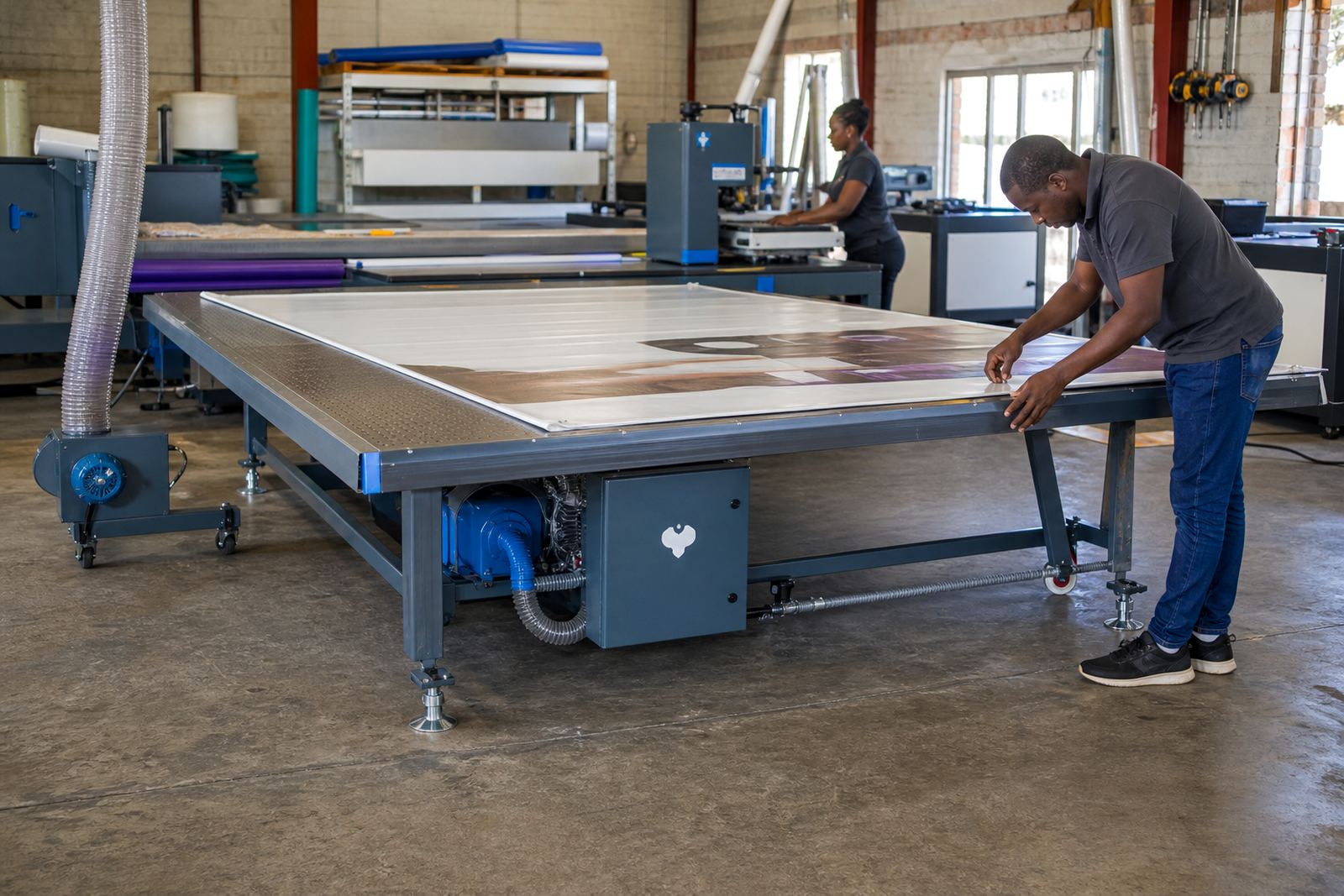
Large PVC sheets can be awkward to move, especially in smaller Germiston and Boksburg workshops where floor space is tight. Handling tables, guides and alignment aids help operators keep long sections straight while feeding them through the welder. That cuts down on wasted offcuts and helps the seam stay true from start to finish.
Where jobs are repetitive, the right tooling keeps the pace steady and the finish consistent. Shops making banners, truck covers, tent walls or display panels usually need machines that are easy to set, easy to clean and stable enough for daily use.
- Feed guides and stops for straighter seam runs
- Work supports for wide panels and long lengths
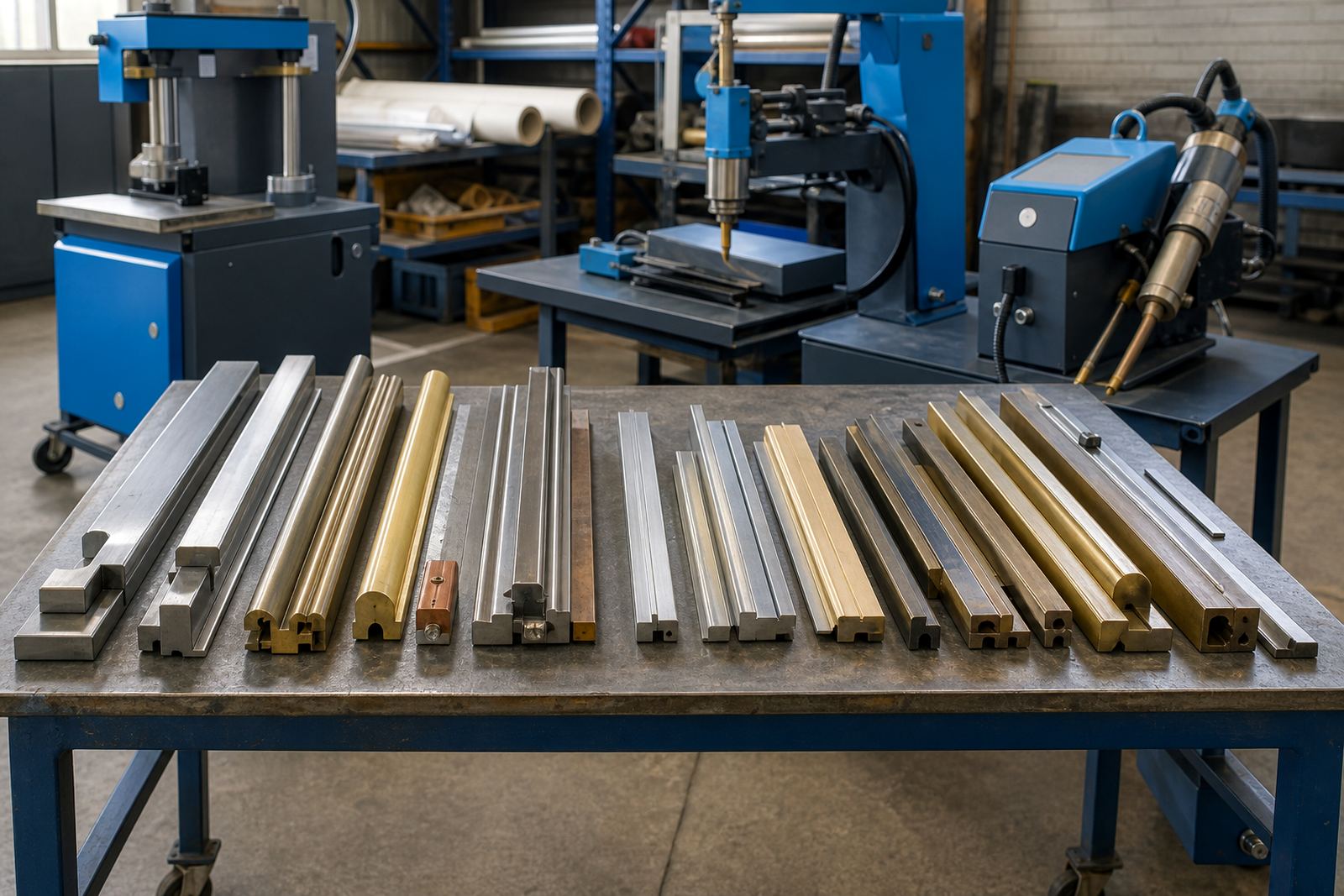
- Specialised tooling for keder, hems and edge reinforcement
- Setup aids for repeat jobs and pattern work
Safety at the machine and around the operator
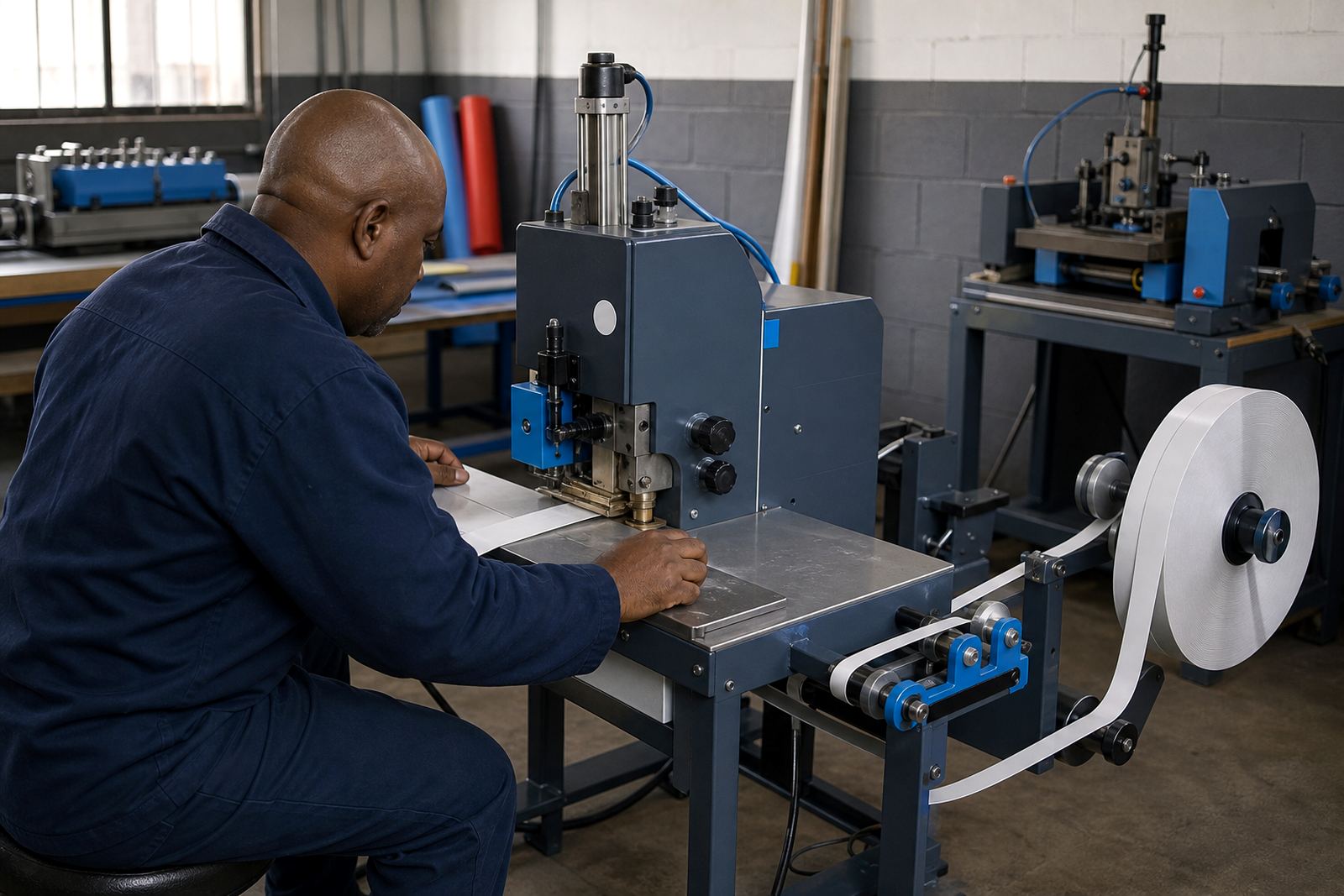
Welding PVC-coated fabric means working with heat, moving parts and powered controls, so operator safety cannot be left to habit. Guards, clear feed paths and proper training help reduce hand injury and accidental contact with heated areas. Good workshop practice also includes keeping loose material away from rollers and making sure leads, switches and controls stay in sound condition.
In busy production rooms, clear procedures matter. Operators should know how to set the machine, check the seam and stop the cycle quickly if fabric slips. That is especially useful where staff rotate between jobs or where a single machine is used for banners in the morning and tarps later in the day.
- Safe setup and operator orientation
- Guard checks and control checks before use
- Careful handling of heated tooling and moving rollers
- Cleaning routines that avoid build-up around weld areas
Servicing that keeps output steady
Preventive servicing helps a welder keep its heat, pressure and alignment where they should be. Over time, electrodes, rollers and tooling surfaces wear, and small faults can show up as weak seams or uneven finishes. Regular checks, fault finding and replacement of worn parts help keep production moving without unnecessary stop-start work.
For South African shops working under tight deadlines, planned servicing is often easier than waiting for a breakdown. Germiston Support, Johannesburg Support, Pretoria Support, Durban Support, Cape Town Support, Bloemfontein Support, Boksburg Support and Benoni Support all fit into that kind of workshop support.
Installation, hire and support for production shops
Some workshops need a permanent machine installed and commissioned, while others need hire equipment for peak periods or a specific contract. PVCWelder supports both approaches, with machine installation, operator training, site callouts and parts supply for tarpaulin, banner and tent makers across the country. The aim is to match the machine to the work, then keep it ready for the next run.
From Germiston in Ekurhuleni to production sites in Pretoria, Durban, Cape Town, Bloemfontein and Johannesburg, the range is suited to practical workshop use. If you are working with PVC-coated fabrics, the choice usually comes down to seam type, output, space and how the finished piece will be used in service.
- Machine installation and commissioning
- Operator training and seam testing
- Preventive servicing and service plans
- Parts supply, tooling alignment and electrode refurbishment