A bench unit for neat PVC seam work
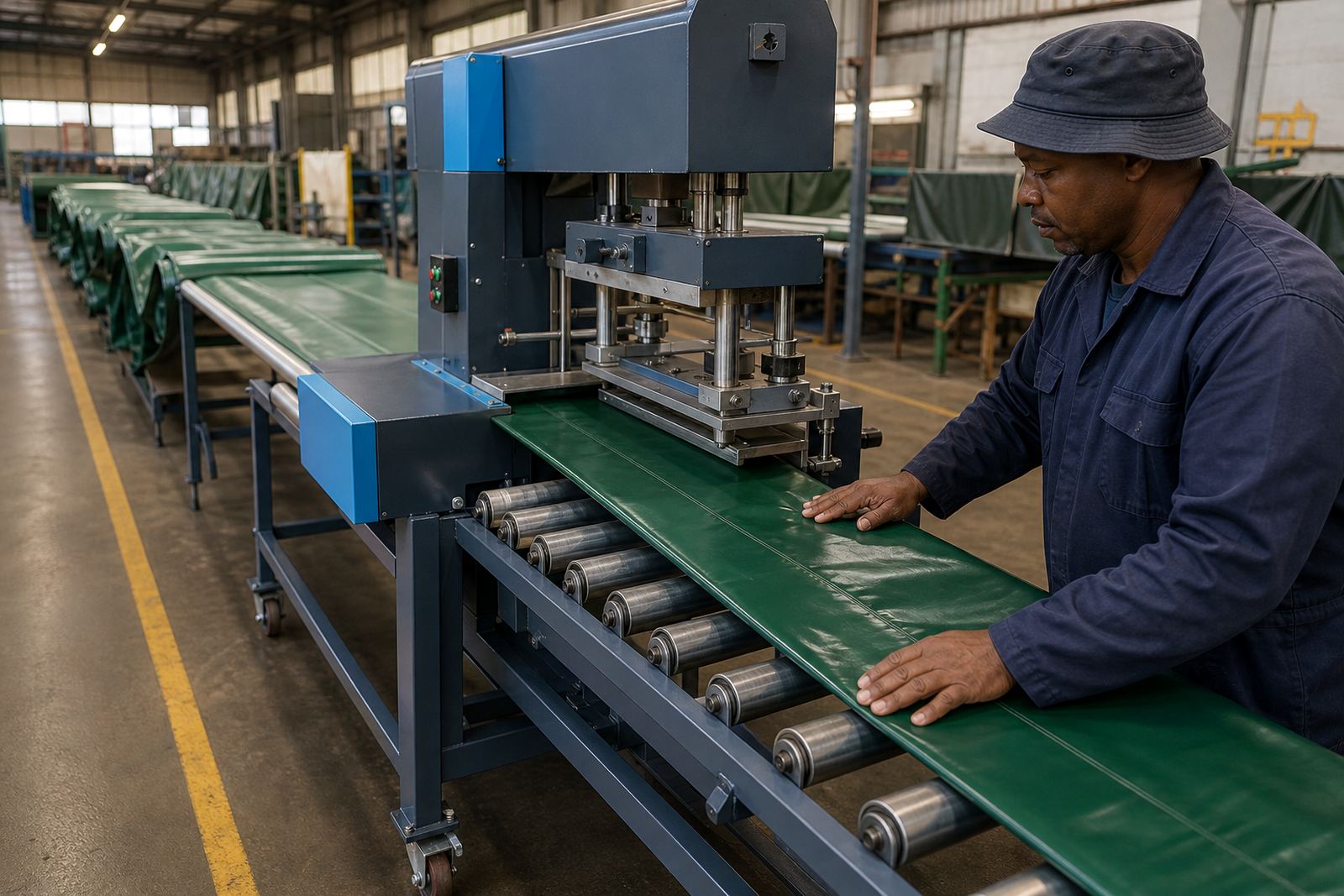
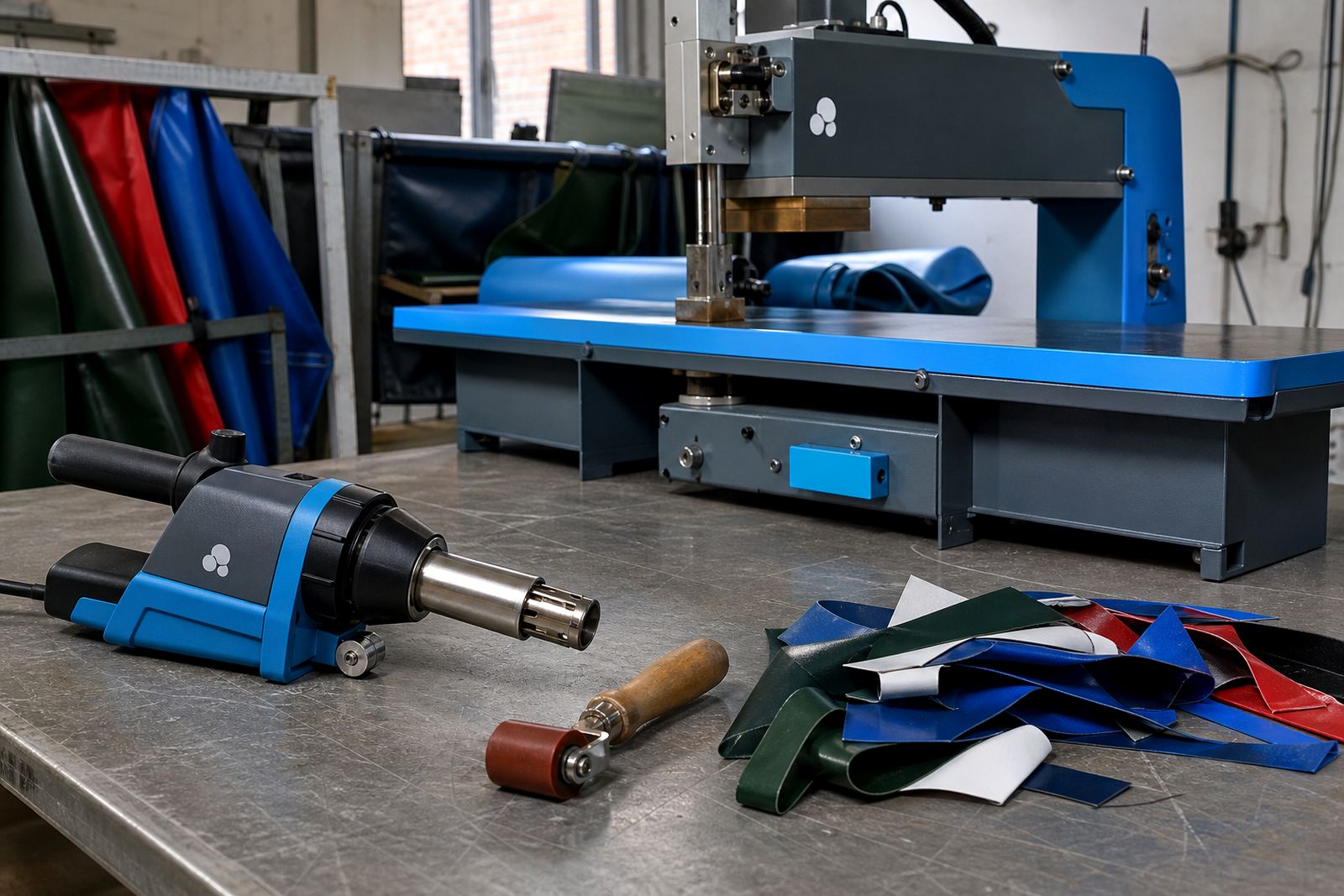
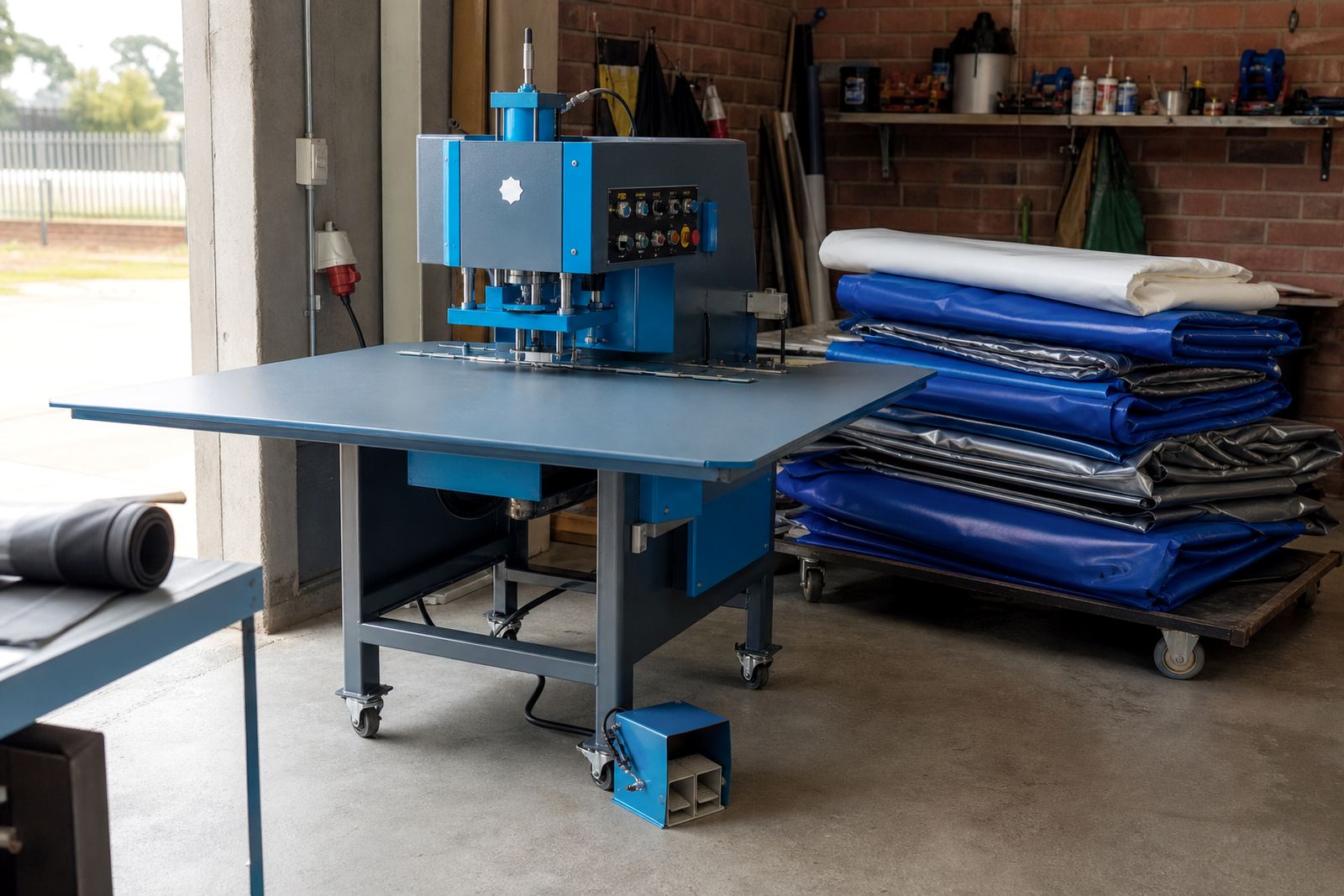
This machine is built for smaller high-frequency welding jobs where control matters more than sheer output. It is commonly used on PVC-coated banner stock, light tarpaulin panels, trim pieces and finishing sections that need a straight seam or a clean folded edge. On a busy floor in Germiston or a display workshop in Cape Town, the bench format helps the operator hold the material flat and keep alignment steady while working through repeat pieces.
High-frequency welding uses radio frequency energy to fuse compatible PVC layers under pressure. The result is a sealed seam that is suited to hems, overlap seams, pocket work and detail repairs on coated fabrics. Where hot-air or hot-wedge methods are preferred for longer runs or thicker assemblies, the bench welder still has a place for precise short sections, corners and controlled finish work.
Where this model fits in the workshop
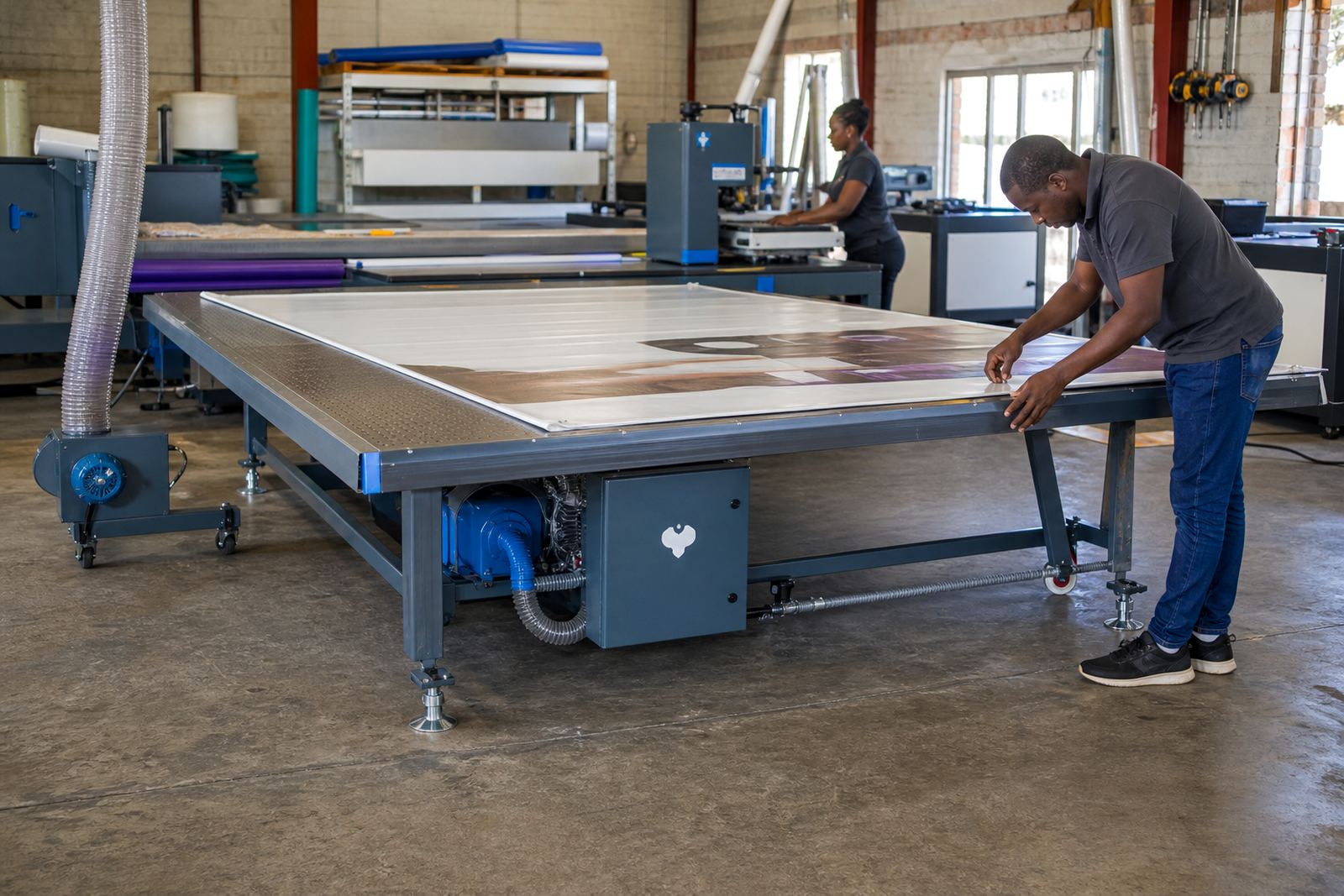
This unit suits smaller production benches, sample rooms and finishing stations where there is limited floor space. It is often used alongside cutting tables, eyelet stations and keder preparation areas. For banner makers in Johannesburg or Pretoria, it can handle short runs of stitched-look hems, reinforcement strips and panel joins that must stay true at the edge.
- Smaller banner hems and folded edges
- Detail seams on PVC-coated fabric panels
- Keder tabs, strips and fitting sections
- Eyelet reinforcement pieces before punching
- Repair work on signs, covers and display items
Because the workpiece sits on the bench, the operator can guide smaller components with less lift and less handling. That helps when working on narrow pieces, corner returns and short lengths that can be awkward on a long production line.
Sizes, setup options and machine details
Bench welders are generally specified by platen size, throat clearance, power output and control layout. The right choice depends on the widest panel you want to process, the seam width you use most often and the amount of repeat work in the workshop. In Durban, where humidity can affect stored fabrics and edge prep, a stable bench unit with consistent pressure control helps keep the seam line even across the job.
Common setup choices include interchangeable tooling, adjustable stops, foot or hand actuation and timers for repeat welding cycles. Some workshops need a compact platen for narrow hems, while others prefer a wider bed for banner sections and reinforcement layers. A machine used for tarpaulin and banner work should also allow proper alignment of the top and lower surfaces so the seam remains square and the finish does not wander.
- Bench-mounted HF welding head and table arrangement
- Adjustable pressure setting for lighter or heavier PVC-coated fabrics
- Timer control for repeatable weld cycles
- Space for seam guides, templates and edge stops
- Tooling suitable for hems, overlaps and small inserts
Seam styles made on smaller runs
The HF Bench Welder is often chosen for work where the seam finish must be neat at close range. That includes double hems on banners, overlap seams on tarpaulin panels, pockets for hanging systems and folded edges for display strips. It also suits short keder sections, corner inserts and eyelet reinforcement pads where a firm fused bond helps the item keep its shape during use.
On PVC-coated fabrics, seam choice matters. A narrow seam may be fine for lightweight banners, while a wider overlap is better for sections that will carry tension or be lifted often. For tent makers and sign shops in Bloemfontein or Ekurhuleni, the bench welder can be used for prepared pieces that then move on to punching, edge finishing or fitting. Careful alignment at this stage saves time later when the item is being assembled or installed.
The machine is also useful for test welds before full production. A small sample can confirm heat, dwell time and pressure settings on a specific fabric batch, which is useful when the coating, base cloth or thickness changes between jobs.
Installation, fitting and workshop servicing
Installation is usually a straightforward workshop fit-out, but the machine must be positioned level and with enough working space for feeding material, checking seam alignment and turning smaller pieces. The electrical supply must match the machine specification and the surrounding bench should be arranged so the operator can load, weld and remove pieces without twisting the fabric. In larger facilities around Johannesburg and Pretoria, it is common to place the unit near cutting and finishing stations so the workflow stays orderly.
Operator safety starts with proper guarding, dry working conditions and clear access around the platen area. Staff should be trained on safe hand placement, cycle control and the correct way to handle hot components after a weld. Regular servicing keeps the machine consistent. That includes checking contacts, pressure parts, alignment, cable condition and the condition of any wear items that affect seam quality. A tired roller or poor electrode contact can leave marks, weak edges or uneven fusion.
- Level bench positioning and clear operator access
- Electrical connection matched to the machine rating
- Routine checks on pressure parts and tooling alignment
- Safe handling of heated components and welded fabric
- Preventive servicing to protect seam consistency
Ordering checks that matter on this trade
When ordering an HF Bench Welder, it helps to confirm the exact fabric type, the widest seam you plan to weld and the most common item sizes. A banner workshop may need one setup, while a tarpaulin repair team may need another. The machine should suit the thickness of the coated fabric, the type of seam and the finishing work that follows. If keder, hems and eyelet reinforcement are all part of the day-to-day work, the tooling choice should reflect that mix.
It is also useful to confirm the available floor space, table height and whether the machine will be used for short runs or repeat batches. Workshops in coastal areas such as Durban or Cape Town may also want to plan for storage conditions, because damp air can affect material handling and edge prep. When the machine is matched correctly to the work, the operator gets cleaner welds, less rework and a more orderly finish at the bench.
PVCWelder supplies and services high-frequency and hot-air PVC welders for banner, tarpaulin and tent production across South Africa, with support from Germiston into Johannesburg, Pretoria, Durban, Cape Town and Bloemfontein.
Key facts
| Machine type | Compact high-frequency bench welder for PVC-coated fabrics |
|---|---|
| Typical use | Small banner seams, hems, keder tabs and detail welding |
| Weld method | Radio frequency fusion under controlled pressure |
| Material range | PVC-coated banner, tarpaulin and display fabrics |
| Control features | Adjustable pressure, timer control and guided alignment |
| Support services | Installation, training, preventive servicing and parts supply |