

Where the workshop support reaches
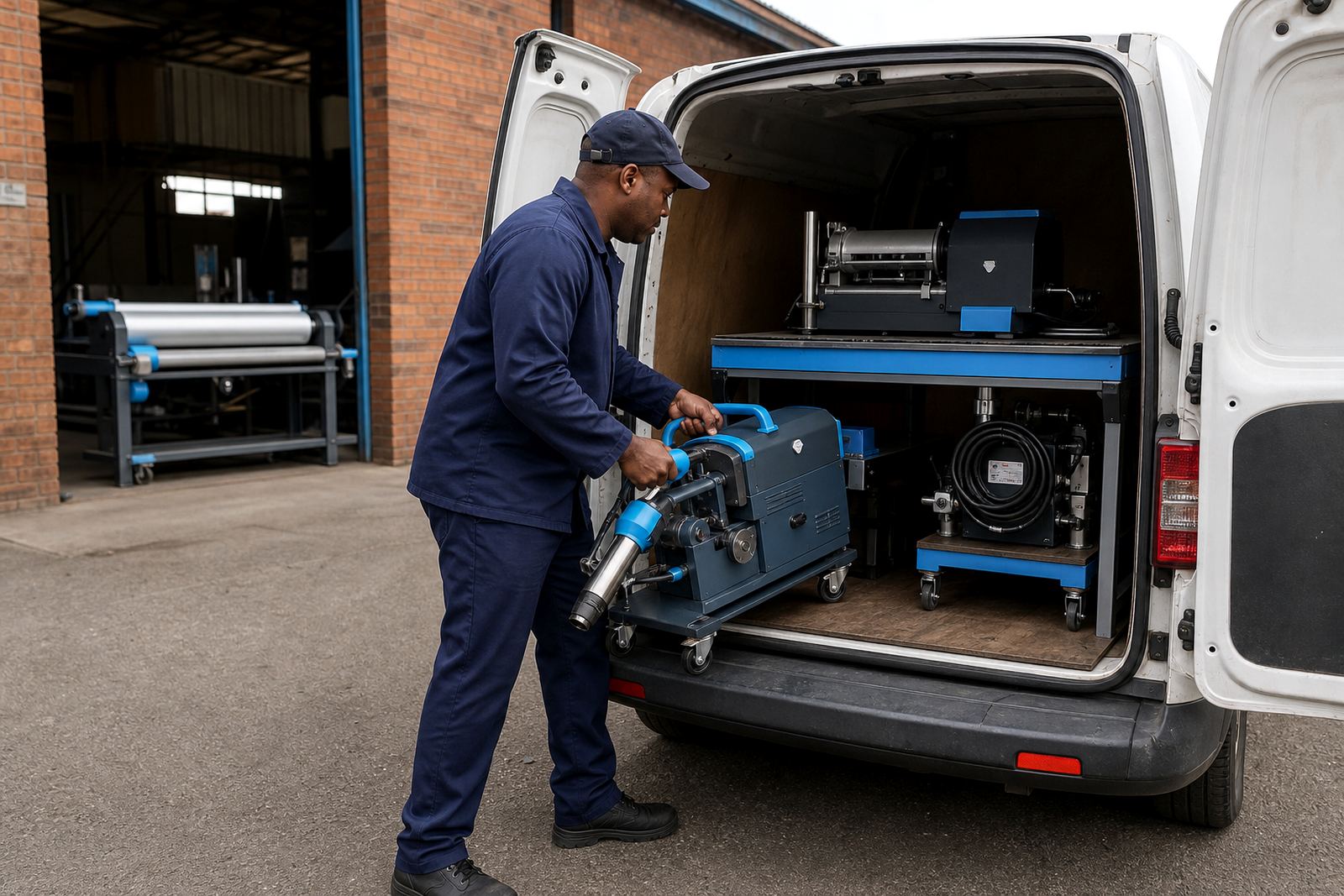
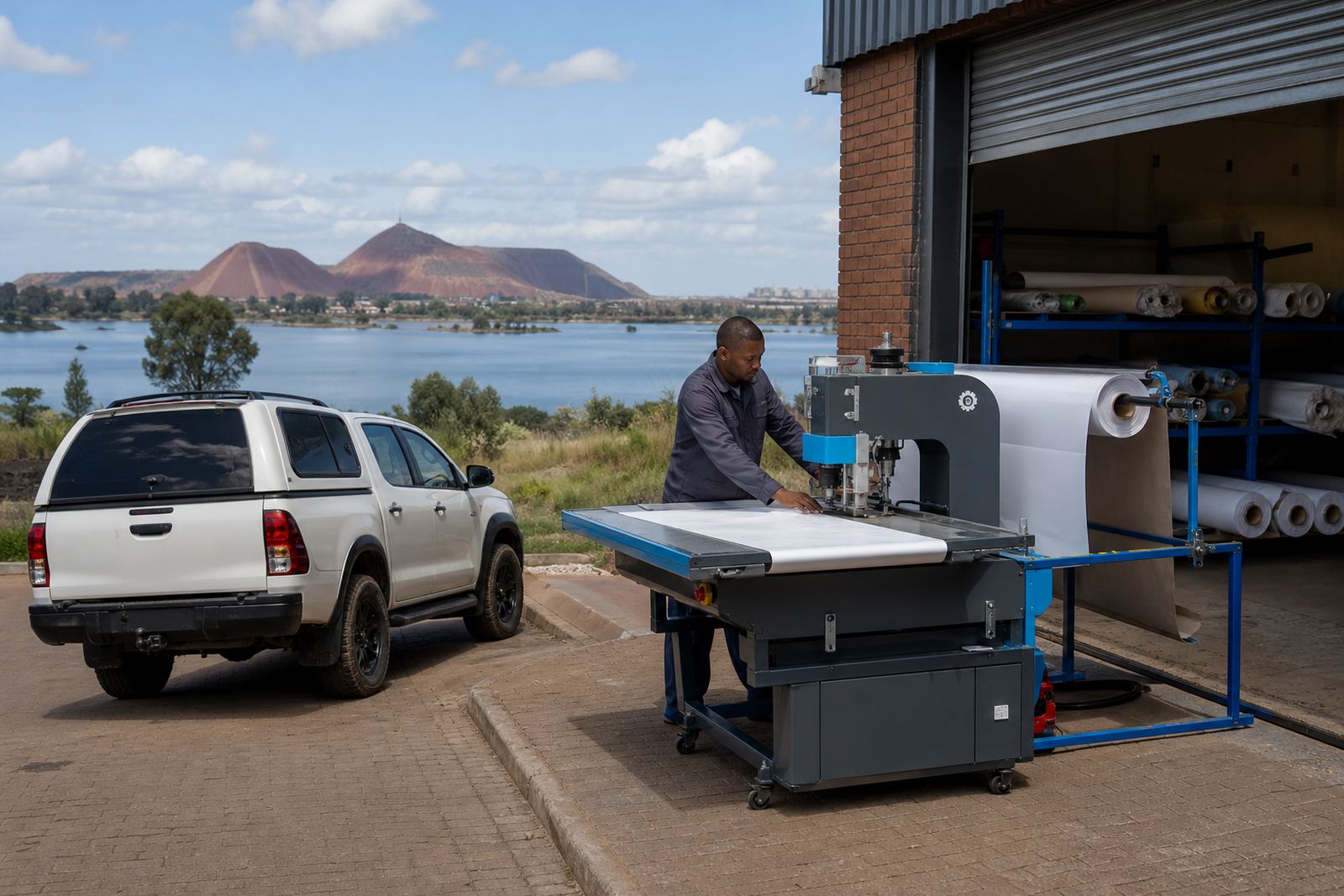
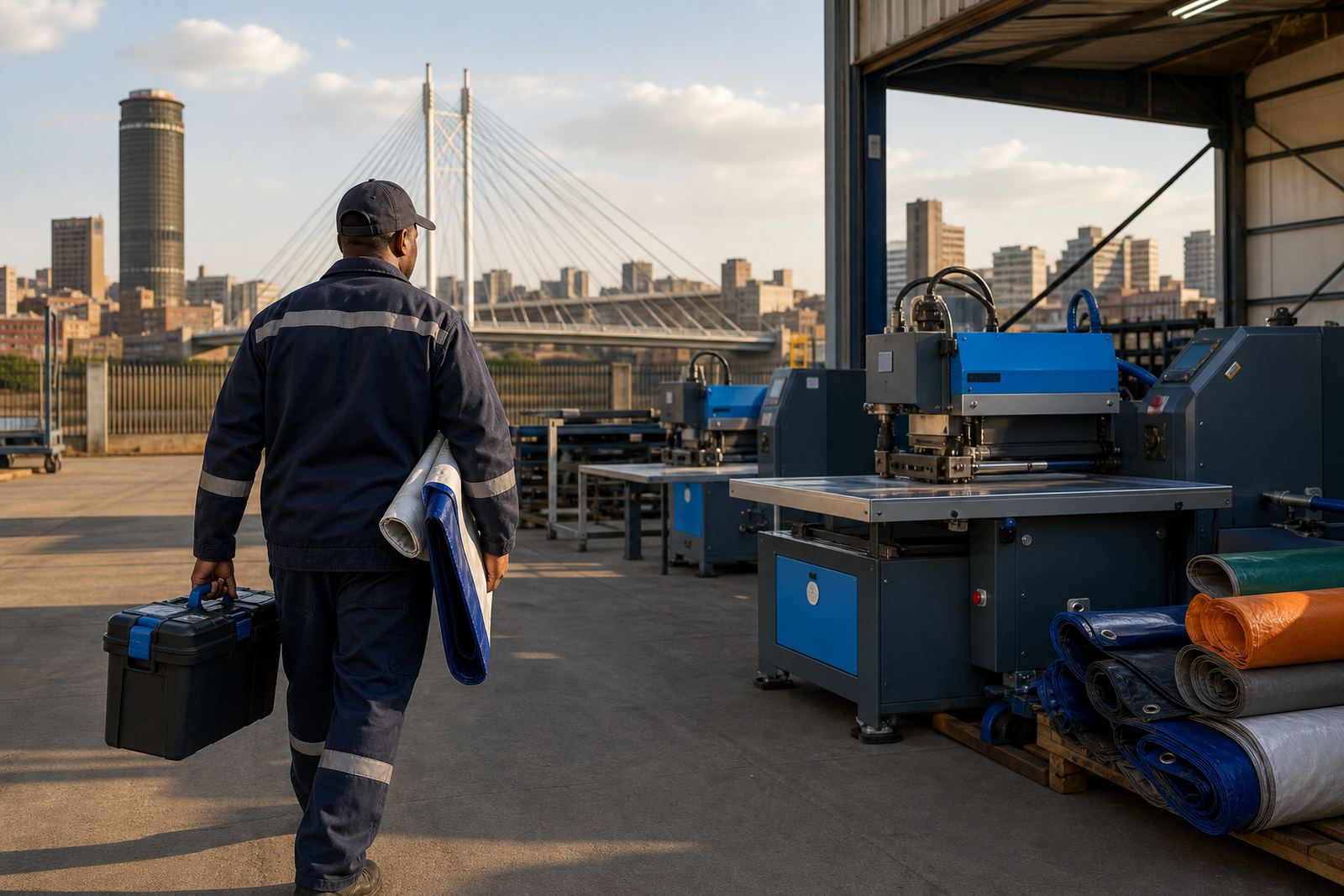
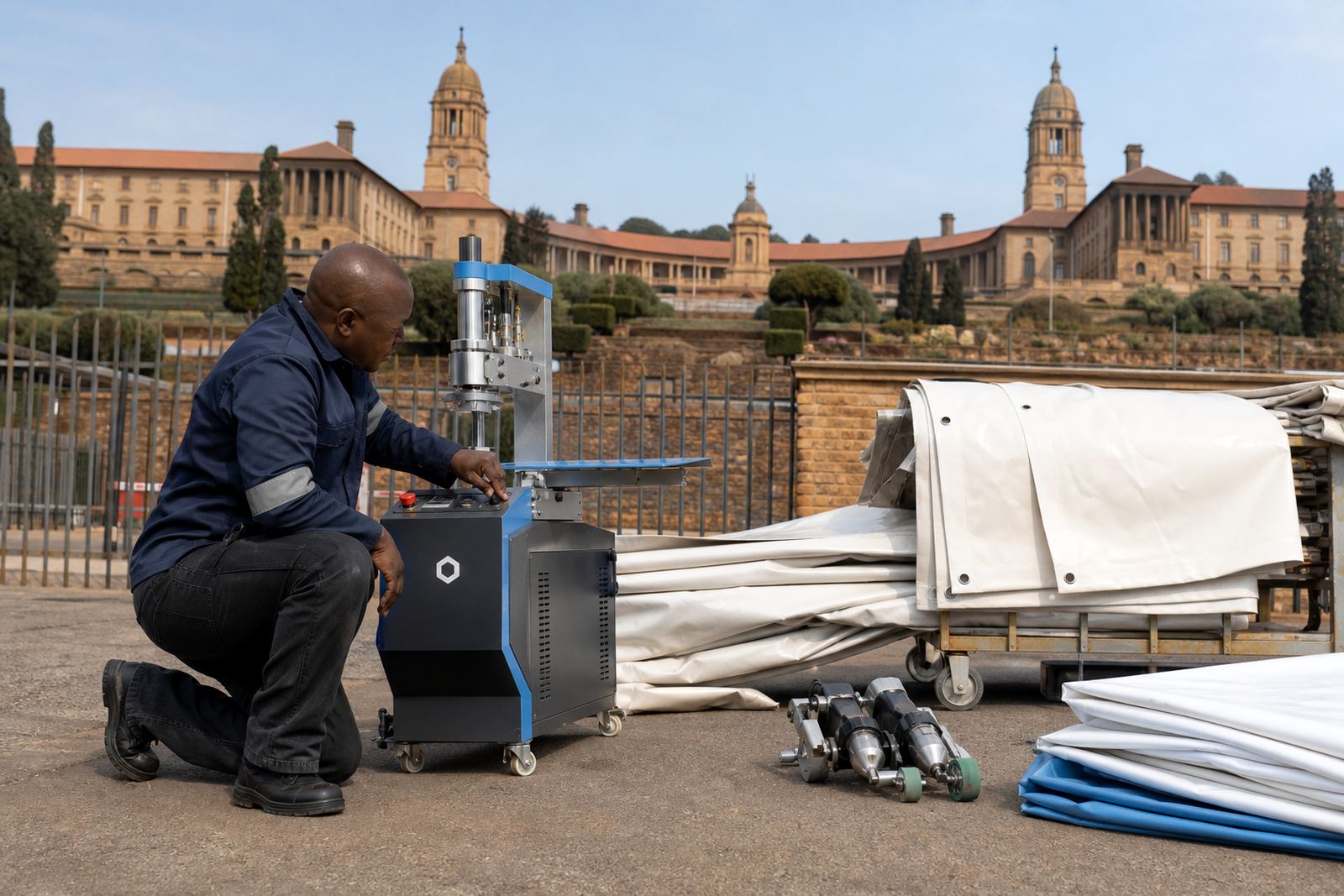
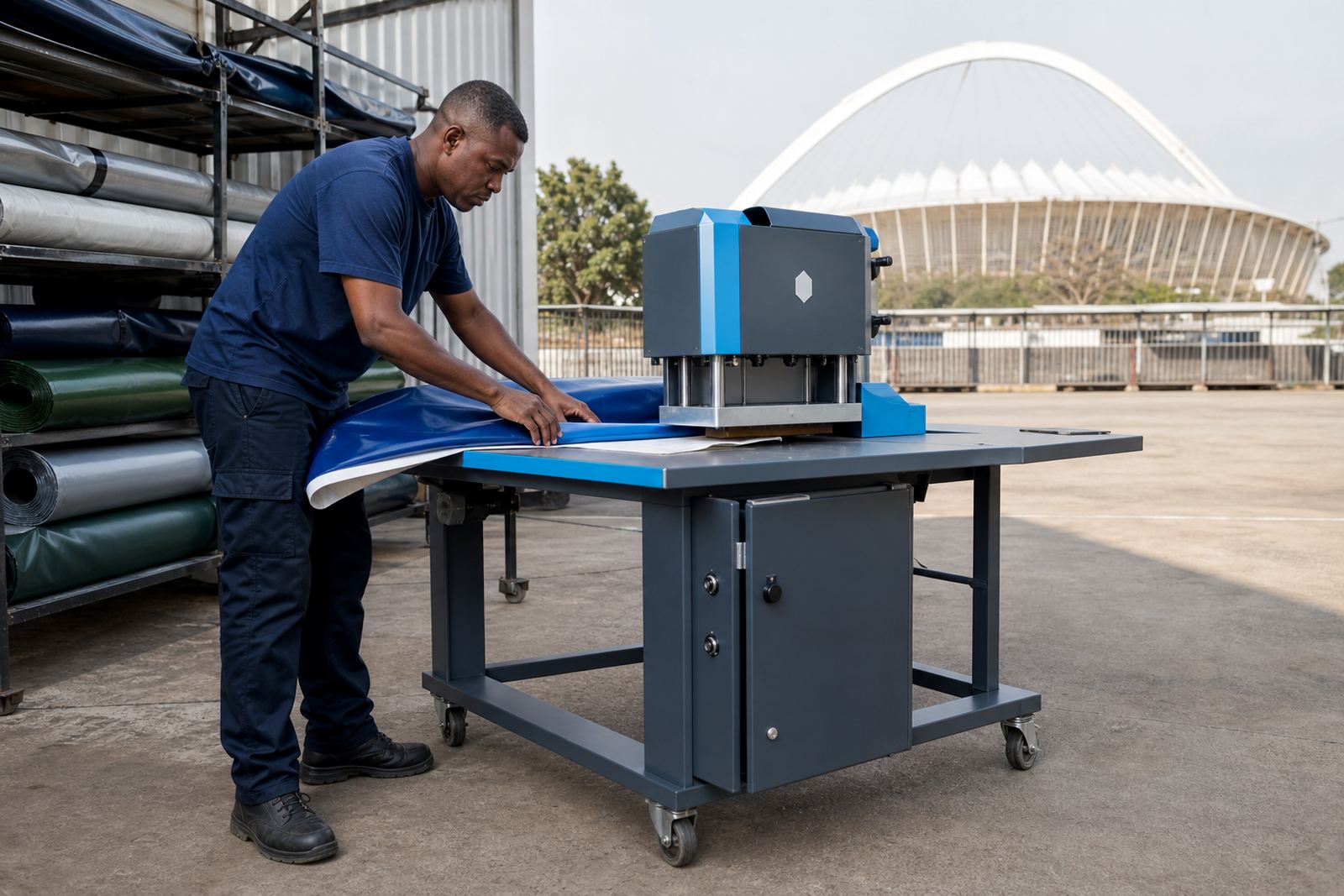
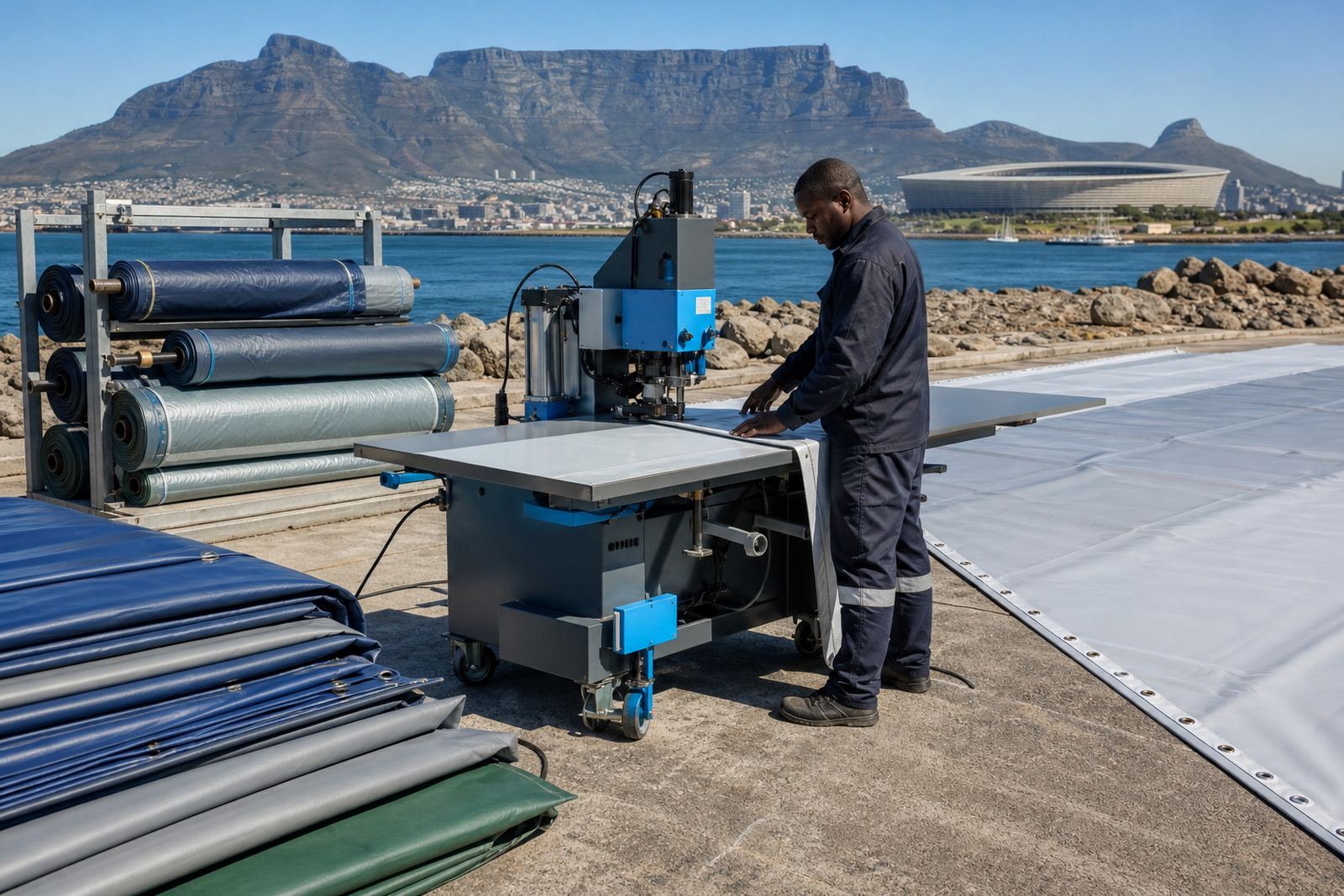
From our Germiston base, support is arranged for customers in Johannesburg, Pretoria, Durban, Cape Town and Bloemfontein, with wider reach across Ekurhuleni including Boksburg and Benoni. The work covers high-frequency and hot-air welding of PVC-coated fabrics used for tarpaulins, banners, tent panels, hems, keder edges and eyelet reinforcement.
For a busy cutting and welding floor, the right service area depends on what needs to happen on site and what can be handled in the workshop. A small banner shop may need seam testing and operator coaching, while a tarpaulin maker may need tooling alignment, roller replacement or a full machine installation.
Choosing the right support for your location
Customers in different towns have different production pressures. Inland workshops often want faster setup around repeat jobs, while coastal sites in Durban and Cape Town often need closer attention to humidity, corrosion and adhesive residue around heated tooling. That makes machine condition, spare parts and routine servicing important, not just the welding method itself.
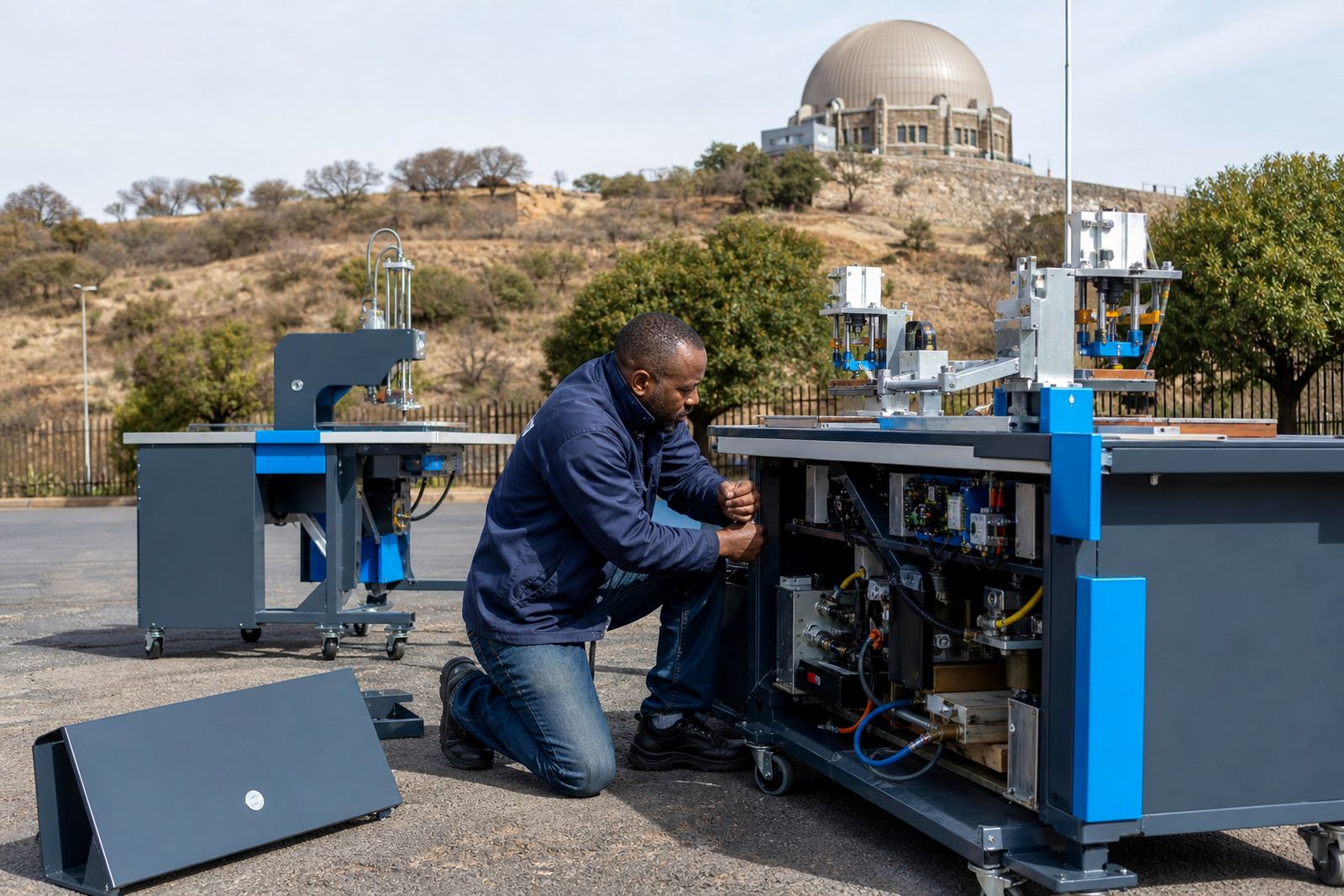
- Machine installation: positioning, levelling, electrical checks and first-run setup.
- Commissioning: proving the weld cycle, output and operating settings on your material.
- Operator training: seam control, heat timing, pressure and safe handling.
- Preventive servicing: inspection, cleaning and wear checks before faults start.
- Fault finding: tracking inconsistent welds, arcing, pressure issues or heating loss.
South African centres we regularly support
Our service areas cover the main production routes used by signage, display and tent-making workshops. Whether the machine is used for straight seams, overlap seams, hems, keder attachment or eyelet work, support can be arranged around the site and the work schedule.
- Germiston and Ekurhuleni: local workshop support, callouts and parts supply.
- Johannesburg and Pretoria: installation, servicing and training for production teams.
- Durban and Cape Town: attention to coastal wear, machine care and seam consistency.
- Bloemfontein: support for tarpaulin and banner makers working with mixed batch sizes.
What the welding work usually involves
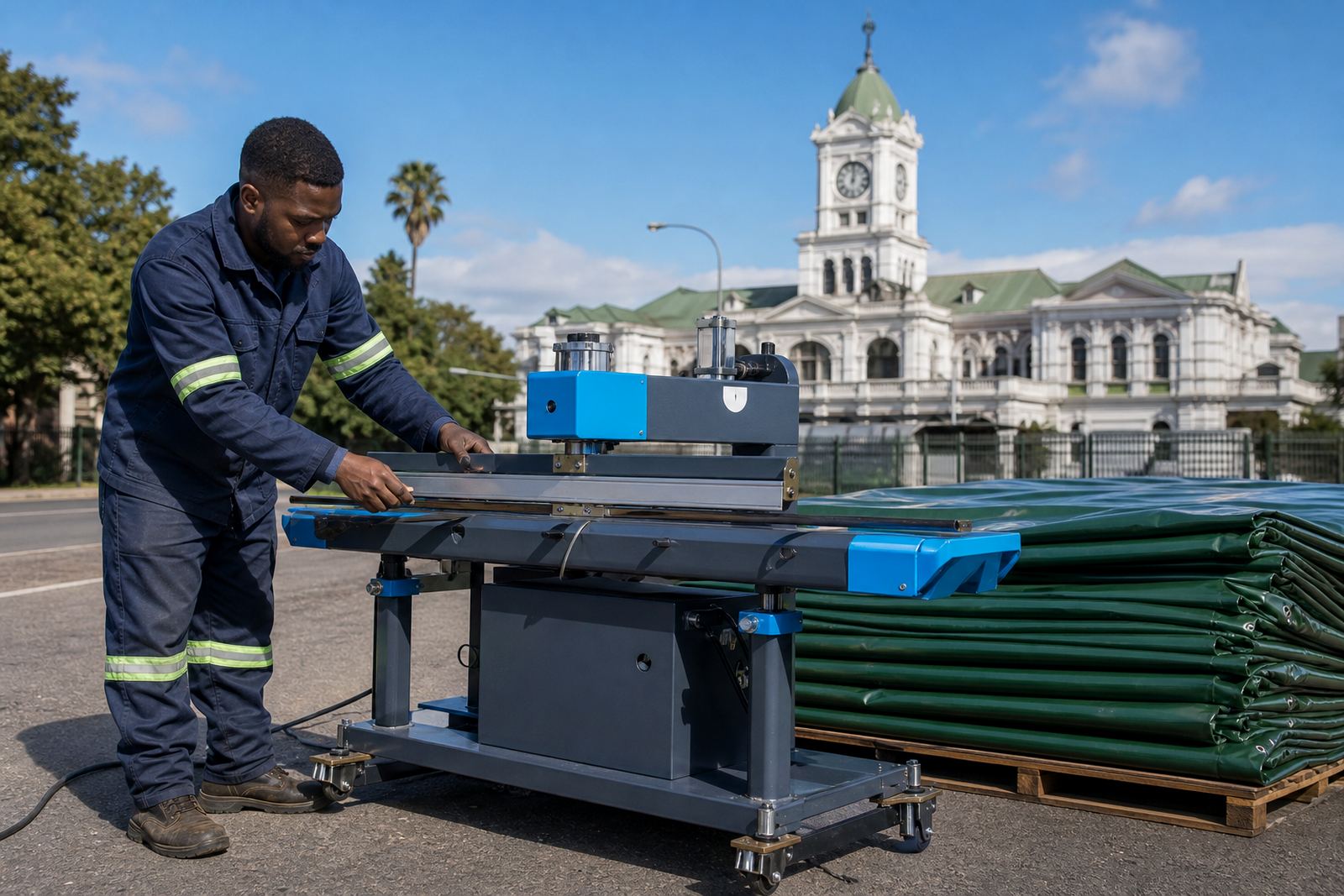
High-frequency, also called radio frequency welding, is used where clean sealed seams are needed on compatible PVC-coated fabrics. Hot-air and hot-wedge welding are common where long runs, hems and reinforcement details need steady heat and pressure. Each method needs the right tooling, operator control and regular machine servicing so the seams stay even and the fabric edge does not distort.
We handle support around common production details such as straight seams, lap seams, pocket hems, keder profiles and eyelet reinforcement zones. Small setting changes can affect finish quality, so machines used for tarpaulins and banners need proper setup rather than guesswork.
Workshop servicing that fits local conditions
Machines in Germiston, Boksburg and Benoni often run in shared industrial spaces where dust, vibration and heat build up quickly. On coastal sites, moisture and salty air can affect electrical parts, moving rollers and tooling faces. Servicing is planned around those conditions so welders stay aligned and operators are not fighting preventable wear.
- Tooling alignment and pressure checks
- Electrode refurbishment and roller replacement
- Seam testing on actual production material
- Site callouts for set-up issues and fault finding
- Parts supply for worn or damaged components
How to use this service area guide
This page is a hub for the areas we support, with listing cards added separately for each location. If you run a workshop that makes banners, tarpaulins or tent products, use the area nearest to your plant or yard and match it to the kind of help needed: installation, training, servicing or a repair visit.
For new machines, it helps to think about floor space, power supply, material thickness and the seams you make most often. For an existing line, the better question is whether the machine needs setup work, routine maintenance or a technician who can find the cause of uneven welds, weak hems or misaligned keder work.