

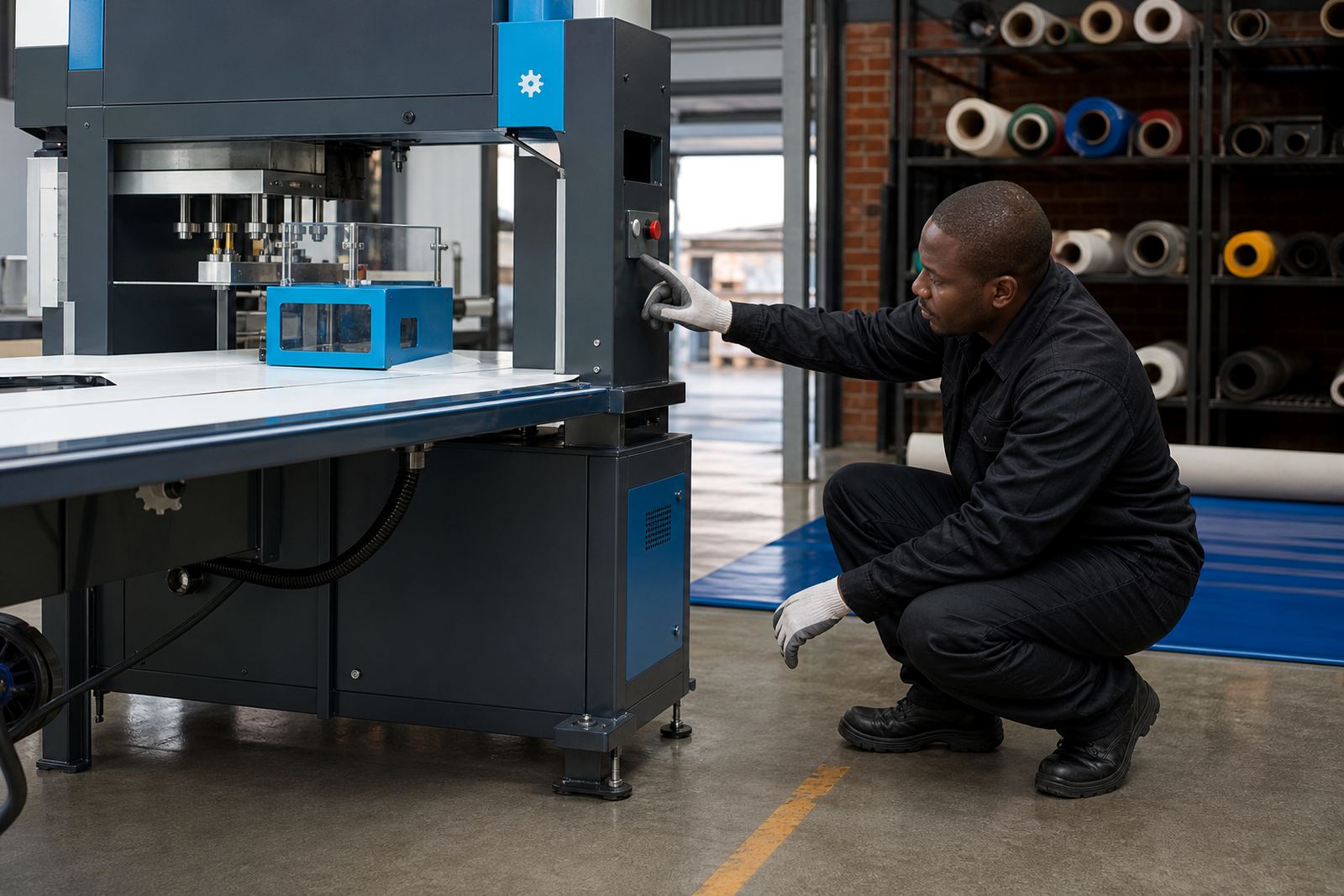
Choosing The Right Weld For The Product On The Table
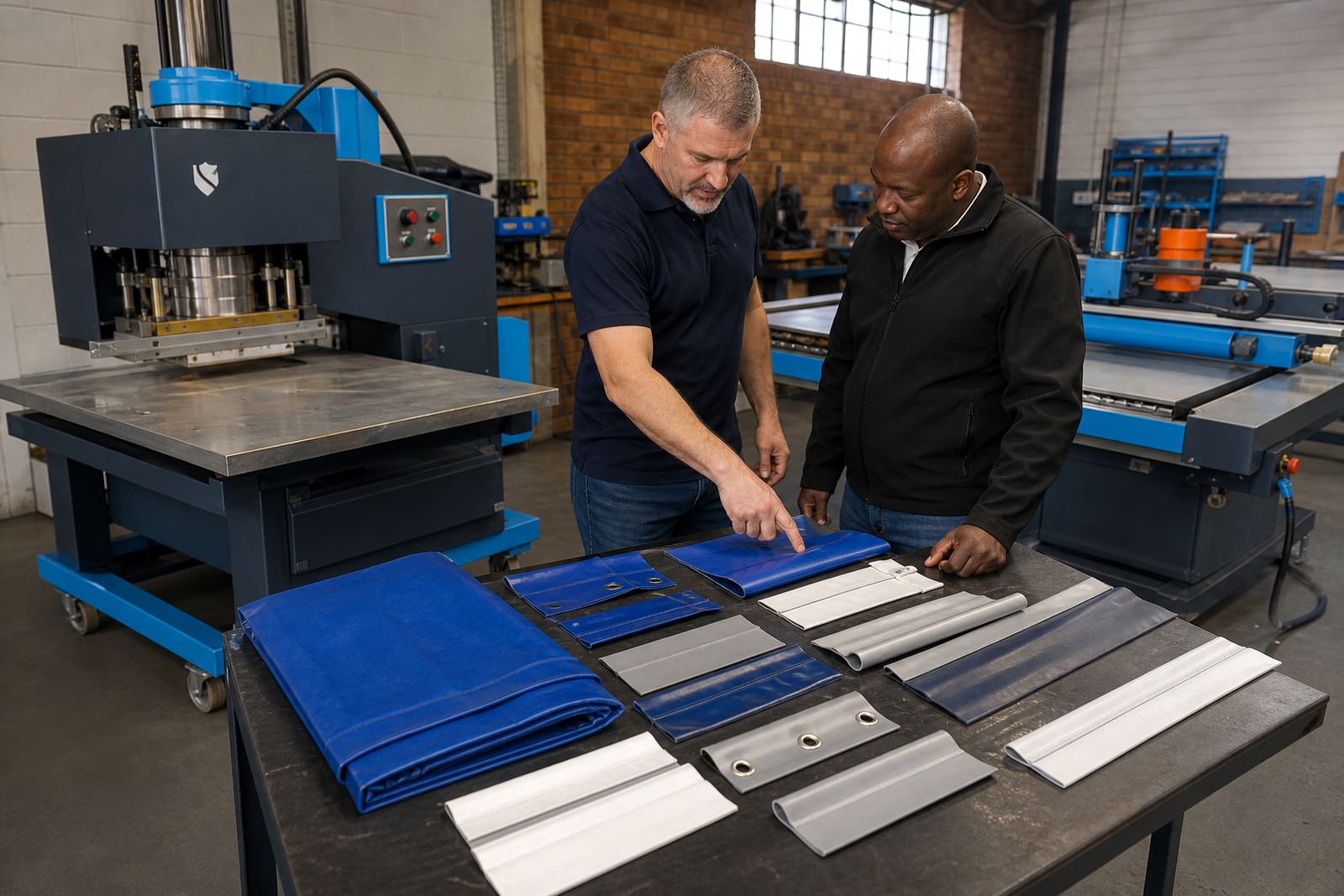
Different PVC products call for different joining methods, and the right choice depends on the fabric, the seam line and the finish you need. High-frequency welding is often selected for repeatable seams on PVC-coated materials, while hot-air and hot-wedge welding suit longer runs on tarpaulins, banners and industrial covers. In some workshops the same machine room has to handle hems, keder strips and eyelet work too, so the equipment mix matters just as much as the output target.
When comparing machines, look at the product range first. A banner workshop that turns out short runs for events will not work the same way as a tarpaulin shop in Germiston or Durban handling larger covers with reinforced edges. The guide pages in this hub break that down in plain terms so supervisors can match the method to the job, not the other way round.
High-Frequency Welding For Clean Repeatable Seams
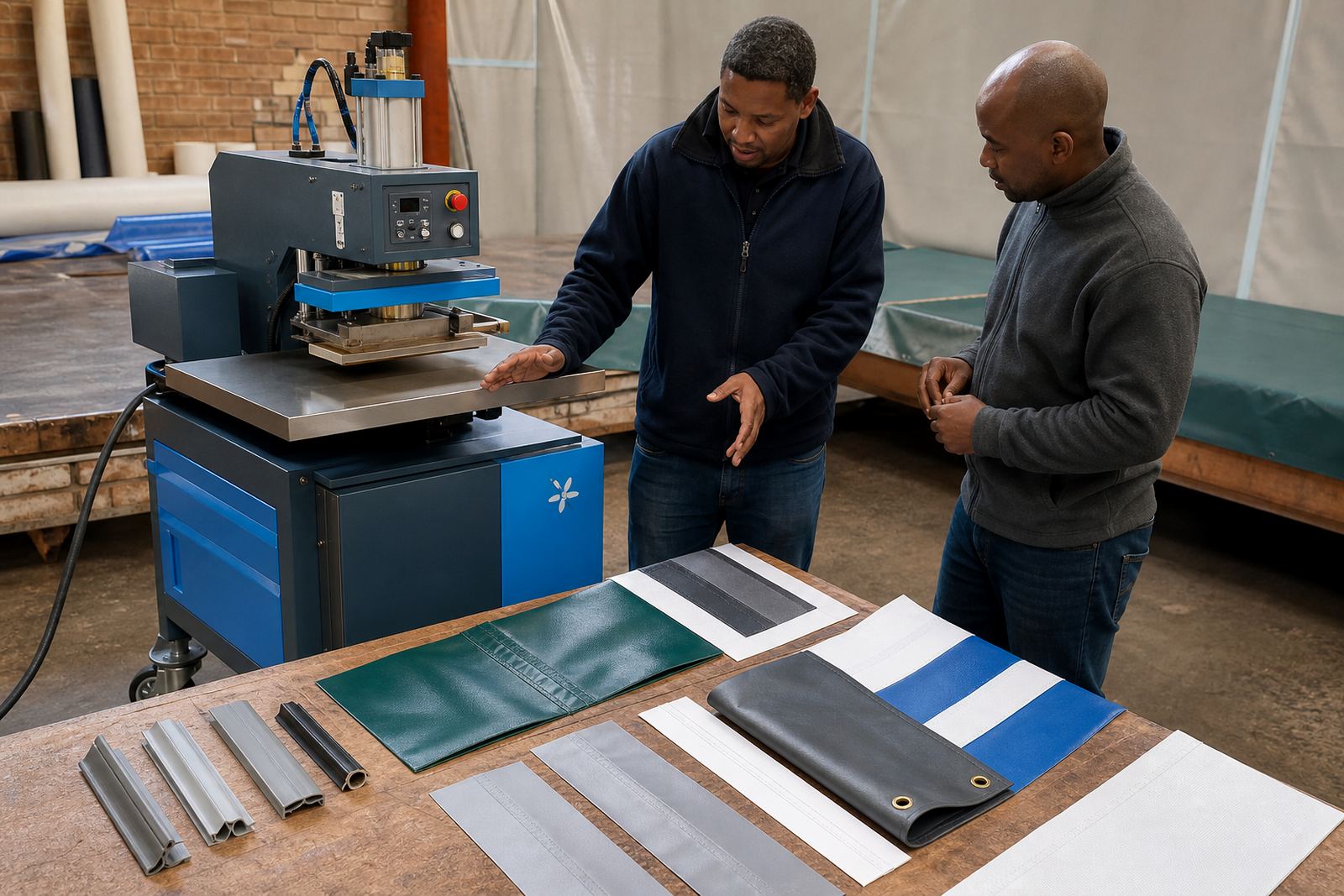
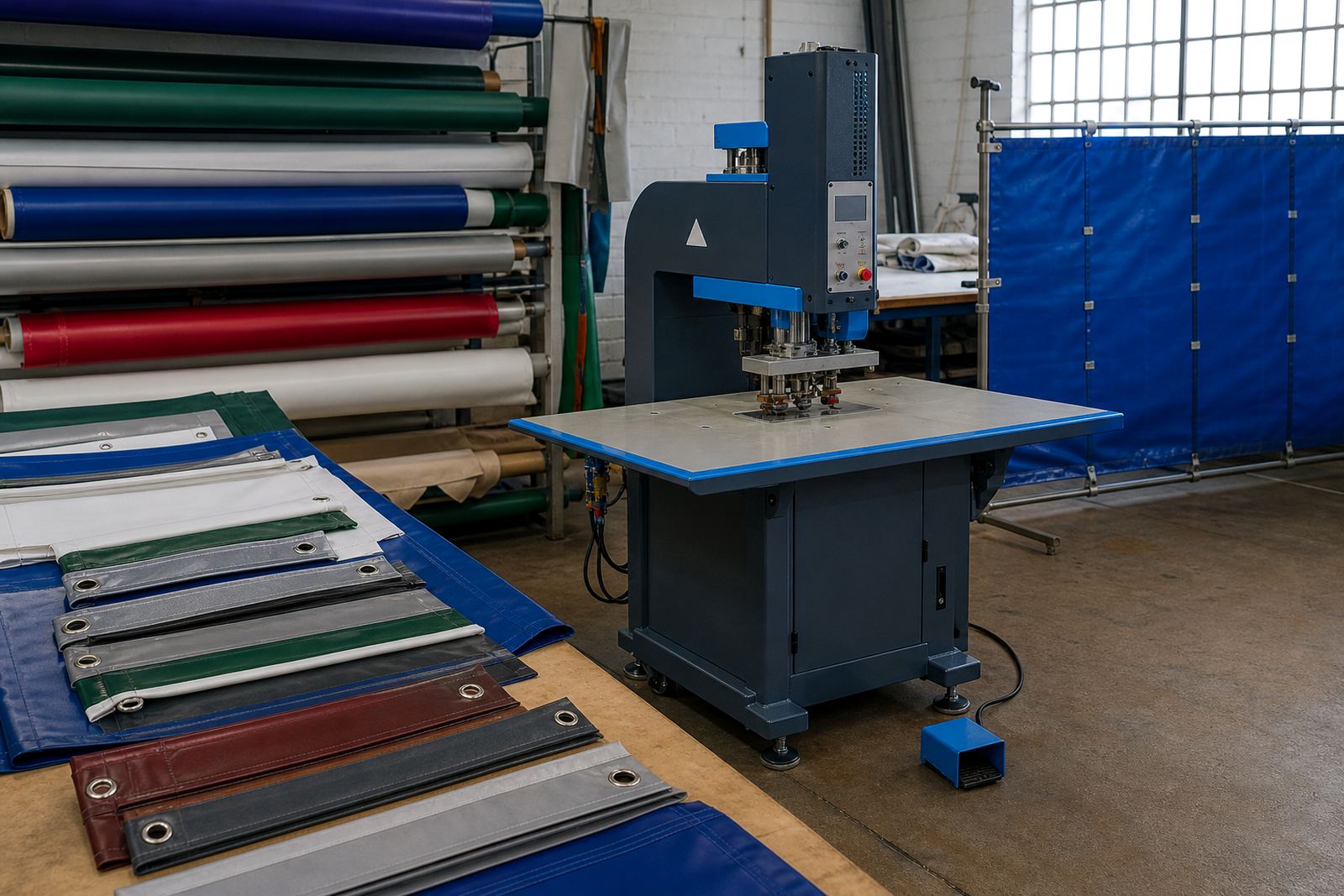
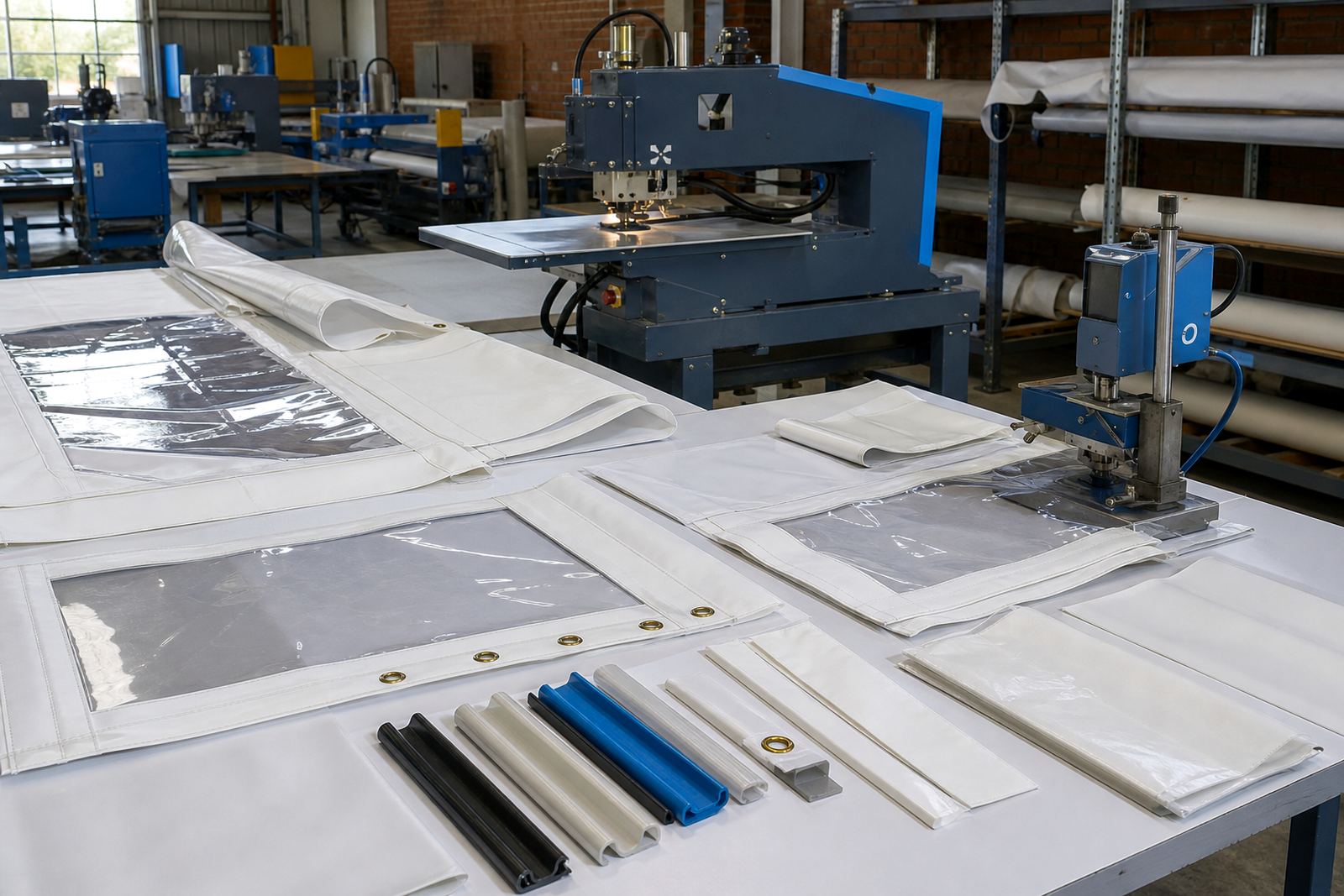
High-frequency, also called radio frequency welding, uses controlled energy to bond compatible PVC-coated fabrics from the inside out. It suits neat straight seams, shaped panels, pockets and sections that need consistent pressure and alignment. For signage and display work, that consistency helps keep the finished edge tidy and presentable.
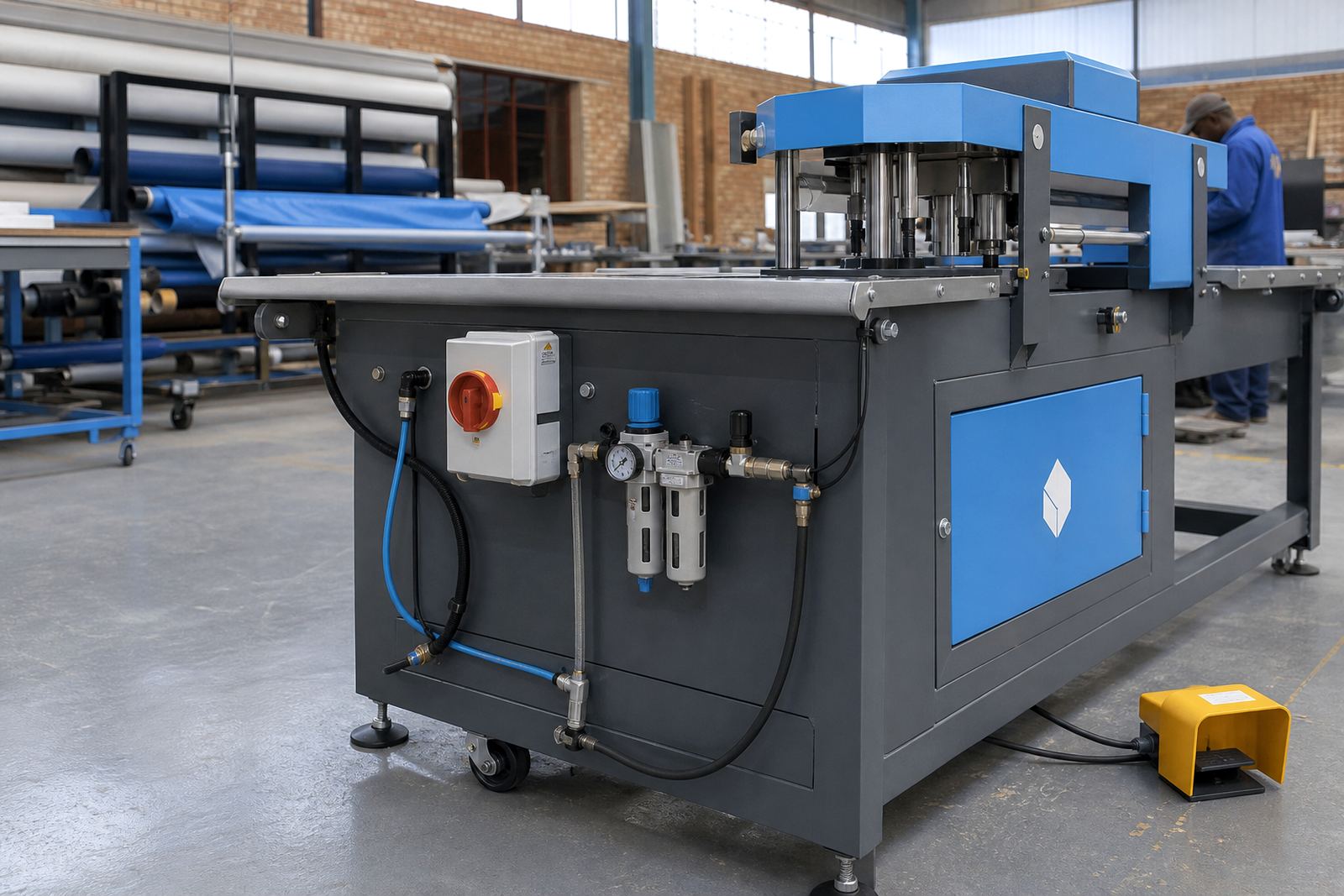
Operators still need to think about seam width, electrode condition and material preparation. A poor overlap, worn tooling or contaminated fabric can leave weak spots at corners and joins. Good guides on this hub explain where HF welding makes sense, where it does not, and how to plan for operator safety around moving parts, heat and clamping points.
Hot-Air And Hot-Wedge Work On Larger Fabric Runs
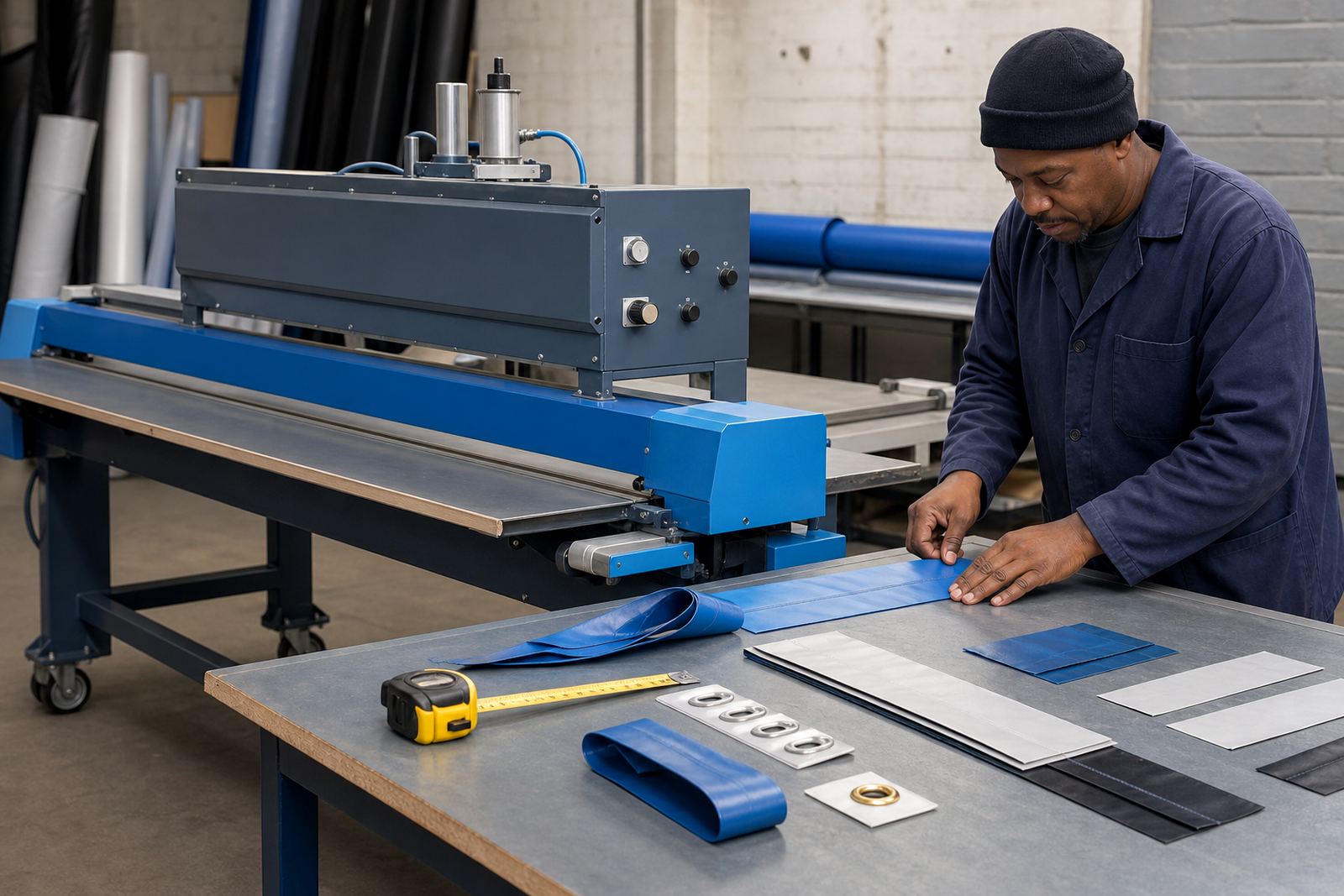
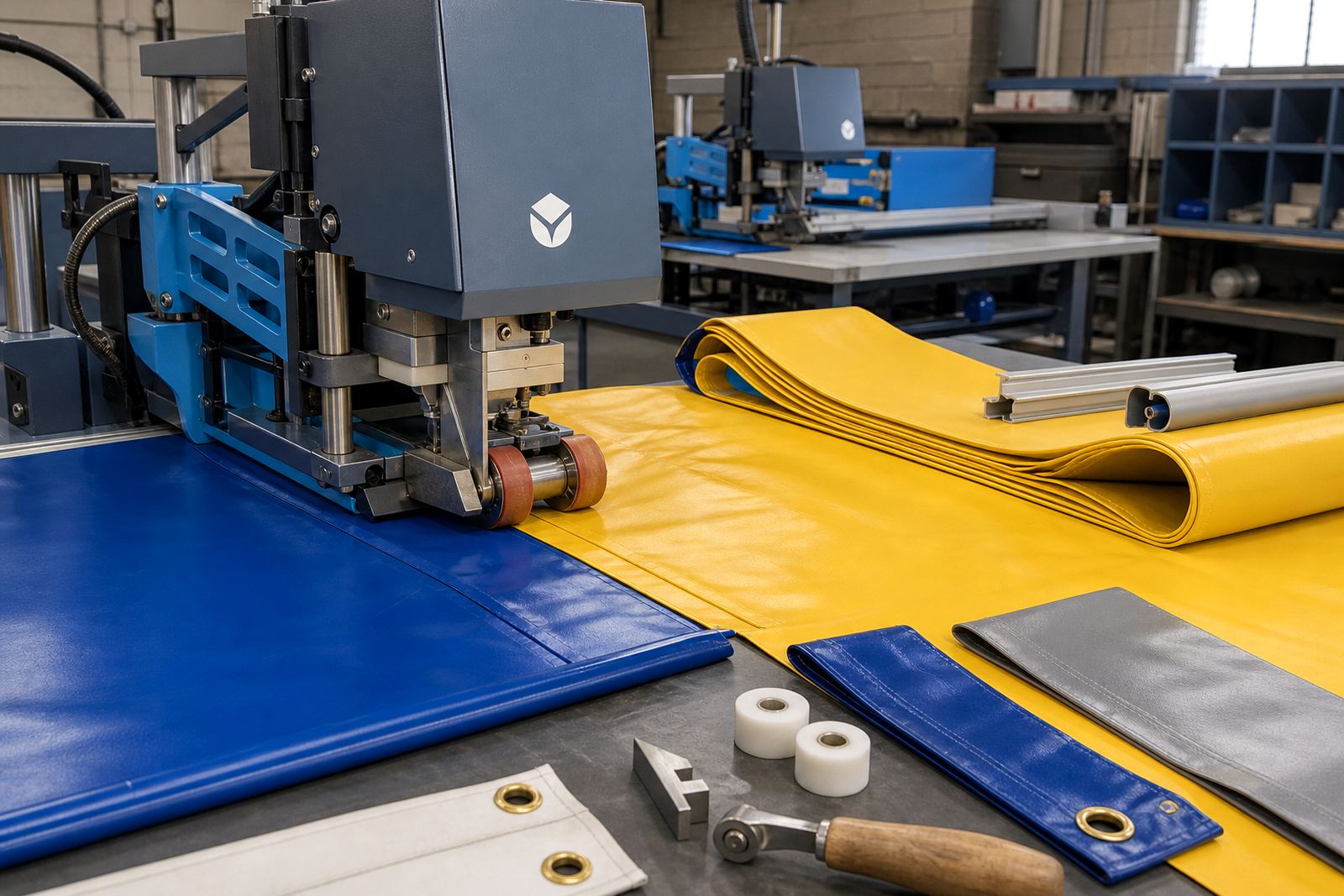
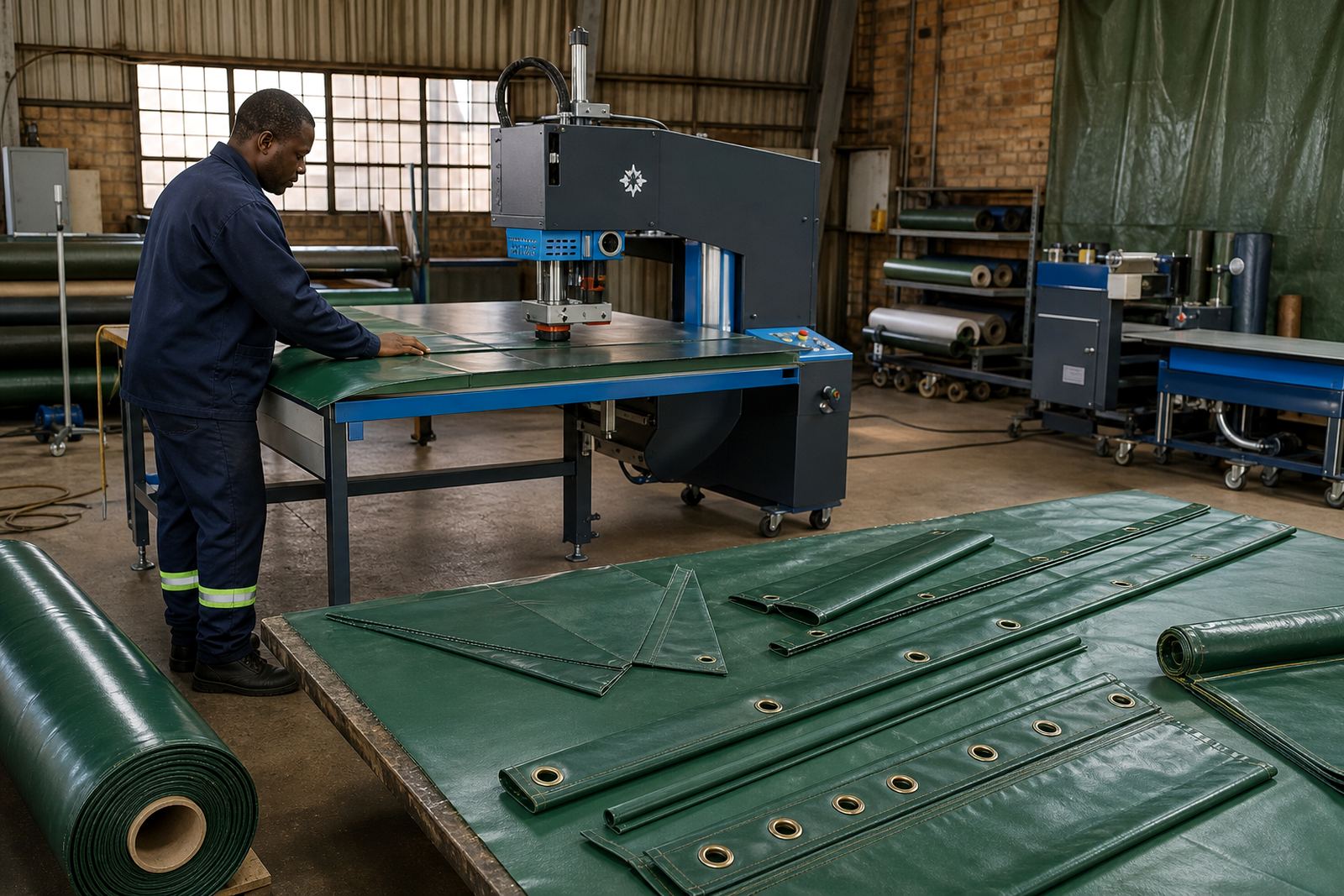
Hot-air and hot-wedge welding are common in shops that make tarpaulins, truck covers and tent sections. These methods are practical for long seams, lap joints and hems where a continuous weld is needed across metres of material. They are also useful where the workshop needs flexibility on width and panel shape.
Machine set-up is important. Temperature, speed, pressure and guide alignment all affect seam strength. In humid coastal areas such as Durban and Cape Town, fabric handling and storage need attention as moisture and dust can affect the finish. Good servicing keeps the heating elements, rollers and guides in working order so the weld stays even across the full length.
Hems, Keder And Eyelet Work In One Workshop Line
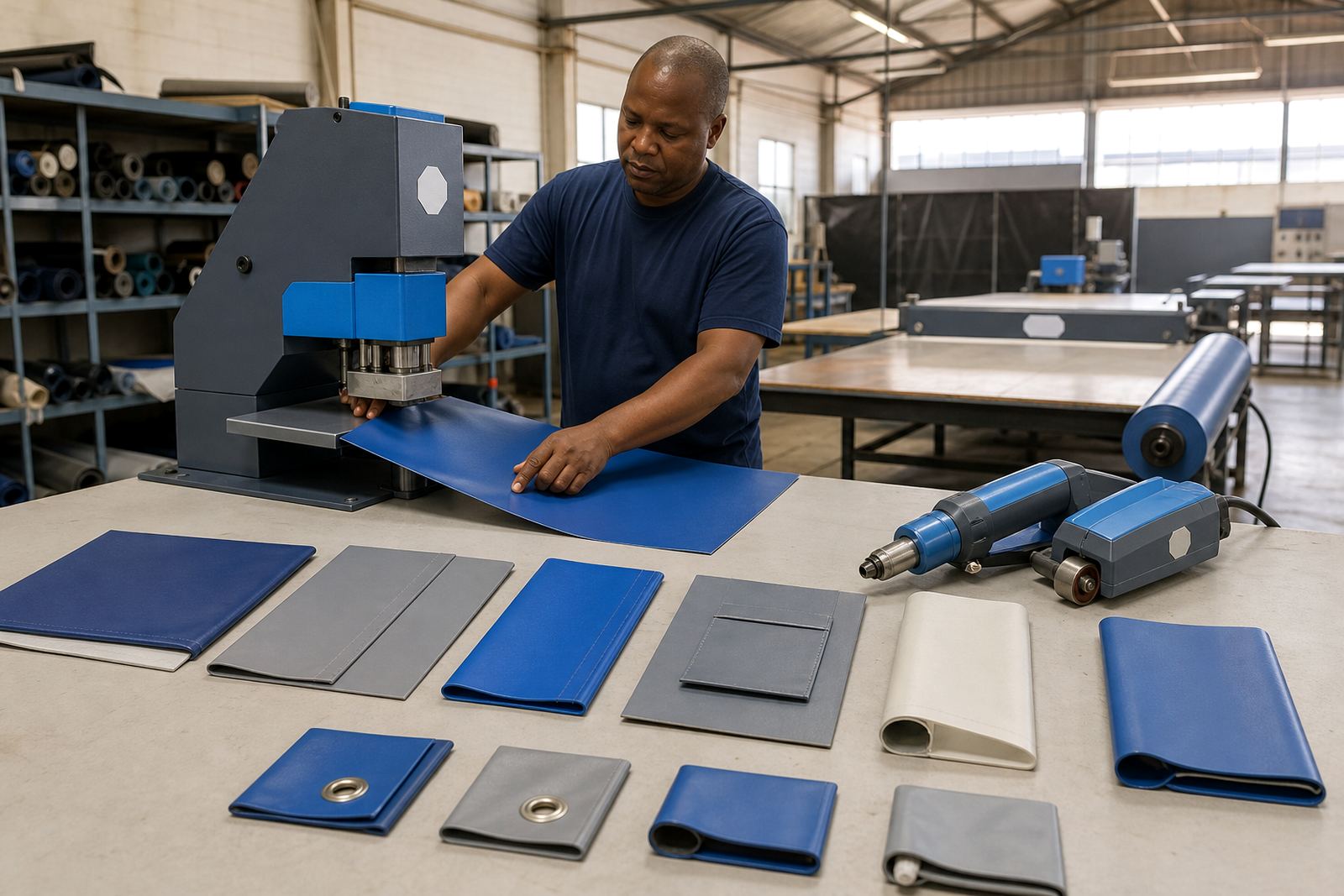
Many South African shops do more than welding alone. They need hems that hold shape, keder edges for track systems, and eyelet work for tying off banners and covers. A workshop guide should show how each process fits into the sequence so materials move through the floor without confusion.
- Hems need straight feed, steady tension and a clean fold line.
- Keder work needs accurate width control so it runs smoothly in its channel.
- Eyelet areas need reinforcement before punching, not after the fact.
- Corner pieces and overlap zones need extra checking where load sits hardest.
These details are what make a product look professional on site, whether it is going into Johannesburg, Pretoria or Bloemfontein.
What A Workshop Needs Before The Machine Arrives
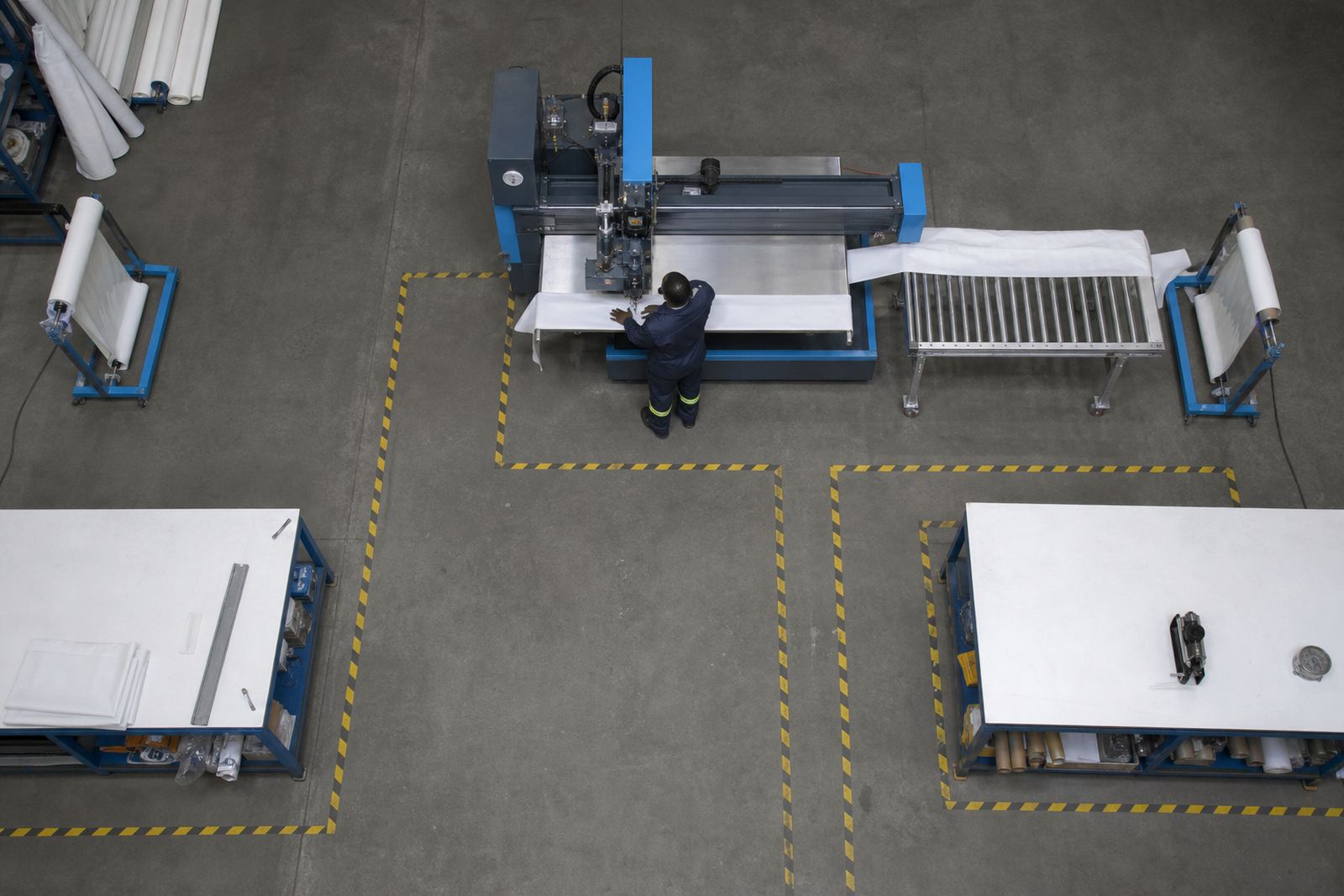
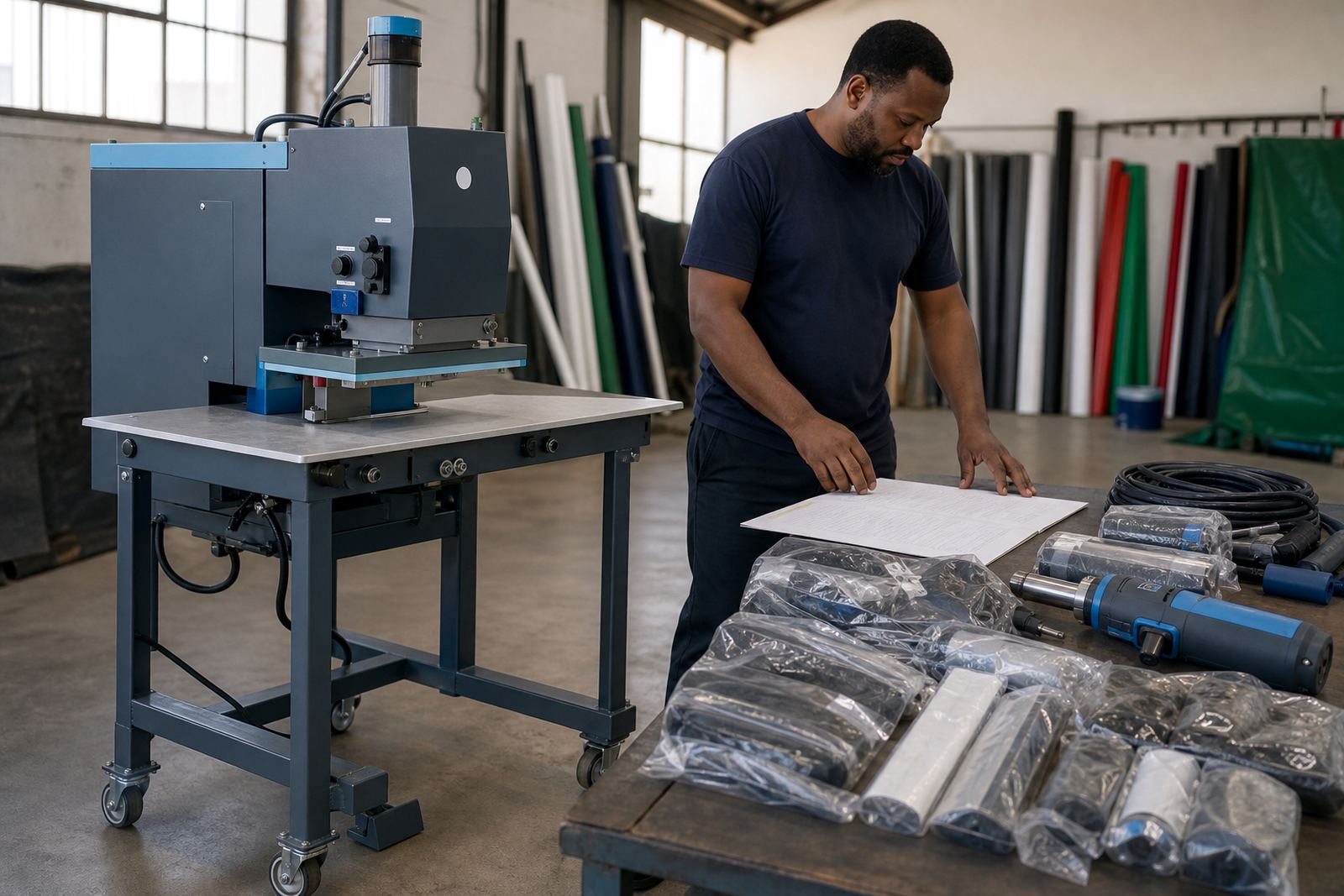
Before buying, it helps to check the actual workshop conditions. Floor space, power supply, material storage and handling flow all shape what equipment will work well. In some premises the main issue is not welding ability at all but how rolls are moved, cut and aligned before welding starts.
- Measure clear working space for the largest panel or roll in the shop.
- Allow room for infeed, outfeed and stacking of finished work.
- Plan for safe operator movement around heated tooling and clamps.
- Keep blades, guides and consumables close enough for efficient changeover.
This kind of planning helps avoid bottlenecks when the workshop is under pressure from seasonal orders or large municipal and commercial jobs.
Servicing That Keeps Seams In Spec
Welders need regular attention if they are expected to hold seam quality over time. Preventive servicing normally covers alignment checks, roller replacement, electrode refurbishment, tooling alignment and fault finding before a minor issue turns into scrap. A clean machine also gives operators a better feel for pressure and feed control.
In a busy plant, the service guide should explain what to inspect weekly, what to log after changeovers and when to call for site support. For high-frequency units, electrode wear and contact consistency matter. For hot-air and hot-wedge machines, heating, drive condition and guides deserve close attention. The aim is steady output, less rework and safer use on the floor.
A Guide Range For South African Buyers
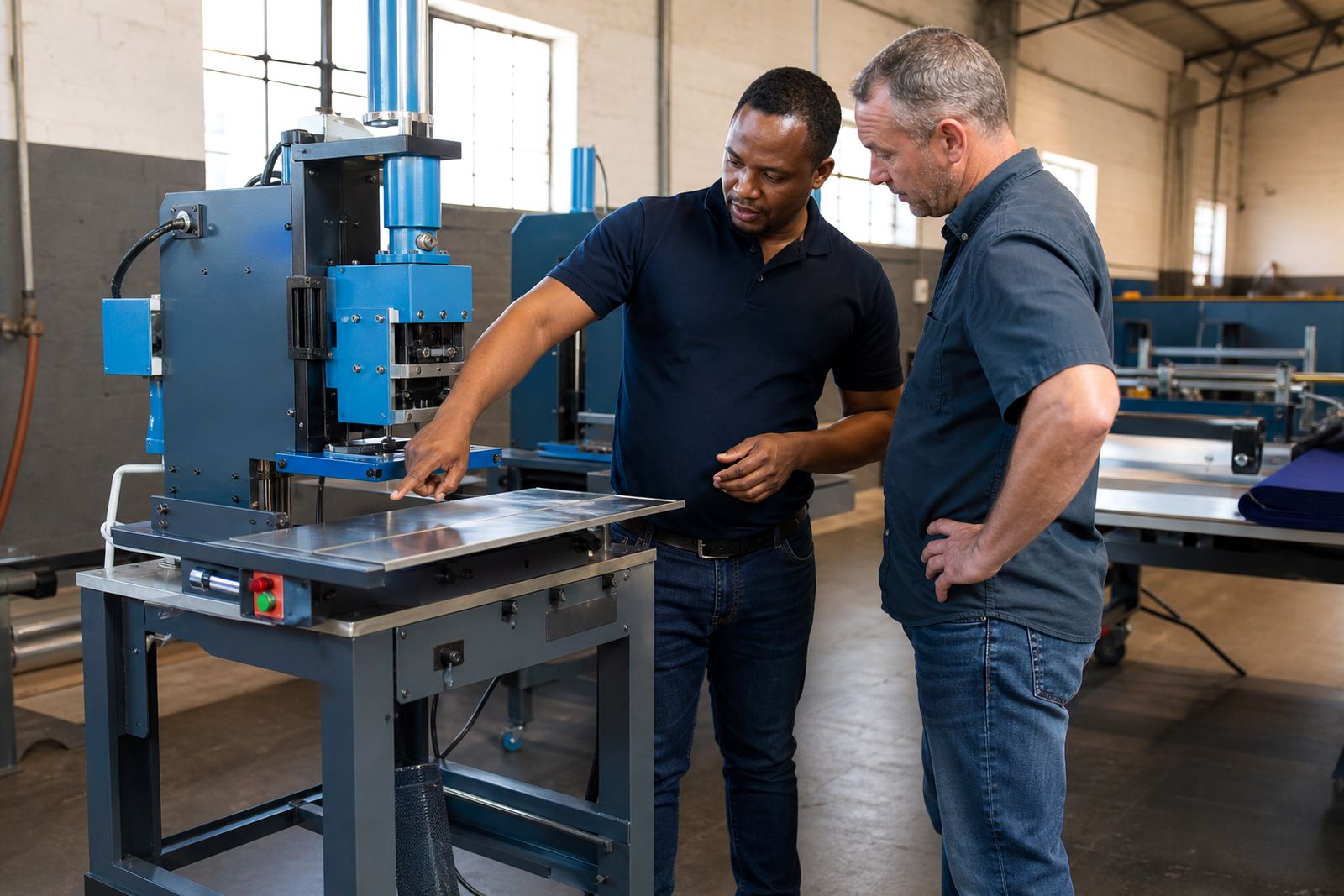
This hub is for supervisors, operators and purchasing teams who need practical guidance before changing equipment or adding a new process to the workshop. The guides speak to the realities of making PVC products across South Africa, from Germiston and Boksburg through to Durban, Cape Town, Pretoria and Bloemfontein.
Each guide focuses on process fit, workshop needs and the working details that affect output every day. Use them to compare seam types, machine layout, operator handling and service needs before the next purchase or upgrade.