Start with the machine load, not the cable run
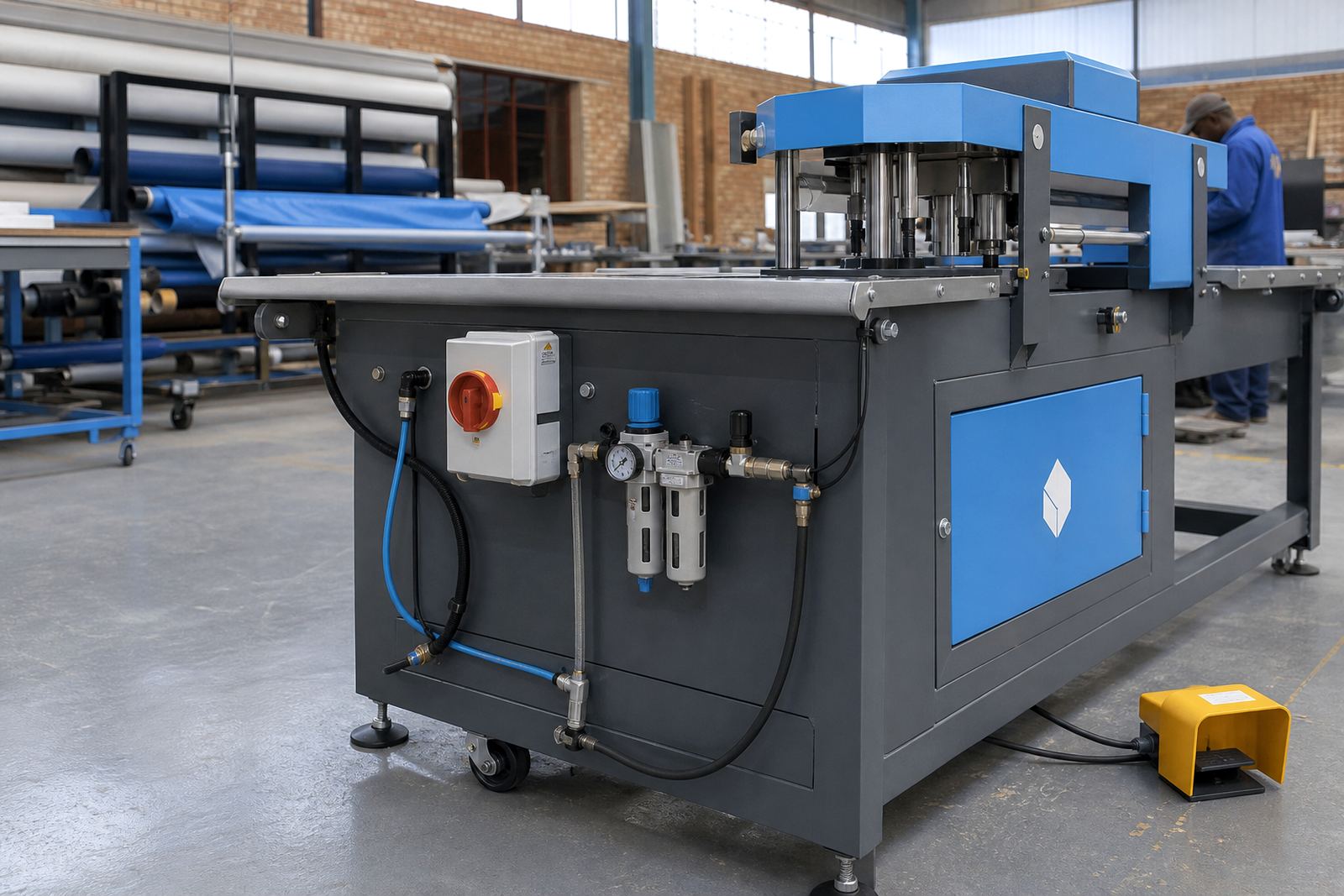
High-frequency welders draw a different kind of load to hot-air and hot-wedge machines, so the first step is to confirm the machine plate data and match it to the workshop supply. A clean power layout helps avoid nuisance trips, uneven heating and long delays when a job needs hems, keder or eyelet work turned around on site. In Germiston and the rest of Ekurhuleni many shops are in older industrial units, so it pays to check the incoming supply, breaker size and earthing before the first weld.
For a practical setup, map the full path from the main board to the machine and leave space for safe access around the welder. Keep extensions short where possible and avoid shared circuits with presses, compressors or office equipment. Small things matter here, a loose connection or tired socket can show up later as poor seam quality or random machine faults.
- Confirm machine voltage and phase before installation
- Check earth continuity and breaker capacity
- Keep cable runs neat and off the floor where forklifts pass
- Separate welding equipment from heavy start-up loads
Compressed air for clamps, cylinders and clean handling
Air support is often needed for clamping, pressing and auxiliary machine functions on PVC-coated fabric lines. If the workshop uses pneumatic cylinders or air-assisted fixtures, the supply must be dry and steady. Moisture in the line can mark fabric, affect movement and make fine seam control harder, especially on longer runs where banners, tents or edge reinforcements need repeated feeding through the machine.
In coastal areas such as Durban or Cape Town, humid air can carry more water into the line, so a proper dryer, drains and routine filter checks are worth the effort. Even inland, a compressor that is undersized will cycle too often and give uneven pressure, which shows up in poor weld consistency. The operator should be able to watch the gauge without leaving the working position.
- Size the compressor for the actual duty cycle, not the minimum guess
- Fit water traps, drains and serviceable filters
- Check hose condition and coupling security
- Keep air lines away from heat and sharp fabric edges
Heat extraction and workshop air movement
Hot-air and hot-wedge welding release heat into the work area, and even when the process is clean the room can get uncomfortable quickly. Good extraction removes warm air, fumes from heated PVC coatings and airborne dust from cutting and finishing. This is especially useful where eyelets are punched nearby or where offcuts build up around the machine table.
The goal is not a strong blast across the weld line, because that can cool the seam too fast or move light banner stock around. Instead, use controlled extraction that clears the air above the work zone and keeps the operator comfortable. High-frequency welding also benefits from a tidy, well-ventilated space because it improves visibility and reduces the chance of foreign material getting trapped in the seam.
- Place extraction so it pulls heat away without disturbing the weld line
- Keep cutting waste and trimmings cleared from under the table
- Do not let ducting block machine access or emergency movement
- Check airflow in summer, especially in enclosed workshops
Layout for seams, hems, keder and eyelet work
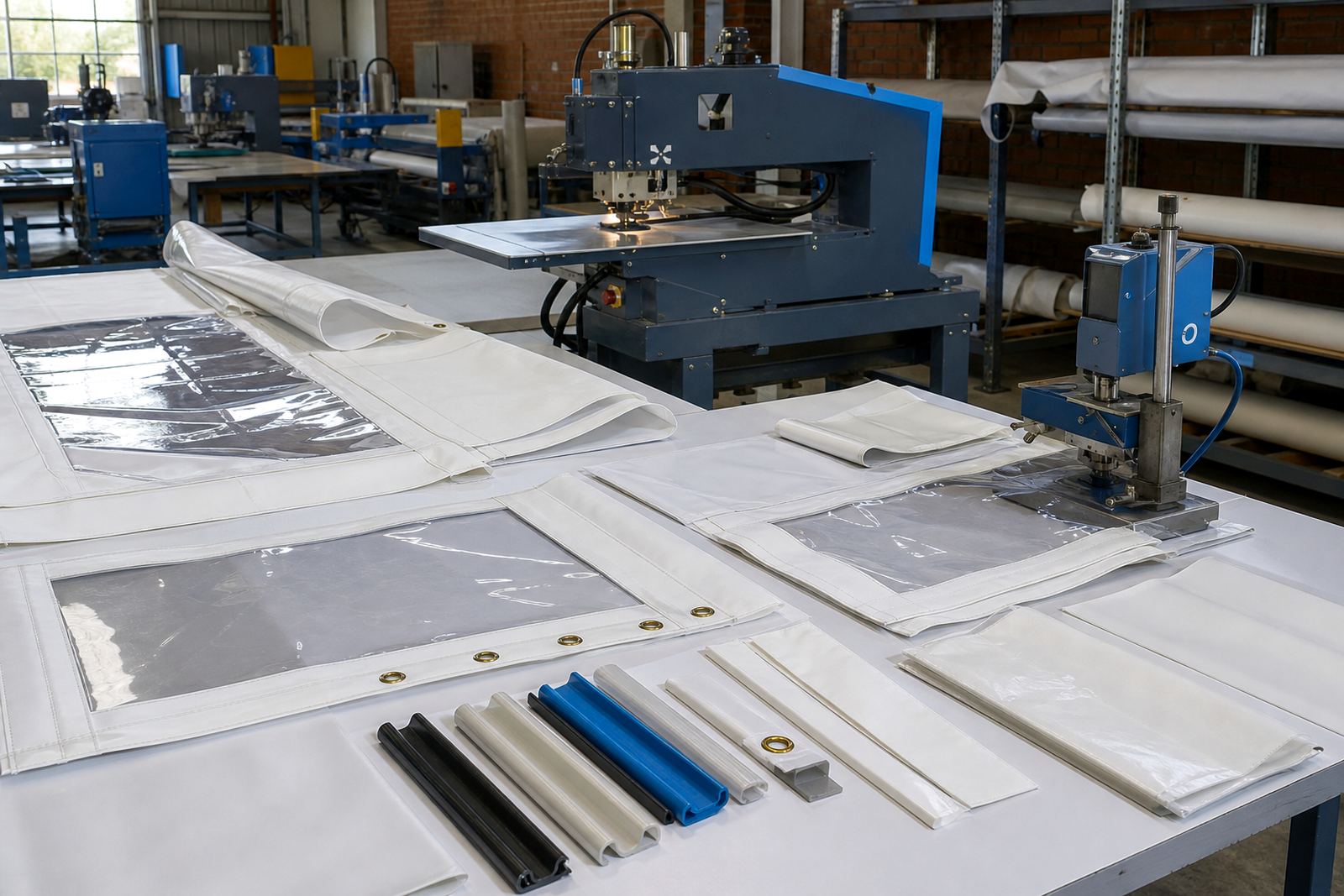
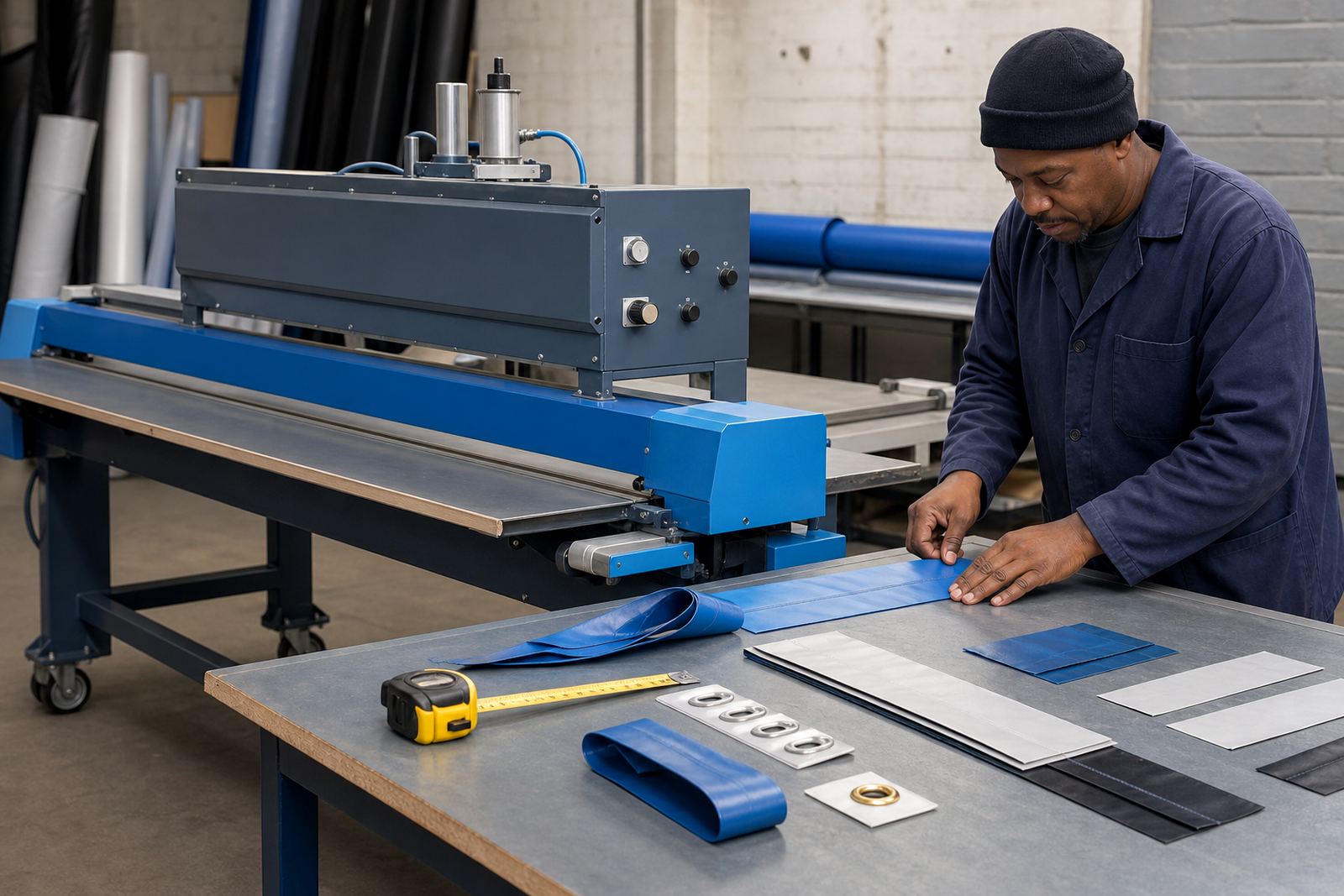
Power and air planning should follow the work that is actually being produced. A shop welding tarpaulins may need straight hems, pocket seams and reinforced corners, while a banner maker may need cleaner straight runs and repeatable eyelet spacing. Tent work adds keder strips, pole sleeves and heavier joins that need stable feed and room for handling larger panels.
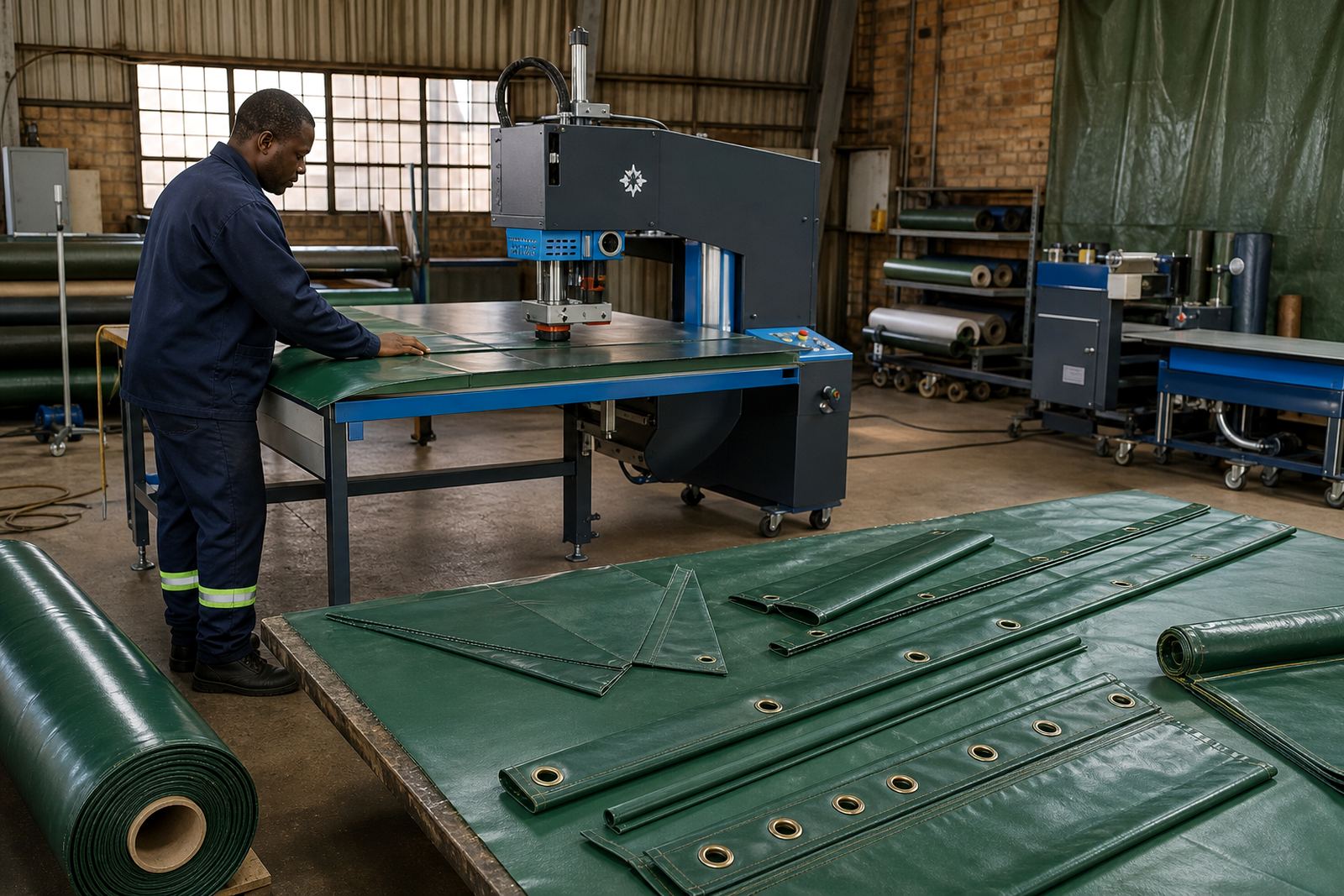
Set the machine so the operator can move material without stretching or twisting it. If the welder sits too close to storage, waste bins or a roll rack, the fabric spends more time fighting the layout than feeding through the seam path. That is where corners get misaligned and eyelets land off mark.
- Leave enough infeed and outfeed space for long panels
- Allow room for rolls, finished stock and offcut bins
- Keep marking, punching and welding stations in a practical order
- Plan for both straight work and heavy corner reinforcements
Operator safety around mains, heat and moving parts
Safe operation begins with clear access to isolators, guards and the footpath around the machine. Operators should know where the emergency stop is, how to isolate power, and how to keep hands clear of rollers and heated zones. Gloves, eye protection and suitable footwear help, but the bigger gain comes from a neat station with no loose leads or scrap on the floor.
Training must cover the real work at hand. That includes feeding PVC-coated fabrics, changing tooling, checking seam alignment and handling hot components after a run. A rushed shift can lead to burns, pinched fingers or damaged material, so the safer setup is the one that keeps the operator in control and the machine easy to read.
- Test emergency stops during commissioning and after servicing
- Keep guards, covers and cables in place during use
- Store tools where they do not end up on the weld path
- Brief new operators on shut-down and isolation steps
Servicing that keeps weld quality steady
Machine servicing should follow the wear points that affect seam quality first. Electrodes, rollers, pressure faces, heating elements and alignment points all need inspection before they start causing uneven seams or poor bonding. On high-frequency equipment, small alignment faults can show up as weak edges or marks in the weld zone. On hot-air and hot-wedge machines, worn rollers or dirty nozzles can create inconsistent heat transfer.
A good servicing plan also tracks the workshop environment. Dust, moisture and vibration from nearby equipment all shorten component life. In Germiston and across South Africa, PVCWelder supports installation, commissioning, operator training, preventive servicing, fault finding, tooling alignment, electrode refurbishment, roller replacement, parts supply, seam testing, site callouts and service plans so workshops can keep production steady.
- Inspect wear parts on a fixed schedule
- Keep a log of faults, adjustments and replaced parts
- Test seam quality after servicing and before production runs
- Store critical spares for the machines in use
Pre-commissioning checklist for a new workshop bay
Before a welder is switched on, walk the bay as if you were the operator doing the first job. Check power, compressed air, extraction and material flow in one pass. That saves time later and makes it easier to spot a missing isolator, a weak air line or a cable path that sits exactly where a roll of coated fabric needs to move.
For tarpaulin, banner and tent makers serving Johannesburg, Pretoria, Durban, Cape Town and Bloemfontein, the best result is a bay that can handle daily production without constant rework. A measured setup makes the machine easier to use and easier to service, which is what keeps the seam quality steady.
- Verify supply voltage, breaker size and earthing
- Confirm air pressure, filtration and drainage
- Check extraction, lighting and floor access around the machine
- Run a test seam on the actual material before production starts