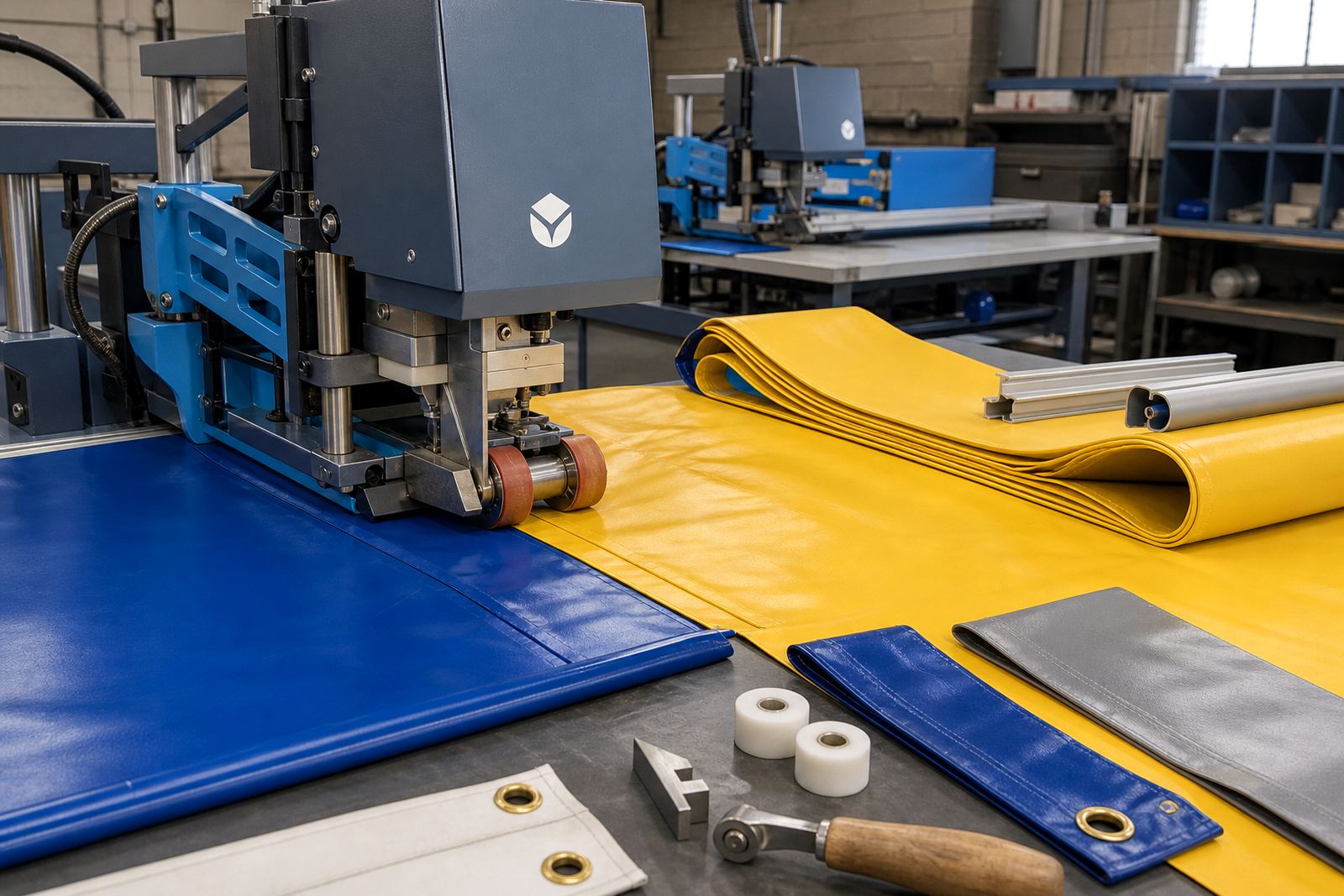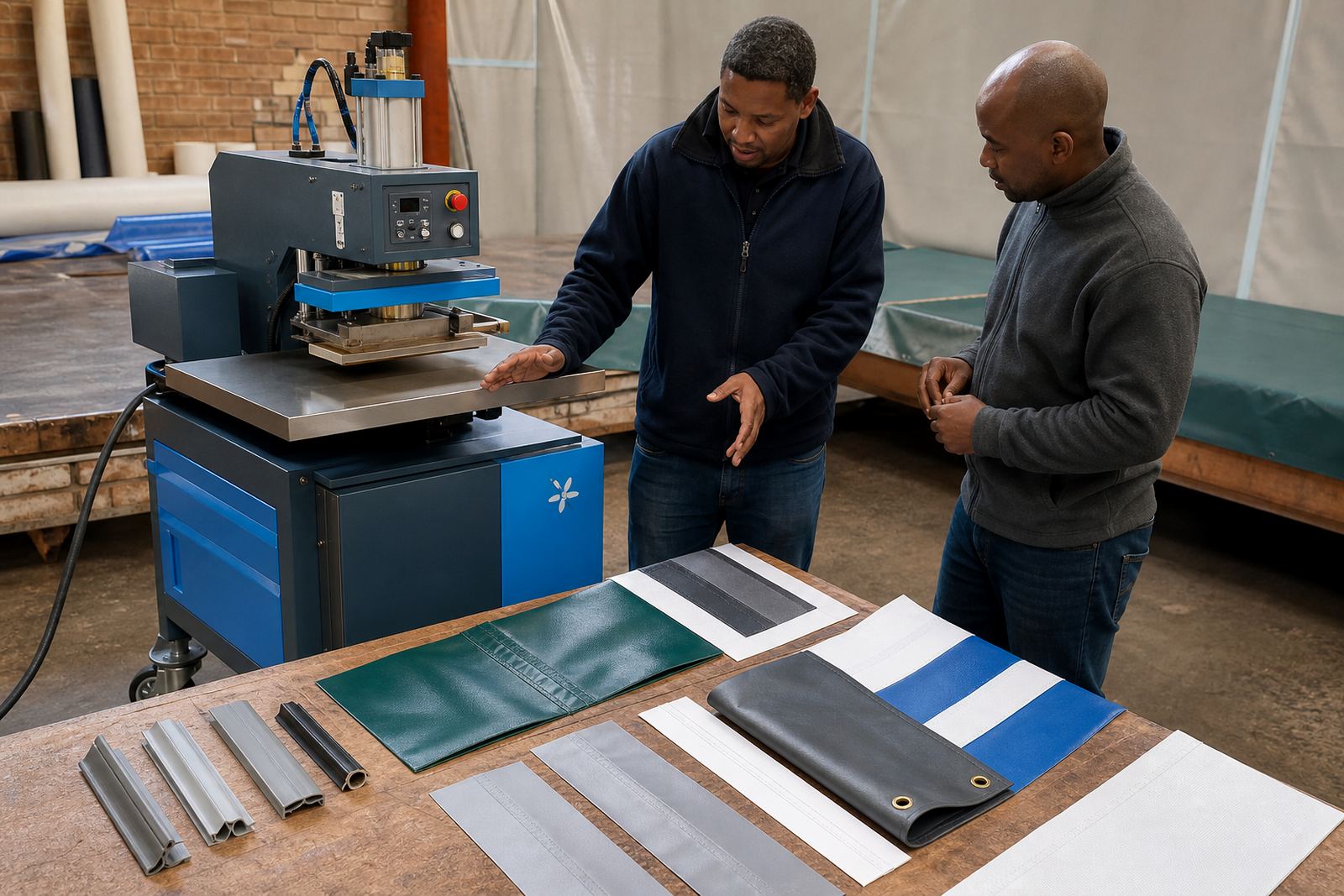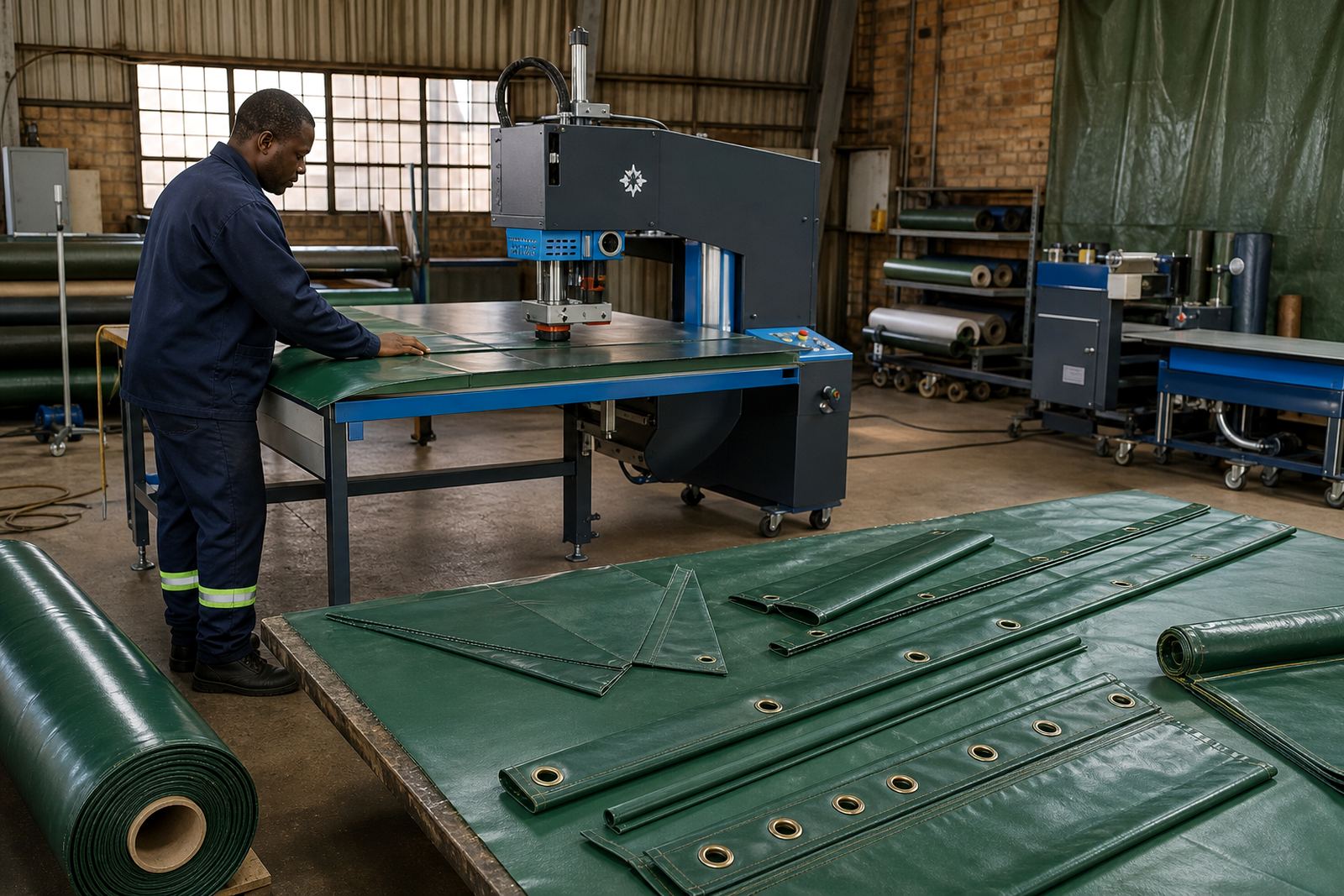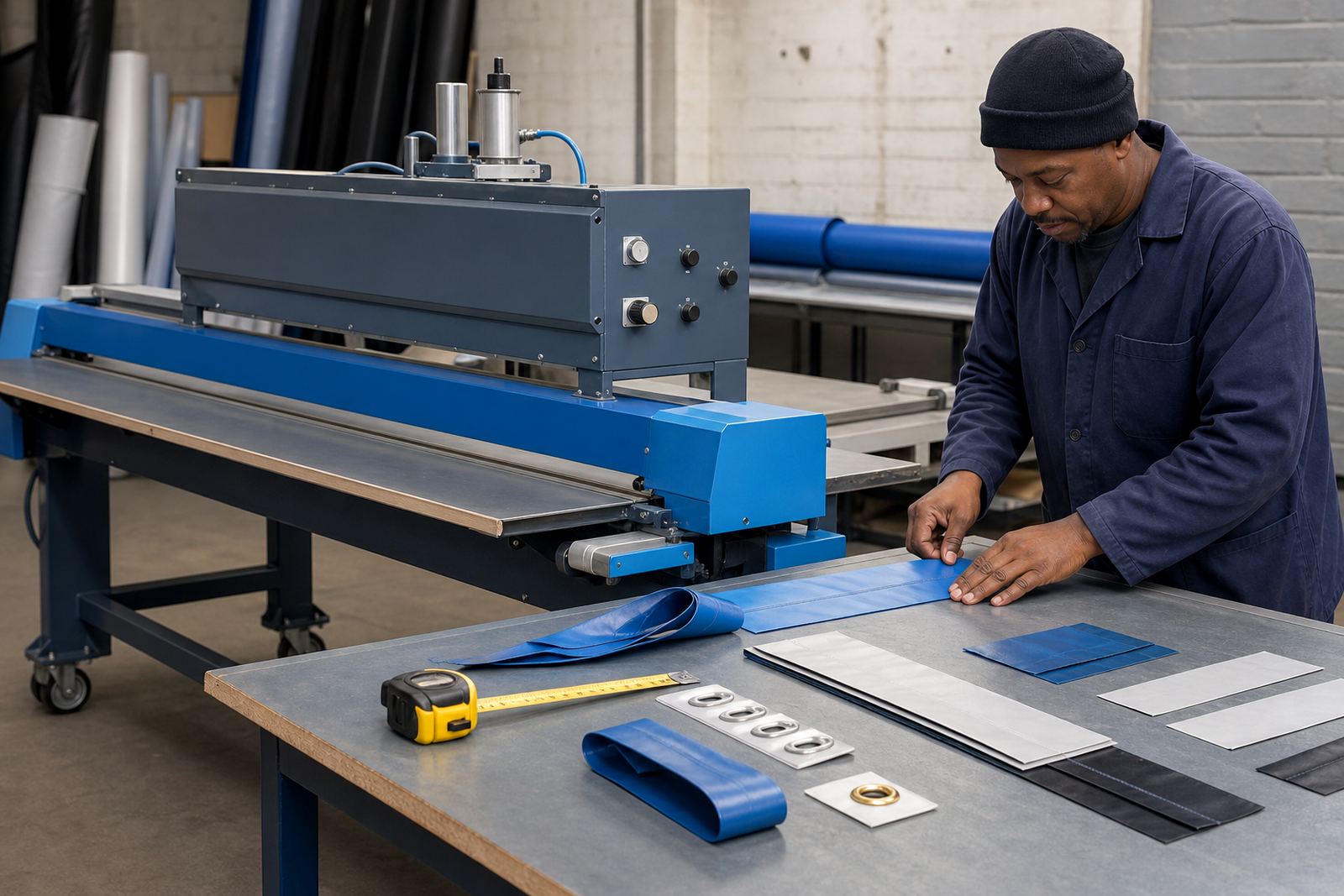
Start with the seam work you do most often
If your day is mostly banner panels, tarpaulins, tent walls or covers with long runs, choose a hot-air machine that suits straight seam production first. A unit built for wide curves and short patches can still weld, but it may slow you down on metre after metre of overlap. For straight work, the feed system, guide rails and temperature control matter more than flashy extras.
Look closely at the material mix you handle. PVC-coated fabric, banner material and heavier tarpaulin grades all react differently to heat. In Durban’s humidity or Cape Town’s coastal air, the surface can feel different by the afternoon, so the machine needs enough control to keep the weld consistent not just in the morning but through the full shift.
- Match the machine to the fabric thickness you use most often.
- Check whether you need overlap seams, hems or keder attachment on the same unit.
- Ask how easily the machine handles long, uninterrupted seam runs.
- Confirm that guides and rollers keep the edge straight over distance.
Heat control must stay steady over long runs
Hot-air welding depends on even heat, even pressure and even speed. On long seams, small changes show up quickly as weak bonding, shinier burn marks or a wavy seam line. A good machine keeps the temperature stable when the operator speeds up, slows down or pauses at a joint. That is where proper controls and well set heater components pay for themselves.
Do not judge a machine only by how hot it can get. What matters is how accurately it holds the set point, how fast it recovers after a pause and how the air flow spreads across the nozzle. If the heat is too narrow, one edge bonds and the other lifts. If it is too wide, the coating can soften too much and leave a messy seam.
- Choose clear temperature control that is easy to read and adjust.
- Check the nozzle design for even heat distribution across the seam width.
- Look for smooth speed control so the weld line stays consistent.
- Ask how the machine performs on longer seams after several hours of use.
Guide the material, do not fight it
Long straight work is easier when the machine helps the operator keep the edge true. Feed rollers, side guides and table support all reduce drift. If the material starts creeping left or right, the seam can narrow on one side and open on the other, especially on wider banners or tarps. A good setup lets the operator watch the weld, not constantly chase the fabric.
For hemming and reinforcement, the machine should handle a folded edge without fighting the bulk. On keder work, the feed path must keep the cord seated correctly while the PVC-coated fabric stays flat. Eyelet strips are a separate task, but if your workflow includes both seams and finishing, it helps when the welder is compatible with tidy prep and repeatable alignment. Small handling errors show up quickly on long straight lines, so the machine needs to support neat feeding rather than force it.
- Check that the machine supports the width of your usual panels.
- Look for adjustable guides for hems, overlaps and corded edges.
- Test how the fabric tracks when the roll is nearly full or nearly empty.
- Make sure the operator can see the seam line clearly during production.
Pick the seam type before you pick the machine
Different seam types place different demands on hot-air welding. A standard overlap seam is common for banners and tarpaulins, but hems, reinforcement strips and keder all need cleaner control and more consistency. If you produce tent components or event covers, you may need to switch between several seam styles in the same day. The right machine should handle that without constant changeover.
When comparing machines, ask how they handle the specific finish you need. A hem requires folded control and even heat. Keder work needs straight feed and reliable bond strength along the cord. Eyelet reinforcement is often done after welding, so the machine should leave a flat, neat surface that is ready for punching and fitting. A strong seam starts with a machine that suits the finish, not only the fabric.
- List your top three seam types before you buy.
- Check whether the machine can shift between seam widths without major rework.
- Confirm that the weld is neat enough for eyelets, patches and final trimming.
- Ask about seam testing on the exact material you use most often.
Safety and servicing should be built into the choice
Hot-air welders run with heat, moving parts and sharp fabric edges, so operator safety matters from day one. A sensible machine layout keeps hands away from the hot zone and gives the operator room to guide the work comfortably. In a busy Germiston workshop, that also means clear access around the unit for loading, trimming and inspection.
Servicing is just as important as purchase. Dust, adhesive residue and worn rollers affect seam quality long before a machine stops completely. Ask how the heater, rollers, guides and drive parts are cleaned and checked. Preventive servicing keeps the weld consistent and reduces the chances of a costly stop during a busy order run. A machine that is easy to inspect is usually easier to keep in line.
- Check that guards, controls and work areas are easy to reach and understand.
- Ask how often rollers, heaters and guides need inspection.
- Look for parts that can be replaced without disrupting the whole line.
- Plan for operator training, not only machine handover.
A practical buying check before you commit
Before you choose a hot-air welder, run a proper workshop check. Use your own material samples and your own seam types, not only a demonstration piece. A machine that looks quick on a short sample may struggle on a 20 metre seam. Long straight work reveals flaws in tracking, heat control and pressure very quickly.
Use a plain checklist and test the points that affect daily production. If you work across Johannesburg, Pretoria, Durban, Cape Town or Bloemfontein, also think about service access and parts support. A machine that can be installed, commissioned and maintained properly will save time on the floor. The best choice is the one that keeps your seams clean and your team steady, with less rework and fewer delays.
- Test seam strength after cooling, not only while the weld is warm.
- Check for uniform appearance along the full length of the seam.
- Watch whether the operator can keep a straight line without strain.
- Confirm that training, servicing and parts support are available for the model you choose.