Where Hot-Wedge Fits Best on Coated Fabric Jobs
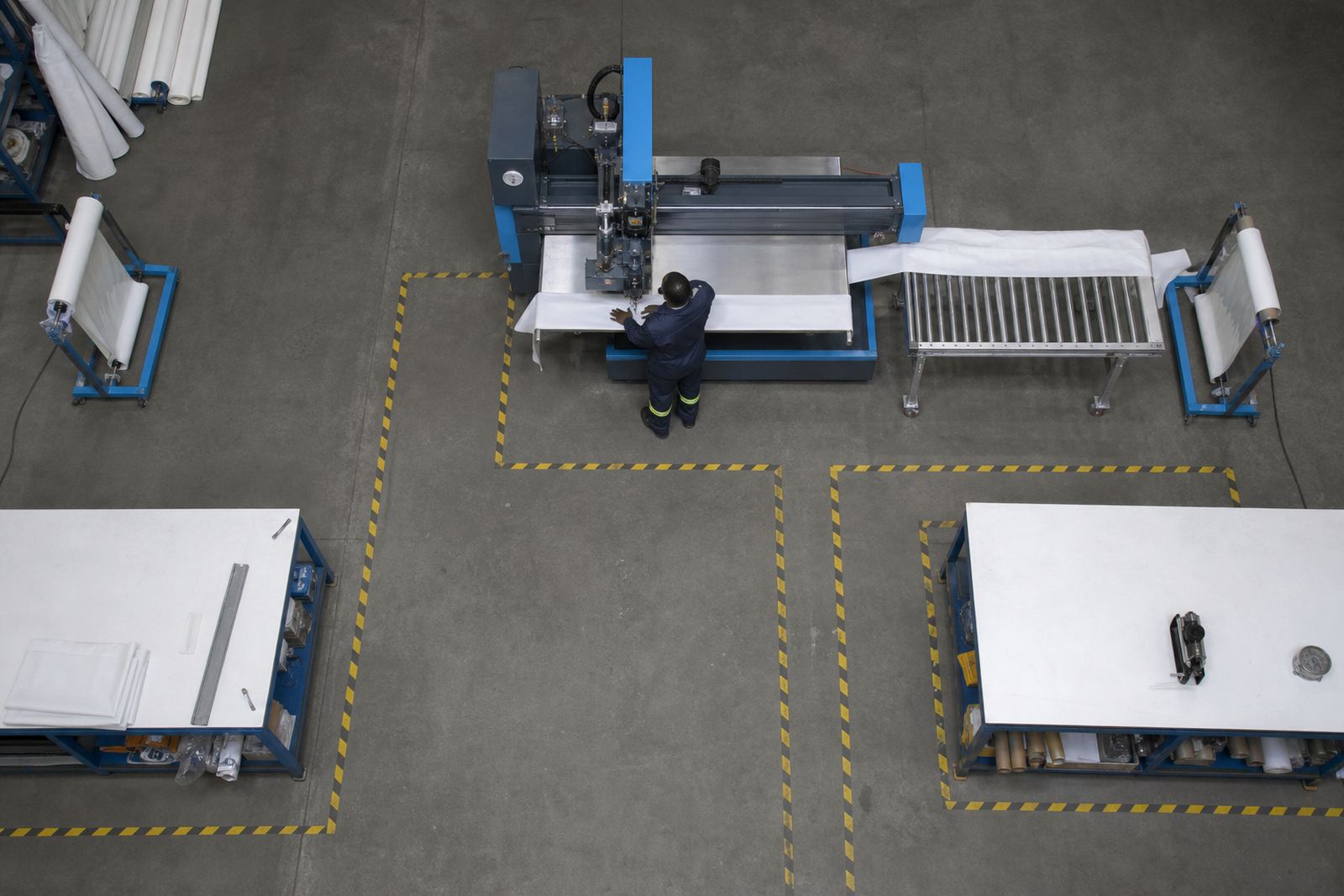
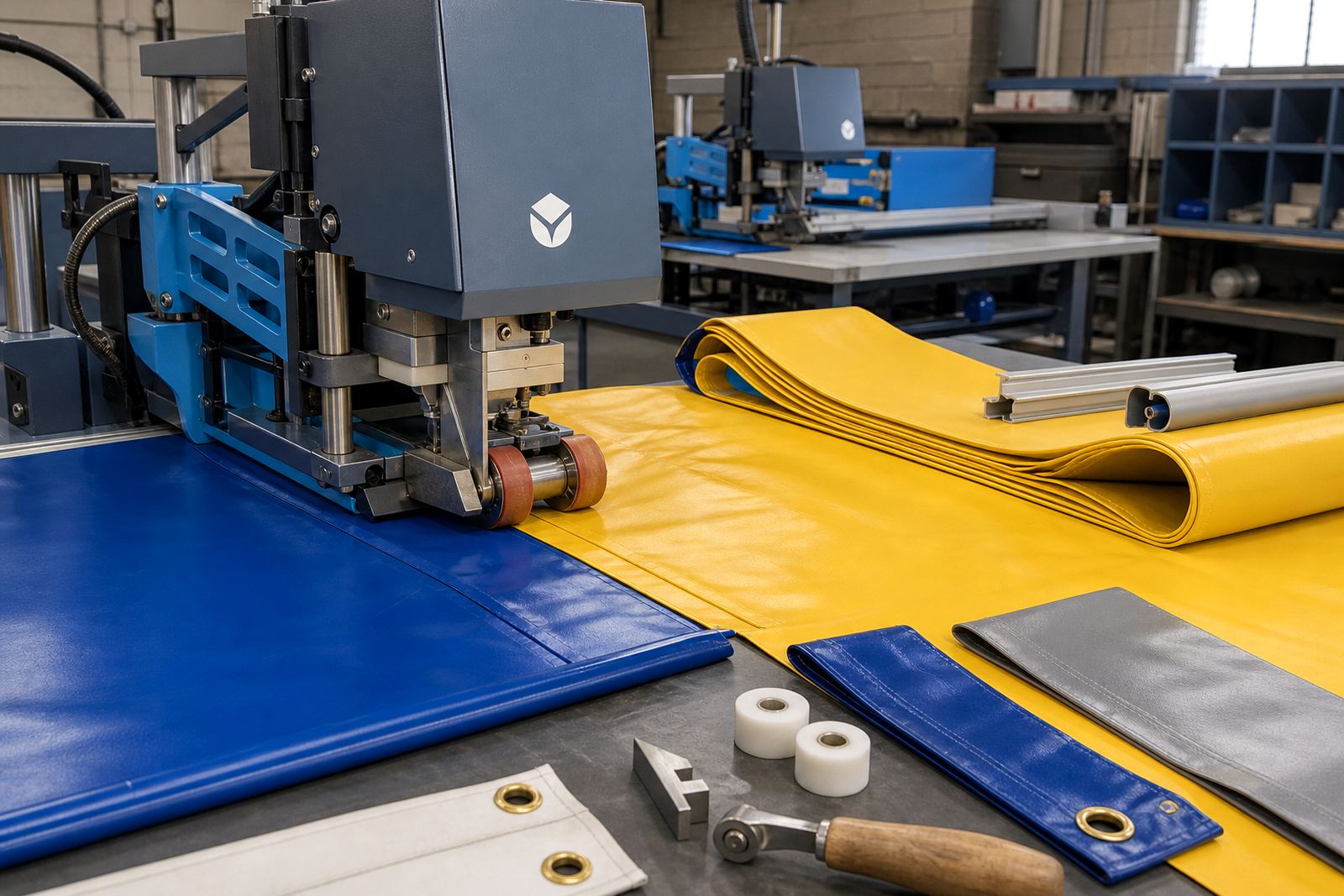
Hot-wedge welding is used where two layers of PVC-coated fabric need a neat overlap seam that can be repeated over long runs. The heated wedge sits between the layers and softens the coating so the rollers can press the materials together in a straight, even line. It is a practical choice for tarpaulin side seams, panel joins, long banner runs and tent sections that need consistent seam width.
On the shop floor, it helps when the material is being made in metre after metre, especially where the finished piece must hold shape and stay clean at the edges. It is also useful when the job needs a visible, controlled seam rather than a folded or decorative join. For many sign and shelter fabricators in Germiston, Johannesburg and Durban, that consistency matters more than speed alone.
Set Up the Overlap Before the Machine Starts
Good hot-wedge work starts before the machine touches the fabric. The overlap must be even, the edges trimmed straight, and any dirt, chalk, moisture or loose coating removed. If the layers wander by a few millimetres the seam line can drift and the finished panel may pull to one side when tension is applied.
- Check that both fabric faces are clean and dry
- Keep the overlap width even from start to finish
- Mark guide lines for repeat panel work
- Test the material thickness on a short offcut first
- Confirm roller pressure before running a long seam
For coated fabrics used in coastal areas like Durban and Cape Town, surface moisture and salt residue can affect weld quality. In busy sheds or on site, it is worth giving the material a proper inspection before loading the machine, not after the first failed seam.
Choosing the Right Seam Type for the Job
Hot-wedge machines are commonly used for overlap seams, but the finish can be varied to suit the product. A narrow seam may be enough for lighter banner work, while a wider seam is often preferred for tarpaulin panels that carry more strain. Hems are still important on many jobs, especially where a reinforced edge is needed for eyelets, ropes or tensioning.
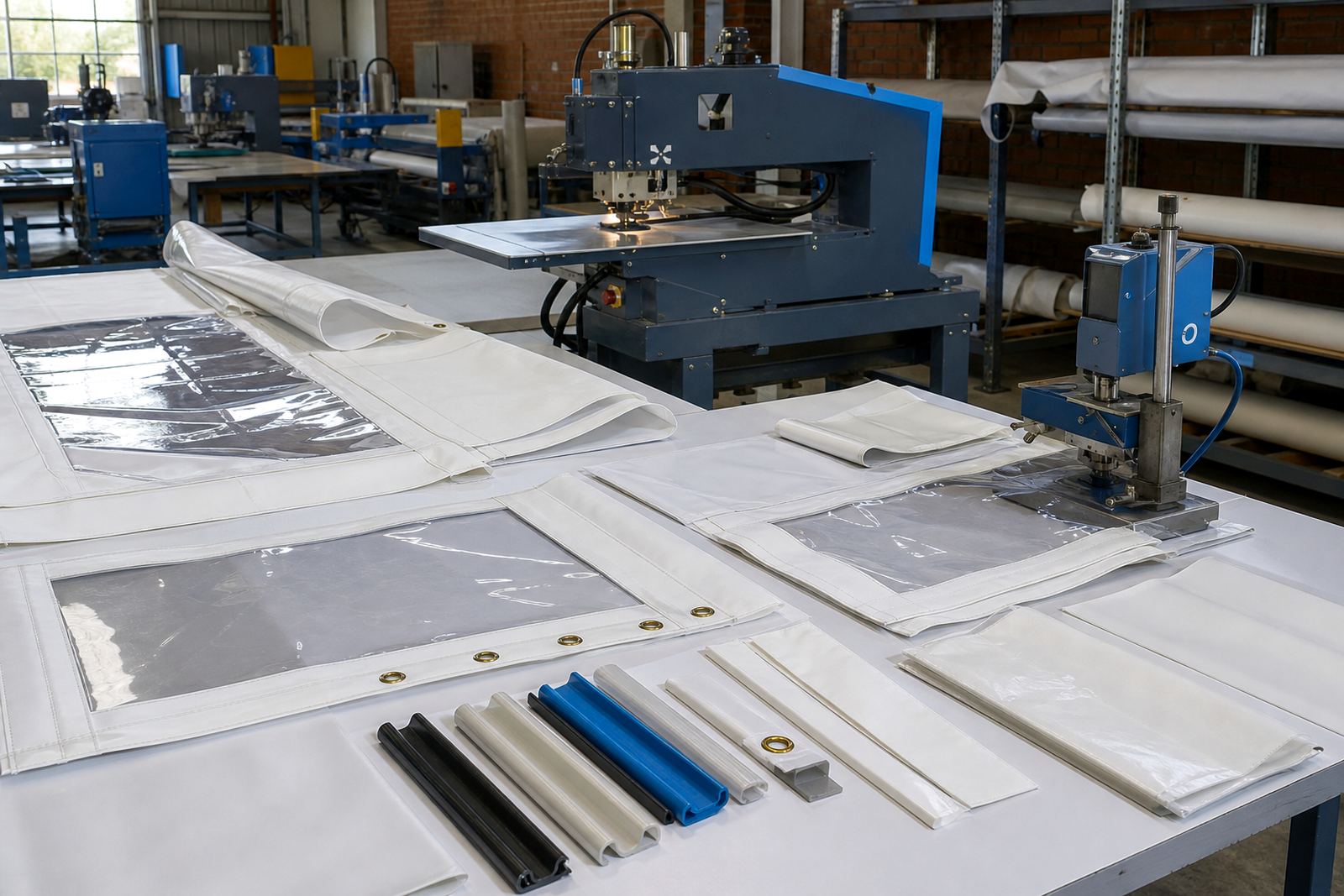
For tent makers and large-format fabricators, the seam plan should match the way the article will be used. If the edge will take hardware, plan the hem first and then the weld. If the panel will be joined to a sleeve or a keder track, the weld line must be straight and uniform so the feed stays true through the rest of the build.
- Overlap seams for general panel joining
- Hems for reinforced edges and finishing
- Keder attachment for track-fed installations
- Eyelet zones where extra reinforcement is needed
Operating Checks That Protect the Weld and the Operator
Before the machine runs, the operator should confirm temperature settings, feed speed and roller condition. A hot-wedge unit depends on stable heat and steady pressure, so worn rollers or poor alignment can leave weak spots, burn marks or an uneven bond. It is better to stop and reset than to push through a bad seam and cut it out later.
Operator safety matters as much as seam quality. Heated parts, moving rollers and trapped fingers are the main risks, so guards must stay in place and loose clothing should be kept clear. The work area should be tidy and well lit, with enough room to handle long panels without dragging them over sharp edges. In South African workshops where power interruptions can interrupt a job, it also helps to restart with a fresh test weld rather than guessing where the machine left off.
When a Hot-Wedge Machine Needs Attention
Most welding problems show up in the seam first. Blistering, weak peel strength, uneven line width or scorched coating often point to temperature drift, bad alignment or dirty tooling. If the seam looks acceptable but fails under handling, the machine may need servicing rather than a simple operator adjustment.
Preventive servicing keeps the system steady over time. That means checking roller wear, alignment, feed path, electrical condition and the parts that control heat transfer. On site callouts are often needed when a workshop cannot afford to strip the unit and guess at the fault. In Germiston and across Ekurhuleni, that practical support saves wasted fabric and lost production hours.
- Inspect rollers for flat spots and wear
- Check alignment of the wedge and feed path
- Clean residue from heated parts
- Review power supply condition and controls
- Run a test seam after any adjustment
A Workshop Checklist Before a Long Production Run
For tarpaulin, banner and tent makers, the best results usually come from a short routine before production starts. The fabric type should be identified, the seam width agreed, and the machine tested on the same material that will be used for the actual order. A quick trial can show whether the wedge heat, speed and pressure are in the right range for the coating and thickness.
It also helps to assign one person to watch the first run and another to prepare the next panels. That avoids overlap errors, missed folds and mixed settings during a busy shift. If a job includes hems, keder or eyelets, the sequence should be fixed before the first seam is made so the workflow stays orderly.
- Confirm material type and thickness
- Set seam width and test on offcuts
- Prepare the cutting, folding and finishing sequence
- Keep spare tooling and basic parts nearby
- Record the settings that worked for the run
Support for Hot-Wedge Work Across South Africa
PVCWelder supplies and services high-frequency and hot-air welding equipment, and hot-wedge guidance is part of the same practical support for coated fabric workshops. From Germiston and Johannesburg to Pretoria, Durban, Cape Town and Bloemfontein, the work often comes down to the same basics: clean overlap, correct heat, even pressure and a machine that is properly serviced.
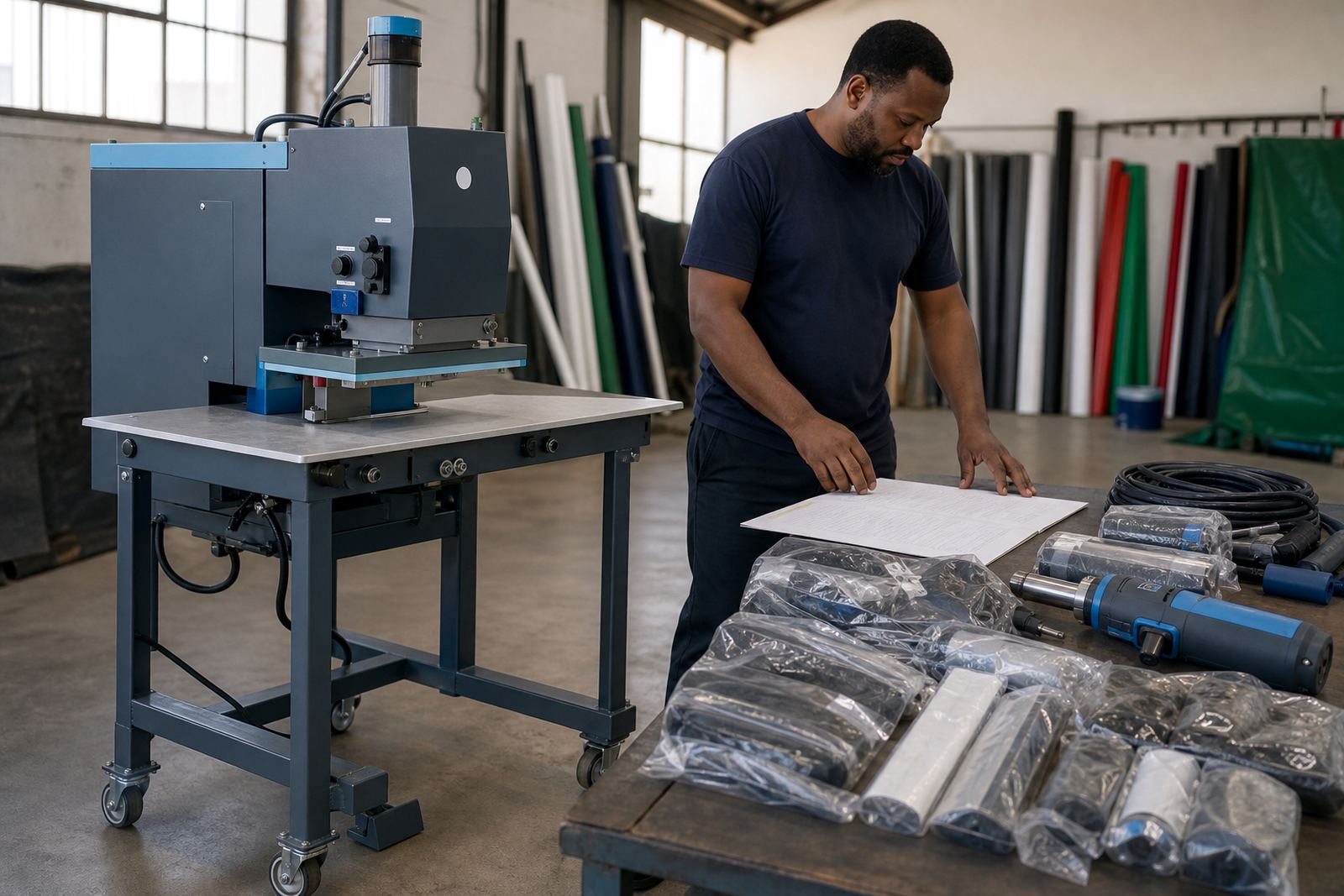
Our team handles machine installation, commissioning, operator training, preventive servicing, fault finding, tooling alignment, electrode refurbishment, roller replacement, parts supply, seam testing, site callouts and service plans. That support is useful when a shop is moving from trial work into regular production, or when an existing machine has started to give inconsistent seams. For many fabricators, the difference is not a bigger machine, but a better set-up and steadier maintenance.