Start With the Tent Build, Not the Machine Name
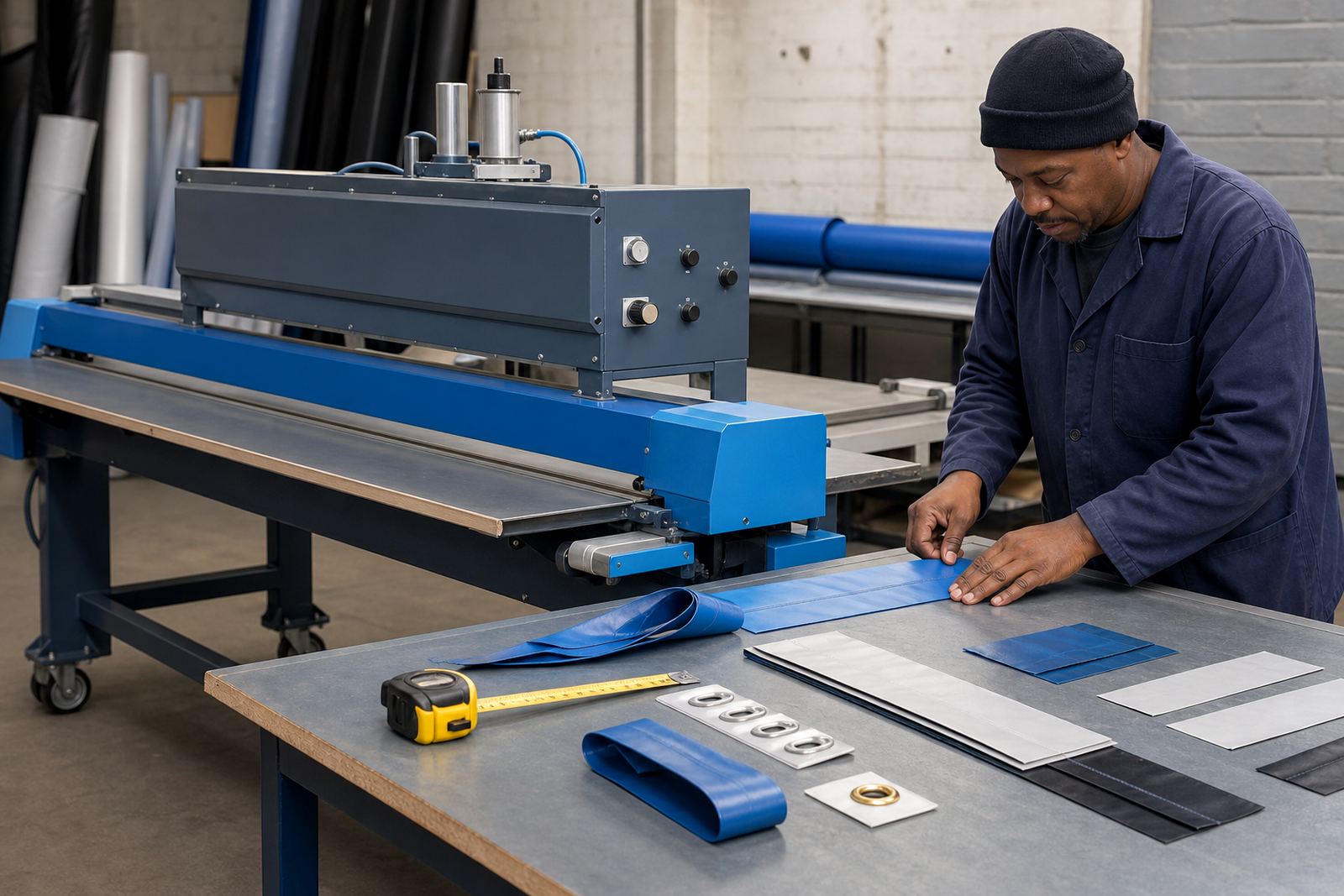
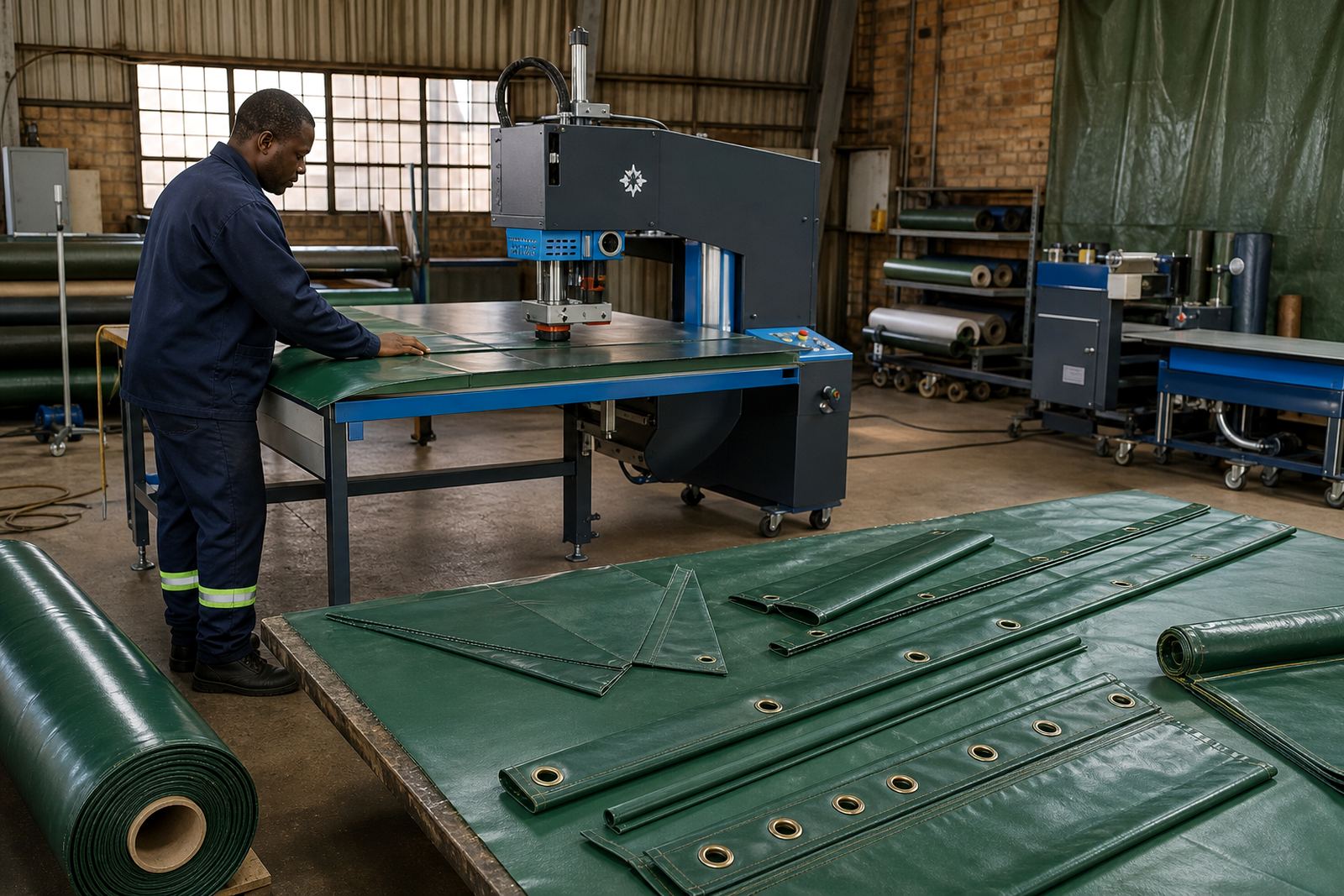
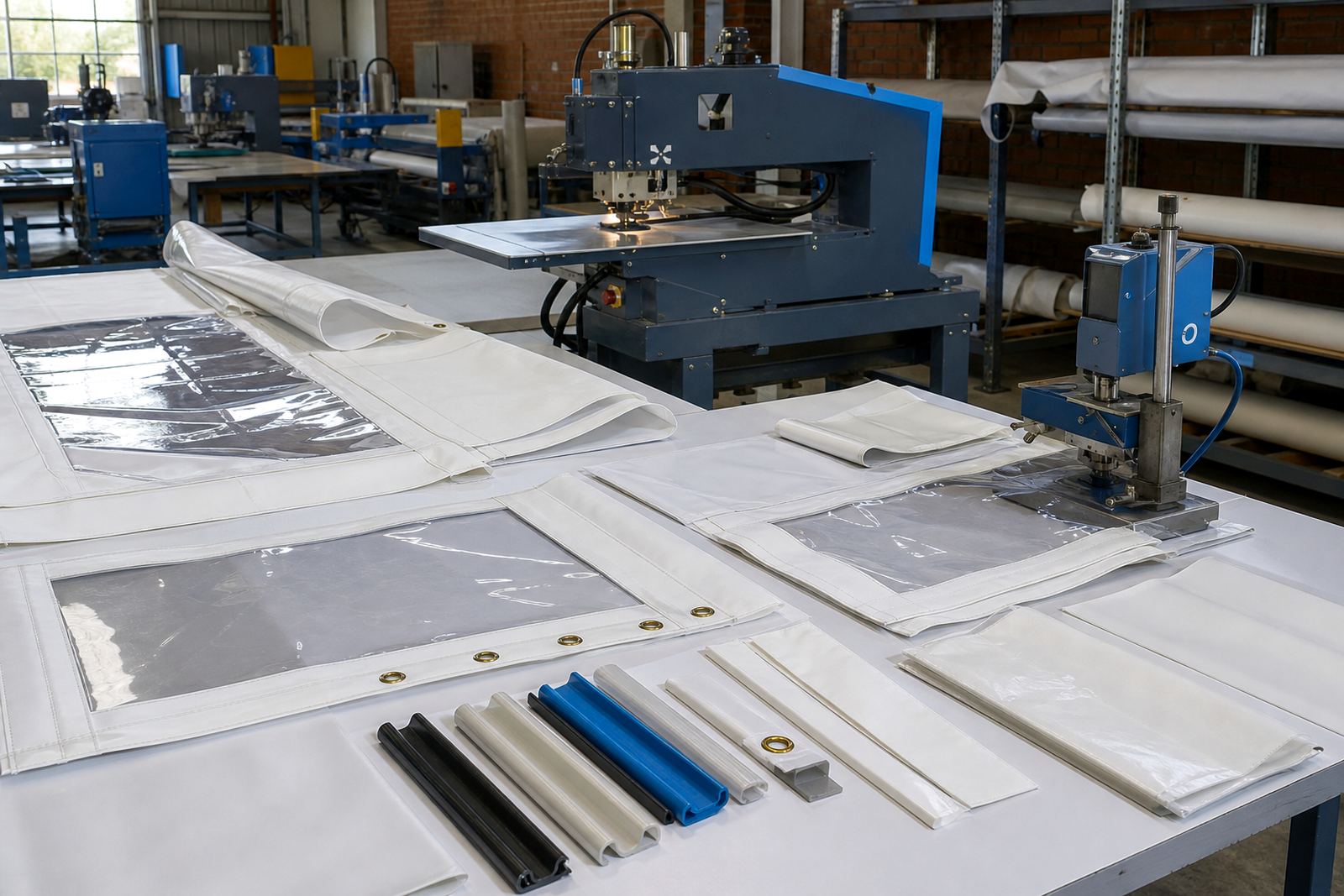
Before comparing machines, map the jobs that land on the floor each week. A tent shop may be joining roof panels, side walls, valances, clear windows, repair patches and curtain sections, all in PVC coated fabric with different thicknesses and reinforcement points. Long seams need stable heat control, while smaller fittings call for accurate edge work and repeatable pressure.
In Germiston and across Ekurhuleni, many workshops also have to move large cut lengths between tables, rollers and packing areas. That means the welding setup should fit the actual handling space, not only the seam width on paper. If the shop is doing banners as well as tents, the machine choice should support clean hems and reinforcement strips too.
Where Radio Frequency Welding Fits in Tent Work
High-frequency, also called radio frequency welding, is useful where PVC coated fabric needs a strong, neat bond without open flame. It is often used for sealed seams, windows, corner reinforcements and shaped sections where the weld line must look consistent across the panel. The process suits repeat work because the heat is concentrated in the joint, not spread across the whole sheet.
For tent makers, RF welding is often chosen for straight seams, curved joints, keder attachment and eyelet reinforcement areas where appearance matters. It can suit heavier PVC coated fabric when the tooling and output match the material thickness. The operator still needs to control dwell time, pressure and alignment carefully, otherwise the seam can drift or mark the face of the fabric.
- Best for repeat seam shapes and cleaner finished lines
- Useful for windows, hems, patches and reinforced corners
- Needs accurate tooling for each seam profile
Hot-Air and Hot-Wedge Jobs on Long Runs
Hot-air and hot-wedge welders are common on long panel seams, overlap joins and repairs where a continuous feed is easier to manage. They are well suited to tent sidewalls, long roof lengths and broad PVC sheets because the operator can keep the material moving through the seam path. On larger work, the main challenge is keeping tension even so the seam does not wander or wrinkle.
These machines are also helpful when the workshop handles different tent sizes from day to day. A sound buying decision includes checking temperature control, wheel pressure, feed stability and access for cleaning. In humid coastal areas like Durban or Cape Town, dust and surface moisture can affect the weld line, so routine setup and drying of material matter more than many buyers expect.
- Good for continuous long seams on tents and banners
- Useful for patching, repairs and overlap welding
- Needs good operator control on speed and pressure
Plan the Details: Hems, Keder and Eyelets
Tents fail in the details if the finishing stage is rushed. Hems need straight alignment so edging tape or sewn reinforcements sit flat. Keder work needs a uniform feed so the bead tracks properly into awning rail or track systems. Eyelet zones need reinforcement that spreads the load, especially where wind pull is high or the tent will be shifted often.
When ordering or sizing a machine setup, check whether it can handle the extra layers that sit in these areas. Some tent shops weld a reinforcement strip first, then add the finishing line. Others build the full hem in one pass. Either way, the machine should hold the fabric steady and keep the weld width even from end to end, otherwise the finished product looks uneven and the load point weakens.
- Hems should stay straight and flat across the full length
- Keder needs consistent feed and edge control
- Eyelet areas must be reinforced before punching or setting hardware
The Workshop Layout Needs More Space Than You Think
Tent welding is not a small-footprint task. Long panels, window sections and cut lengths need staging room, a clear path for the operator and enough flat area to check alignment before the seam is sealed. If the shop only has narrow space, the team will keep stopping to reset material, which slows production and increases marking on the PVC coated fabric.
In Johannesburg, Pretoria and Bloemfontein, workshop space often has to do several jobs at once. That makes it important to look at machine length, table height, access to rollers and where finished panels will rest while cooling. A good layout also helps with safety because operators are not reaching across hot tooling or lifting awkward sheets alone.
- Allow for loading, alignment and cooling space
- Keep a clear path around moving panels and tools
- Place cutting, welding and inspection areas in one flow
Operator Safety and Servicing on Busy Lines
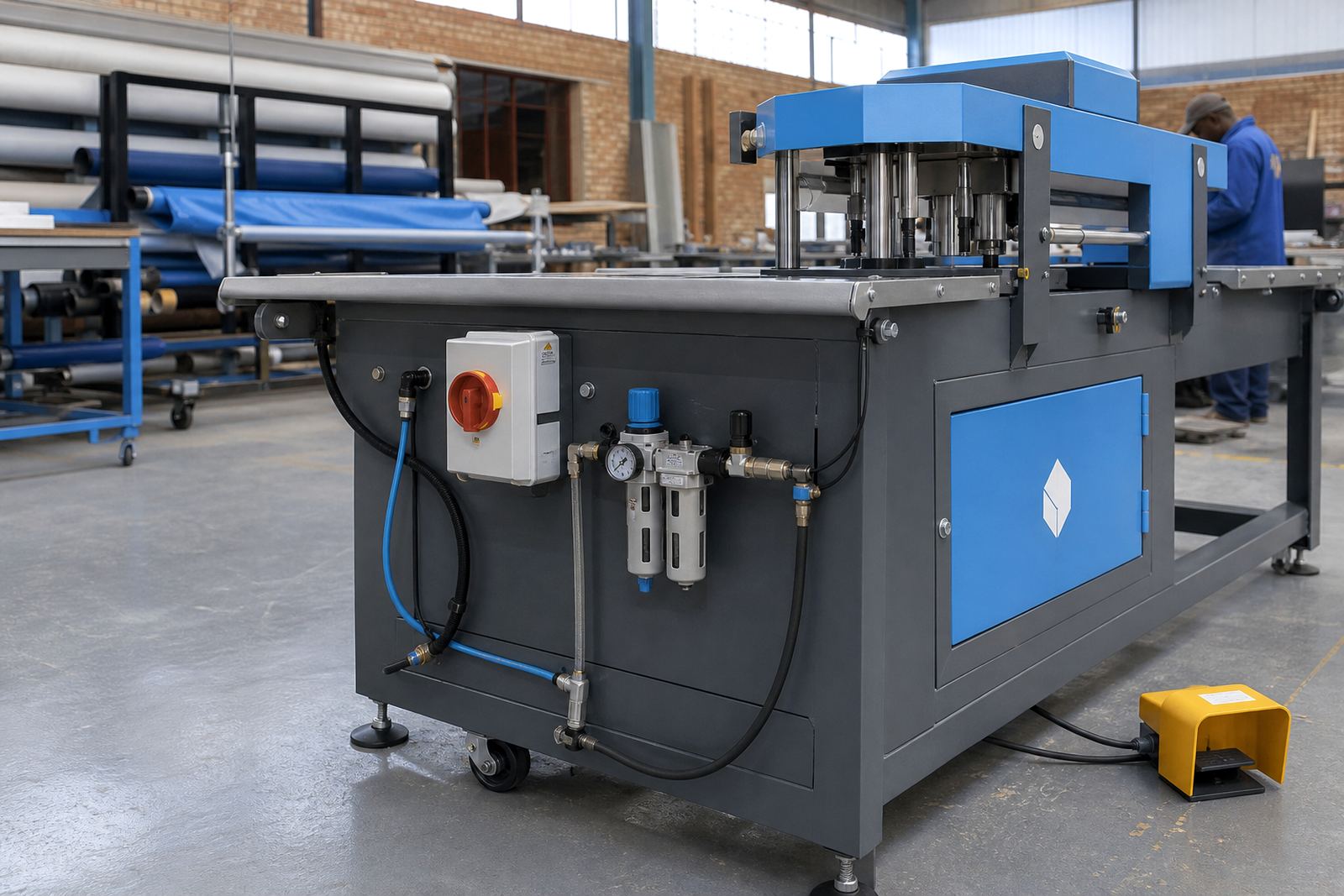
Safe operation starts with training on clamps, heat settings, pinch points and the correct handling of heavy PVC sheets. Guards and controls should be checked before each shift, and operators should know how to stop the machine quickly if the material shifts. On hot-air and hot-wedge machines, hot parts stay dangerous for longer than most new staff expect, so clear habits matter.
Preventive servicing keeps the weld quality steady and reduces downtime. That means checking rollers, guides, electrodes where relevant, alignment, cleaning paths and worn parts before they fail. In coastal or dusty inland conditions, servicing becomes part of normal production discipline rather than a once-off repair job.
- Train staff on heat settings, clamping and safe feed handling
- Check rollers, guides and tooling alignment regularly
- Replace worn parts before seam quality starts drifting
A Practical Buying Checklist for Tent Makers
Use the tent itself as the final test. If the machine can make straight long seams, handle window sections, finish hems cleanly and manage keder without twisting the edge, it is meeting the real job. The next question is service access, because a workshop in Germiston or Boksburg cannot afford long delays when a feeder, roller or electrode needs attention.
For South African tent makers, buying well means matching the machine to the fabric weight, the seam pattern and the size of the worktables. It also means keeping spare parts, training and servicing in the same plan. That way the workshop is ready for short repair runs and larger event orders without changing the whole setup each time.
- Test the machine against your longest panel seam
- Check window, hem and keder handling before signing off
- Keep servicing, parts and operator training in the same plan