

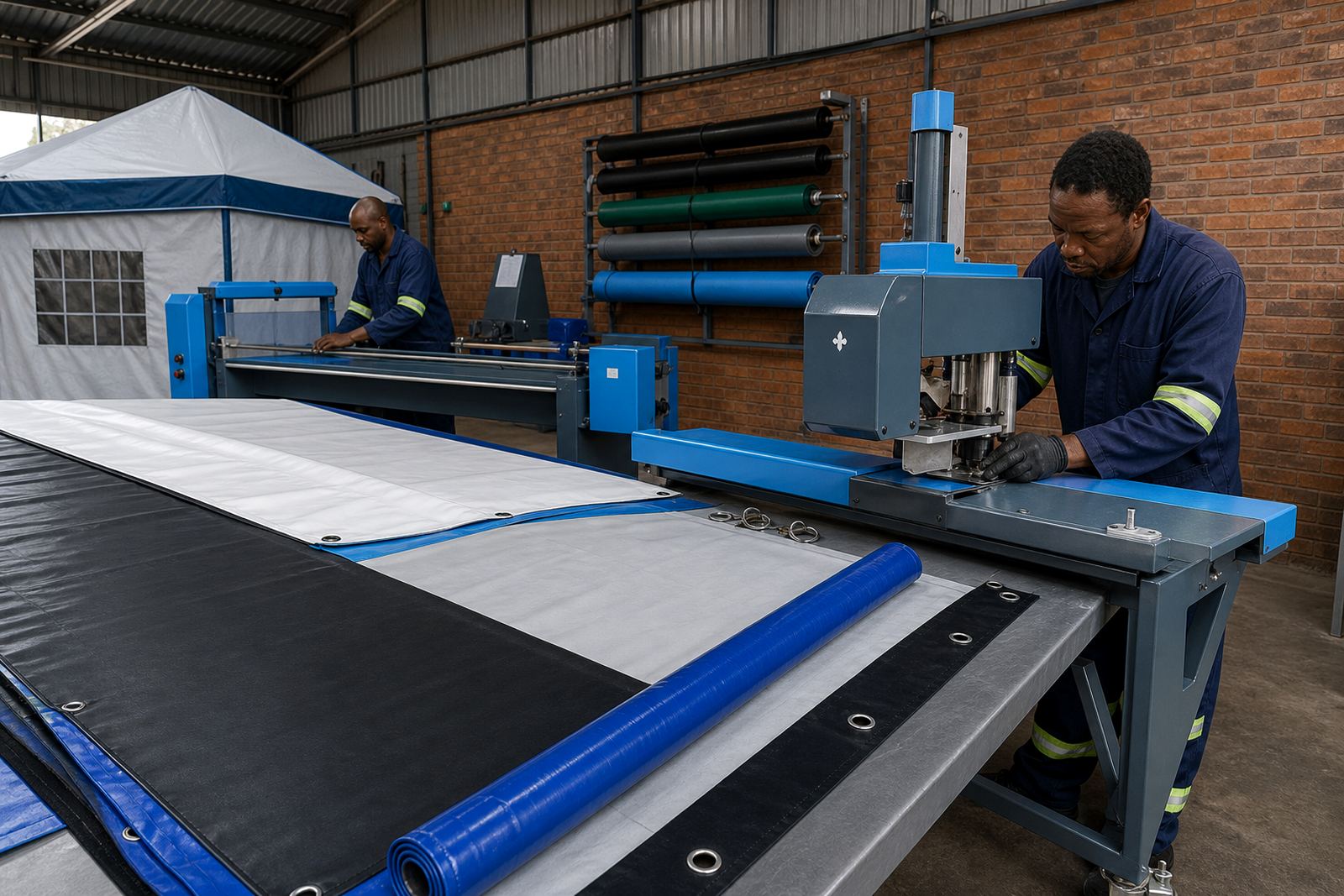
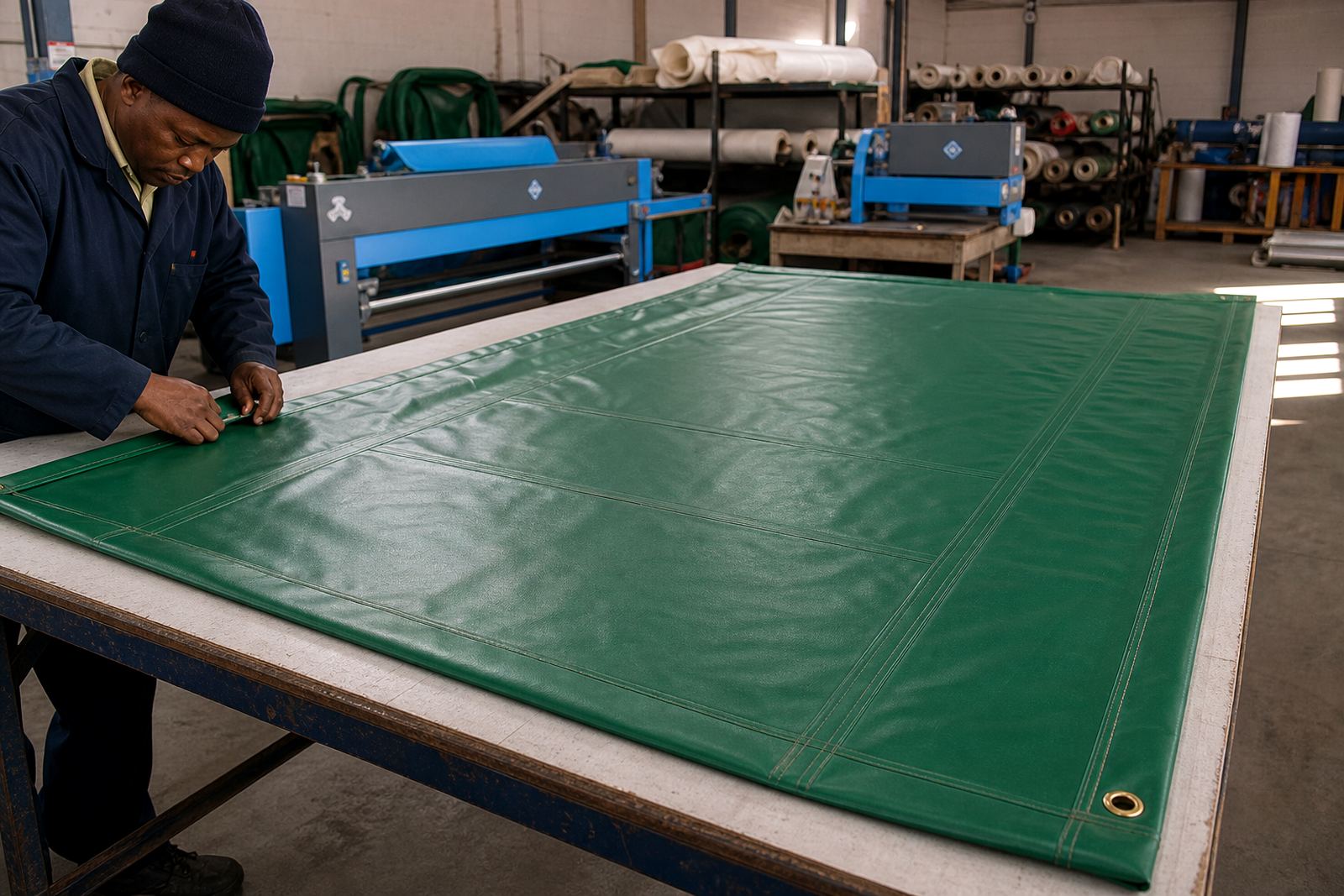
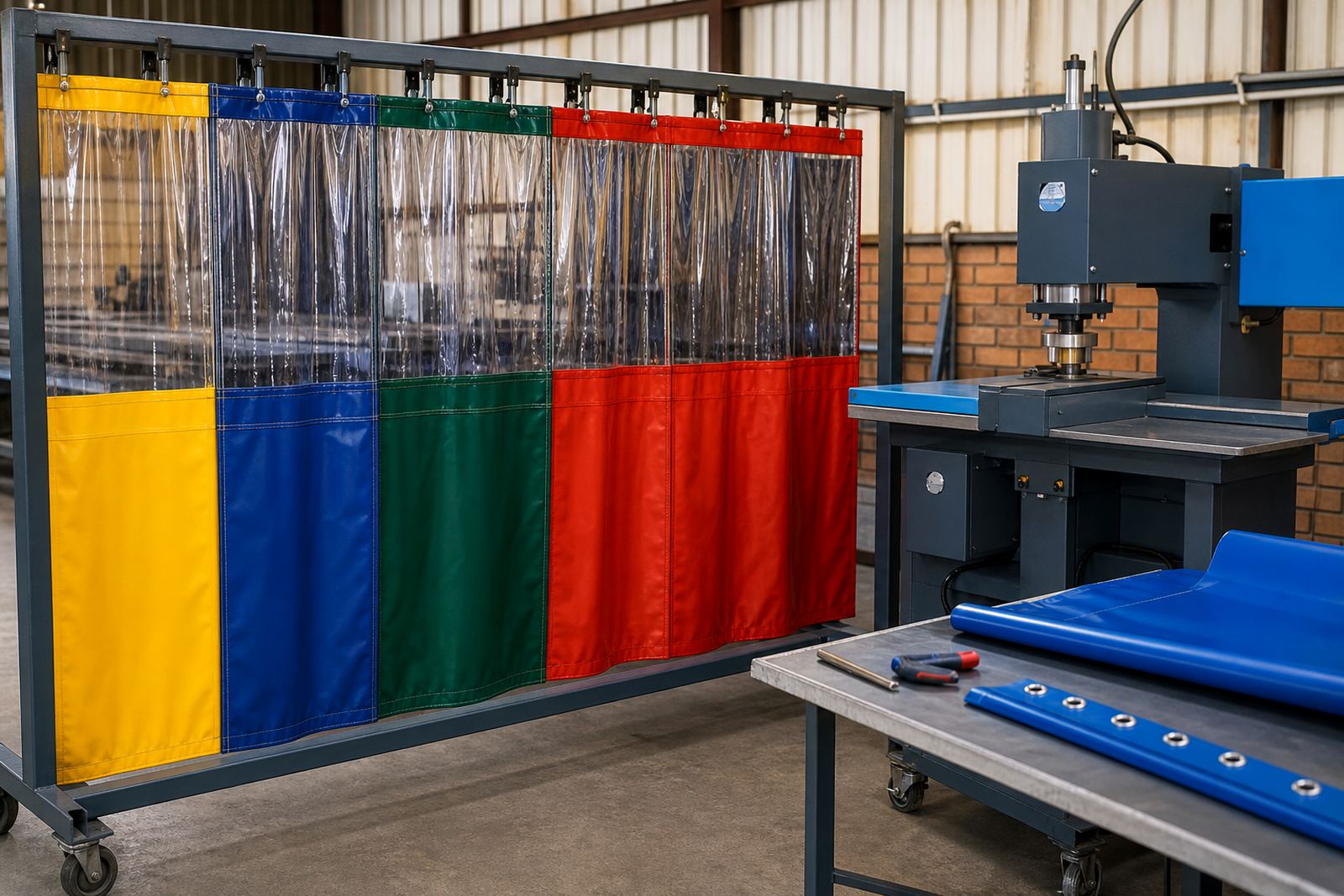
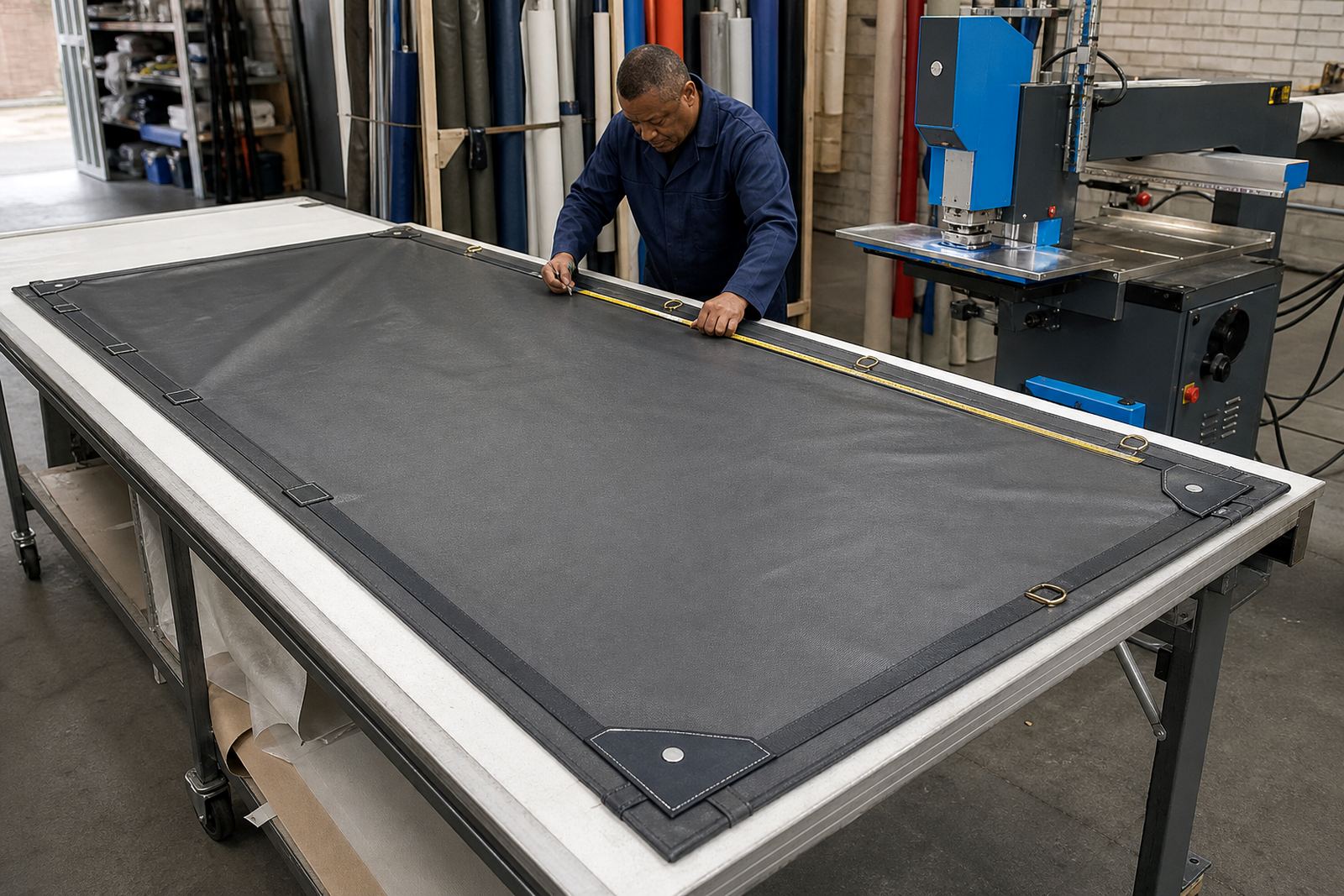
Where PVC-coated fabric shows up on the floor
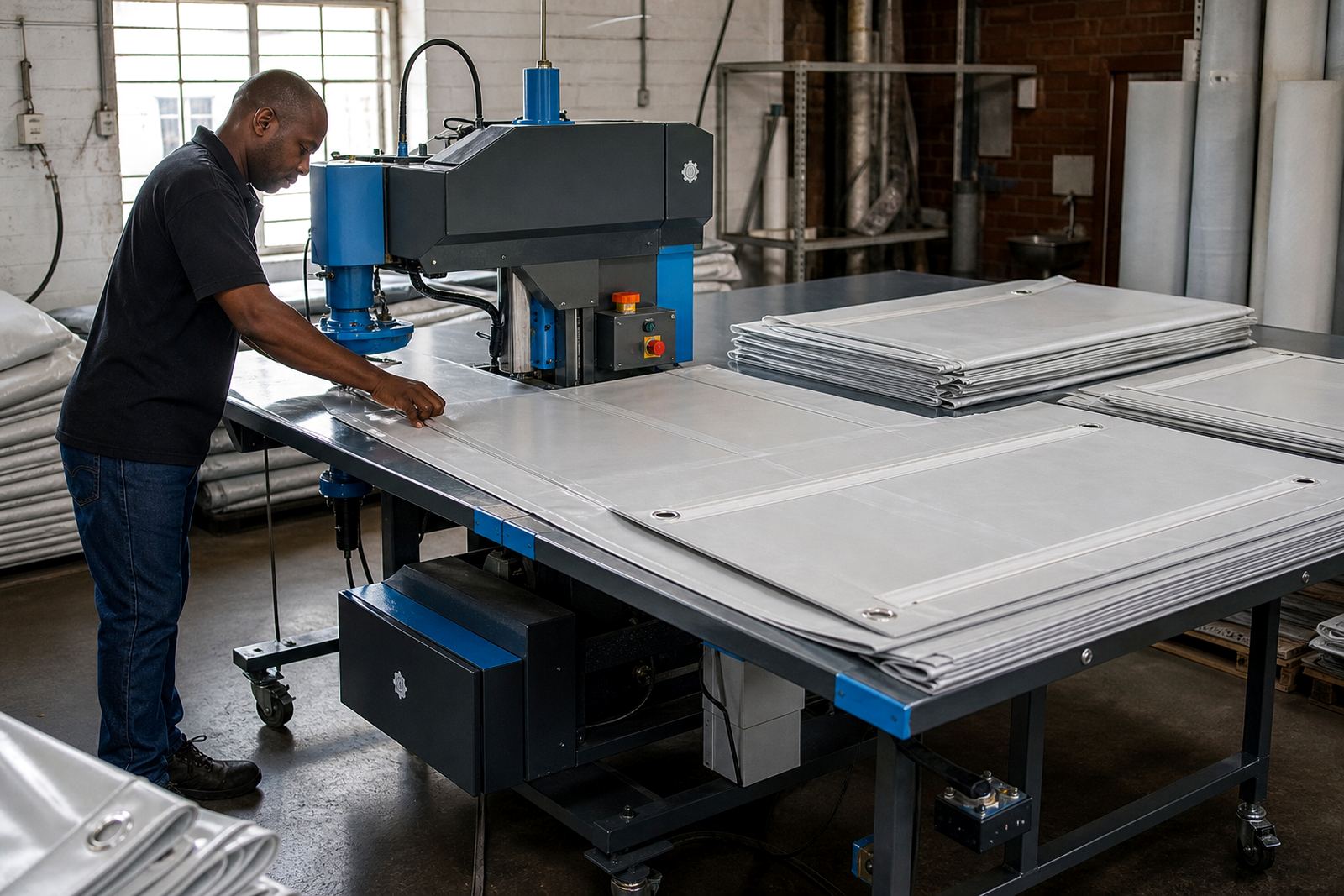
Most workshops in this trade handle more than one product line, so the same machine may be used for tarpaulins, banner panels, marquee walls or fitted covers in the same week. The fabric may look similar from one roll to the next, but the seam pattern, handling and finish can change quite a lot from a roadside cover to a display banner or a tent panel.
That is why it helps to think in terms of the end item first. A straight seam for a large cover, a hemmed edge for a banner, a pocket for a pole, or a reinforced opening for eyelets all need different tooling and set-up. The right process also helps with neat edges, even melt, and fewer rework marks where the weld line is visible.
- Tarpaulins for freight, site protection and storage covers
- Banner panels for signage, exhibitions and event backdrops
- Tent walls, valances and fitted canopy sections
- Protective covers for equipment, stacks and outdoor stock
High-frequency welding for clean, repeatable seams
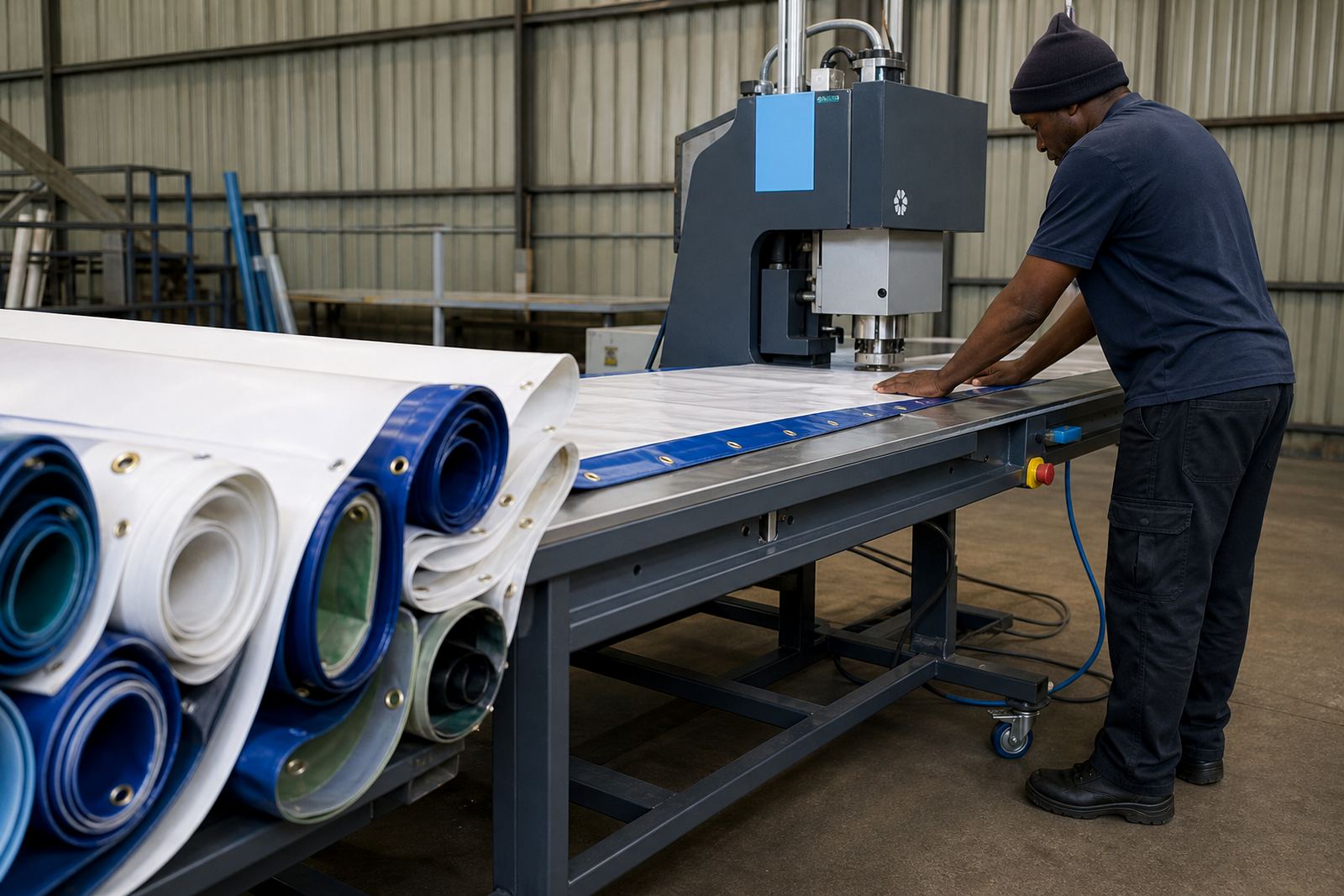
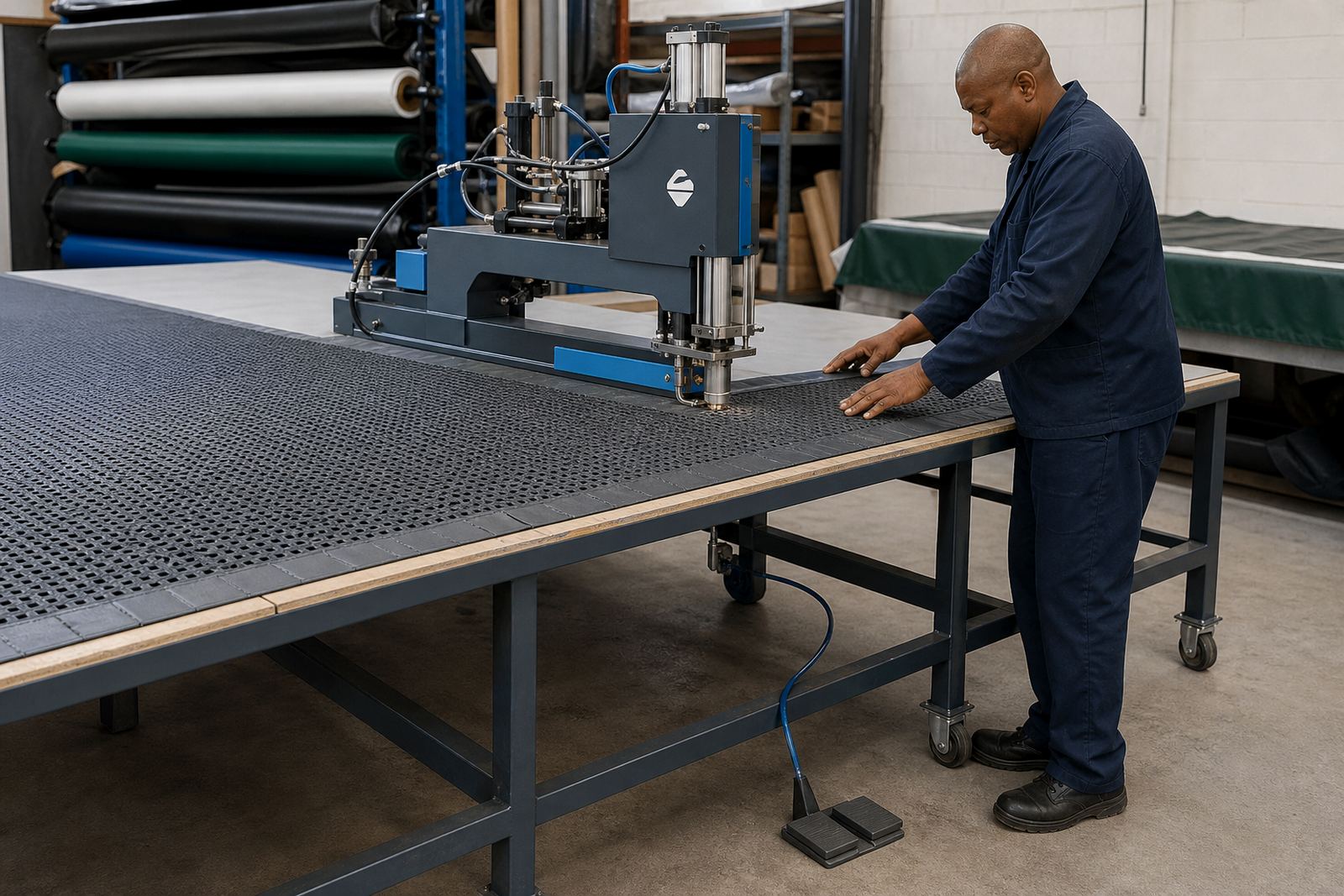
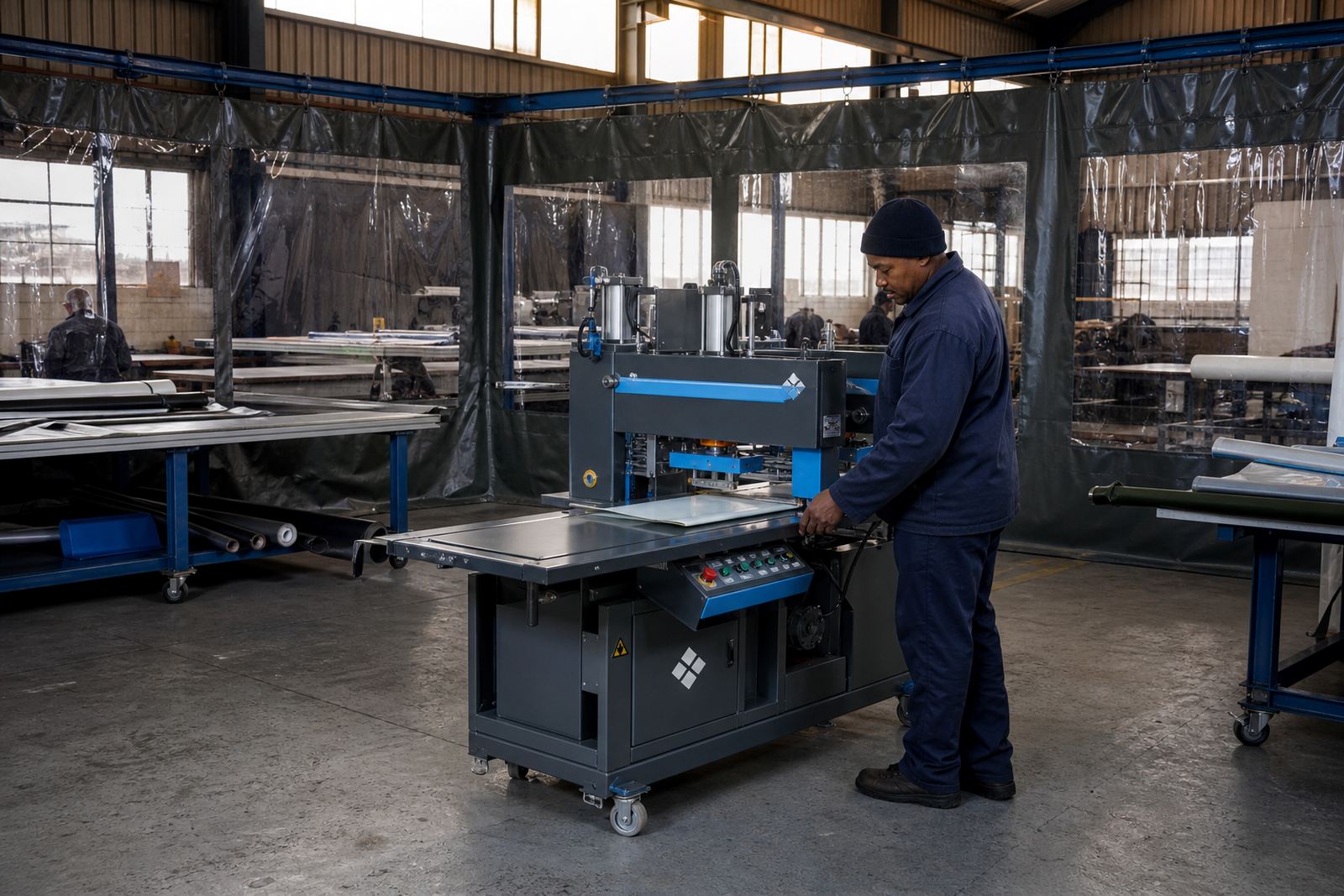
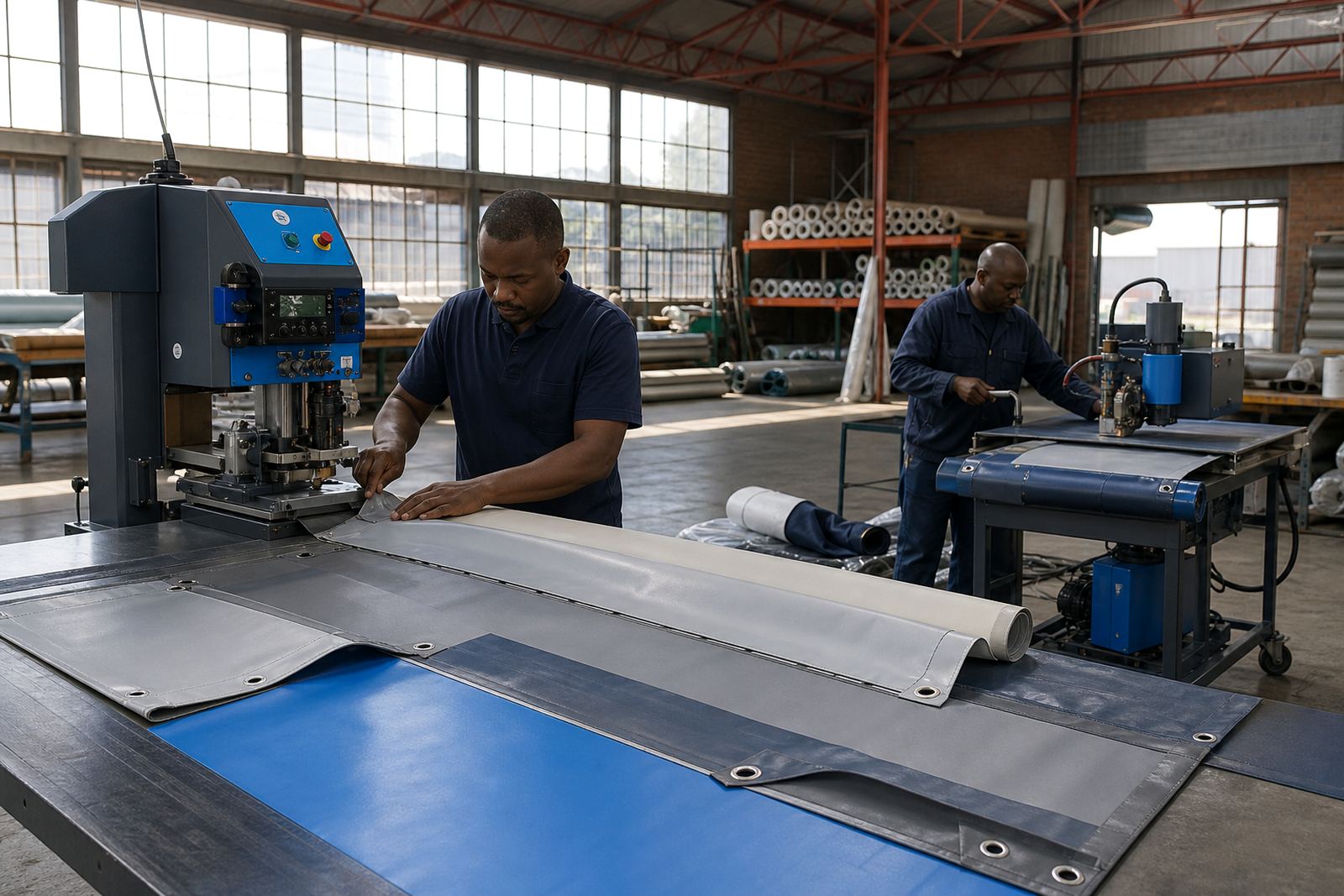
High-frequency welding, also called radio frequency welding, is used on PVC-coated fabrics where a strong, consistent bond is needed along a controlled seam path. It is well suited to straight joins, shaped panels and neat seam edges where the weld must look tidy and hold under repeated use.
Here, the operator watches alignment, pressure and dwell time, because those settings shape seam width and finish. It suits work where the same panel shape is produced repeatedly, such as matching banner sections or paired cover panels.
- Butt seams and lap seams
- Reinforced corners and panel joins
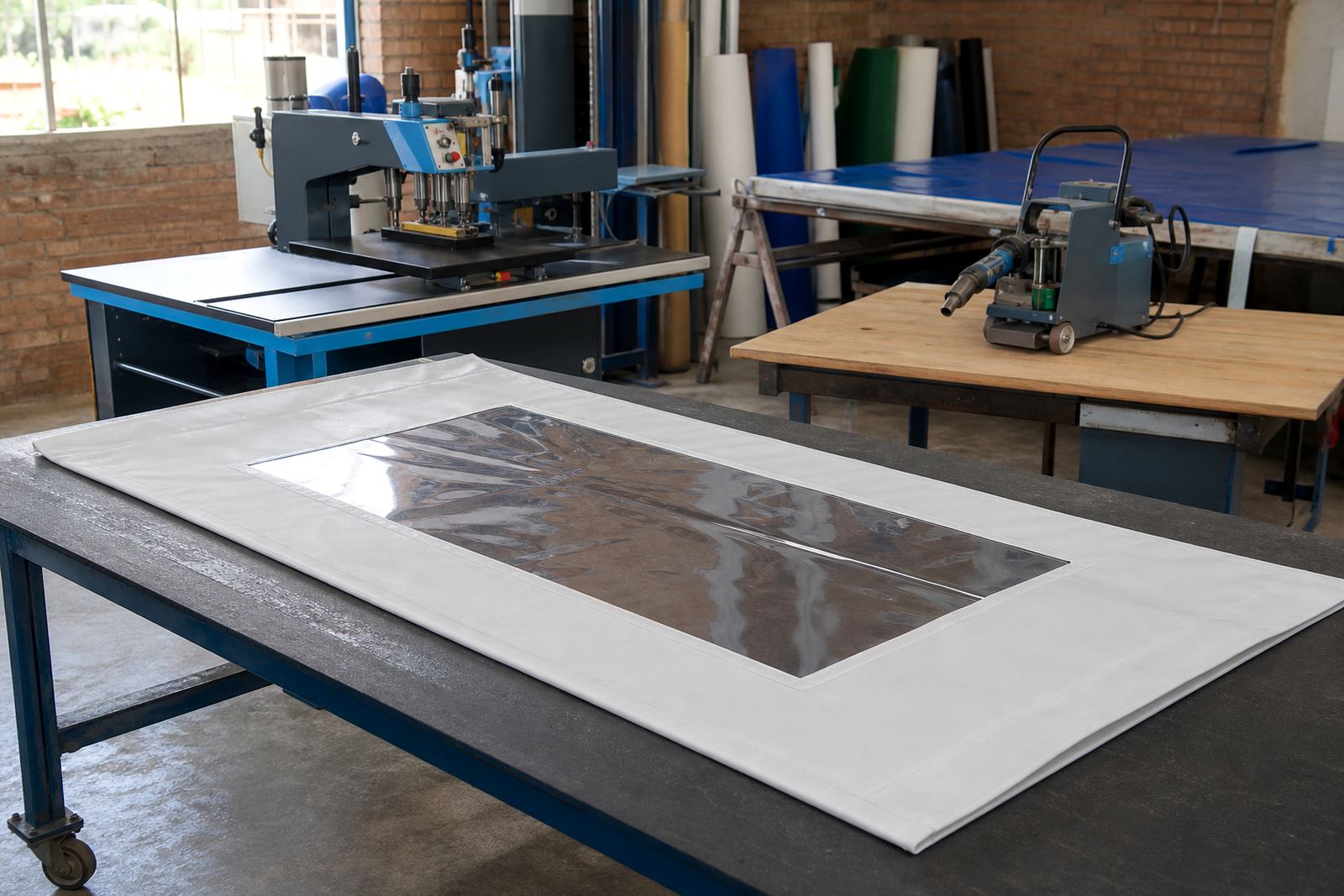
- Pocket work where a pole or rod must slide cleanly
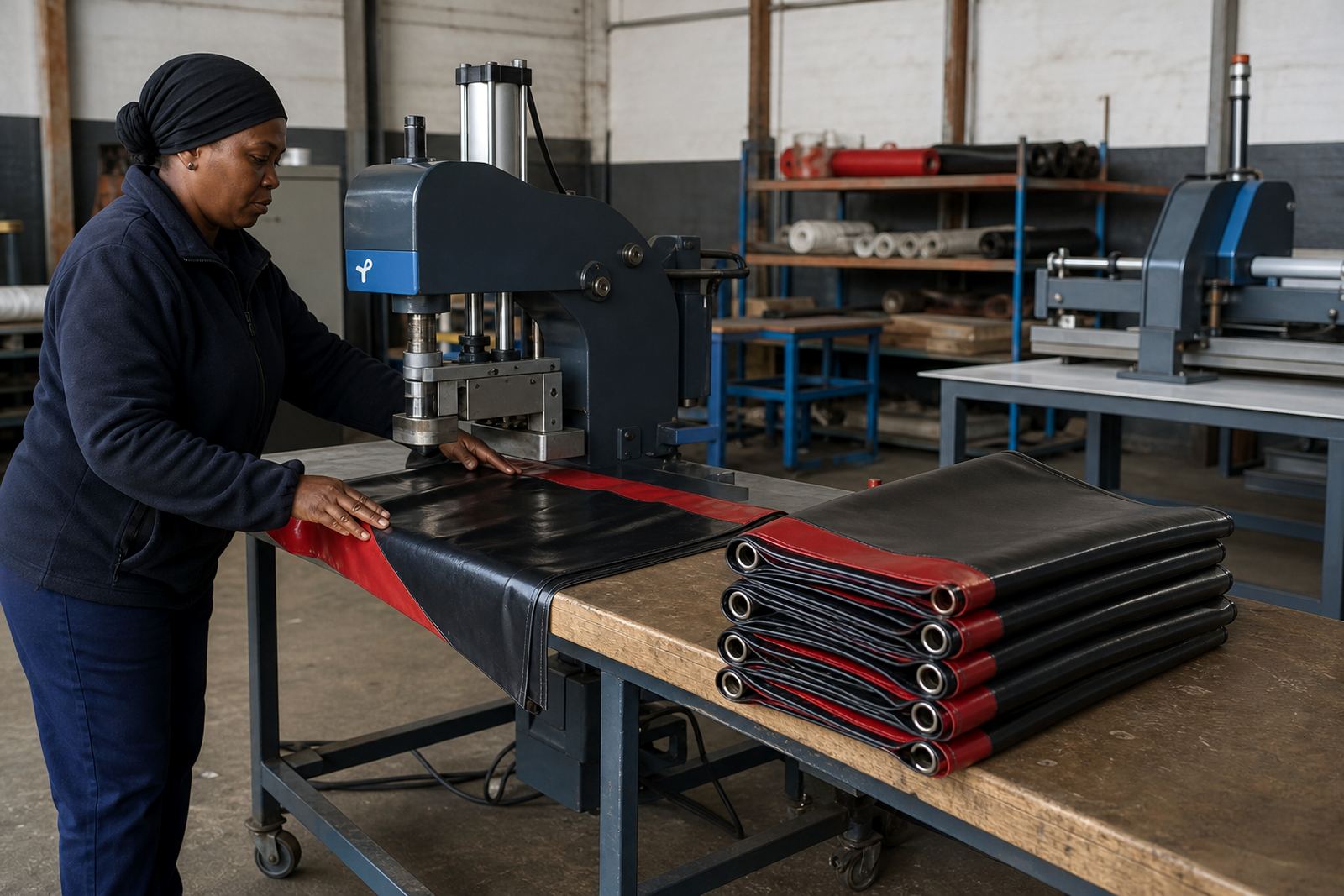
- Eyelet-ready edges that need even reinforcement before punching
For workshops in Johannesburg, Pretoria or Germiston, a stable machine set-up matters when the same item is being produced in batches and the seam has to stay consistent across all pieces.
Hot-air and hot-wedge work on larger lengths
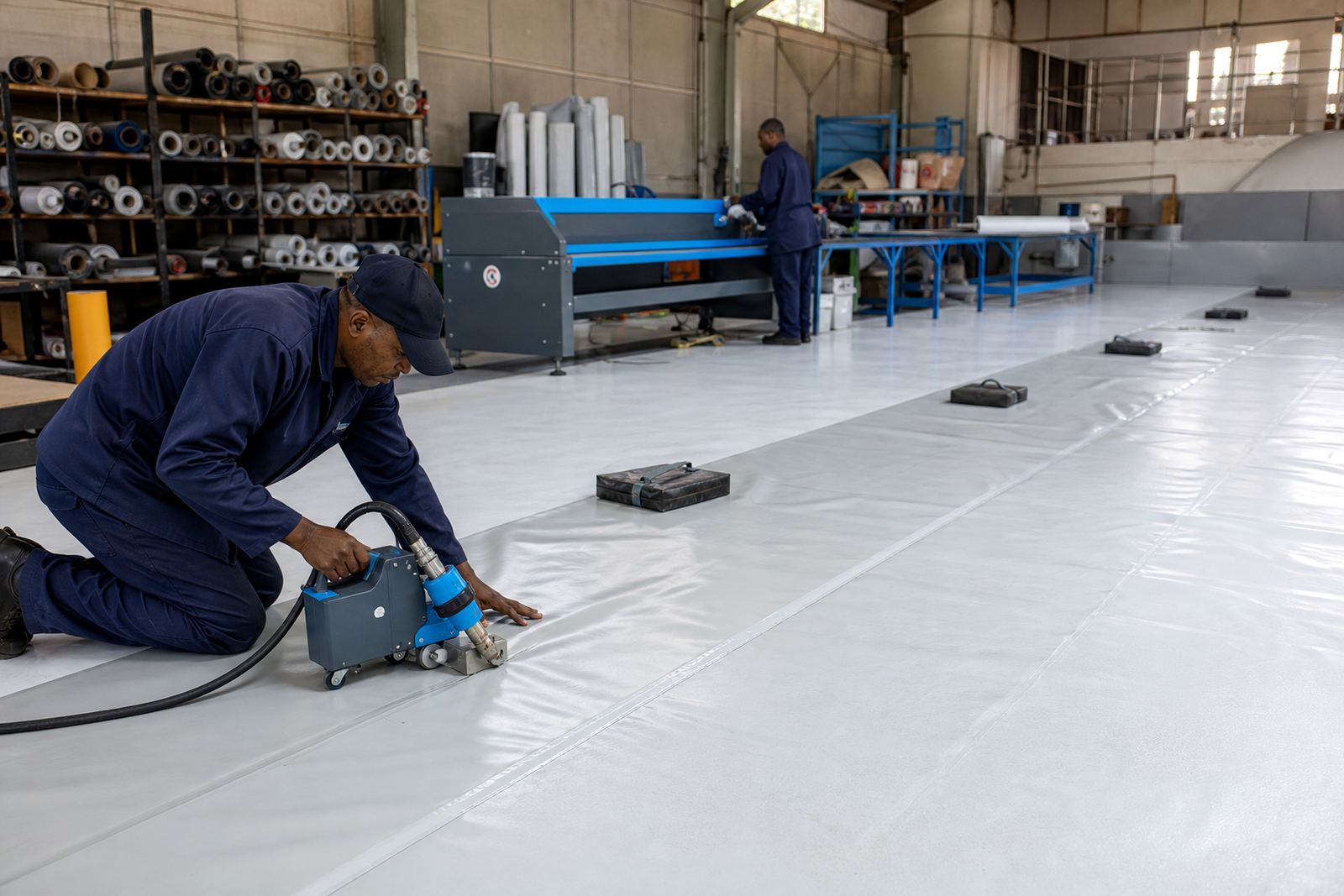
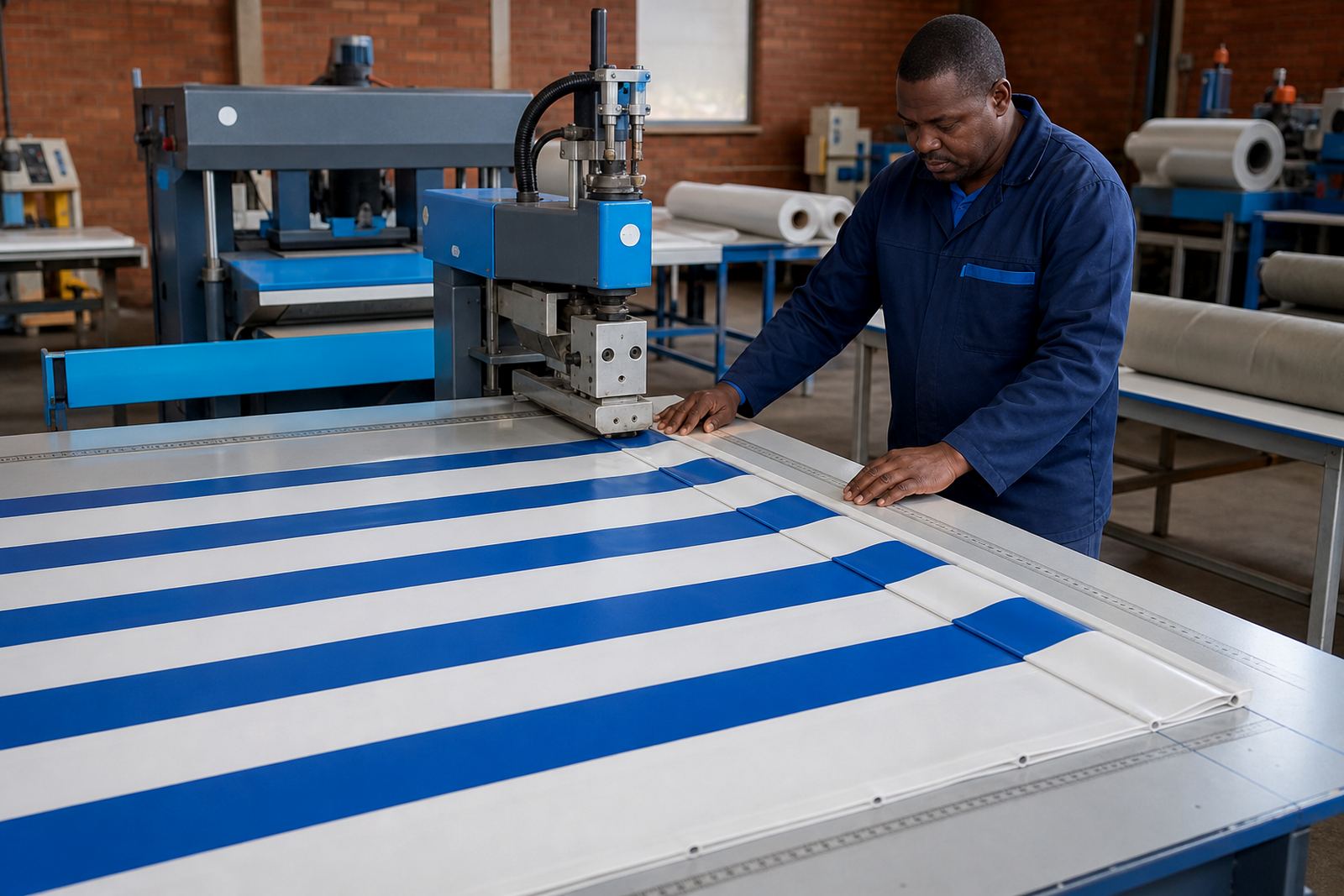
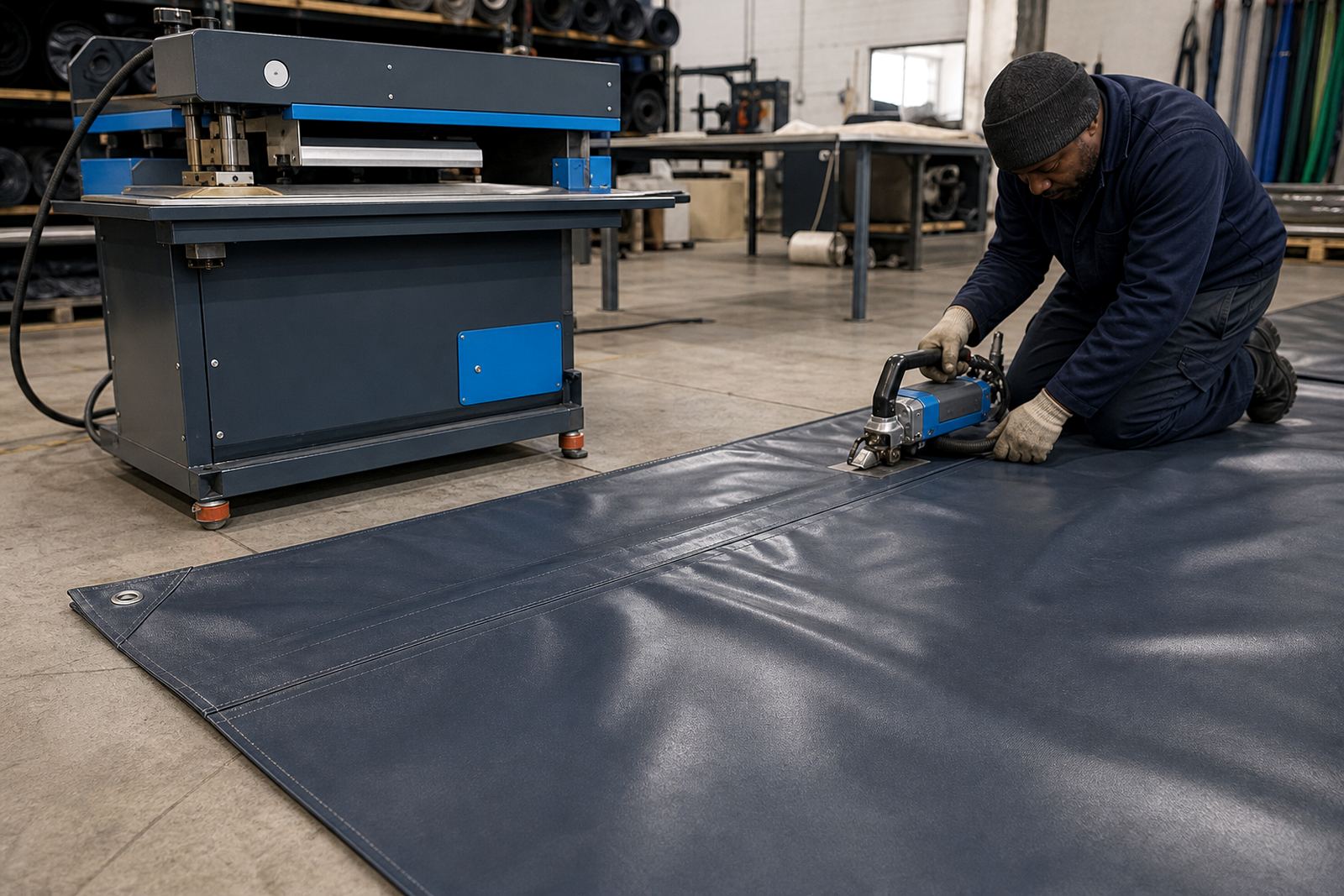
Hot-air and hot-wedge welding are common on long runs, especially where the material needs to be joined, folded or sealed over distance. These methods are often used for hems, lap seams and long edging on banner stock, tarpaulins and tent skins.
They are practical for larger sheets and linear work because the operator can guide the fabric through the machine in a steady line. On heavier PVC-coated fabric, the right heat and feed speed help avoid scorching on one side or a weak bond on the other, which matters when the item will sit outdoors in sun, wind and coastal humidity.
- Banner hems and welded edges
- Long side seams on tarpaulins
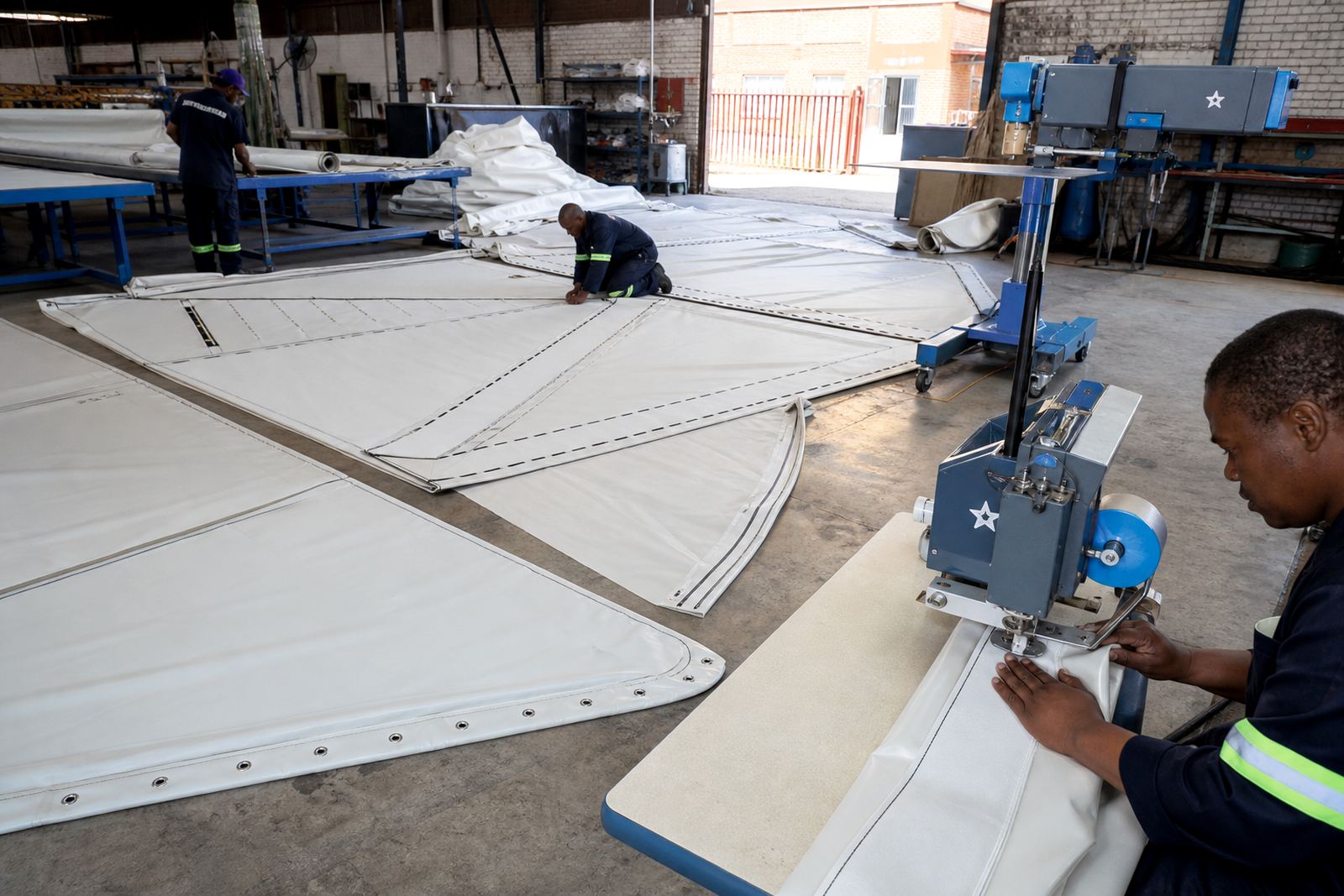
- Roof and wall sections for tents
- Overlaps for weather resistance and shape retention
In Durban and Cape Town, where moisture and salt in the air can be hard on outdoor products, a well-formed seam and correctly finished edge help the finished item hold up better in use.
Hems, pockets, keder and eyelet-ready finishes
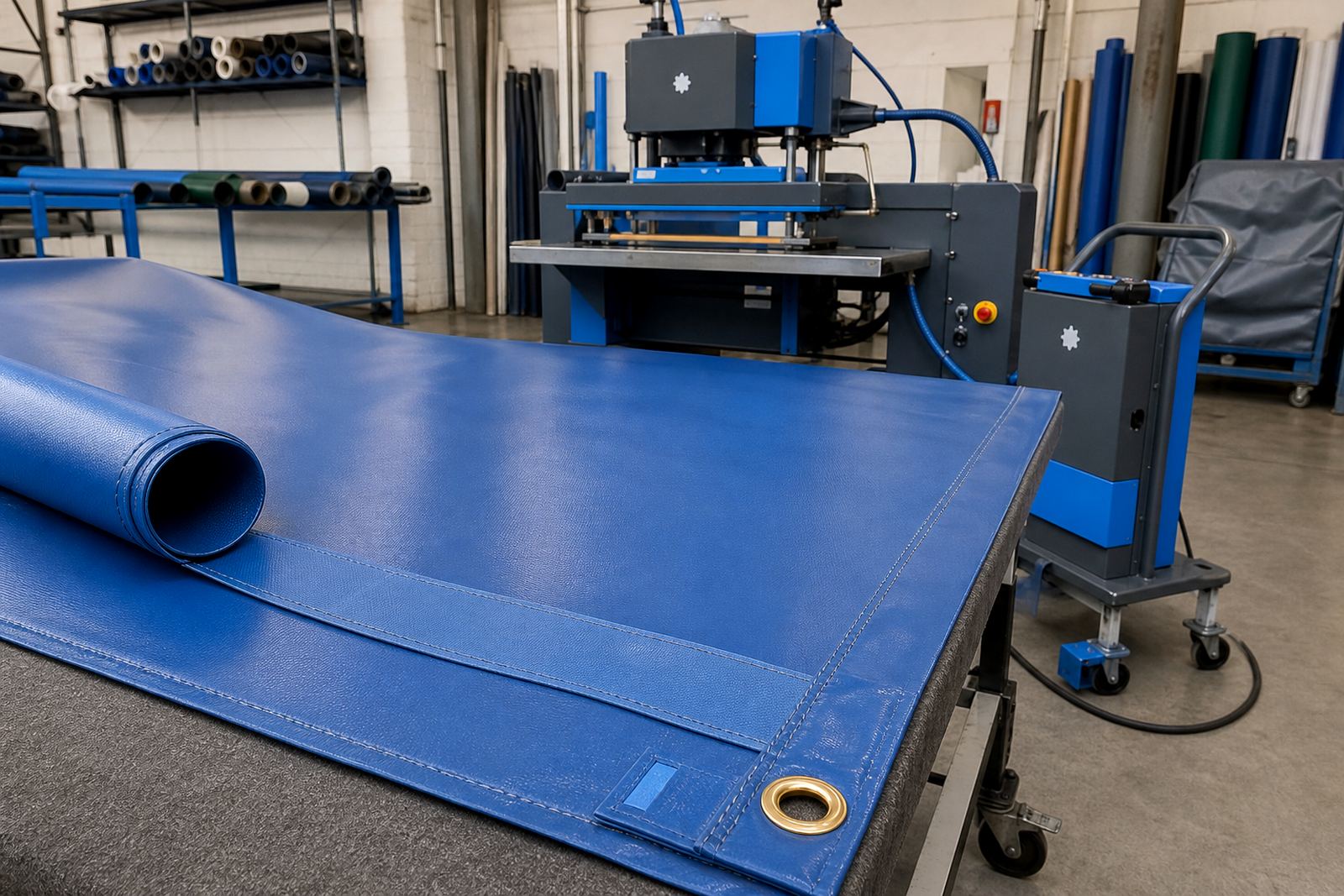
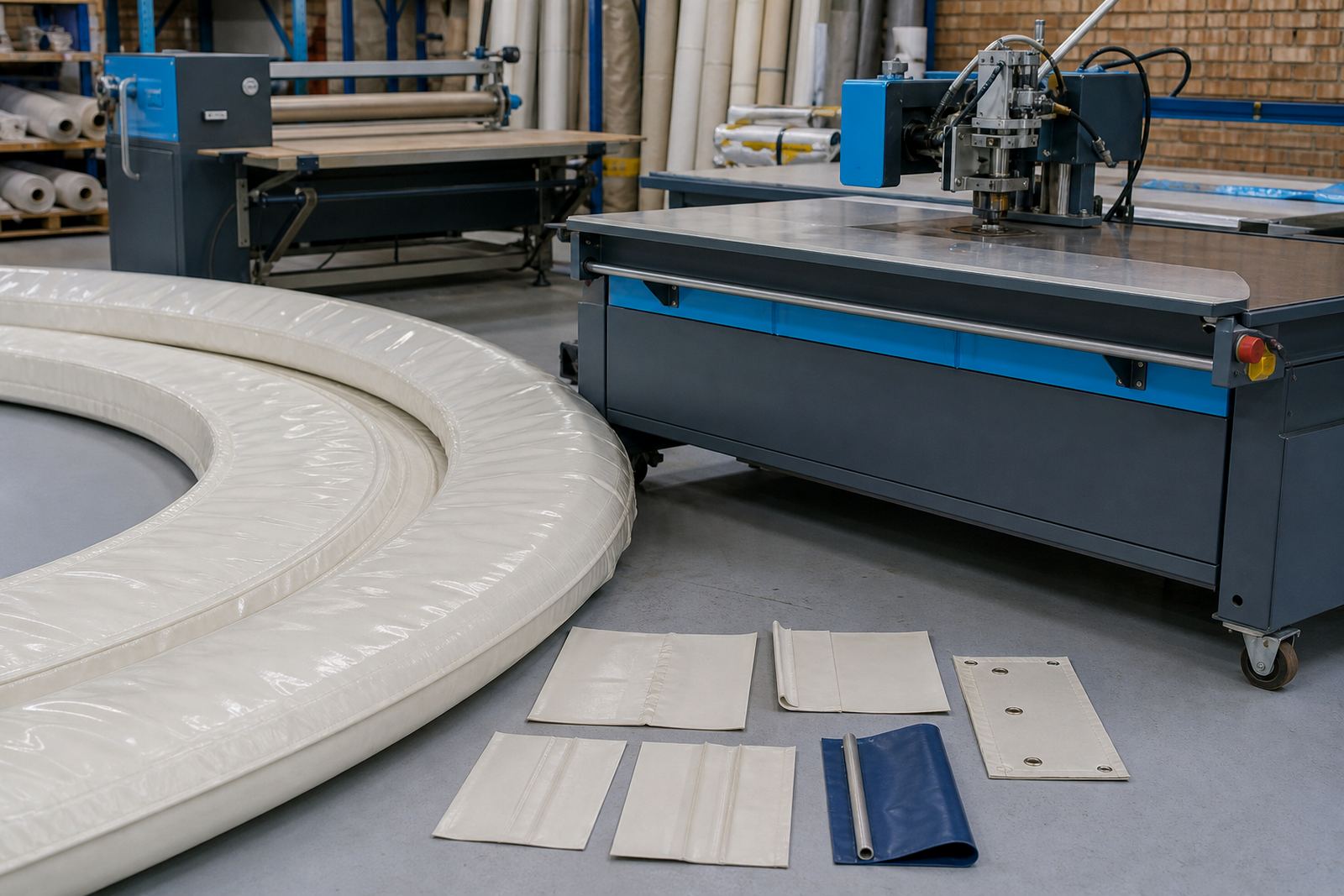
Many of the jobs that leave a welding table are not just joined, they are finished for fitment. A clean hem can make a banner hang straight, while a pocket can hold a batten or tube. Keder work is used where the welded edge needs to slide into a channel, and eyelet-ready reinforcement gives a stronger fixing point before the holes are punched and set.
The finish chosen should match the way the item will be installed and handled. A cover that is lashed down on a trailer needs different edge treatment from a show banner that is stretched into a frame. Good workmanship here saves time on site and helps the product sit properly once fitted.
- Hemmed banner edges for a neater drop
- Pockets for poles, rods and tension members
- Keder edges for track or channel installation
- Reinforced eyelet zones for tie-down points
How seam choice changes with the end use
There is no single seam that suits every product. A tarpaulin used for transport may need long, durable joins and stronger corner reinforcement, while a display piece may need finer edges and cleaner visible lines. Tent makers often work with a mix of seam types in one product, including welded joins, hems and attachment points.
The right choice depends on the fabric weight, the stress on the joint and how the item will be handled after it leaves the workshop. If the item is likely to be folded often, dragged, or exposed to wind load, the seam and finishing method need to be selected with that use in mind. That is where tooling alignment and seam testing become part of the job, not an afterthought.
Operator safety and machine care in day-to-day use
Welding equipment for PVC-coated fabrics runs hot and uses pressure, so safe handling matters every shift. Operators need clear guarding, sound cable and hose management, and a tidy work area where offcuts, dust and loose tools do not interfere with the seam path. Heat, moving parts and sharp trimming tools all need respect on the floor.
Regular servicing helps keep welding pressure even and the finish predictable. That means checking alignment, roller condition, electrodes, tool faces and moving parts before small faults turn into scrap or downtime. In coastal areas the extra moisture can affect storage and machine condition, so dry keeping space and routine maintenance are worth the effort.
- Installation and commissioning for new workshop lines
- Operator training on seam quality, safety and repeat set-up
- Preventive servicing and fault finding
- Electrode refurbishment, roller replacement and tooling alignment