When a billboard skin must stay flat and neat
Large billboard skins are not forgiving. If the panel lines wander, the print looks off. If the seams lift at the edges, wind gets under the skin and the whole job starts to move. In Germiston and the wider Ekurhuleni area, many sign and display workshops work with wide PVC-coated sheets that need accurate joining before finishing at the perimeter.
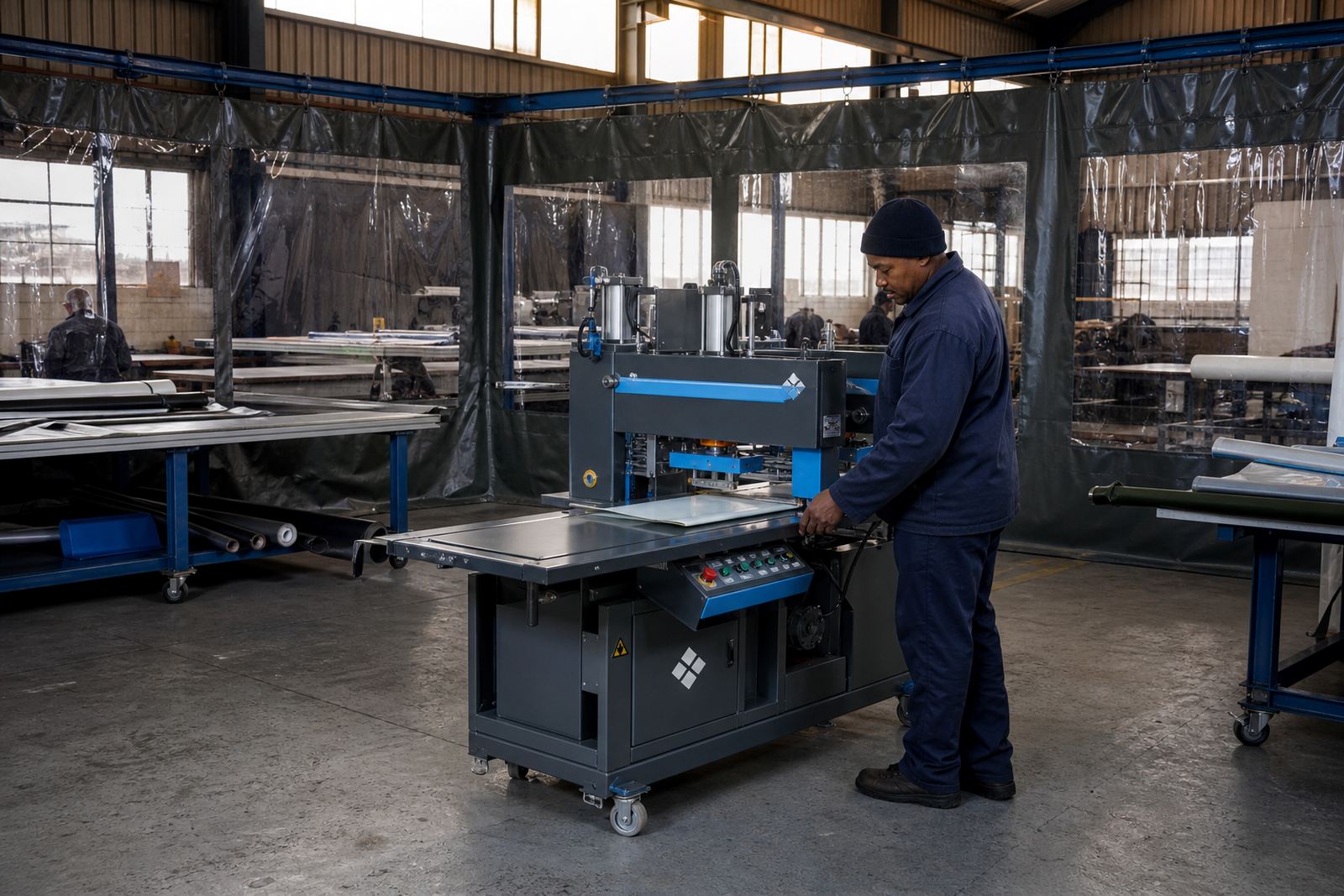
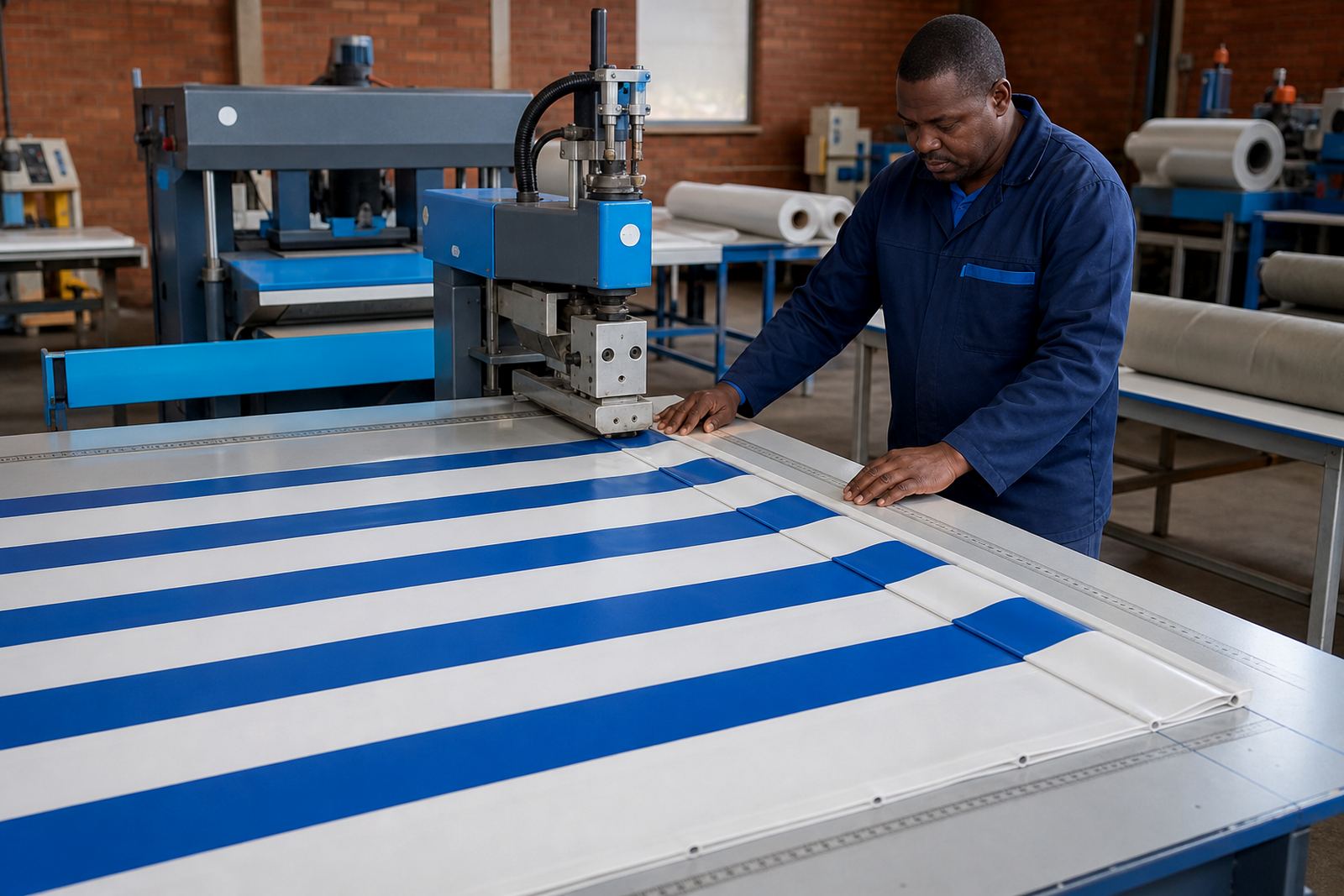
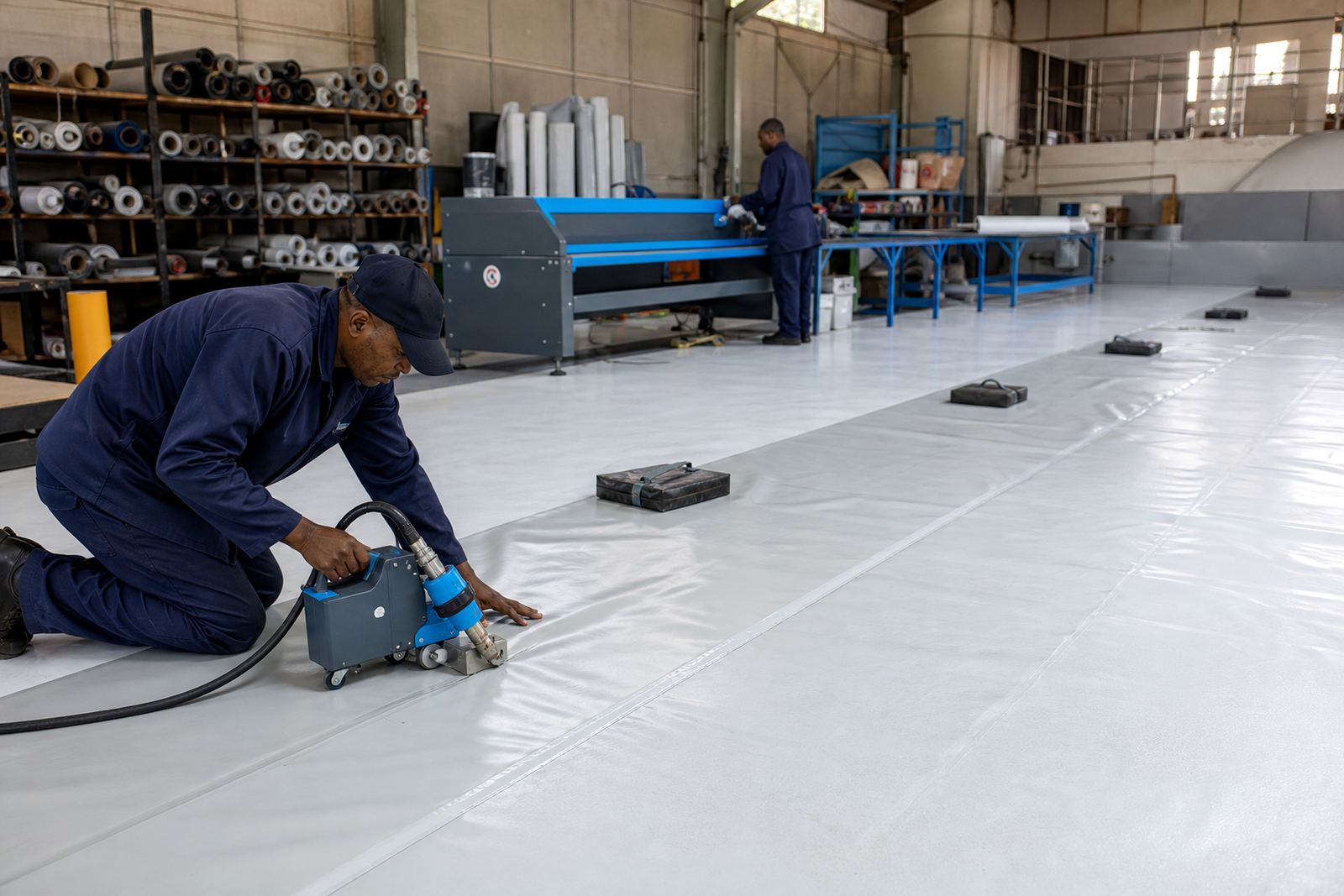
For this use, the machine choice depends on the material weight, the width of the join and how the skin will be mounted. High-frequency welding is often chosen for straight, repeatable seams on compatible PVC-coated fabrics. Hot-air and hot-wedge machines are also used where long runs, hems, sleeves and site adjustments are part of the job. The right set-up keeps the face of the skin even and the edge detail tidy, which matters on roadside boards and shopfront displays.
Typical welding setup for billboard skin work
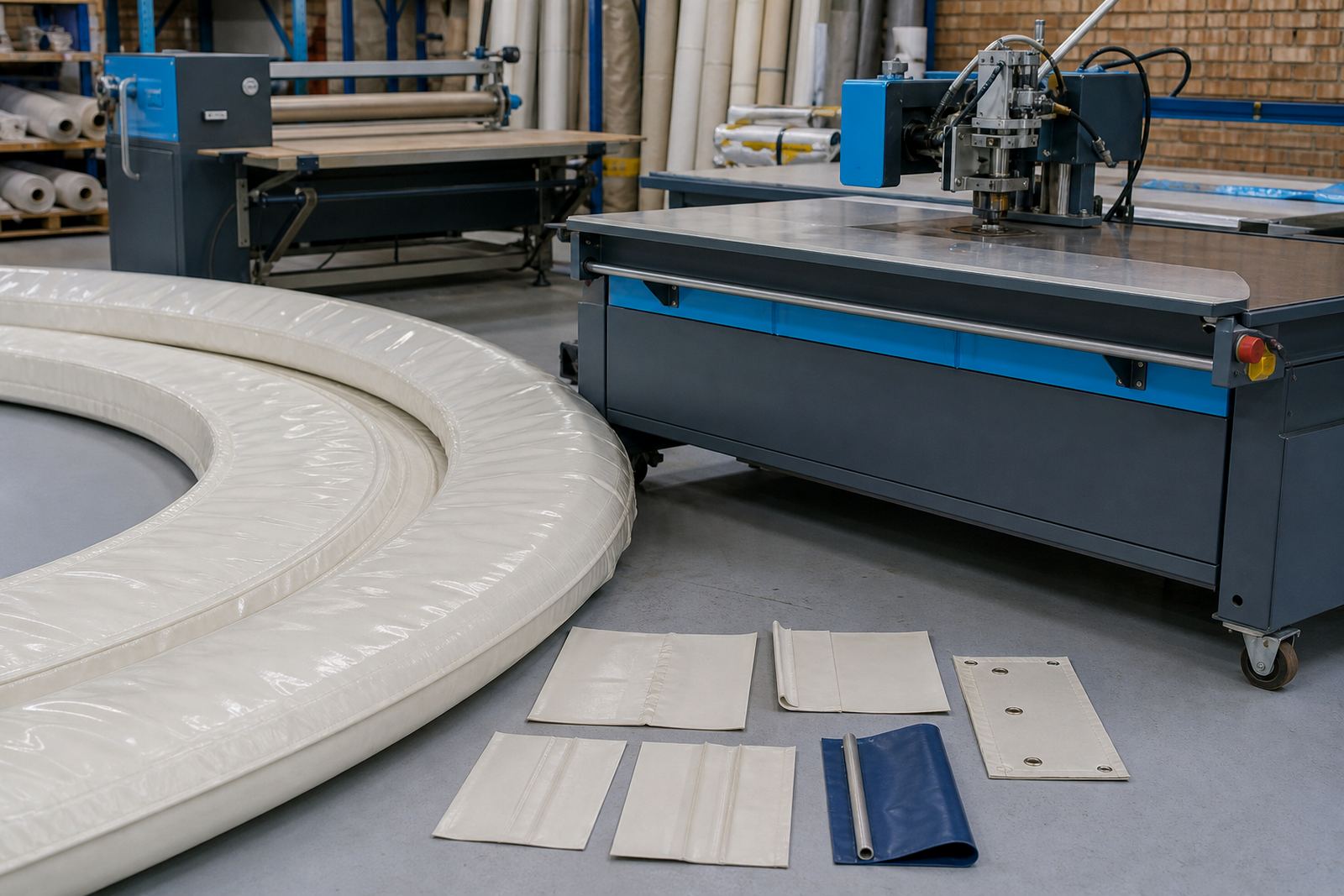
A workshop handling billboard skins will usually need more than one type of welder or attachment. Broad panels are often joined first, then the outer edges are finished with hems or pockets. Where a skin must be tensioned on a frame, keder can be added for a cleaner fit. Eyelets may also be used where the fixing method calls for tie-down points around the border.
- High-frequency welders for straight seam welding on suitable PVC-coated fabric
- Hot-air or hot-wedge units for hems, lap seams and longer edge runs
- Cutting and trimming tools for accurate panel prep before welding
- Keder tooling for framed display skins and repeat installations
- Eyelet pressing tools for border fixing and site fitting work
For banner and billboard work, even a small fault in alignment can show on the finished face. That is why tooling condition, pressure setting and guide alignment all matter before the first panel goes into the machine.
Layout planning before the first weld
Good planning saves fabric and avoids awkward joins. The print size, edge allowance and fixing method should be mapped before cutting begins. If the skin needs a return fold, allowance must be added for the hem. If keder is needed, the edge width and insertion path must be set out in advance. On windy sites in Durban or coastal Cape Town, a heavier edge detail may be safer than a light hem that flexes too much at the corners.
It also helps to plan for access on the machine bed. Large skins are easier to handle when the table space, feed path and operator movement are set to suit the panel size. For taller billboard faces, many teams work in stages, joining sections first and then finishing the perimeter in controlled runs. That method gives better control than trying to force one long sheet through without a proper lay out.
Common mistakes that show up on the board
Most problems on billboard skins start before welding begins. Poor cutting, damp fabric, dirty overlap zones and rushed alignment all leave marks that are hard to hide. A seam that looks fine in the workshop may also fail once it sees heat and tension on a live site.
- Uneven overlap, which creates a visible ridge across the face
- Overheating on hot-air work, which can distort the coating or edge
- Dirty or dusty weld zones, especially after cutting and handling
- Poor corner treatment, which causes curl and lift at the ends
- Using worn tooling, leading to weak seams and patchy finish
Operator handling matters as much as the machine. A well-trained team checks temperature, pressure, feed speed and seam line before each run. That is especially useful for shops doing mixed work, where banner hems one hour and billboard skins the next can use different settings.
Servicing that keeps production moving
HF and hot-air welders need regular attention if they are expected to hold consistent heat and pressure. Electrode condition, roller wear, air delivery, guide alignment and cable condition all affect the result. In humid coastal areas, and in dusty inland shops, routine cleaning helps prevent uneven output and premature wear.
PVCWelder supports machine installation, commissioning, operator training, preventive servicing, fault finding, tooling alignment, electrode refurbishment, roller replacement, parts supply, seam testing, site callouts and service plans. For workshops in Johannesburg, Pretoria, Bloemfontein, Durban and Cape Town, that support is often the difference between smooth production and stop-start work. A machine that is checked properly before a run is far less likely to leave a weak seam half way through a large skin.
Budget ranges for billboard skin jobs in Rand
Machine budgets vary with width, control type and the kind of finishing needed. A smaller hot-air unit for hems and repairs may sit in the lower tens of thousands of Rand, while heavier HF welding equipment for production joining can move into much higher ranges. Full workshop set-ups with tooling, tables and support equipment can rise well above that depending on output needs.
For the actual billboard skin job, the budget also depends on panel size, seam count, keder use, eyelet density and whether the work is one-off or repeat production. A simple skin with straight joins and basic hems costs less to process than a large display with multiple sections, reinforced corners and tight tolerances. Shops that plan the welding path early usually save on scrap and rework, which protects the Rand value of each job.
From Germiston to site, the details have to match
Billboard skin work moves quickly from the workshop to the fitting crew, so the finish has to hold up first time. A clean seam line, a properly formed hem and the right fixing detail make a clear difference when the skin is stretched across a frame or fixed to a sign structure. That is true for roadside boards, mall displays and event graphics with large surface areas.
PVCWelder supplies and services welding equipment for tarpaulin, banner and tent makers across South Africa, with support in Germiston, Johannesburg, Pretoria, Durban, Cape Town and Bloemfontein. The right machine set-up lets a team handle broad joins, accurate finishing and durable perimeter detailing without fighting the material at every stage.