

Welding equipment set for real workshop work
High-frequency, also called radio frequency, welding is used for PVC-coated fabrics where a strong, even seam is needed on tarpaulins, banners, tents and related products. Hot-air and hot-wedge systems are used for hems, overlap seams, repairs and lighter fabric work where controlled heat and steady pressure matter. The right setup depends on the fabric weight, seam width, production volume and the finish you need on the job.
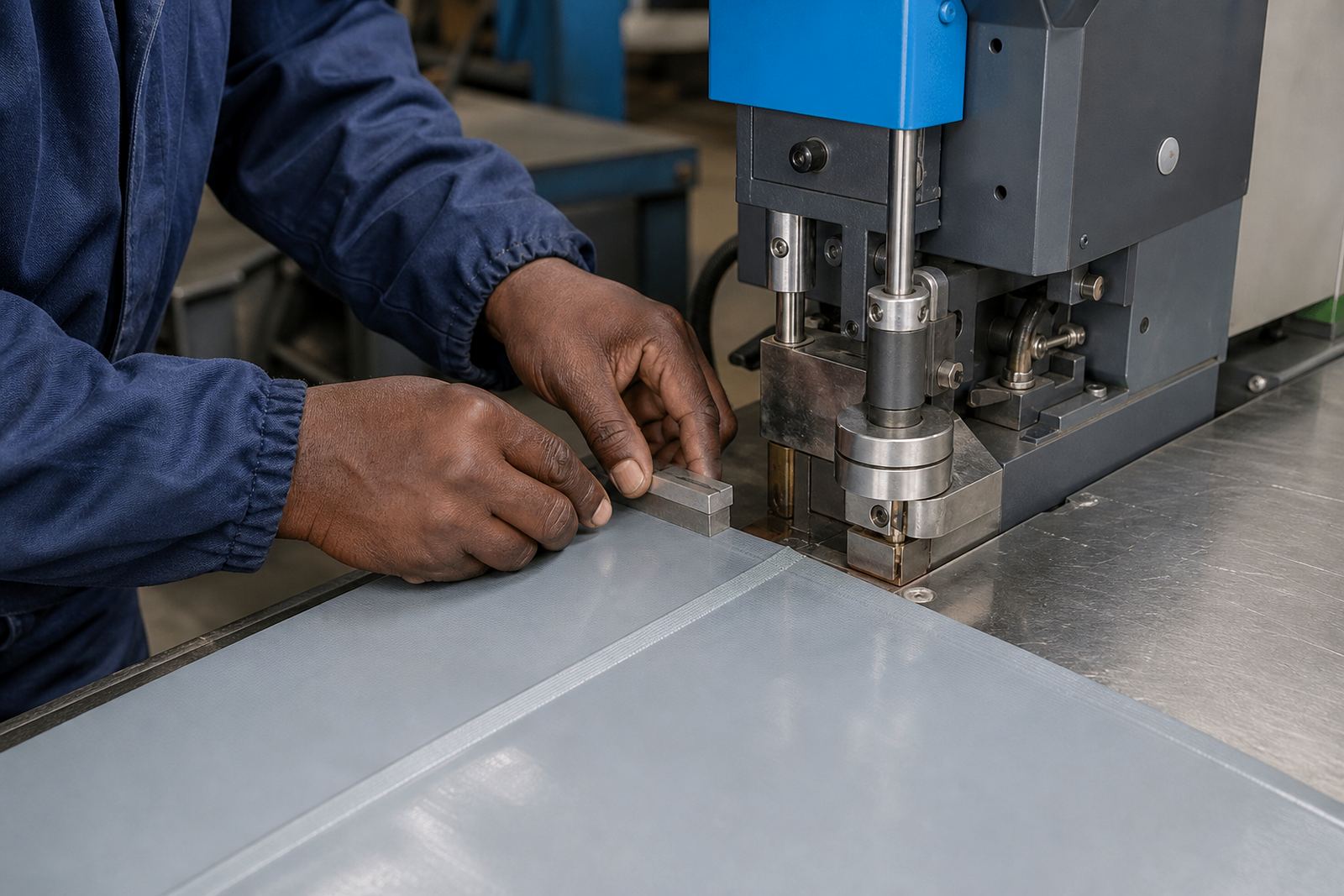
In a busy workshop, the machine must be matched to the material and the output expected each day. That includes the right tooling, the correct electrode or welding head, and a table arrangement that allows straight feeding, repeatable alignment and safe handling around the weld zone.
Choosing the right service path for your line
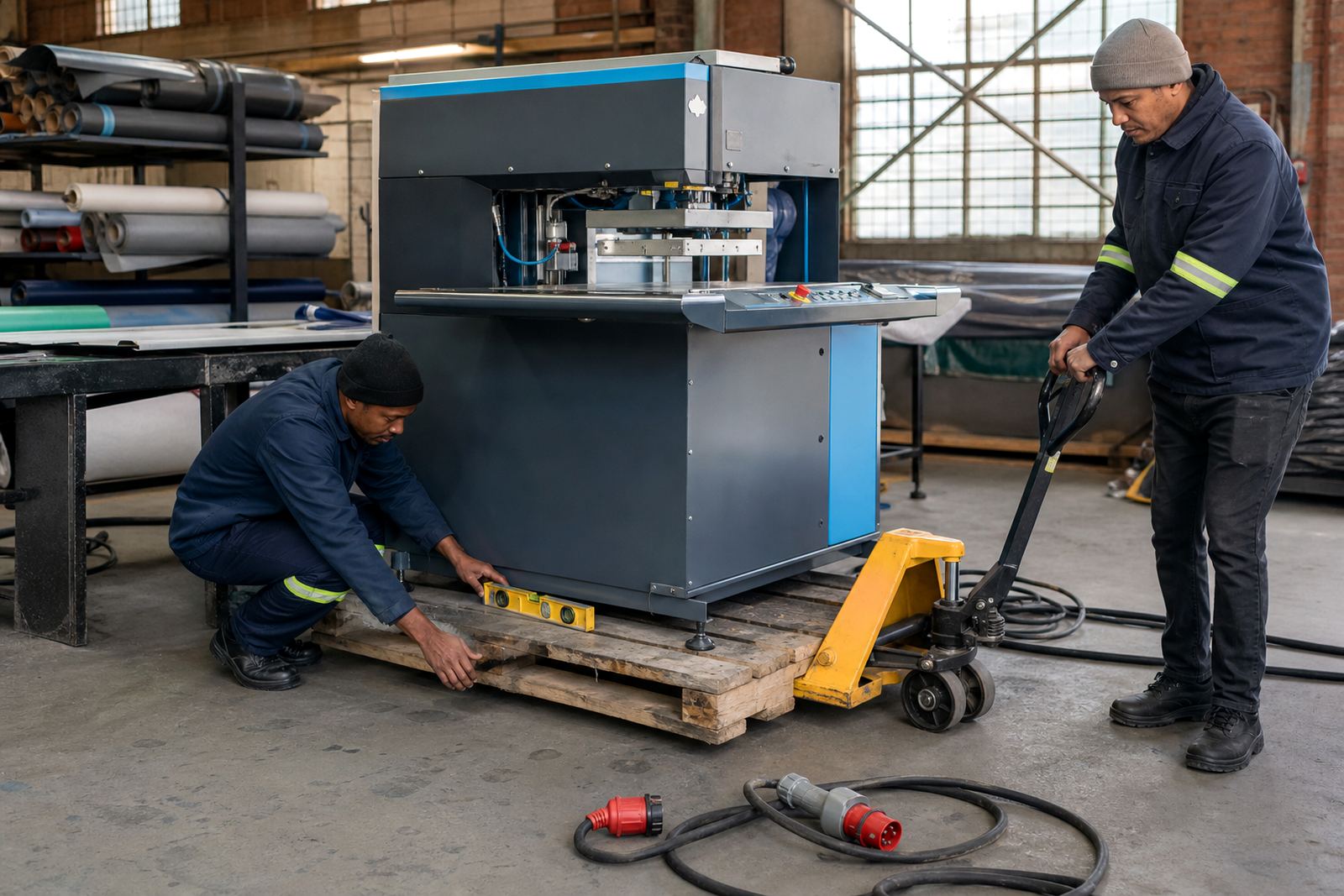
Some workshops need full installation and commissioning on a new machine. Others need fault finding after poor seam formation, edge lifting, uneven heat or inconsistent pressure. Many teams only need routine servicing, operator coaching or tooling checks to keep production steady.
- Machine installation and commissioning for new equipment
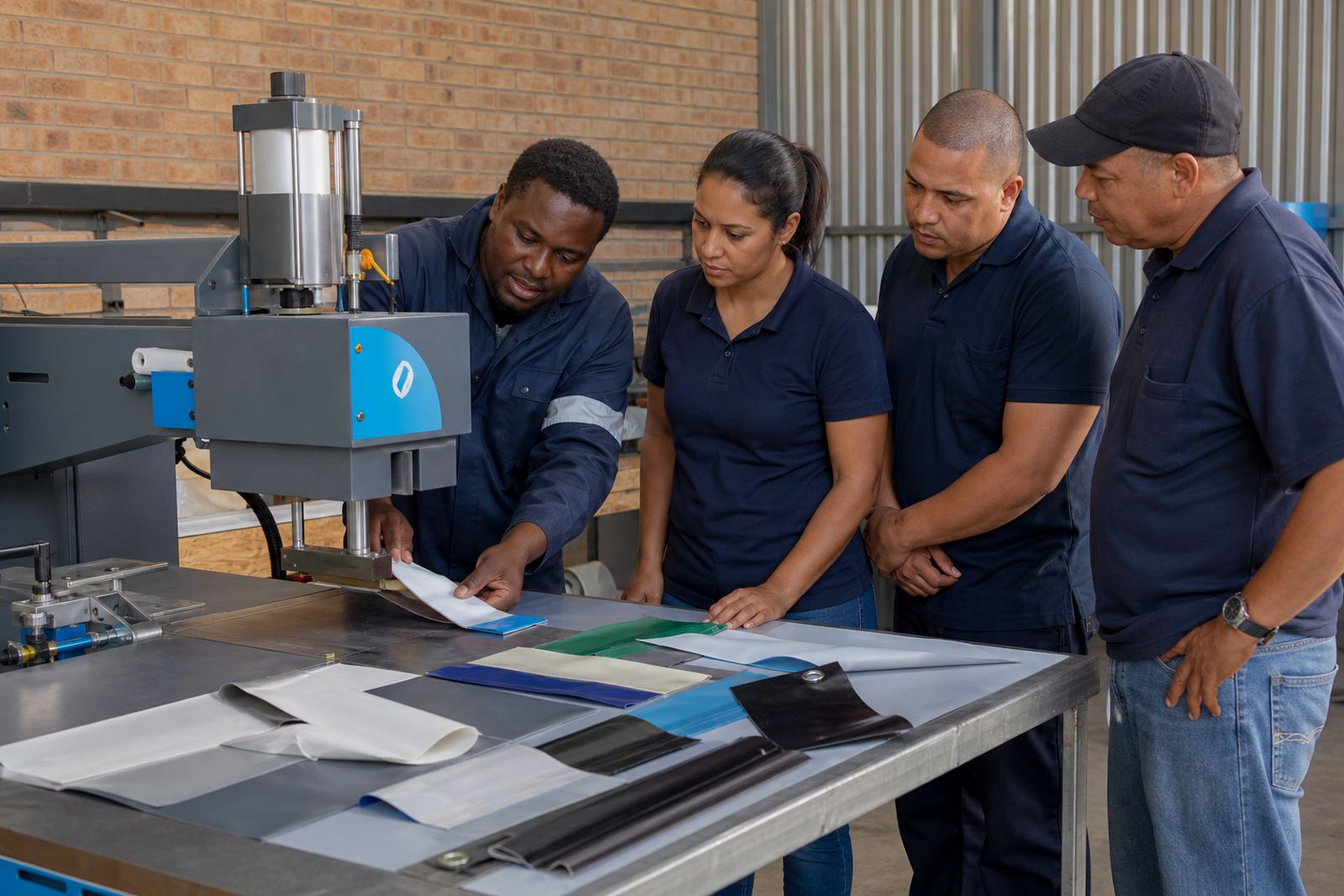
- Operator training for safe daily use
- Preventive servicing for high-frequency and hot-air systems
- Tooling alignment and seam testing for consistent results
- Site callouts for production stoppages and recurring faults
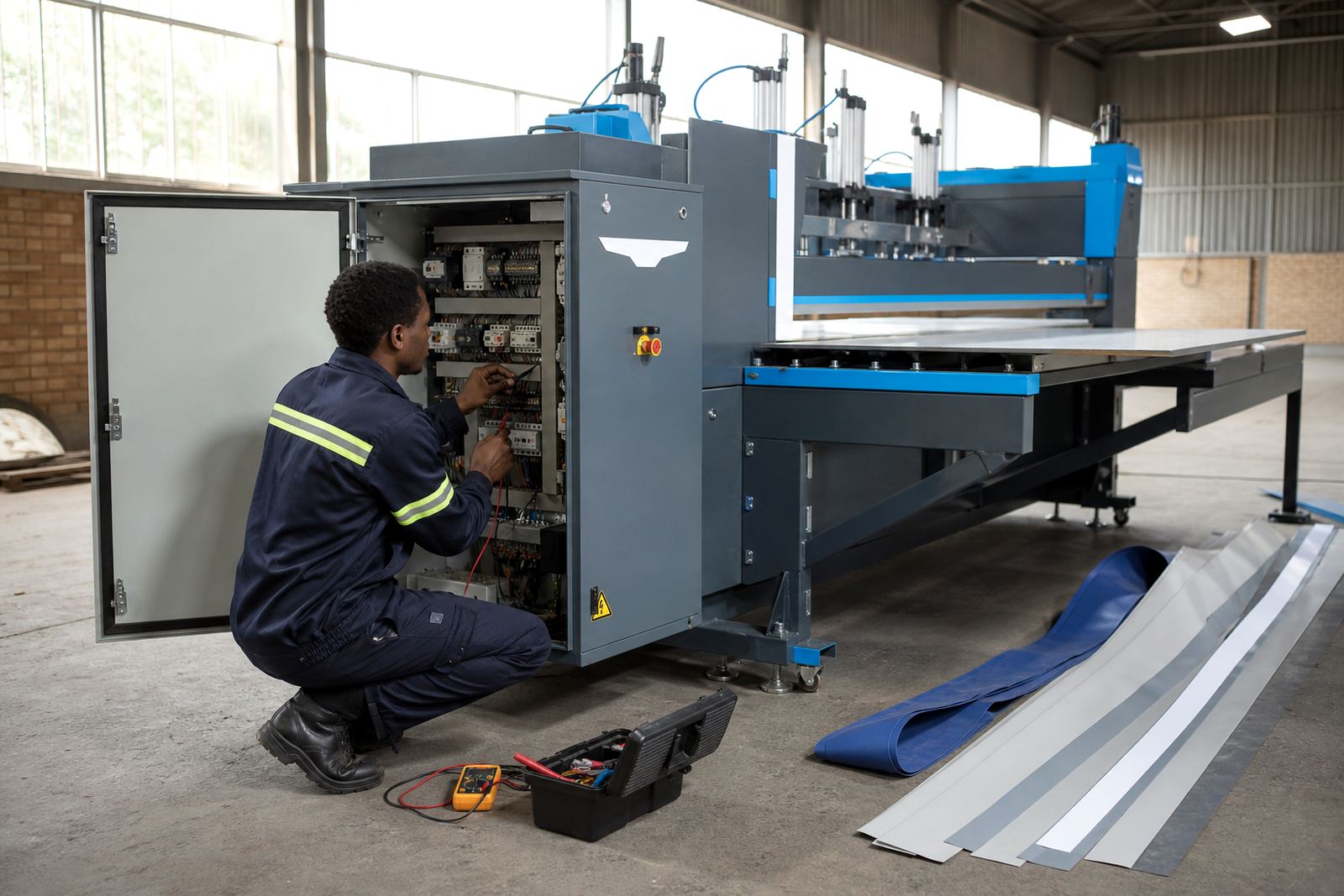
If a machine is running but the seams are not clean, the issue may sit in alignment, pressure, worn tooling, dirty contact points or the wrong weld settings for the fabric. A proper service checks the machine as a whole, not only the visible fault.
Seam types, hems and finishing details
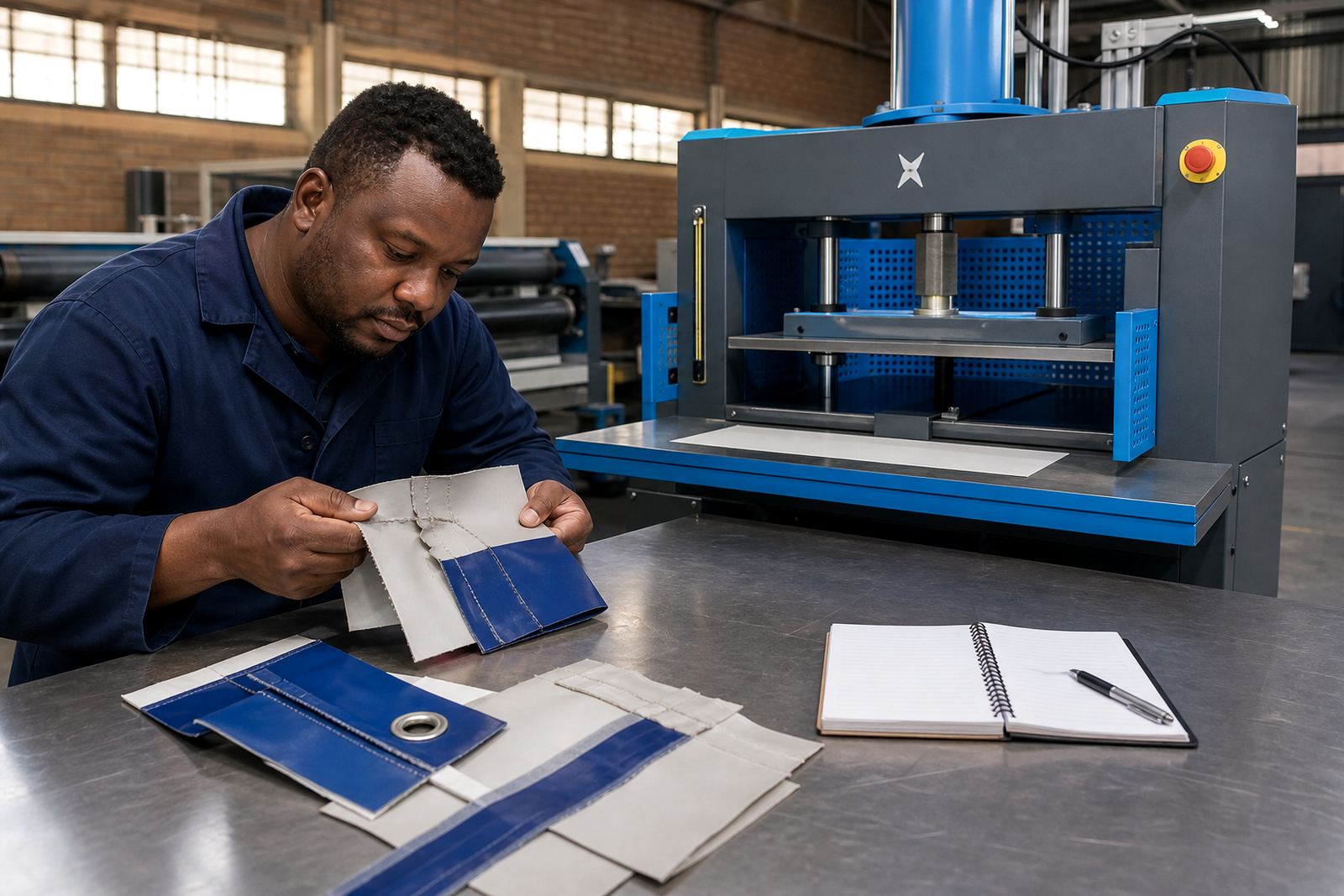
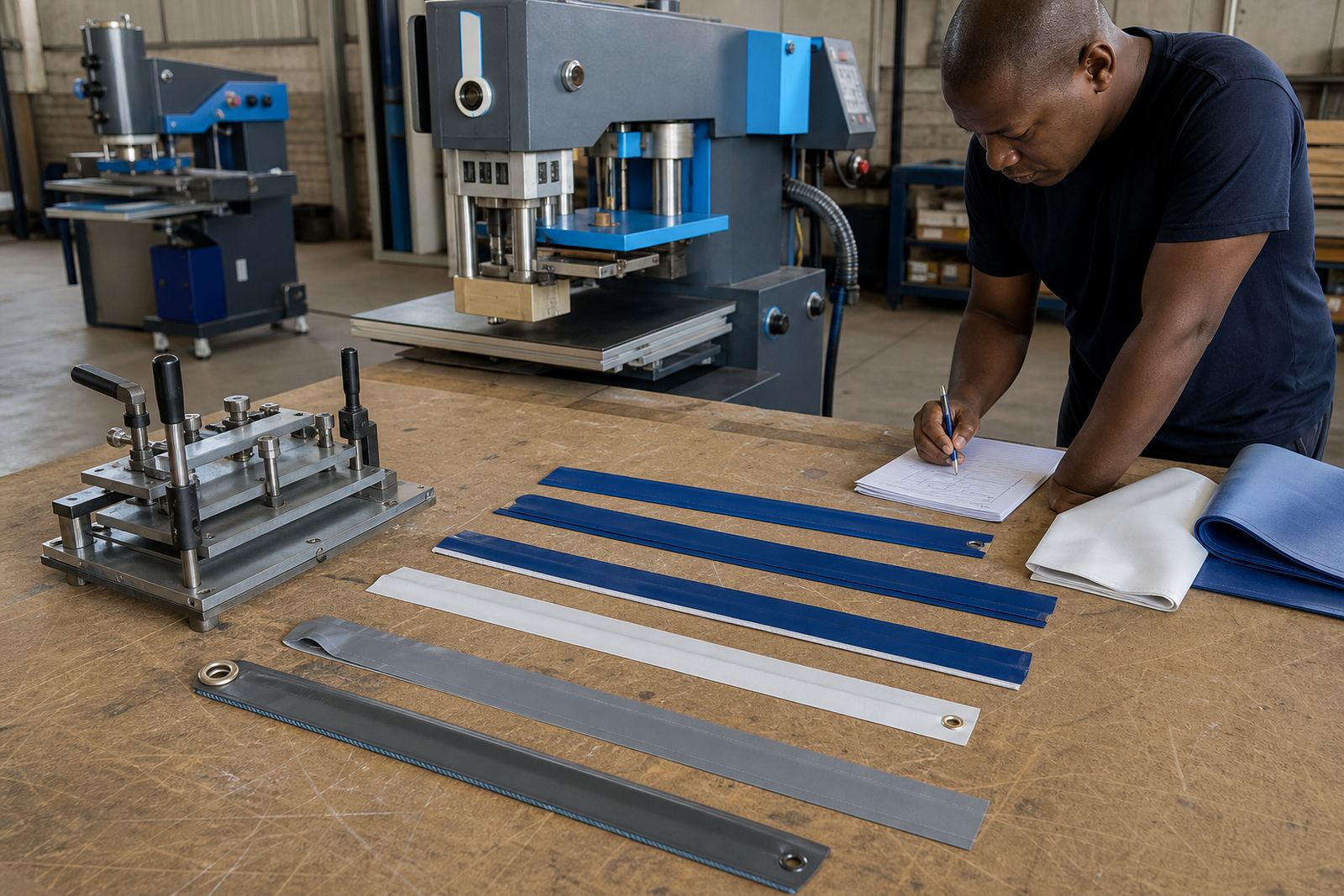
Tarpaulin and banner work often needs different seam types depending on the job. Straight lap seams are common, while hems are used for edge strength and better handling. Keder work needs consistent feeding and accurate weld placement so the profile sits properly in the track. Eyelets are usually added after welding, with spacing planned to suit the load and the way the item will be hung or tensioned.
Good seam work depends on clean cutting, even pressure and control at the corners and joins. When the weld path is off by a few millimetres, the finish may still hold but the product can look untidy and be harder to fit on site.
What servicing keeps a weld machine honest
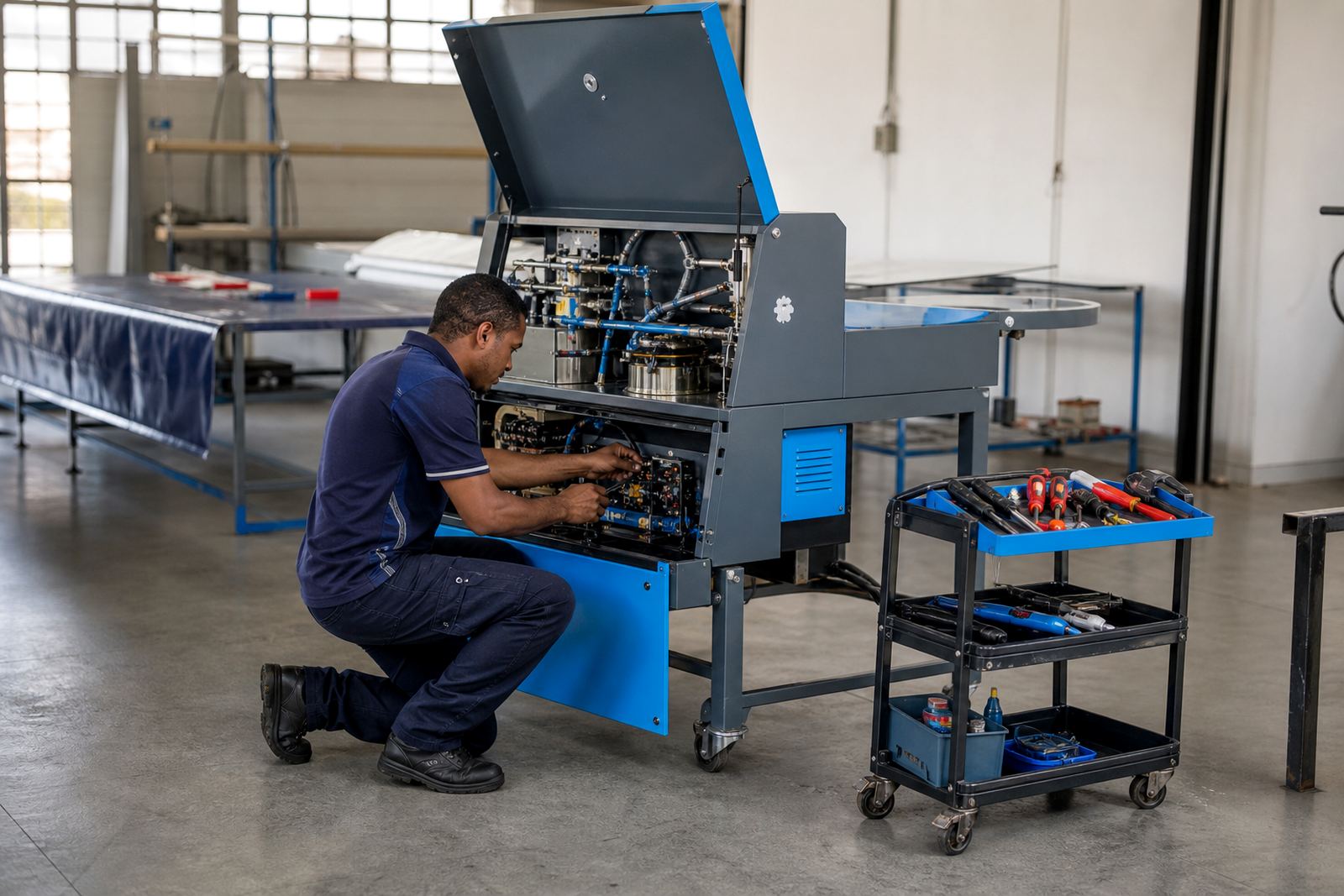
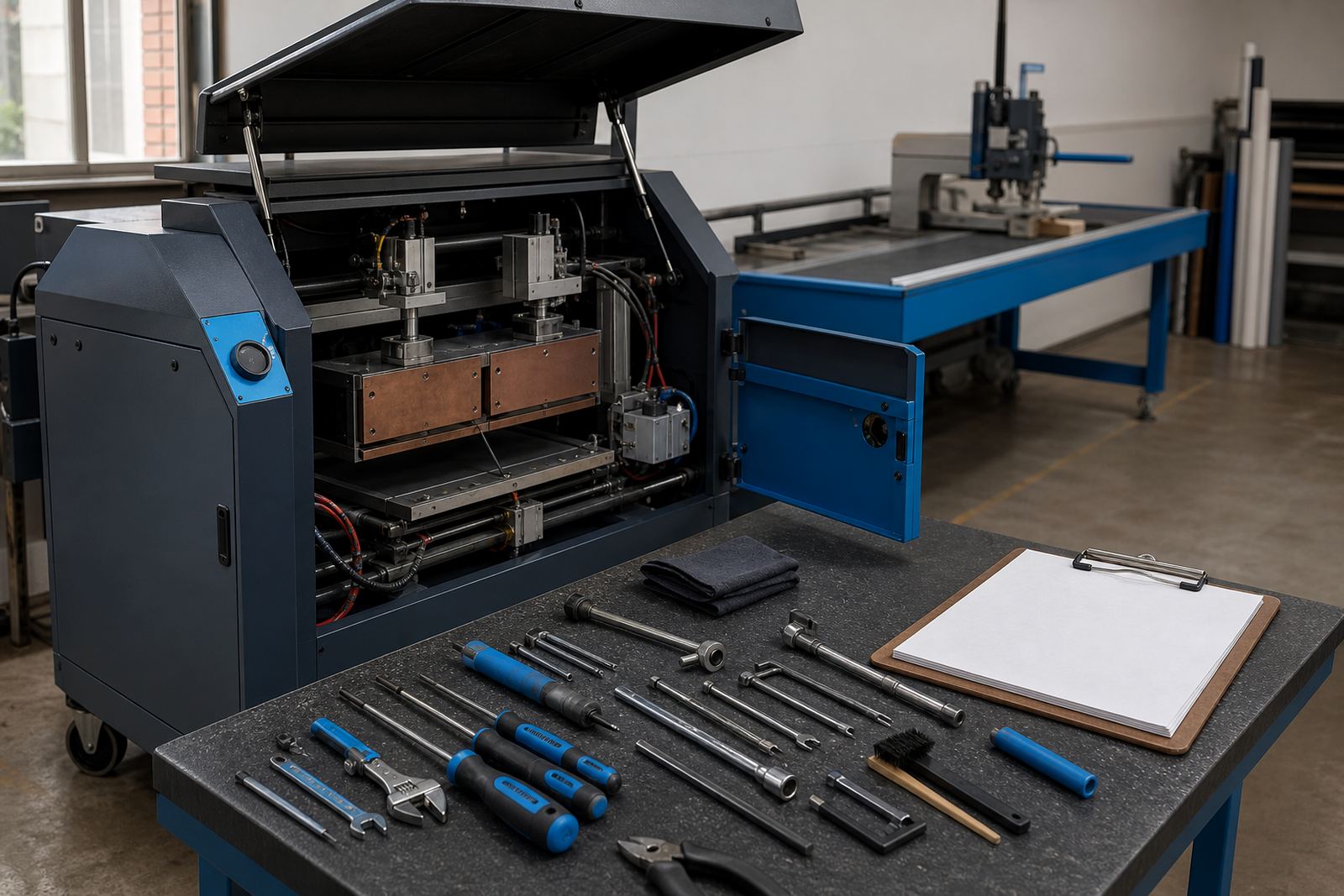
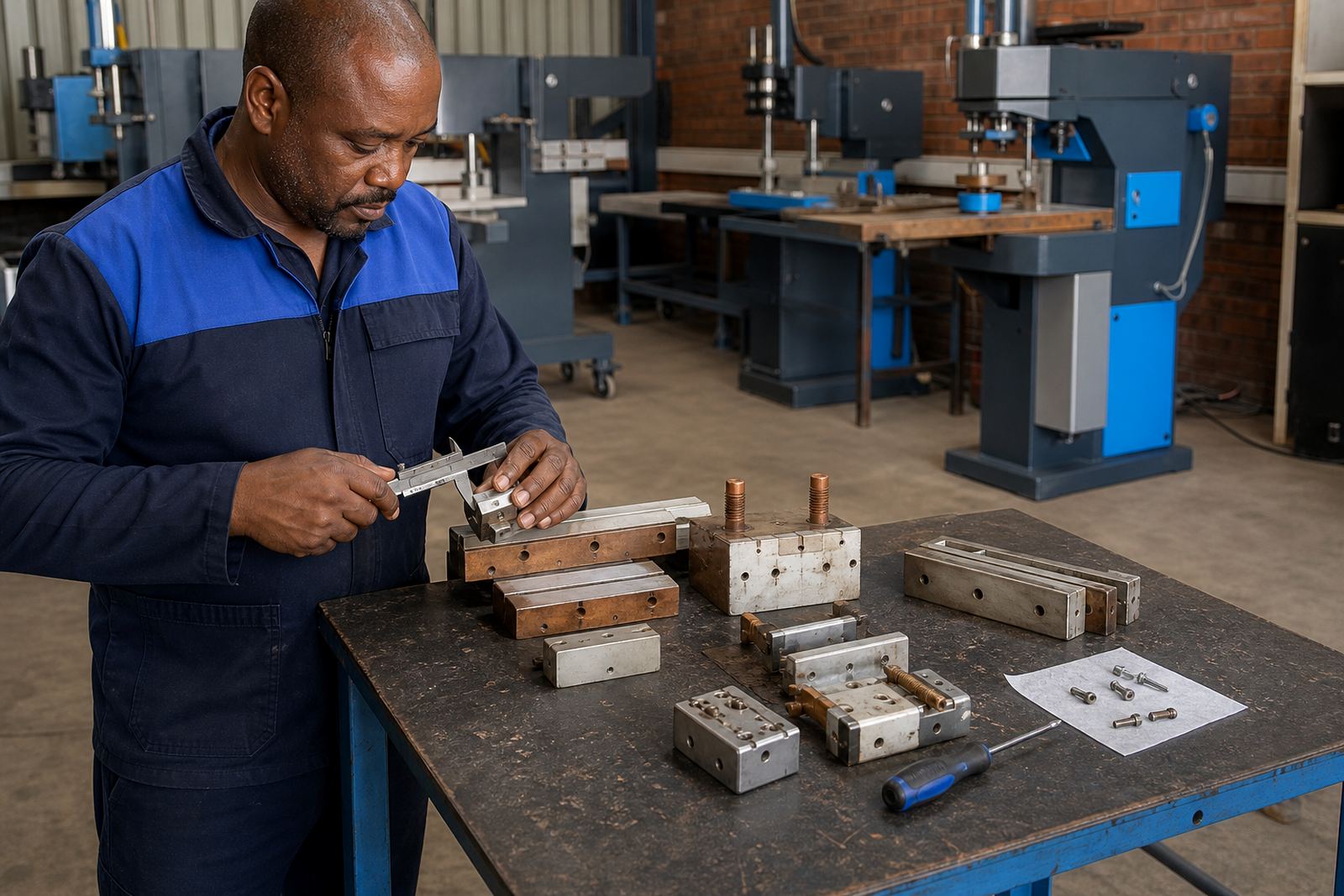
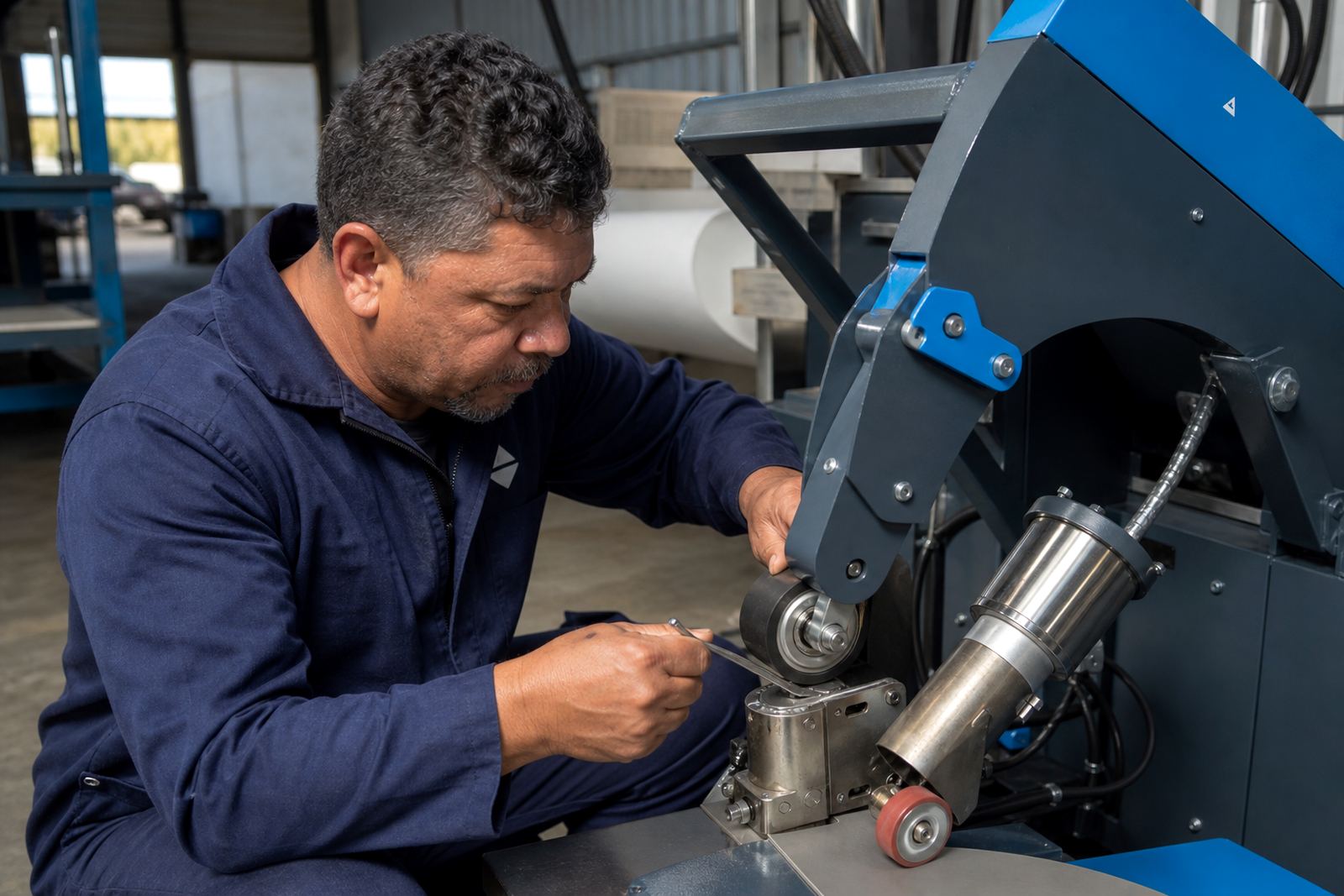
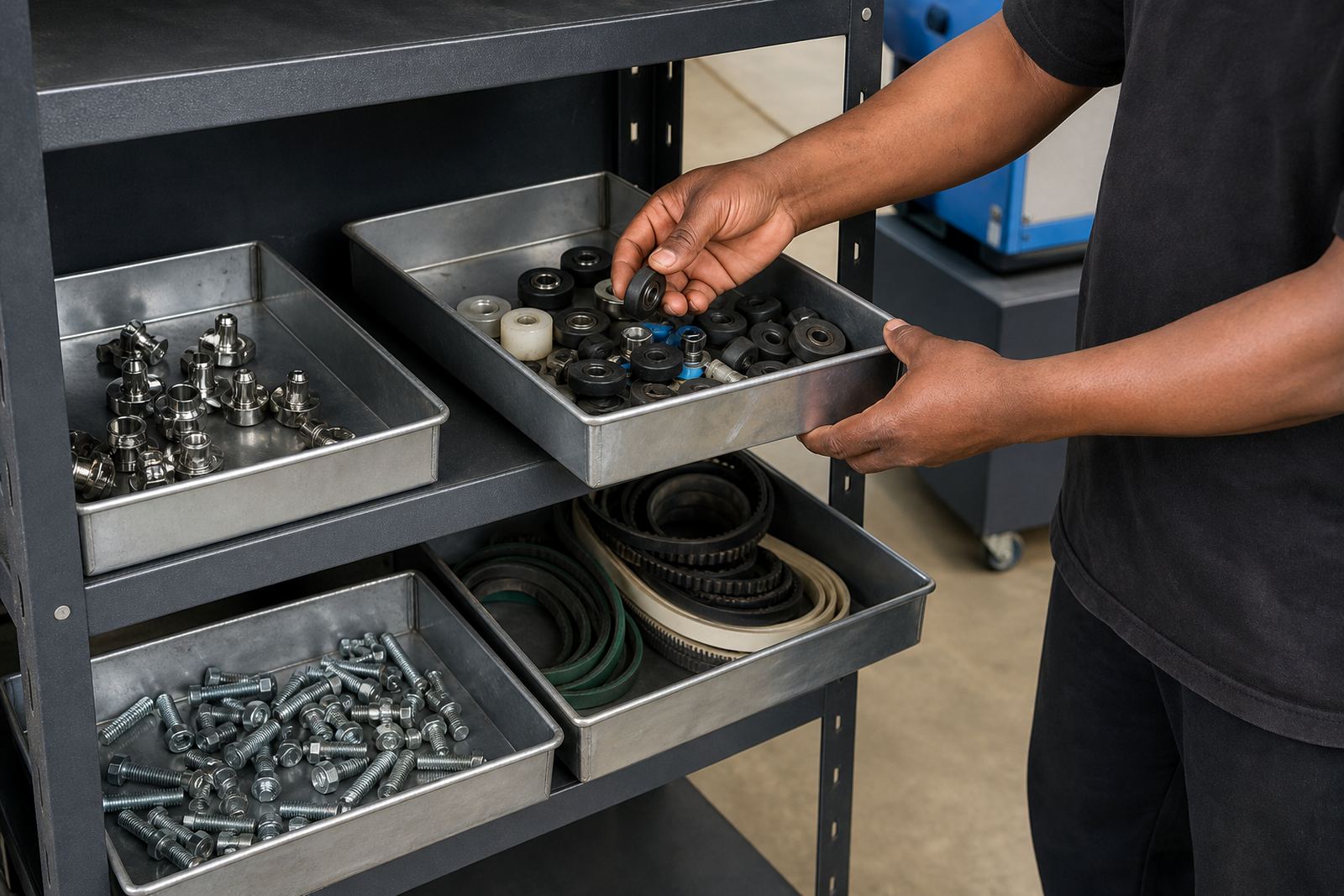
Regular servicing helps prevent small faults turning into long downtime. On high-frequency machines that means checking electrodes, alignment, arcing points, guards, pressure systems and electrical connections. On hot-air and hot-wedge units it also includes heaters, rollers, nozzles, wedges, drive parts and the condition of the guides that keep fabric tracking straight.
- Electrode refurbishment and replacement
- Roller replacement and pressure checks
- Tooling alignment and seam testing
- Parts supply for worn or damaged components
Dust, adhesive residue and offcuts can build up quickly in a tarpaulin shop. In coastal areas like Durban and Cape Town, humidity can also affect storage and metal parts, so cleaning and protection of the machine matter as much as the weld settings.
Operator safety and steady handling
Welding equipment should be set up so operators can work without reaching across hot surfaces, moving rollers or pinch points. Training covers safe clamping, proper feeding of fabric, lock-off steps during adjustments and the correct way to check the seam before the next run. Good habits reduce burns, misfeeds and wasted material.
Safe operation also means keeping the work area clear, using the correct lifting method for heavy rolls and making sure guards, stops and controls are understood by everyone on the floor. A trained operator usually spots a wear problem early, before it affects the whole batch.
Servicing across Germiston and the main production centres
From Germiston in Ekurhuleni, PVCWelder supports workshops across Johannesburg, Pretoria, Durban, Cape Town and Bloemfontein, with service coverage also reaching Boksburg and Benoni. That matters for firms running repeated jobs for signage, transport covers, event structures and tent making, where one machine out of action can hold up several orders.
Site callouts, service plans and parts support help keep the equipment in line with the work being done. Mandla Mnisi leads the business with the team covering sales, service, installation, training and support so workshops can keep their welding line set up properly and working to spec.