What Roller Replacement Covers on PVC Welding Machines
Roller replacement is the service that restores the part of the machine that grips, presses and guides PVC-coated fabric while the weld is formed. On tarpaulin, banner and tent work, a worn roller can leave drag marks, slip on the feed path or press too lightly on hems, keder and lap seams. That shows up quickly in the finished work, especially on long runs and wider sheets where alignment has to stay steady from one end to the other.
We replace pressure rollers on high-frequency and hot-air or hot-wedge welders used for PVC-coated fabrics. The work is suited to machines making overlap seams, hem folds, reinforcement strips, pocket seams, keder pockets and eyelet-ready edges. Where required, we also inspect the mating surfaces, shaft fit, bearings and adjacent guides so the new roller works properly in the whole feed assembly.
- Pressure rollers for feed and seam pressing systems
- Wear checks on surface hardness, glazing and edge damage
- Fitment checks for shaft, bush and bearing condition
- Alignment checks for hems, keder and straight seam runs
When a Roller Needs Attention
Operators often notice the change before a machine stops completely. A roller that has gone flat or become polished can let the fabric creep, especially on wider banner stock or heavier tarpaulin grades. You may also see waviness on the seam line, uneven pressure on one side, or feed marks that show the roller is no longer gripping evenly. In humid coastal conditions, some roller materials age faster and can become brittle or sticky, depending on storage and heat exposure.
On machines used every day in signage, event graphics and shelter work, the signs are usually practical rather than dramatic. Feed tension changes, the seam looks less crisp, and the operator has to keep correcting the material by hand. That increases risk around the weld zone and makes repeat work harder to keep consistent.
- Uneven seam finish across the width of the weld
- Slip at the feed rollers during longer runs
- Marks, cuts or glazing on the roller surface
- More manual correction needed by the operator
Our Replacement Process in the Workshop or On Site
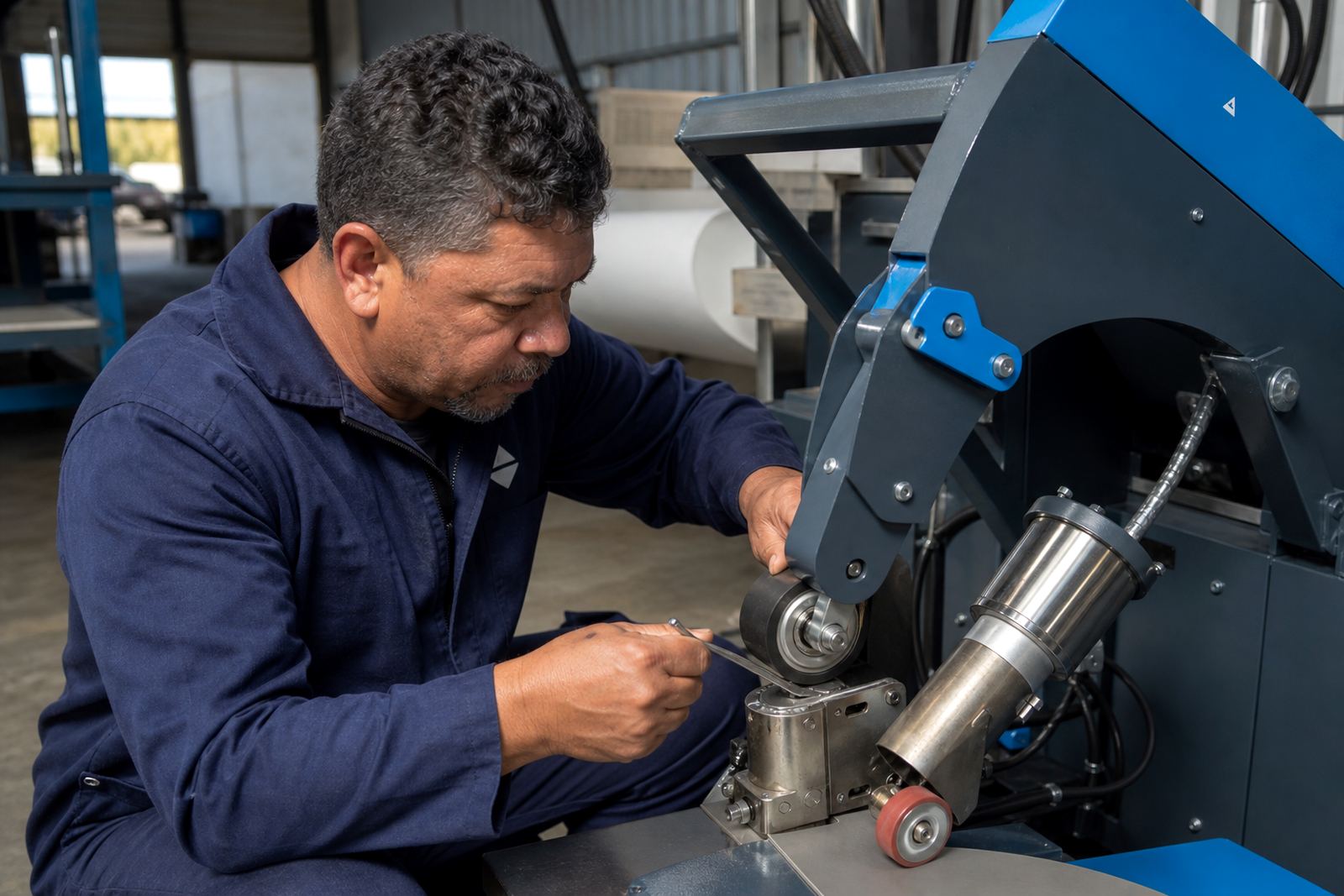
We start by checking the machine type, roller size, mounting style and the condition of the surrounding parts. Some units use solid pressure rollers, while others use coated rollers or matched roller pairs that must sit square to the feed path. Once the wear pattern is confirmed, the damaged roller is removed and the replacement is fitted, aligned and tested against the machine's travel and pressure setting.
For site callouts in Germiston, Johannesburg, Pretoria, Durban, Cape Town, Bloemfontein and surrounding areas, the job is handled in a way that keeps the machine safe and ready for testing before it returns to service. If the roller was damaged by heat build-up, poor tracking or a seized bearing, we look at the cause as well as the part itself. That helps avoid the same fault reappearing too soon.
- Identify roller size, profile and mounting style
- Remove worn parts and inspect shafts, bearings and guides
- Fit new roller and set alignment to the weld path
- Test feed control on a sample seam or test strip
Specs We Match During Replacement
Rollers are not treated as generic parts. We match them to the machine's working width, pressure needs and seam style. A roller used for light banner work is not the same as one pushing thick tarpaulin through a heated seam zone. Correct diameter, surface finish and axle fit all matter, because a small mismatch can affect line tracking and seam quality.
Where the machine handles hems, eyelet reinforcement or keder edging, the pressure profile has to suit the finished edge too. A roller that is too hard can mark the material. One that is too soft may not hold the feed evenly, especially on long straight seams. We also check heat exposure around the roller zone, because too much heat can shorten the life of the part and reduce contact consistency.
- Roller diameter matched to machine carriage and feed path
- Surface type matched to PVC-coated fabric and seam pressure
- Axle and bearing fit checked for smooth rotation
- Working width matched to the machine's welding throat
- Compatibility with hems, keder and overlap seams
- Heat exposure and wear pattern checked before handover
Pricing Approach and What Affects the Cost
Pricing depends on the roller type, the condition of the shaft or bearing set, and whether the machine needs a basic swap or a fuller inspection. If a roller has damaged nearby parts, the final cost may also include alignment work or extra components. We keep the pricing approach practical and item based, so the customer knows what is being replaced and why.
For workshops across South Africa, it helps to separate the cost of the part from the labour involved in fitment and testing. A straightforward replacement on a standard feed assembly is different from a machine with heat damage, seized rollers or worn tooling alignment. We also consider whether the job is done in the workshop or during a site visit, since access and machine condition can change the work required.
- Part type and machine size
- Condition of bearings, shafts and adjacent guides
- Need for alignment or seam testing
- Workshop replacement or on site callout
Aftercare After the New Roller Is Fitted
Once the new roller is installed, we check feed feel, seam pressure and the way the fabric tracks through the machine. Operators are shown what to watch for in the first few runs, including unusual drag, side pull or a change in seam finish. If the machine is used on long banner lengths or heavy tarpaulin, the early checks help catch a setup issue before it affects a full order.
We also advise on clean handling around the roller area. Adhesive build-up, dust, offcuts and hardened residue can shorten roller life if they are left to sit on the surface. For machines running in busy production rooms, a quick wipe-down and a visual check before work starts can make a clear difference. Small things matter here, especially where the weld zone runs hot and operators are moving fast.
- Check feed tracking on a sample run after fitting
- Keep the roller surface clean and free of residue
- Watch for heat marks or side wear during early use
- Book follow-up servicing if the machine shows uneven pressure
Service Support Across South Africa
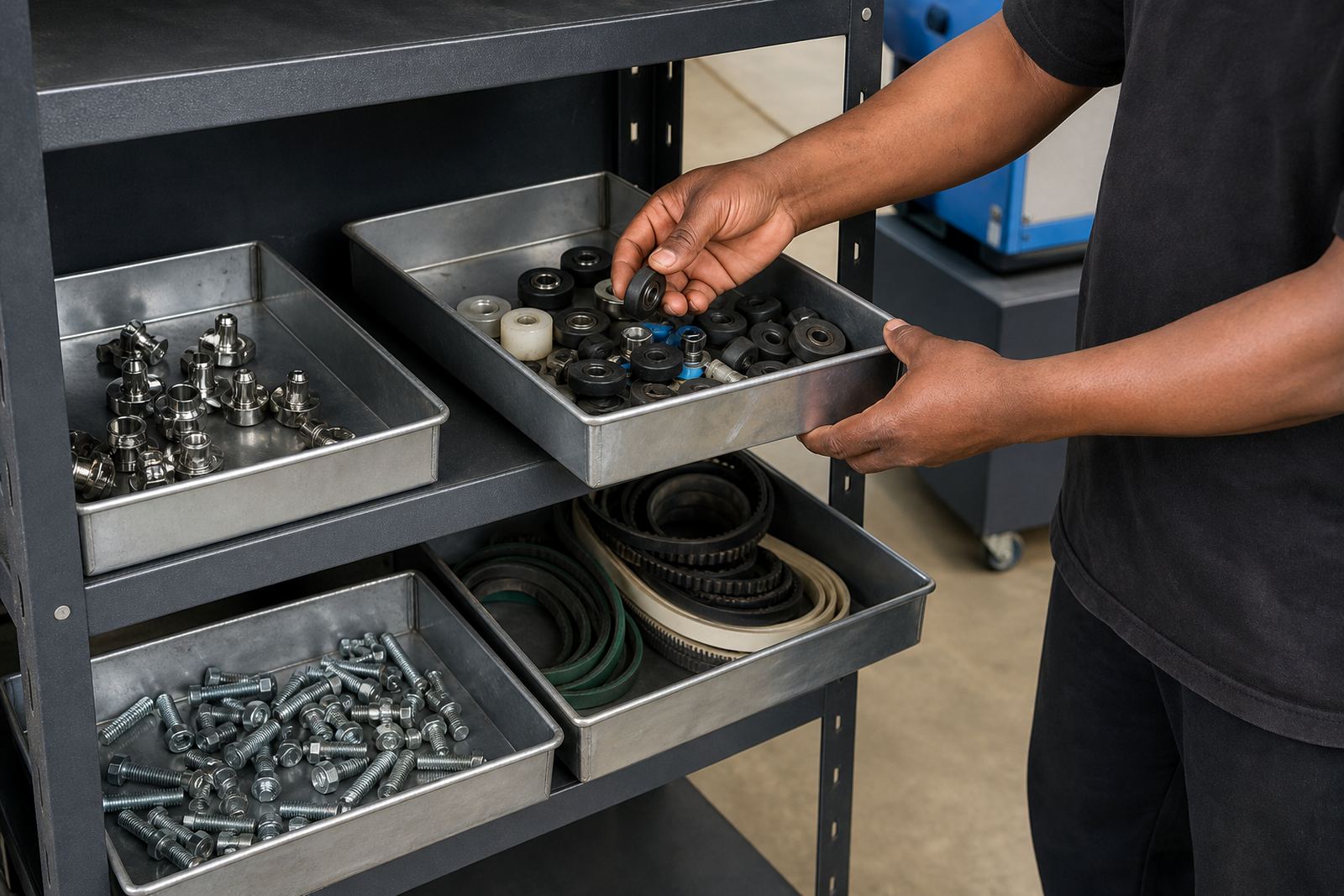
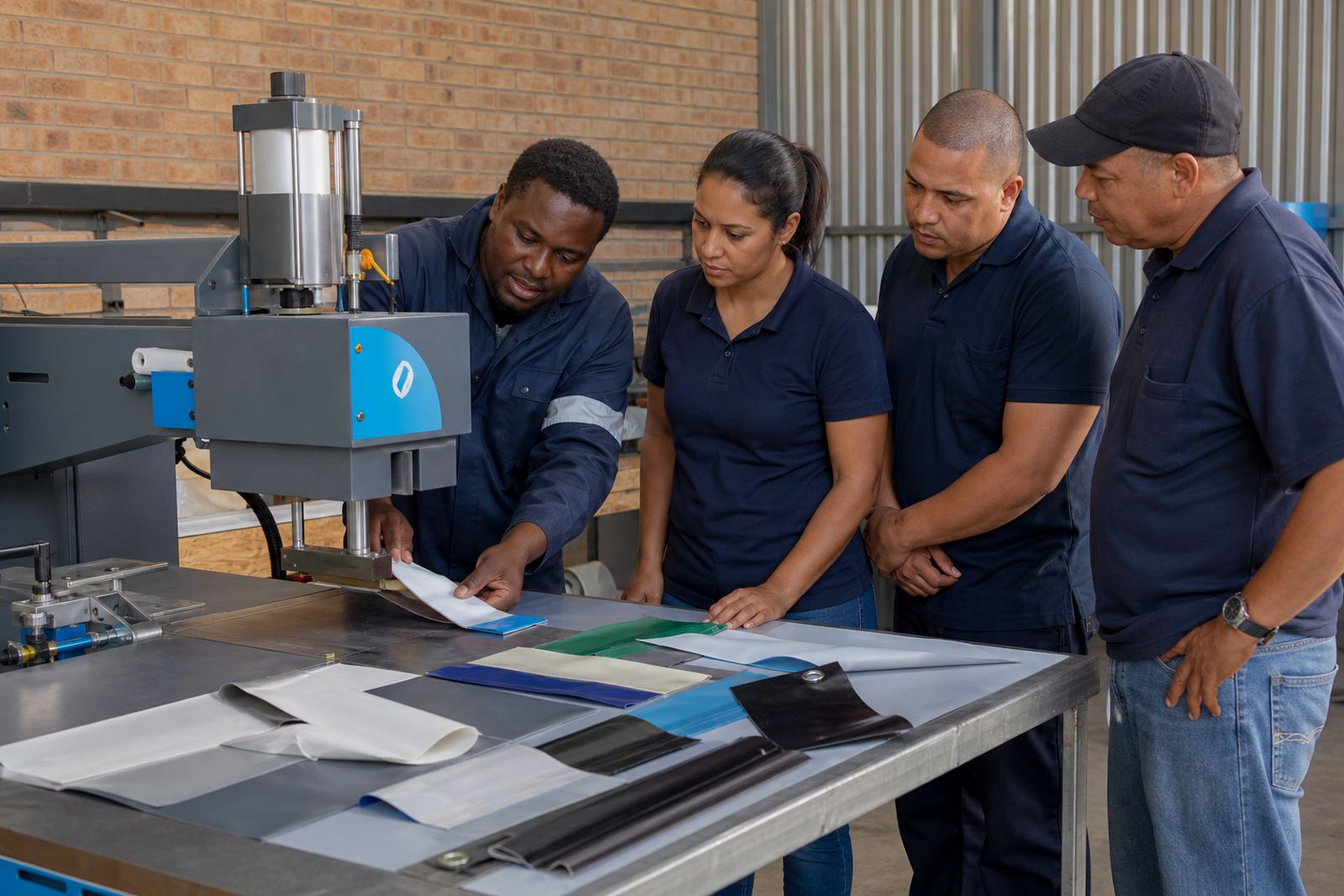
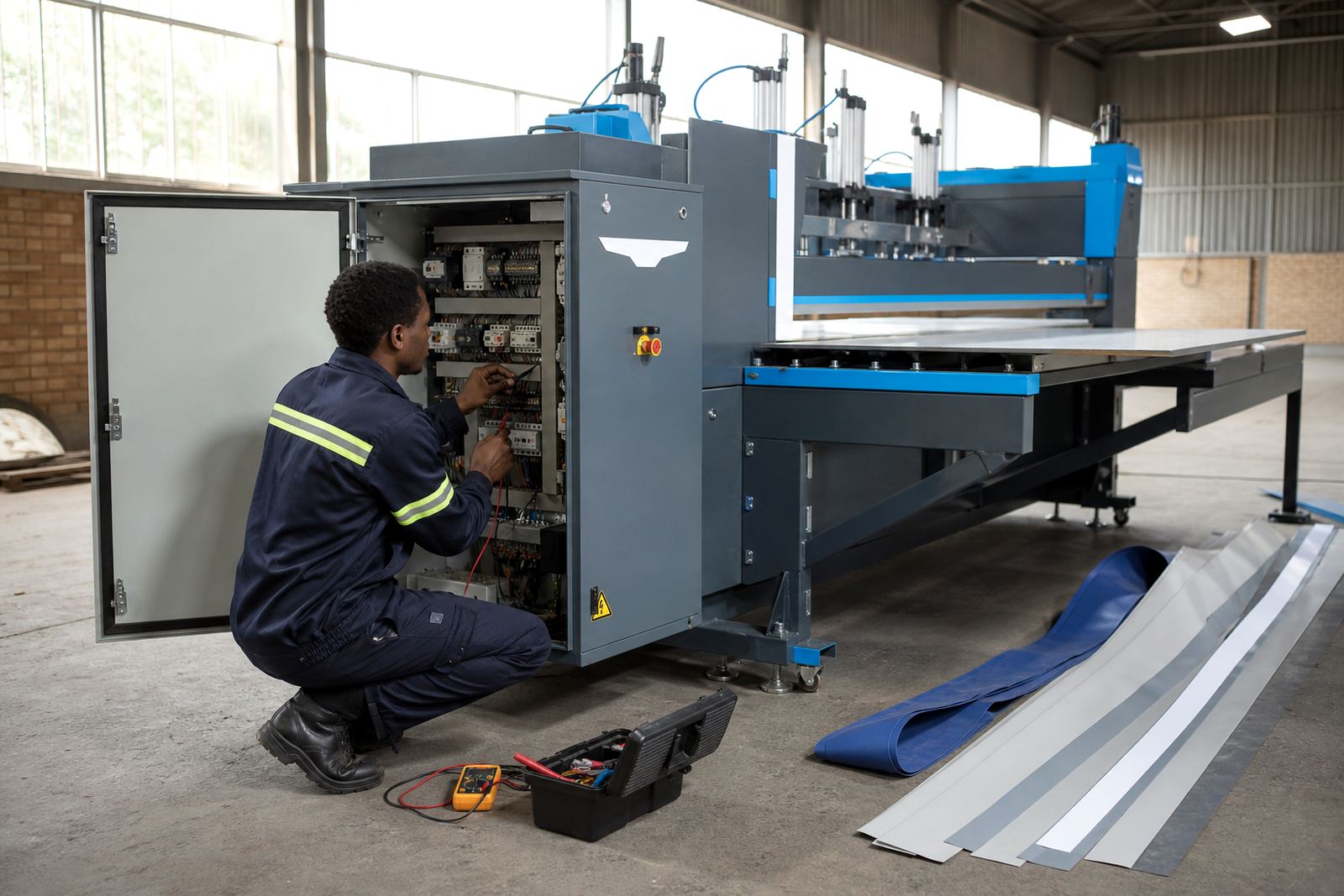
PVCWelder supports tarpaulin, banner and tent makers from Germiston, Ekurhuleni to Johannesburg, Pretoria, Durban, Cape Town and Bloemfontein, with branch support also in Boksburg and Benoni. Our team handles roller replacement alongside installation, commissioning, operator training, fault finding, tooling alignment, electrode refurbishment, seam testing and parts supply. That helps keep the machine and the weld result in the same conversation, not as separate problems.
Whether the work is high-frequency radio frequency welding or heated wedge and hot-air seam work, the roller has to match the pressure pattern the machine needs. When it does, the feed stays controlled and the seam finish is cleaner. When it does not, the operator ends up fighting the machine. That is usually the point where replacement makes more sense than trying to push a worn part for a little longer.
- Workshop and site support from Germiston, Ekurhuleni
- Service for machines used in signage, display and shelter work
- Replacement support for feed rollers and pressure rollers
- Help with machine setup after the part is fitted
Key facts
| Service type | Pressure roller replacement for PVC welding machines |
|---|---|
| Machine types | High-frequency, hot-air and hot-wedge welders |
| Materials | PVC-coated fabrics for tarpaulins, banners and tent work |
| Common seam work | Overlap seams, hems, keder pockets and eyelet reinforcement |
| Areas served | Serving workshops in Germiston, Johannesburg, Pretoria, Durban, Cape Town and Bloemfontein |
| Support options | Workshop fitting, site callouts, testing and follow-up support |