What your operators work through on the day
Training is hands-on and tied to the work your crew already does on the factory floor or at site. We cover high-frequency welding for PVC-coated fabrics, plus hot-air and hot-wedge joining where the job calls for long seams, cleaner finishes or shaped pieces. The session is set around the machine type in use, the material thickness and the seam style your team needs for tarpaulins, banners, shade products and tent panels.
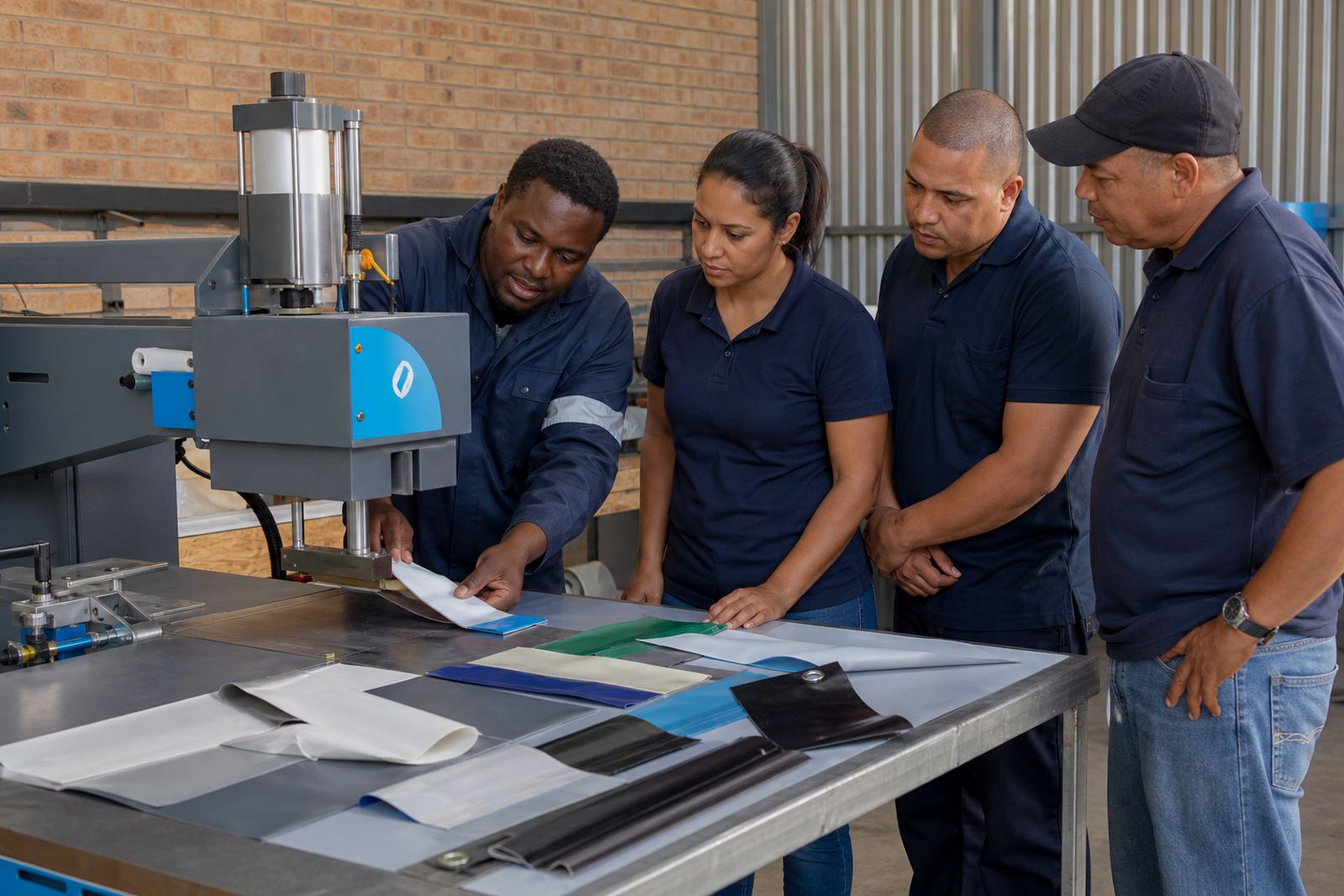
Operators are shown how to load material squarely, check overlap, set pressure correctly and read the seam line before a piece moves into production. The aim is steady output, fewer reworks and safer handling when working with heated tools, moving rollers and clamping parts.
- Safe startup and controlled warm-up checks
- Material handling for PVC-coated fabrics, mesh-backed banner stock and coated sheeting
- Setting seam width, overlap and pressure for straight seams and corner work
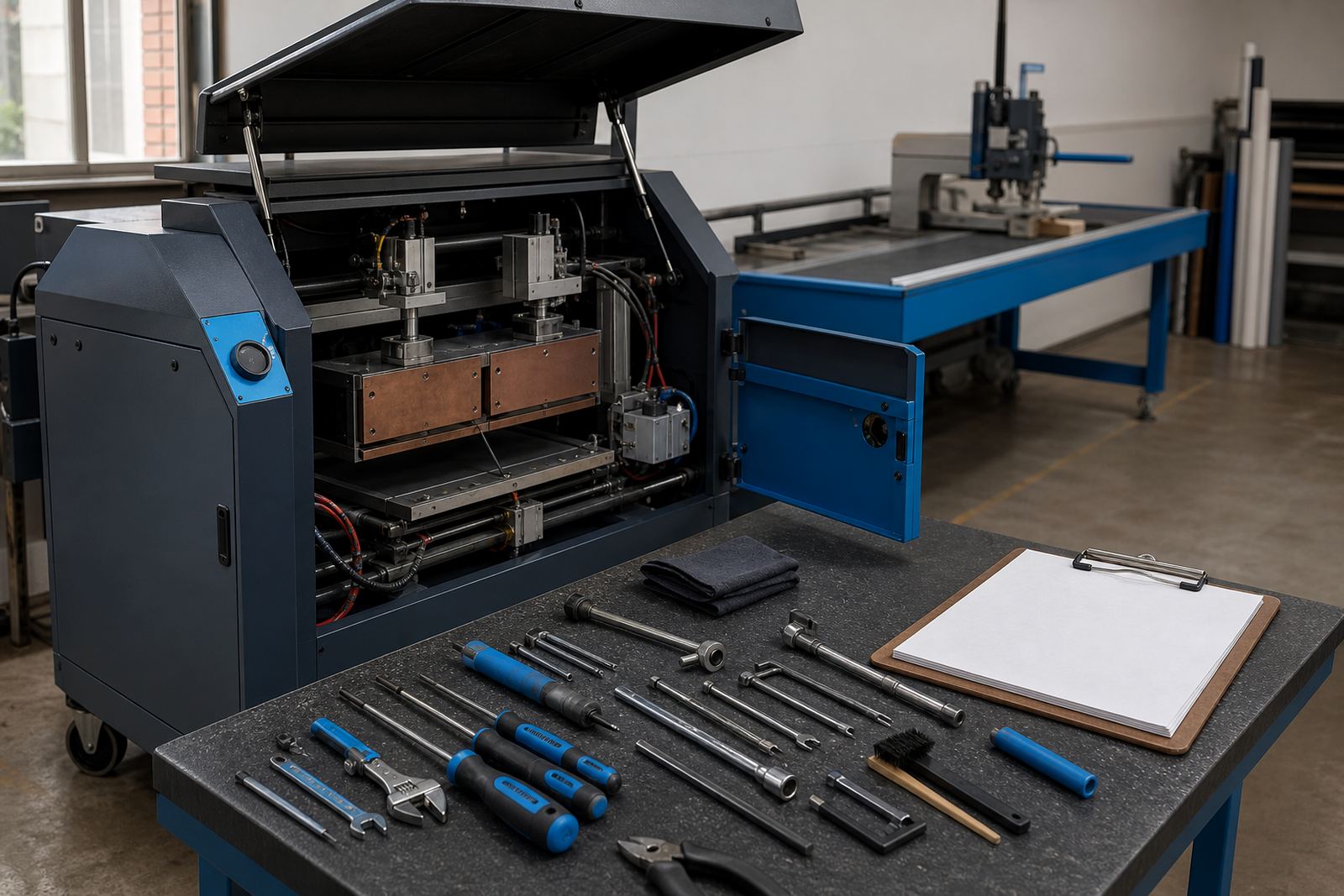
- Shutdown routines, cleaning points and post-run checks
Seam control for tarpaulin, banner and tent work
Good training is not only about starting the machine. Operators need to know how the seam should look and feel once it leaves the welding head. We guide them through practical seam checks for overlap welds, double seams, folded hems, pocket welds and edge reinforcement. Where keder is used, the team learns how to keep the cord channel straight and free of shrink or creep.
Eyelet preparation is covered too, especially where the fabric must stay flat and clean around punched points. On heavier tarpaulins the pressure and heat must be balanced carefully, otherwise the weld can look sound but fail once the sheet is tensioned outdoors in wind and rain.
- Identifying acceptable seam finish by eye and touch
- Checking for burn marks, edge lift and trapped air
- Handling long runs without drifting off line
- Protecting seam strength around stress points and fixings
Training format for different machine types
We train operators on the equipment they will actually use, whether that is a high-frequency press for shaped PVC assemblies, a hot-air unit for repairs and smaller seam runs, or a hot-wedge machine for longer linear welds. Controls, tooling and setup steps differ from machine to machine, so the session is adjusted to the model on site and the work you expect from it.
For larger shops in Germiston, Johannesburg, Pretoria and Durban, training can be split across more than one shift so supervisors and operators all get time at the controls. Where a team handles mixed work, we will cover a typical day from start-up through to inspection and packing, including how to label rejected pieces and keep the work area in order.
- High-frequency setup for PVC-coated fabric assemblies
- Hot-air handling for seams, repairs and local finishing work
- Hot-wedge settings for long straight welds and repeat production
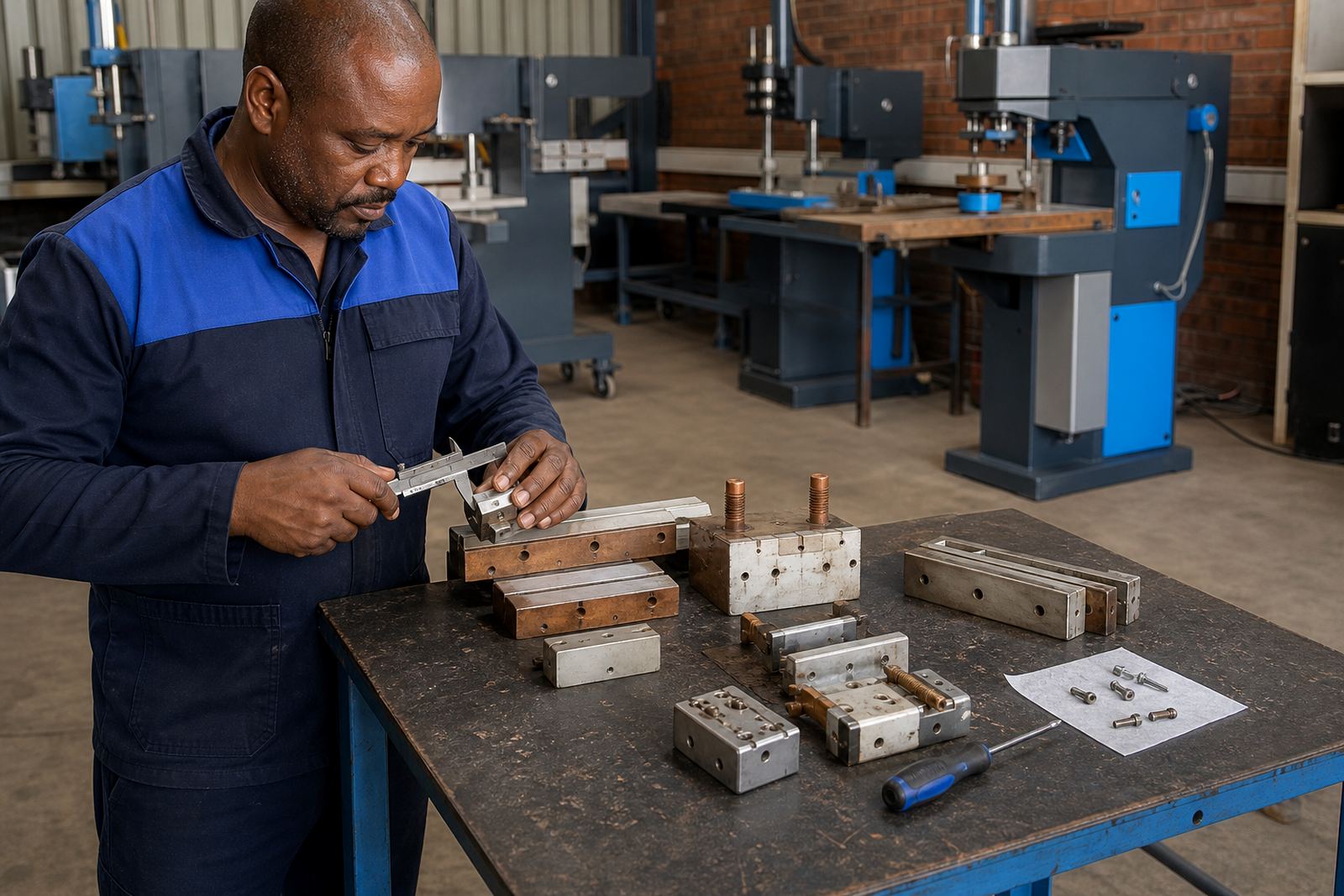
- Basic tooling care so the operator knows when to stop and call for service
Training process from first check to final sign-off
The process starts with a quick review of the machine, tooling and the type of work your team is running. We then move into a practical session at the machine, followed by supervised runs so the operator can repeat the same steps without guessing. The last part of the session covers shutdown, basic cleaning and what to report if the weld quality changes during a shift.
This practical method suits production floors where time matters and the team already has orders lined up. It also helps new staff understand the difference between machine settings and material behaviour, which is important when fabric thickness, coating and ambient heat all affect the weld. In coastal areas like Durban and Cape Town, humidity can change how some materials handle, so operators are taught to watch the fabric and not just the control panel.
- Site check of the machine, tooling and work area
- Demonstration run with live material
- Operator practice under supervision
- Final review of seam quality, shutdown and handover notes
Turnaround for training sessions and follow-up work
Training is scheduled around your production load and the type of equipment on site. For small teams, a focused session may be enough to get operators safely through basic production and inspection. Larger plants, multi-shift crews and mixed machine rooms often need a longer programme, especially where new staff must learn both welding and seam inspection.
If a team later needs a refresher after changes to tooling, material thickness or production method, we can revisit the same machine and work through the points that matter most. That may include seam testing, tooling alignment, roller condition or operator technique if output has started to drift. For sites in Bloemfontein, Boksburg and Benoni, service planning is arranged with travel and production time in mind.
Pricing approach for operator training
Pricing depends on the machine type, how many operators are being trained, the number of sessions needed and whether the visit includes seam checks or basic setup work. If the job includes more than one machine, or if the team needs training on both high-frequency and hot-air equipment, the scope is set out clearly before any work starts. That keeps the costing tied to the actual floor time and the support required.
We do not quote from a standard one size fits all sheet because a small banner shop and a large tarpaulin plant do not need the same amount of time or supervision. The aim is to match the cost to the amount of practical training delivered, the complexity of the machine and the level of support needed after the session.
- Single machine or multi machine training
- Operator count and shift coverage
- Practical time on live material
- Any seam testing, setup or tooling work included
Aftercare when the team is back in production
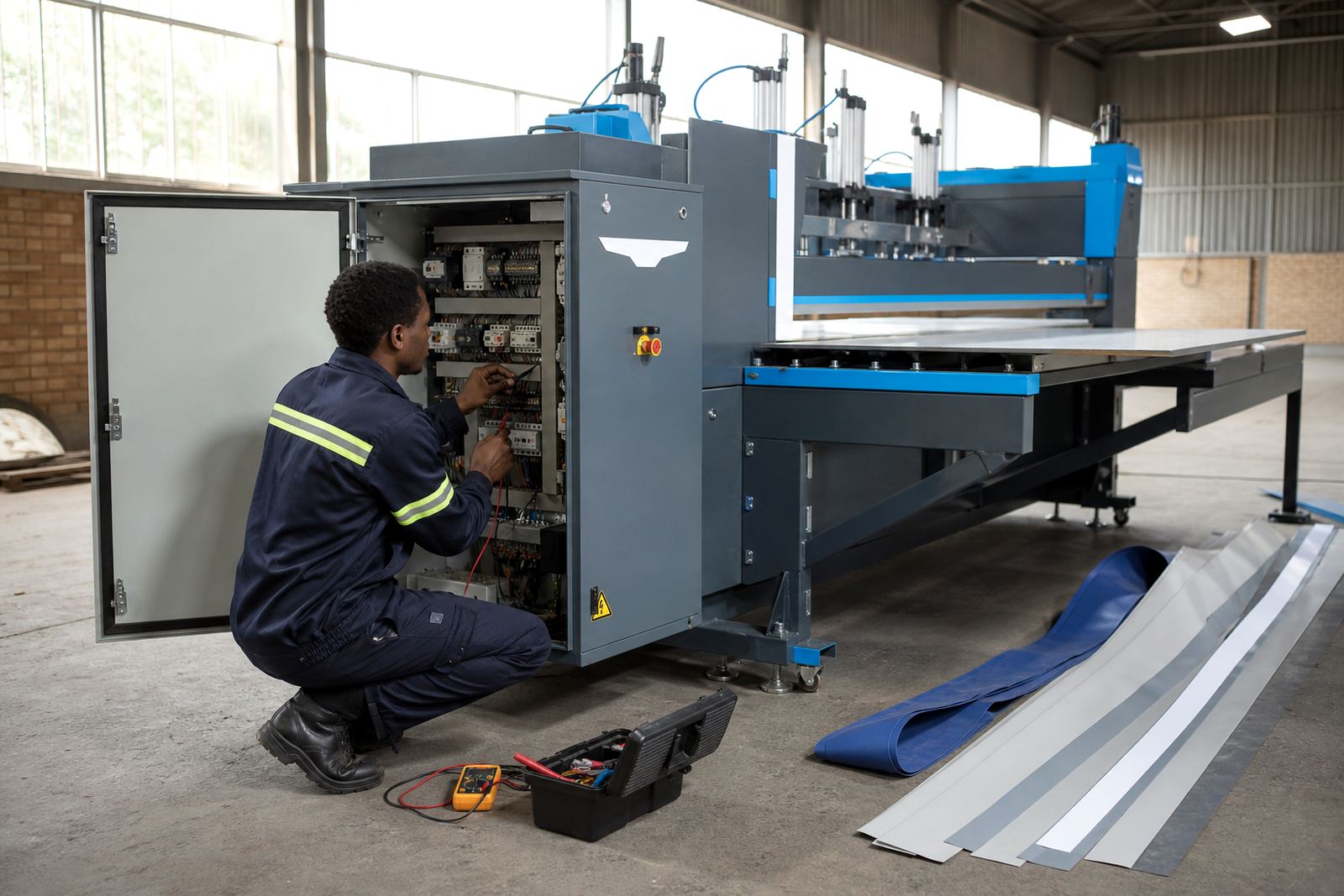
After training, operators should be able to carry out the daily checks, recognise a poor seam early and know when the machine needs attention from a technician. We stay available for questions tied to the equipment, the weld pattern or the materials being used, and can assist with fault finding, parts supply, electrode refurbishment, roller replacement and preventive servicing where needed.
Good aftercare is practical. That means keeping the weld area clean, watching for wear on tooling, and making sure the machine is not forced to run outside its normal settings. With PVC work, a small change in pressure or heat can show up in the seam later, so the operator is trained to treat changes in finish as a warning not an annoyance. That habit saves time and material across busy runs.
Key facts
| Training type | Operator training for high-frequency, hot-air and hot-wedge PVC welding equipment |
|---|---|
| Materials covered | PVC-coated tarpaulin, banner stock, tent panels, hems, keder pockets and eyelet zones |
| Session focus | Safe startup, material handling, seam checks, shutdown routines and quality control |
| Typical site use | Production floors, sign shops, tarpaulin makers and tent fabrication workshops |
| Coverage area | Serving workshops in Germiston, Johannesburg, Pretoria, Durban, Cape Town and Bloemfontein |
| Support options | Seam testing, fault finding, tooling alignment, servicing and parts supply |