What gets checked before wear shows up
Preventive servicing is a planned inspection and adjustment process for PVC welding machines used on PVC-coated fabrics, banner material, tarpaulin stock and tent panels. The work focuses on the parts that affect seam quality first: electrode condition, pressure setting, heating performance, roller alignment, cooling, cabling, guards and the general condition of moving parts. On high-frequency machines, we also look at the dielectric side of the setup, where small shifts can affect seam width, bond consistency and edge finish. On hot-air and hot-wedge units, attention goes to nozzle condition, wedge wear, drive rollers and temperature stability.
In Germiston and across Ekurhuleni, many workshop problems start small. A slightly worn roller, a loose guide or uneven pressure can lead to wrinkled hems, weak keder welds, lifted edges or eyelets that do not sit cleanly. Routine servicing is there to catch those changes before they reach the job table. It is useful for fabricators working on long banner runs, fitted covers, marquee panels and truck tarps, where a repeatable seam matters every day.
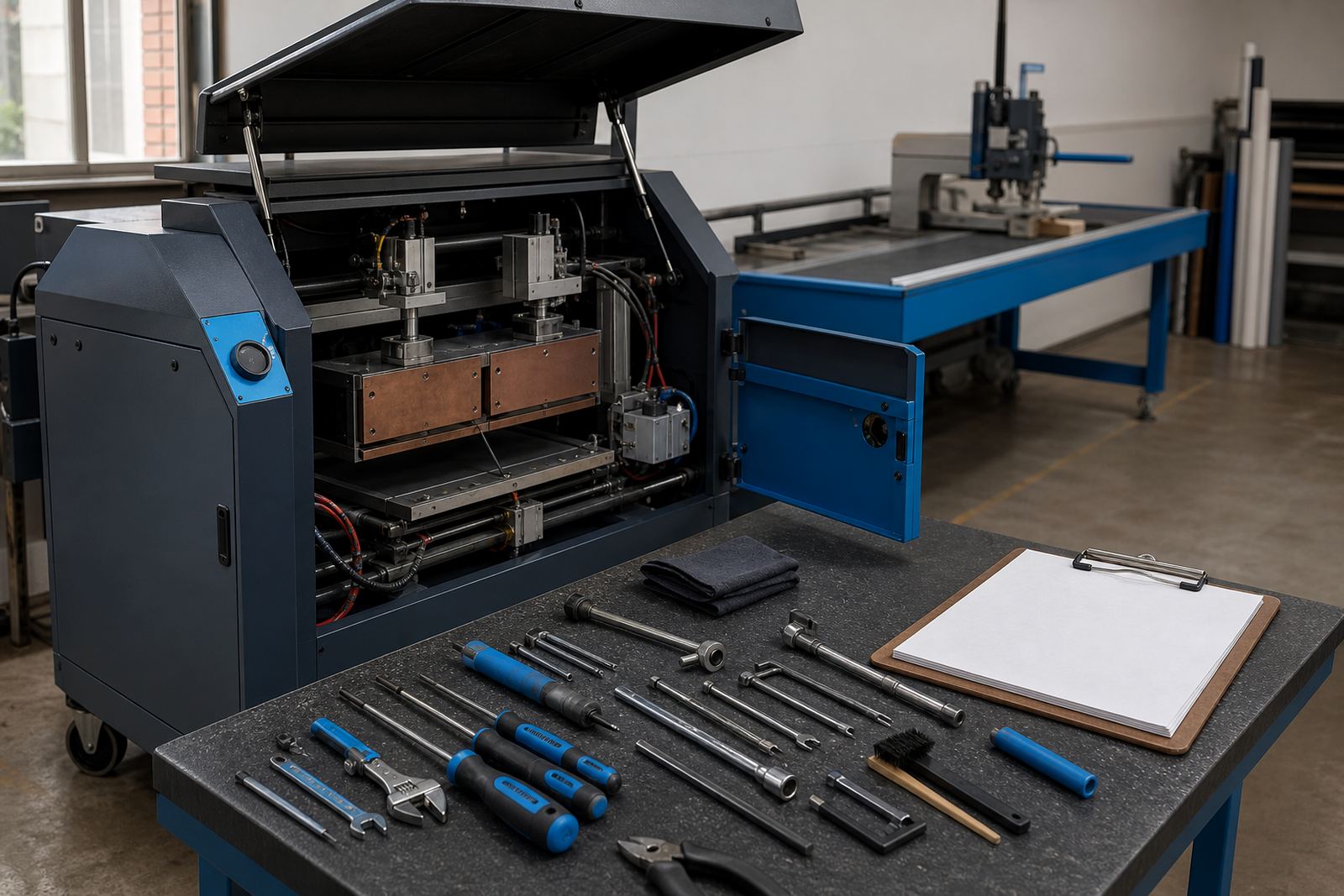
- Visual inspection of machine condition and safety features
- Cleaning of weld zones, guides and exposed moving parts
- Checking pressure, alignment and motion consistency
- Inspection of electrodes, rollers, wedges and heat elements
- Test welds for seam width, hold and finish
A practical servicing sequence for busy workshops
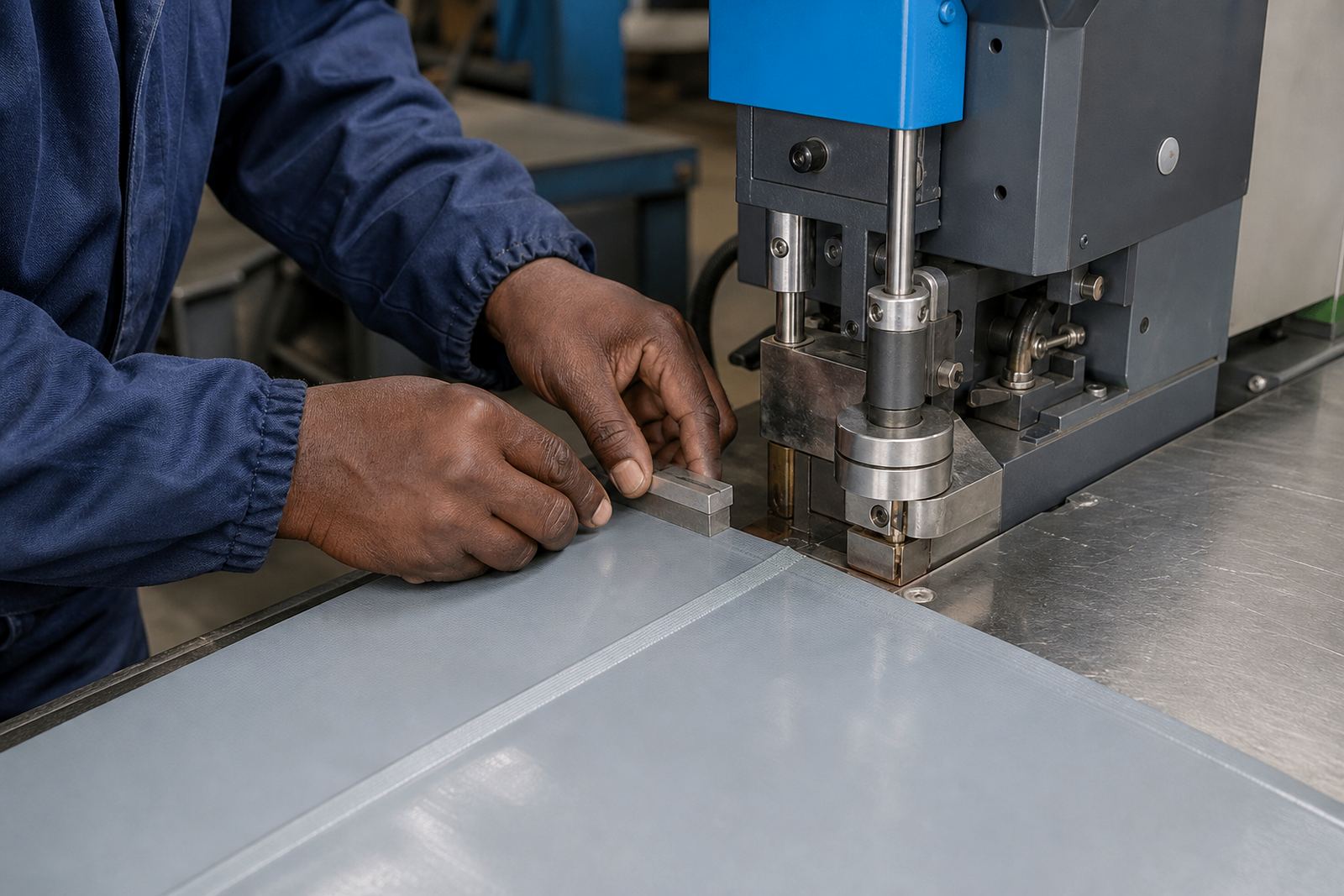
We work through the machine in a set order so the cause of a fault is not missed. First, the machine is isolated and inspected for wear, loose fixings, contamination and signs of overheating. The operator controls are tested, then the welding area is checked for alignment, travel and contact. On radio frequency welders, we pay attention to the electrode face, press pressure and consistency across the weld bed. On hot-air and hot-wedge welders, the focus shifts to temperature control, airflow path, wedge condition and the feed path for PVC-coated fabric.
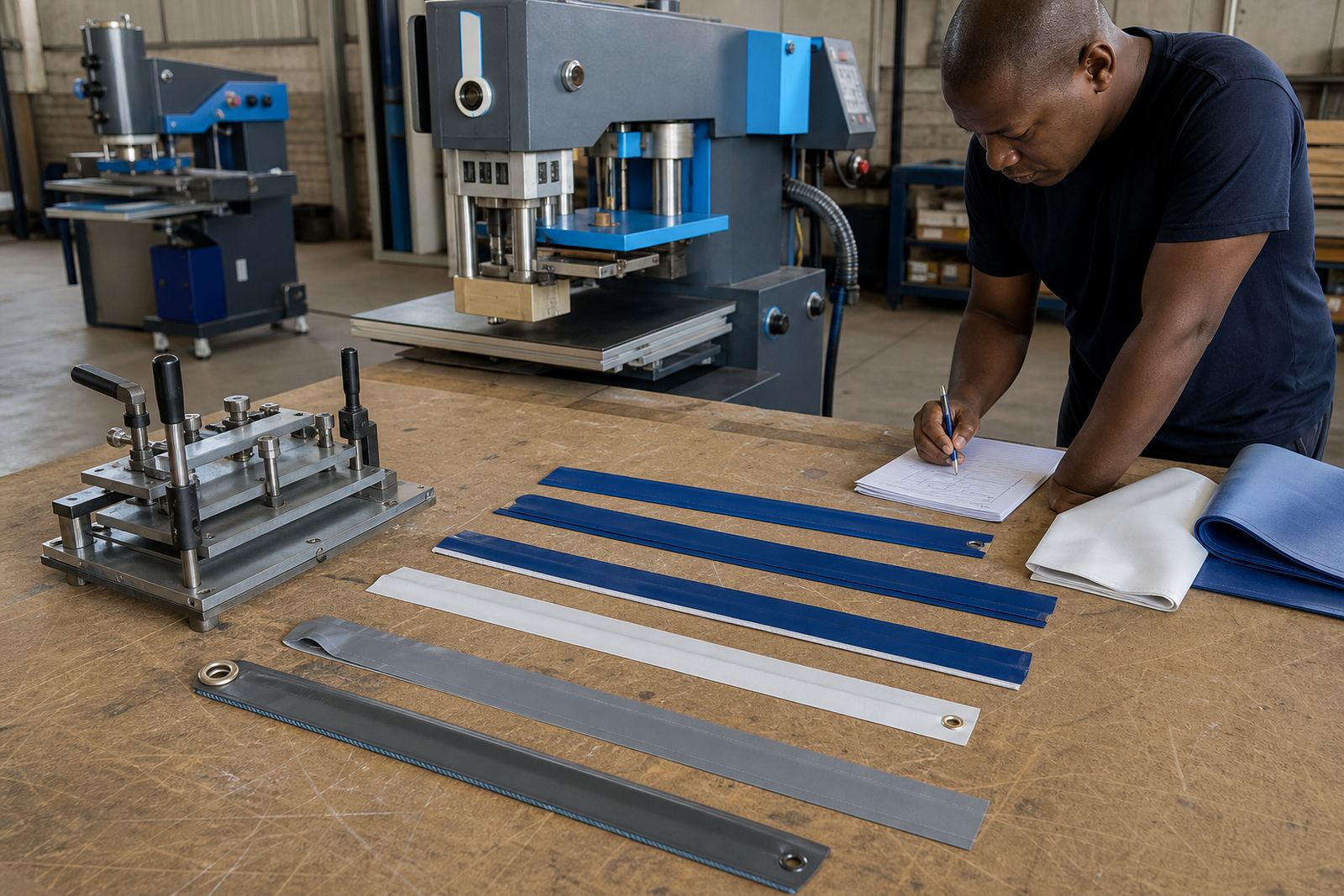
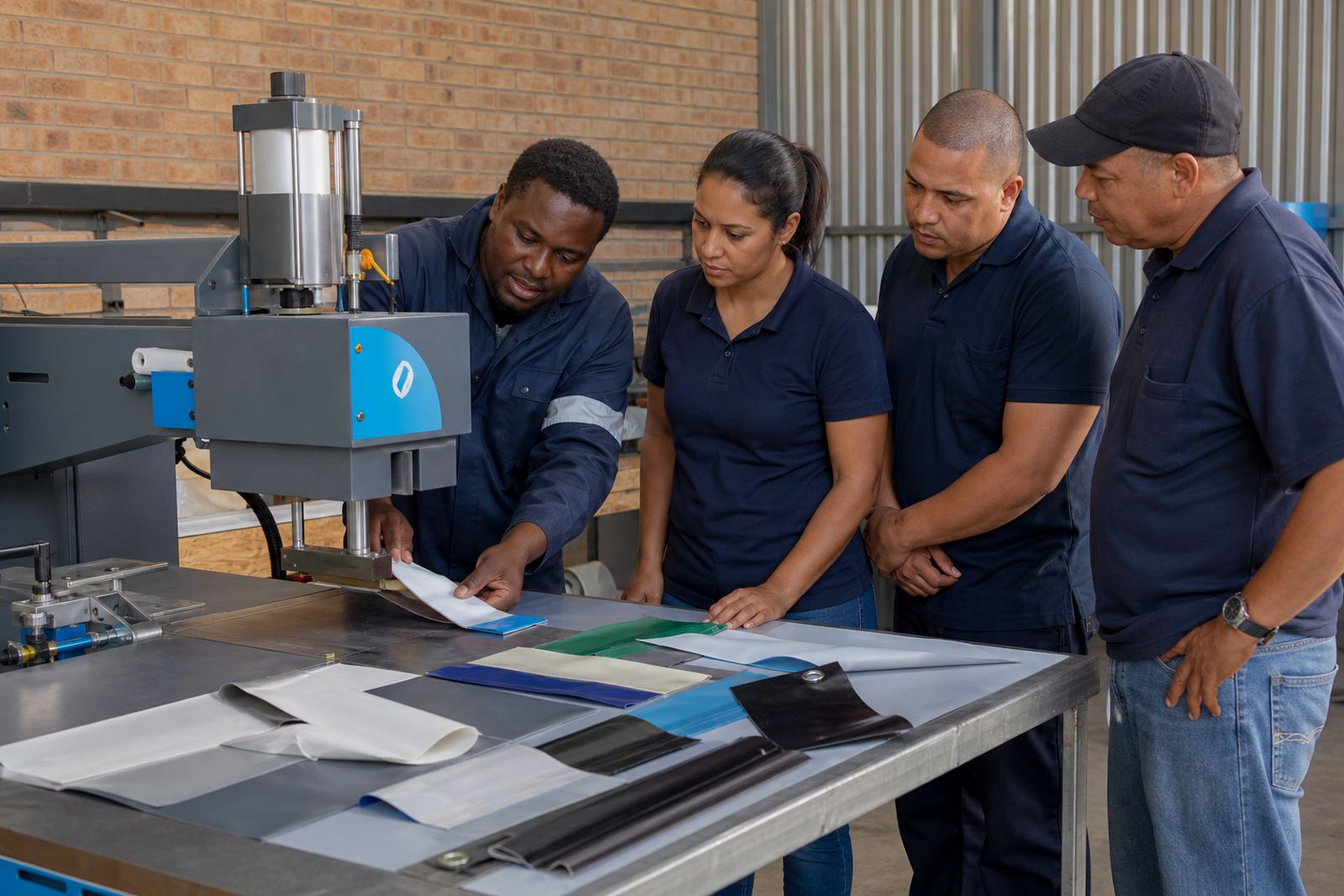
After that comes a controlled test run with material similar to what the workshop uses day to day. That can include straight seams, hems, pocket work, keder insertion seams and reinforced corners. If the machine is used for banner finishing or tent panels, we will also check eyelet preparation areas and make sure the weld edge is clean enough for the next operation. Any drift in output is corrected on the spot where possible, or noted for parts replacement and follow-up work.
- Machine isolation and safety check
- Mechanical and electrical condition review
- Alignment and pressure adjustment
- Test welds on customer material types
- Fault notes for any parts that need replacement
Typical issues preventive servicing helps avoid
Preventive servicing is not only about keeping the machine neat. It helps control the things that interrupt production: inconsistent weld width, hot spots, poor seam fusion, edge scorching, delayed start-up and intermittent output. In high-frequency work, a machine that is slightly out of tune can produce seams that look acceptable at a glance but fail under load. That is a problem on tarpaulins, side curtains and tent walls where the seam must hold tension in wind, movement and handling.
For hot-air and hot-wedge welders, dirty air paths, worn drive rollers or heat drift can create curling, under-bonded hems and uneven lap joints. On banner and signage work, that can show up as a visible line through the finish. On heavier covers and industrial fabric, it can lead to rework, scrap or a callout to fix work that should have passed first time. Servicing also helps with operator safety, because poor guards, loose cables and damaged controls should not be left in daily use.
- Uneven seam appearance or seam opening after cooling
- Hot spots, scorch marks or weak bond zones
- Slipping feed rollers and poor fabric tracking
- Sticking controls, loose fixings or worn guarding
- Repeat rework on hems, keder and reinforced joints
Parts, tooling and small corrections that matter
Many servicing jobs are a mix of inspection and fine correction. That can include roller replacement, electrode refurbishment, tooling alignment, cleaning of build-up around the weld area and checking consumable parts for early wear. For workshops in Durban or Cape Town, where coastal humidity and salt air can affect exposed metal parts, cleaning and corrosion checks are especially worthwhile. In Gauteng, dust and fabric fibres often build up in the feed path and around moving parts, so cleaning and alignment can make a noticeable difference to how the machine runs.
We also look at the fit between the machine and the work being done. A shop producing narrow hems for banners does not need the same setup as one welding heavy truck side curtains or tent panels with keder. The machine needs to suit the material thickness, the seam style and the working speed. Preventive servicing gives space to make those small corrections before they turn into larger faults.
- Electrode refurbishment where the face has worn or pitted
- Roller replacement where grip or tracking has changed
- Tooling alignment for hems, overlaps and keder seams
- Cleaning and corrosion checks on exposed metal parts
Turnaround, pricing and how jobs are quoted
Turnaround depends on the machine type, the condition of the unit and whether parts are needed. A straightforward service on a machine with no major wear is usually planned as a workshop job or a site visit depending on access, production pressure and the size of the equipment. If a fault is found during servicing, the next step is to separate what can be adjusted during the visit from what needs replacement parts or more detailed repair.
Pricing is approached on the basis of machine type, scope of work, travel if a site callout is needed, and any parts that must be fitted. That keeps the job clear before work begins. Preventive servicing for a small hot-air unit is not priced the same way as a large radio frequency welding system with dedicated tooling and heavier wear parts. If several machines are covered in one workshop, the work can be grouped so that planning is easier and production disruption is lower.
Key facts
| Service scope | High-frequency, hot-air and hot-wedge PVC welders |
|---|---|
| Material types | PVC-coated fabrics, tarpaulins, banners and tent panels |
| Common seam types | Laps, hems, pockets, keder seams and reinforced joins |
| Workshop base | Germiston, Ekurhuleni |
| Coverage | Johannesburg, Pretoria, Durban, Cape Town and Bloemfontein |
| Service options | Workshop servicing, site callouts, service plans and parts supply |