Sample Weld Checks Before Full Production
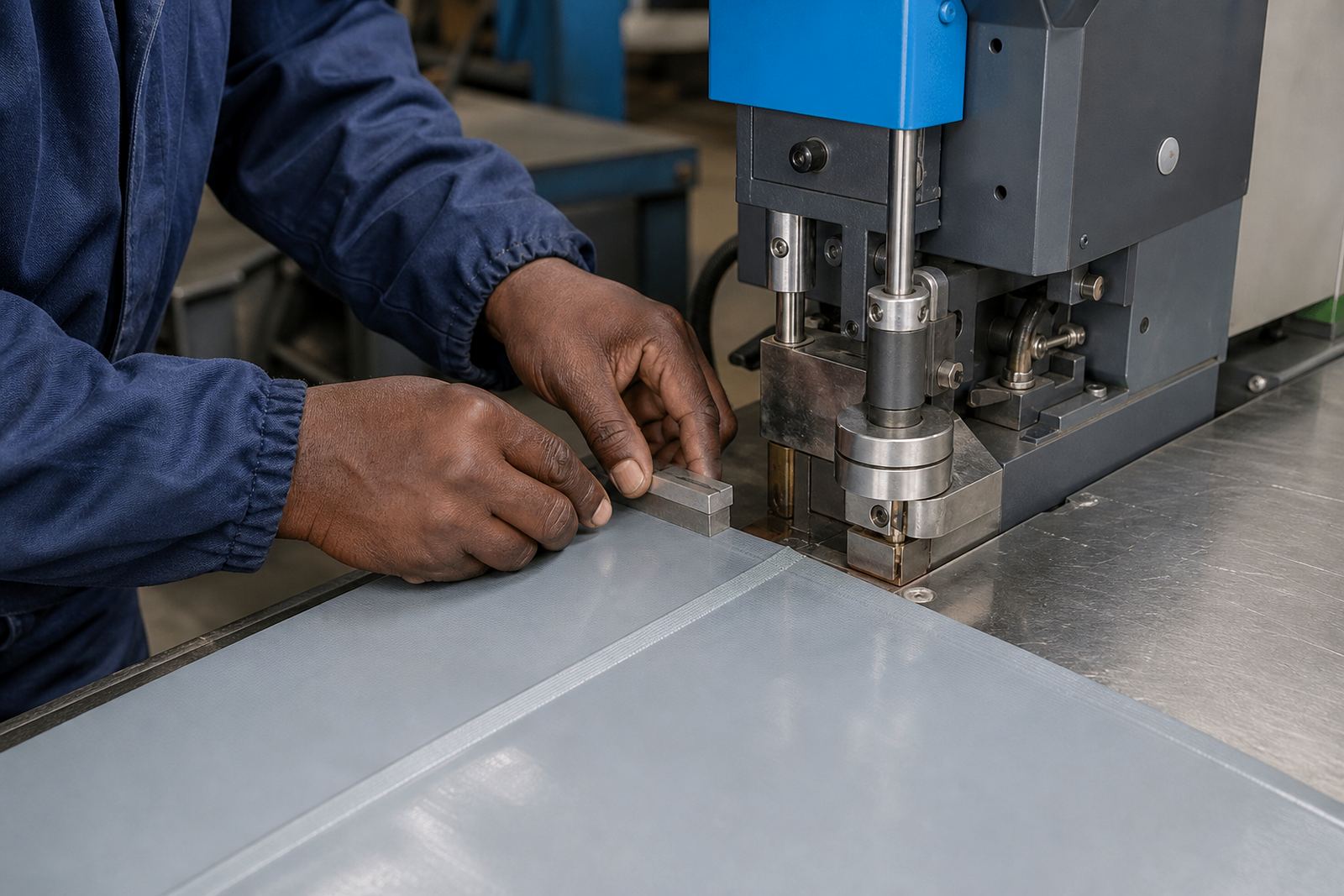
Seam testing is the practical check that sits between setup and production. A short sample is welded under the same heat, pressure, dwell and feed conditions that will be used on the job, then examined for bond quality, alignment and consistency. That matters on PVC-coated fabrics because a clean looking seam can still fail if the weld has not fused evenly through the coating and base cloth.
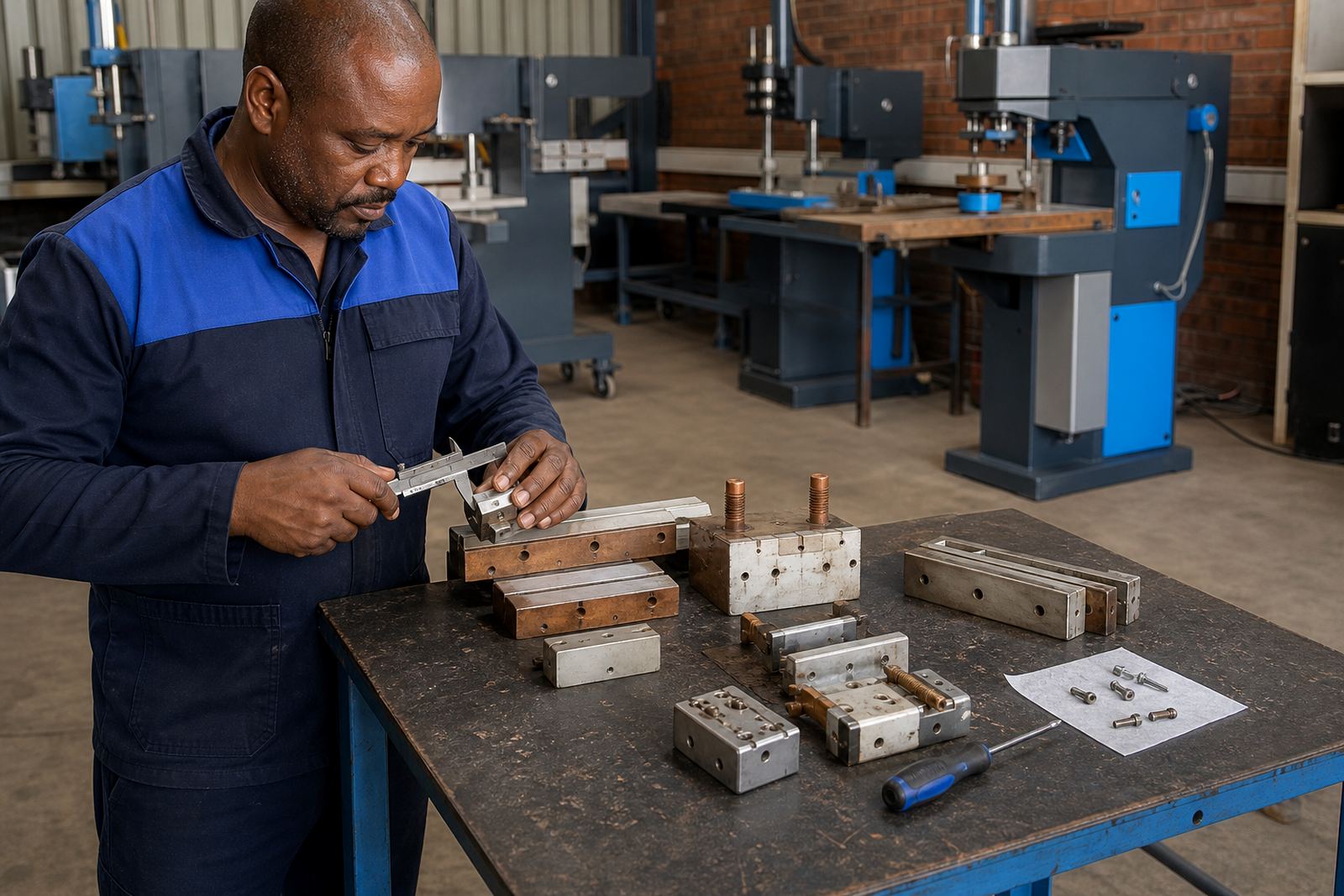
For tarpaulin makers, banner shops and tent fabricators, the check is done on the actual material offcut or test strip, not on a guess. We look at whether the seam holds through a straight pull, whether the edges sit flat, and whether the weld width matches the required finish. If a change has been made to an electrode, roller, guide or heating element, the sample test shows very quickly if the set-up is right or needs correcting.
- High-frequency weld samples for PVC-coated fabrics
- Hot-air and hot-wedge seam samples for long runs and repairs
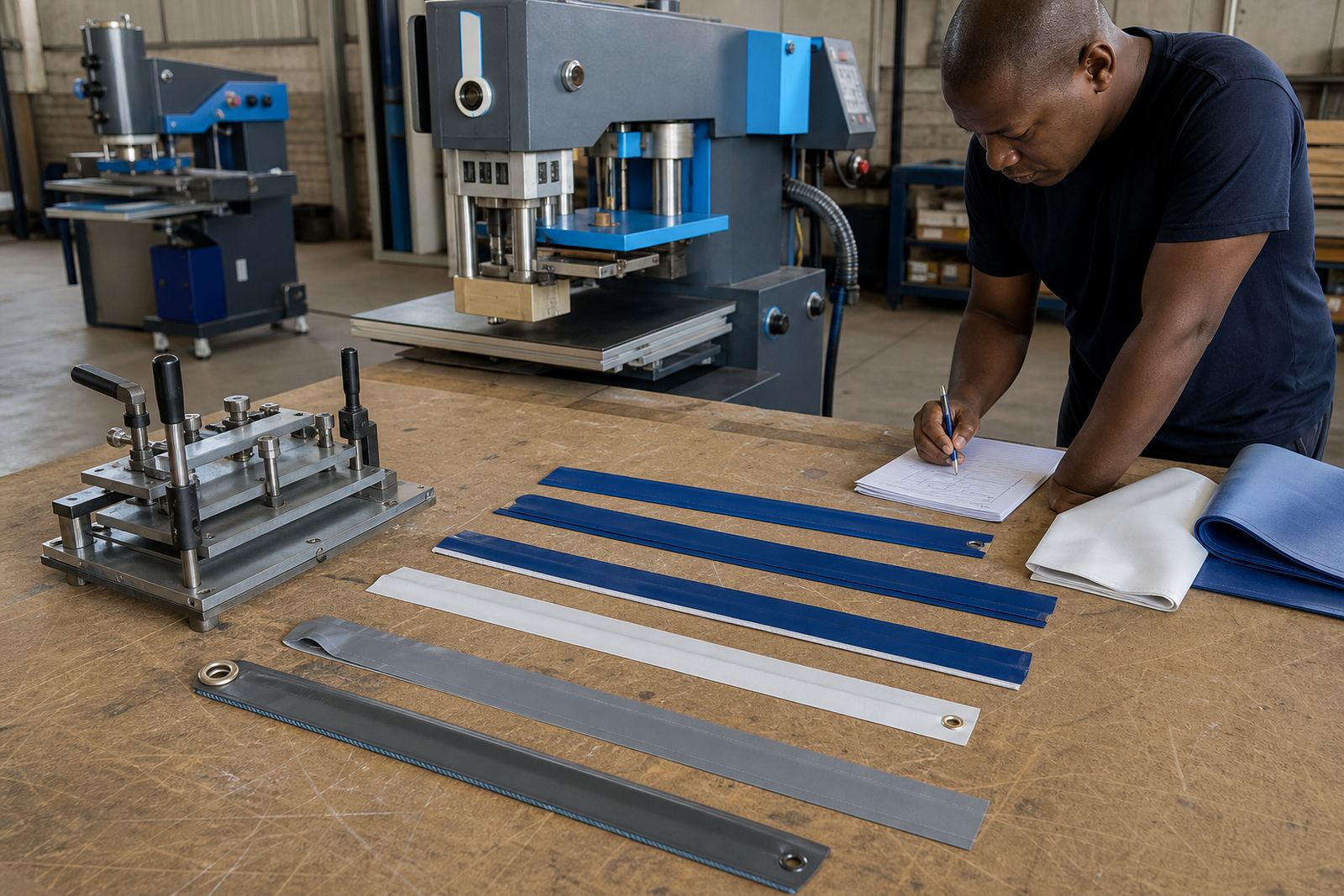
- Checks on hems, lap seams, keder track welds and reinforced edges
- Eyelet area checks where added stress can cause failure
What the Seam Test Covers On Site
The service covers a practical review of the weld line and the machine settings used to make it. Depending on the machine type, the test may include a visual seam review, light peel testing, a hand pull check, edge alignment, and inspection of the finish around corners, joins and doubled sections. On heavier tarpaulins, we also check whether the seam has been over heated, under fused or stretched during handling.
For radio frequency welding, seam testing helps confirm the output is transferring evenly across the electrode face and that the pressure is not leaving thin spots or scorching. On hot-air and hot-wedge machines, the focus is on heat stability, travel speed and roller pressure. Coastal humidity in Durban, for example, can change how some materials behave on the day, so the sample needs to be tested under the actual shop conditions not only from a previous setting card.
- Edge overlap and seam width measurement
- Inspection of weld uniformity across the full sample
- Testing around corners, patch joints and reinforcement strips
- Review of keder insertion lines, hems and weld finish
The Testing Process From First Sample To Sign Off
Our process starts with the material and the machine setup being used on the job. We check the thickness, coating condition and intended seam type, then weld a sample section. That sample is inspected for bond, finish and repeatability. If the first result is not right, adjustments are made to the working settings, tooling alignment or roller pressure and a second sample is welded.
Once the sample meets the required standard, the set-up can be released for production. When a machine has had preventive servicing, tool changes or electrode refurbishment, the test also confirms that the service work has not affected seam performance. In many cases the customer just needs the green light that the machine is welding the same way it should on the full job.
- Review of the job spec and seam type needed
- First sample weld on the actual material
- Inspection, adjustment and repeat sample if required
- Final sign off before production continues
Where Seam Testing Saves Time And Material
Seam testing is useful when a machine has been moved, after a fault has been cleared, when operators change shift, or when a job moves from one material grade to another. A setup that works on a light banner can behave differently on heavy truck tarpaulin or tent fabric with thicker reinforcement. Catching that early saves wasted fabric and avoids repair work after the full run has already been made.
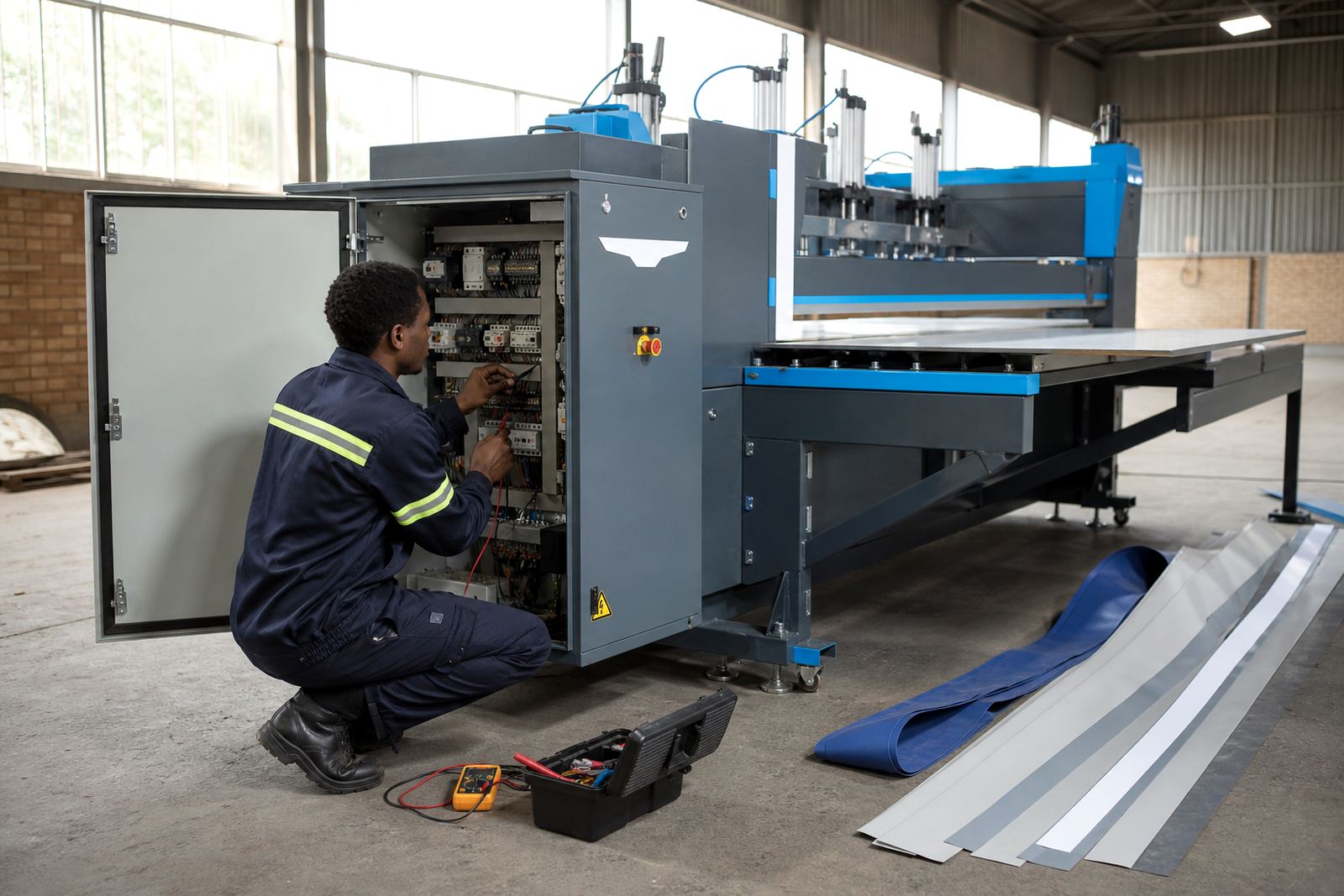
It is also helpful after site callouts where a machine has been re-aligned or had worn parts replaced. A hot-air machine with a tired roller or a HF press with uneven pressure can still produce a seam that looks passable at a glance, but the test sample tells the real story. That is the point of the service, to verify the weld before the stack of material is committed.
Pricing Built Around The Work Required
Seam testing is priced according to the type of machine, the number of samples needed, the condition of the equipment and whether the check is done in Germiston or at a customer site elsewhere in South Africa. A single verification on a stable set-up is different from a troubleshooting visit where several test samples are needed across different seam types.
We quote on the work involved, not on a one-size figure. If the job includes tooling alignment, electrode adjustment, roller replacement or a follow-up sample after servicing, those items are listed clearly so the customer knows what is being covered. The aim is to keep the testing focused and practical, with no wasted steps or loose assumptions.
- Single sample verification
- Multi-sample fault finding on changing materials
- On-site testing after servicing or installation
- Combined testing with machine alignment or parts work
Aftercare For A Steady Weld Line
After the test, operators get clear feedback on the settings that gave the best result and what to watch for during the next run. That may include pressure balance, feed speed, heat control or the condition of the seam guides. If a problem was found, the next step may be a parts replacement, a roller correction or a further workshop check depending on what the sample showed.
We also help teams understand how to spot early signs of a poor weld before a bigger run gets affected. Small changes in finish, edge curl or bond feel often show up before a full failure. A steady seam line is easier to keep when the operators know what a good sample looks and feels like.
Key facts
| Seam types checked | Lap seams, hems, keder tracks, reinforcement strips and repair joints |
|---|---|
| Welding methods | High-frequency, hot-air and hot-wedge |
| Material range | PVC-coated fabrics for tarpaulins, banners and tent work |
| Test method | Sample weld, visual review, pull check and setting adjustment |
| Typical use | After installation, servicing, tool changes and fault correction |
| Service areas | Germiston, Johannesburg, Pretoria, Durban, Cape Town, Bloemfontein, Boksburg and Benoni |