What Refurbishment Covers On RF Tooling
Electrode refurbishment is used when the working face of a radio frequency tool has picked up pitting, oxidation, scoring or edge wear from repeated production. On high-frequency welders, the electrode surface must present an even contact area so the PVC-coated fabric heats uniformly through the seam line. When that surface starts to mark the material or lose consistency, the weld can show weak spots, shiny burn marks, uneven embossing or a narrow seam that does not hold the same way across its length.
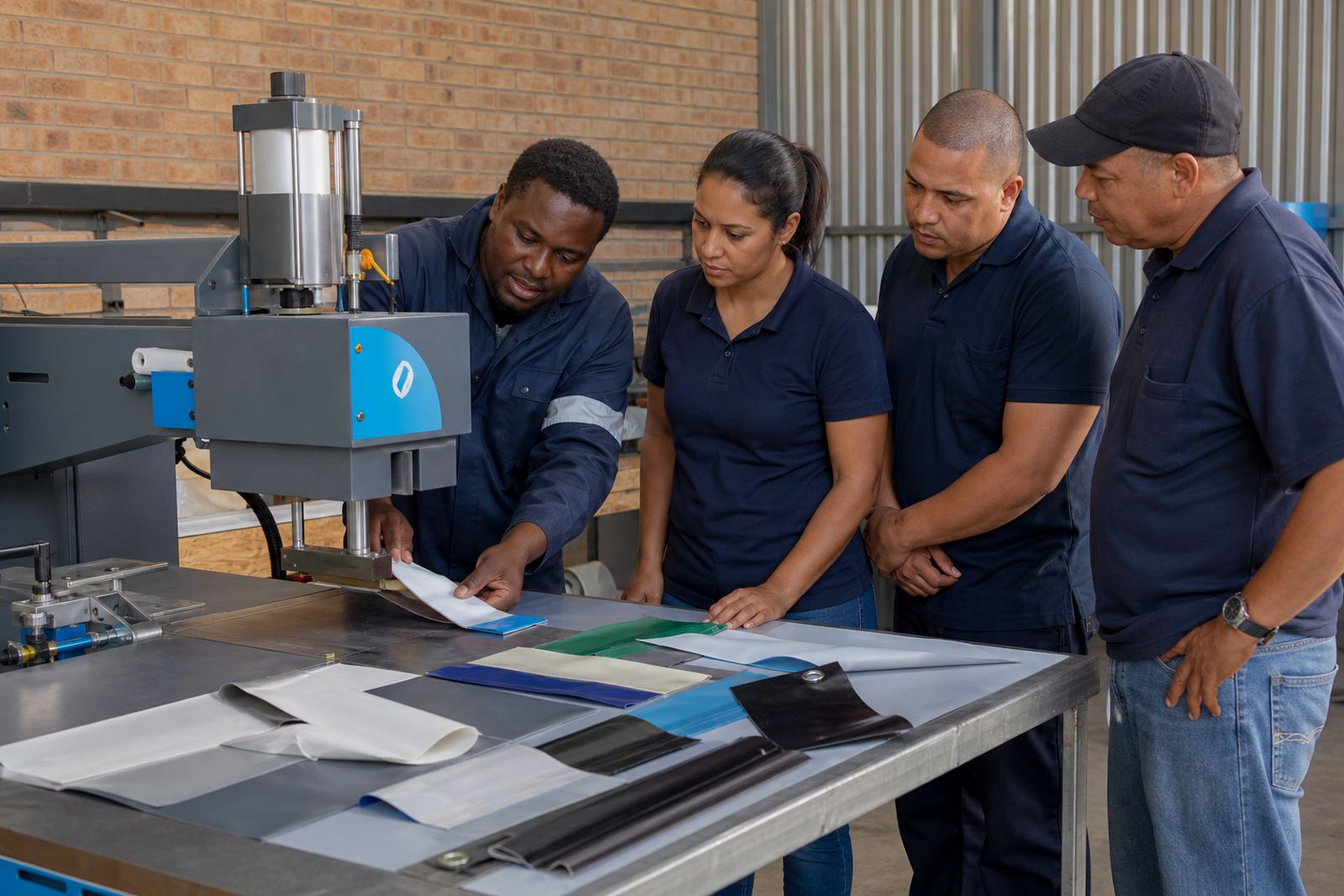
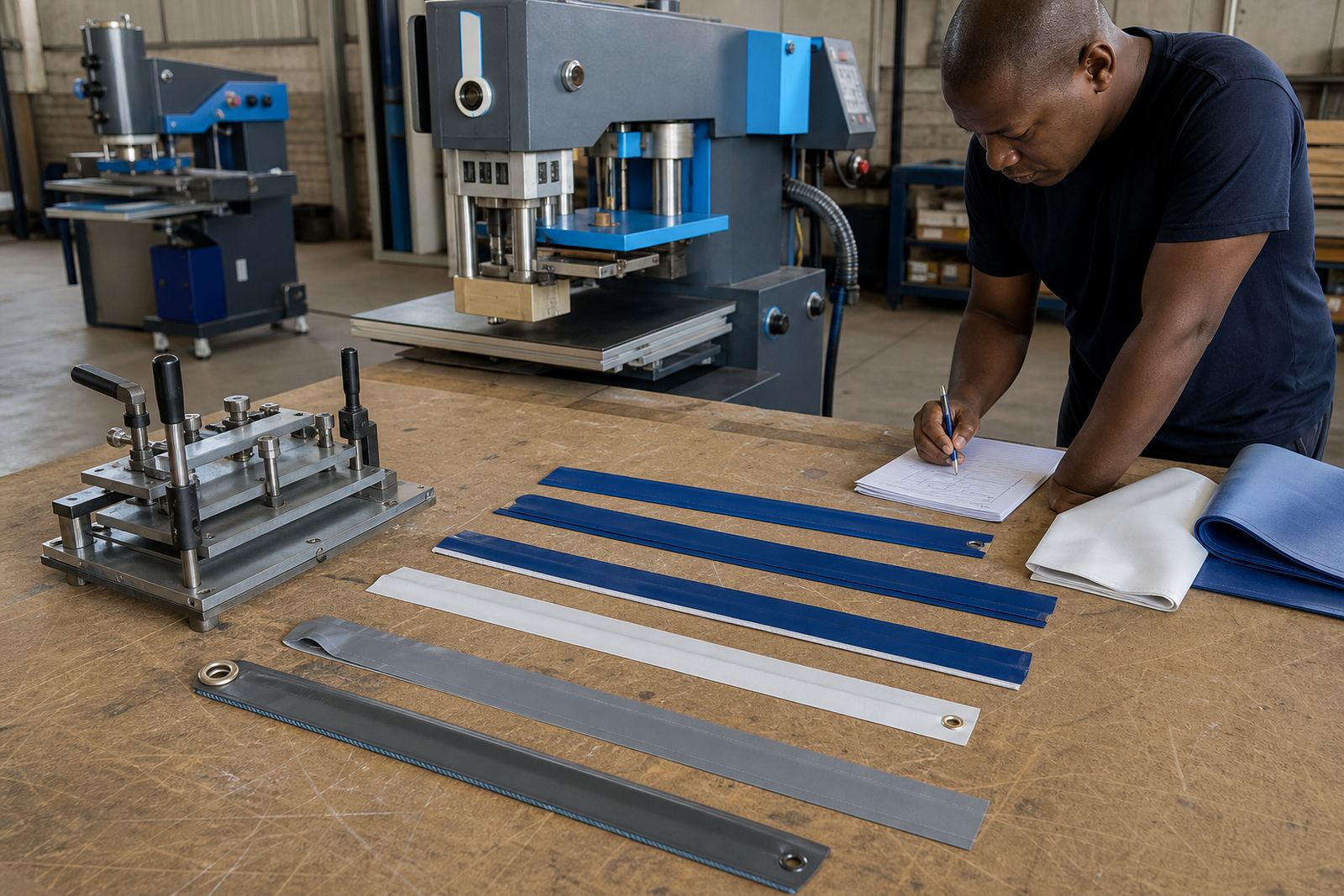
We refurbish tooling used on tarpaulins, printed banners, tent panels, clear panels and other PVC-coated fabrics. That includes straight seam tools, overlap seam tooling, hemming tools, keder guides and fitting-related electrodes used for eyelet work. The process is suitable for production equipment in shops handling frequent runs, especially where seam finish matters for visible display work and weather exposed covers.
- Resurfacing of worn electrode faces
- Cleaning of contact areas and build-up removal
- Profile correction for seam width and edge control
- Inspection of fixing points and alignment surfaces
How The Refurbishment Process Runs
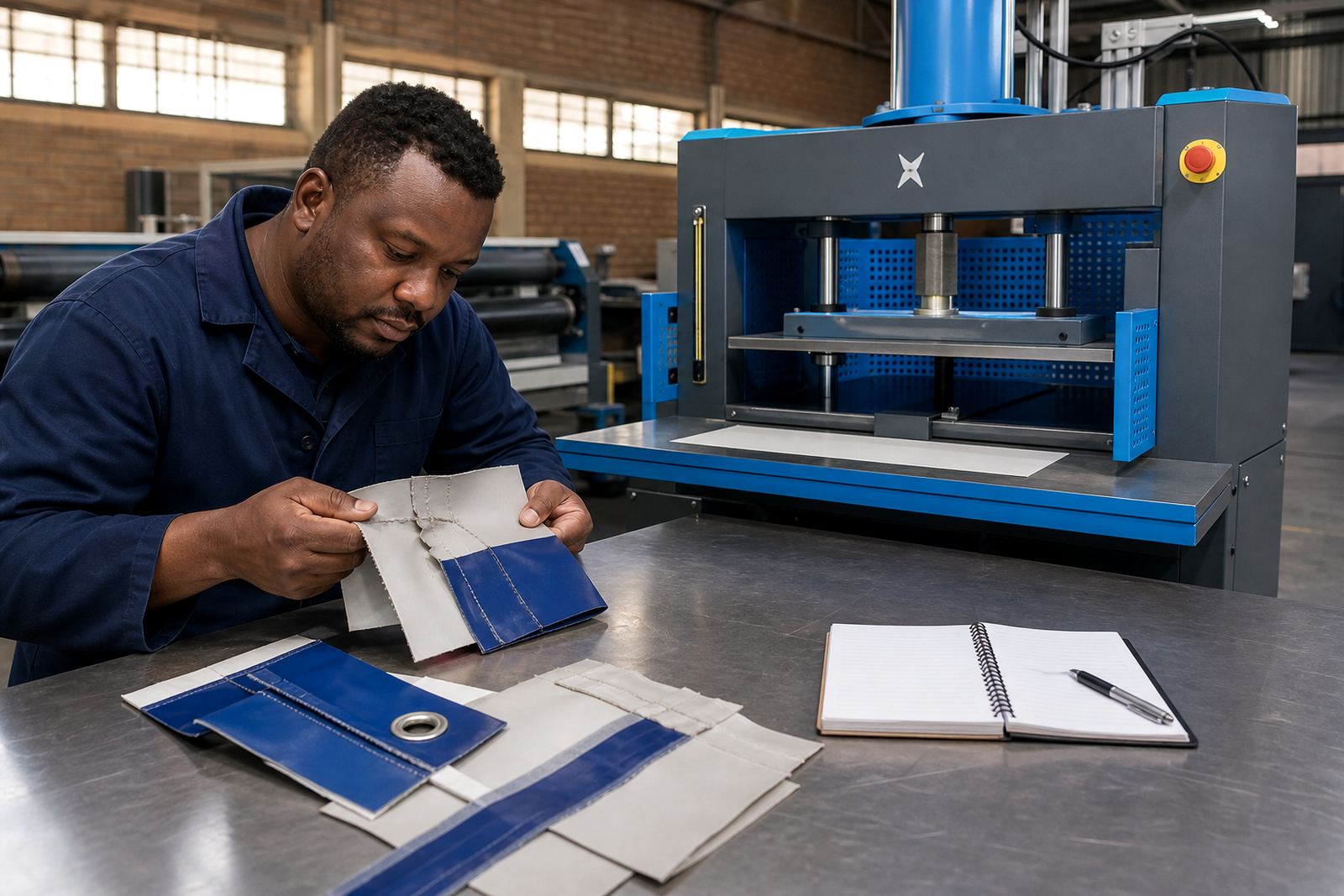
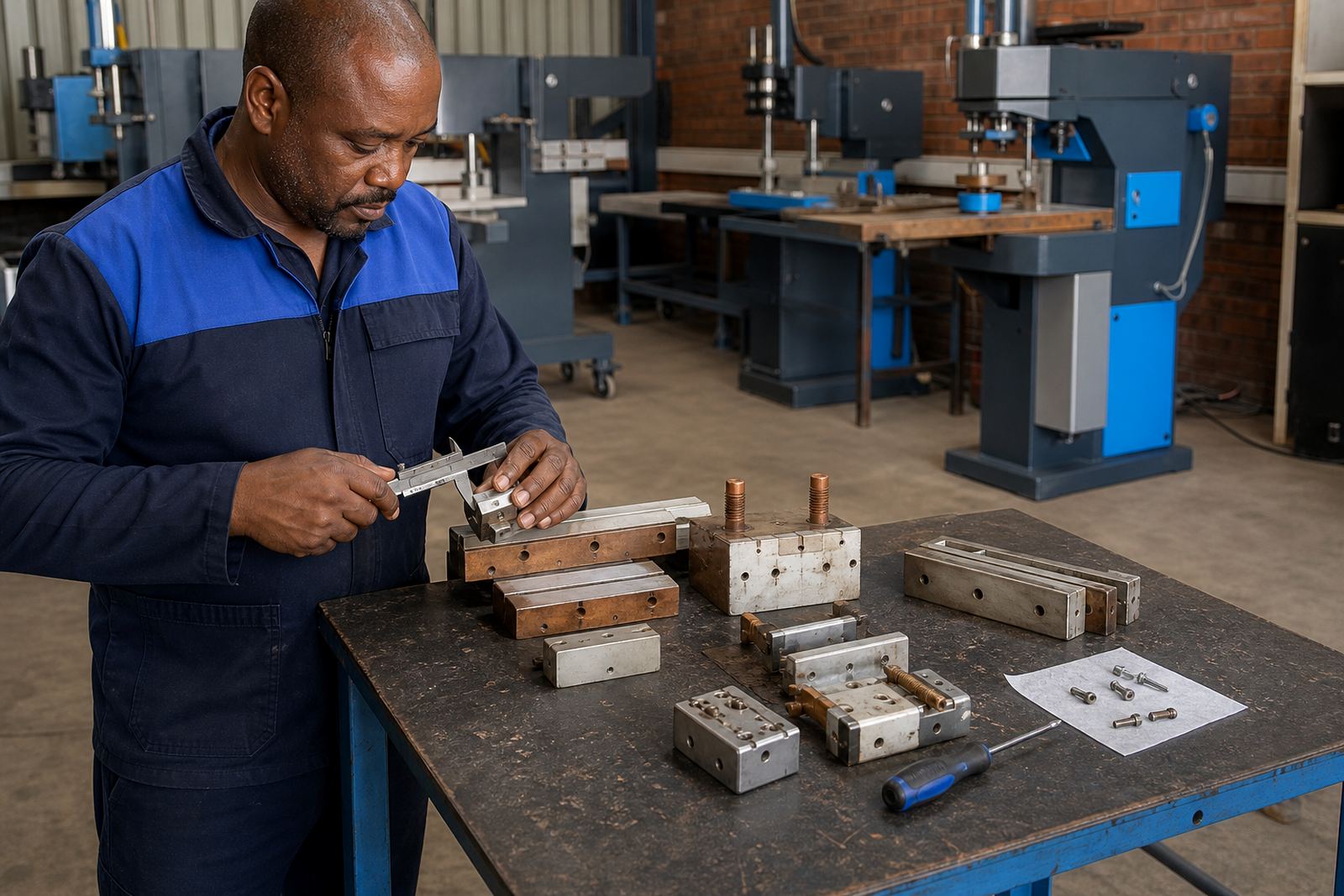
Each electrode is checked first for wear pattern, fit, distortion and signs of overheating. We measure the working edge, confirm the seam profile and assess whether the part can be restored or needs a different approach. Where possible, the original geometry is preserved so the machine operator does not need to relearn settings from scratch. The aim is to return the tool to clean, repeatable contact across the full seam length.
After assessment, the surface is cleaned and prepared for reworking. Depending on the condition, the electrode may be re-machined, re-faced or corrected at the contact zones that matter most to weld quality. Final finishing is done to suit the application, whether that is a flat overlap seam, a folded hem, a keder pocket or a tooling face used around attachment points. We then check fitment and alignment before the part goes back into service.
- Visual inspection and measurement
- Surface preparation and correction
- Re-facing or profile adjustment
- Final fit and seam check
Specs That Matter For Clean Seam Production
Electrode refurbishment is not only about appearance. The contact surface, edge condition and alignment all influence how the weld forms under pressure and RF energy. For shops producing banners and tarpaulins in Johannesburg, Durban or Cape Town, coastal humidity and dust can also affect tooling condition over time, so a clean and even face helps keep the output stable. A well-refurbished electrode supports better transfer of energy and reduces the chance of chasing the same fault across several jobs.
We work with tooling where the production requirements may include narrow hems, wide seam bands, reinforced corners, eyelet stations and keder inserts. The restored profile needs to match the fabric thickness and the machine setting used on that line. If the tool face is too rough or out of shape, the seam can vary from one side to the other and the operator ends up adjusting settings to compensate. That wastes time and can lead to more scrap.
- Common seam widths: 10 mm to 50 mm depending on tooling
- Typical fabric types: PVC-coated polyester, banner stock and tent material
- Tool types: flat seam, overlap, hem, keder and attachment tooling
- Condition targets: even face, square alignment and clean edge contact
Where The Work Helps Most
This service is useful for tarpaulin makers, signage workshops and tent manufacturers that run repeated jobs on the same machine. High-frequency equipment is sensitive to tooling condition, so a small defect on the electrode can show up across every panel. In busy production rooms that use both RF welding and hot-air or hot-wedge methods, refurbished electrodes help keep the RF side consistent while the rest of the shop handles trimming, finishing and assembly.
We also support sites where operators work with mixed products and changing seam layouts. If the tooling is being used for hems one day and eyelet reinforcement the next, the working surface needs to stay true. Refurbishment is often the practical choice when the machine is otherwise in good shape but the weld face has simply reached the point where repair is needed.
- Tarpaulin cover fabrication
- Signage and banner finishing
- Tent panels and sidewall work
- Repair shops with repeated seam runs
Pricing Approach And Service Planning
Pricing is based on the condition of the electrode, the size of the tooling, the amount of rework needed and whether any alignment corrections are required. A simple clean-up and face restoration costs less than a part that needs deeper correction or replacement of worn mounting sections. We quote according to the actual work involved, not a flat guess, because two tools that look similar can need very different levels of attention.
For customers in Germiston, Ekurhuleni and across South Africa, the service can be arranged around machine downtime and production schedules. Where a line must keep moving, we plan the work so the operator is not left waiting on a part that is still in use. If a tool is beyond safe refurbishment, that is stated clearly before any work continues.
- Condition-based pricing
- Work scoped to tooling size and wear
- Assessment before corrective work starts
- Support for local and national collections or site callouts
Aftercare For Operators And Workshops
Once the electrode is back in service, the operator needs to watch seam appearance, heat consistency and the way the fabric releases from the tool. A refurbished face should give cleaner contact and fewer marks, but the machine still depends on correct setup, clean material and steady handling. We can advise on set-up checks, pressure balance and surface care so the tool keeps producing good seams for as long as possible.
For shops that run multiple shifts, it helps to keep the tooling wiped clean and stored properly when not in use. Dust, adhesive residue and rough handling shorten the life of the contact face. If you notice the seam starting to wander or the edge marking the PVC again, that is usually the time for another inspection. No drama, just practical checking before a small issue turns into a batch of scrap.
- Check seam finish after the first production run
- Keep contact surfaces clean and dry
- Watch for marking, uneven pressure or edge burn
- Report fit issues before the tool wears further
Key facts
| Service type | Electrode refurbishment for high-frequency PVC welding tooling |
|---|---|
| Material focus | PVC-coated fabrics for tarpaulins, banners and tents |
| Tooling supported | Flat seam, overlap, hem, keder and attachment electrodes |
| Typical applications | Seam production, edge finishing and eyelet-related tooling |
| Location | Germiston, Ekurhuleni with South African support |
| Support options | Assessment, re-facing, alignment checks and site callouts |