How the fault finding visit is handled
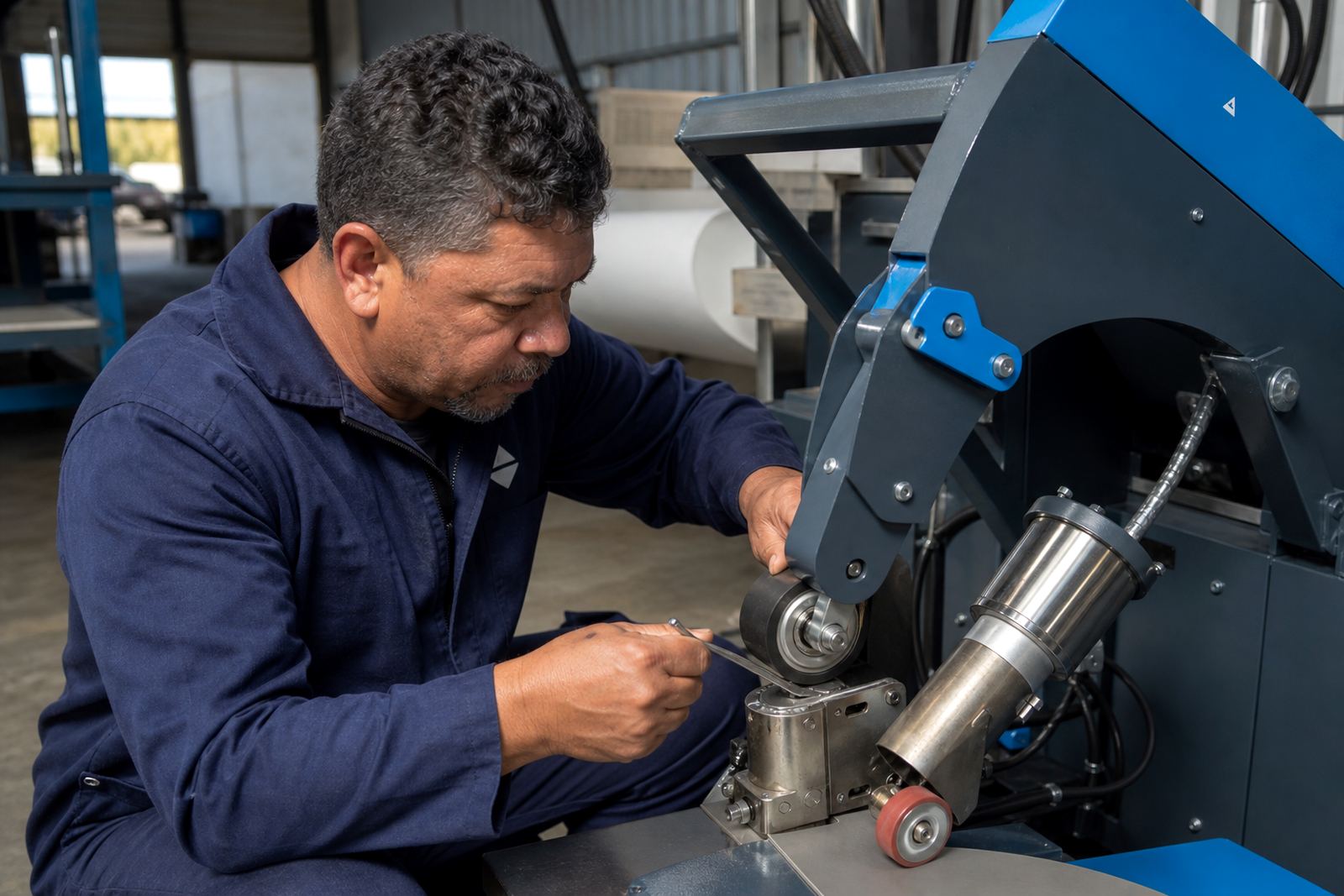
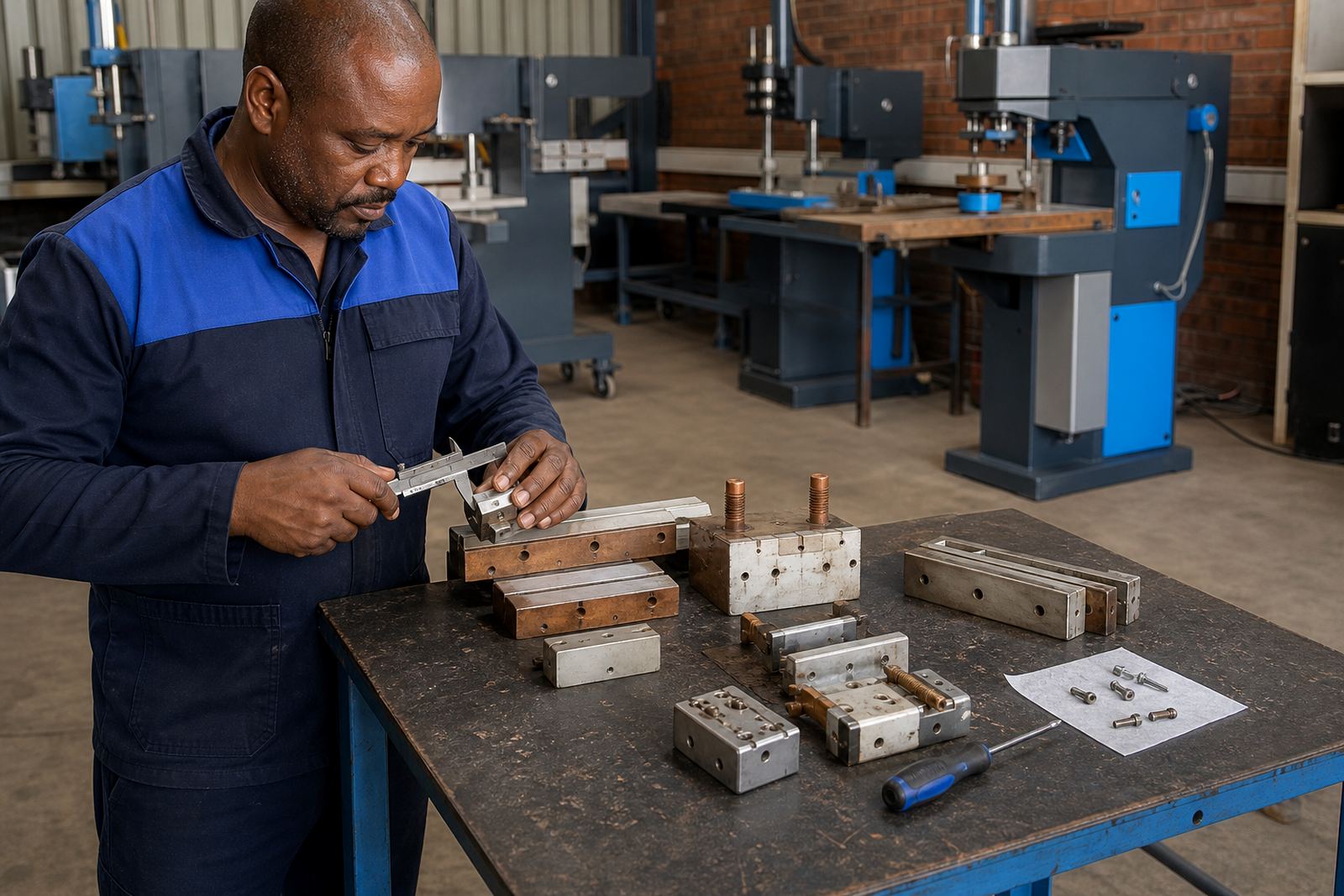
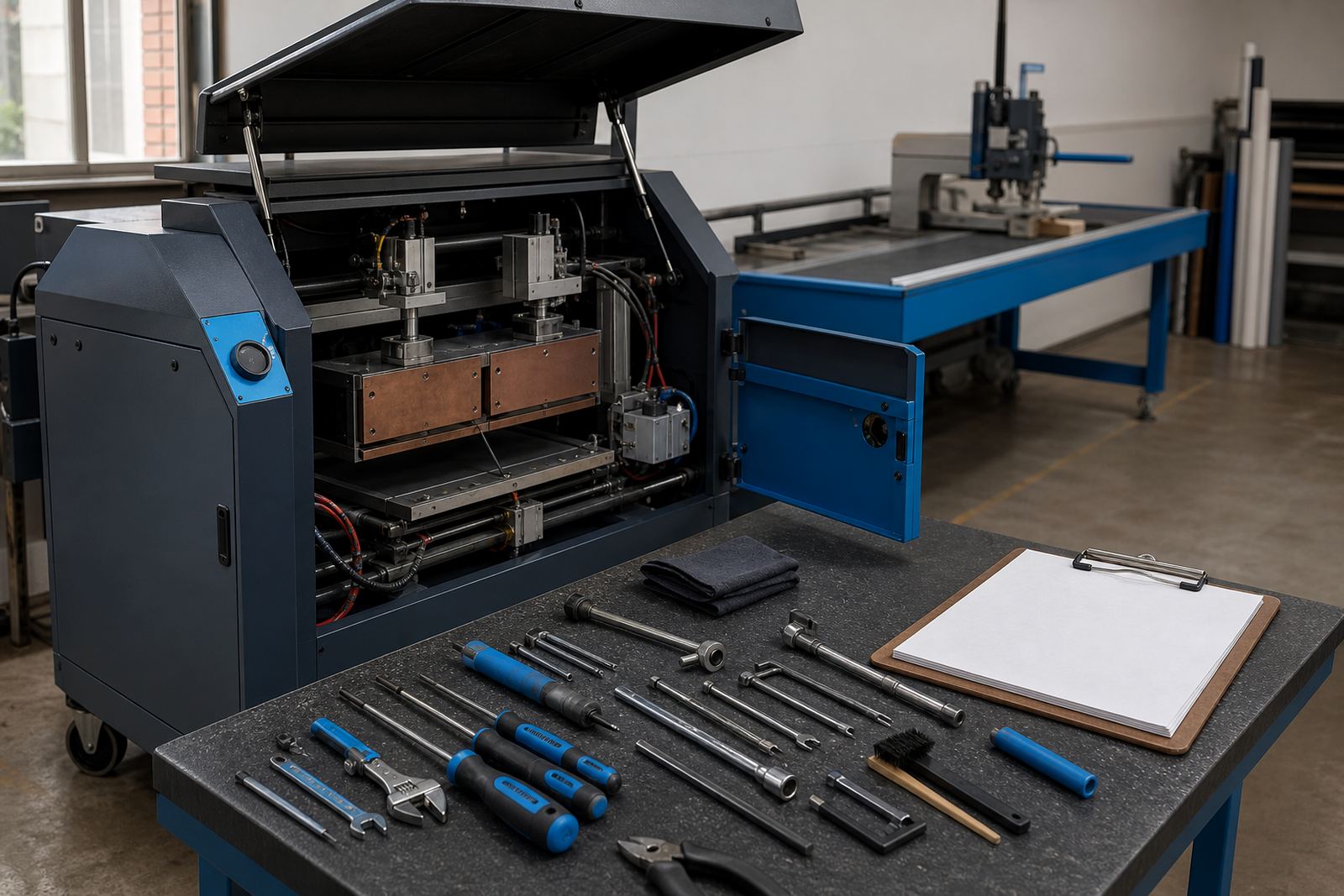
A fault finding visit starts with a short machine history, then a visual check of the weld area, tooling, controls and safety parts. We look for weak seams, hot spots, arc marks, pressure loss, uneven tracking and cycle results that change from job to job.
The inspection covers high-frequency and hot-air or hot-wedge systems used on PVC-coated fabrics, including banners, tarpaulins, tents, hems, keder pockets and eyelet work. If the fault sits in one section only, we isolate that section first so the machine is not stripped more than needed.
- Control panel and timer checks
- Electrode, wheel and roller condition
- Pressure, heat and dwell settings
- Clamp alignment and bed condition
Common faults we trace on site
Weak seams are often linked to poor heat transfer, worn tooling or incorrect pressure across the weld line. On high-frequency units, drift in output or timing can cause a seam to look sound on the outside but peel early under load, especially on wide tarpaulin panels and banner joins.
Hot-air and hot-wedge machines can show uneven temperature across the nozzle or wedge, dirty guides, tracking problems or a drive that pulls the fabric off line. In humid coastal areas such as Durban and Cape Town, moisture and dust can also affect finish quality, so the full operating set-up is checked not only the symptom.
- Temperature drift and false readings
- Inconsistent cycle results and missed welds
- Tracking faults on long runs
- Seam scorch, chatter marks or poor fusion
What the service includes
Fault finding is not just a quick reset. We test the machine under working conditions, confirm the fault source and then sort the parts, settings or alignment issue that is causing the problem. Where needed, we carry out tooling alignment, electrode refurbishment, roller replacement, or a controlled adjustment to the welding head.
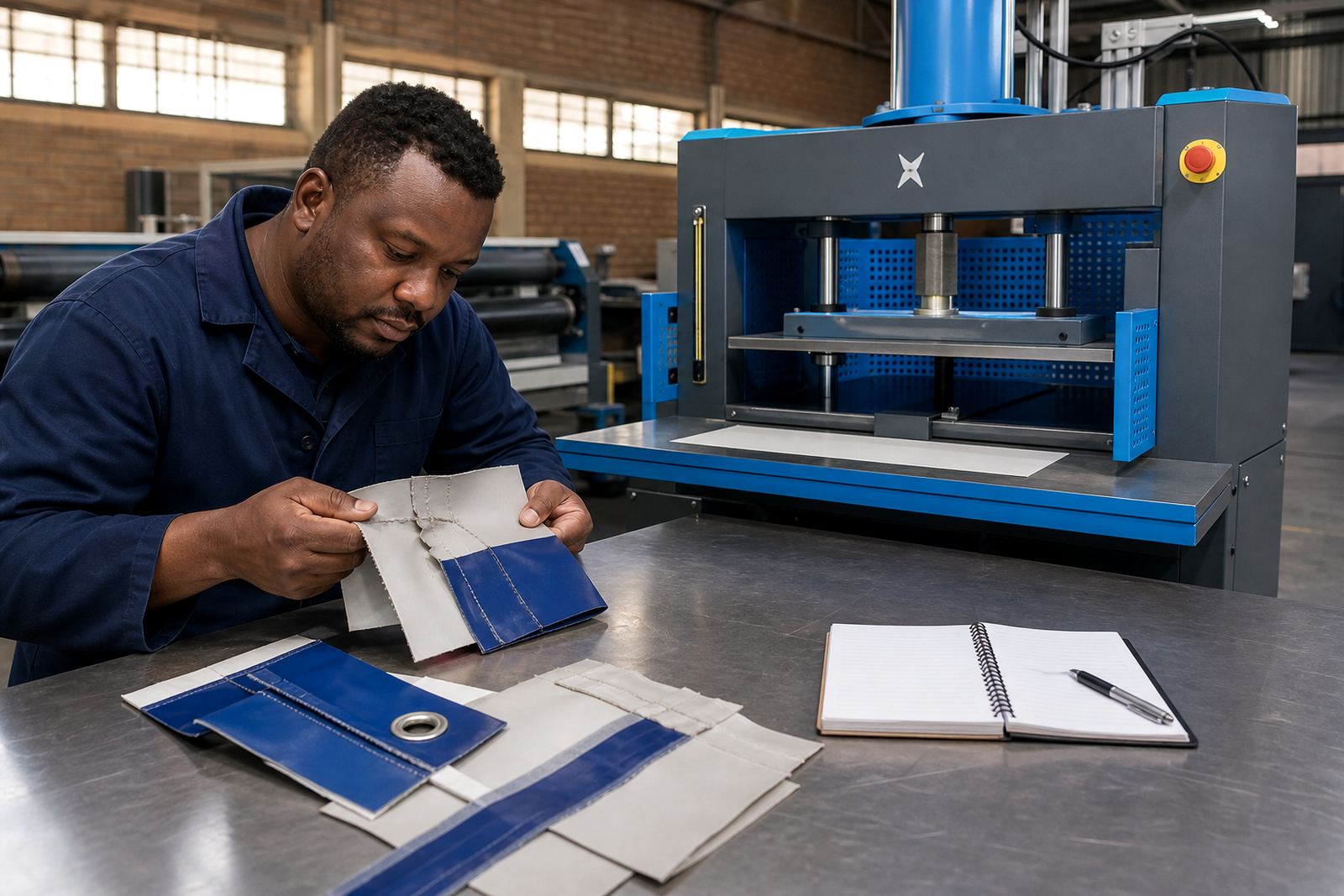
For seam and accessory work, we also check hems, keder slots, eyelet sections and overlap joints. That matters on display items and tent panels where one bad joint can ruin an entire run.
- Targeted diagnostics and fault isolation
- Mechanical alignment checks
- Electrical and heat output checks
- Parts advice before any replacement is done
Turning a fault into a clear repair plan
Once the fault is confirmed, you get a practical repair path based on the machine model, the wear pattern and how hard the unit is being used. Some faults are corrected during the visit, while others need parts supply or workshop work if the issue is deeper, such as damaged controls, worn rollers or a tired heating assembly.
We keep the report plain and specific, with the fault, the likely cause and the next step set out in language that production teams can use. No guesswork, and no pushing parts that are not needed.
- Immediate correction where possible
- Parts list only where wear is proven
- Workshop follow-up if the repair is not practical on site
Turnaround and pricing approach
Turnaround depends on where the machine is based, how easy it is to reach the fault point and whether parts are on hand. A basic control issue or alignment problem is usually faster than a full heat system fault or repeated cycle failure, which may need testing over a few runs to pin down properly.
Pricing is handled in stages. The fault finding visit is quoted on the work required, with separate pricing for labour, replacement parts and any extra callout or workshop work. That keeps the cost tied to the actual repair rather than a blanket charge that hides the detail.
- On-site diagnosis for Germiston and nearby areas
- Site callouts across major SA production centres
- Labour and parts shown separately
Aftercare after the machine is back in line
After the repair, we confirm the weld under normal production settings and talk through the points that caused the fault in the first place. If operator handling, worn tooling or a dirty weld path caused the problem, those points are flagged so the fault is less likely to return.
We also support planned servicing for shops that run several shifts or work with heavy tarpaulin stock. For businesses in Johannesburg, Pretoria, Durban, Cape Town and Bloemfontein, this helps keep seam quality steady and reduces the stop-start pressure that comes with sudden breakdowns.
- Final seam test and settings check
- Operator notes on the fault cause
- Servicing advice matched to machine use
Key facts
| Machine types | High-frequency and hot-air or hot-wedge PVC welders |
|---|---|
| Materials | PVC-coated fabrics for tarpaulins, banners and tents |
| Fault scope | Weak seams, temperature drift, tracking issues and cycle inconsistency |
| Work areas | Serving workshops in Germiston, Johannesburg, Pretoria, Durban, Cape Town and Bloemfontein |
| Service methods | On-site fault finding, workshop follow-up, parts supply and seam testing |
| Common seam work | Hems, overlap joints, keder pockets and eyelet areas |