

Skip to content
Home / Notes

Seam Notes

These editorial notes explain welding methods, seam design and workshop practice for PVC-coated fabrics. Topics are written in practical terms for South African makers handling tarpaulins, banners, tent panels and related products.

Seam Notes
HF or Hot-Air

HF or Hot-Air

A basic comparison of high-frequency welding and hot-air welding for common PVC-coated fabrics.

Hot-Air or Wedge

Hot-Air or Wedge

How hot-air and hot-wedge processes differ in heat delivery, setup and seam behaviour.

Overlap Seams

Overlap Seams

Why overlap seams are widely used on tarpaulins, covers and larger welded assemblies.

Hem Design

Hem Design

A practical look at folded hems for banners, covers and eyelet-ready edges.

Pole Pockets

Pole Pockets

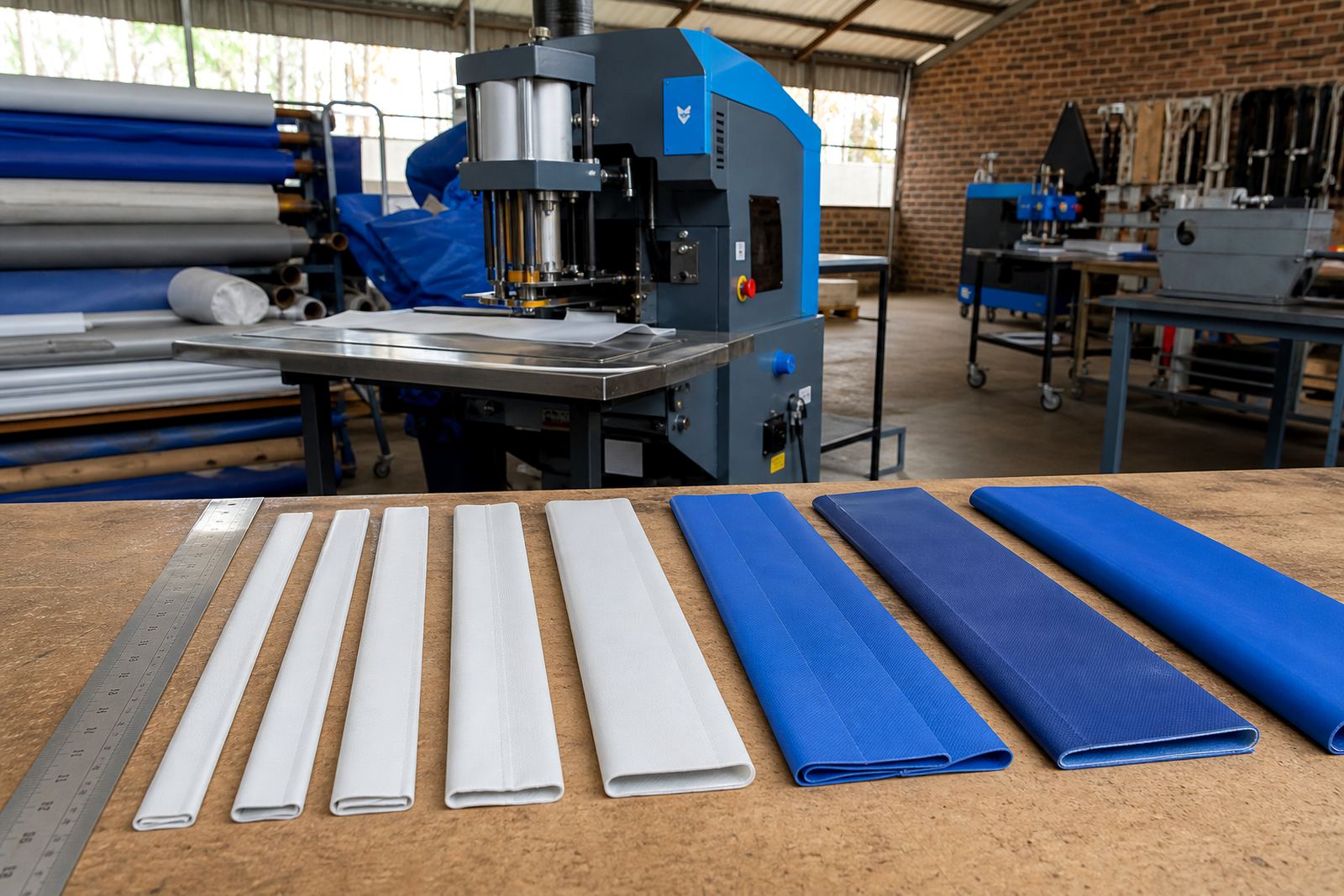
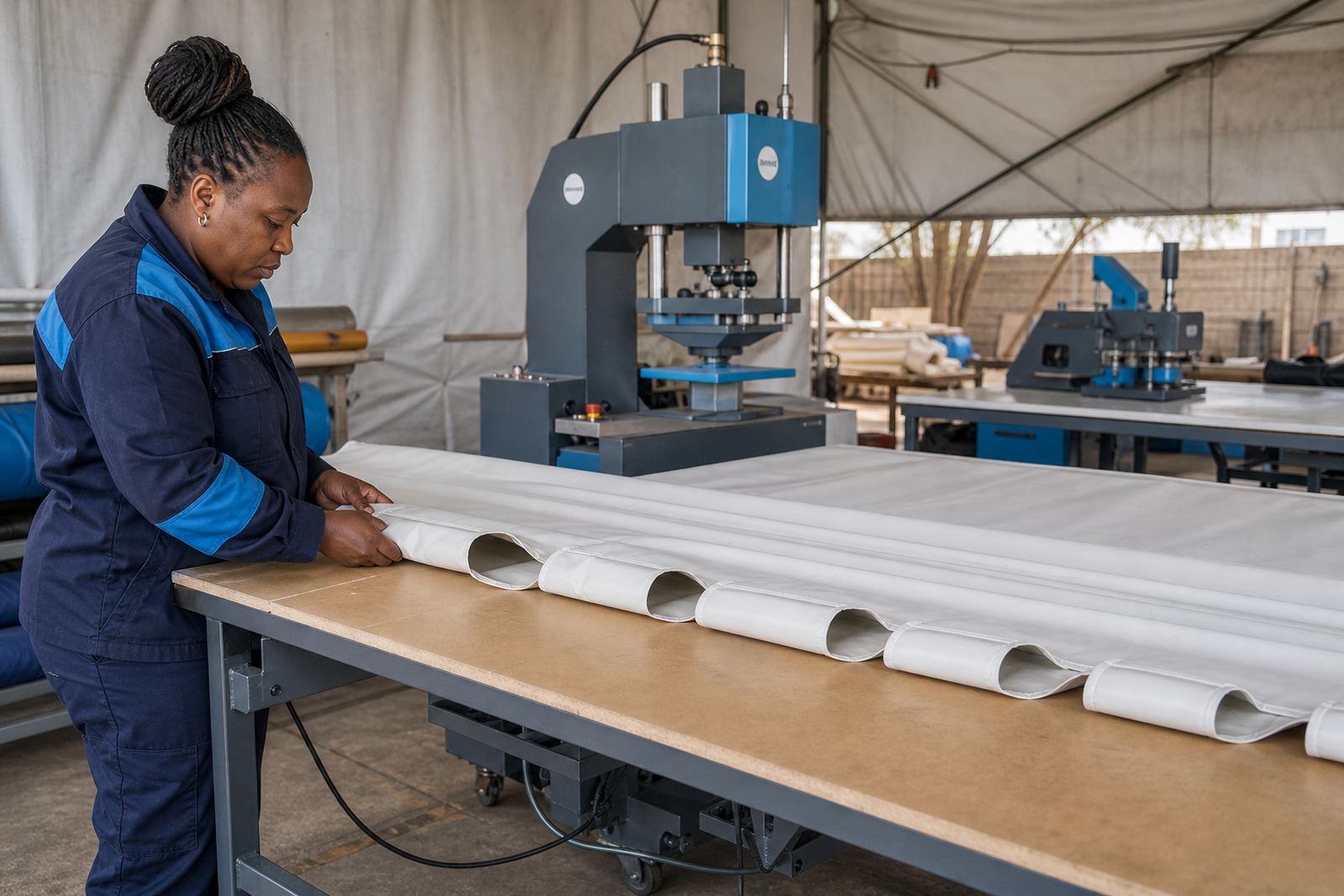
Pocket welding basics for banner sleeves, hanging loops and display hardware fitment.

Keder Basics

Keder Basics

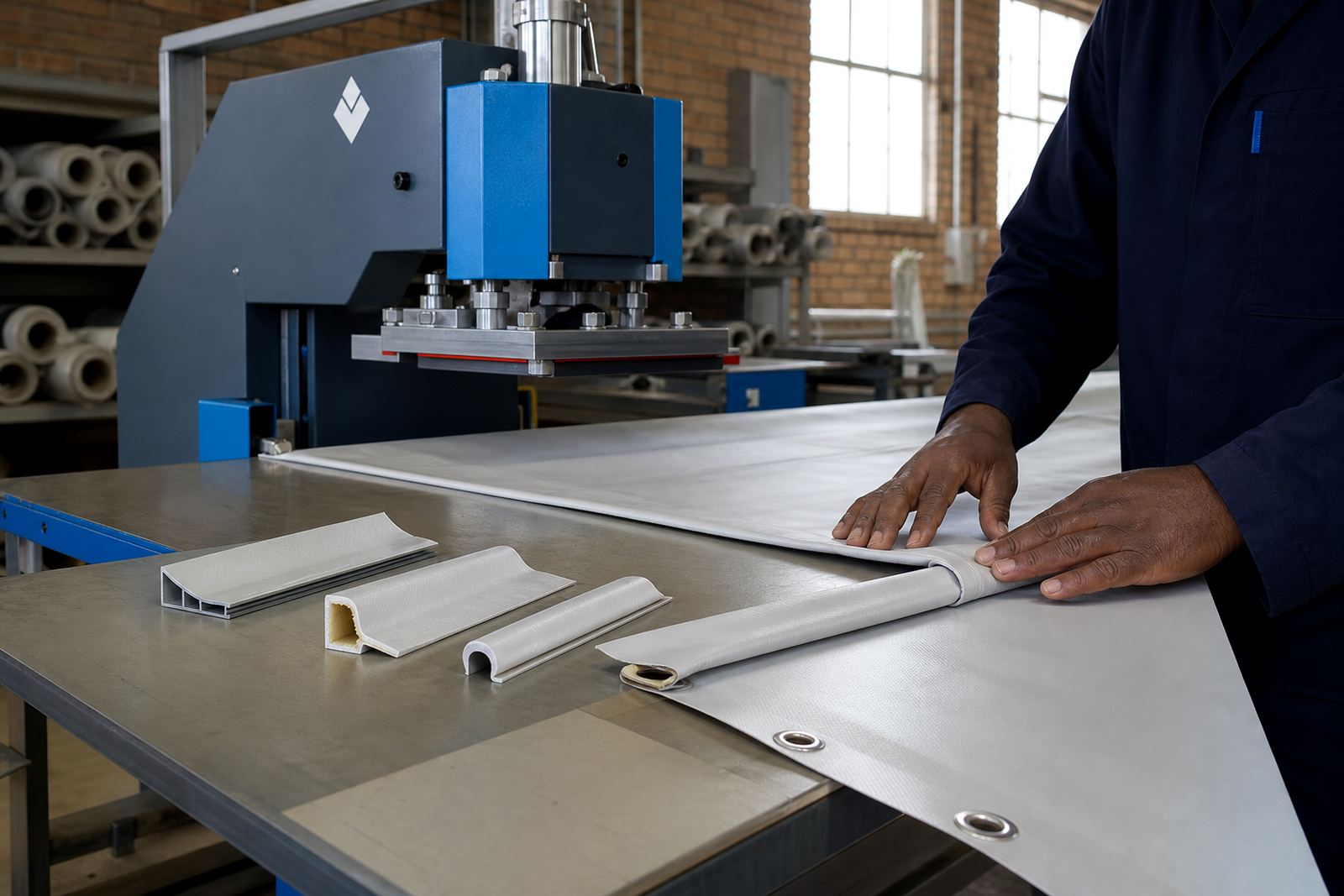
An introduction to keder welding for tension graphics, tents and track-mounted fabric products.

Eyelet Spacing

Eyelet Spacing

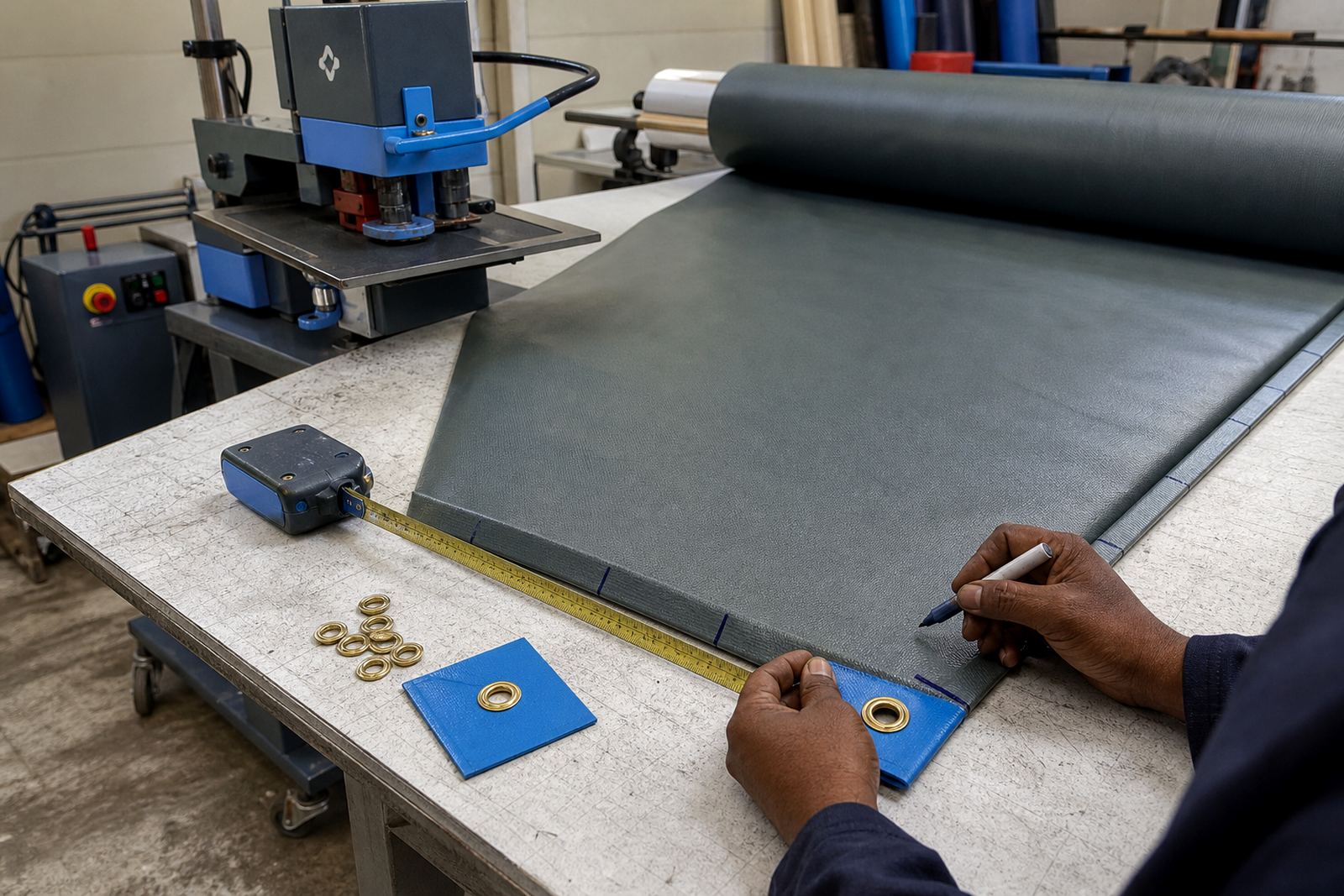
How welded hems and corner reinforcement support practical eyelet spacing decisions.

Corner Reinforcement

Corner Reinforcement

Why corners need extra material and careful seam placement on tensioned products.

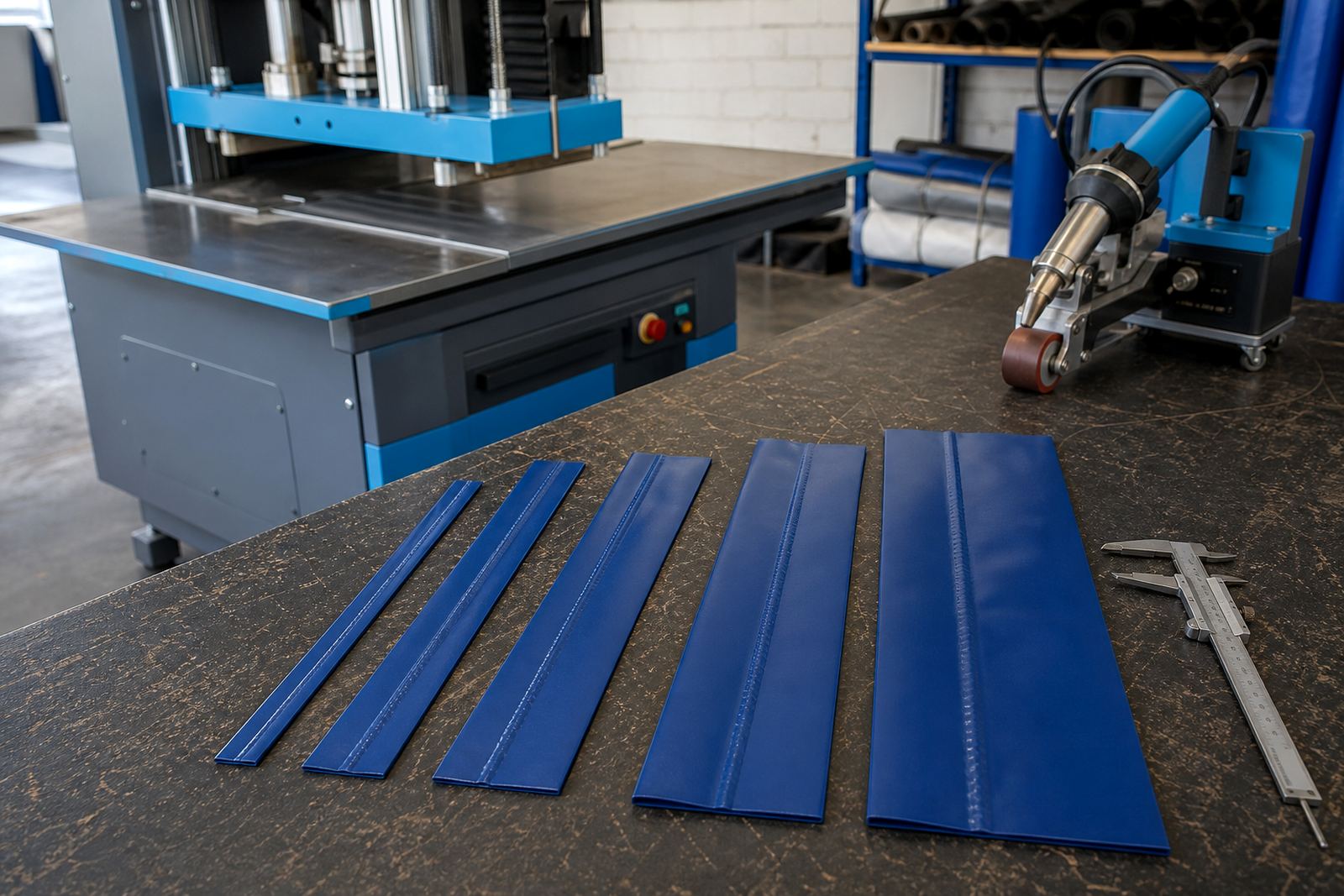
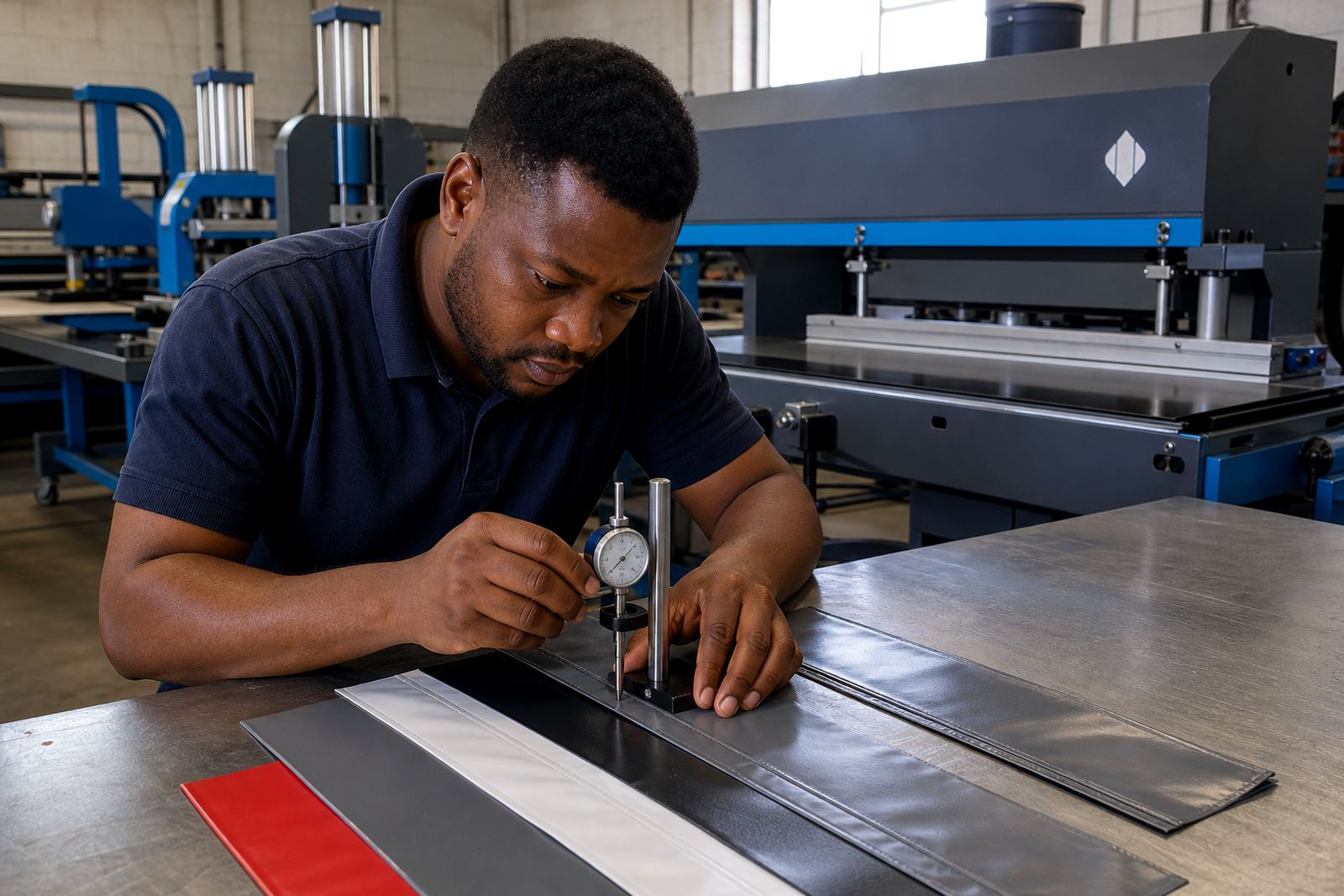
Seam Width

Seam Width

Choosing sensible seam widths for different fabric weights, loads and product uses.

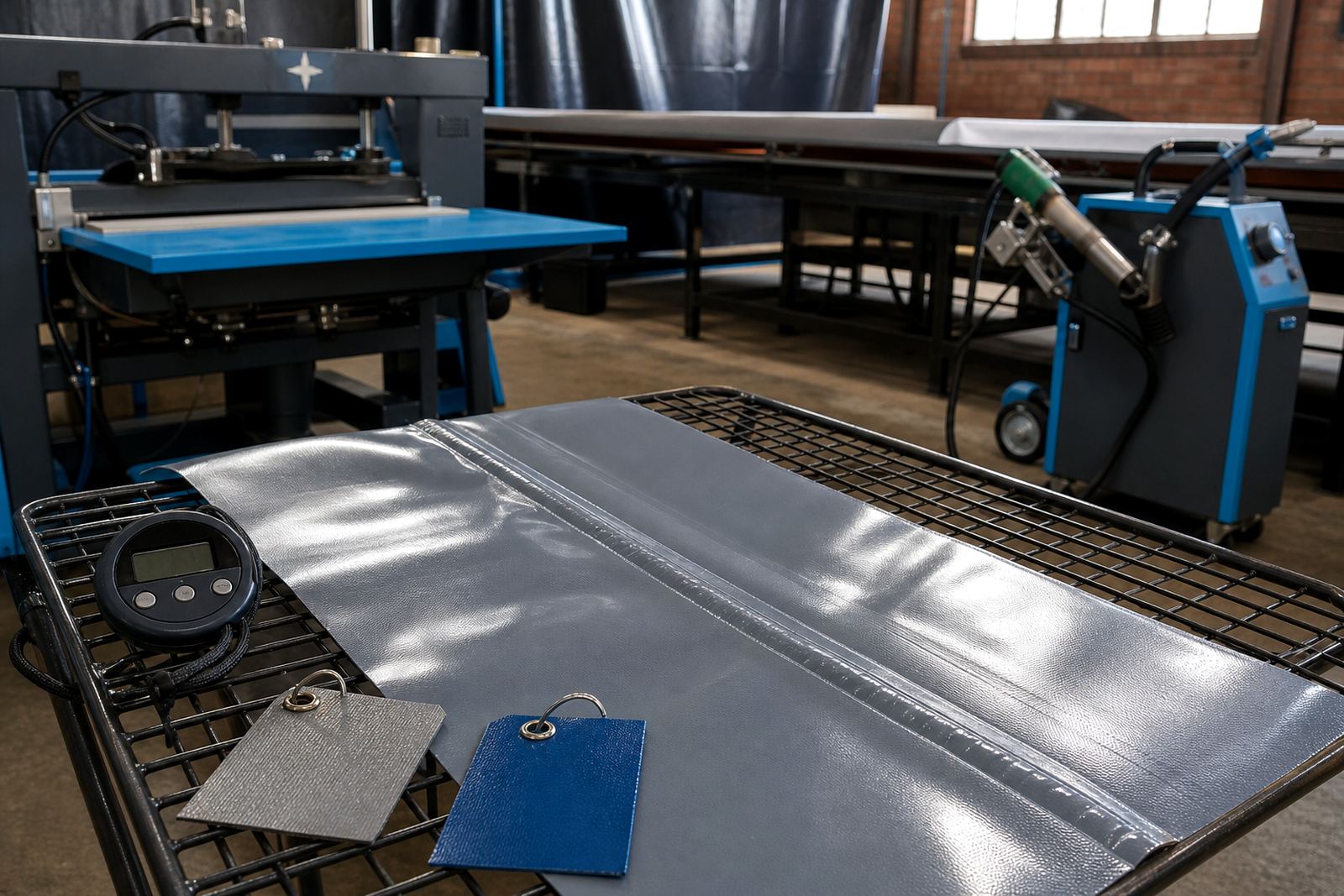
Test Strips

Test Strips

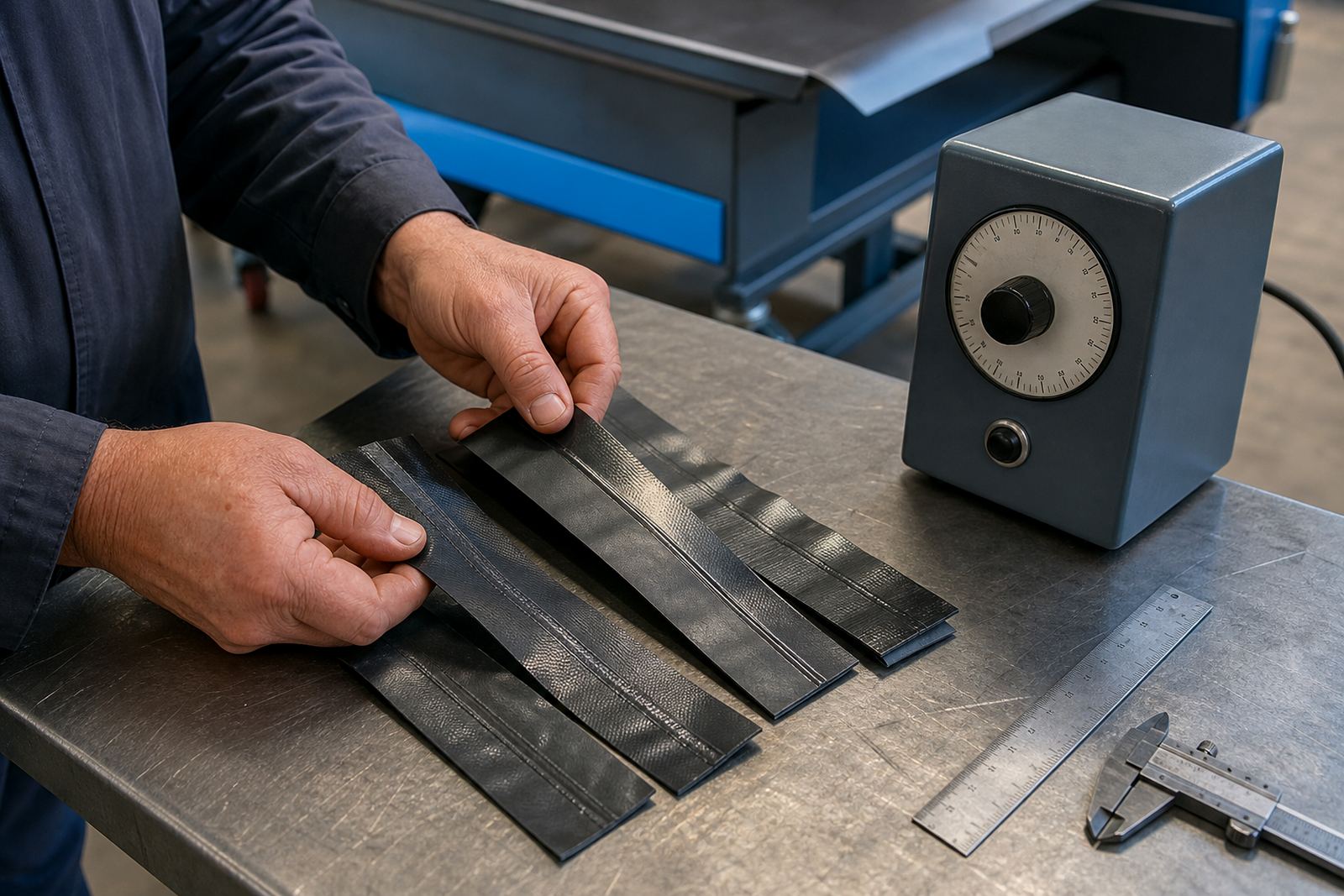
Why quick test strips matter before running production on a new material batch.

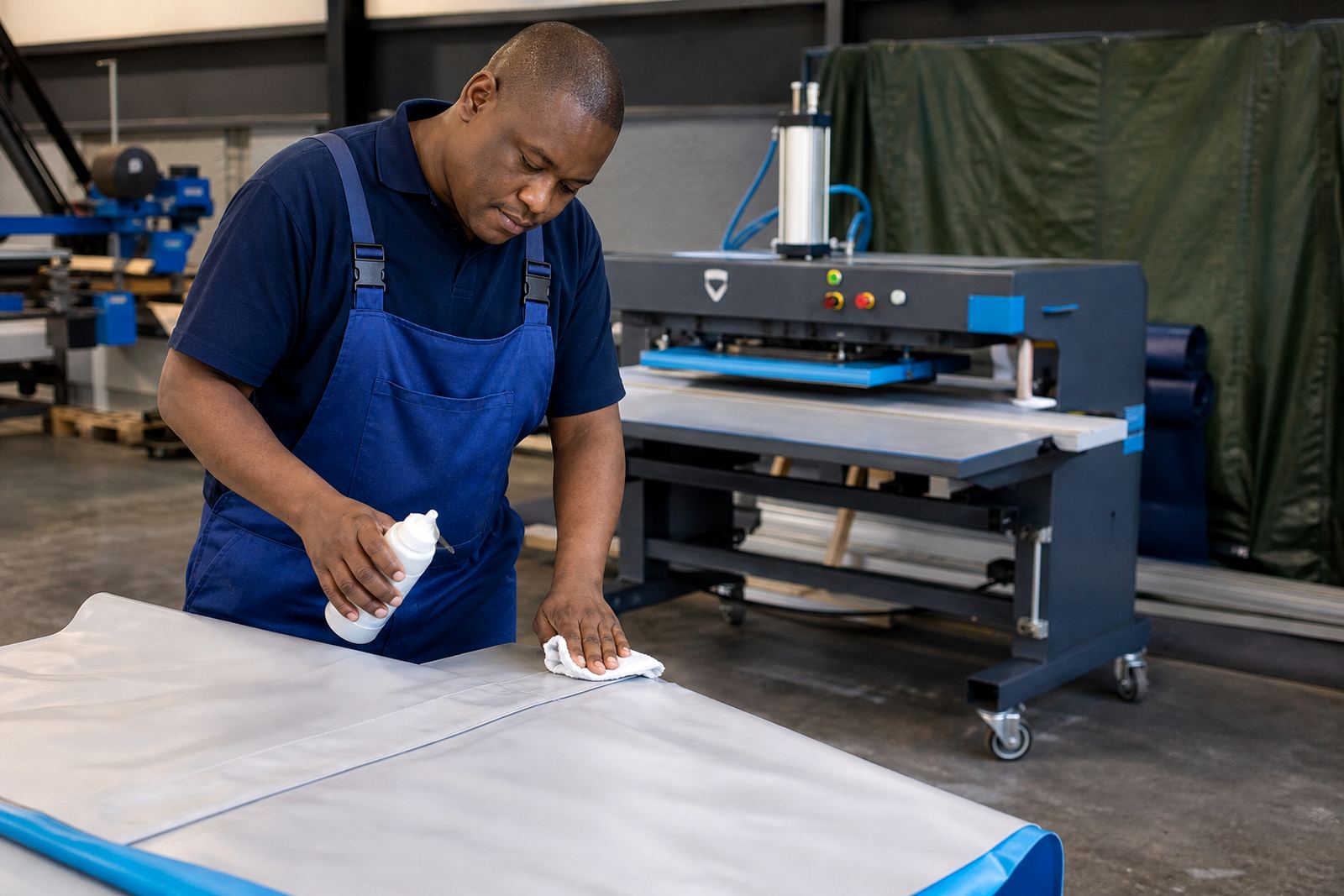
Surface Cleaning

Surface Cleaning

Basic surface preparation can improve seam consistency when dust and handling marks build up.

Material Storage

Material Storage

Simple storage habits help keep coated fabrics flat, clean and easier to weld.

Feed Alignment

Feed Alignment

Straight feeding reduces wandering seams and wasted banner or tarpaulin material.

Cooling Time

Cooling Time

Allowing seams to cool correctly helps preserve shape and handling during finishing.

Pressure Balance

Pressure Balance

Even pressure across the weld zone supports consistent bonding and seam appearance.

Temperature Drift

Temperature Drift

Recognising temperature drift can prevent weak seams and visible finish changes.

Dwell Time

Dwell Time

Dwell time affects how long energy is applied and can change seam strength and finish.

Speed Settings

Speed Settings

Travel speed influences output, heat exposure and final seam consistency on long runs.

Mesh Handling

Mesh Handling

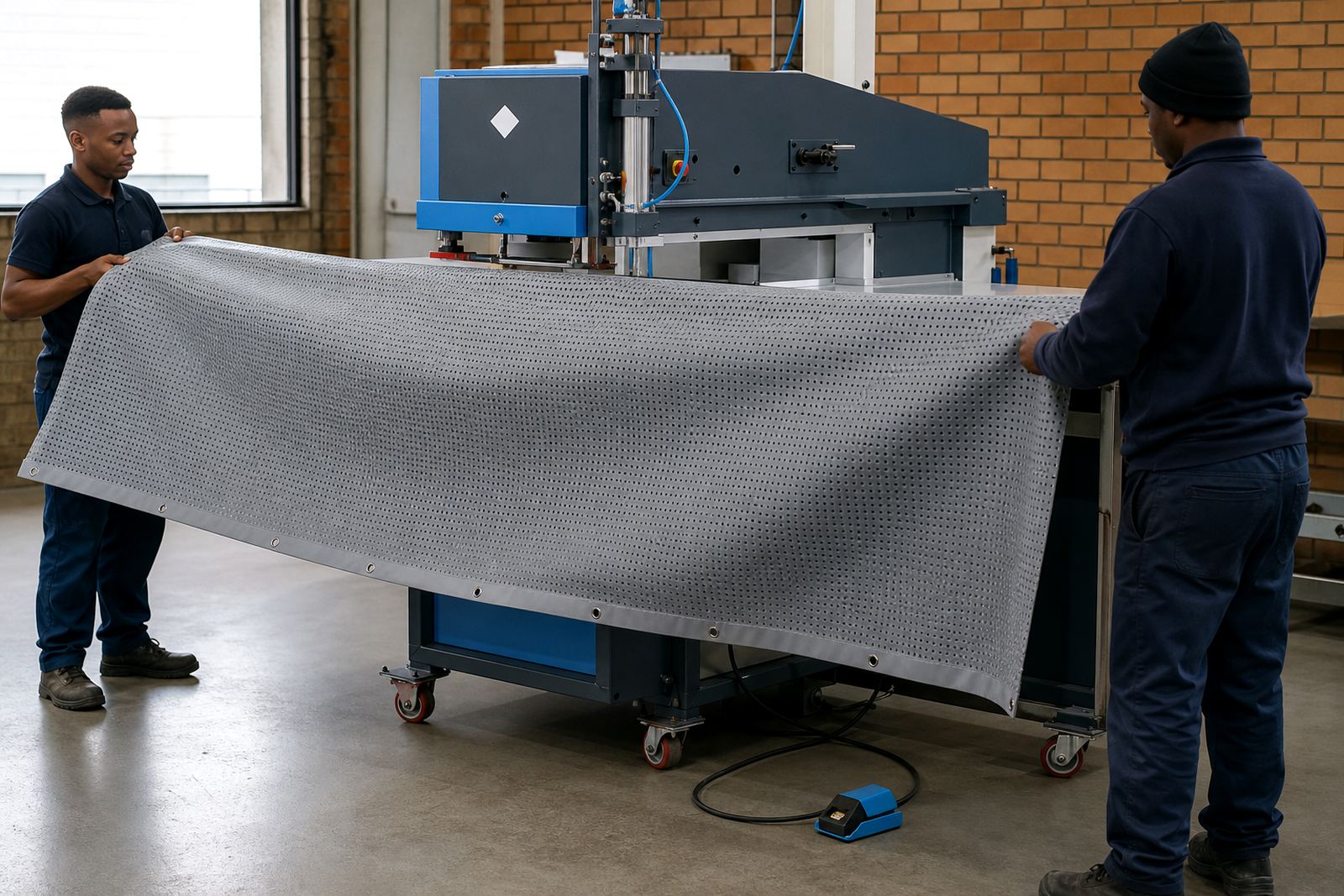
Mesh products need careful support and folding practice during hem and pocket work.

Clear PVC Panels

Clear PVC Panels

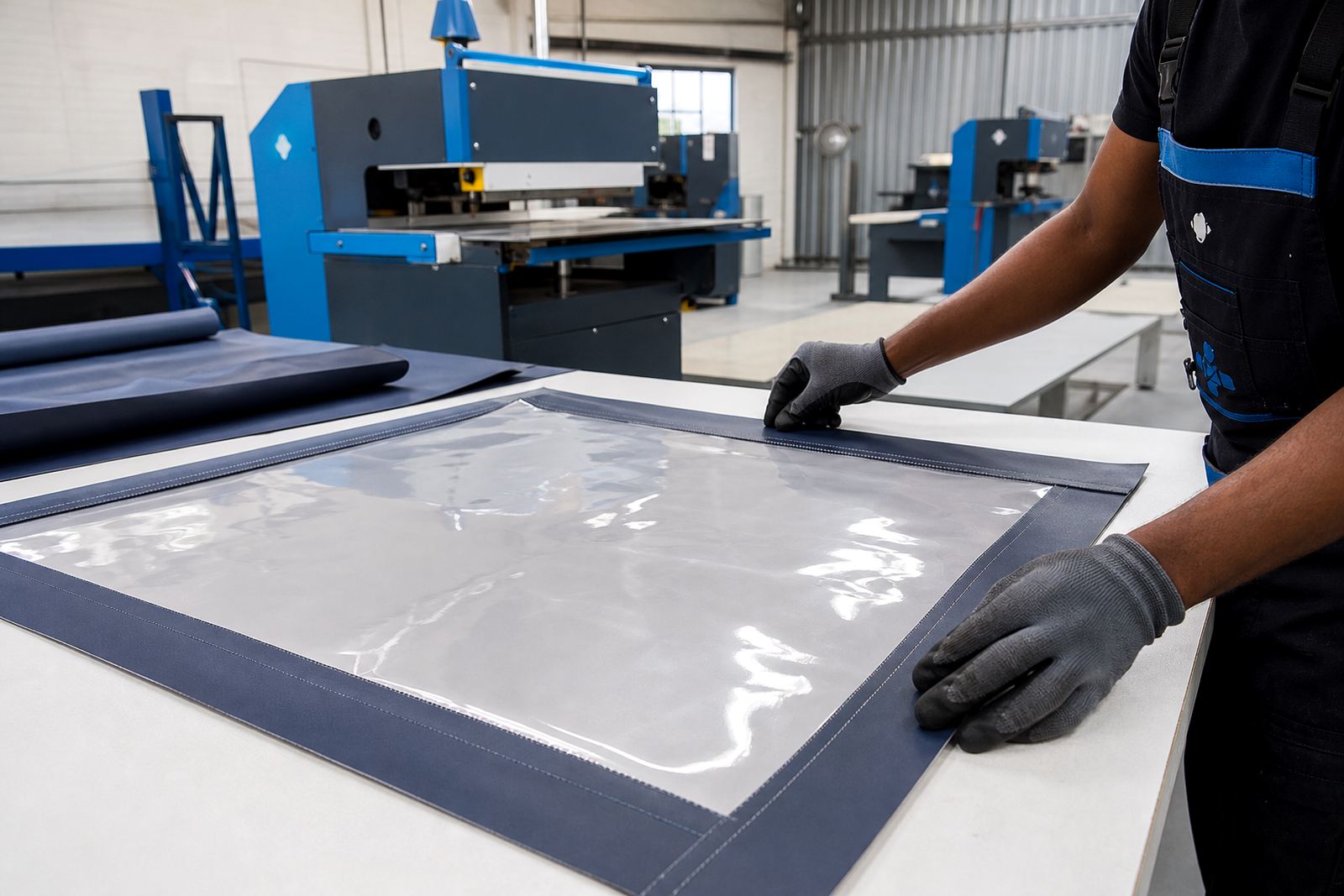
Working with clear sections calls for clean handling and careful seam appearance control.

Thick Fabric Seams

Thick Fabric Seams

Heavier coated fabrics may require slower setup and firm pressure control.

Thin Banner Seams

Thin Banner Seams

Lighter banner stock often rewards careful heat control and neat edge preparation.

Long Seam Support

Long Seam Support

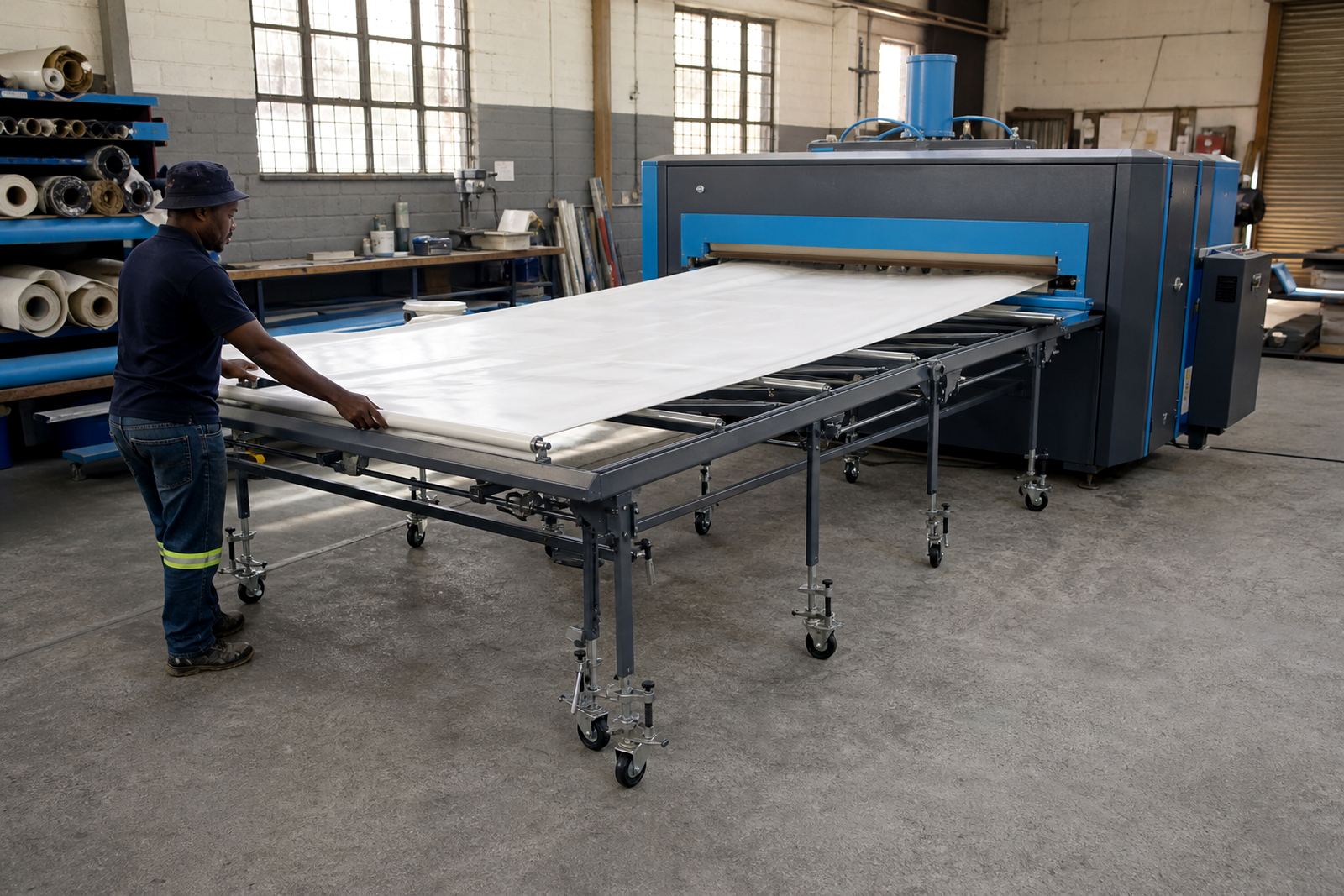
Support tables and roller stands can reduce drag and improve long seam tracking.

Small Part Fixturing

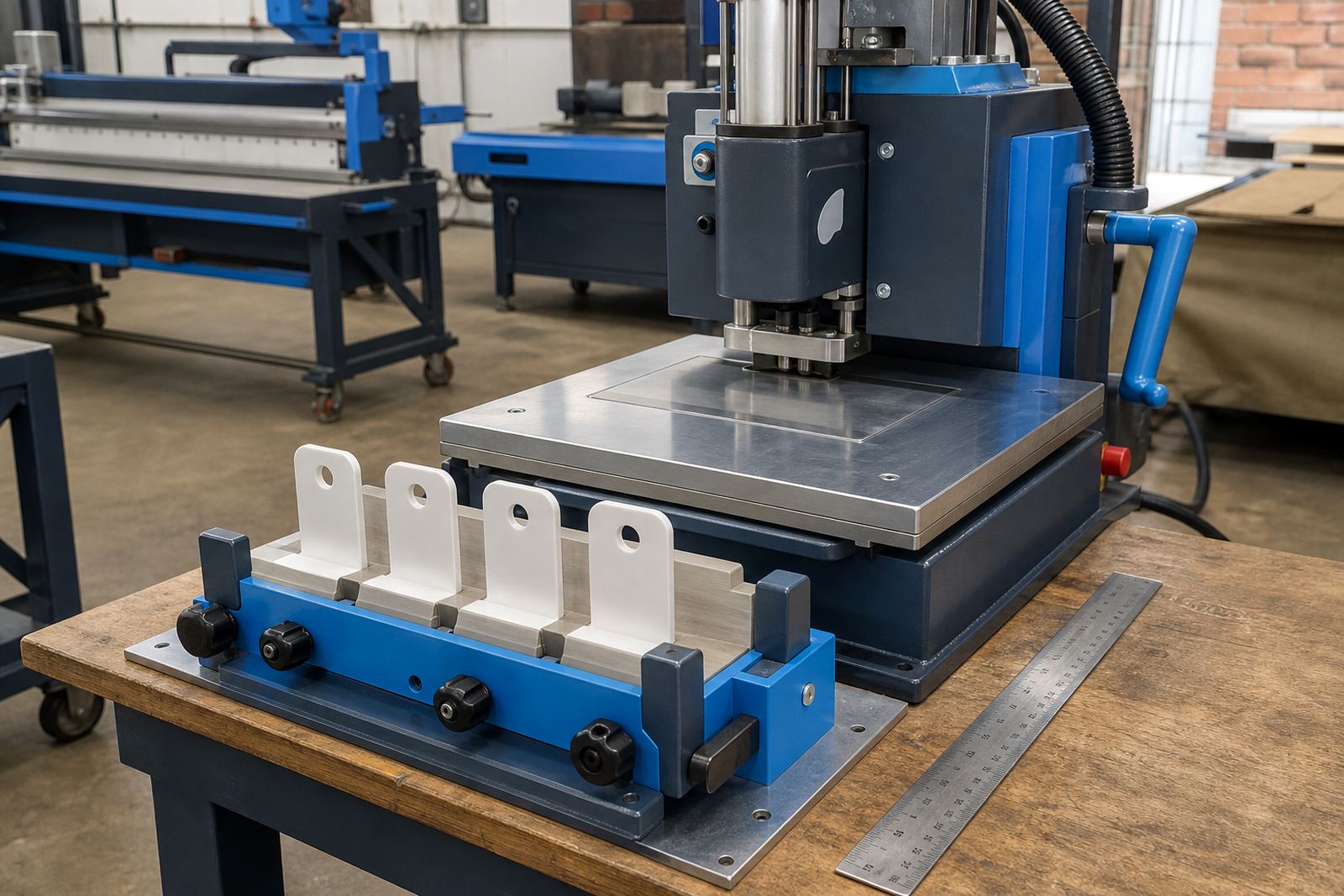
Small Part Fixturing

Simple jigs help hold smaller reinforced pieces in the correct welding position.

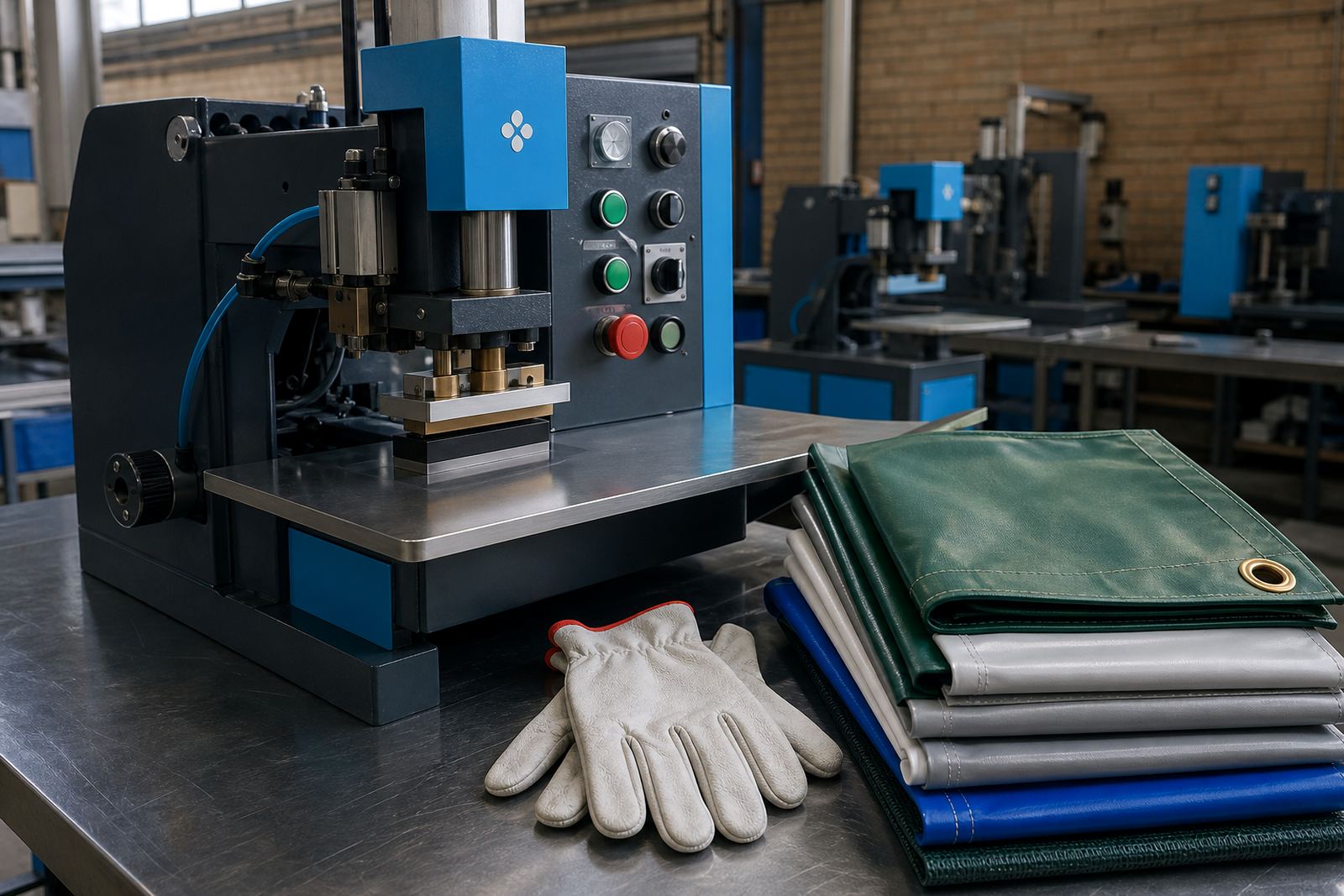
Operator Gloves

Operator Gloves

Suitable gloves can assist safe handling without reducing feel during setup work.

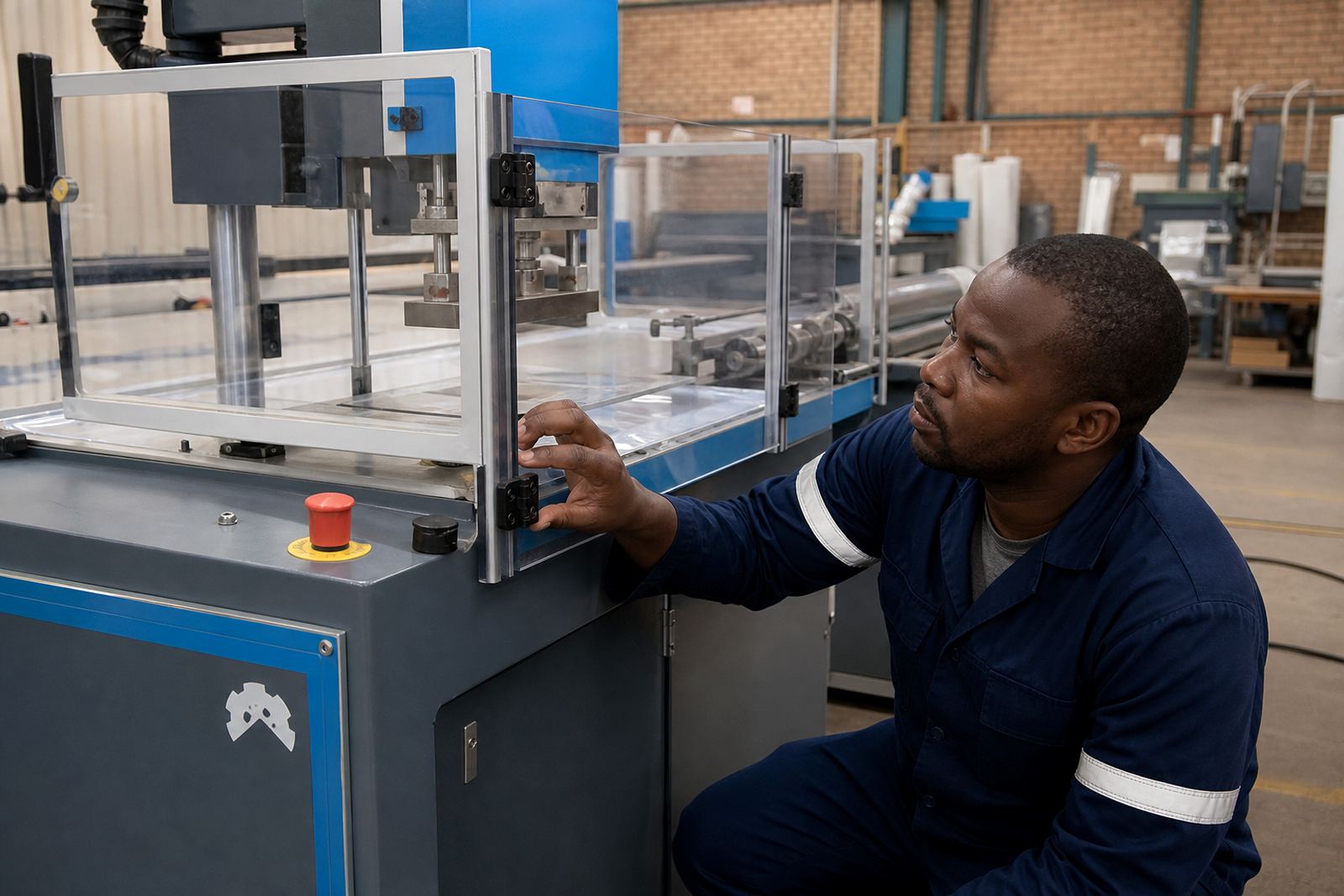
Guarding Checks

Guarding Checks

Routine guarding checks are part of safer operation around hot and moving machine parts.

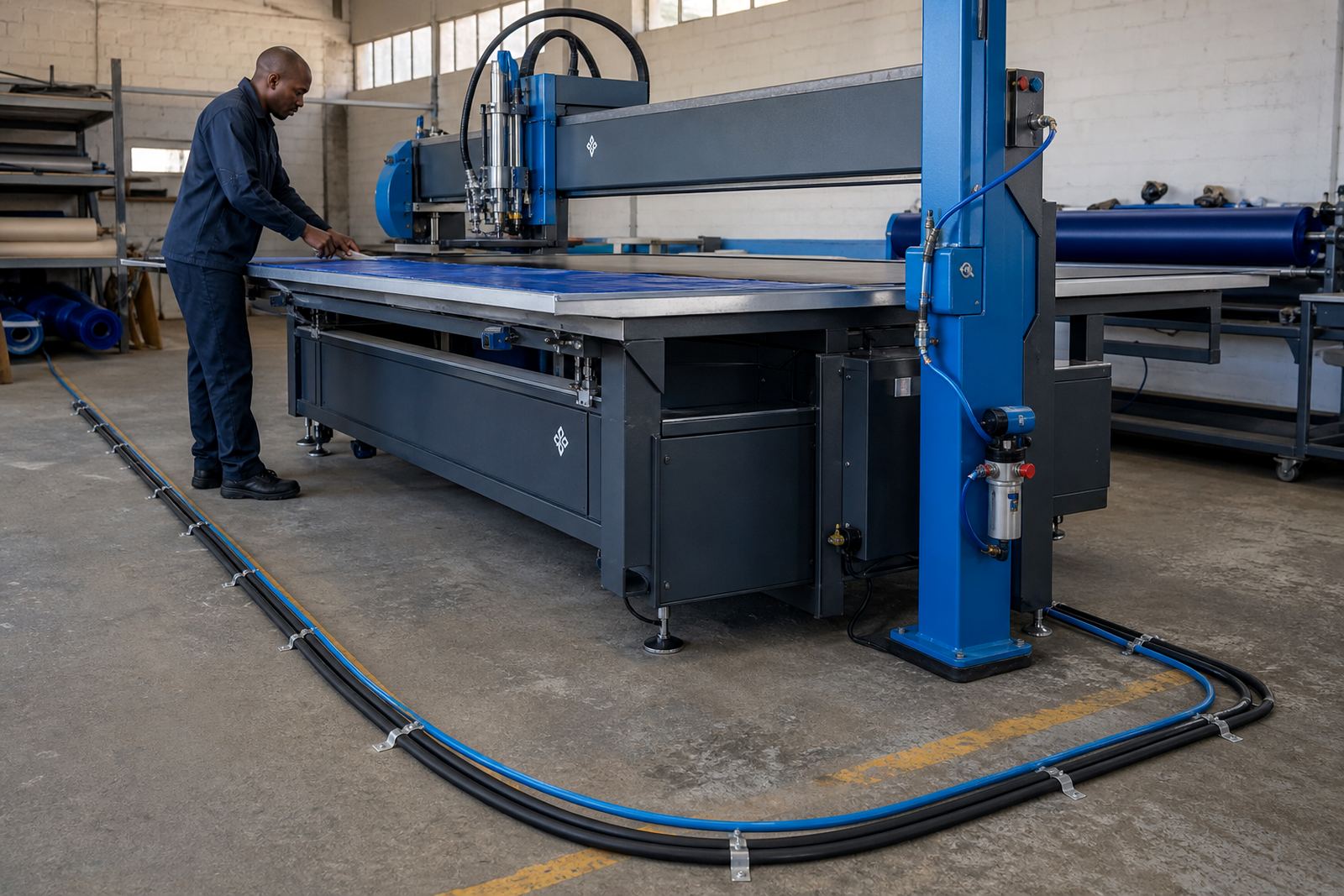
Cable Housekeeping

Cable Housekeeping

Tidy cables and hoses help reduce trip risks and simplify daily machine use.

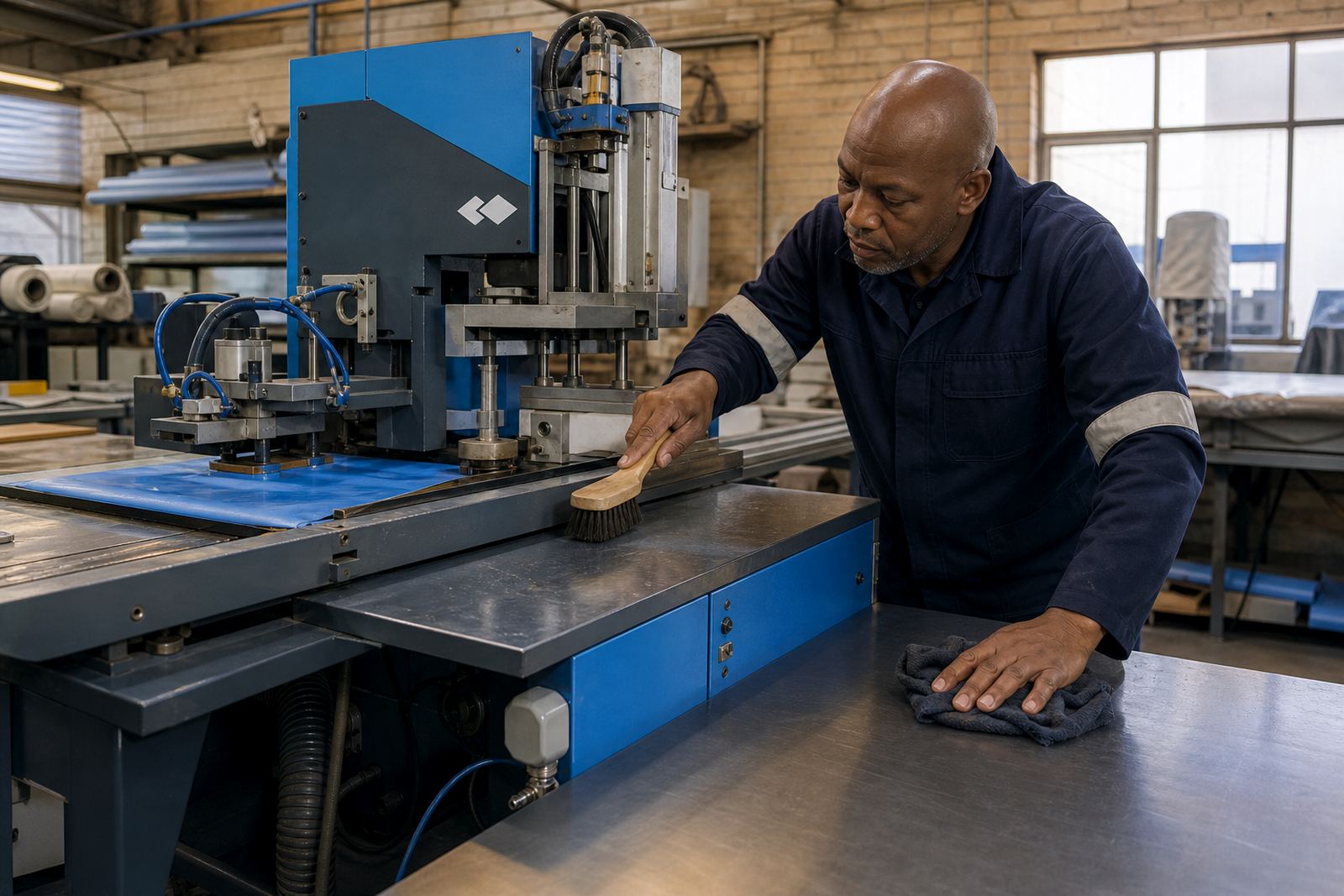
Daily Clean Down

Daily Clean Down

A short clean-down routine can keep guides, rollers and tables in better condition.

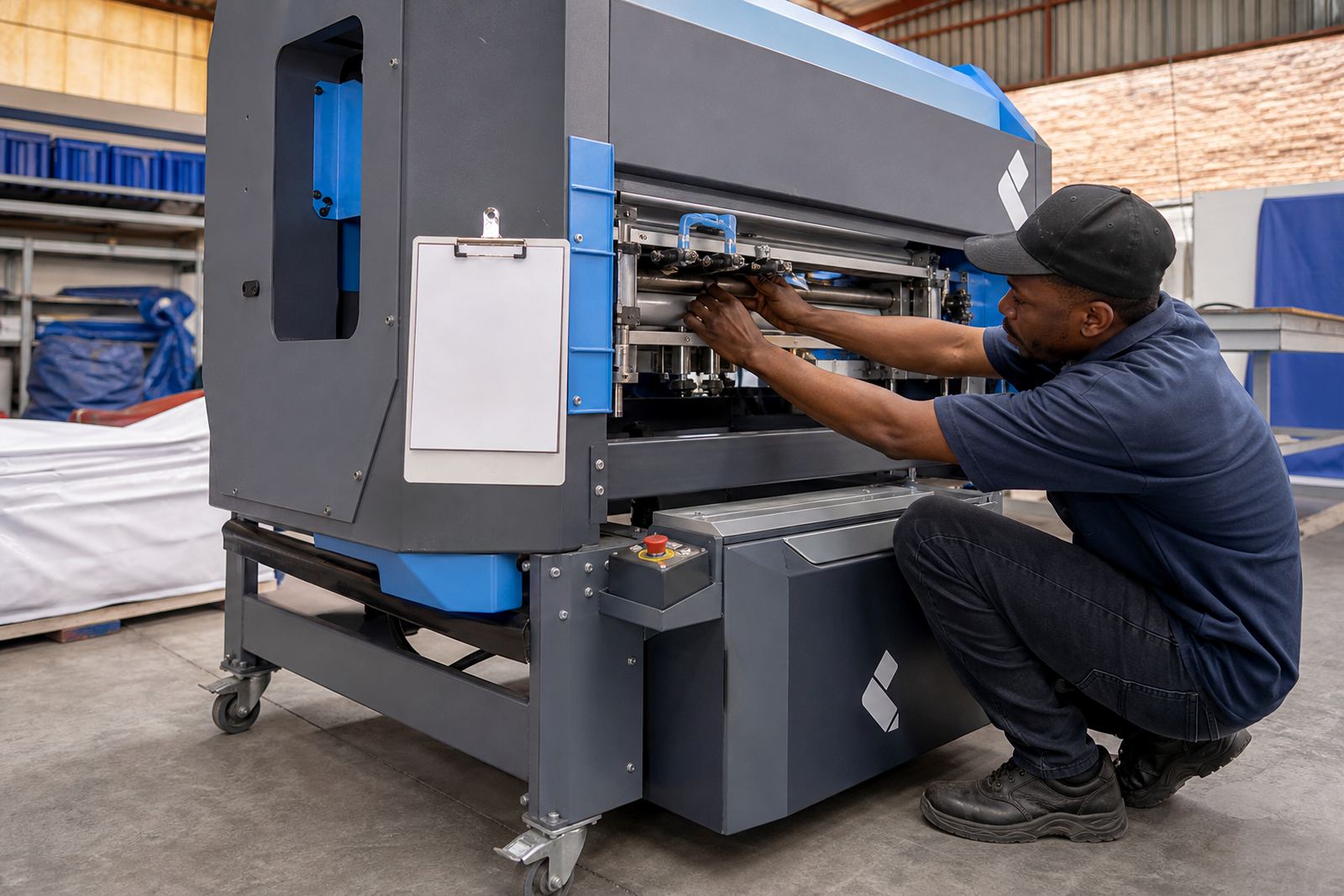
Weekly Inspections

Weekly Inspections

Weekly inspection habits help spot wear before seam quality is affected.

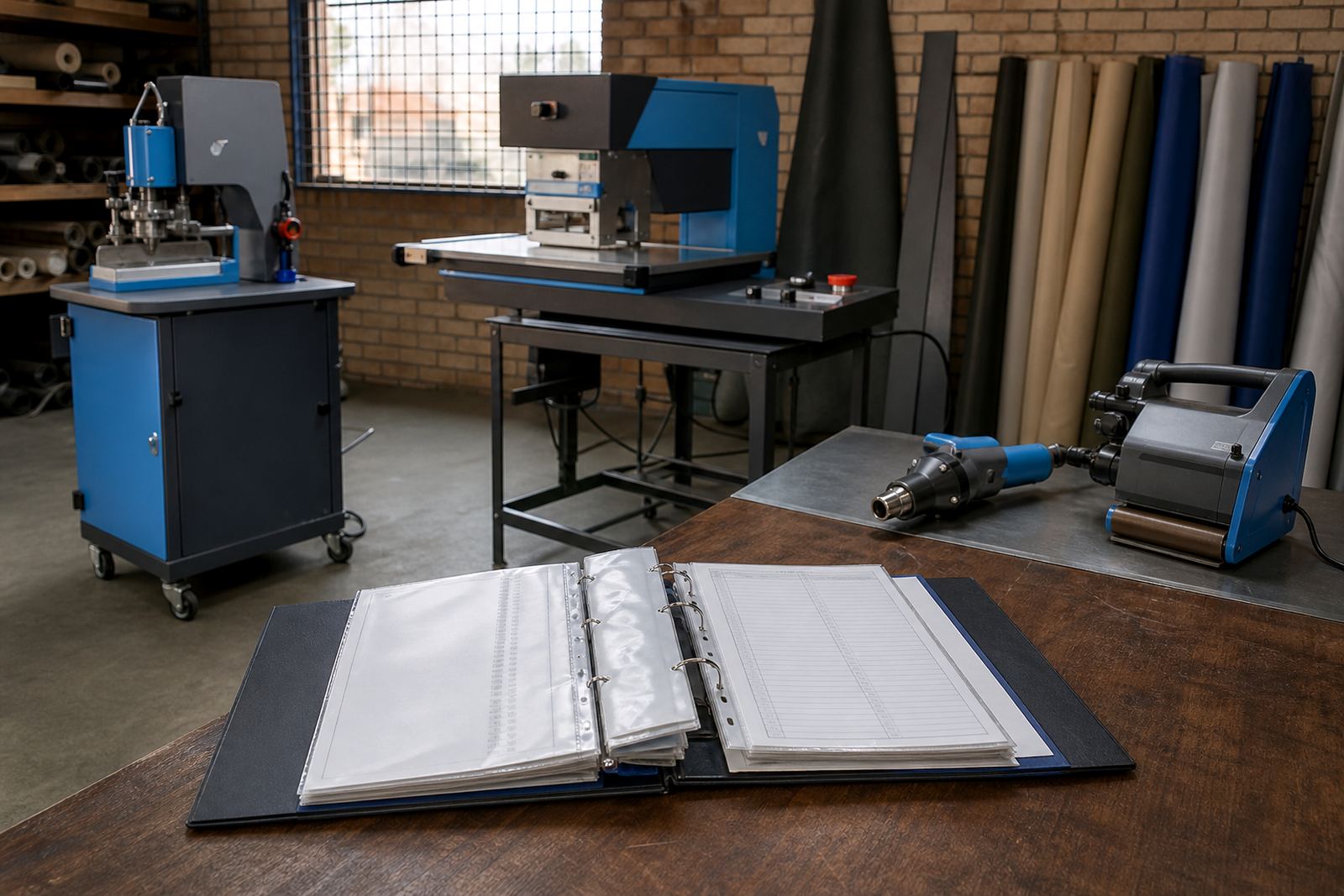
Service Records

Service Records

Clear service records make it easier to track recurring faults and planned maintenance.

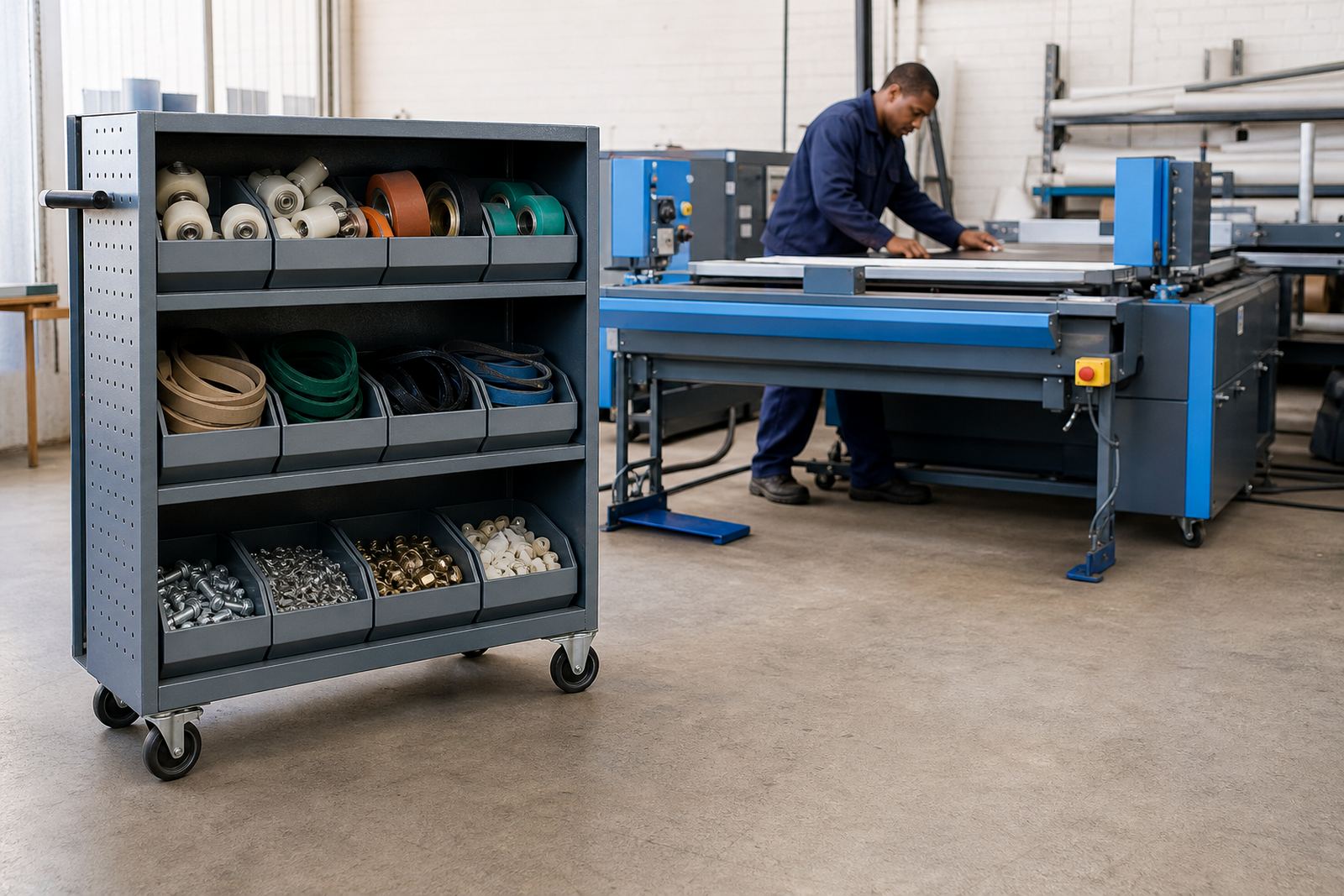
Spare Parts Stock

Spare Parts Stock

Keeping a few wear items on hand can reduce disruption during busy production periods.

Sample Library

Sample Library

A seam sample library gives operators a useful reference for proven setups.

Banner Flow

Banner Flow

A simple finishing flow can reduce handling and speed up banner output.

Tarp Flow

Tarp Flow

Tarpaulin shops benefit from planned cutting, joining, hemming and eyelet preparation stages.

Panel Layout

Panel Layout

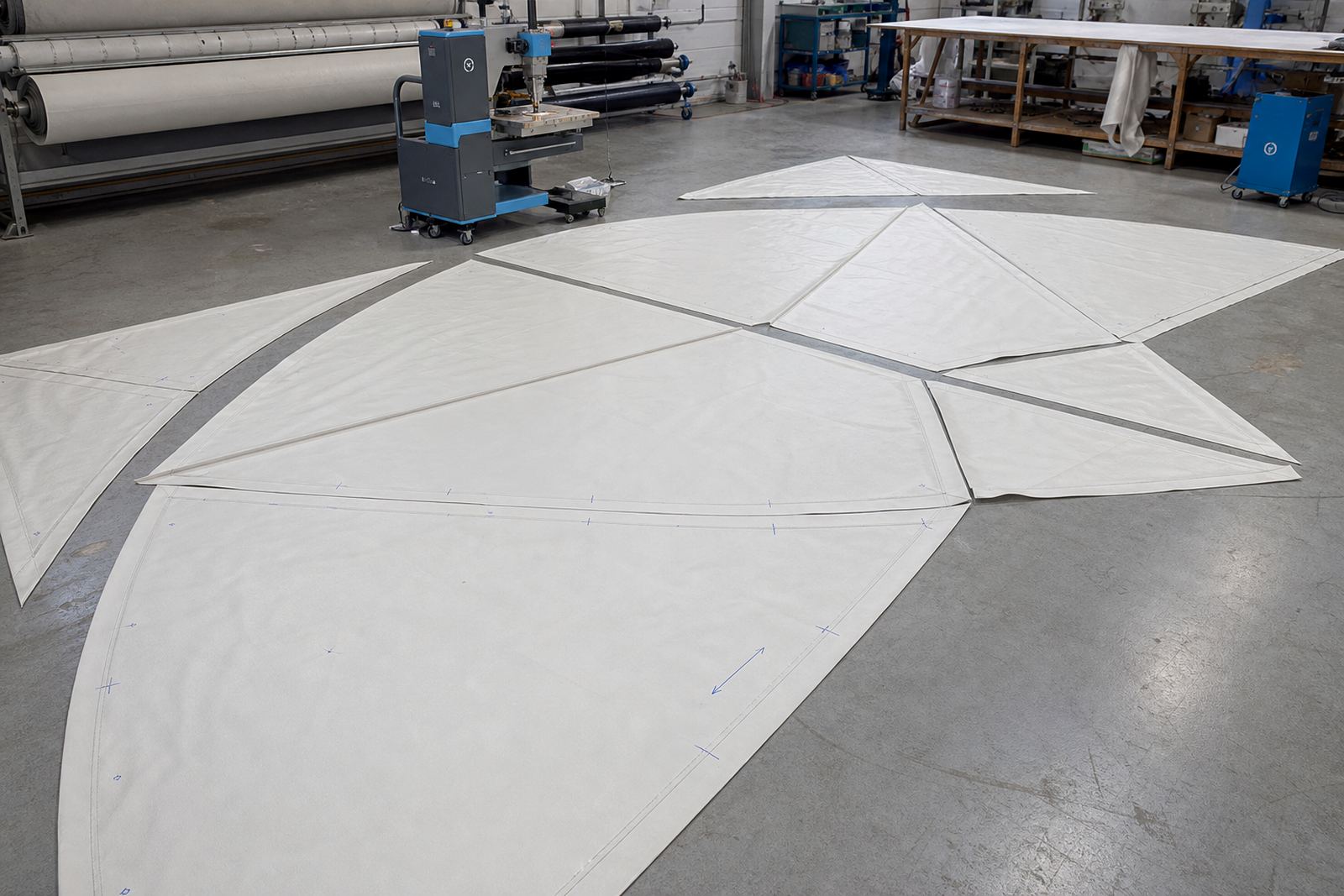
Good panel layout planning can reduce waste and simplify long seam assembly.

Rework Causes

Rework Causes

Understanding common rework causes helps improve seam consistency and output.

New Operator Training

New Operator Training

Structured training helps new operators learn seam checks and machine routines faster.

Shift Start Checks

Shift Start Checks

A quick start-up checklist helps confirm settings, safety items and material readiness.

Radio frequency welds for clean PVC seams

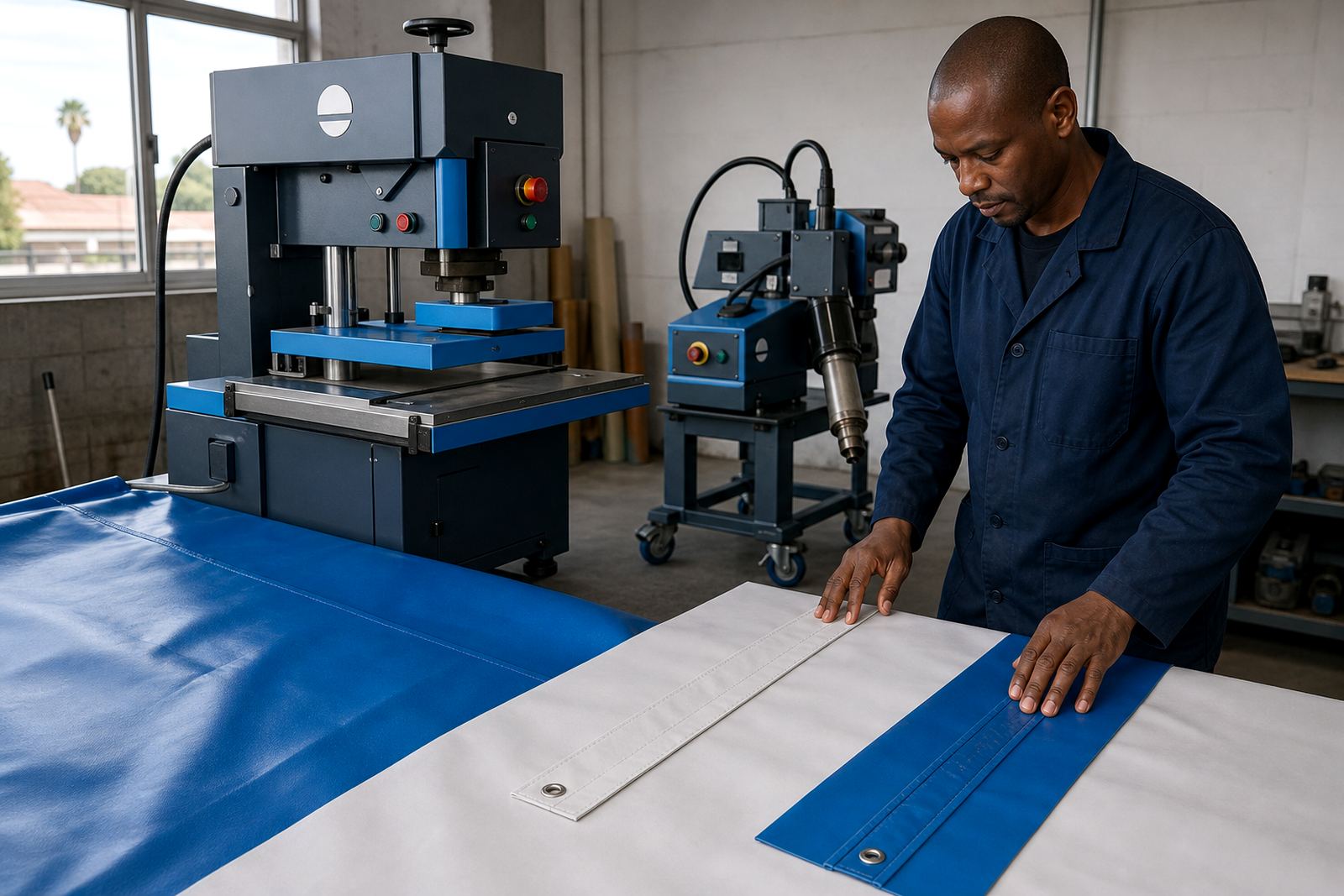
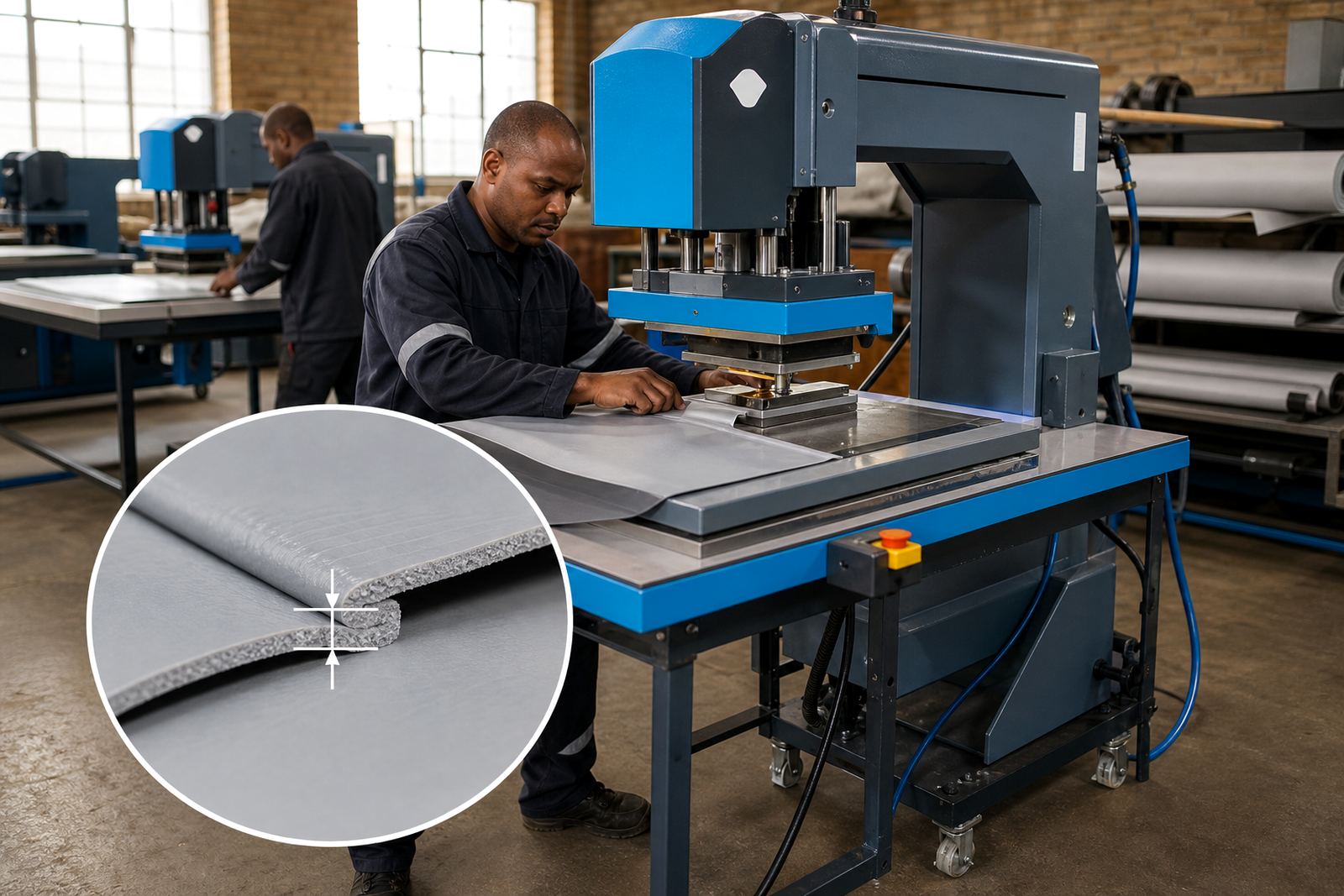
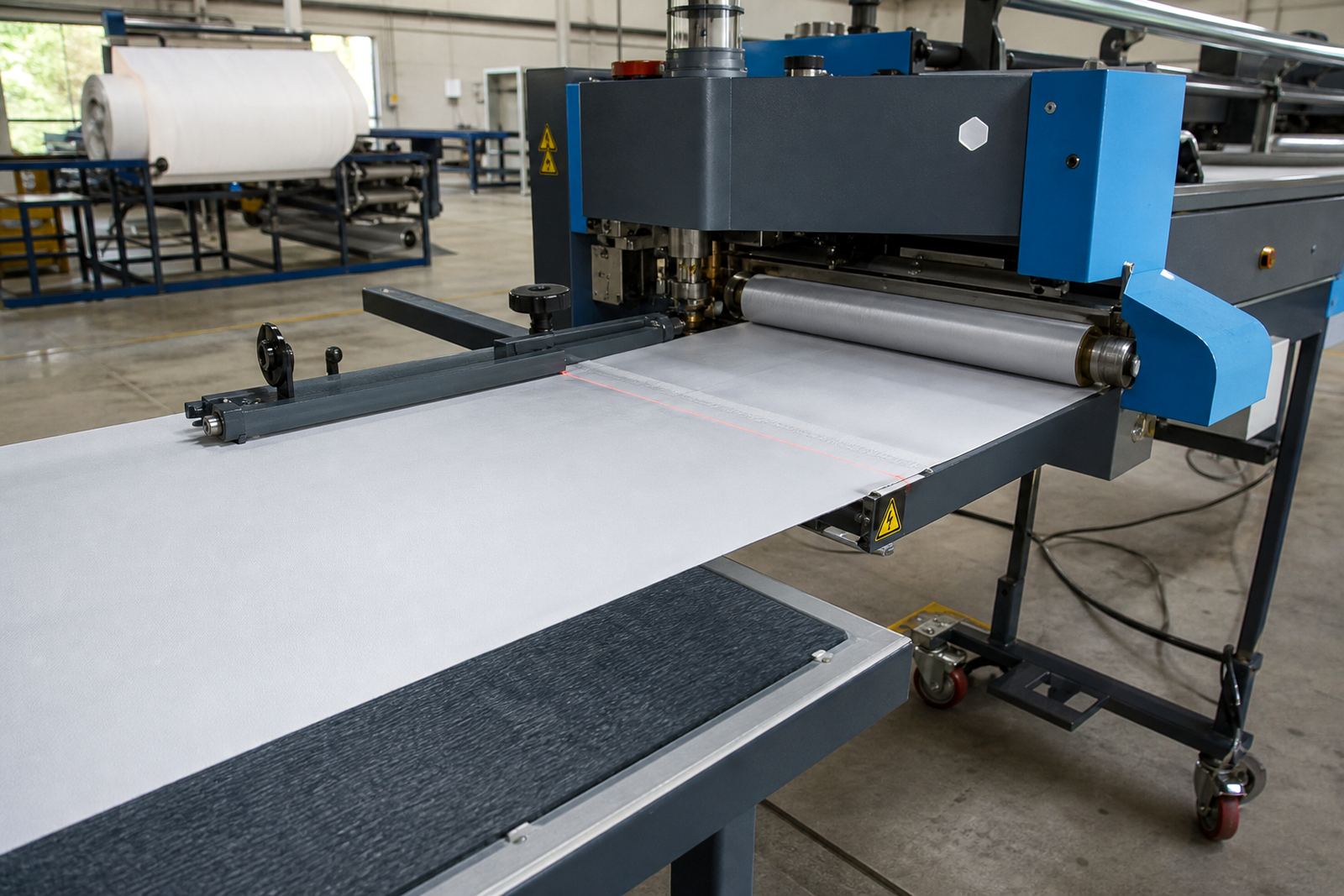
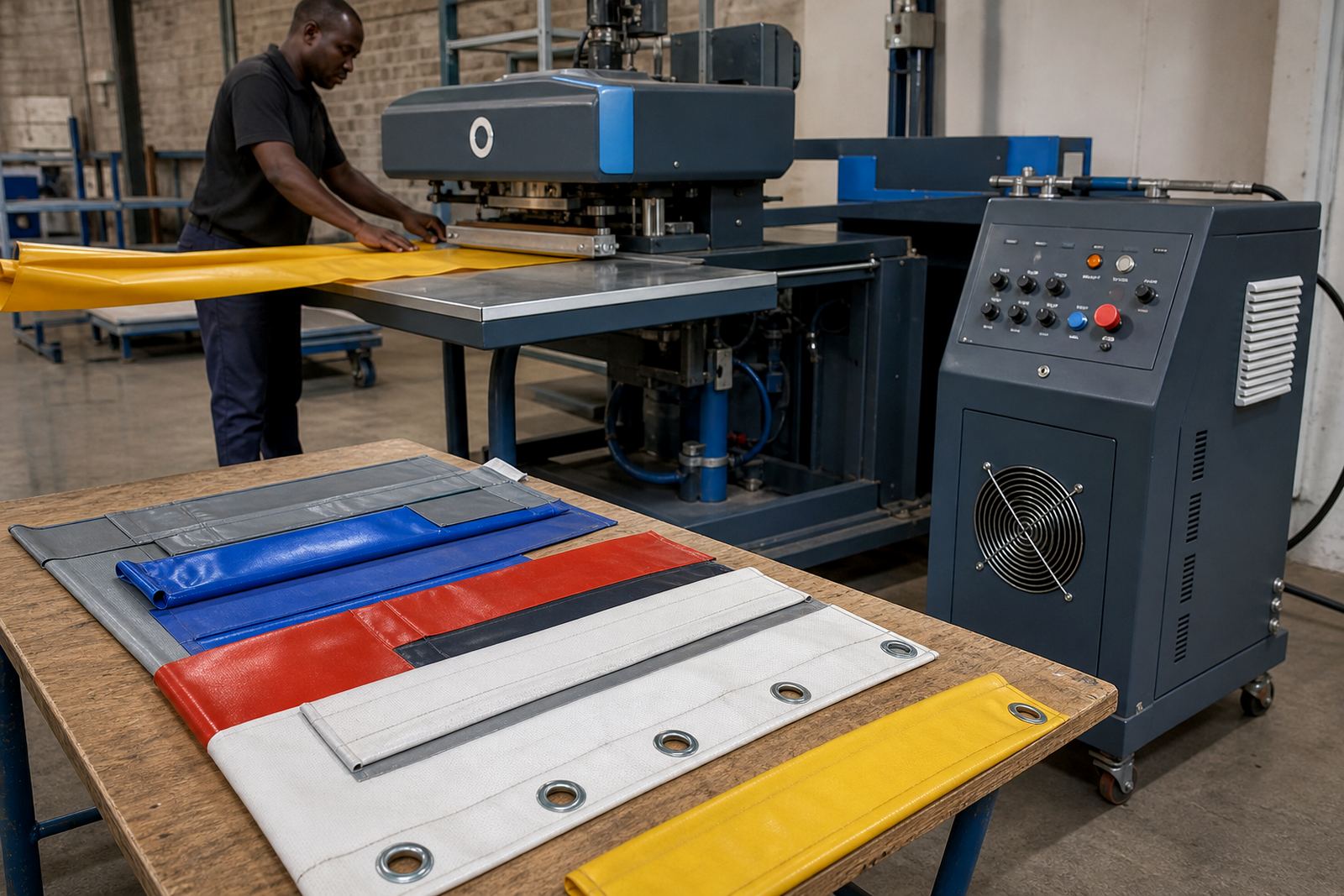
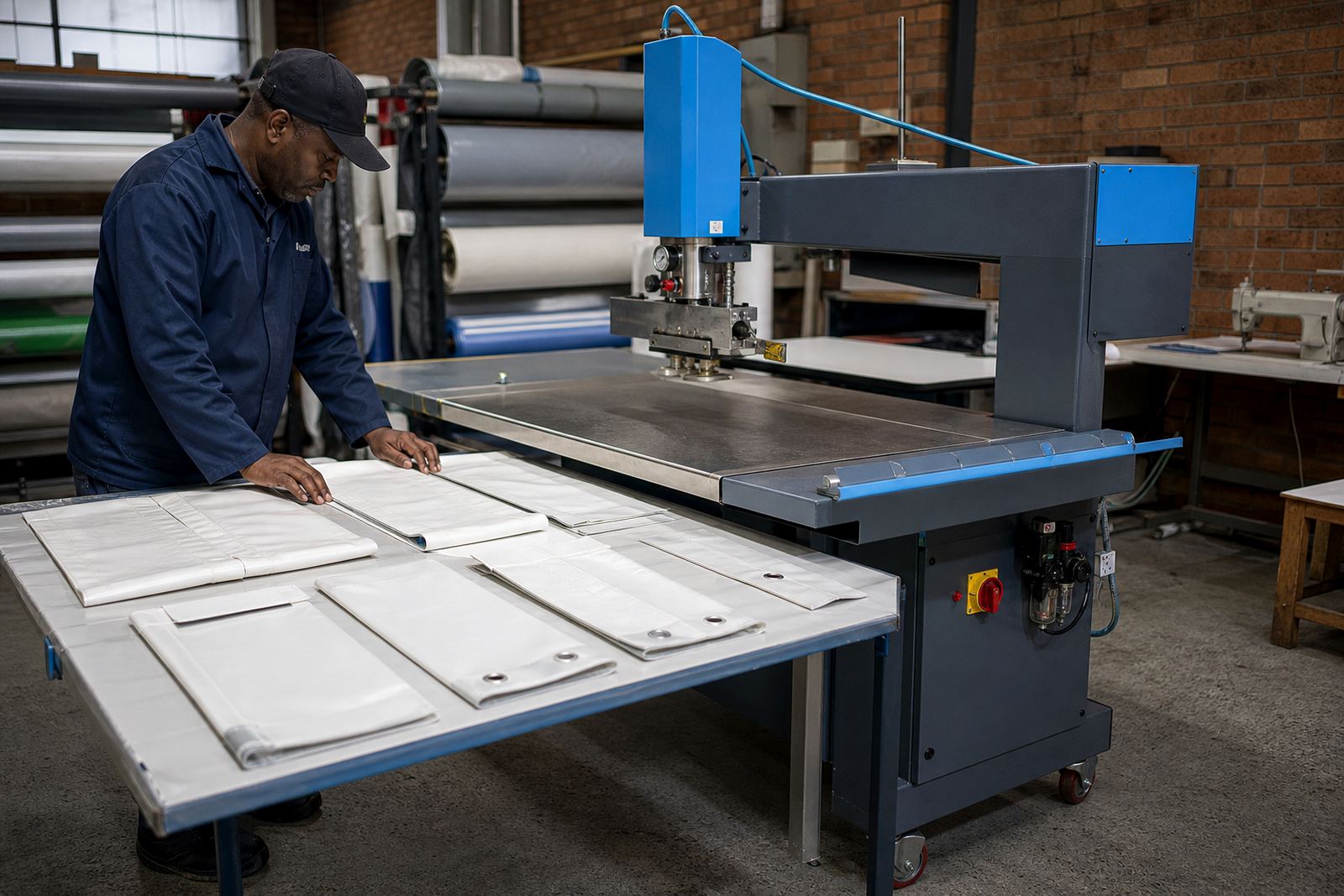
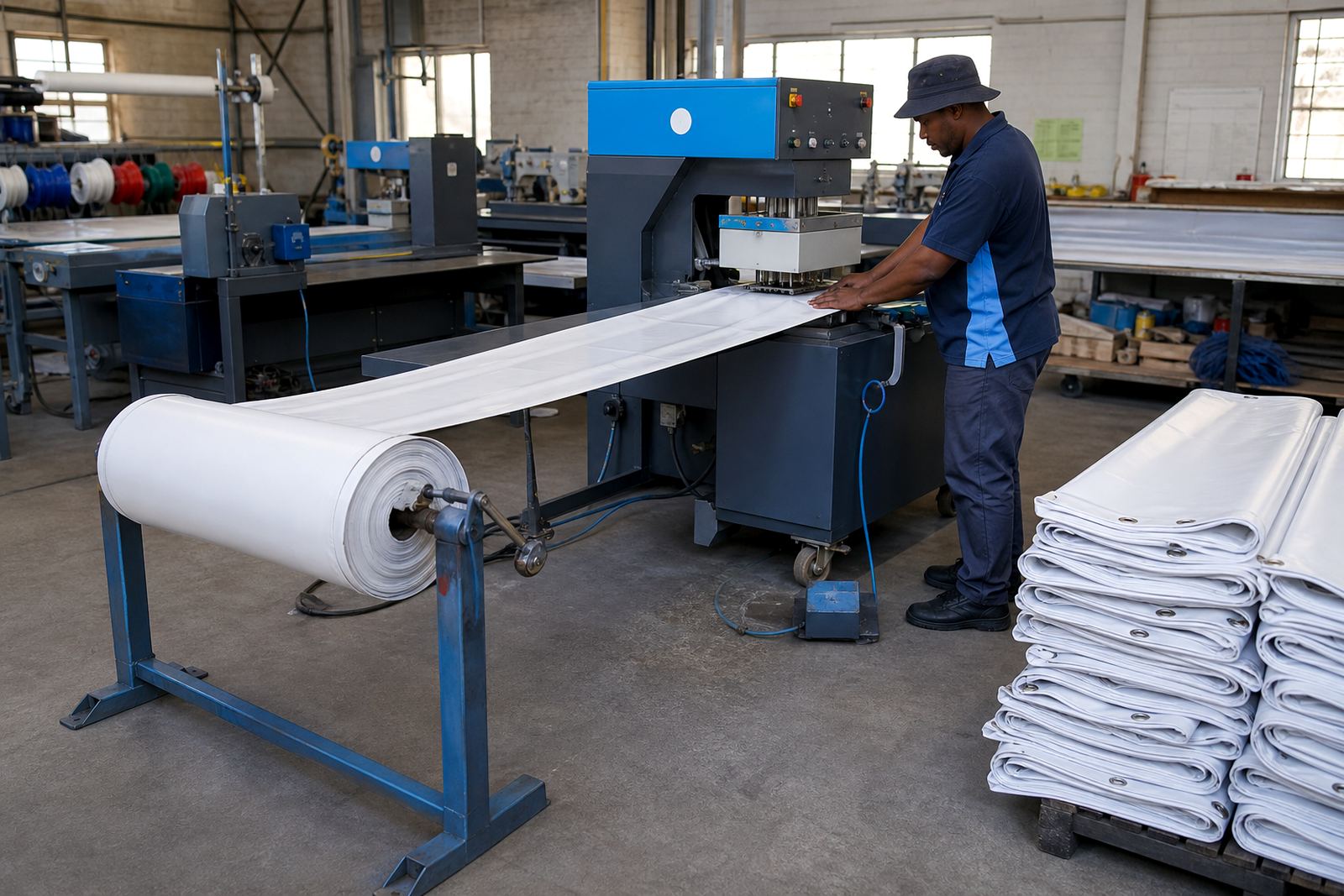
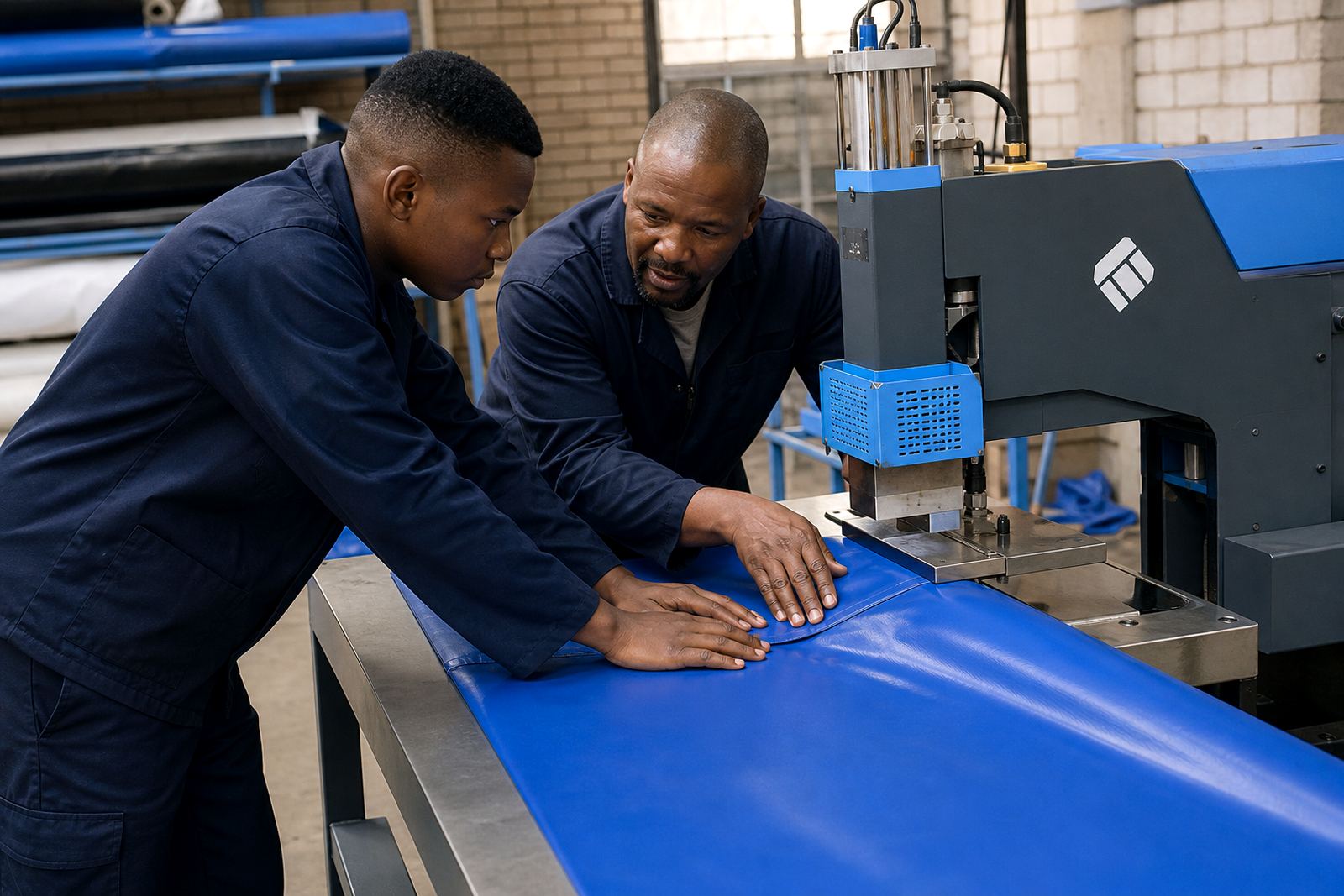
High-frequency welding, also called radio frequency welding, is used on suitable PVC-coated fabrics where a controlled, even bond is needed along the seam line. It is well suited to straight joins, welded pockets and repeated production runs where the same width and pressure must be held across the work. On tarpaulins and banner material, the finish depends on correct material match, clean edge preparation and steady clamp pressure.

For workshop planning, the main point is matching the weld method to the product. Thin banner work may need narrow seams and lighter handling, while heavy truck tarpaulins or tent panels often call for wider overlaps and stronger edge detail. A good weld starts with flat material, correct alignment and tooling set to the fabric thickness.

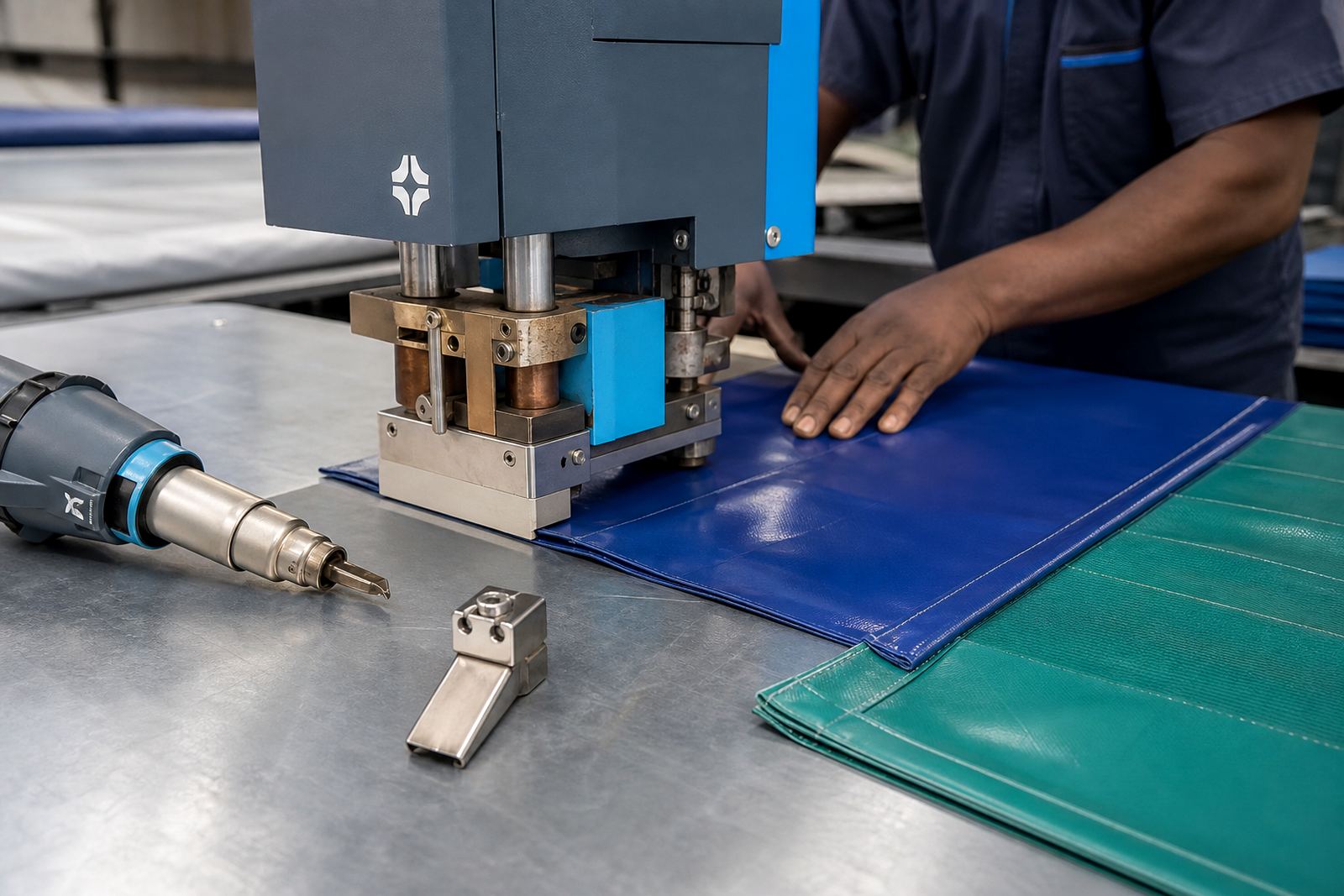
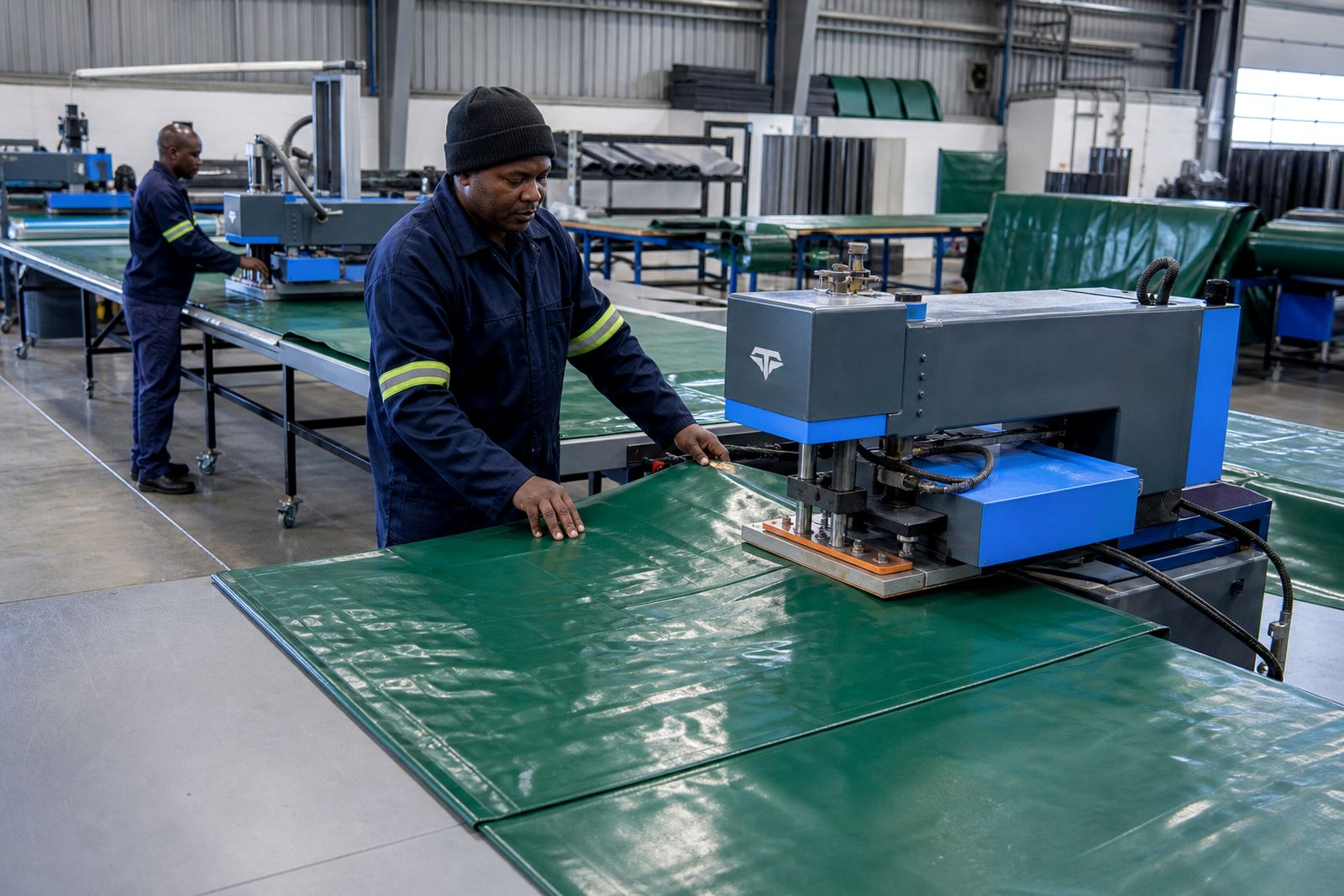
Hot-air and hot-wedge work on larger panels

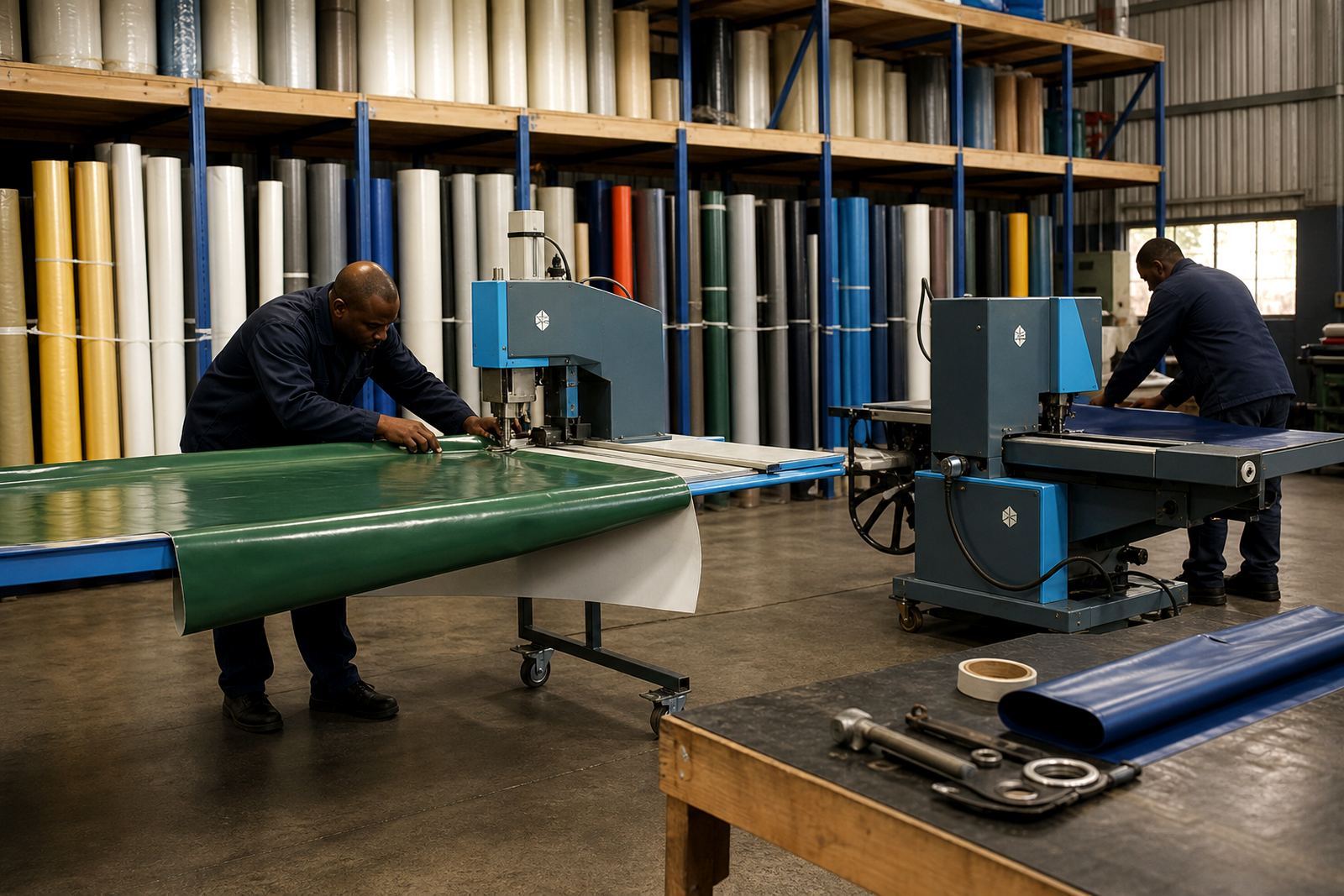
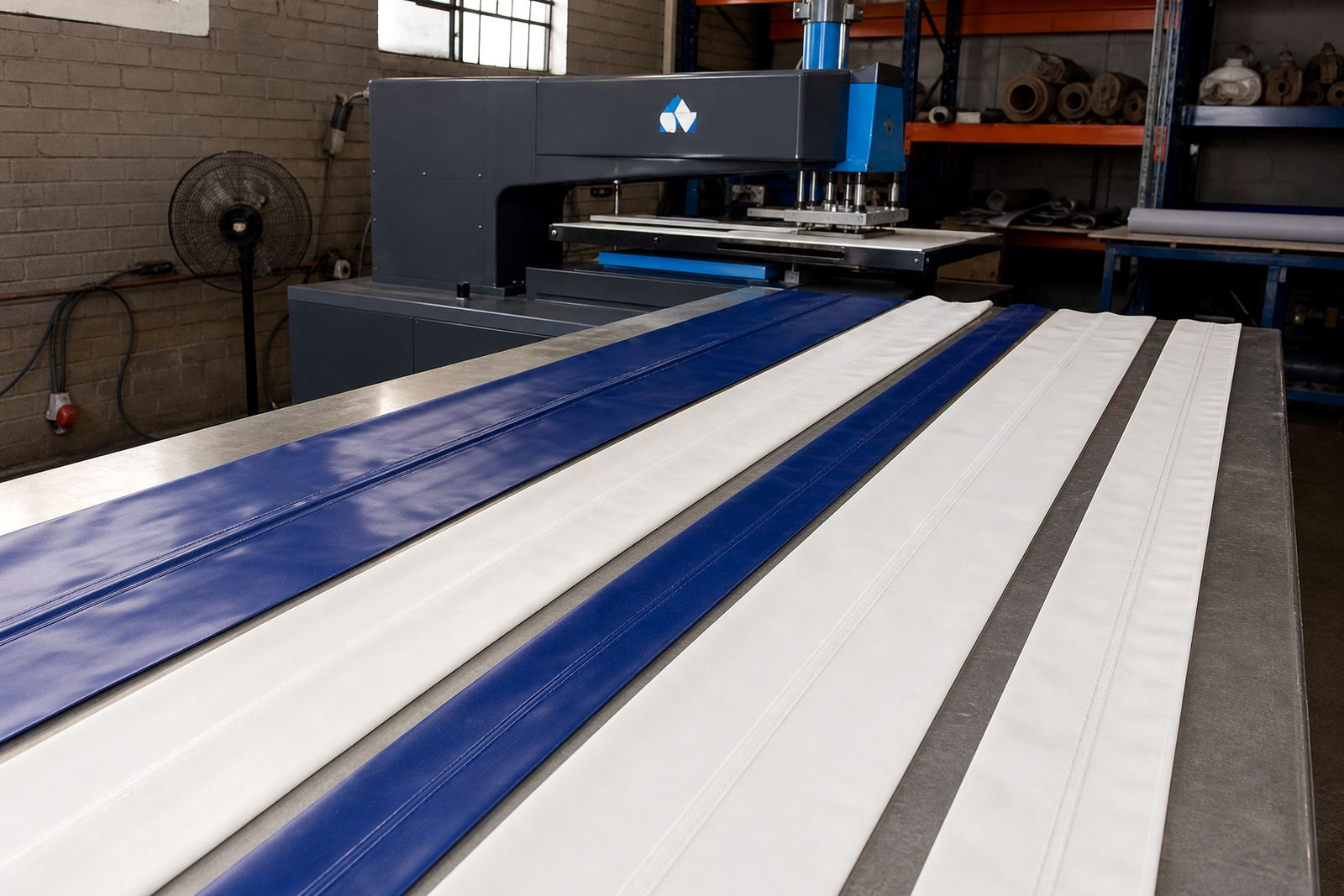
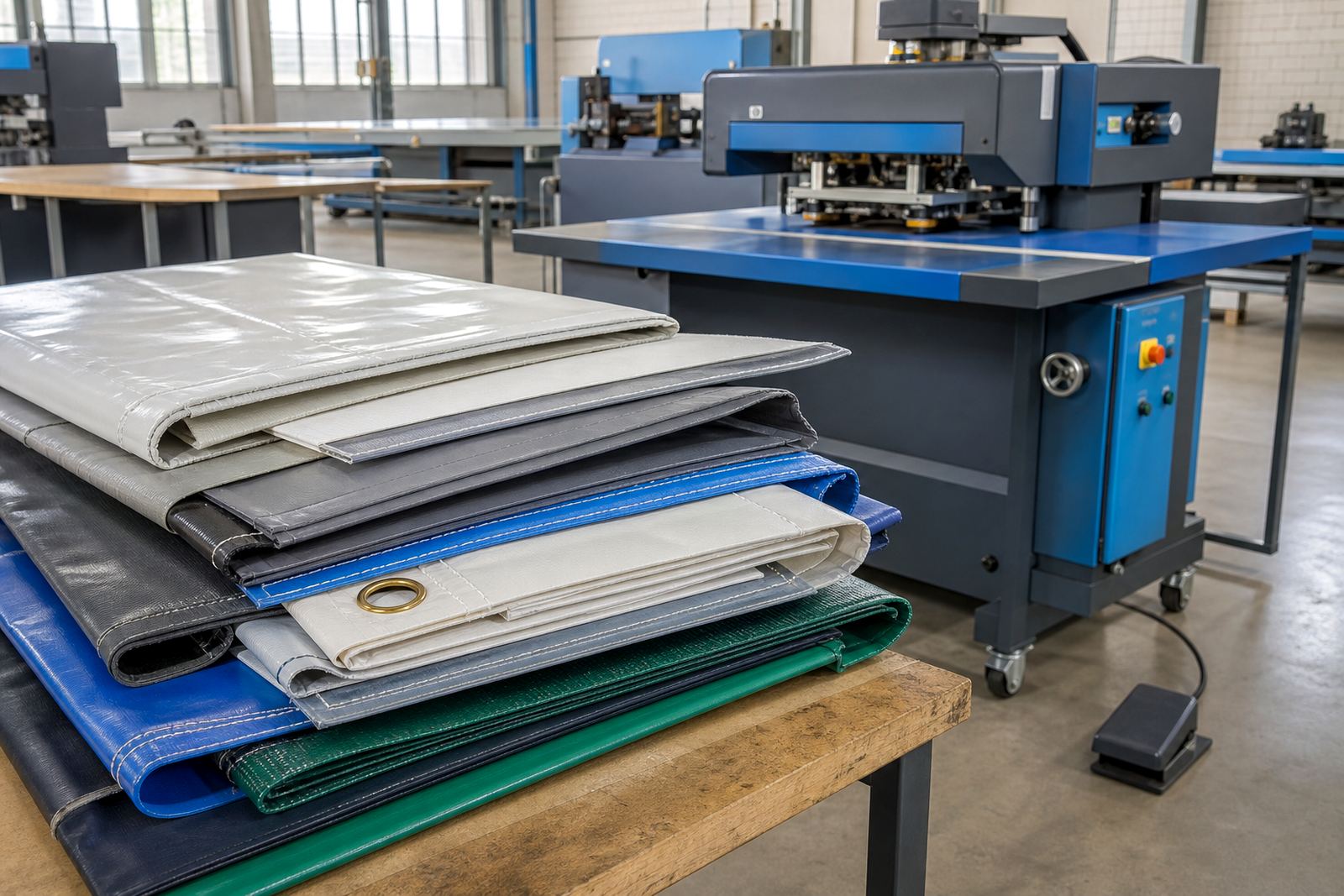
Hot-air and hot-wedge welding are common choices for long panel runs, hems and wider construction work. They suit many PVC-coated fabrics used in South African workshops, especially where a seam must travel over long lengths with consistent heat delivery. These methods are often chosen for banner edges, side curtains, tent panels and covers that need practical site handling after fabrication.

  • Hot-air welding gives good control on shaped work and smaller joins
  • Hot-wedge welding supports steady output on longer straight seams
  • Both methods depend on correct temperature, pressure and travel speed
  • Material contamination, dust and worn rollers can affect bond quality

In humid coastal areas such as Durban and Cape Town, stored PVC can pick up moisture and grime, so clean prep matters before any weld is made. In dry inland workshops around Johannesburg, Pretoria and Bloemfontein, static and dust can be the bigger issue.

Seam design that suits tarpaulins and display work

Seam design is more than just joining two pieces together. The weld width, overlap direction and seam placement all affect strength, appearance and how the finished item hangs or folds. For tarpaulins, the seam often needs to carry load and resist flapping. For banners, the seam may need to stay visually neat from a distance and avoid puckering near the print edge.

Common seam choices include lap seams, double welds and reinforced edge finishes. Where extra stress is expected, such as corner pulls or tie-down points, the seam layout should spread force rather than concentrate it in one spot.

  • Lap seams are widely used on PVC-coated fabric
  • Double welds add security on load-bearing joins
  • Reinforcement patches help at corners and stress points
  • Seam placement should avoid unnecessary strain near fittings

Hems, keder and eyelet work in the same line

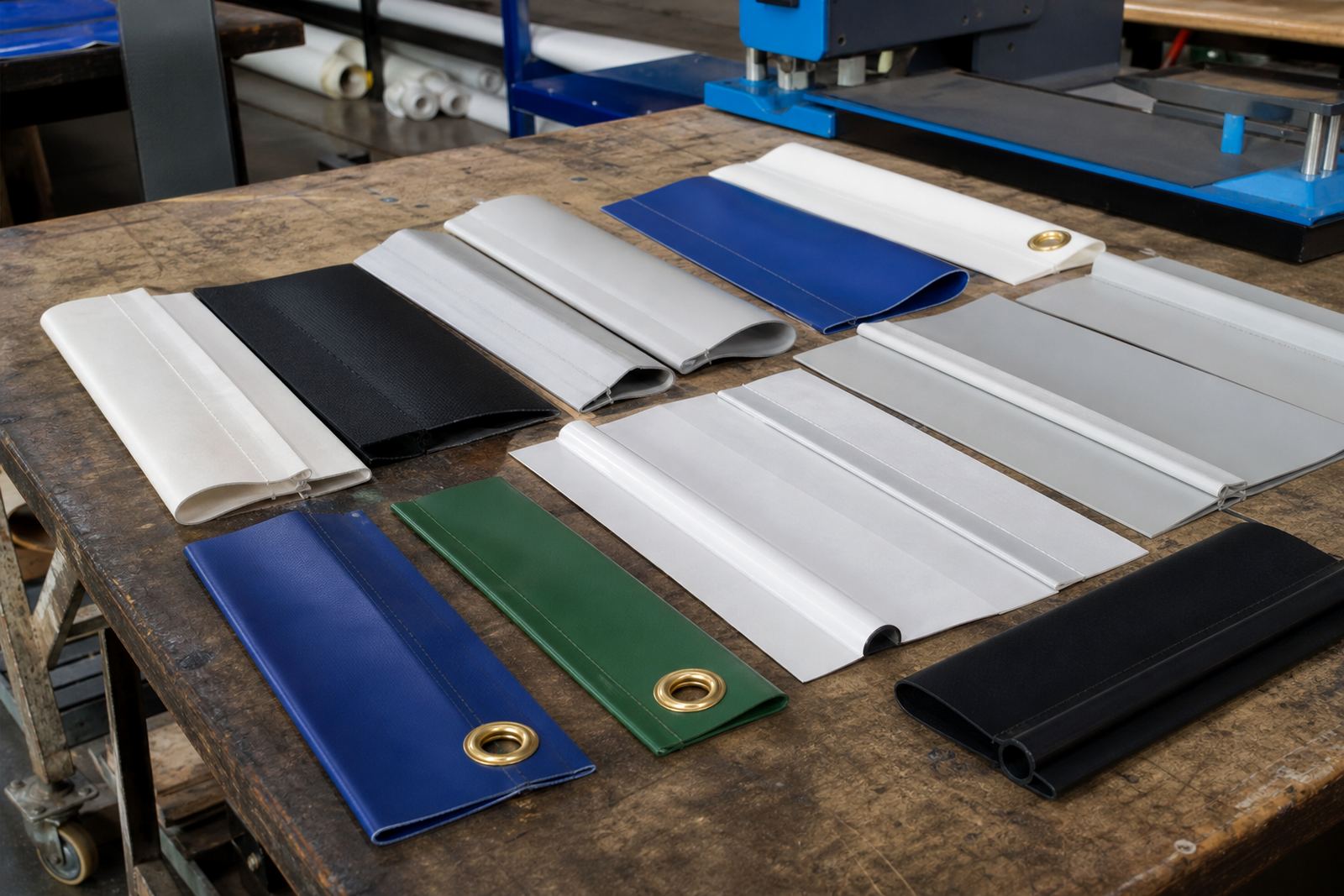
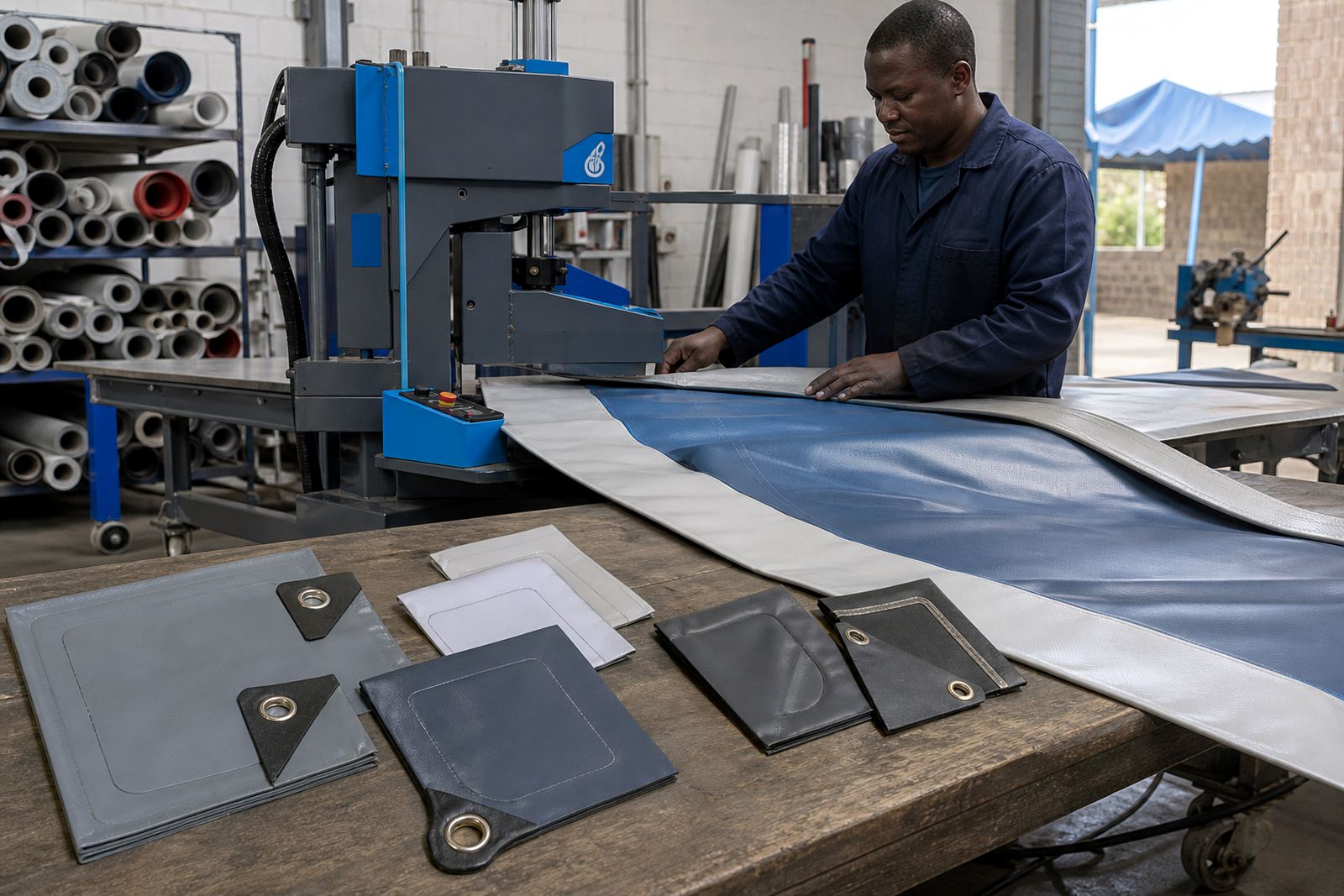
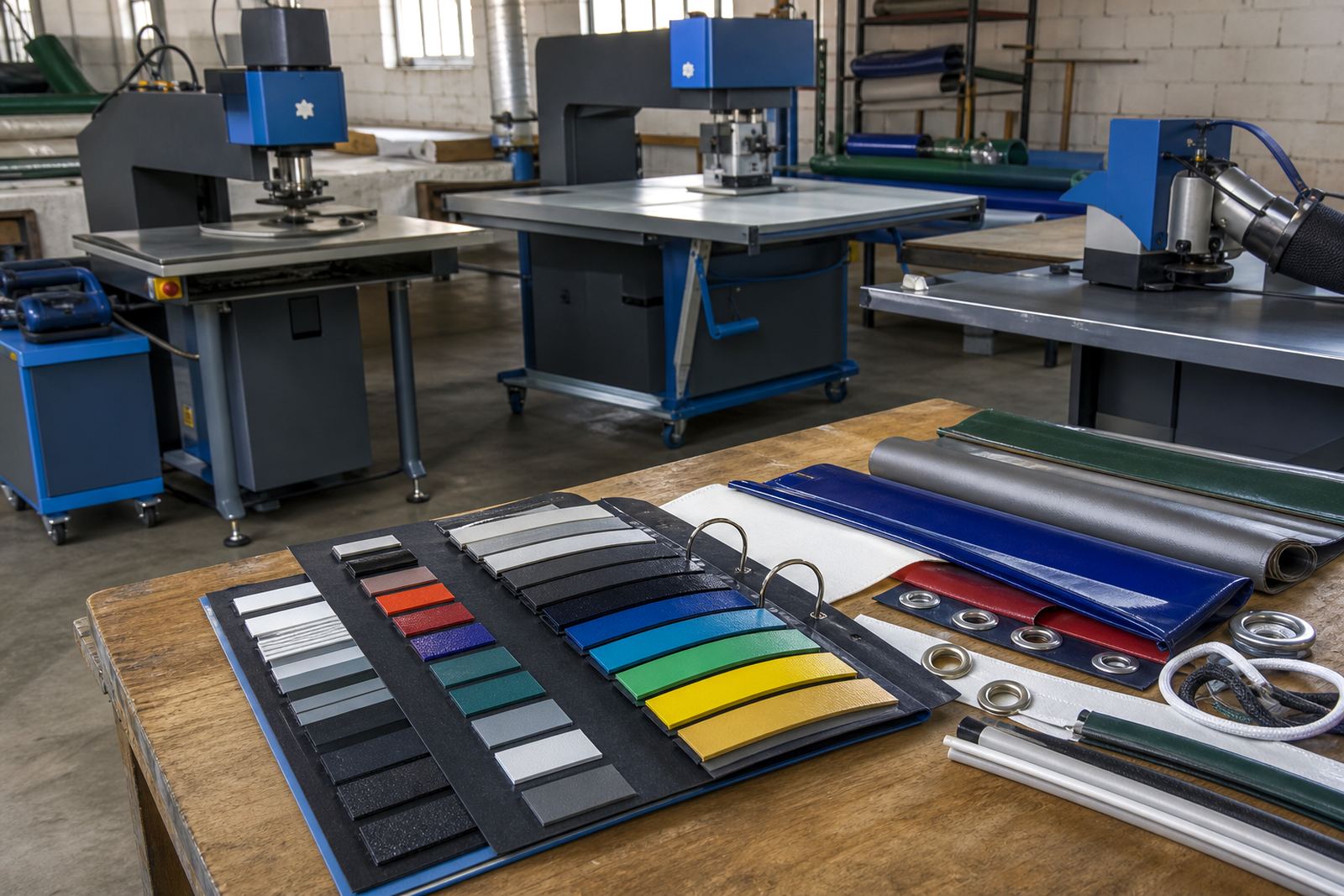
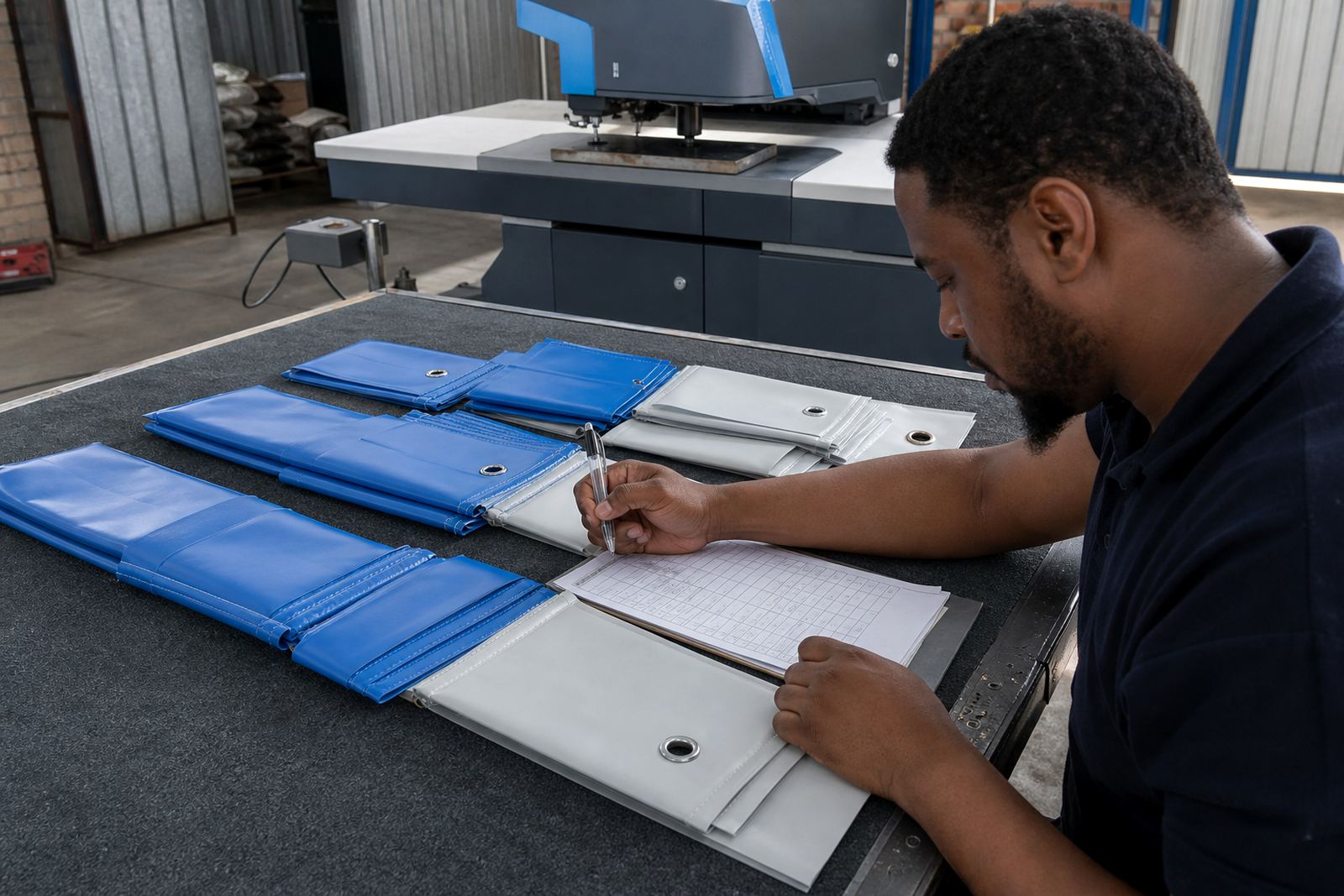
Hems, keder and eyelet work are part of the same production conversation because each feature affects how the product is fitted and used. A hem can finish a banner edge neatly and give space for rope or battening. Keder is used where a strip needs to slide into a channel or track, often on tents and display systems. Eyelets are still common where a direct tie-down point is needed on tarpaulins and banners.

Good workshop practice is to keep the edge finish consistent before fitting accessories. If the hem width changes along the run, the finished product can pull unevenly. Eyelet spacing should suit the load and the size of the item, not just a standard pattern copied from one job to the next.

  • Hems can be folded once or twice depending on edge load
  • Keder needs even feeding and steady weld alignment
  • Eyelets should be placed clear of weld stress and frayed edges
  • Corner finish matters as much as the main seam line

Operator safety and workshop handling

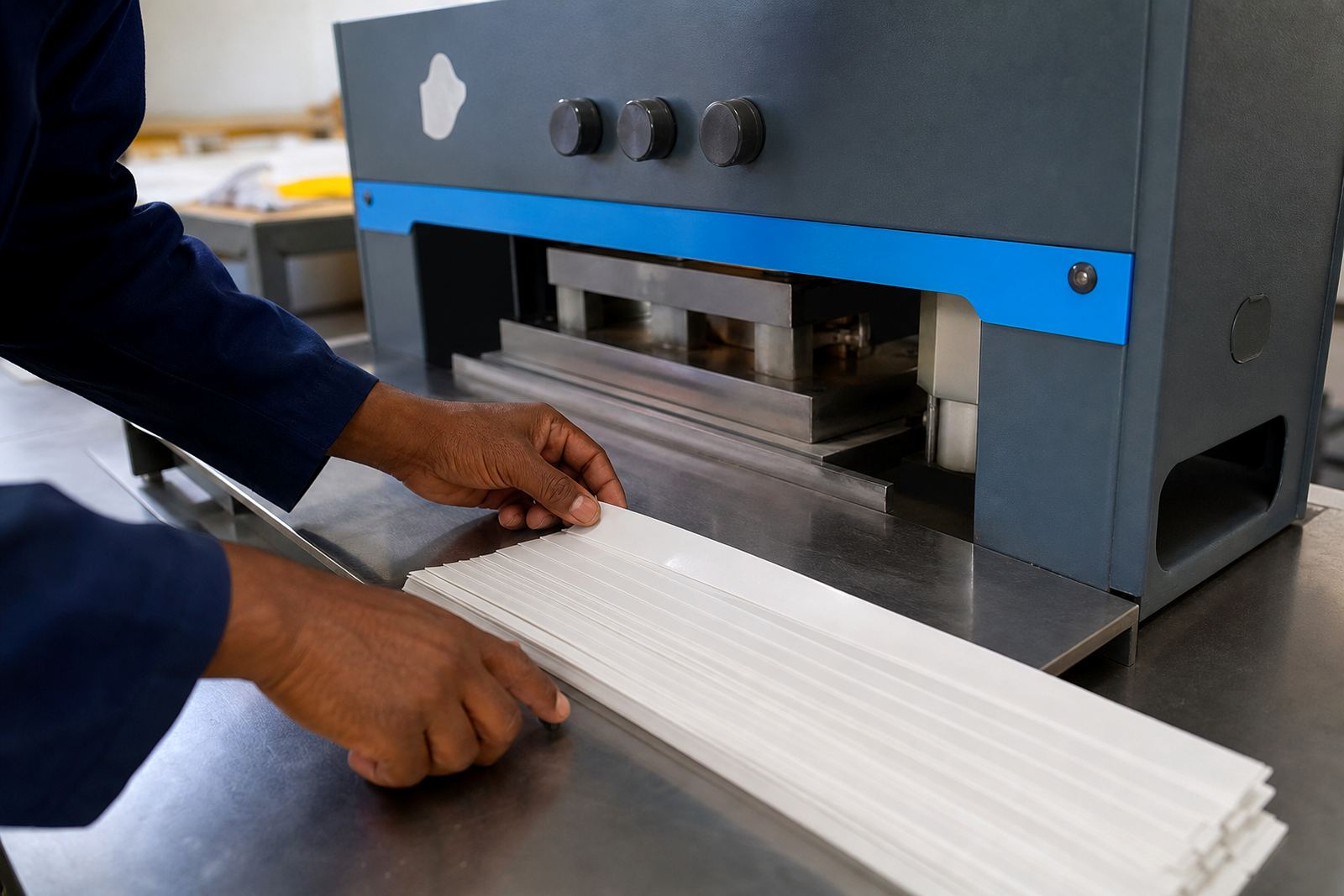
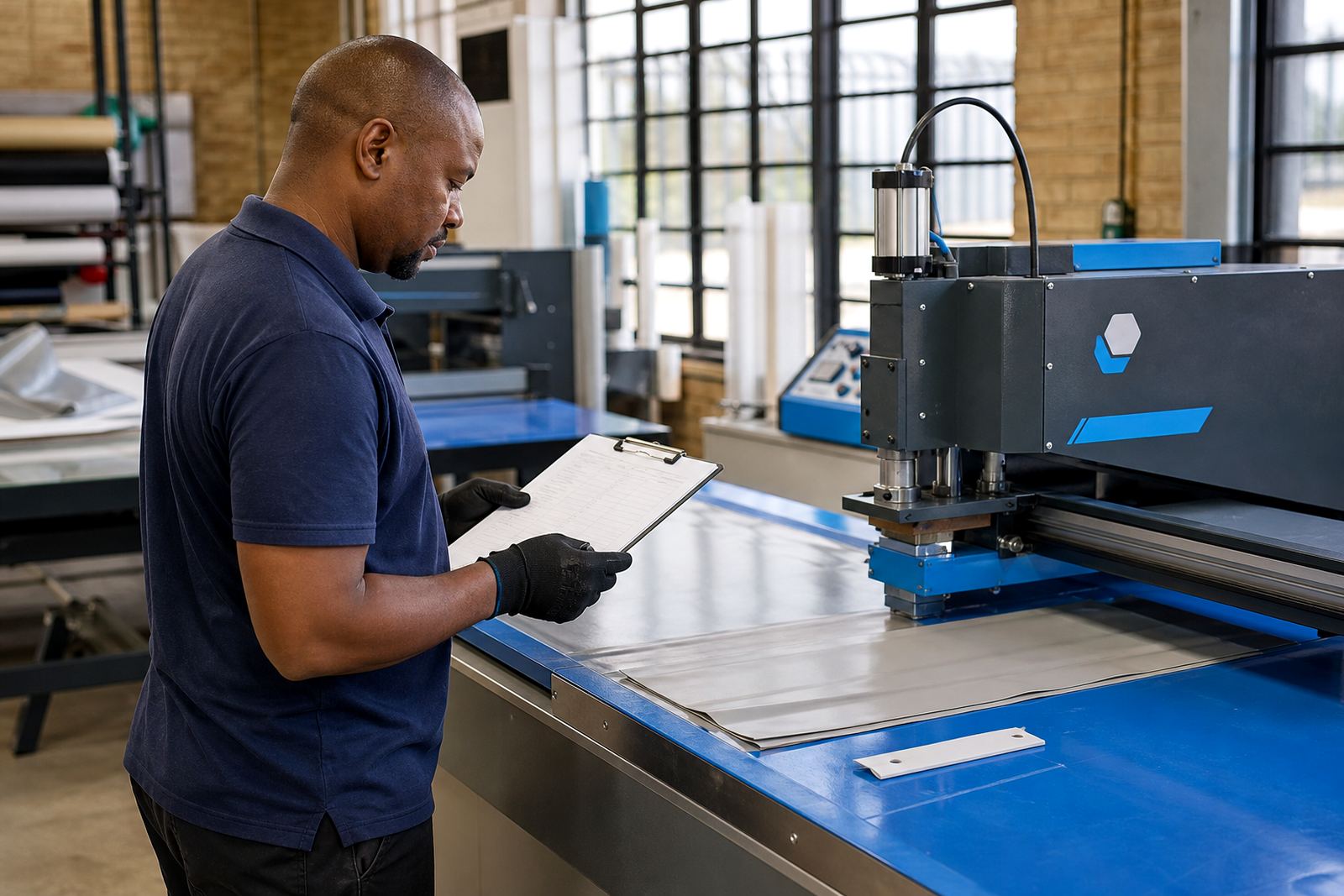
Welding machines for PVC work use heat, pressure and moving parts, so safe handling is part of the job. Operators should keep hands clear of clamps and rollers, use suitable guarding, and check that emergency stops and controls are working before a shift begins. For radio frequency equipment, lead placement and table setup must be managed carefully so the material sits flat and the operator is not reaching across the active area.

Training also helps reduce waste. When a new operator understands feed direction, seam marking and basic fault signs, there is less chance of burnt edges, weak joins or stretched panels. That matters in busy shops handling mixed work from tarpaulins to branded banners.

Servicing that keeps seam quality steady

Welders need regular attention if seam quality is to stay consistent. Preventive servicing usually covers inspection of electrodes or heating elements, roller condition, alignment, timing, pressure settings and general wear in the moving parts. A machine can look fine on the outside and still give poor seams if one side is running out of line or the tooling has worn unevenly.

In practical terms, servicing also protects output. When a workshop checks the machine before a heavy run, there is less chance of stop-start production and fewer rejected panels. That applies whether the machine is used for short banner jobs or longer tarpaulin panels for customers across Gauteng, KwaZulu-Natal, the Western Cape and inland routes.

  • Check alignment before seam testing begins
  • Keep tooling clean and free of adhesive residue
  • Replace worn rollers before they mark the fabric
  • Record fault patterns so repeat issues can be traced

Questions we get asked

What seam type suits PVC-coated tarpaulins best?

Lap seams are common on PVC-coated tarpaulins, with wider overlaps used where there is more pull or movement. The final choice depends on load, fabric thickness and how the item will be fitted.

When is hot-air welding better than radio frequency welding?

Hot-air welding is often chosen for long runs, hems and shaped work where the operator needs fine control along the edge. Radio frequency welding is useful where the fabric type and tooling suit a clean, repeatable weld line.

Why do eyelets and hems need matching seam design?

Eyelets and hems carry the force that keeps banners and tarpaulins in place, so they need a seam layout that spreads the load. If the edge finish is uneven, the product can pull, crease or tear sooner.

Need PVC welding advice? Message the team

Contact form