Keep rolls off the floor and out of the sun
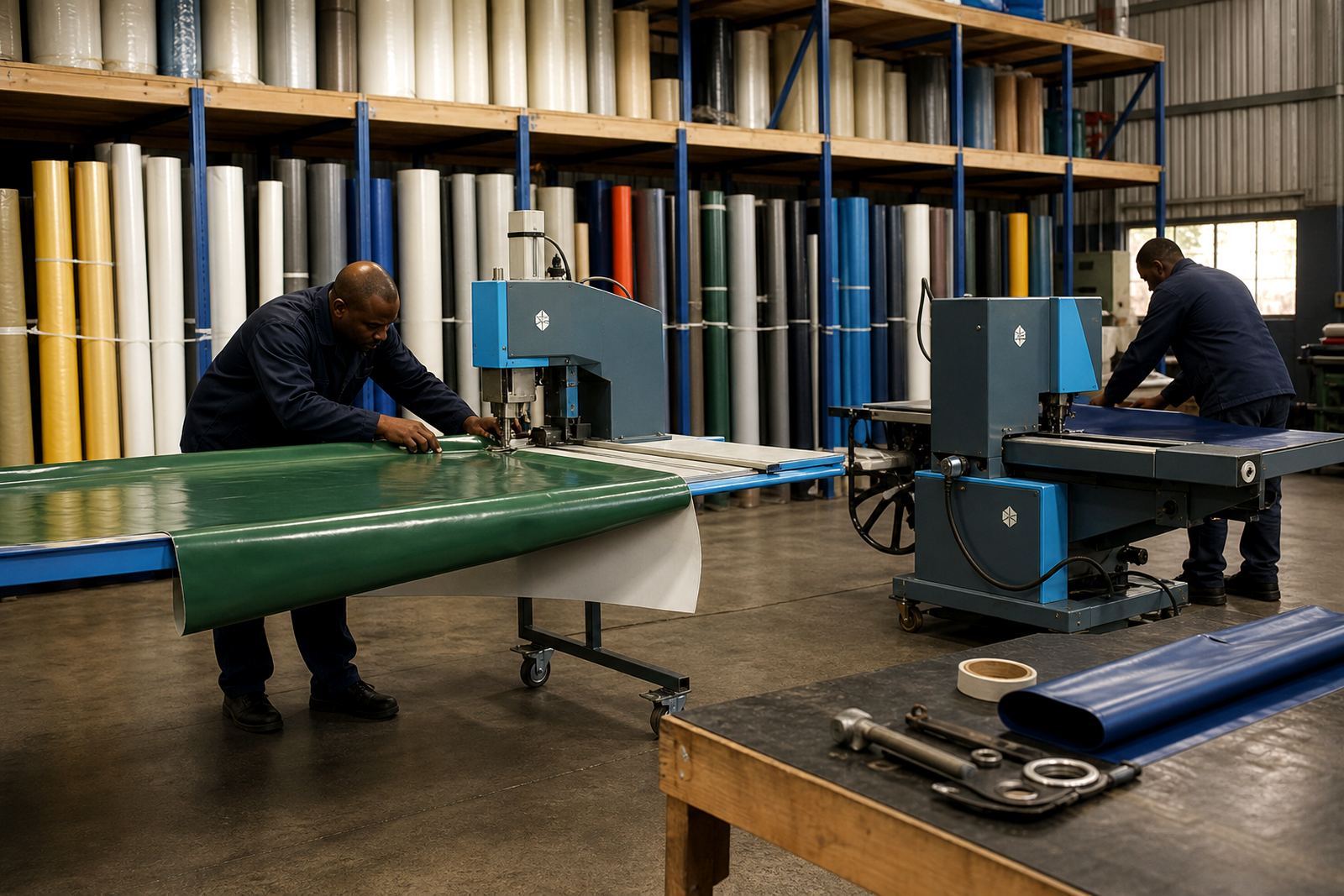
Most storage trouble starts with where the rolls are left between jobs. PVC-coated fabrics should sit on clean racking or pallets, not directly on concrete, where moisture, grit and forklift marks can work into the outer layer. In a Germiston workshop, winter mornings can leave a film of damp on the floor and that is enough to stain lighter banners or mark a fresh tarpaulin panel.
Direct sun is another problem. Heat can soften the coating on one side of the roll while the other side stays cool, which encourages curl and set marks. If the material must wait near a loading bay, cover it with a clean sheet or store it in a shaded section of the shop.
- Use level racking so the roll does not sag in the middle.
- Keep the storage area free of dust, grinding sparks and overspray.
- Leave enough space for the roll to be lifted without dragging.
Stacking without flattening the fabric grain
Flat storage helps with welding accuracy, but heavy stacking can leave pressure lines that show up later in hems, seams and printed areas. Coated fabric takes a memory from whatever sits on it for too long. If a bundle is tied too tight or placed under a heavy offcut stack, the edge can harden into a curve that makes alignment harder at the welding table.
For banner makers and tent fabricators, this matters on long runs where panels need to match neatly. A few millimetres of drift at storage stage can become visible when the seam is under tension. Keep similar widths together and do not mix sharp cornered items with finished rolls.
- Store by width and batch where possible.
- Keep completed work separate from raw material.
- Use soft straps rather than cutting ties that bite into the roll.
Humidity, dust and coastal air on the shop floor
South African storage conditions vary a lot. Durban brings more humidity, while inland workshops can battle dust and dry air. Coastal moisture does not usually ruin PVC-coated fabric overnight, but it can leave surfaces tacky enough to attract dirt. Dust then transfers to the weld area and can weaken a seam, especially on banner hems or keder edges where contact must be clean.
Before welding, wipe the material with a clean lint free cloth if the surface has picked up light dirt. Avoid harsh solvents unless the material maker recommends them, because some cleaners can affect the coating and leave patchy discolouration. If the roll has been stored near a workshop entrance, inspect the outer turns before feeding them into the machine.
- Close roll ends properly after use.
- Keep storage away from oil, adhesive, paint and welding fumes.
- Use covered bins for offcuts so dust does not cling to open edges.
Reading the roll before it reaches the welder
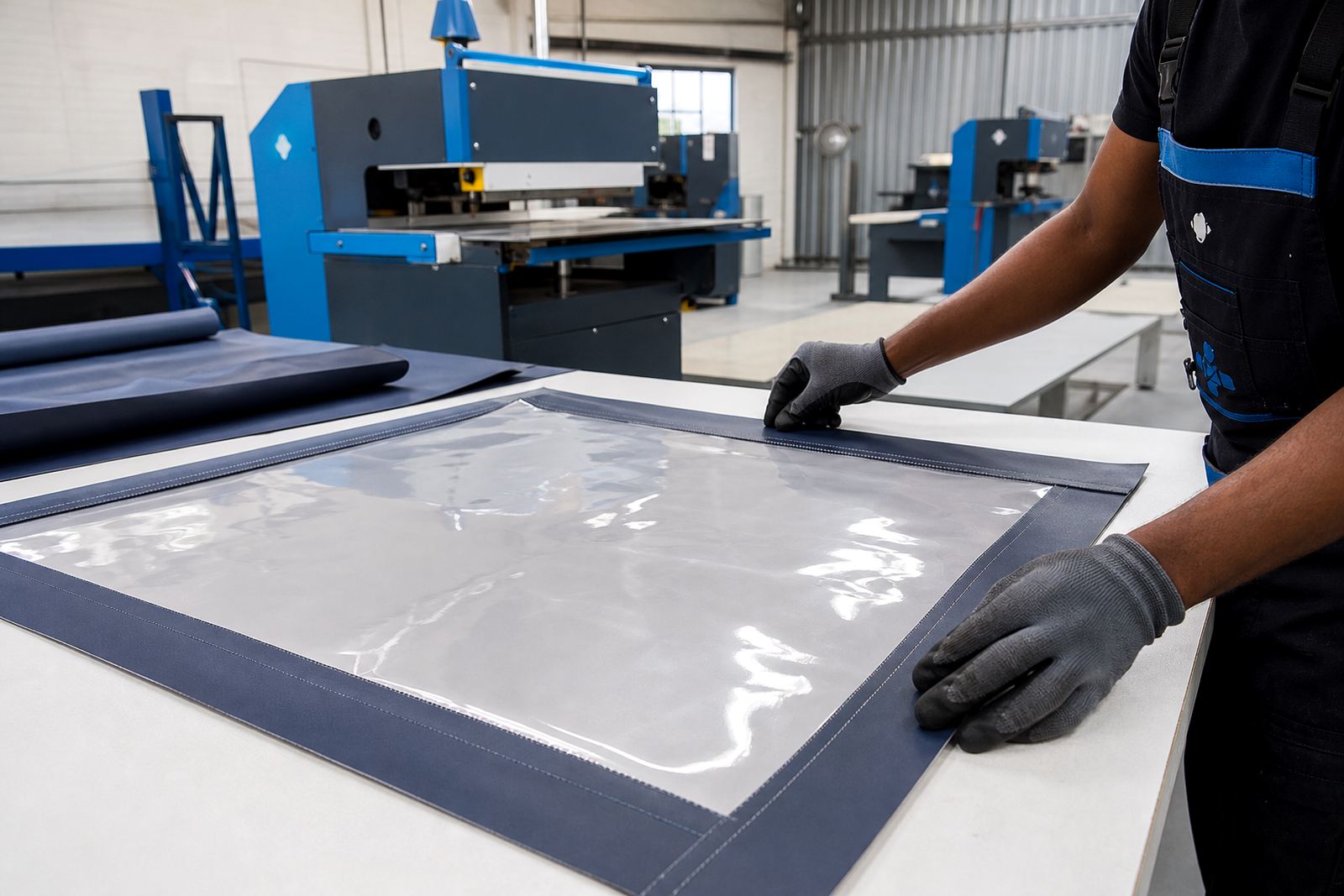
A quick check before fabrication can save a long repair later. Look for creases, edge crush, scuffing, loose weave at cut lines and any surface contamination. Material that has sat for too long in one position may need to be relaxed before seam work, especially on wider tarpaulin panels where a straight weld line is important.
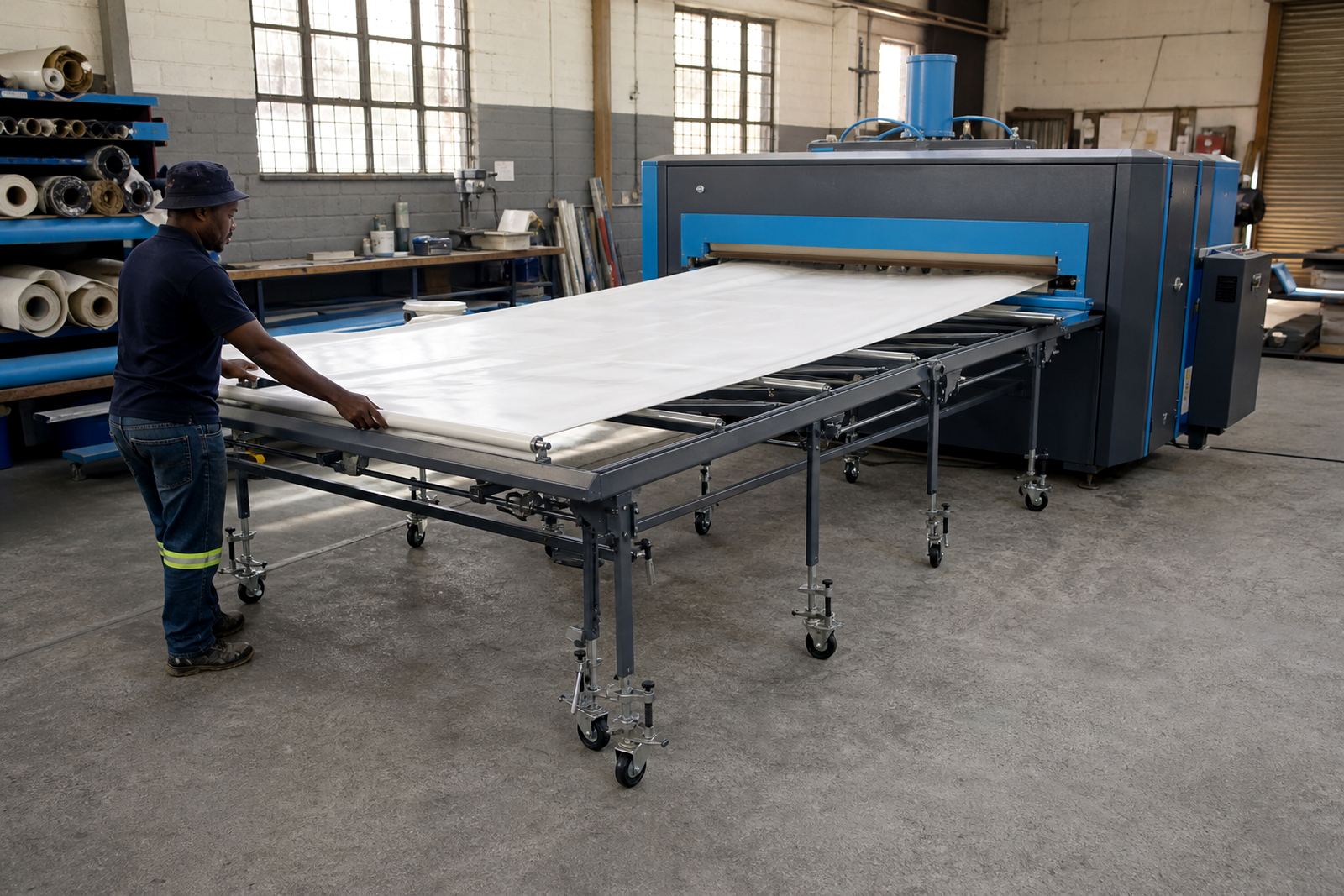
For high-frequency welding, the material must lie evenly under the electrode. For hot-air or hot-wedge work, flat feeding matters just as much because distortion can pull the seam off line. If the roll has a strong curl, reverse rolling it for a short period can help ease the set without damaging the coating.
- Check the first and last turns on every roll.
- Mark damaged sections before cutting begins.
- Keep a short log of storage faults and repeated issues.
Making hems, keder and eyelet work cleaner
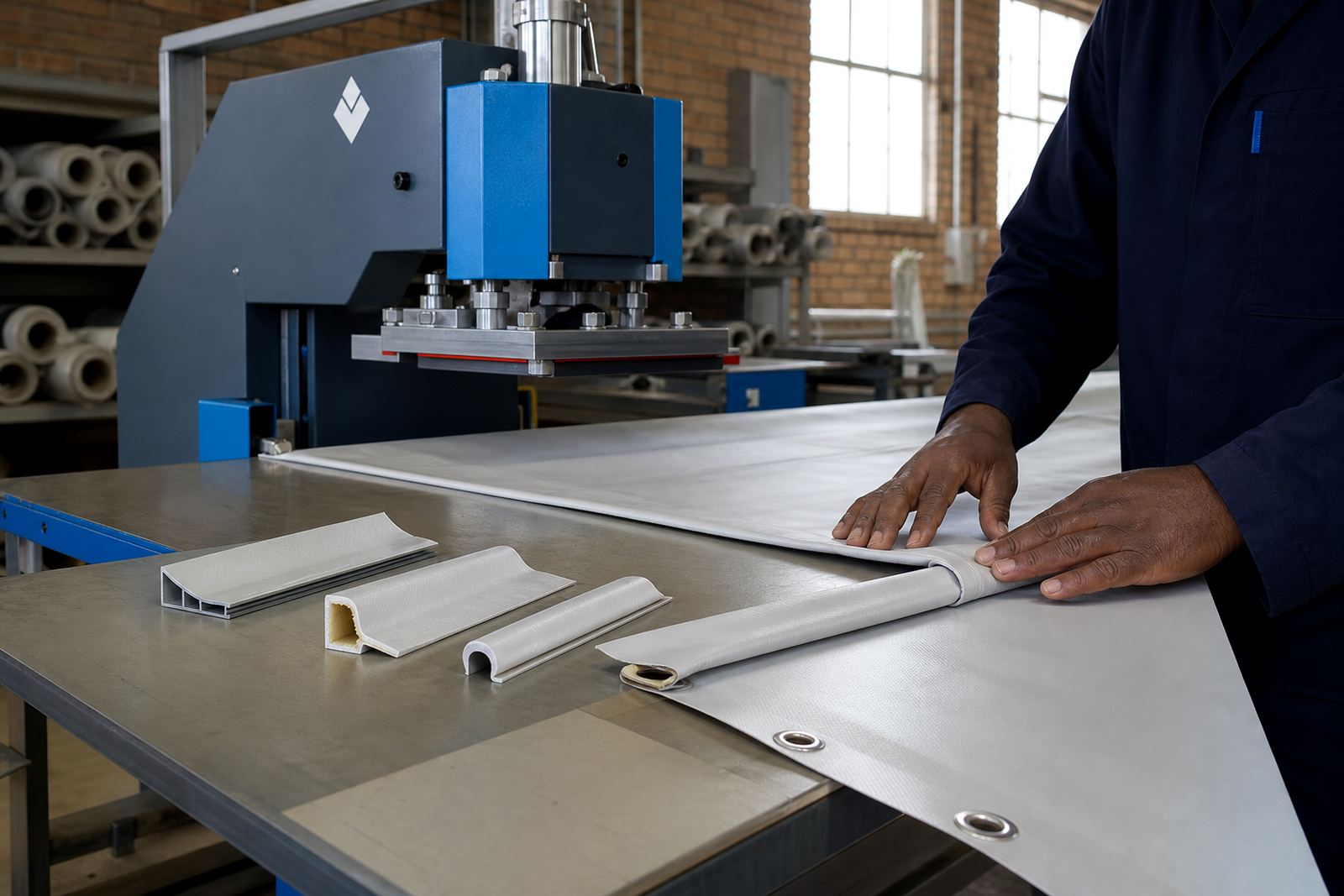
Storage affects more than the main panel. Hems need straight, even feed. Keder strip must sit without twist. Eyelet strips need a clean edge so the punch or press lands in the right place. If the fabric has been crushed in storage, these details become harder to set out and the final fit can look uneven.
On banner work, a wrinkled edge may cause the eyelets to sit at different heights. On tent panels, a bent keder can create drag in the track. Keeping the material laid flat, with the ends supported, helps the operator maintain a consistent seam allowance and a tidier finish.
- Support long lengths so the ends do not curl down.
- Store keder and reinforcement strips straight, not wound too tightly.
- Keep eyelet stock and related trims in clean closed containers.
Servicing the storage and handling routine
Good storage works best when the rest of the handling process is in order. Rollers, guides and cutting tables should be clean and aligned so the material is not scratched before it reaches the weld station. Worn rollers can leave pressure lines, and a misaligned feed path can twist the fabric edge during setup.
For workshops handling repeated production, preventive servicing helps protect both material and machines. That includes checking rollers, electrodes, guides, tool alignment and general wear. A machine that feeds smoothly places less strain on the fabric, which makes storage habits count for more because the material arrives in better condition.
- Clean contact surfaces before each shift.
- Check guides and rollers for burrs or flat spots.
- Schedule fault finding before small feed problems become repeat faults.
A Germiston example from the loading bay to the weld line
A tarpaulin shop in Germiston, Ekurhuleni may handle rolls that arrive from different provinces, with some sitting in a truck through heat, rain or road dust. If those rolls are stacked against a wall near an open bay, the outer layers often take a curve and collect grit. By the time cutting begins, the operator is already fighting the material instead of focusing on the seam.
Simple changes make a difference. Put the rolls on raised storage, cover the open ends, keep the floor swept and separate finished work from fresh stock. That sort of habit does not need special equipment, just a steady routine and a trained eye. The result is cleaner welding, neater hems and fewer problems at the finishing bench.
- Unload into the storage area first, not beside the weld table.
- Keep a dry path between storage and production.
- Train every handler to treat the roll edge as a finished surface.