

Choosing the Right Seam for the Job
Not every PVC job needs the same seam detail. A trailer cover, a retail banner, a shelter wall or a tent panel can call for a different weld width, fold, edge finish or reinforcement method. Good seam work starts with matching the welding method to the material, the load on the seam and the way the product will be handled in use.
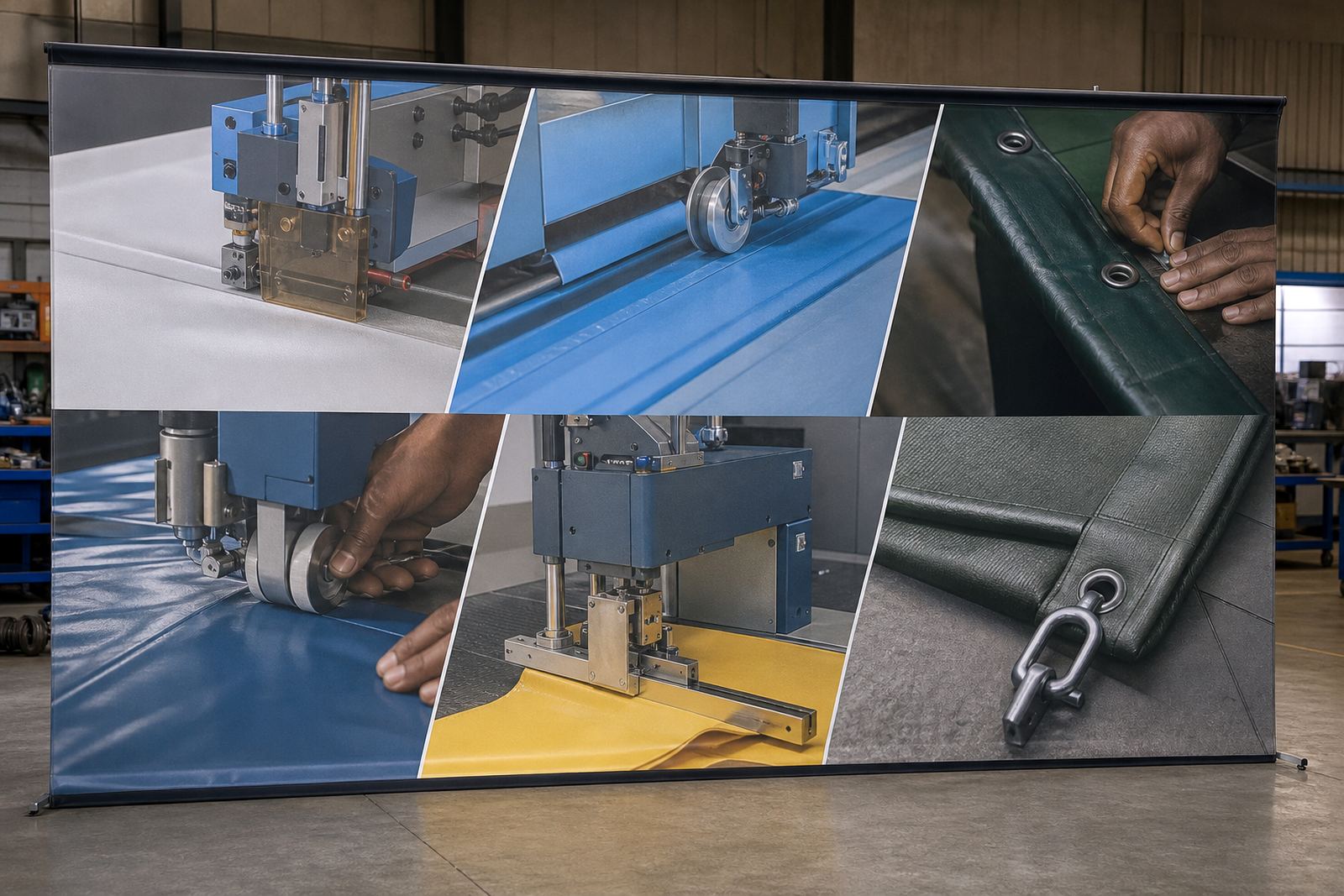
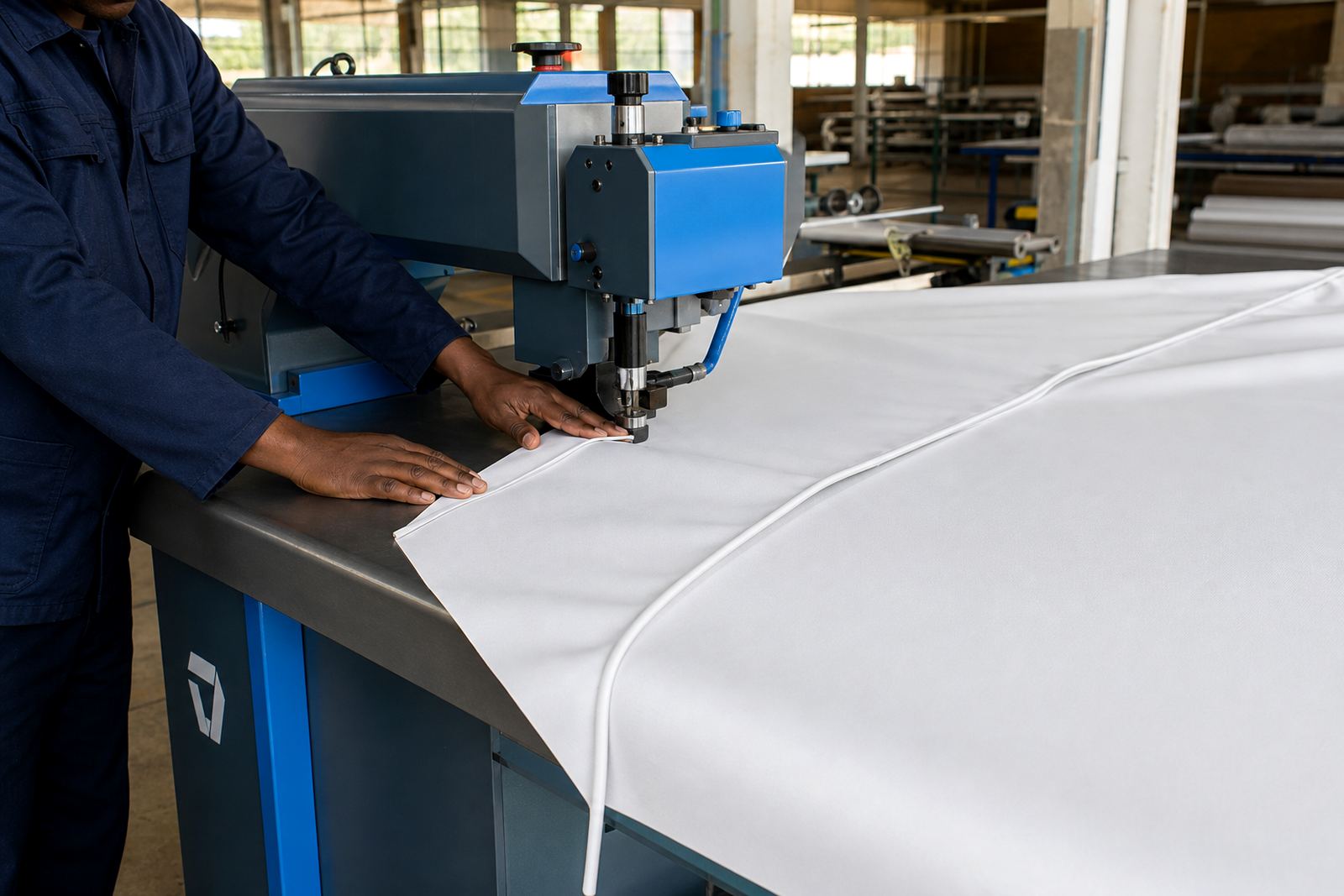
High-frequency welding is often used where a neat, repeatable seam is needed on PVC-coated fabrics. Hot-air and hot-wedge welding suit many tarp and banner applications where long straight runs, hems and overlap seams are part of daily output. In busy shops around Germiston, Johannesburg and Durban, the practical choice is usually the method that gives stable seam quality without slowing production.
- Overlaps for general joining and panel build-up
- Double hems for edges that take pulling and handling
- Keder seams for track-fit banners, awnings and tent panels
- Reinforced corners and stress points
Tarpaulin Seams That Hold Up to Daily Use
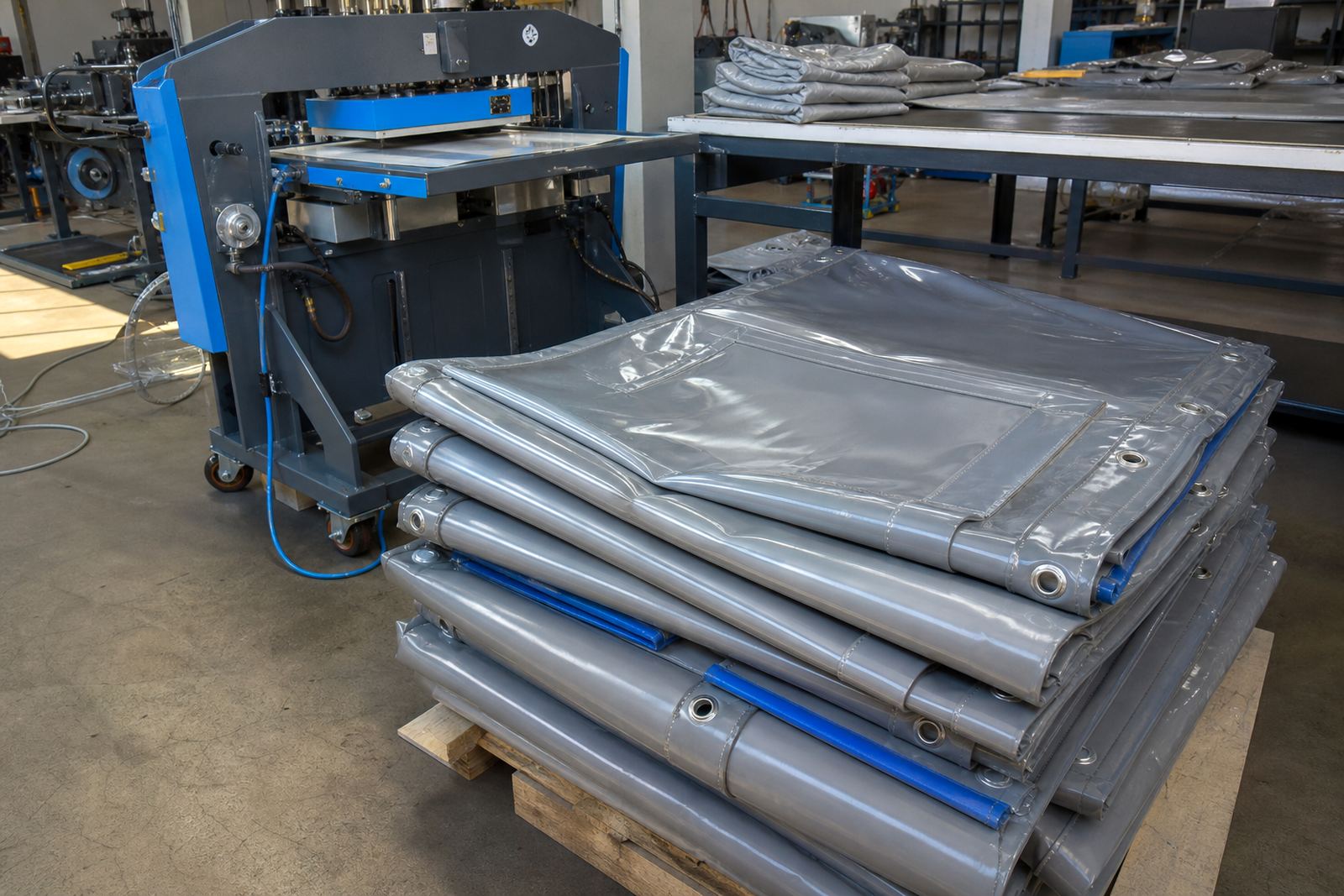
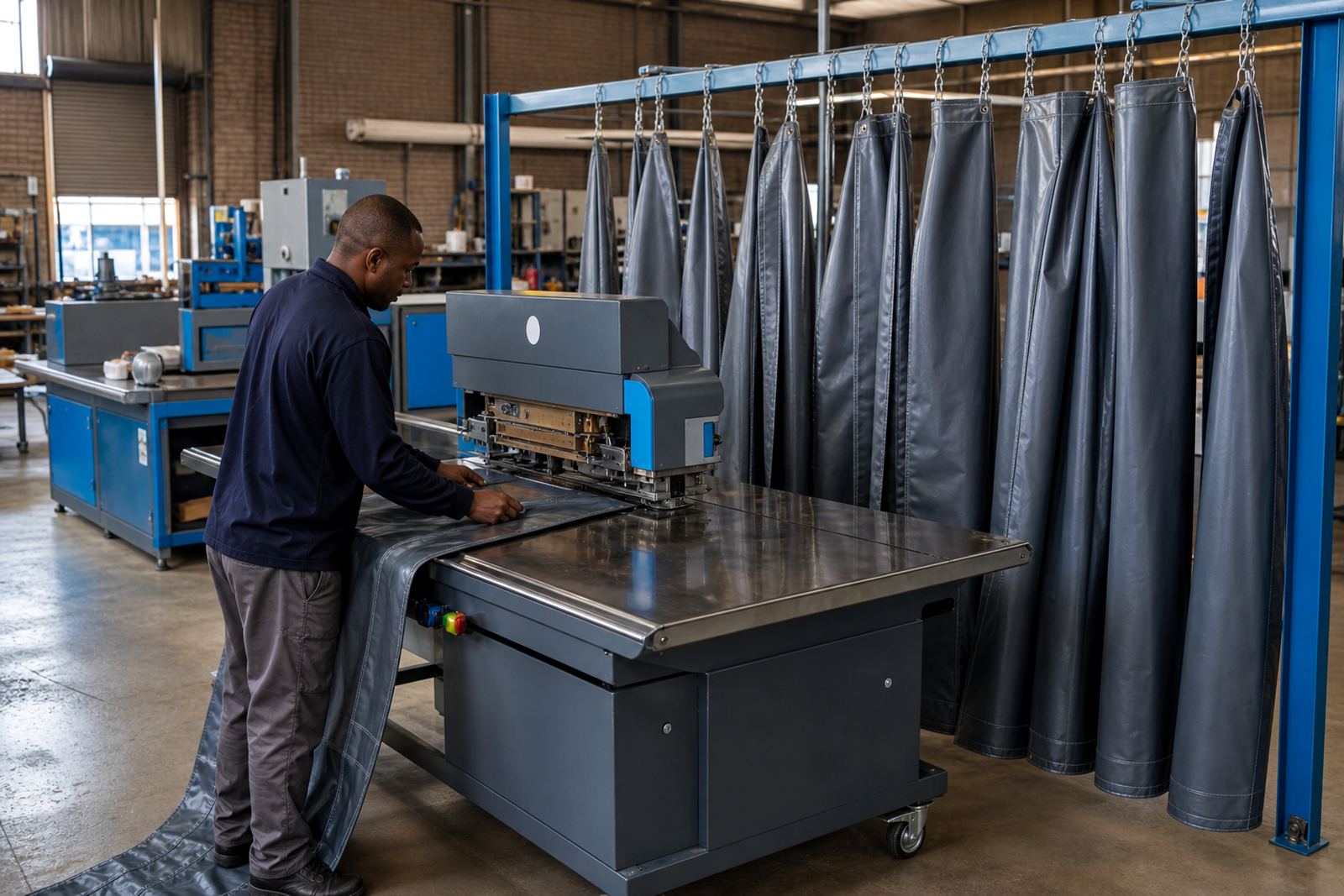
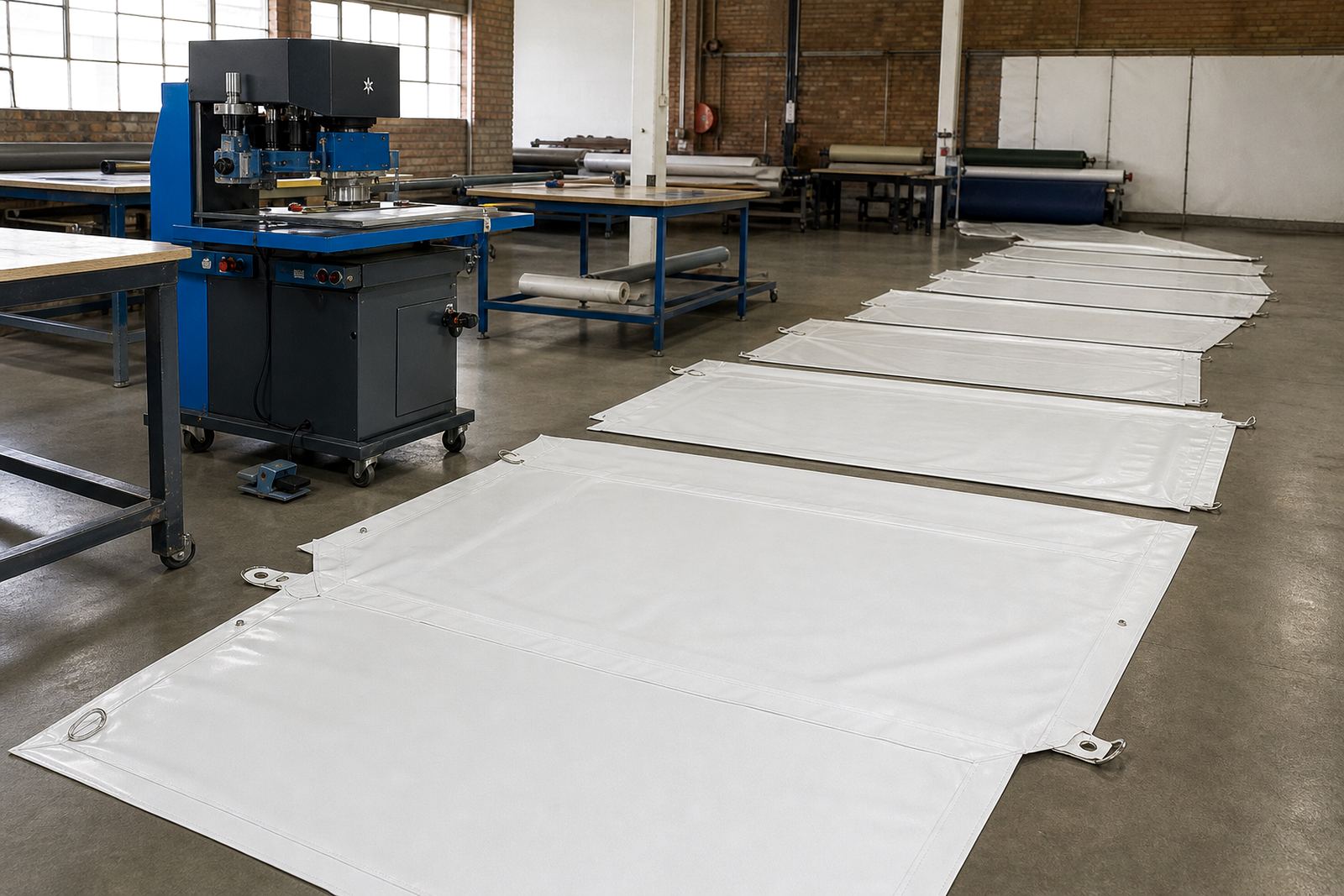
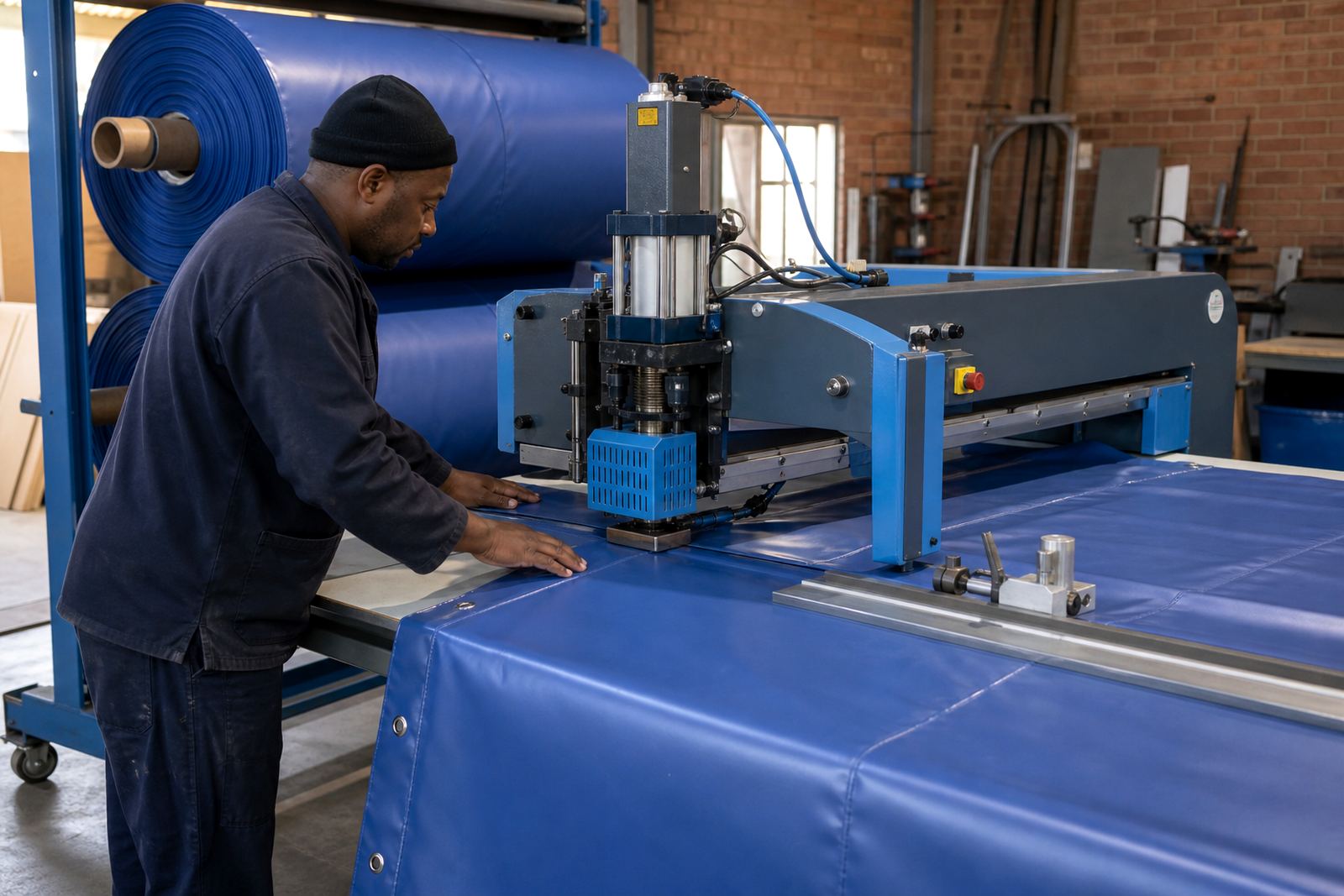
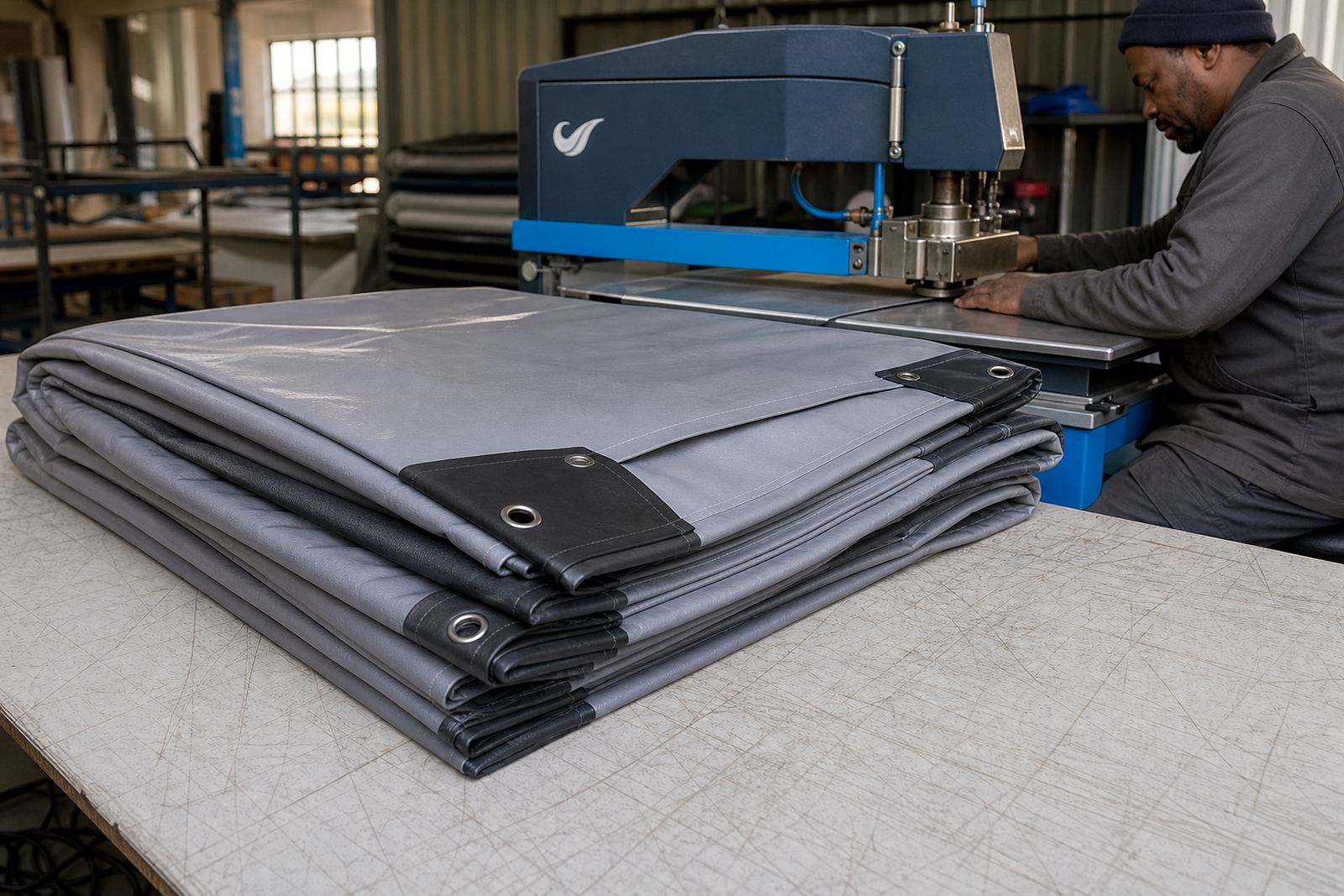
Tarpaulins need seams that can stand up to folding, rolling and regular load movement. On truck covers, side curtains and industrial sheets, seam quality affects how well the finished cover seals, wears and keeps its shape. A clean seam line also helps when a cover must fit the frame properly and sit flat after repeated use.
Typical tarpaulin jobs include straight seams on large sheets, folded hems on exposed edges and welded patches over wear points. In coastal areas such as Durban and Cape Town, fabric handling needs extra care because humidity can affect storage and the way sheets sit before welding. Where the fabric is heavier, tooling alignment and even pressure across the weld zone matter more than speed.
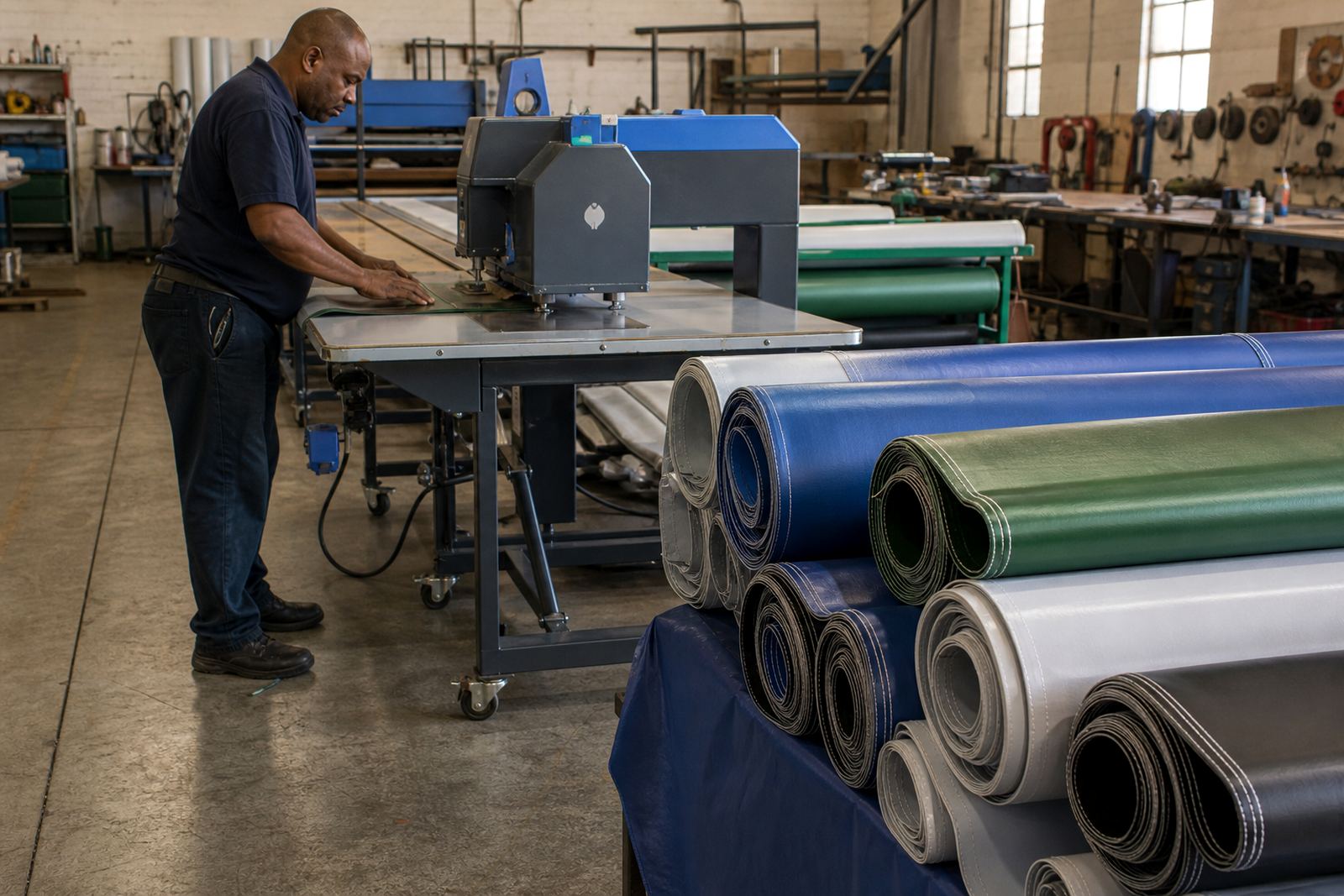
- Heat-consistent welds on PVC-coated tarpaulin rolls
- Edge hems for cleaner handling and reduced fraying
- Patch welding for repairs and strengthening
- Corner and anchor point reinforcement for straps and tie-downs
Banner Work for Clean Edges and Straight Runs
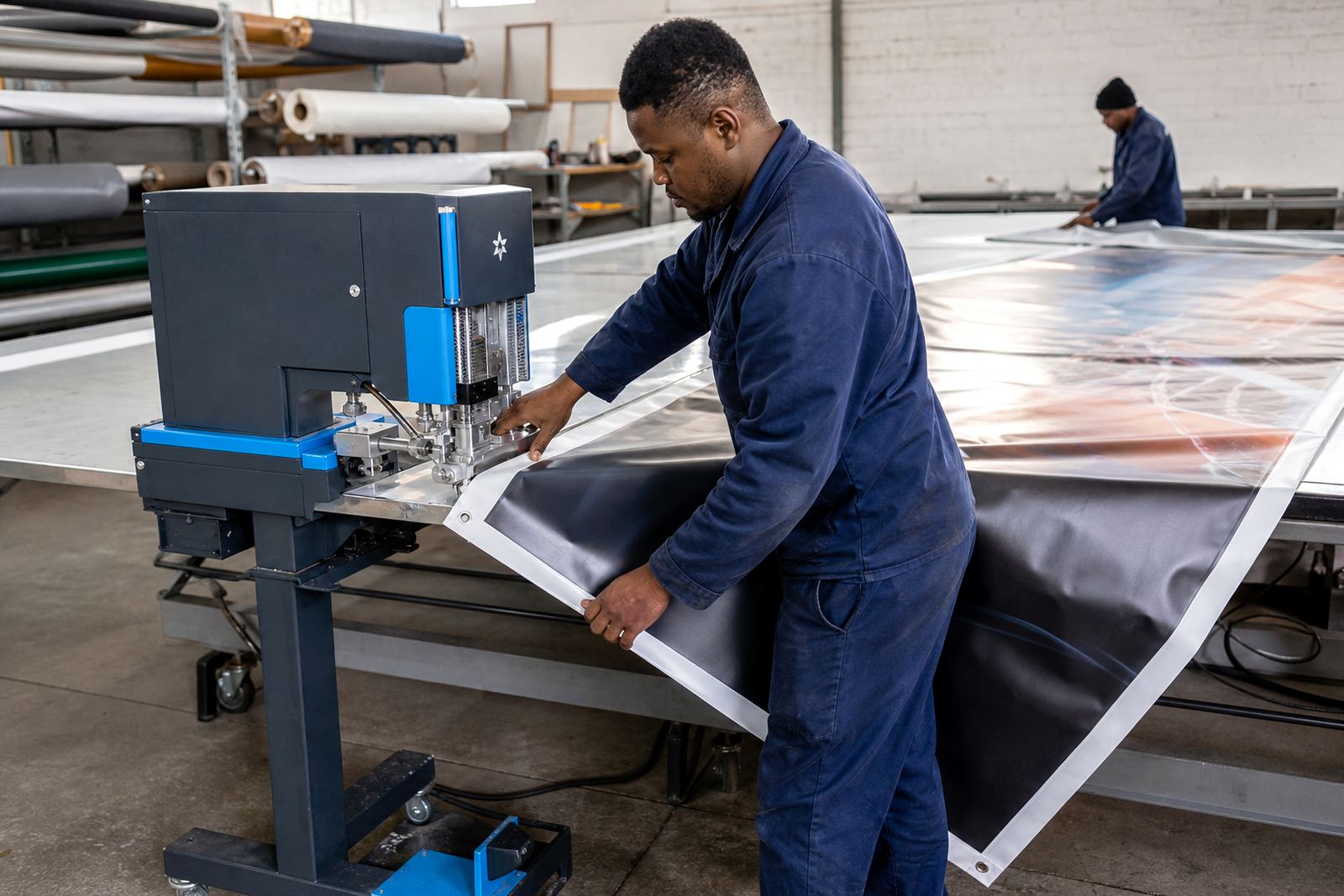
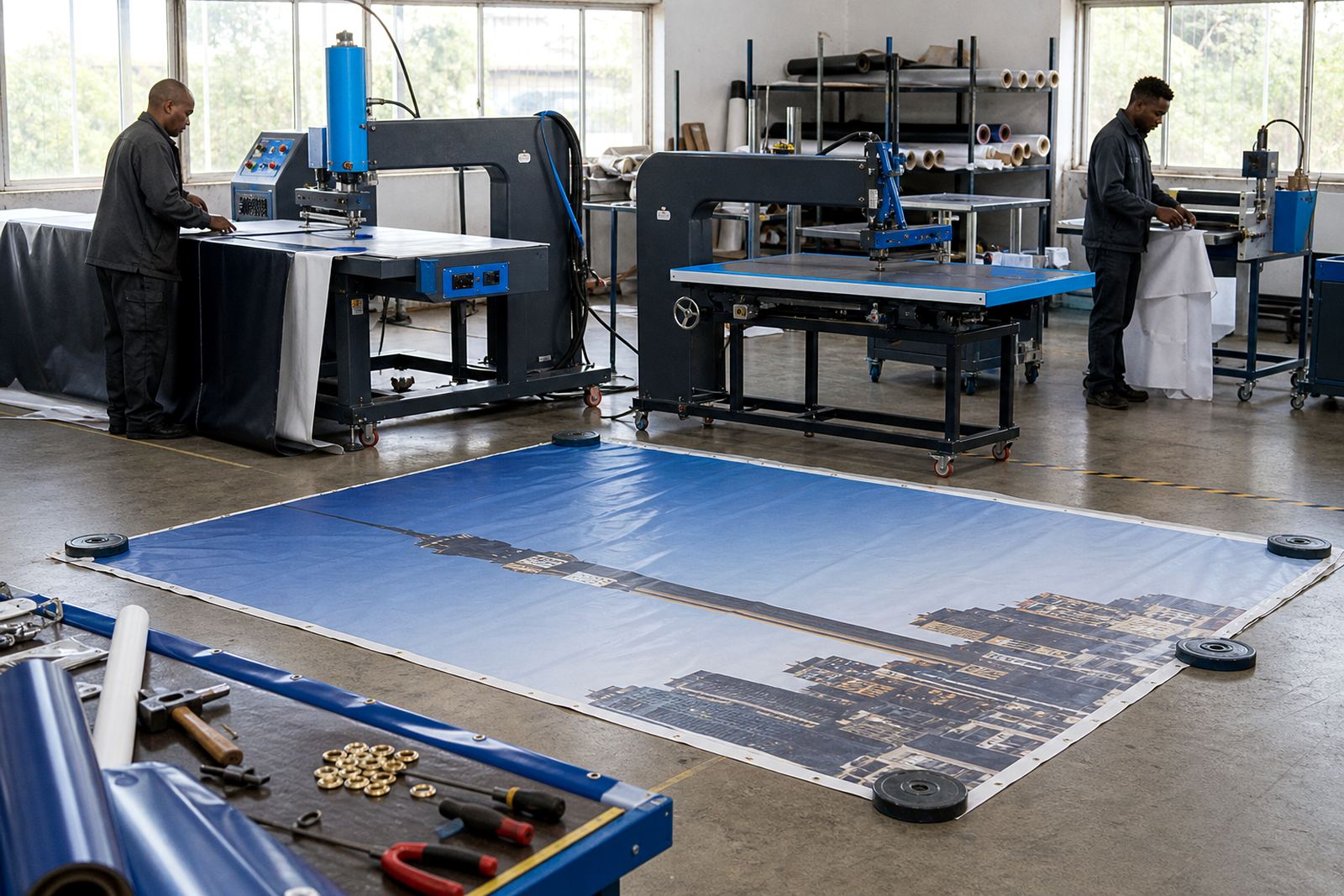
Banner makers usually want a finish that looks neat from the front and stays tidy after fitting. Straight hems, pocket folds, welded overlaps and eyelet-ready edges are common on promotional banners, shop fronts and event signage. The seam has to stay flat so the banner hangs correctly and does not twist under wind or repeated handling.
For this type of work, the weld line should be even and the edge should stay consistent from one panel to the next. In Pretoria and Bloemfontein, where banners may be fitted on stands, fences or temporary frames, accurate edge work saves time during installation. It also reduces rework when the same job is produced in batches.
- Hemmed edges for a tidy display finish
- Eyelet preparation on reinforced borders
- Panel joining for larger printed runs
- Pocket work for poles, rails and hanging systems
Tent Panels, Keder and Fitted Seams
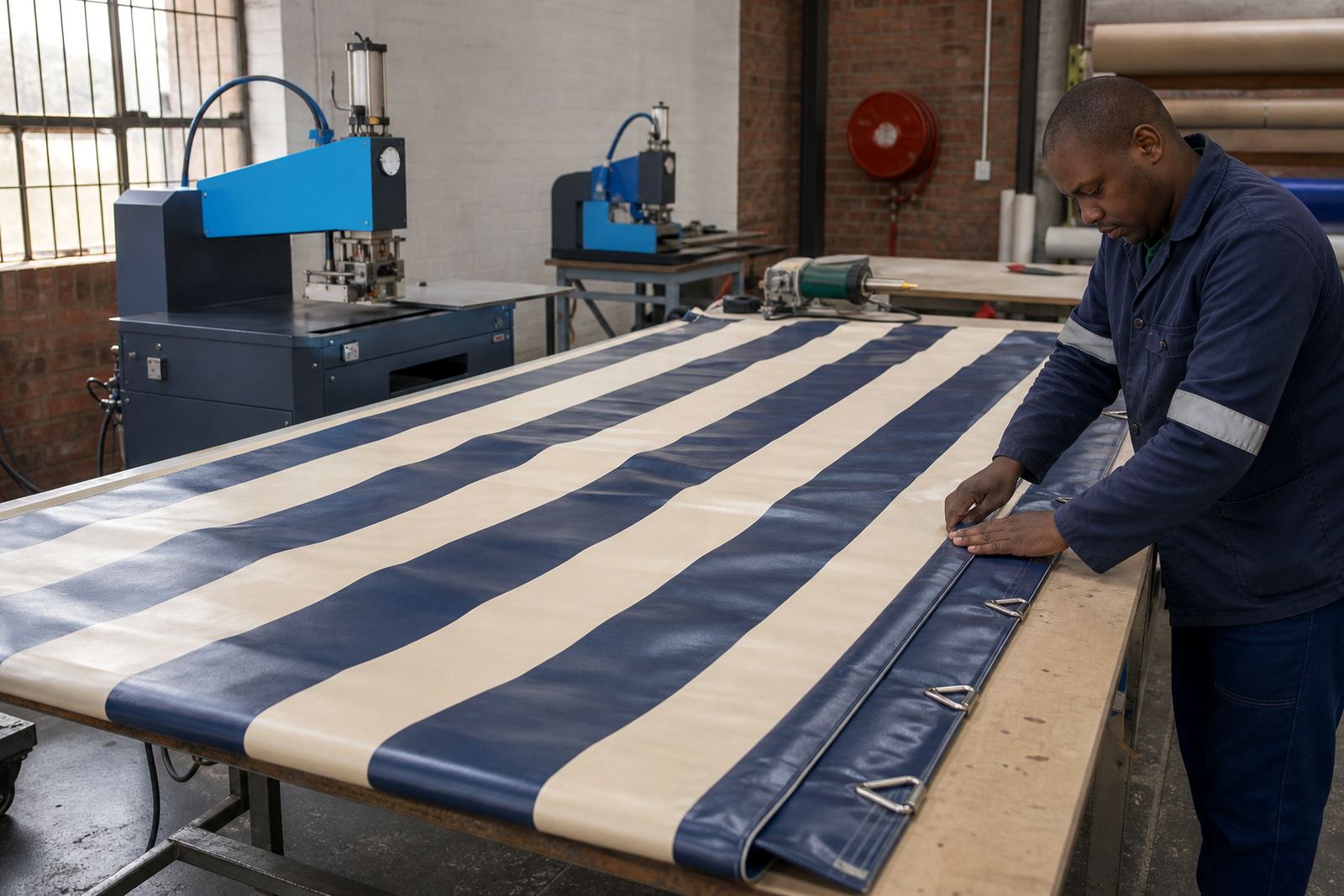
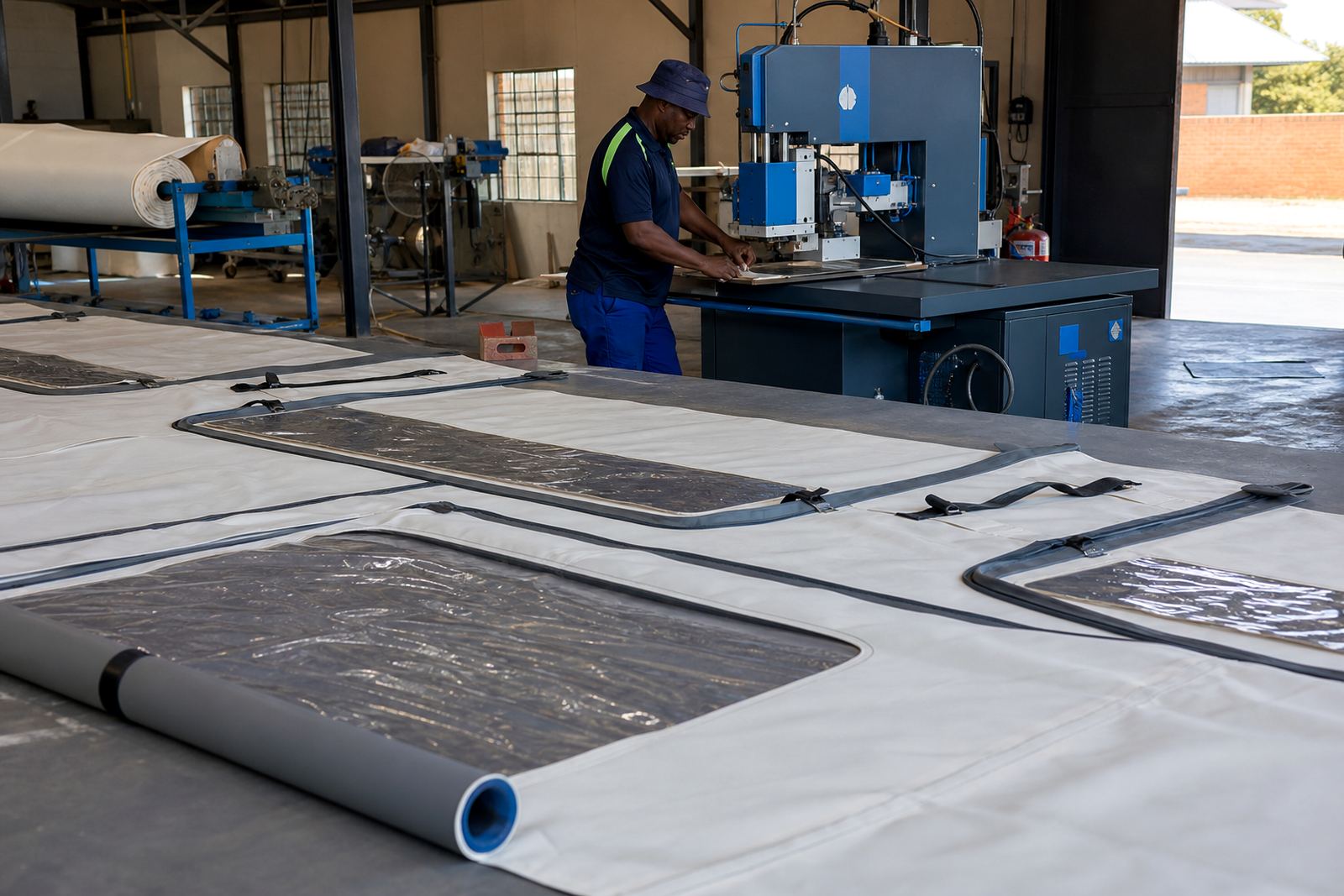
Tent and marquee work often needs more than a basic overlap. Keder seams, reinforced joins and shaped panels help a tent fit its frame properly and keep the structure looking orderly once installed. The weld must support repeated erection and striking without opening up at the edge or pulling apart at the stress points.
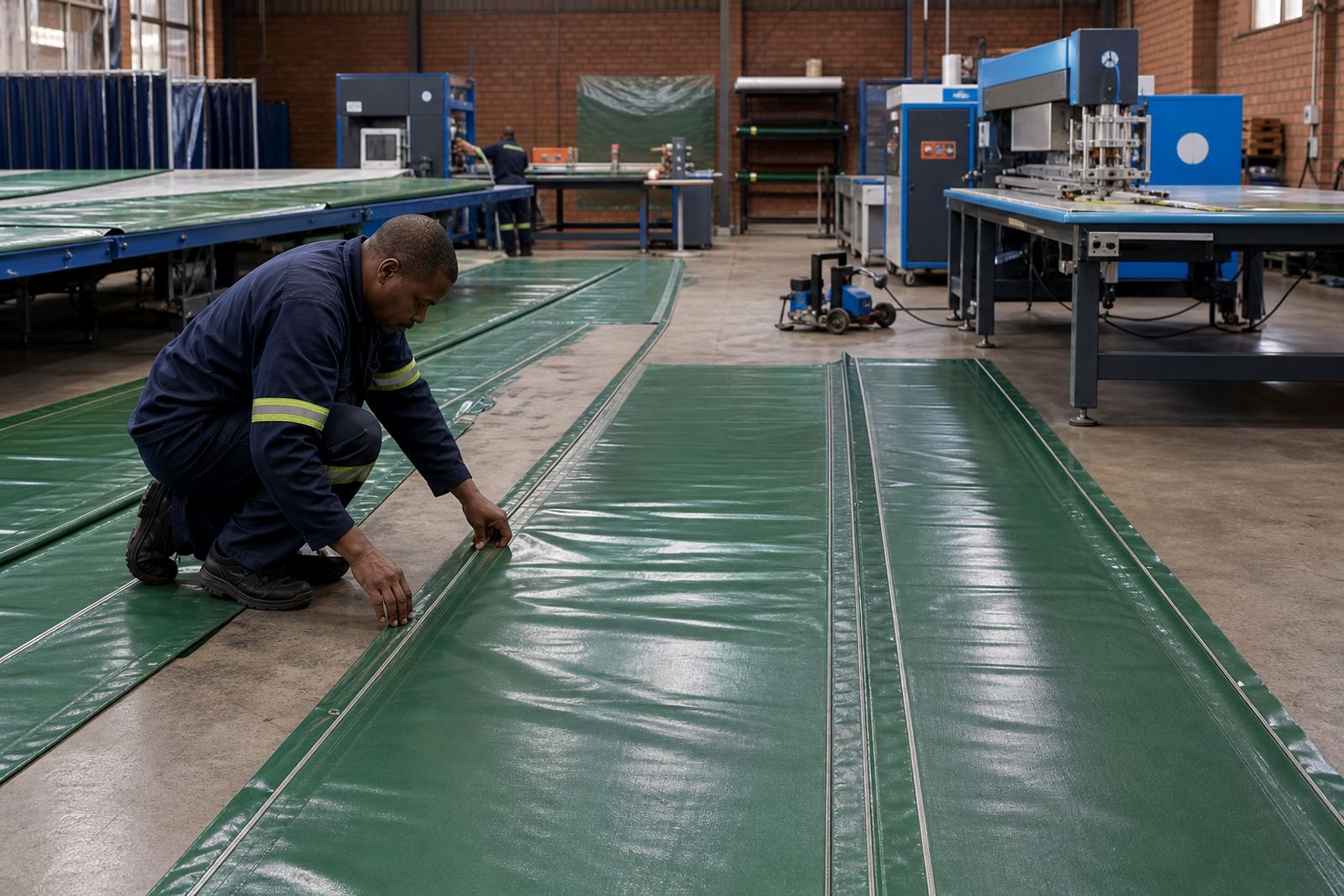
Hot-air and hot-wedge systems are commonly used on long, straight tent seams where control and consistent pressure are important. High-frequency welding is useful on selected joins where a tidy, bonded finish is required. For larger tent makers in Johannesburg, Boksburg and Benoni, the main requirement is steady output with seams that remain true to size after handling.
- Keder insertion seams for track fitting
- Roof and wall panel joins
- Reinforced load points around corners and poles
- Sealed edges where weather exposure is a concern
Eyelets, Reinforcement and Finish Details
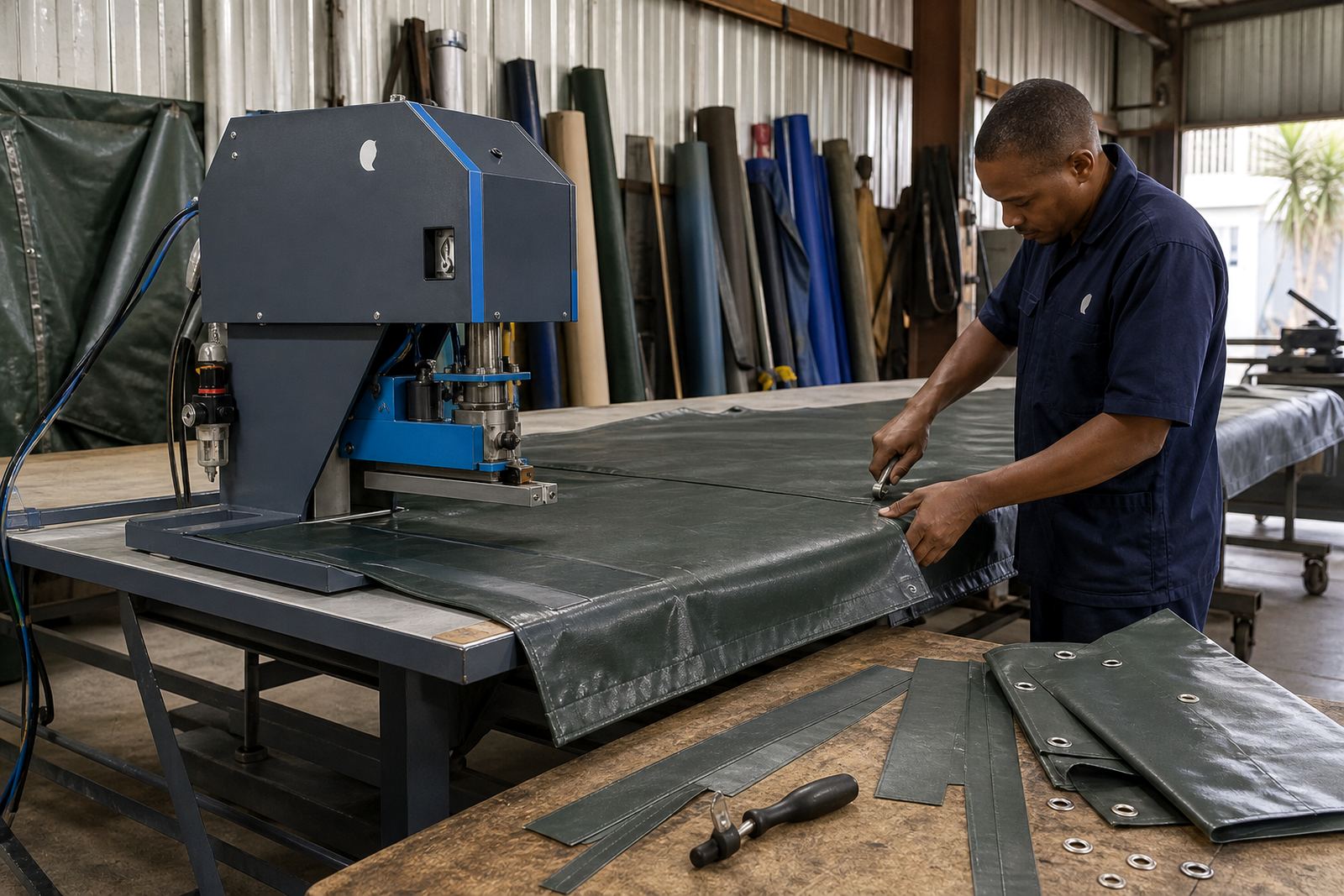
Good seam work does not stop at the weld line. Eyelet strips, corner patches, webbing reinforcement and folded returns all help a finished product cope with tension and movement. These details matter on tarpaulins, banners and tent walls because the load often lands at the edge before it reaches the main body of the fabric.
A proper finish depends on layout before the welding starts. Marking, alignment and clean trimming help the operator keep the panel square and prevent a twisted hem or an uneven eyelet line. For shops doing mixed work, the best result comes from a repeatable setup that can handle different panel sizes without constant adjustment.
- Eyelet-ready reinforcement strips
- Corner patches for high-tension points
- Folded hems for stronger edges
- Webbing attachment areas for straps and tie-downs
Operator Safety and Machine Care in the Workshop
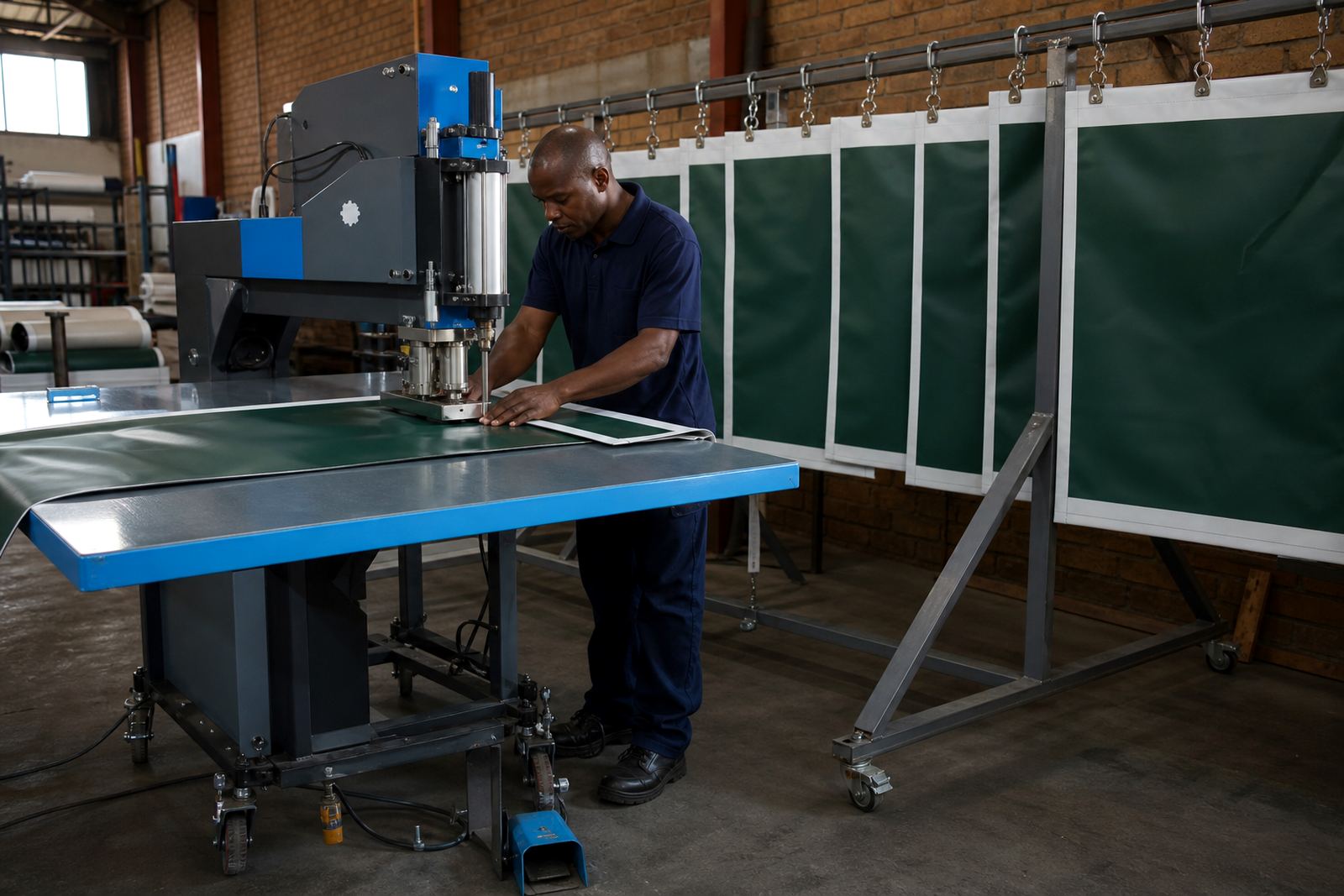
Welders used on PVC-coated fabrics need orderly workshop practice. Operators work near heated tooling, moving rollers and clamping areas, so guards, safe hand placement and clear work surfaces matter. Leads, controls and foot-operated systems should be checked before the shift starts, especially where a team is working on repeated production runs.
Regular servicing helps keep weld quality steady. That includes checking electrode condition, roller wear, tooling alignment and the way heat is distributed across the seam. In Germiston and across the Ekurhuleni area, preventive servicing is often the difference between clean daily output and avoidable stoppages during a busy run.
- Keep tooling clean and aligned before production starts
- Check rollers, pressure settings and seam guides
- Replace worn parts before they mark the fabric
- Test sample seams after setup and after adjustments
How These Example Jobs Help You Plan Production
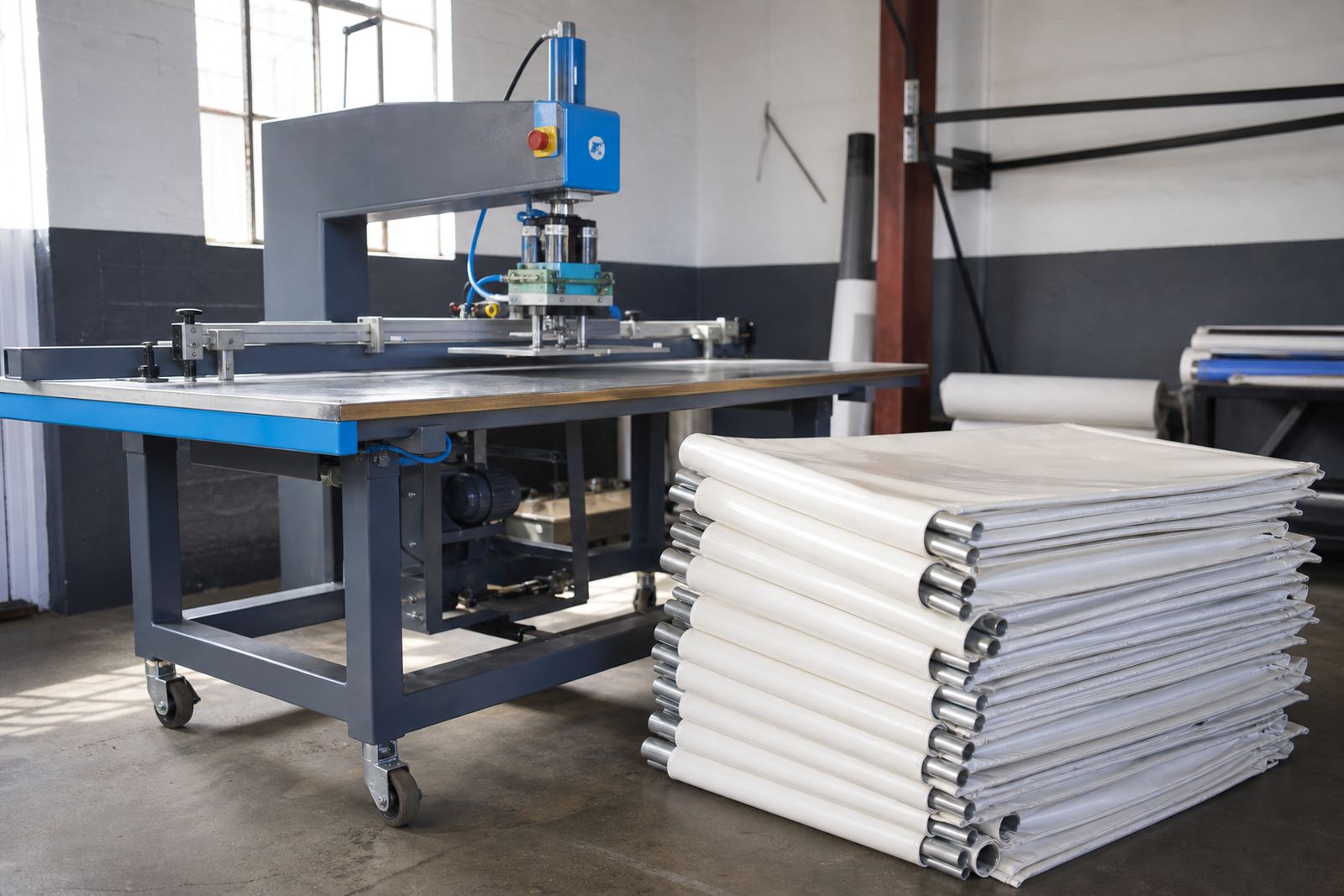
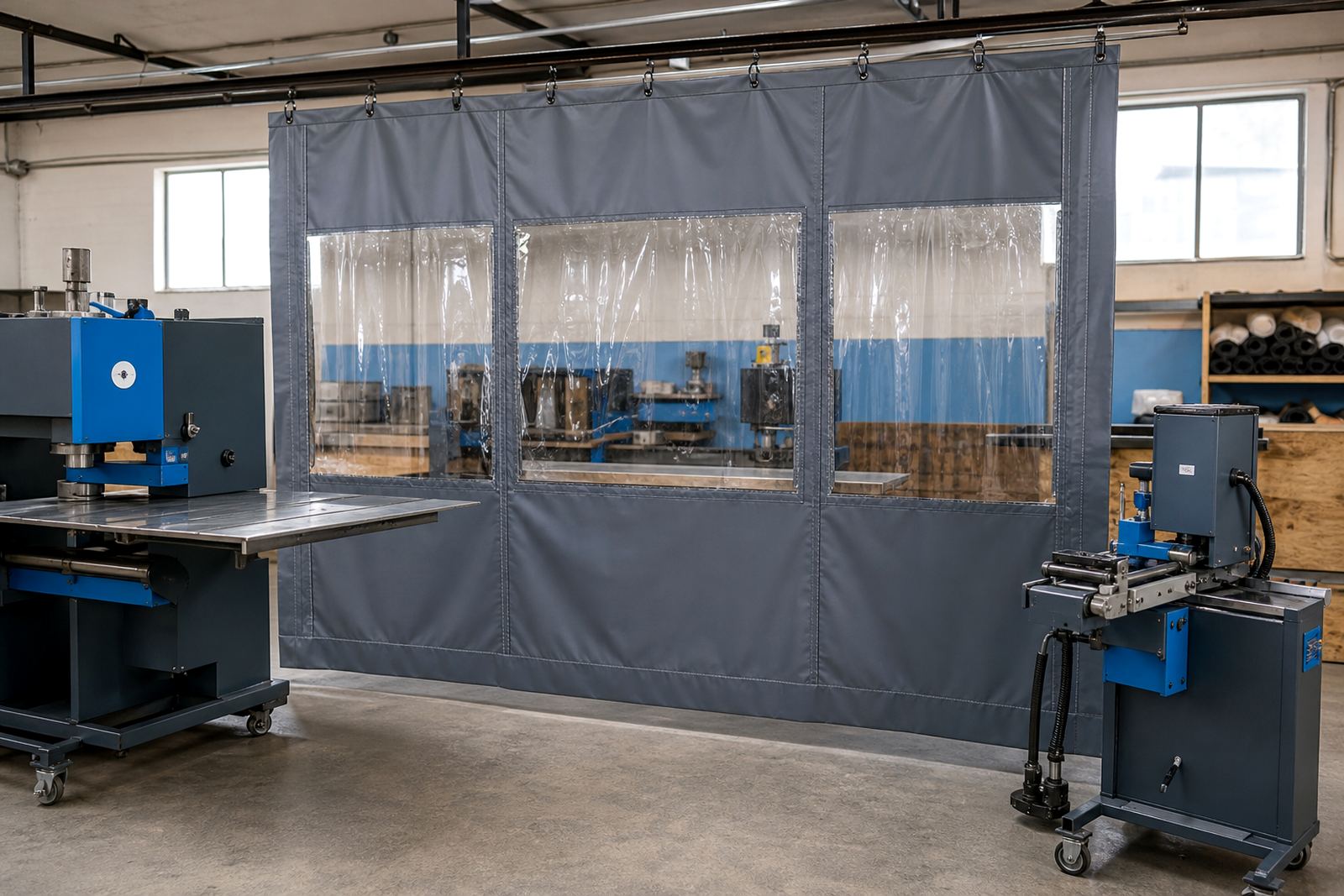
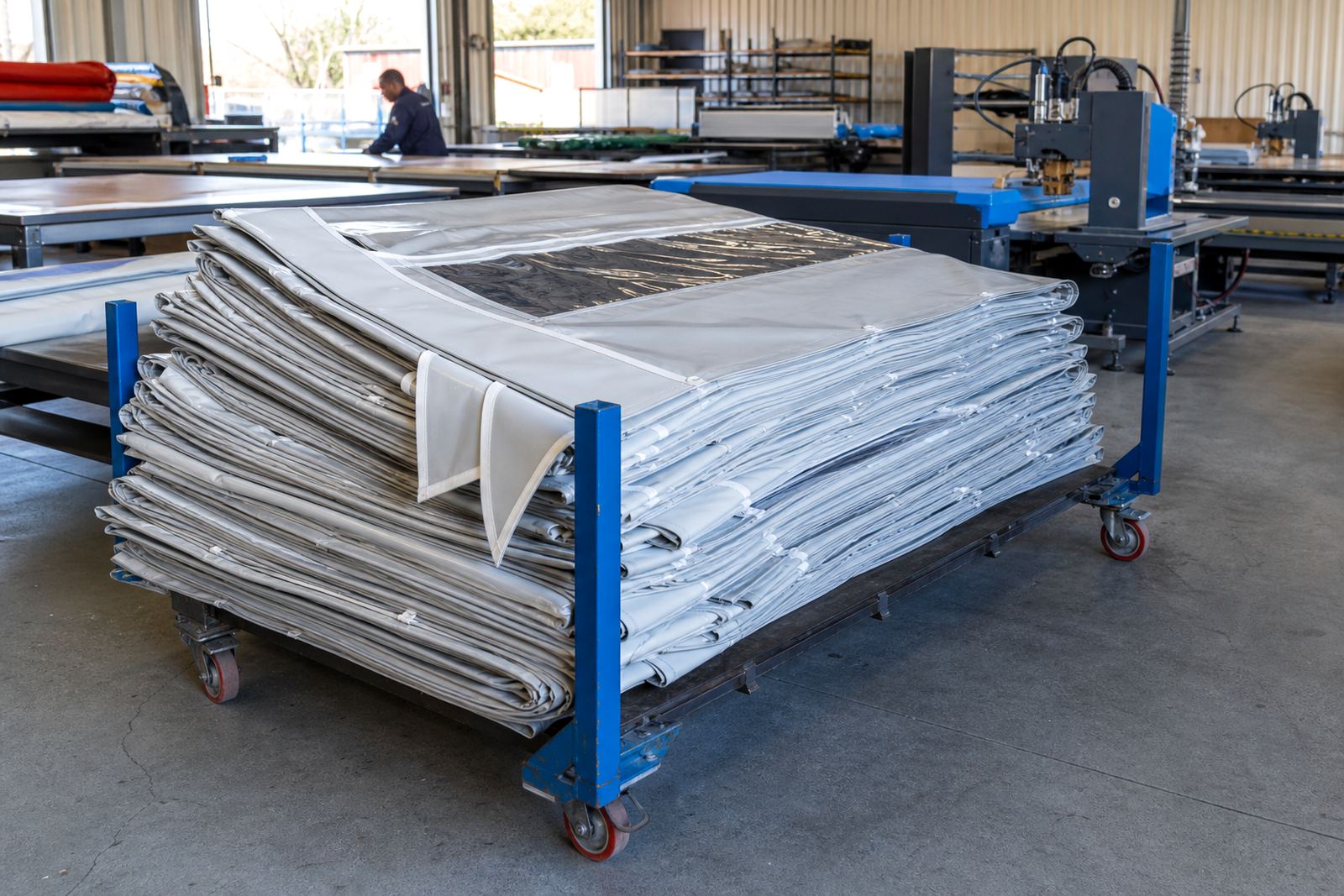
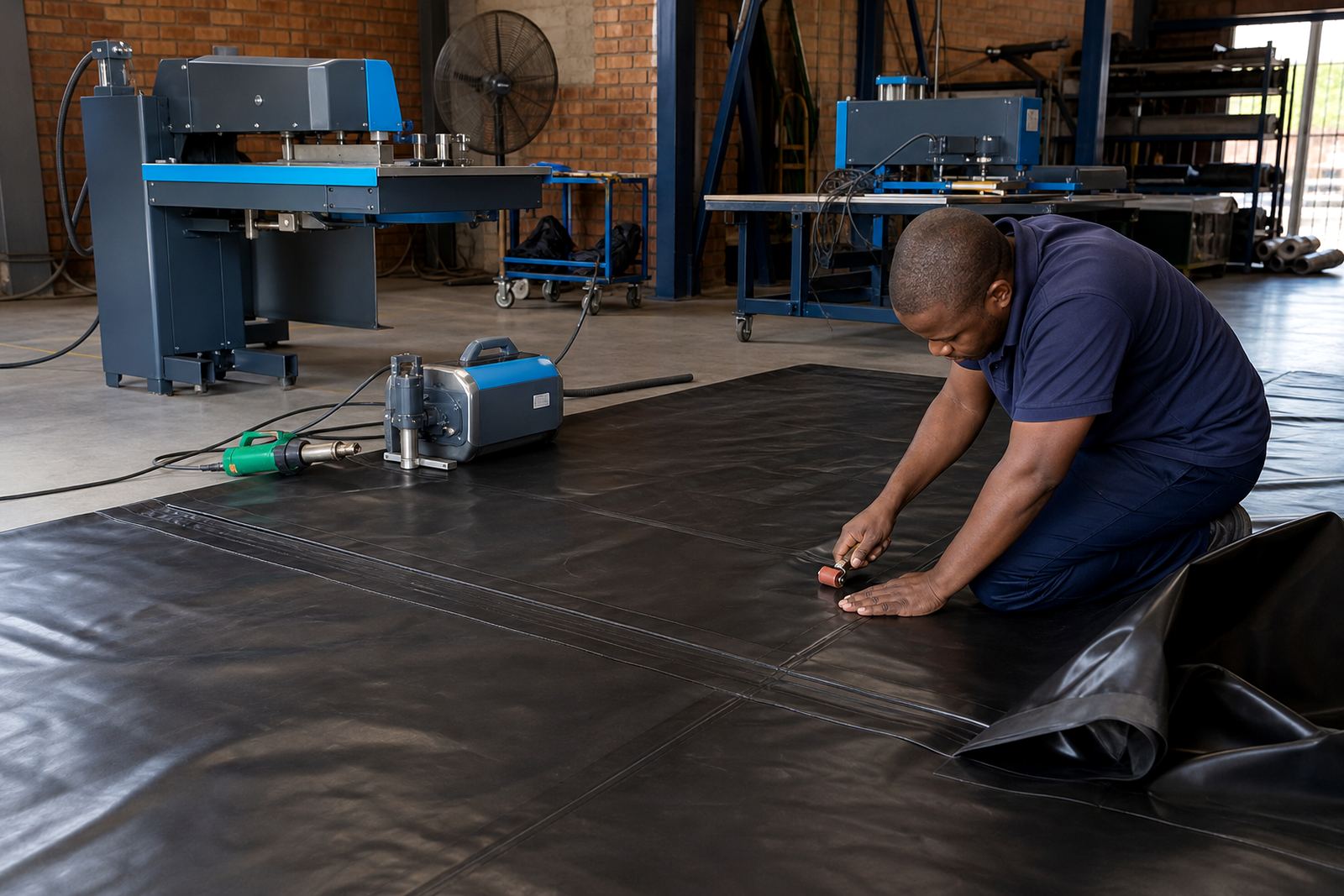
These example jobs give a practical picture of the work PVCWelder equipment supports, from simple hems to shaped tent seams and reinforcement detail. They also show how the same workshop may need different welding methods for different products, depending on fabric thickness, finish quality and the pace of output required.
When planning a new job, it helps to think about the seam first: how much load it will carry, where it will be fitted and how clean the final edge must look. From there, the choice between high-frequency, hot-air or hot-wedge welding becomes much easier. For makers supplying Johannesburg, Durban, Cape Town, Pretoria and Bloemfontein, that kind of planning keeps production moving and reduces waste.