What the Benoni workshop needed on this run
The brief came from a busy signage workshop in Benoni working on mesh banners for outdoor display. The job had to suit wind-exposed mounting points, keep the print area flat, and finish with hems that would not curl once the banners were installed on poles and frame points. They also needed a process that could be repeated across a small batch without chasing different seam widths from one banner to the next.
Mesh material is unforgiving if the welding setup is rough. Too much heat and the face can distort, too little and the seam lifts at the edges after handling or tensioning. The workshop wanted a practical finishing method for banner sizes that would travel well, hang straight and survive the handling that comes with fitment around Benoni, Boksburg and the wider East Rand.
- Mesh banners with folded hems on all sides
- Pole pockets for upright or temporary display use
- Clean edge finishing for eyelet placement
- Consistent seams for repeated workshop output
The weld method and finish detail
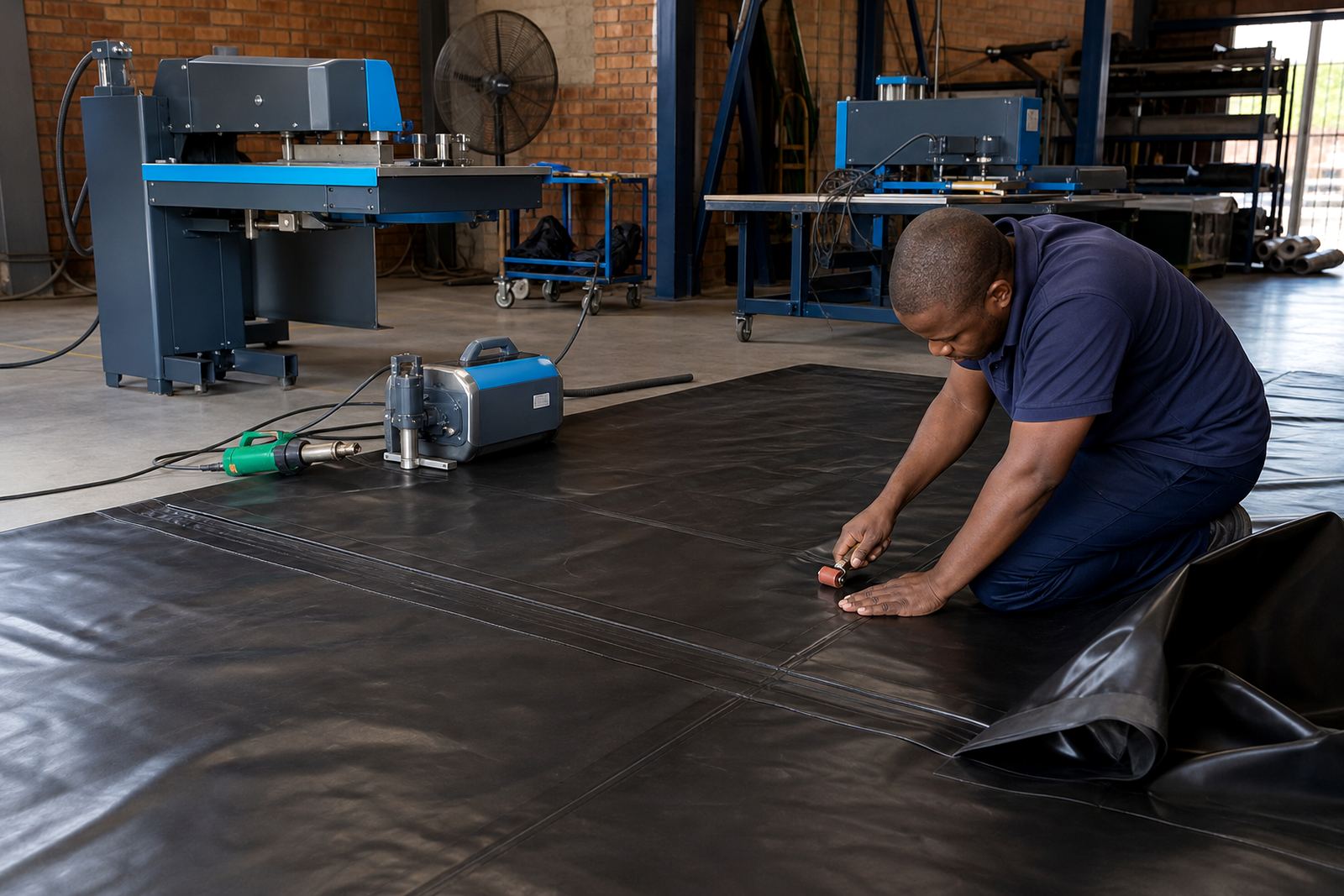
For PVC-coated fabrics and banner-grade mesh, radio frequency welding is a common choice where precise, even seams are needed on coated material. Hot-air and hot-wedge welding are also used on many workshops for hems, pockets and long linear joins, especially where the operator needs control over overlap and weld speed. In this Benoni job, the finishing plan centred on neat folded hems, then pole pockets sized to suit the mounting hardware the workshop already used.
The seam layout was kept practical: straight hems on the long sides, reinforced corners, and tidy pocket folds that would not create bulky ridges at the top edge. Eyelet positions were marked out after the welds were checked, so the spacing stayed even and the banner could be tensioned without tearing at the holes. That matters on mesh, because the material can be pulled hard when fixed outdoors and any weak point shows up fast.
- Folded hems for edge strength
- Pole pockets matched to the display setup
- Eyelet layout kept clear of stressed corners
- Seam consistency checked before packing
Constraints on site and in the workshop
Benoni workshops tend to work with mixed signage loads, from short-run banners to larger outdoor pieces, so the real constraint is often time and repeatability rather than raw material availability. This project needed a setup that could handle the mesh without drifting on alignment. On coated textiles and banner mesh, a few millimetres off at the start can turn into a messy pocket or a bowed hem by the end of the run.
There was also a practical handling issue. Mesh banners are light, but once folded and packed they can show crease lines or edge memory if they are rushed through finishing. The workshop wanted a result that would stay square after rolling and unpacking, and one that would not need rework once the installers got it on site. That meant checking roller pressure, alignment and edge feed before the main welds were completed.
- Mixed batch work with tight finishing tolerances
- Need for square corners and even pocket depth
- Careful handling to avoid crease marks
- Repeatable output for later matching banners
What we supplied and set up
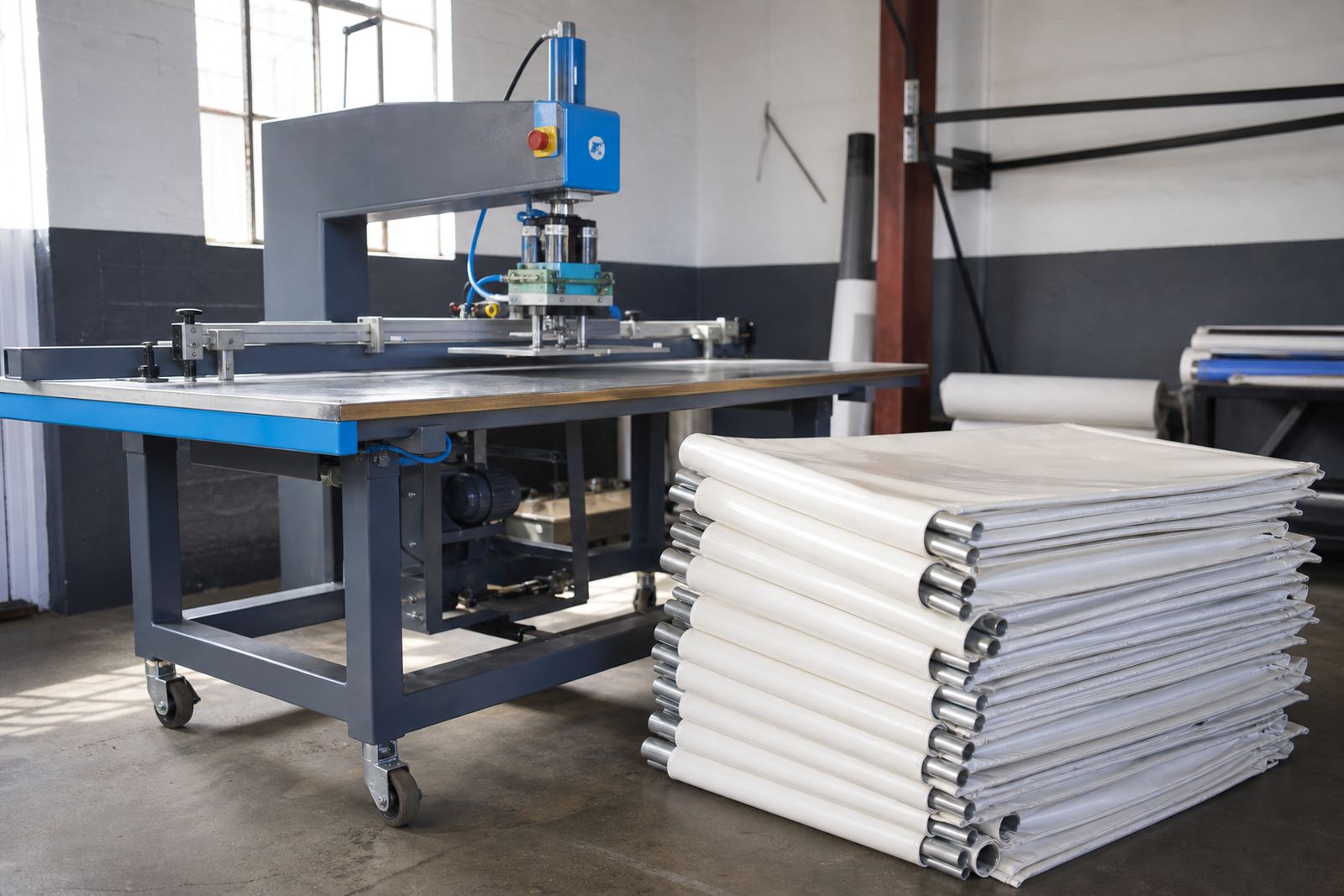
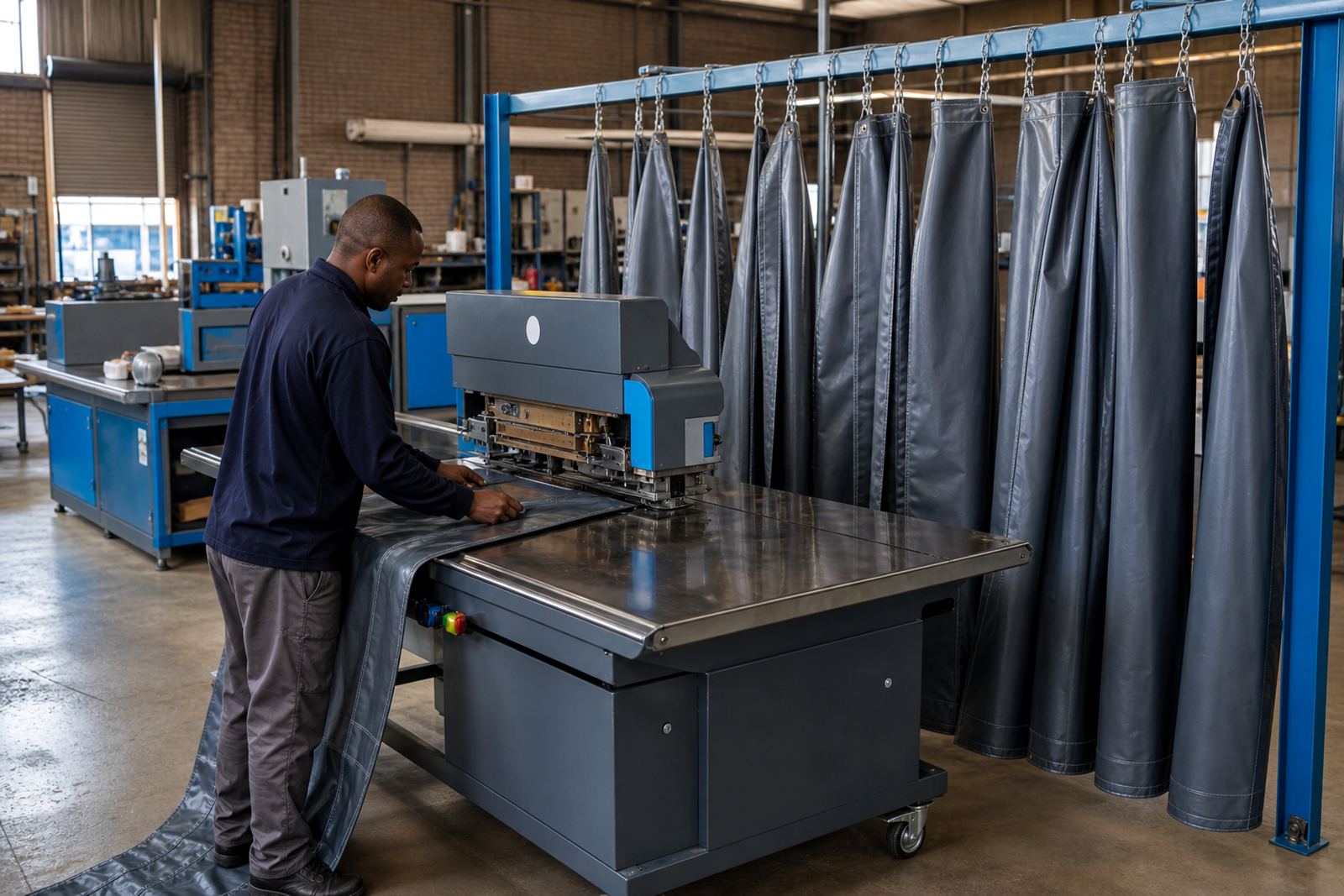
We supported the workshop with the welding setup suited to PVC-coated fabrics and finishing details for banners. That included practical machine setup for the material thickness, tooling alignment for straight seams, and checks on the weld path so the hems held evenly across the width. Where the workshop needed guidance, the focus was on set-up, operator handling and keeping the finish neat on every panel.
The work also covered the finishing accessories and checks that matter in day-to-day production: correct edge alignment, roller condition, seam testing on sample sections, and making sure the fold lines sat where the pocket or hem needed them. For banner work, the machine is only part of it. The rest is keeping the operator comfortable with the process and making sure the weld quality stays steady when the pace picks up.
- Machine installation and commissioning support
- Tooling alignment for straight seams and hems
- Operator training on feed, heat and pressure control
- Seam testing before full production runs
Three weeks from setup to finished banners
The project ran over three weeks. The first week was spent on setup, alignment and proving the weld behaviour on the mesh samples. The second week focused on the actual banner production, including the folded hems and pole pockets. The final week was used for checking the finish, reviewing the handling of the finished pieces and making small adjustments where the workshop wanted better speed on the repeat sections.
That pace suited the job because it let the team check what the material was doing at each stage instead of forcing the whole batch through in one rush. It also gave enough time to sort small issues like pocket alignment and eyelet spacing before the banners were handed over for installation. On this kind of work, one tidy correction early can save a lot of waste later.
- Week 1: setup and sample weld checks
- Week 2: banner production and finishing
- Week 3: review, adjustment and handover
- Small corrections done before full batch completion
What the finished mesh banners needed to achieve
The finished banners had to hang neatly, take wind movement without opening the seams, and stay easy to install. The folded hems gave the edges more body, while the pole pockets made the top and bottom edges easier to position on site. The workshop was also looking for a finish that looked professional close-up, because signage work is judged just as much by the edge detail as by the print face.
For outdoor signage in Benoni and the rest of Gauteng, that means getting the basics right: even weld width, stable pocket depth, and eyelets that line up without pulling the fabric out of shape. The result from this project was a cleaner production run with less trimming after welding, fewer edge corrections, and a banner set that was easier to handle from workshop floor to site fitment.
- Neater hanging with less edge curl
- Better hold on the pole pocket line
- Less rework at the trimming stage
- Cleaner presentation for outdoor signage use
What we would keep for the next mesh batch
If we were doing the next batch for the same workshop, we would keep the same approach: sample first, set the weld path early, then run the batch with regular seam checks at the corners and pocket ends. That is where most banner faults show up, especially on mesh where the material movement is more noticeable than on solid PVC. We would also keep the operator notes close to the machine so the same fold width and pocket depth can be repeated without guesswork.
This kind of job suits a practical workshop routine. The material is checked, the seams are tested and the finishing details are kept plain and consistent. For Benoni signage work, that is usually what saves time on install day and keeps the banners looking tidy once they are up.
- Use the same fold widths for matching jobs
- Check corner stress before the final trim
- Keep pocket depth matched to the fixings
- Review seam tension before dispatch
Key facts
| Project location | Benoni, Ekurhuleni |
|---|---|
| Client type | Signage workshop |
| Material | PVC-coated mesh banner stock |
| Finishing | Folded hems, pole pockets, eyelet-ready layout |
| Process used | Radio frequency and hot-air or hot-wedge welding principles |
| Timeline | 3 weeks |