The Witbank brief and what was at stake
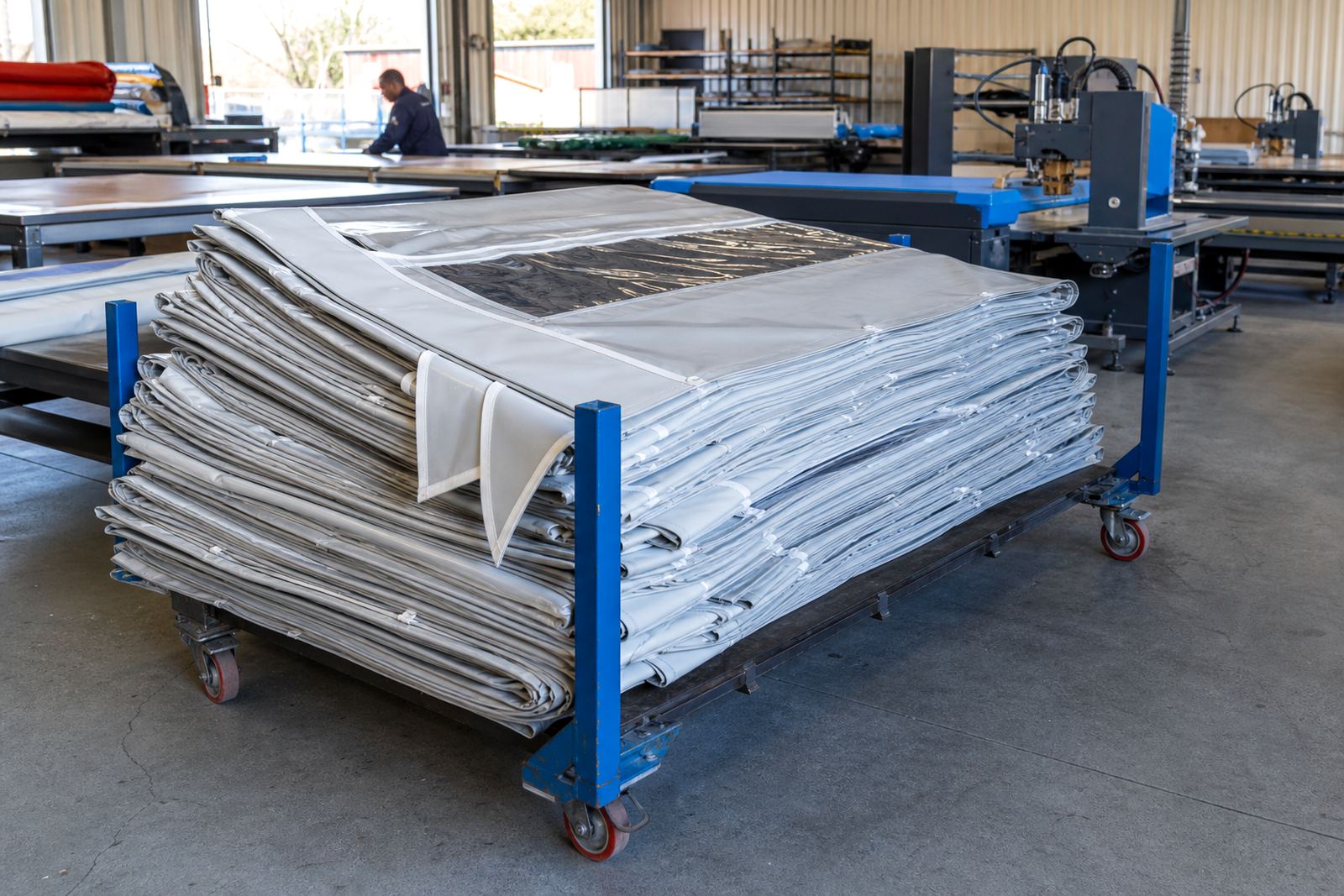
The client in Witbank builds load covers for mining support work, where trucks and utility vehicles run long routes, pick up dust and see hard handling at yards and depots. The brief was not just to weld material, but to produce covers with stronger edge construction, wider joins between panels and neat finish points for eyelets and tie-downs.
They were working with PVC-coated fabric in heavier grades, so the machine setup had to suit thicker material, wider hems and repeatable seam quality. The fabricator also needed a practical welding line that could cope with both long straight runs and smaller shaped sections around corners, flaps and overlap points.
Why the welding method had to suit both speed and control
For this job we worked around two common methods used on PVC-coated fabrics, namely high-frequency, also called radio frequency welding, and hot-air or hot-wedge welding. Each method has its place. RF welding is suited to controlled, repeatable seams on compatible PVC materials, while hot-air and hot-wedge units are useful for hems, reinforcements and long runs where the operator needs flexibility.
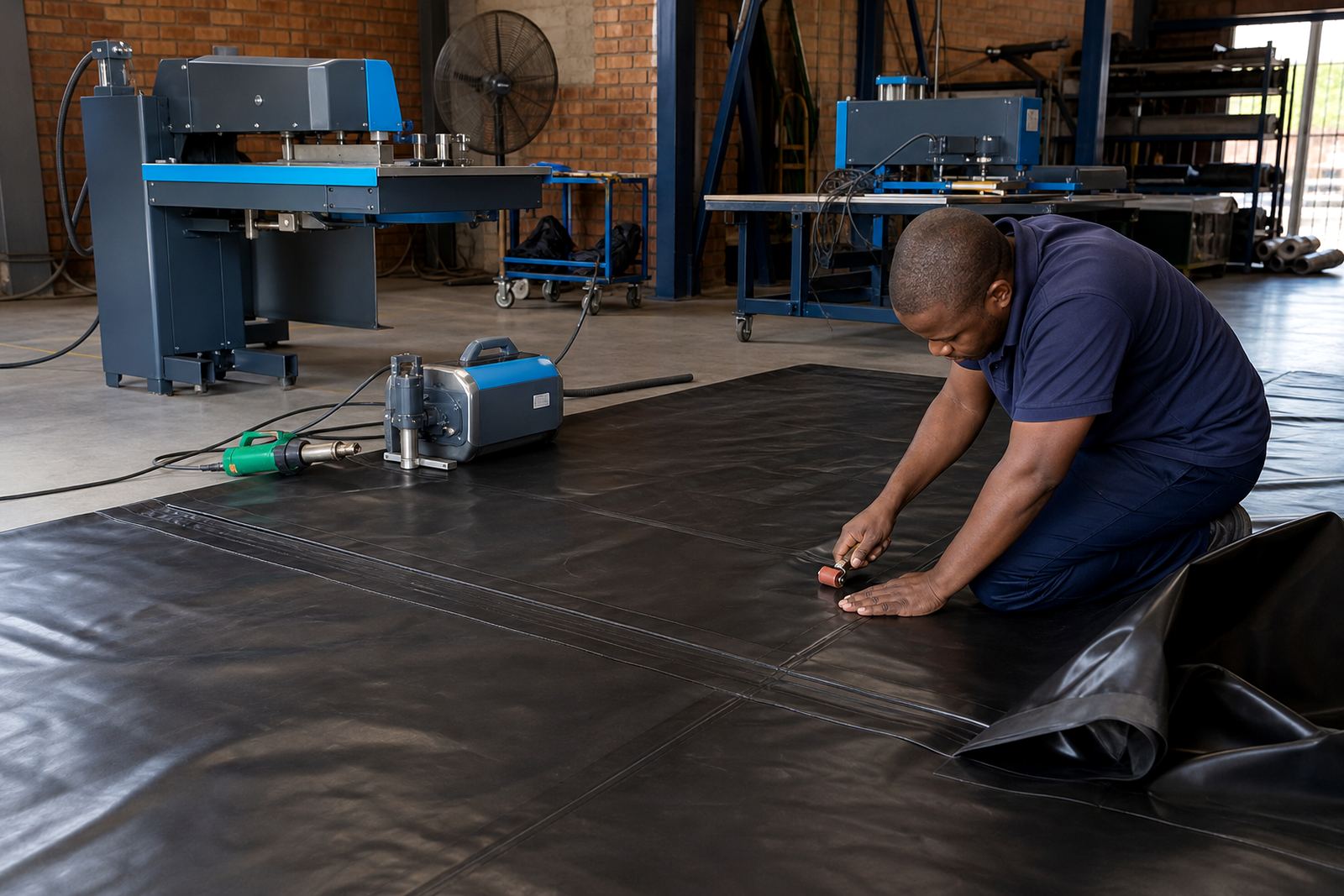
The covers called for broad panel joins and heavier hems, so the main issue was not only adhesion but seam build-up and edge control. A neat seam can still fail if the weld path is too narrow, too hot or uneven along the length, so setup mattered just as much as the machine itself.
- Panel joins sized for wide-format cover sections
- Reinforced hems for higher pull at the edges
- Eyelet-ready margins with steady spacing
- Clean overlap transitions at corners and folds
What we prepared and installed on site
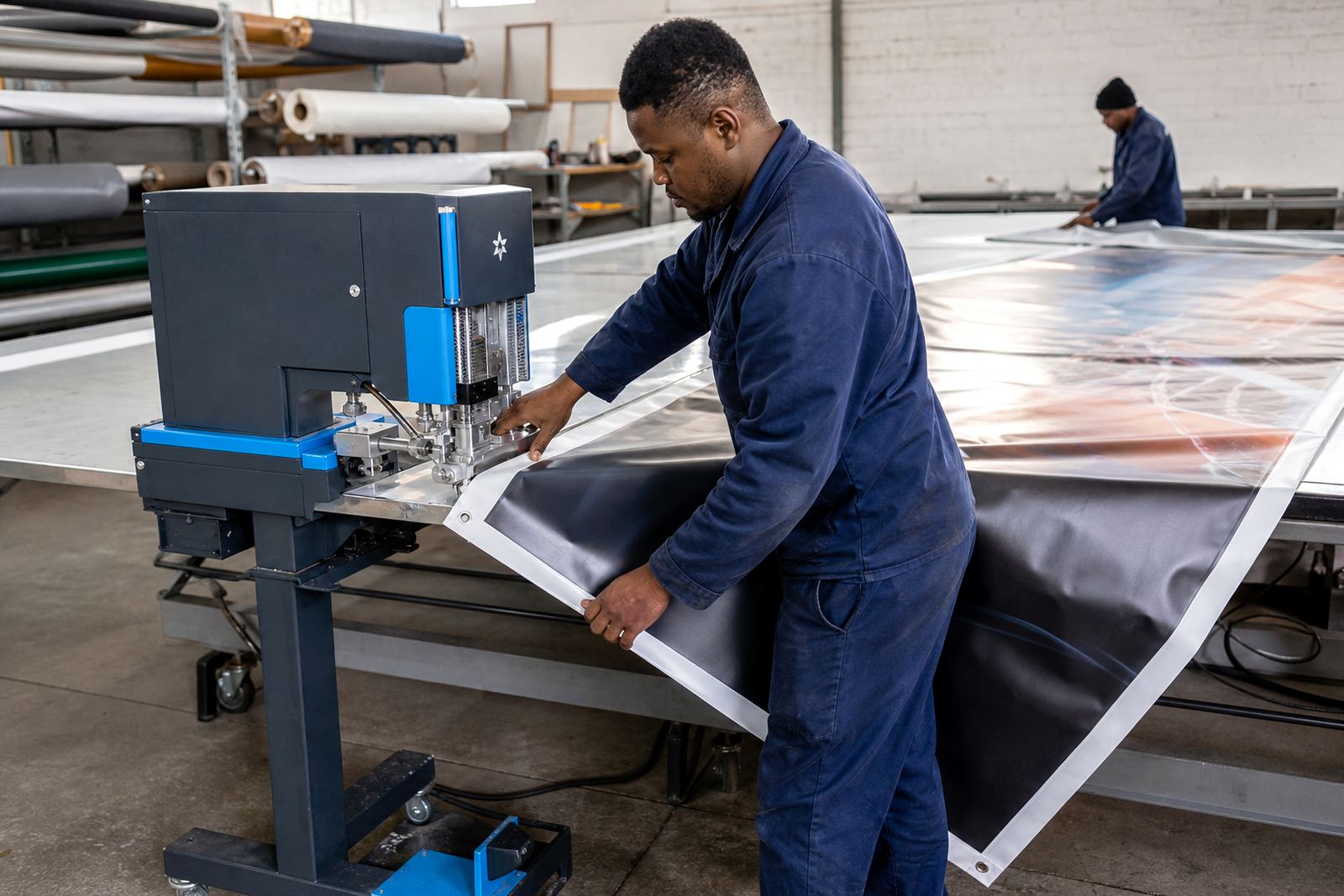
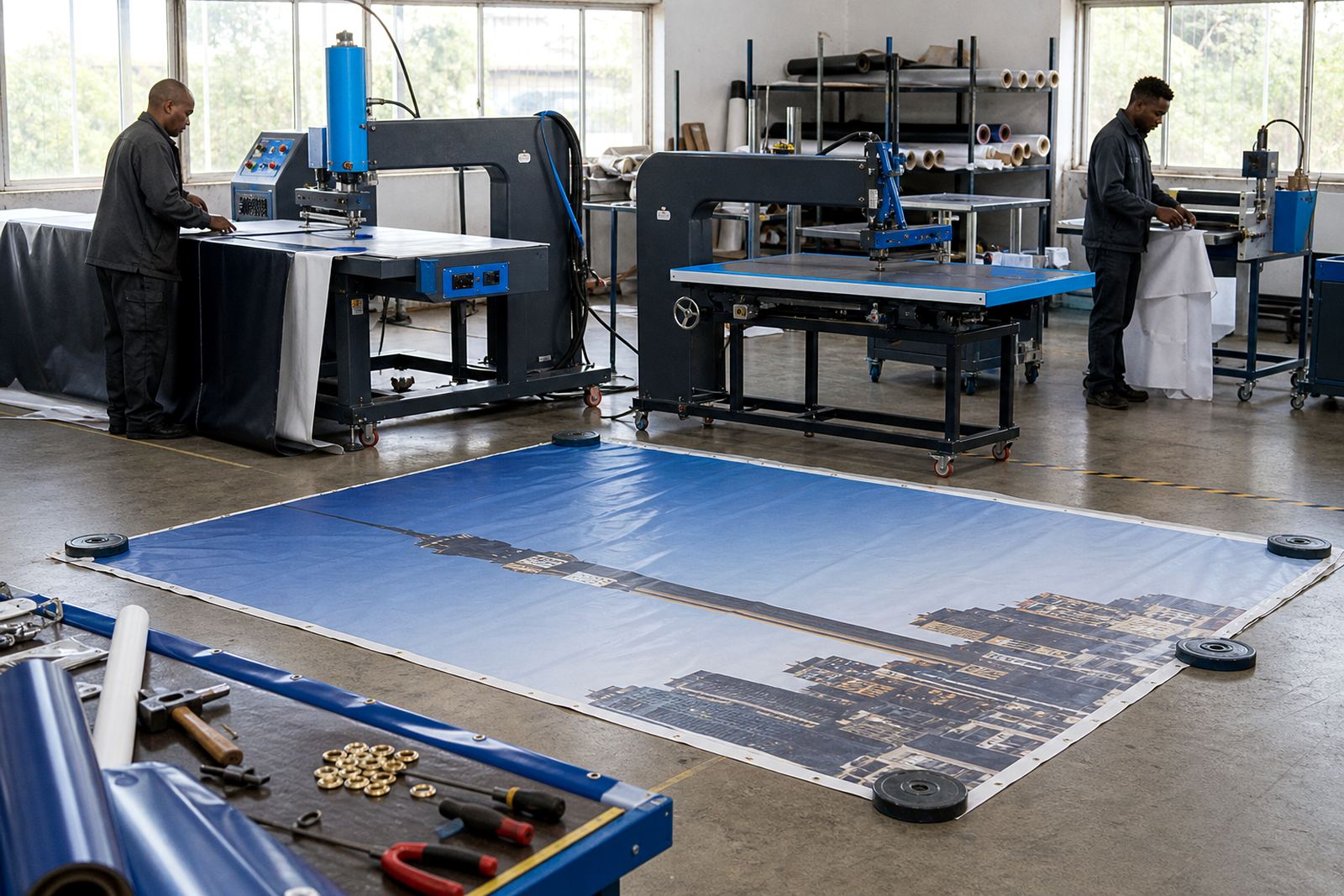
We supplied and commissioned welding equipment suitable for PVC tarpaulin work, together with alignment checks, tooling setup and operator familiarisation. On this project the line was arranged to support both seam work and finishing work, so the fabricator could move from broad joins to hems and then to final fixture points without constant rework.
The machine setup included guidance on weld width, pressure, dwell settings and material feed control. We also checked that the work area allowed enough room for handling long sheets, because on large covers the material can pull off line if the table is too short or the feed path is cramped.
- Machine installation and commissioning
- Tooling alignment for consistent seam width
- Operator training on feed, pressure and heat control
- Parts supply for wearing components and service items
Site constraints in Witbank that shaped the job
Witbank fabricators working for mining customers usually deal with dust, temperature shifts and frequent handling of large covers. Those conditions affect both the material and the weld. Dust on the fabric surface can interfere with seam quality, while cold mornings and warmer afternoons can change how the PVC behaves under heat. The machine settings had to be checked with that in mind.
There was also the usual challenge of producing covers that would sit flat on vehicle bodies and still accept broad hems without twisting. Where the material turns back on itself, the weld path needs to hold line cleanly or the cover will pucker at the edge. That is where a careful operator and steady tooling make a real difference.
- Dust control around the weld area
- Material handling for long and heavy panels
- Allowance for temperature change across the shift
- Edge control on folded hems and corner returns
How the seams, hems and fixtures were handled
The finished load covers used broad panel joins to spread stress across the seam rather than concentrating it in a narrow strip. Heavier hems were put in along exposed edges so the fabric had better body and a more reliable line for eyelets and tie-down points. Where the pattern called for reinforcement, we worked with layered sections rather than forcing a single pass to do all the work.
For the fabricator, the key was consistency. A seam that looks fine on one section but varies on the next can cause tension problems when the cover is fitted on the vehicle. The setup supported repeatable seams, neater hems and easier eyelet work, with less trimming after welding.
- Broad joins on main body panels
- Heavy hems on outer edges and load sides
- Prepared margins for eyelet punching
- Cleaner overlap finish on flap sections
Timeline, handover and the first production run
The project ran over three weeks from first site review to handover. The first week covered assessment of the work flow, fabric type and output requirements. The second week focused on installation, alignment and test welds. In the third week we moved through operator training, seam checks and the first production run on actual load cover panels.
During handover we reviewed seam testing, machine care and safe operating practice. That included checking guarding, heat control and handling of hot components, because a welding line that is pushed too hard or left unserviced will show wear quickly. The fabricator left with a process that was more controlled and easier to repeat on new batches.
- Week 1: assessment and process review
- Week 2: installation and setup
- Week 3: training, test welds and production handover
What changed after the first batch
The immediate result was better consistency on the load covers, especially at the broad joins and heavy hems. The fabricator had fewer edge corrections, better control on the weld line and cleaner finishing around the fixtures. That mattered because mining support work is rough on covers, and any weak edge tends to show up early in service.
What would be done the same way next time is the sequence: review the material first, set the tooling before production and train the operator on the actual job profile rather than on a generic sample. For PVC-coated fabric work, that order saves time and avoids chasing faults later in the run.
- Improved seam consistency across full-length panels
- Cleaner edge build on heavier hems
- Less rework around eyelet and tie-down areas
- Better control during repeat production
Key facts
| Project type | Mining support load covers |
|---|---|
| Town | Witbank |
| Material | PVC-coated fabric for transport covers |
| Seam detail | Broad panel joins with heavier hems |
| Welding methods | High-frequency welding and hot-air or hot-wedge welding |
| Completion time | 3 weeks from review to handover |