The Springs brief and the scale of the skins
The job came from a display fabricator in Springs that produces large outdoor advertising skins for roadside and site boards. Their printed panels were arriving in broad widths, and the seams had to line up cleanly so the artwork stayed true across each finished skin.
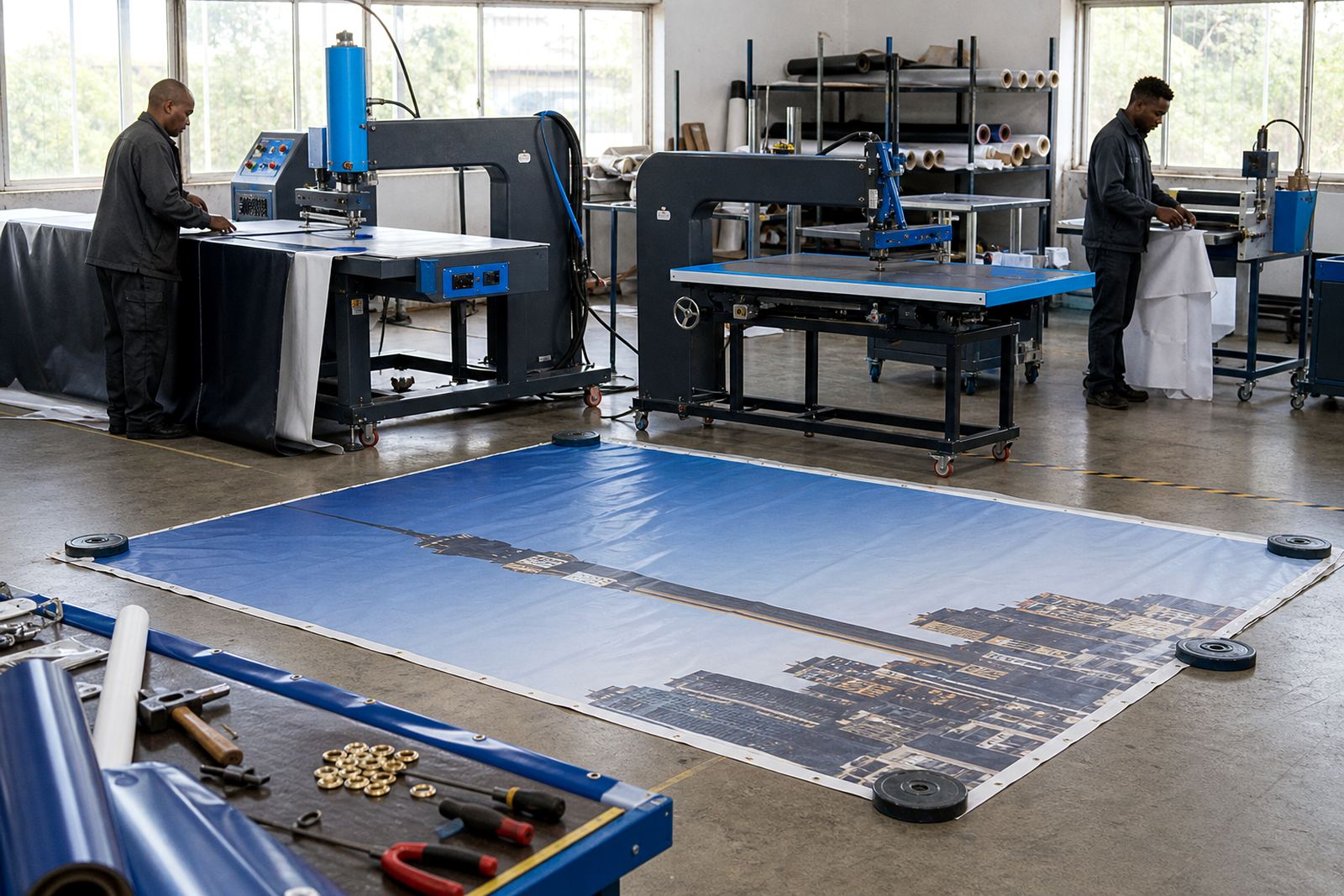
The brief was practical: join PVC-coated fabric panels, form neat hems, add keder where the frame system needed it, and punch consistent eyelets for fitting and tensioning. The client also needed a set-up that could handle repeated runs without slowing the workshop down. Outdoor skins take punishment from wind, UV and rain, so the weld line had to be even across the full length, not just strong in one spot.
- Project type: outdoor billboard skins
- Client location: Springs, Ekurhuleni
- Material: printed PVC-coated fabric panels
- Key finish work: hems, keder and eyelets
Why the weld method mattered on printed banner stock
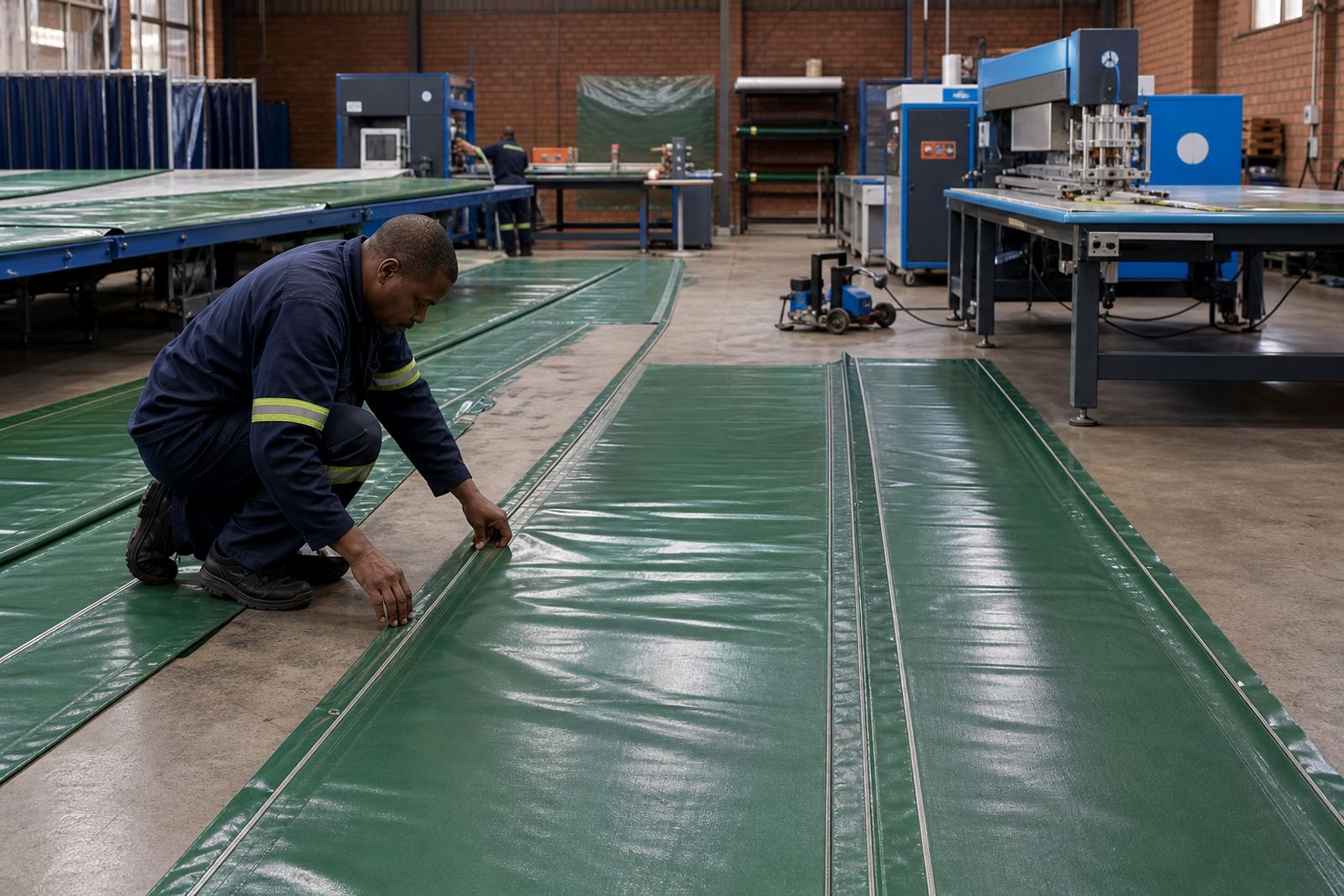
For this kind of work, the seam method matters as much as the print. High-frequency welding, also called radio frequency welding, is well suited to PVC-coated fabrics because it creates a controlled bond through the material layer. Hot-air and hot-wedge welding were also part of the plan for seam runs, hems and detail areas where the workshop wanted flexibility.
The challenge with billboard skins is keeping the face clean. Heavy overlap can show through on lighter print areas, while poor heat control can leave waviness along the seam. We looked at weld width, overlap allowance and the way the panels would sit once tensioned on the structure. The aim was a straight, tidy seam that would hold under load without distorting the artwork.
- RF welding for long, consistent bonded seams
- Hot-air and hot-wedge welding for hems and detail work
- Seam planning to match the frame tension
- Eyelet spacing set for even pull across the skin
What we supplied to the workshop floor
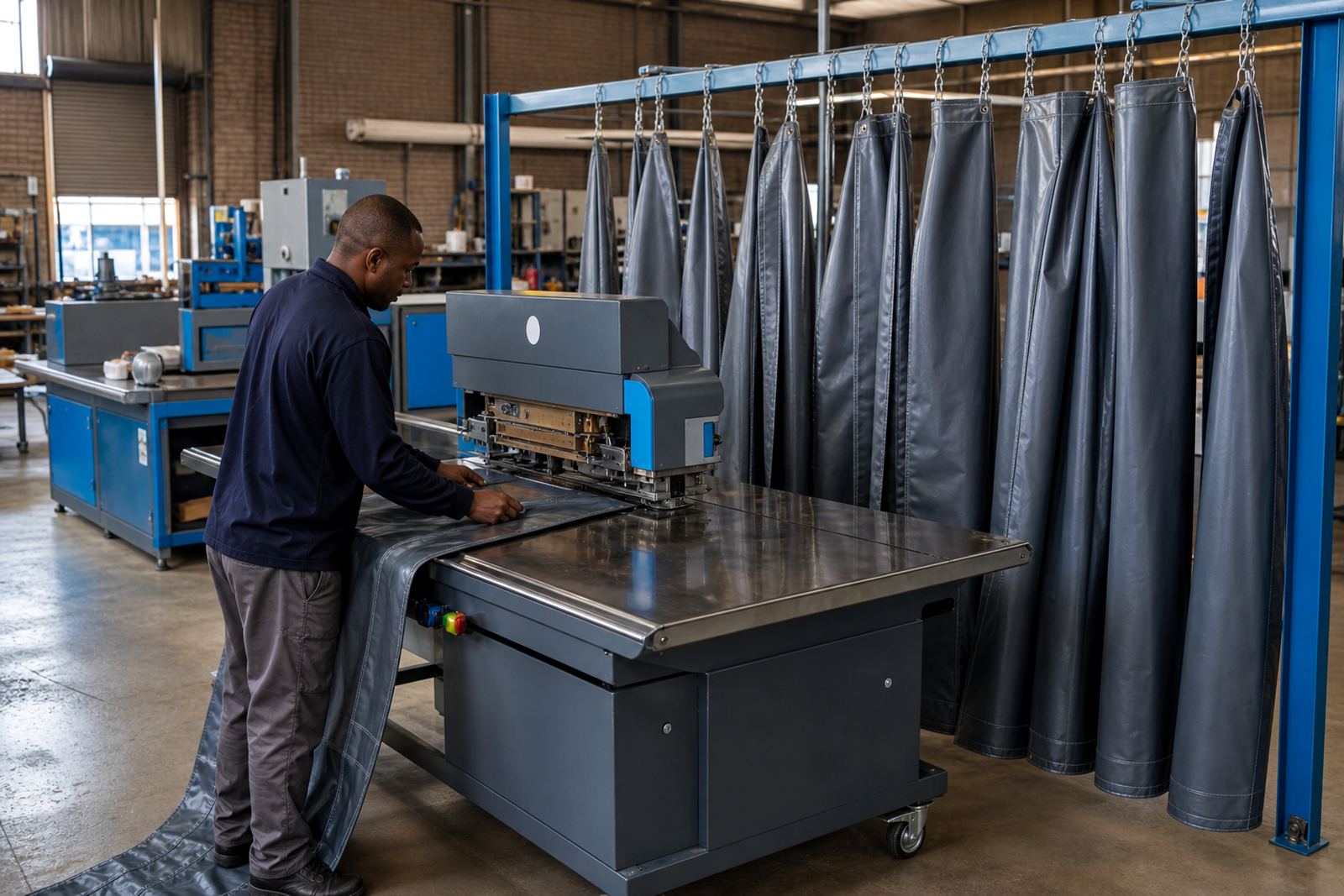
We supplied and supported welding equipment suited to PVC-coated materials, together with the tooling needed for the specific skin build. That included setup for straight seam runs, edge finishing and repeatable fitting work. The machine arrangement was chosen so the operators could move between long joins and smaller finishing tasks without changing the whole production method each time.
Alongside the machine work, we handled tooling alignment, electrode refurbishment, roller replacement and seam testing. For a print fabricator, these details make a real difference. A slightly misaligned roller or worn electrode can show up as a weak or uneven weld later in the job, and with billboard skins the client does not have room for patchy joins.
- Machine installation and commissioning
- Tooling alignment for straight, repeatable seams
- Electrode refurbishment and roller replacement
- Parts supply for wear items and service support
Two weeks from set-up to first production runs
The project ran over two weeks. In the first week we completed the machine placement, set the welding parameters for the material thickness, and worked through sample seams. The Springs team needed confidence on the panel overlap, edge finishing and eyelet positions before moving into full production. We tested welds under handling stress and checked for clean release around the finished edges.
In the second week the client moved into live runs for the billboard skins. We stayed focused on operator safety, repeatability and practical handling on the shop floor. That meant clear guarding awareness, careful heat management on hot-air and hot-wedge work, and making sure the team understood how to spot wear before it became a fault. A clean workflow matters when you are joining long panels, the fabric has to feed straight.
- Week 1: installation, set-up and trial welds
- Week 2: production runs and seam verification
- Operator training on safe handling and checks
- Preventive servicing plan discussed for ongoing use
Details that helped the skins hold together outdoors
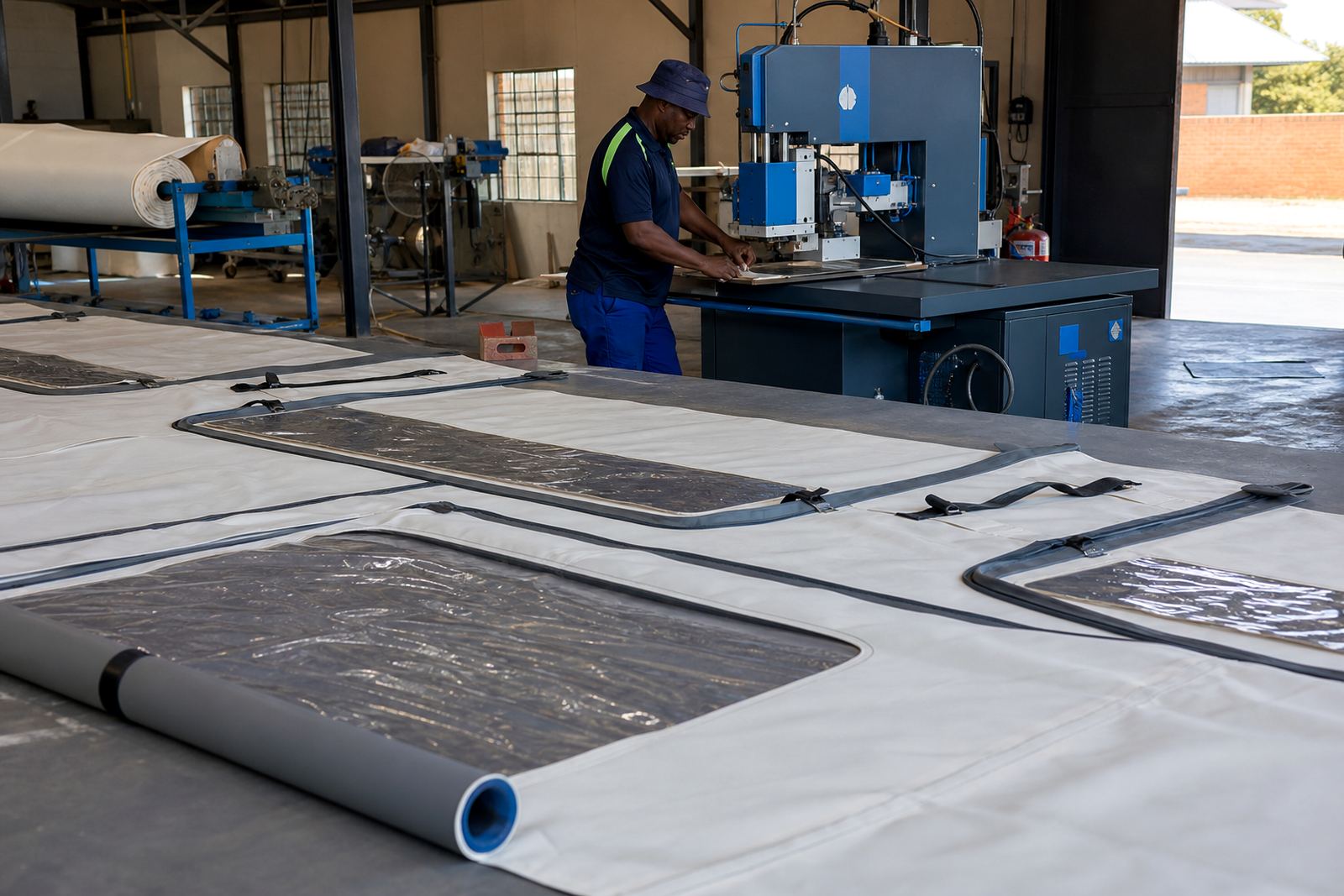
Billboard skins need more than a strong seam. They need a finish that supports the whole edge system. We helped the fabricator standardise hems so the panels sat flat, and we set the keder line to suit the frame profile. Eyelet work was spaced to spread the pull, which helps reduce stress concentration at the corners and along the high-tension zones.
We also checked seam testing results against the way the skins would be fitted in the field. In outdoor advertising, a skin that looks fine on the bench can behave differently once it is pulled into place. Good edge preparation, even weld pressure and the right weld width all matter. It is practical work, not guesswork.
- Clean hems for edge stability
- Keder alignment for frame fitment
- Eyelet layout for balanced tension
- Seam testing matched to installation use
Support for Springs and wider Gauteng production
The Springs job is the sort of project that benefits from local support and real workshop knowledge. From Germiston in Ekurhuleni, we service and support high-frequency and hot-air PVC welders for tarpaulin, banner and tent makers across Johannesburg, Pretoria and the rest of Gauteng, with support also reaching Durban, Cape Town and Bloemfontein when the work calls for it. For a fabricator, that means fewer stop-start delays when a machine needs checking or a part needs replacing.
We also keep servicing practical. Preventive servicing, site callouts, fault finding and service plans all help reduce unplanned downtime. On welding equipment, dust, heat, worn rollers and poor alignment can shorten the life of the machine and affect seam quality. A steady maintenance routine keeps production cleaner, especially when the workshop is running multiple skin sizes in the same week.
- Preventive servicing for welders in regular use
- Fault finding and site callouts for production issues
- Parts supply, including rollers and wear items
- Training and commissioning for new operators
What this Springs job achieved
The finished billboard skins came out with straight joins, tidy edges and repeatable fittings for outdoor use. The fabricator could move from sample to production without changing the whole process each time, which helped keep the workshop organised and the skins consistent. For printed outdoor advertising, that consistency is what clients notice once the skin is on the frame.
If we were handling a similar run again, we would keep the same order of work: sample welds first, then seam testing, then production set-up with the operators involved from the start. That approach gives the best control over print alignment, seam appearance and the final fit on site. It is the kind of practical work that suits billboard skins, especially where the panels are broad and the finish has to look right from street level.
Key facts
| Project | Springs billboard skins for outdoor advertising |
|---|---|
| Client type | Display fabricator |
| Location | Springs, Ekurhuleni |
| Process | High-frequency welding and hot-air or hot-wedge welding |
| Finish work | Hems, keder and eyelets |
| Project duration | 2 weeks |