The Boksburg brief on bigger panels
The brief covered both high-frequency welding for selected joint work and hot-air welding for longer seams, hems and repair sections. They also needed practical support for keder insertion, eyelet areas and seam testing, because the finished covers had to hold shape in daily handling, road spray and regular tensioning. Boksburg’s mix of industrial dust and moisture means the finish has to stay tidy, not just look neat on the table.
- Work type: truck covers, tarpaulin panels, hems and reinforcement strips
- Material: PVC-coated fabric in medium to heavy gauge sheets
- Main issue: straight seam drift on long welds
- Location: Boksburg, with support for wider Gauteng supply and servicing
Equipment set-up for cleaner seam control
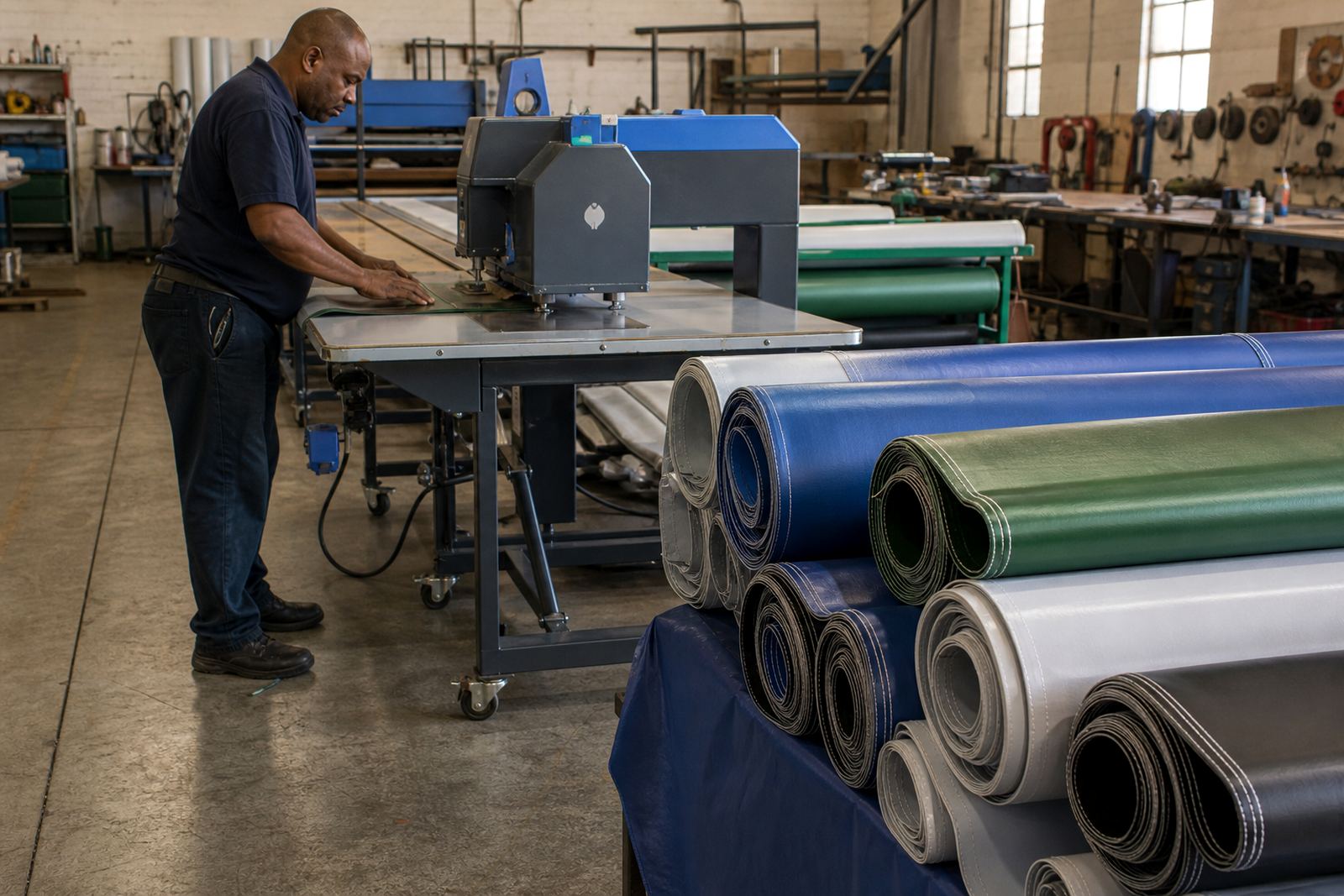
We also checked the tooling alignment, seam guides and roller condition so the machine would not pull the fabric off line during a run. On this sort of work a slightly uneven roller or a poor guide setting can throw out the overlap and create visible waviness. The site had enough floor space for panel handling but the operators needed a cleaner process for loading, setting and trimming, so we structured the station around that.
- Machine set-up: welding alignment, tooling check and trial seam runs
- Welding methods used: high-frequency and hot-air, with hot-wedge work discussed for long straight runs
- Seam types covered: overlap seams, hems, patch joints and edge reinforcement
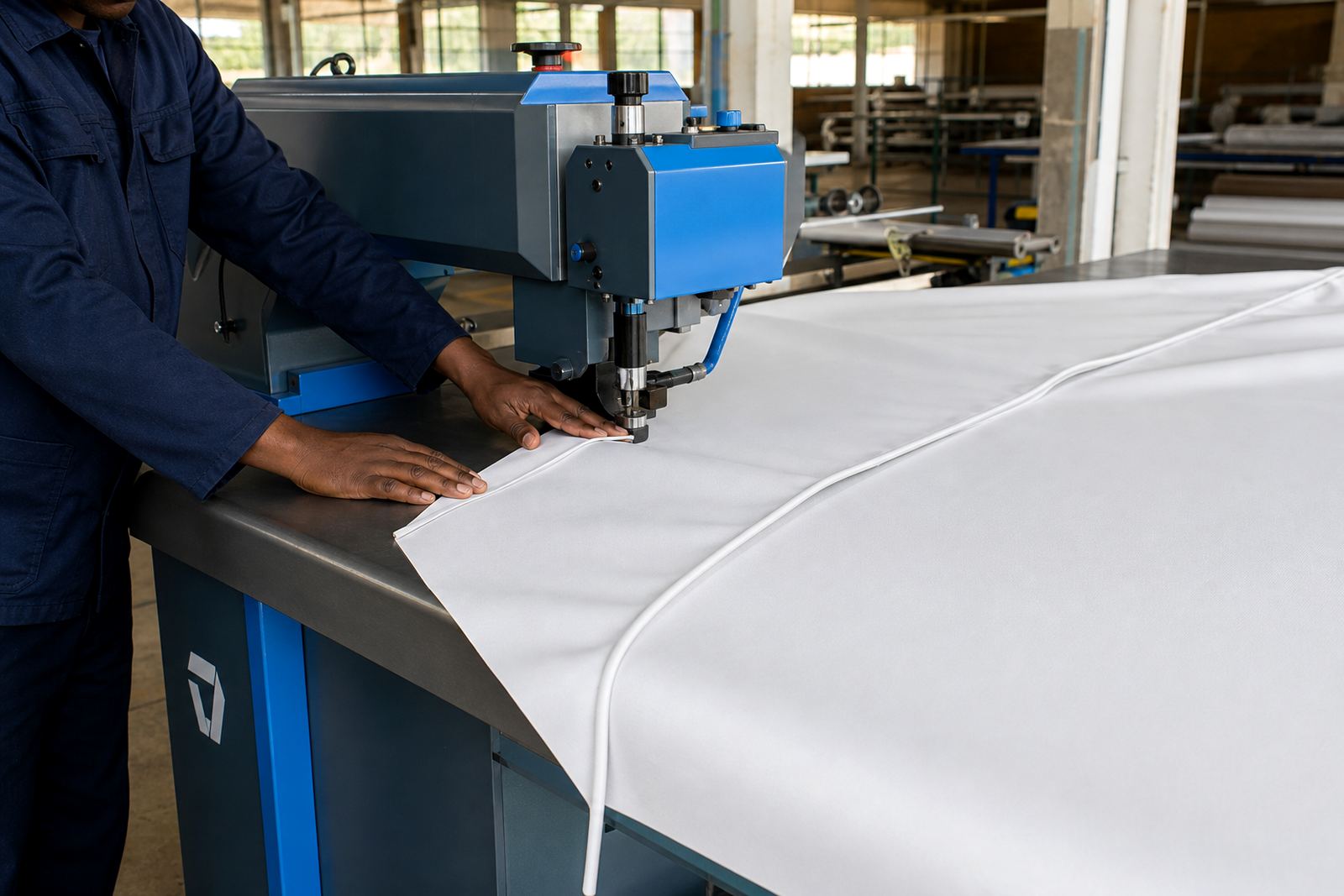
- Accessory work: keder channels and eyelet reinforcement areas
Operator training on long straight runs
We also went through operator safety around heated tooling, moving rollers and pinch points, plus the handling of PVC-coated fabrics that can soften quickly if dwell time is too high. The team practised test welds on offcuts before moving to production panels, and we reviewed simple checks for seam strength, edge flatness and clean finish. A few fine adjustments to the guide setting made a noticeable difference.
- Training focus: seam tracking, overlap width and start-stop control
- Safety points: heat zones, roller pinch points and safe material handling
- Testing method: trial strips, pull check, visual seam check and edge trimming
Seam testing and finish checks on the workshop floor
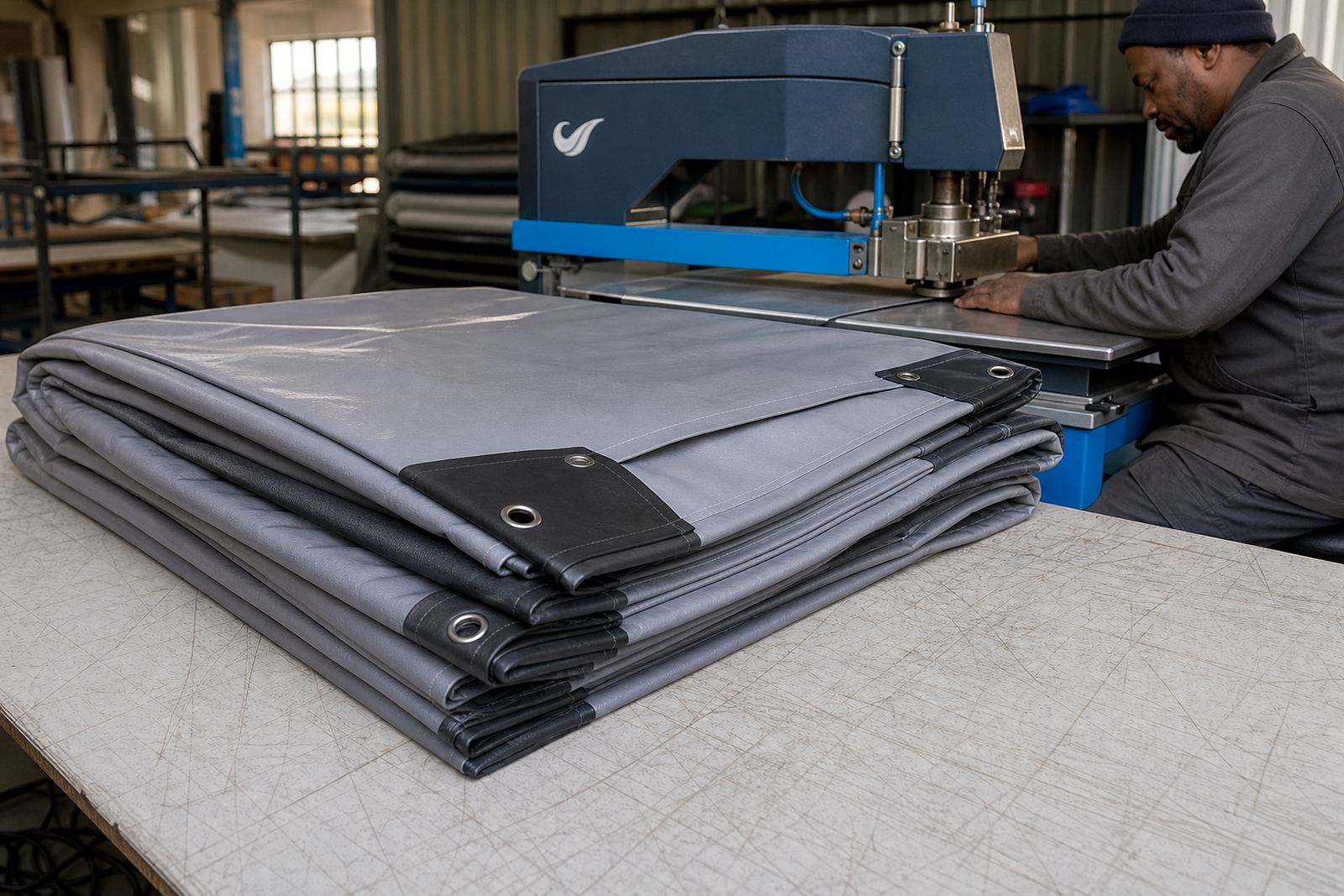
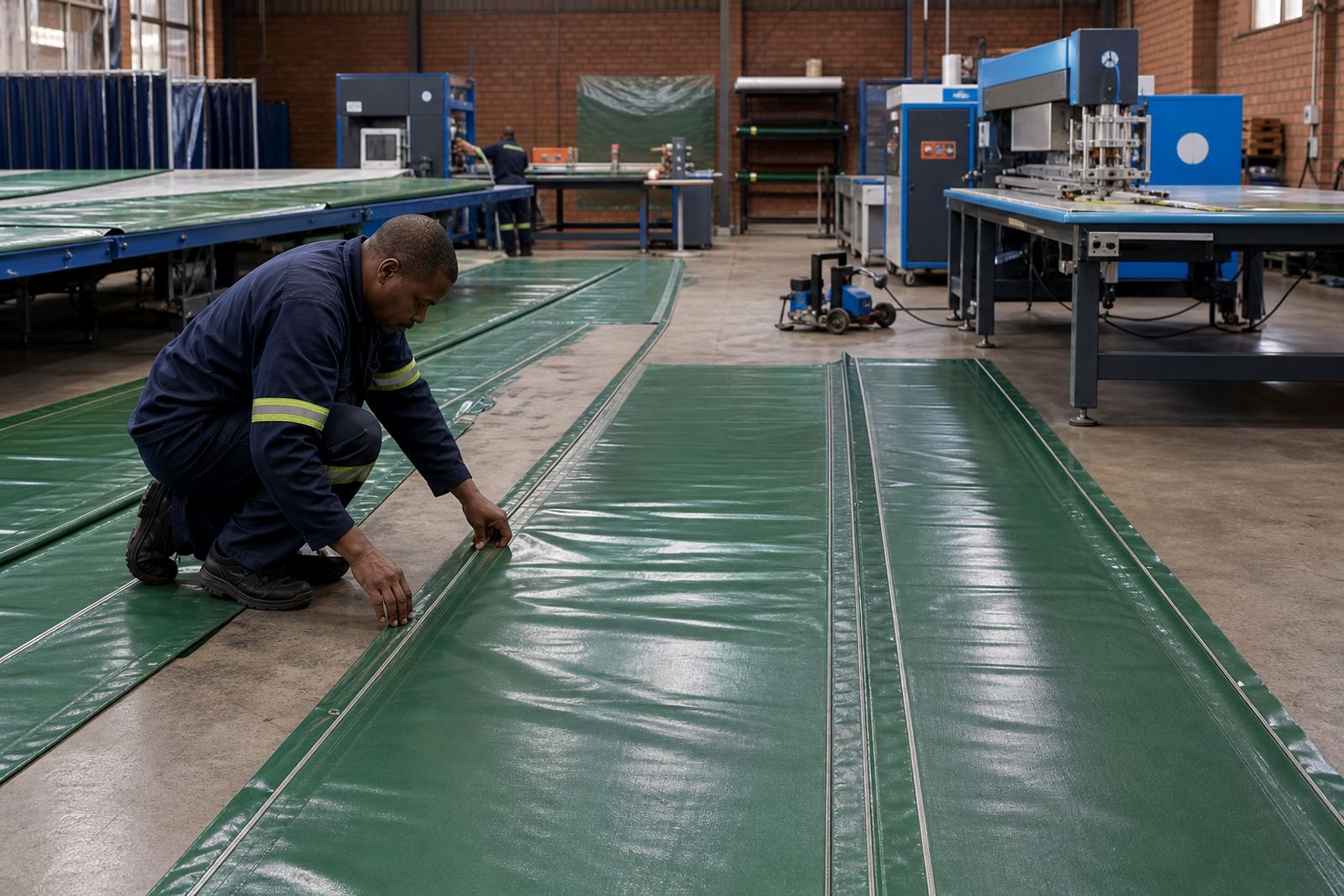
Once the station was set, we ran seam tests on the larger tarpaulin sections and checked for straightness over the full length of the weld. The key was not only bonding strength but also appearance, because truck cover work has to look orderly when it is fitted and when it is folded. We checked hems for even width, reinforced corners for clean overlap and keder channels for steady feed into the extrusion or track section used by the fabricator.
- Checks completed: seam straightness, bonding consistency and edge flatness
- Reinforcement work: corner patches, eyelet zones and keder sections
- Practical result: less rework on long panels and more predictable finishing
Servicing notes for the machines that stay in production
After commissioning, we set out a servicing rhythm for the welding machine and the workshop tooling. Preventive servicing matters on this kind of work because dust, adhesive residue and heavy daily use can affect heat output, roller pressure and seam quality. In a transport cover shop, a small fault in alignment can show up as a crooked seam by the end of the day.
The servicing scope covered electrode condition, roller wear, alignment of feed components, and fault finding where the machine was not holding the same result from panel to panel. We also spoke about parts planning so the workshop could keep common wear items on hand and avoid unnecessary stoppages when a roller or contact part reaches the end of service. The Boksburg team wanted a practical maintenance routine and that is what we set up.
- Servicing scope: preventive checks, fault finding and tooling alignment
- Wear items reviewed: rollers, electrodes and feed components
- Support route: site callouts, parts supply and service plans
The result on the larger truck cover runs
The project ran over three weeks from first assessment through to final operator sign-off. By the end of the work, the shop had steadier straight seams on the larger tarpaulin panels, cleaner hems and more even reinforcement at the eyelet and keder points. The operators also had a clearer process for start-up checks, test strips and visual inspection, which helped reduce avoidable rework.
For a transport cover maker, consistency matters as much as speed. The improvement showed up in fewer seam corrections, a tidier finish on long panels and more confidence when handling wide sheets through the weld area. On a repeat job, we would use the same approach: check the station layout first, set the seam guides early, then tune the machine around the actual panel sizes being run that week.
- Timeline: 3 weeks from assessment to handover
- Outcome: better straight seam consistency on long tarpaulin panels
- Follow-up approach: adjust guides to the exact panel size and recheck wear items before heavy runs
Key facts
| Project location | Boksburg, Ekurhuleni |
|---|---|
| Client type | Transport cover maker working with PVC-coated tarpaulins |
| Main welding methods | High-frequency welding and hot-air welding |
| Work covered | Straight seams, hems, keder channels, eyelet reinforcement and patch joints |
| Project timeline | 3 weeks |
| Support provided | Machine installation, commissioning, operator training, preventive servicing and seam testing |