Cape Town brief: tighter edges for repeat-fit graphics
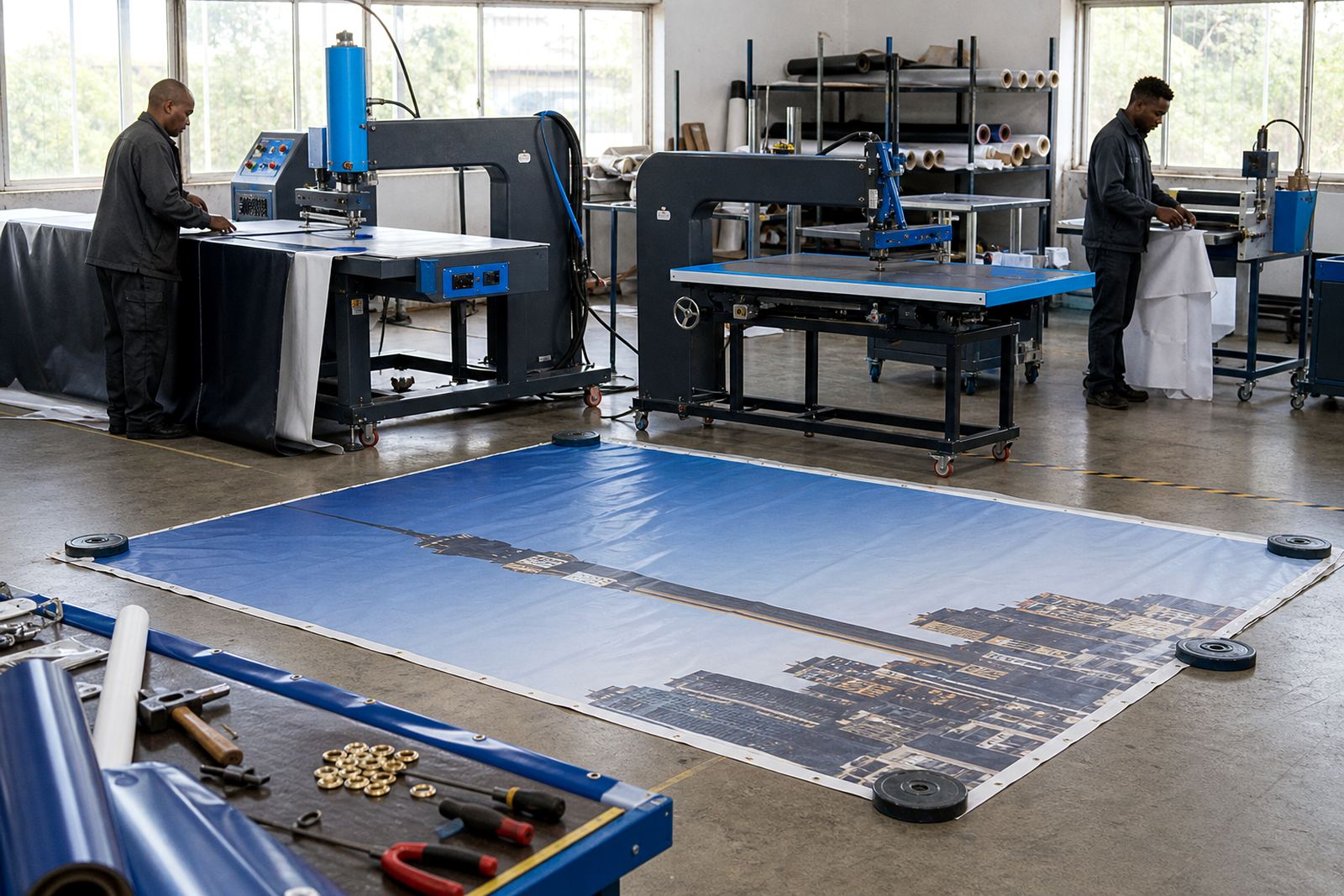
The client was a display installer in Cape Town working on tension graphic panels for retail and exhibition fit-outs. The brief was straightforward on paper but exacting in practice: produce PVC-coated fabric edges that would sit properly in aluminium track, stay even across long runs, and hold up to frequent insertions and removals without fraying at the weld line.
The job needed more than a standard hem. The graphic edges had to accept welded keder, keep a clean face on the printed side, and remain consistent on panels that were handled by different installers on site. Coastal humidity was part of the picture too, so seam integrity and material conditioning mattered, especially on days when fabric arrived cool in the morning and warmer later in the day.
Why the seam needed a welded keder finish
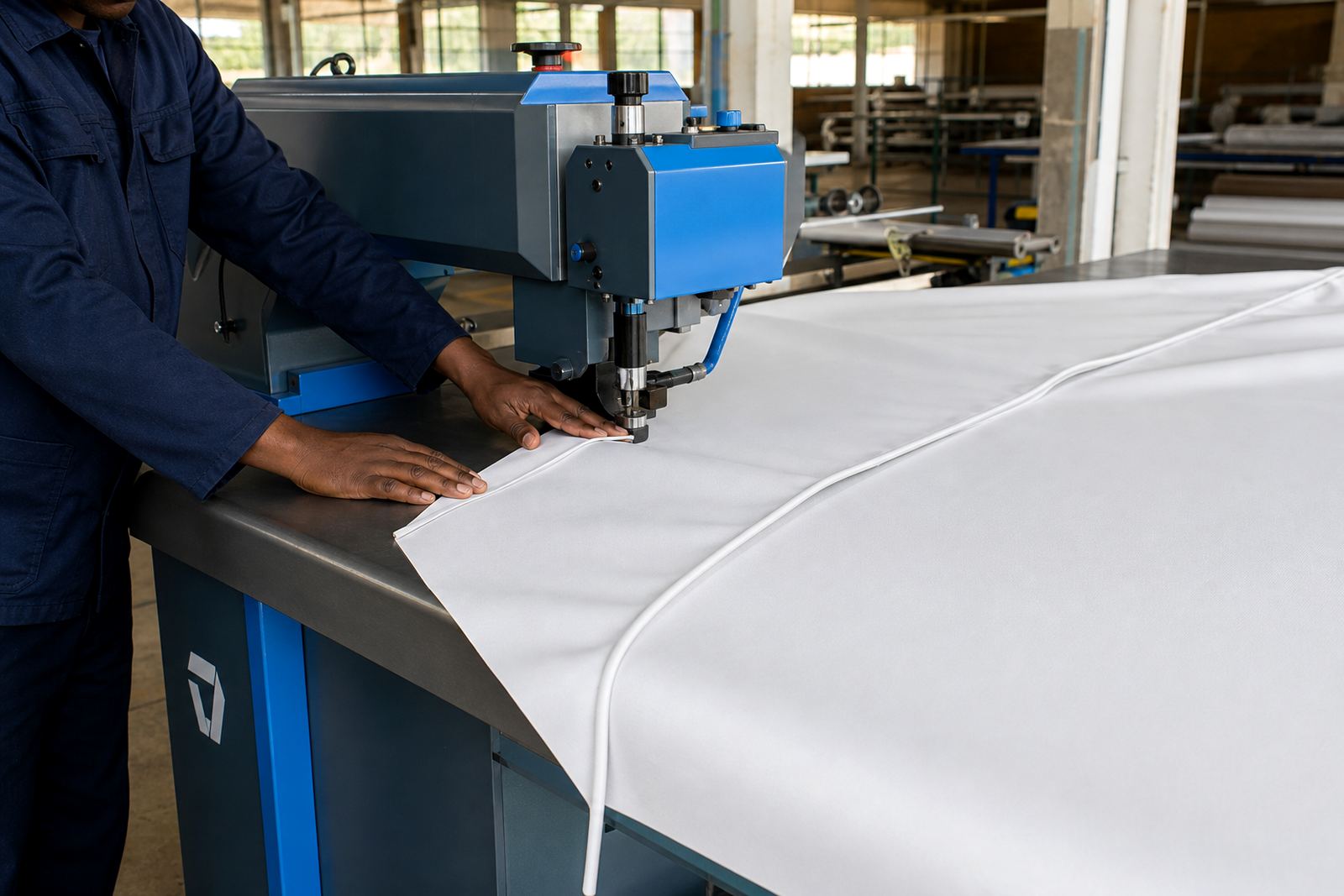
The panels were being used for tension display work, so the edge profile had to run smoothly in the track and not twist at corners. We worked around PVC-coated fabric in the typical 0.4 mm to 0.8 mm range, with welded keder attached to the perimeter and reinforced at the high-stress points. The seam type was chosen to suit repeated loading rather than just a once-off installation.
- Welded keder for track engagement on tension frames
- Neat edge hems where the panel needed extra body
- Corner relief planning so the keder would not bunch at mitres
- Eyelet positions checked for secondary fixing points where needed
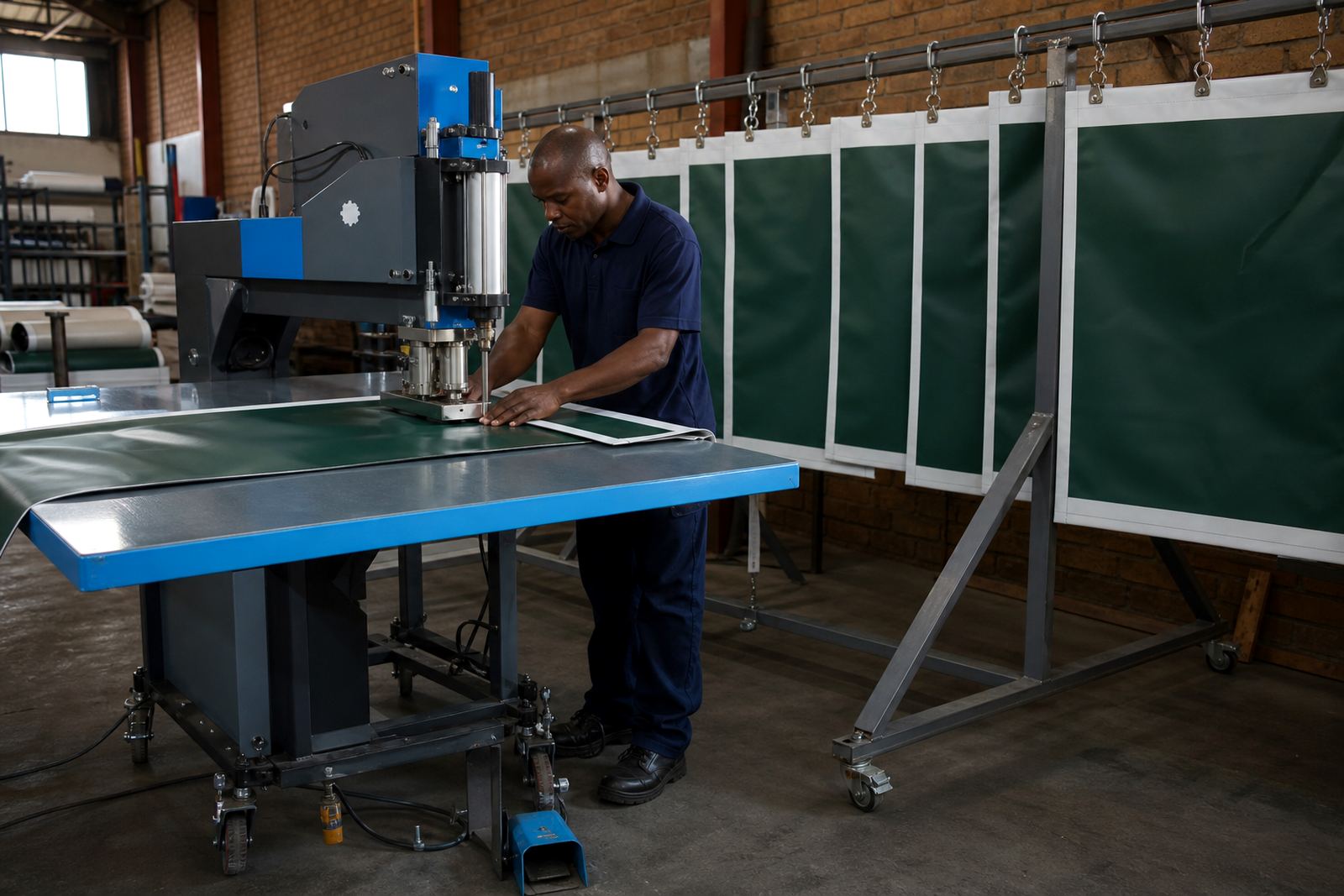
For this kind of work, the seam line has to be even, otherwise the panel pulls unevenly and the visual face shows ripples. That is where radio frequency welding makes a difference on compatible PVC-coated materials, because the bond is formed through the material itself rather than relying only on surface contact. Hot-air and hot-wedge welding were also discussed for other parts of the workflow, but the keder attachment on this job suited high-frequency welding best.
What we supplied on the Germiston side
From Germiston, we supplied the welding equipment support, tooling checks and the set-up advice needed for production on this type of graphic. The client already had an active workshop layout, so the focus was on making the welding process dependable rather than rearranging the whole floor. We also looked at electrode condition, pressure alignment and roller contact so the seams would stay tidy over multiple panels.
- Machine installation and commissioning for the welding line
- Tooling alignment for the keder profile and edge guides
- Operator training for loading, positioning and seam control
- Preventive servicing checks on the welding head and rollers
The workshop was handling a mix of short runs and larger repeats, so the machine needed to switch between panels without constant readjustment. We set the operator sequence so the same edge width and weld position could be held from one panel to the next, which cut down on rework. A clean weld on the first pass matters when the graphics are scheduled for site fitting and there is no time for patching later.
Three-week production window
The full project ran over three weeks. Week one covered inspection of the welding setup, test welds and confirmation of the keder profile against the track size used on site. Week two was the main production period, with sample seams checked for pull resistance and visual consistency before the balance of the panels moved through the line. Week three was for final checks, operator handover and service fine-tuning.
The timing mattered because the installer had a mixed pipeline of exhibition and retail jobs, and panel sequencing had to match the schedule. We kept the process practical, with one or two sample runs at the start of each production batch so the team could check the weld width and edge finish before continuing. That helped catch minor setting drift early, rather than after a full batch had already been completed.
- Week 1: machine setup, sample testing and edge profile checks
- Week 2: production welding, seam checks and corner refinement
- Week 3: final commissioning, operator handover and service review
Site behaviour, handling and operator safety
High-frequency and hot-air welding both demand disciplined handling, especially where operators work close to heated tooling and moving rollers. We went through guard use, hand placement, material feed alignment and the correct way to clear off-cuts from the work area. The team also reviewed practical issues such as keeping the surface clean, checking for contamination on the PVC coating and avoiding uneven feed that can mark the printed face.
The Cape Town site also had the usual workshop realities to deal with, including temperature changes through the day and material left near open doors. Those small things affect seam quality more than people expect. If a sheet picks up dust or moisture, the weld line can show faults after fitting, so storage and staging were part of the training. The aim was not just to weld the graphic but to keep the process stable from the first panel to the last.
Results on the finished graphic edges
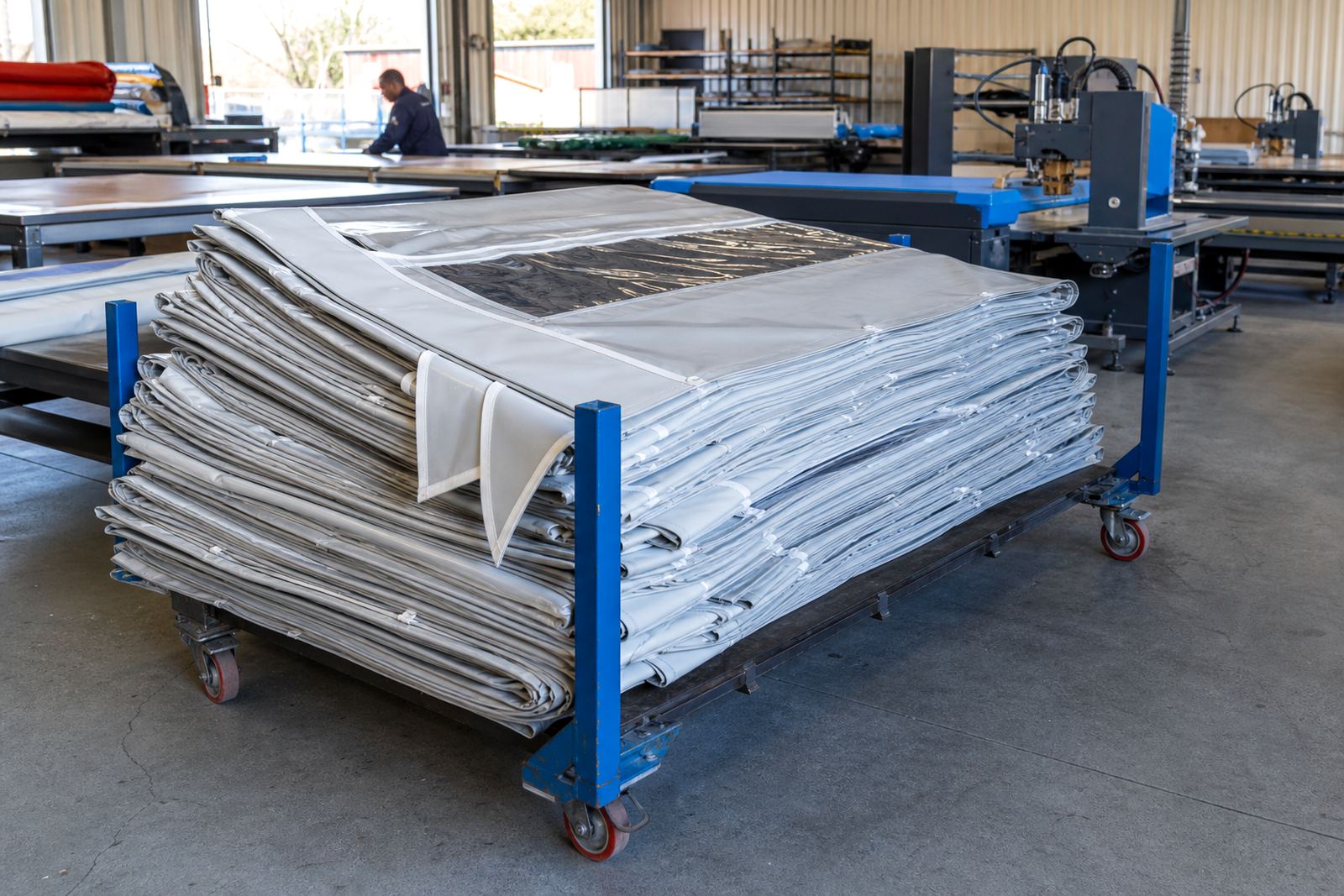
The finished panels had a cleaner edge fit and a more even track engagement, which made installation quicker on site. The welded keder held its profile properly through repeated fitting, and the seam line stayed neat along long spans where uneven pressure would usually show up first. The installer also had a better handle on corner detailing, so there was less trimming on site and fewer small adjustments at the frame.
For a display installer, the value is in repeatability. When the edge finish stays consistent, the graphics sit straighter and the crew does not waste time fighting a panel that has pulled out of shape. The project also showed the advantage of matching the welding method to the material and the application instead of using one setting for every job.
- Smoother insertion into aluminium track
- More consistent edge tension across the panel
- Less rework during final fitting
- Cleaner appearance on the printed face
What we’d repeat on another keder graphics job
On a similar Cape Town graphics project, we would repeat the same sequence: sample first, confirm the keder size, lock in the seam width and then run production in controlled batches. That approach keeps the edge finish steady and gives the operator a clear reference when the next panel goes through the machine. We would also continue with a quick service check between batches, especially on longer runs where heat and pressure drift can affect the weld.
For tension graphics, the details are small but important. A few millimetres off on the keder position or an uneven corner can affect the whole installation. By keeping the welding process controlled and the machine serviced, the installer gets a cleaner product and fewer site headaches. That was the outcome here, and it is the method we would use on the next one too.
Key facts
| Project location | Cape Town, Western Cape |
|---|---|
| Client type | Display installer |
| Application | Tension graphics with welded keder edges |
| Materials | PVC-coated fabric |
| Welding methods | High-frequency, hot-air and hot-wedge support |
| Project duration | 3 weeks |