A Paarl brief with wind, dust and repeat handling in mind
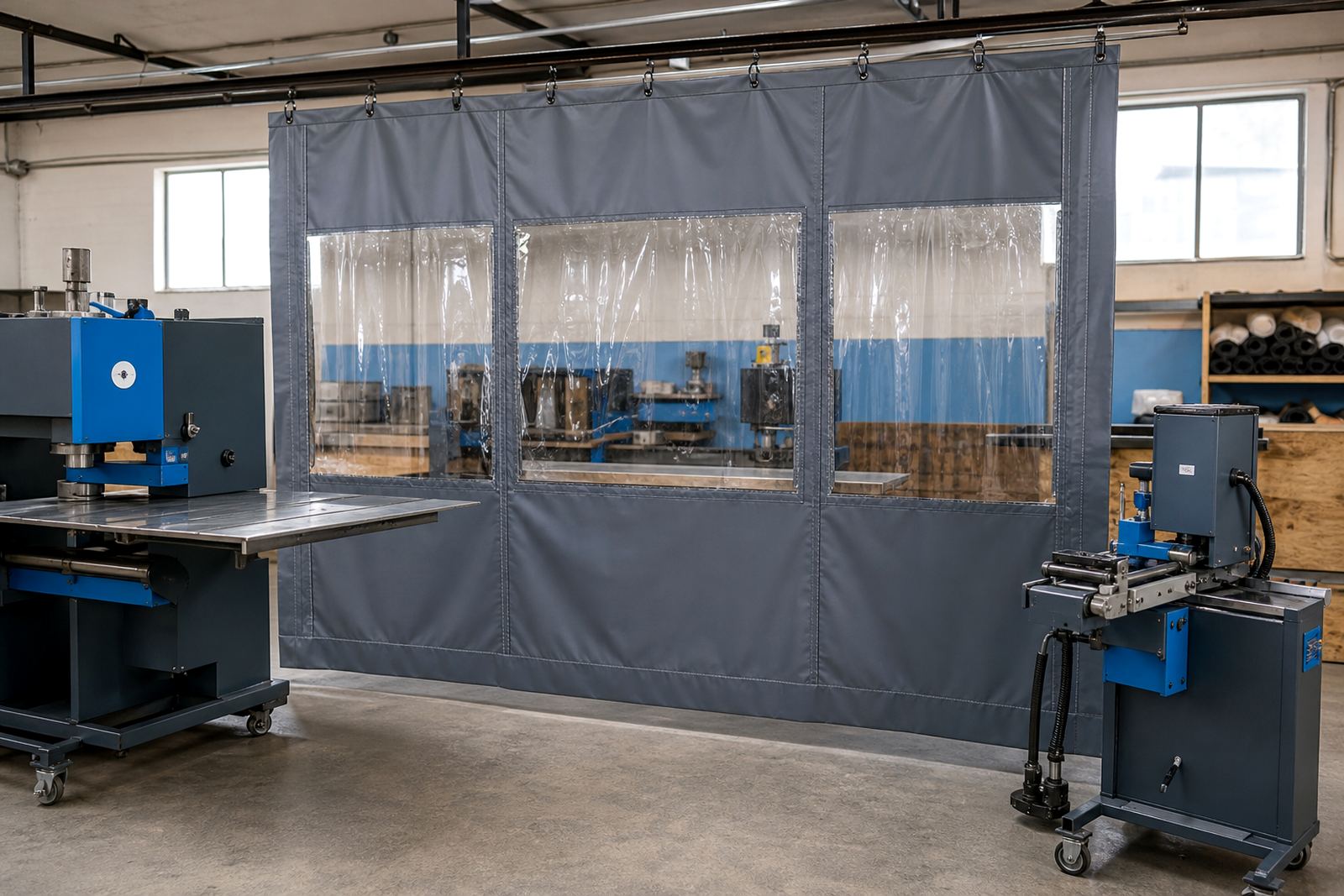
The client was a promotional supplier in Paarl making mesh fence skins for outdoor brand displays around the winelands and on event sites further afield. Their brief was clear: produce branded skins with reinforced edges, tidy graphics, and fixing points that would hold during erection and removal without fraying at the folds.
The work needed to cope with Paarl heat, dry afternoons and the rough handling that comes with events, activations and temporary fencing. The mesh skins also had to read well from a distance, so the finish on the welds, hems and eyelets mattered just as much as the print. There was no room for loose threads or wavy seams.
- Product type: PVC-coated mesh fence skins
- Use: branded event fencing and outdoor promotional work
- Finish requirements: reinforced edges, straight hems, neat eyelets
- Location: Paarl, Western Cape
What the welding line had to do on this job
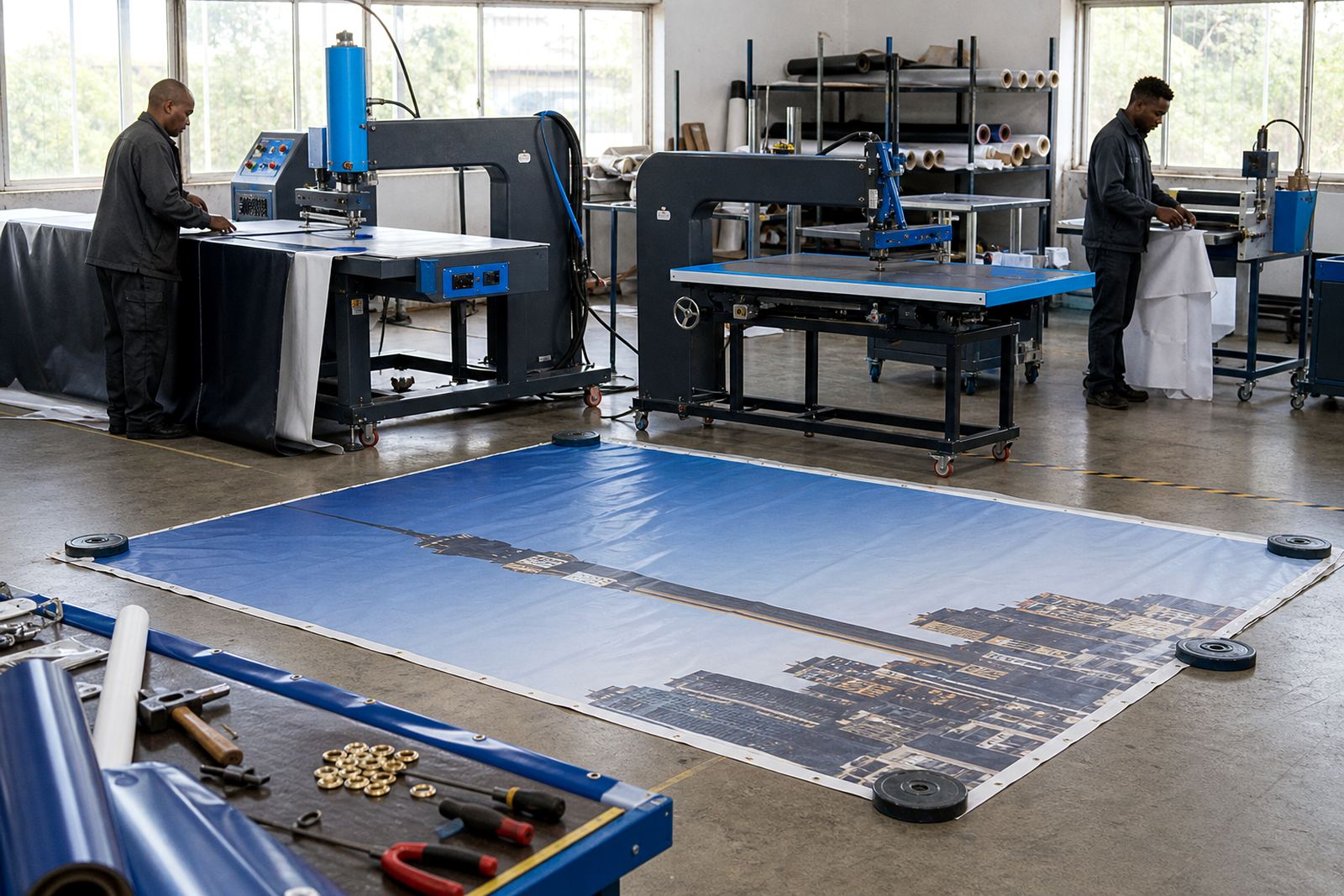
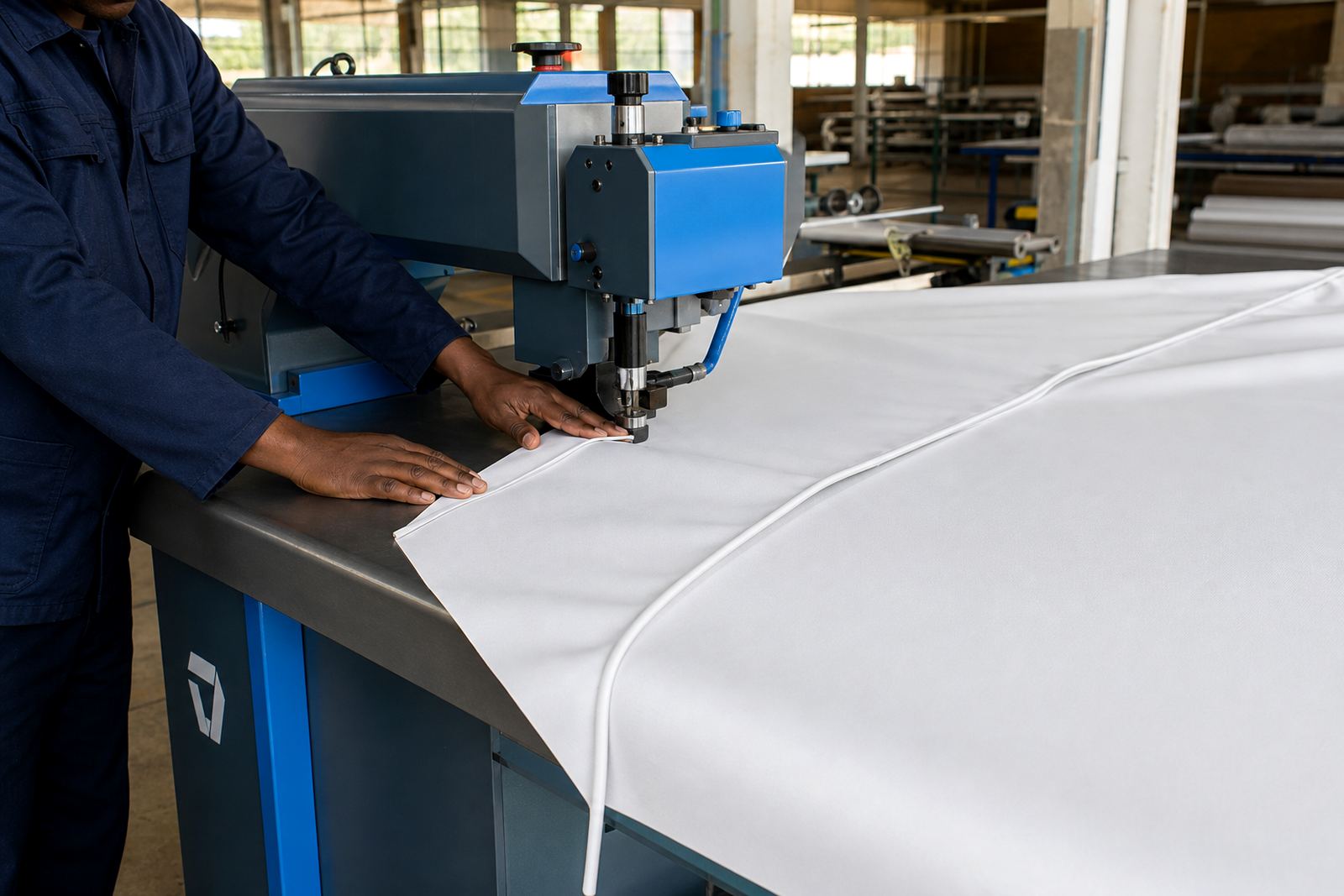
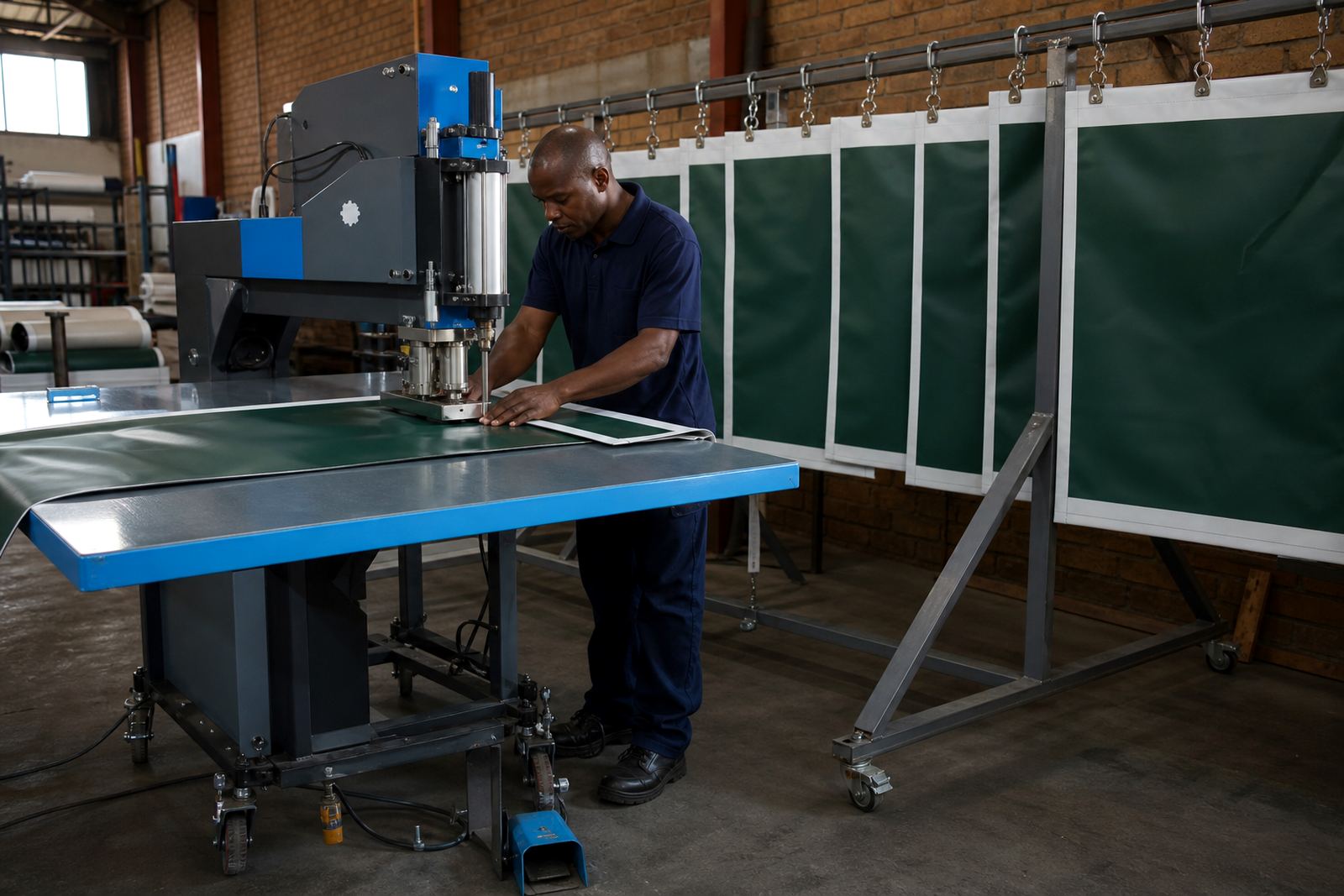
The production team needed a practical set-up for both radio frequency welding and hot-air welding, because the job used different seam areas and different finishing steps. High-frequency welding was used where a clean, consistent bond was needed on compatible PVC-coated fabrics, while hot-air work handled hems, repairs and smaller edge details where hand control was important.
We looked at the material build-up, the thickness of the coated fabric and the stress points around the perimeter. The aim was to keep the fence skins flat and square, with strong corners and even tension across the panel. A slight variation in seam width can show immediately on a long run of mesh, so tooling alignment and operator rhythm mattered from the first panel.
- Seam types used: overlap seams, edge hems and reinforced corner folds
- Fixings: welded eyelet strips and keder edge detailing where specified
- Working method: controlled heat, pressure and dwell time
Equipment supplied and the setup work around it
PVCWelder supplied a welding solution suited to tarpaulin, banner and tent makers working with PVC-coated fabrics. The installation covered machine placement, power checks, tooling alignment and basic operator familiarisation, then a controlled test run on the actual mesh material used for the order.
We also assisted with seam testing, because a fence skin that passes on the bench still needs to hold once it is stretched across a frame. The team checked bond quality, edge pull and eyelet spacing before moving into full production. That extra checking saved time later, because any weak spot shows up quickly once a panel is tensioned outdoors.
- Installation and commissioning on site
- Operator training for day-to-day welding control
- Seam testing and trial pieces before production runs
- Tooling alignment for consistent edge width and finish
On this project we also paid attention to safety around heated tooling, pinch points and material handling. Good guarding, clean work surfaces and clear operator habits are part of the job, especially where a team is moving between cutting, welding and eyelet fixing in the same shift.
Four weeks from first checks to packed fence skins
The full job ran over four weeks. The first week was used for reviewing the brief, material samples and the fixing layout. In week two we completed installation and commissioning. Week three was focused on training and test welds, then week four moved into production support and final checks.
There were a few small adjustments along the way, mostly around edge tension and the spacing of eyelets near the corners. Once those were set, the line settled in well and the finished panels stayed consistent from the first batch to the last. The client wanted a repeatable process, not a once-off fix, so the controls had to be practical for daily use.
- Week 1: brief review and sample assessment
- Week 2: installation and commissioning
- Week 3: training and trial welding
- Week 4: production support and sign-off checks
What changed on the floor after the first batch
The finished mesh fence skins left the workshop with cleaner edges, better corner strength and a more even look on the branding. The reinforced seams reduced fraying at the high-wear points, while the welded hems kept the panels flatter once they were tensioned. That made the display look neater on site, which is the whole point of a promotional fence skin.
The production team also had a clearer routine for maintenance and servicing. Regular cleaning of contact surfaces, checking rollers and keeping the tooling aligned helped the welds stay consistent. Where radio frequency welders and hot-air machines are used daily, small wear items should be watched closely or they start affecting output before anyone notices.
What we would carry over on a similar Paarl run
We would use the same approach on a similar mesh fence skin order: test the exact fabric first, confirm seam width and eyelet spacing before bulk work, then keep a close eye on the first few panels. That saves rework and keeps the line moving at a steady pace.
For projects in Paarl and across South Africa, the best results come from matching the welding method to the fabric and the finish detail. A neat hem, a square corner and a well spaced fixing point may look like small things, but they decide how the skin performs once it is in the wind.
- Best fit for the job: sample testing before production
- Finish focus: edges, corners, eyelets and tension points
- Support areas: Germiston, Johannesburg, Pretoria, Durban, Cape Town and Bloemfontein
Key facts
| Project type | Branded mesh fence skins for outdoor promotion |
|---|---|
| Location | Paarl, Western Cape |
| Material | PVC-coated mesh fabric |
| Key finishes | Reinforced edges, hems, keder and eyelet work |
| Process | High-frequency welding and hot-air welding |
| Timeline | 4 weeks from review to final checks |