The sidewall brief from Port Elizabeth
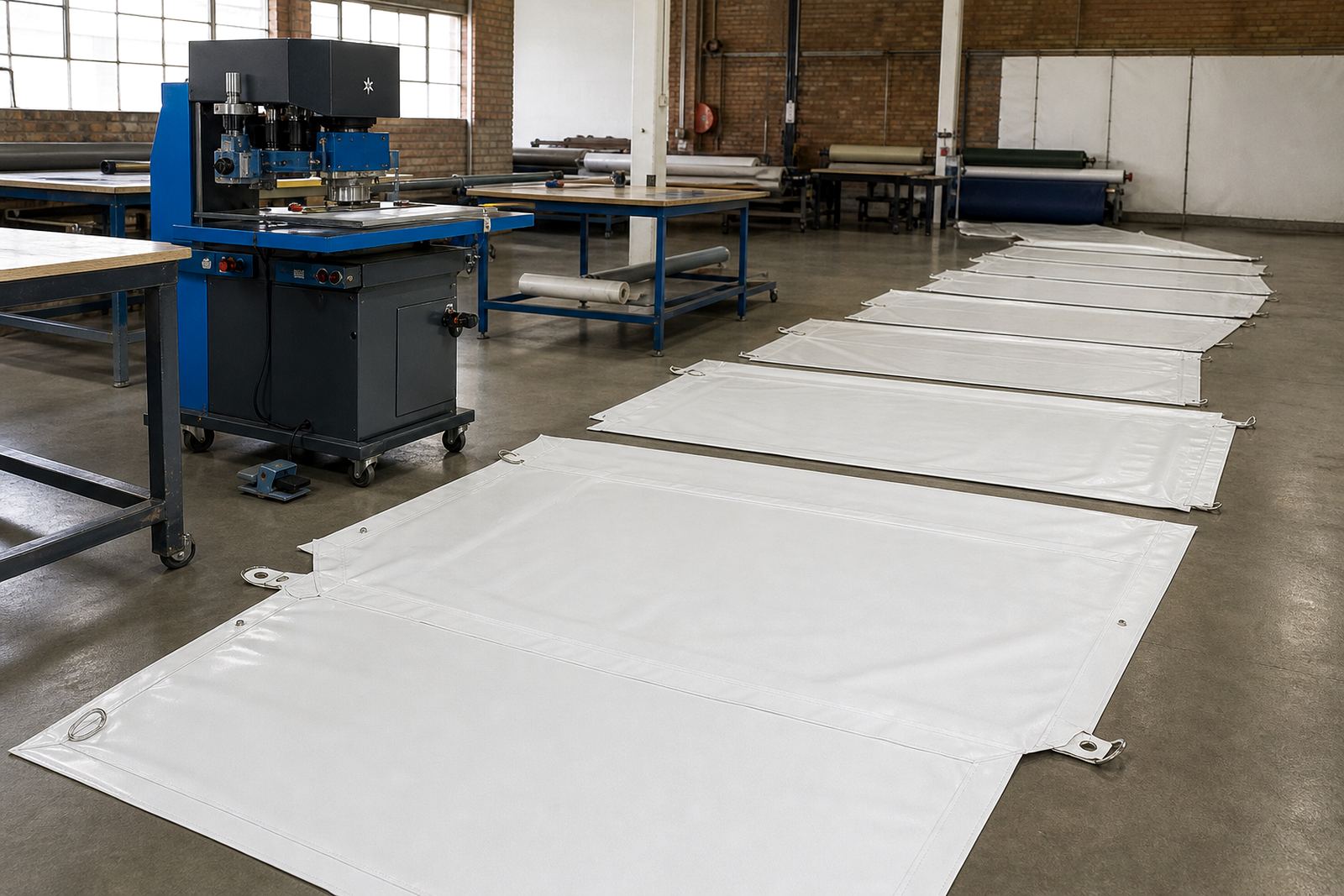
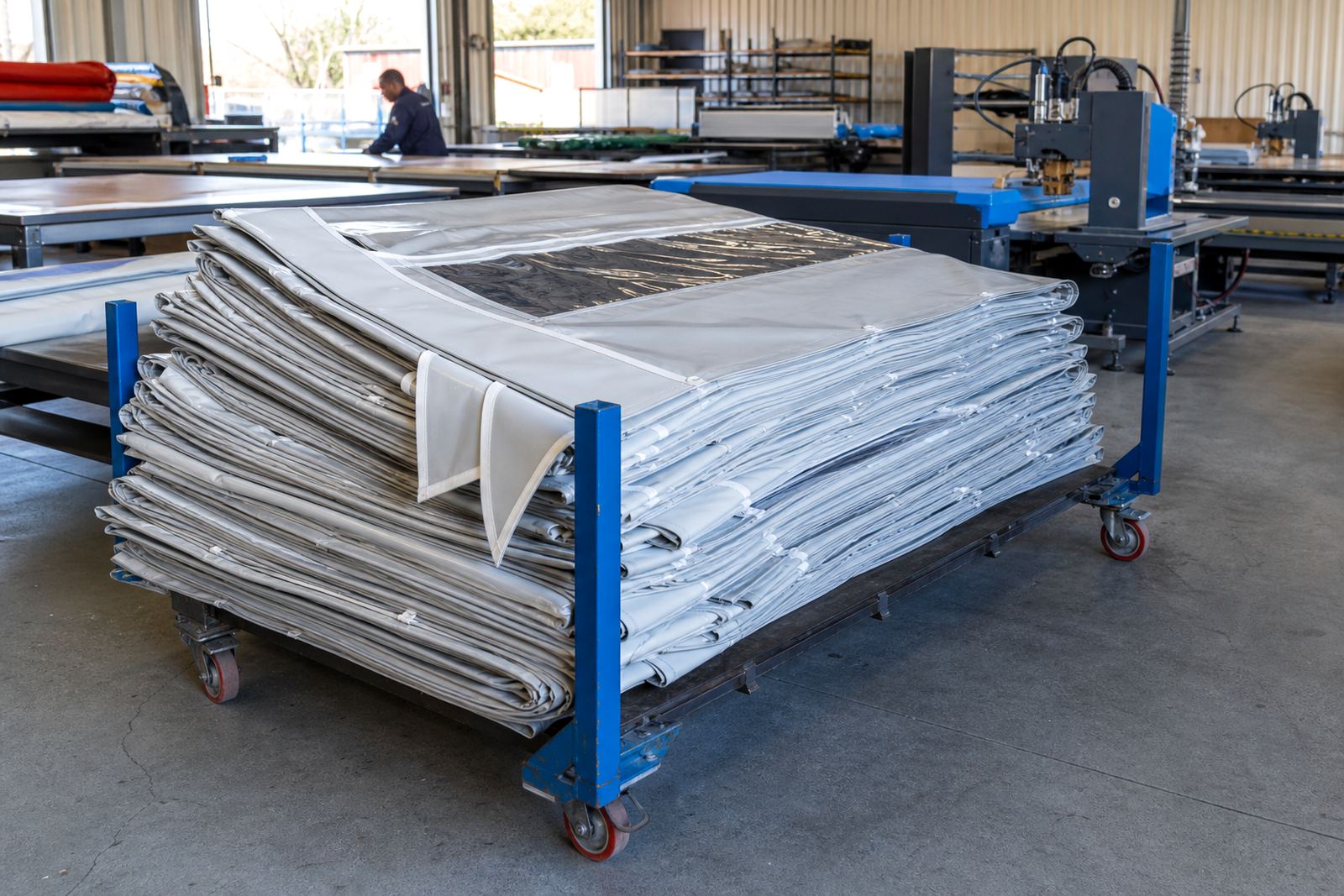
The job came from an event fabricator in Port Elizabeth working on tent walls for temporary structures used at functions, exhibitions and outdoor hospitality setups. The brief was practical: produce sidewall panels with clear window sections, straight hems, and fittings that held up through repeated folding, transport and reinstallation.
They needed clean, consistent welds on PVC-coated fabric, with enough control to manage long runs on sidewall panels and smaller detail work around window inserts. The material also had to suit coastal handling, where damp air and salt exposure can affect stored fabric and machine parts if servicing is neglected.
What had to be right on the seam lines
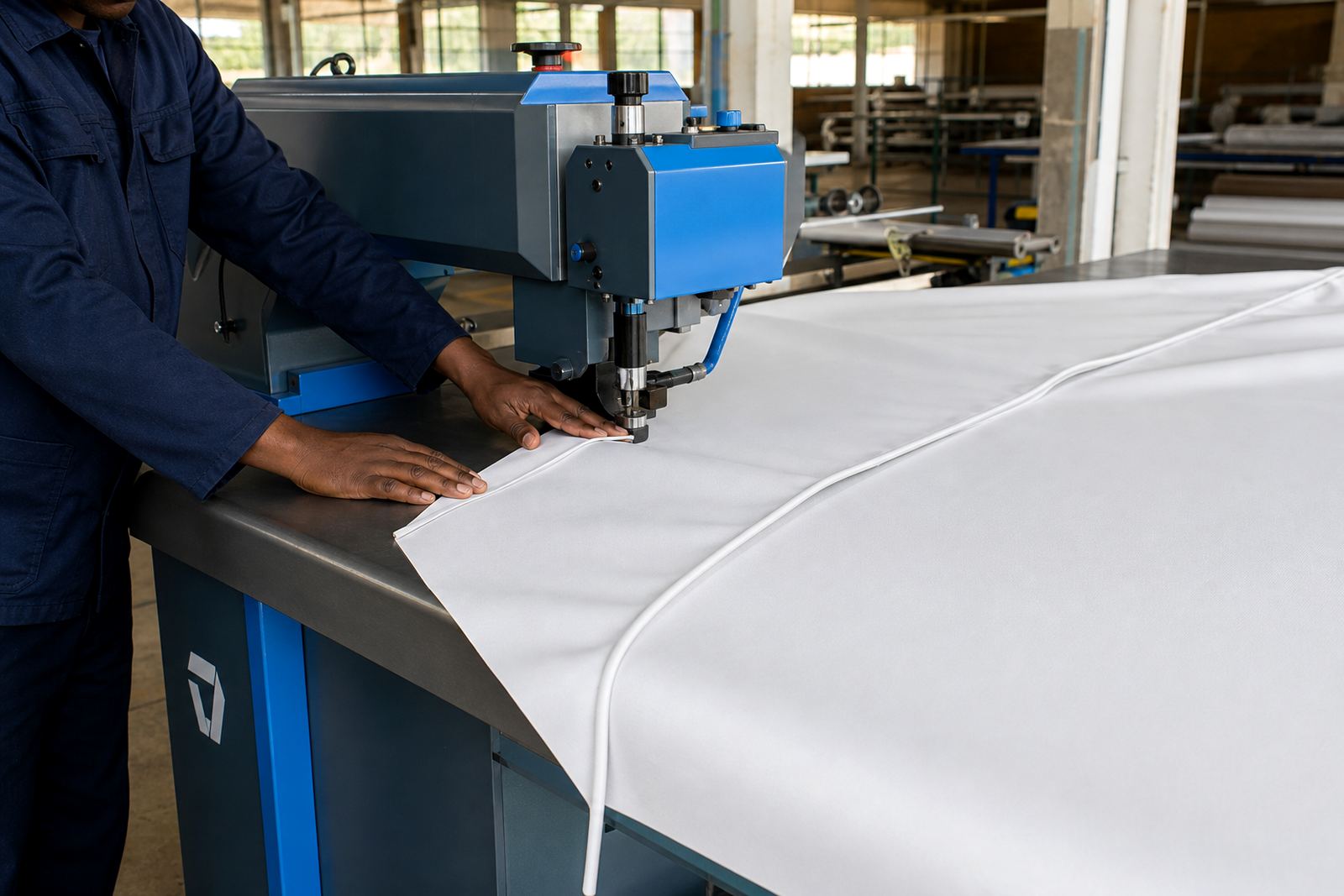
The fabricator wanted a welding solution that could handle both radio frequency welding and hot-air work, because the job mixed different seam styles. Some sections were suited to high-frequency welding for straight, strong joins on coated PVC, while hems, repairs and lighter finishing work could be handled with hot-air or hot-wedge methods depending on the panel layout.
- Sidewall panels with clear windows set into PVC-coated fabric
- Hems on the top and bottom edges for better handling on site
- Reinforced stress points around opening corners
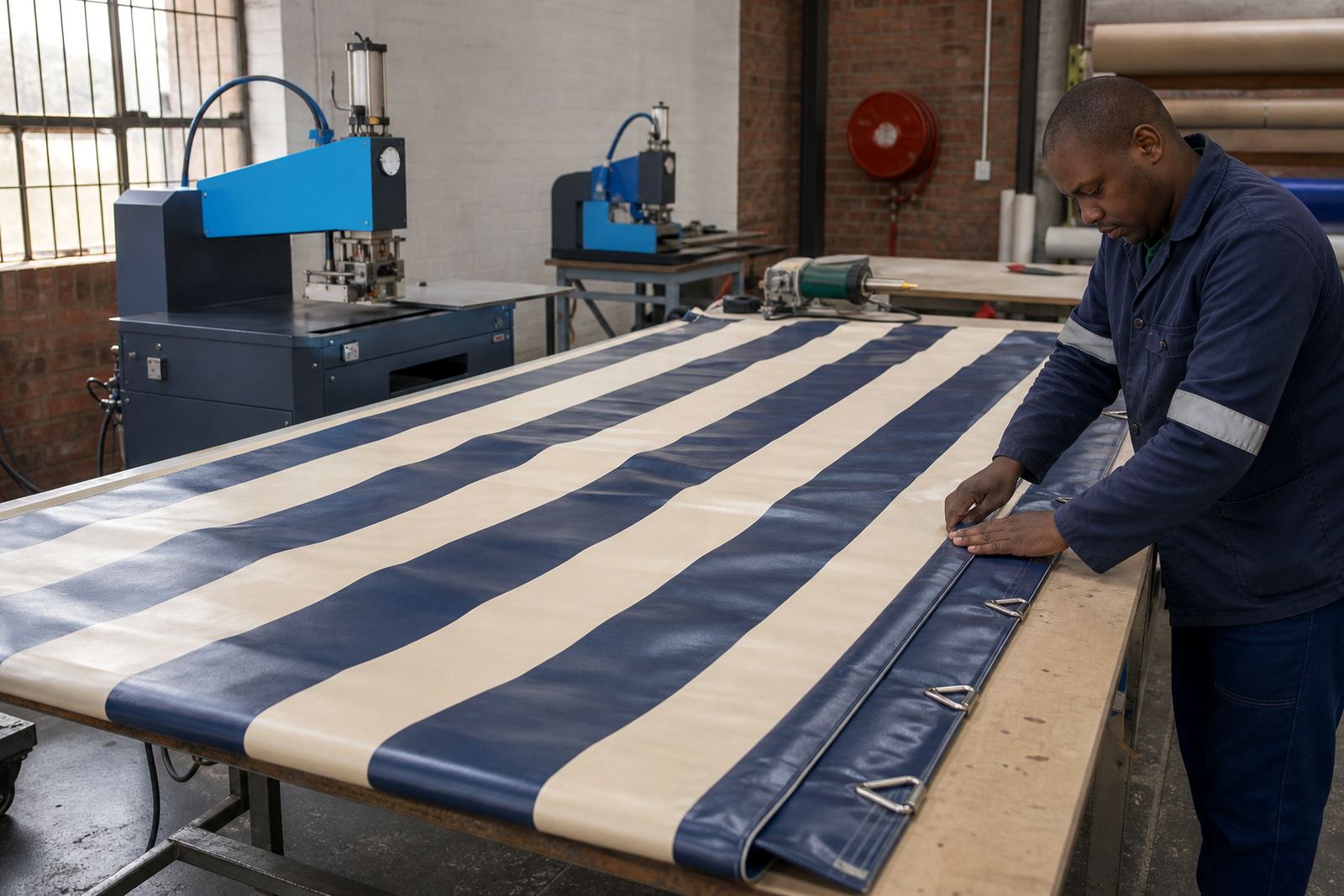
- Eyelet and fixing preparation for tie-down use
- Consistent seam width for repeatable panel sizing
The main constraint was keeping the finish neat across a batch of panels that had to look the same. On event work, if one hem wanders or a window line is uneven, the whole wall reads badly once it is hung up.
Equipment supplied for the wall set
We supplied welding equipment and support arranged around PVC tarpaulin and banner work, with attention to the type of seam the fabricator was producing. The setup covered the welding methods commonly used for tent walls, banners and sign panels, including controlled seam formation, flat hems and detail work around clear inserts.
We also supported the workshop with tooling alignment, electrode refurbishment where applicable, and roller replacement on the hot-air side of the process. That matters on a production floor because worn tooling gives weak edge quality and uneven pressure, which shows up quickly on large sidewall sheets.
- Machine installation and commissioning
- Operator training for safe handling and seam control
- Preventive servicing to keep output steady
- Fault finding when heat or pressure drifts
- Parts supply for worn rollers, tooling and service items
How the work moved over the three week programme
The project ran over three weeks. In the first week, the workshop layout was checked, machine positions were set, and the operators were shown how to switch between longer seams and smaller detail areas without losing alignment. The second week focused on trial panels, seam testing and window placement so the fabricator could confirm the panel sizes before batch production.
By the third week, the team was running full sidewall sections. The welding settings were kept consistent, and the fabricator could produce hems, window inserts and fixing points with less rework. That reduced wasted material, which is important when PVC fabric is already cut to the event order.
Workshop safety and machine care
High-frequency and hot-air welding both need disciplined workshop habits. Operators were briefed on guarding, heat control, safe handling of sharp cut fabric, and keeping hands clear of pressure areas during seam formation. On a busy floor, the risk is not just burns or pinched fingers, but also small alignment errors that become expensive once a panel is finished.
Machine servicing was part of the project support. Coastal humidity in Port Elizabeth can affect moving parts, contacts and storage if equipment is left dirty or damp. Regular checks on rollers, pressure faces, electrodes and general cleaning help the machine hold its settings from one job to the next.
- Keep tooling clean after adhesive residue and PVC dust build up
- Check roller condition before long production runs
- Inspect pressure faces for wear and scoring
- Test weld quality on offcuts before full production
- Store fittings and consumables in dry space after use
The finish on the finished tent walls
The finished sidewall panels had neat windows, even hems and clean seam lines that sat flat when installed. The fabricator could use the walls across different events without having to trim or patch each time, which saved handling time on site and gave the panels a better appearance when the tent was dressed.
For the client, the main outcome was evenness. The seams bonded properly, the clear panels sat neatly in place, and the eyelets and fixing points were laid out to suit repeated use. In daylight, the walls presented well and kept their form once stretched on the frame.
What we would carry over on the next wall batch
On a repeat order, the same approach would suit another batch of tent walls in Port Elizabeth or any coastal town handling PVC-coated fabrics. We would again start with seam testing, confirm the window layout before production, and keep the machine settings matched to the material weight and panel width.
That method works well for fabricators producing sidewalls, banners and display panels because it keeps the weld quality steady across the job. It also gives the operator a clearer rhythm for hems, keder edges and eyelet areas, which makes the workshop easier to manage during a full production run.
South African supply and support for welding workshops
PVCWelder supports tarpaulin, banner and tent makers from Germiston across South Africa, including Johannesburg, Durban, Cape Town, Pretoria, Bloemfontein and surrounding industrial areas such as Boksburg and Benoni. The team handles installation, commissioning, operator training, site callouts, service plans and parts support for workshops that rely on high-frequency and hot-air welding equipment.
For this Port Elizabeth project, the key was matching the machine setup to the product, not forcing the product to fit the machine. That is the practical difference on a production floor: cleaner seams, fewer rejects, and a workshop that can keep turning out wall panels, hems and window sections without constant rework.
Key facts
| Project location | Port Elizabeth |
|---|---|
| Client type | Event fabricator |
| Product made | Tent sidewall panels with clear windows |
| Materials | PVC-coated fabric and clear window sections |
| Welding methods | High-frequency and hot-air welding |
| Project timeline | 3 weeks |