The brief from a busy Germiston workshop
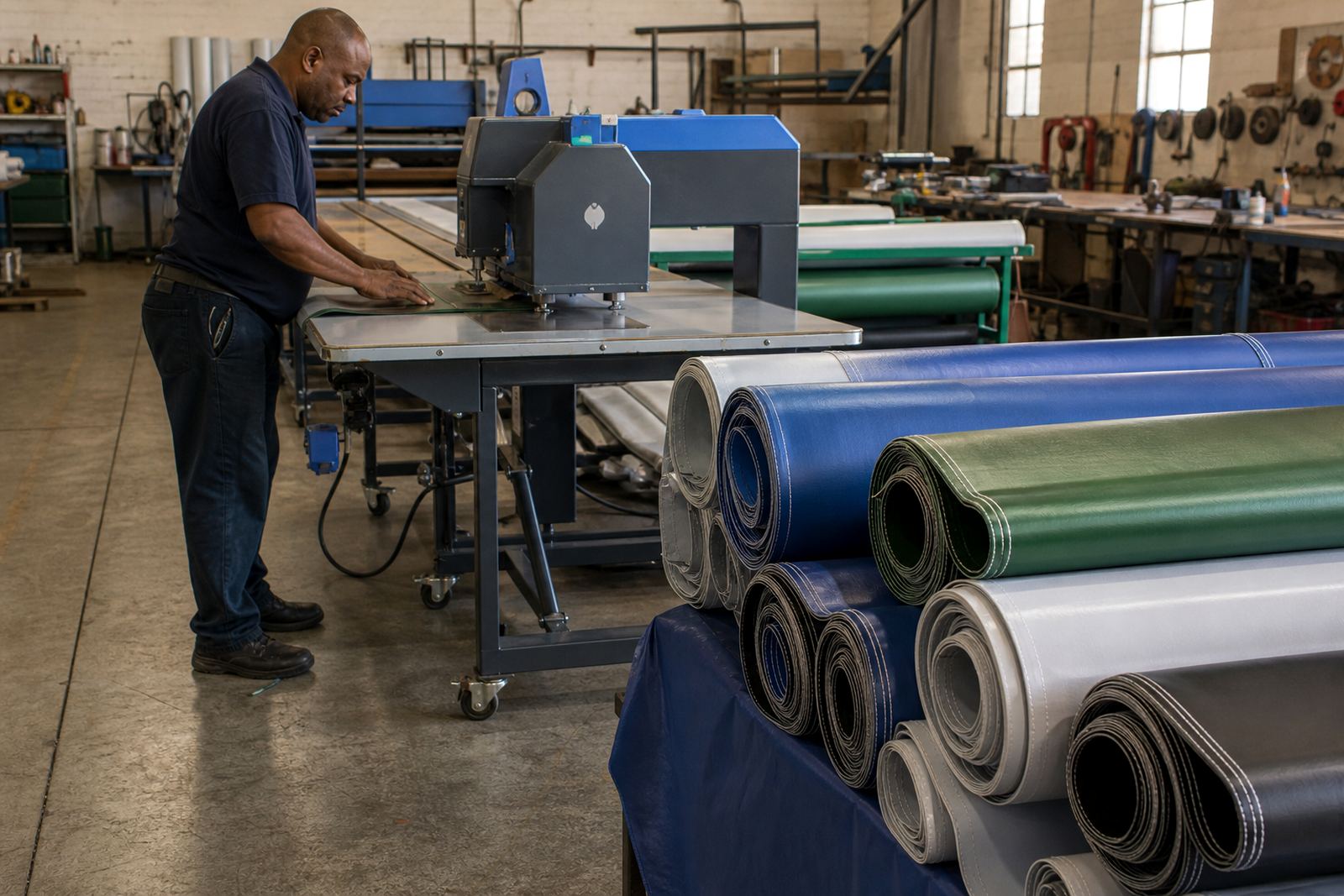
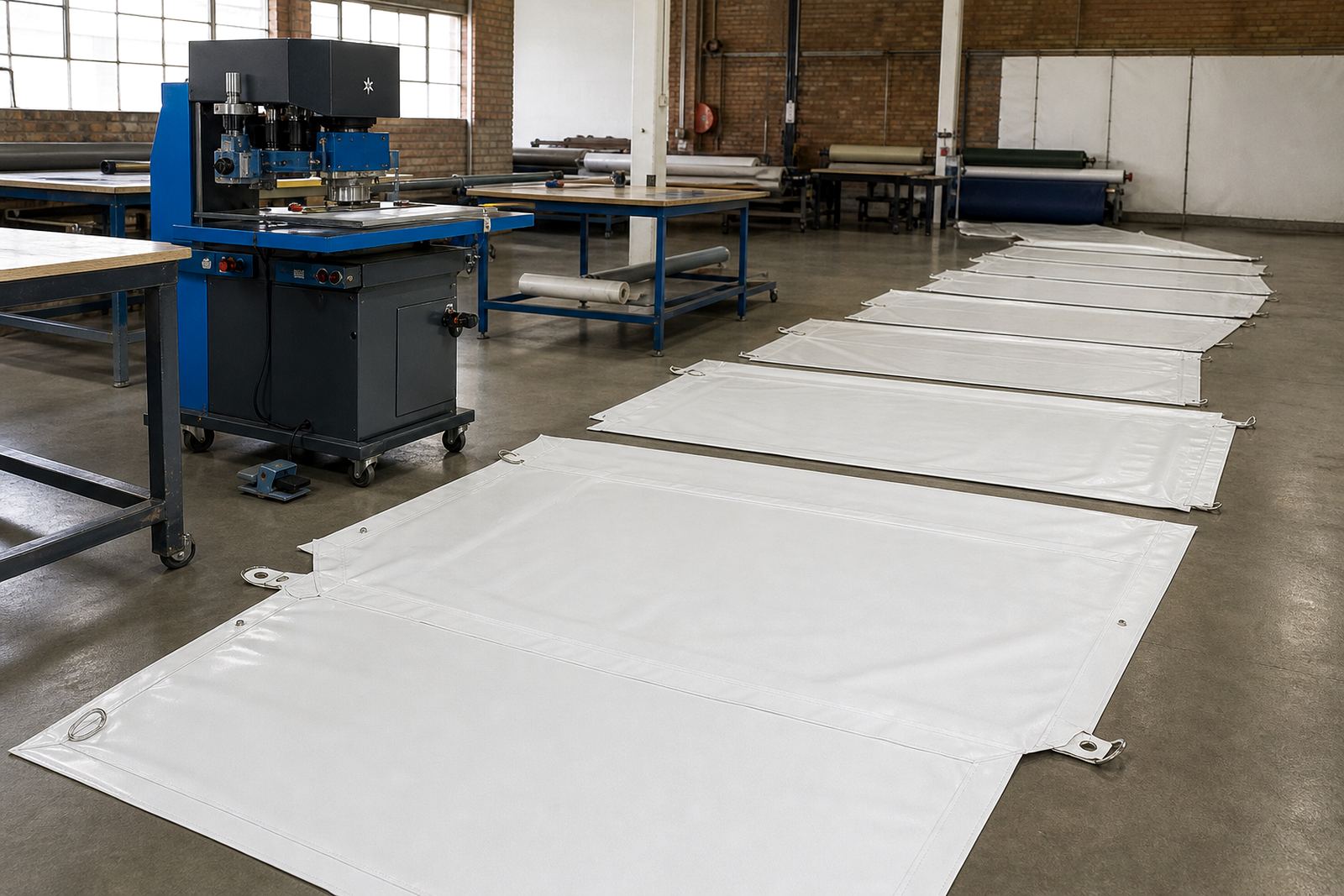
The client was a tent maker working from Germiston and handling a mix of event tents, sidewalls and replacement panels for jobs across Gauteng and further afield. Their main requirement was a reliable long-bed setup that could handle long roof panels, straight sidewall seams and repeat work without pulling the fabric out of square.
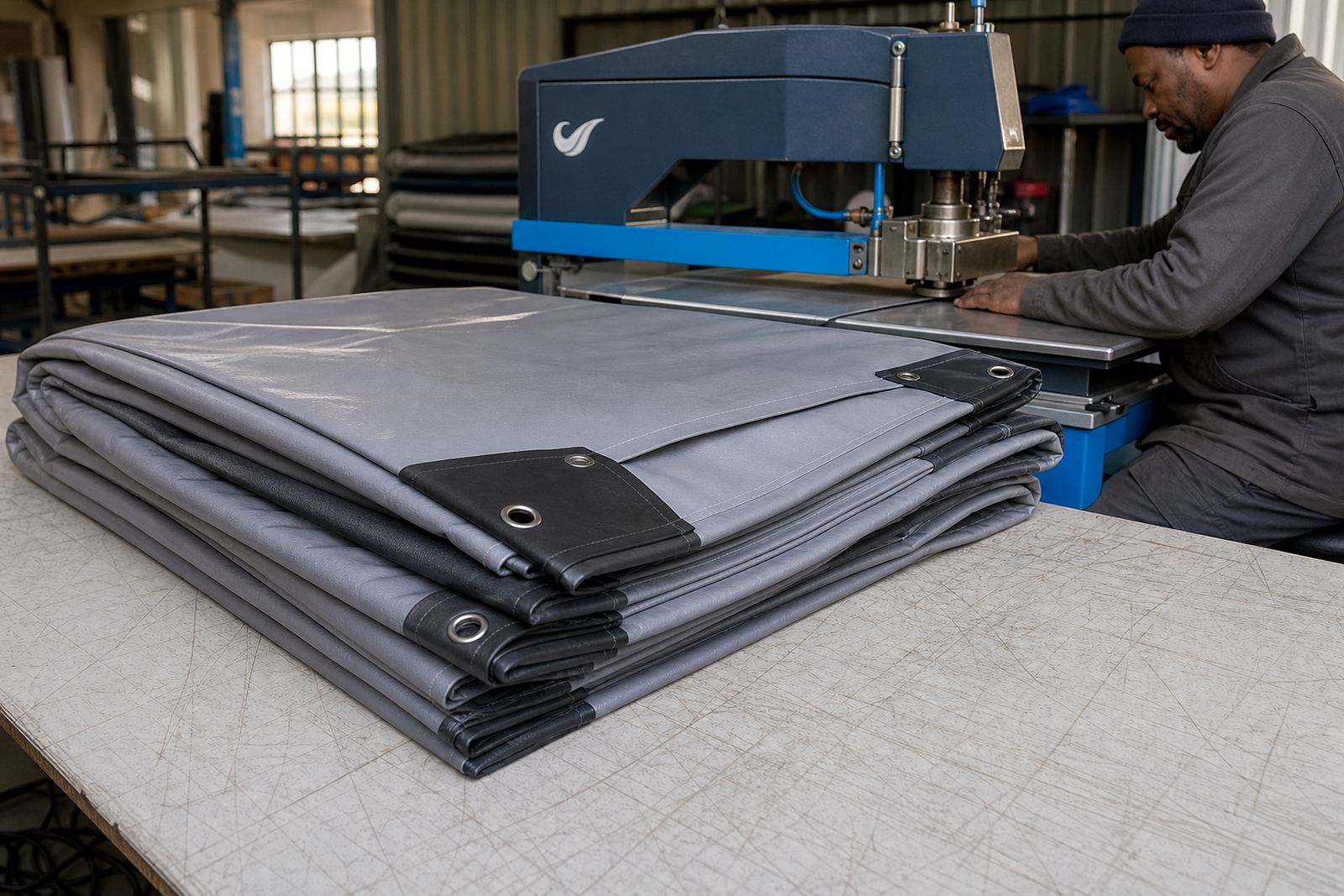
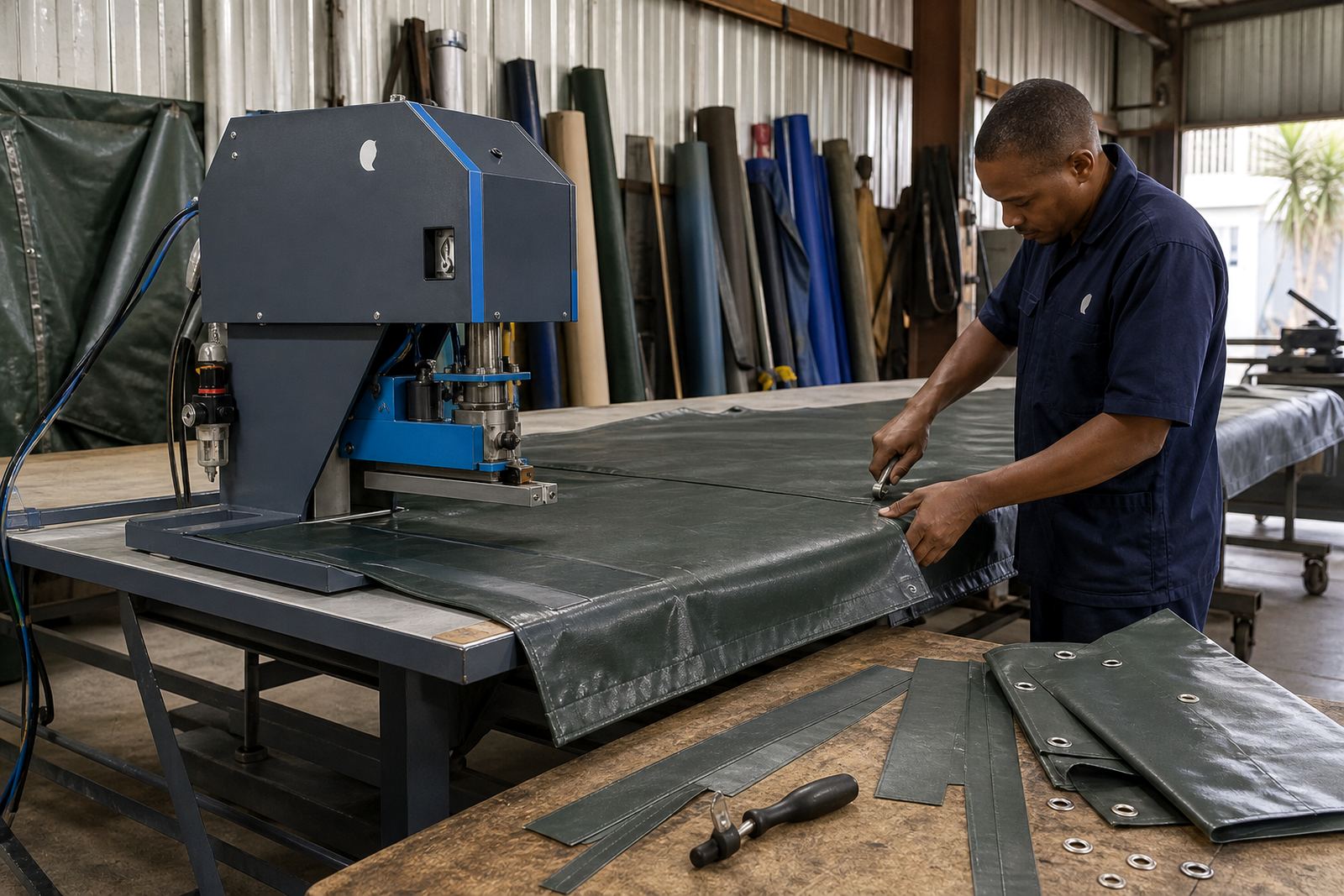
The panel work was mainly PVC-coated fabric, with a need for consistent seam widths, neat hems and accurate reinforcement strips where keder and eyelets were fitted. Because tent parts are handled, folded, loaded and reinstalled more than once, the seams had to stay even and the finished edges needed to sit flat instead of puckering.
- Long-bed welding for roof panels and sidewall sections
- High-frequency welding for straight, repeatable seams
- Hot-air and hot-wedge options for fabrication on selected joints
- Clean hems, keder runs and eyelet reinforcement zones
What the workshop needed to solve
The workshop had enough work, but the bottleneck was consistency on longer panels. When a roof section is a few metres long, even a small alignment error can show up later as a twisted panel or a loose hem. In humid weather, especially near the coast, PVC-coated material can also behave differently from one day to the next, so temperature and feed control matter.
We looked at how the team handled straight seams, overlap joints, corner patches and edge finishing. The aim was to make the welding process predictable for both day shifts and busy production runs, while still leaving room for more detailed manual work around keder pockets and eyelet positions.
- Maintain straight feed over long lengths
- Keep seam width even from start to finish
- Reduce rework on hems and corner reinforcements
- Support safe operator movement around heated tooling and moving rollers
Equipment set-up and line tuning
We supplied long-bed high-frequency welding equipment suited to PVC-coated fabrics, with tooling matched to the panel sizes used in tent manufacture. Where needed, the process was supported with hot-air and hot-wedge welding for jobs that suited those methods better, including hems, folded edges and some reinforcement work.
The set-up included tooling alignment, pressure checks, seam testing and a practical run through on the fabrics the workshop used most often. We also checked the eyelet and keder stages so that the welded panels could move through finishing without fighting the rest of the production sequence. A few small adjustments to feed speed and roller pressure made a clear difference to seam appearance.
- Long-bed machine installation and commissioning
- Tooling alignment for straight panel welds
- Electrode refurbishment and roller replacement planning
- Seam testing on sample roof and sidewall cuts
How the job was sequenced over three weeks
The project ran over three weeks from first workshop assessment to a working production line. In week one, we measured the available floor space, checked the panel sizes and identified where the long-bed unit would sit in relation to cutting, marking and finishing. That helped the client keep material handling short and practical.
In week two, the machine was installed and commissioned, then the operators were shown the set-up for different seam types, including overlap seams, hems, keder strips and eyelet reinforcement patches. In week three, we stayed close to the line for live production checks, sorted out one tooling alignment issue and confirmed the seam settings the team preferred for their main fabrics.
- Week 1: site assessment and layout planning
- Week 2: installation, commissioning and operator training
- Week 3: live production checks and fine tuning
Operator safety and machine care on the floor
Any welding line that handles PVC-coated fabrics needs clear operator routines. Heat, pressure and moving parts all require attention, so we covered safe loading, hand placement, guarding habits and the right way to clean and inspect tooling after use. The team also got a practical check sheet for keeping seams consistent and spotting wear before it causes a stoppage.
Preventive servicing matters when a workshop depends on a machine for long panels and repeat production. We set up a basic servicing plan for rollers, guides, electrodes and alignment points, with extra attention to dust, adhesive residue and heat build-up. That kind of care helps the equipment stay steady in daily use, especially where the workshop runs a full production calendar.
- Safe loading and unloading of long panels
- Routine cleaning of rollers and tooling surfaces
- Checks for alignment drift and worn parts
- Service planning for ongoing workshop use
What changed after the handover
After handover, the tent maker had a cleaner flow from cut panels to finished sections, with fewer stops for correction on long roof pieces. The seam appearance improved, the hems ran straighter and the keder areas sat more evenly along the edges. Eyelet positions also became easier to keep in line because the base panels were holding shape better during finishing.
For a Germiston workshop serving Johannesburg, Pretoria, Durban, Cape Town and Bloemfontein, that kind of consistency matters. Jobs can move from one region to another and the finished panels still need to fit well, pack properly and hold up in service. In a trade where material handling can rough up edges fast, tidy welding saves time later.
- More even seams on roof and sidewall panels
- Less rework on hems and reinforcement zones
- Better repeatability across different operators
- Clearer maintenance schedule for the machine
Key facts
| Project location | Germiston, Ekurhuleni |
|---|---|
| Client type | Tent maker |
| Fabric type | PVC-coated tarpaulin and banner grade material |
| Welding methods | High-frequency, hot-air and hot-wedge |
| Panel work | Roof panels, sidewalls, hems, keder, eyelets |
| Project duration | 3 weeks |