What the Polokwane workshop needed fixed
The workshop handled PVC-coated fabric covers for transport, storage and outdoor display, and the main problem was split seams, torn hems and worn fixing points after repeated handling. Some panels had stretched at the weld line while others had edge damage near eyelets and keder, so the repair method had to hold shape without making the sheet stiff or patchy.
The brief was practical: rebuild damaged sections, match the existing panel layout, and use welding methods that suited the fabric weight and coating thickness. The workshop also wanted a process that staff could repeat on later repairs, not just a once-off fix. Because Polokwane has dry inland weather with strong sun exposure, the repaired areas had to be neat and properly fused, not over-heated.
- Client type: regional tarpaulin and cover workshop
- Town: Polokwane, Limpopo
- Material: PVC-coated fabric for covers and banners
- Faults: split seams, torn hems, damaged eyelet zones and worn keder edges
Repair method used on the panels
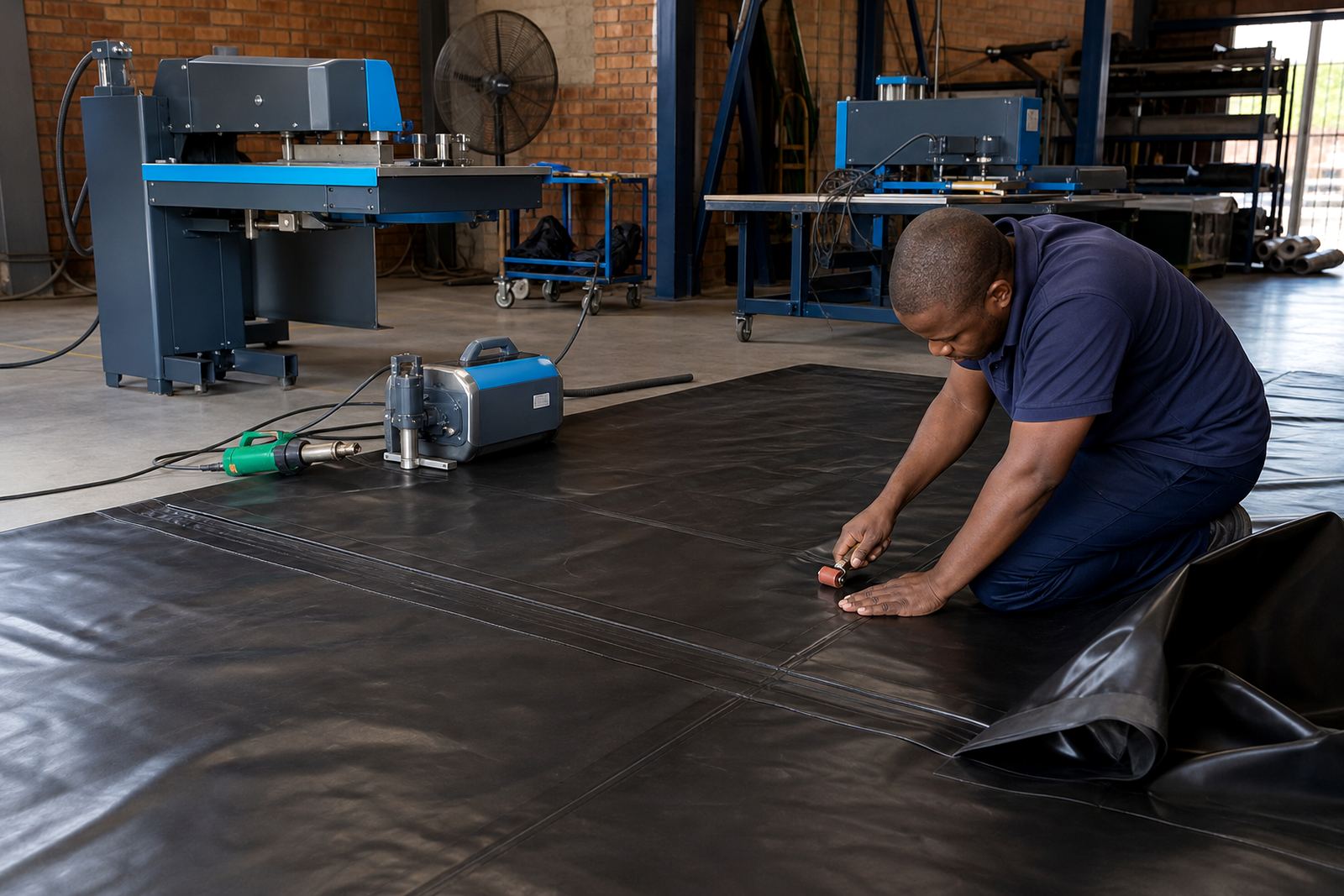
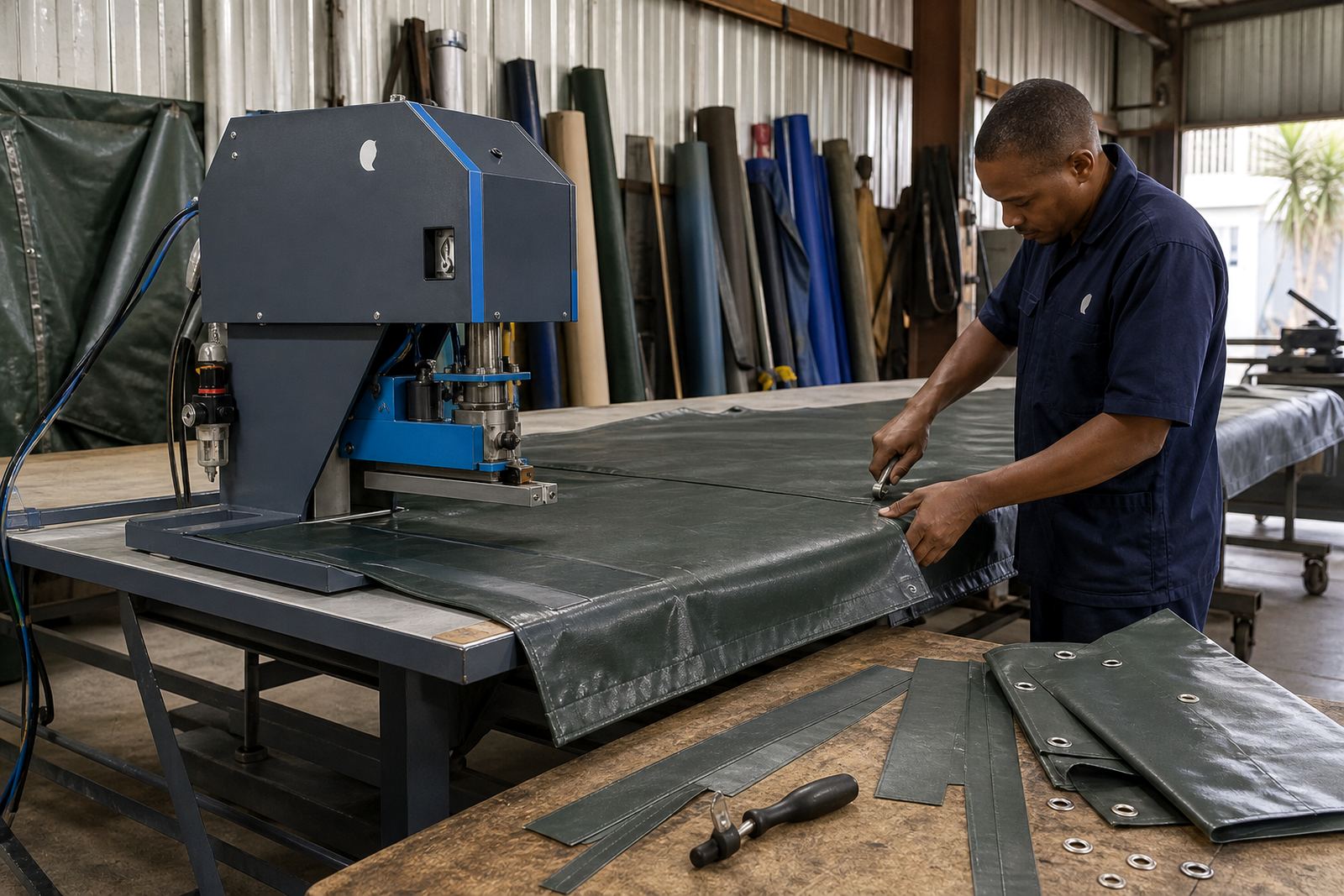
We worked with the workshop on both high-frequency welding and hot-air welding, depending on the panel size and the seam shape. High-frequency welding was used where a clean, controlled seam was needed on compatible PVC-coated fabric, while hot-air work was used for longer runs, hems and local patching where the operator needed more movement around the sheet.
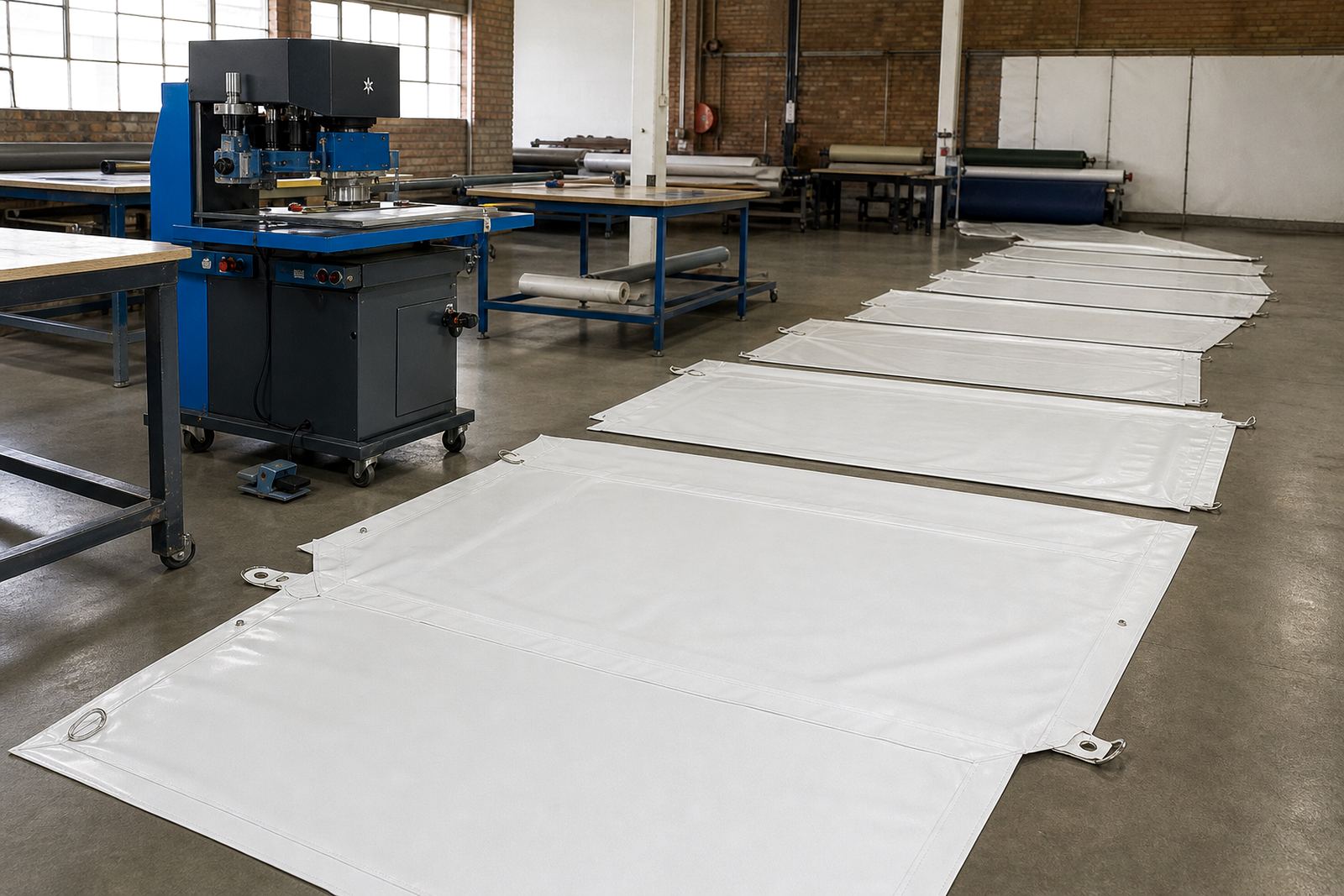
The repair set-up included seam testing, tool alignment and inspection of the welding surfaces before any full run. Damaged sections were trimmed back to sound material, then rebuilt with overlapping repair strips and replacement edge work. In a few panels we also reset the fold line so the finished part sat straight on the frame, instead of pulling out of line after tensioning.
- Seam types handled: lap seams, edge seams and reinforcement strips
- Finishing work: hems, keder edges and eyelet repairs
- Quality checks: visual inspection, pull checks and seam testing
- Method split: high-frequency for controlled seam lines, hot-air for flexible repair work
Machines and tooling supplied for the job
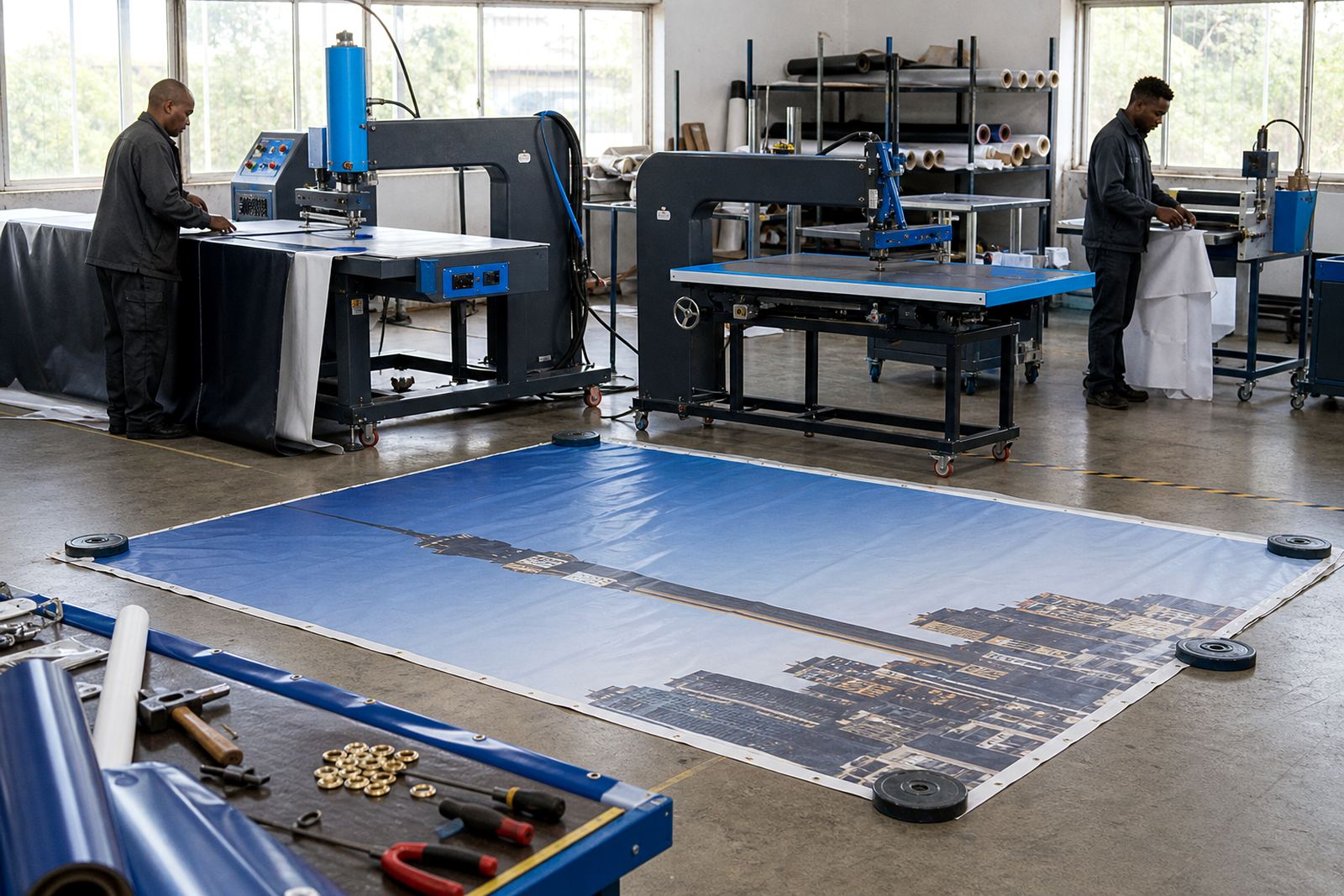
PVCWelder supplied and commissioned welding support equipment suited to tarpaulin repair work, plus the tooling needed for accurate alignment. The setup covered operator-safe handling, correct temperature control for hot-air welding, and repeatable positioning for RF work where the seam path had to stay consistent across multiple panels.
We also checked the roller condition, electrode alignment and basic consumable wear. That matters because a small fault in pressure or heat can leave a repair looking fine at first but weak at the edge. The workshop wanted less rework and fewer off-cuts, so we set the process around steady feed control and clean trimming. A neat seam saves time later, and it also helps when a cover has to hold under tension in windy conditions.
- Machine installation and commissioning
- Tooling alignment and electrode refurbishment
- Roller replacement where wear was affecting feed pressure
- Parts supply for routine repair work
Operator safety and workshop handling
The repair area needed safer handling around heated tools, moving rollers and heavy PVC sheets. We covered basic operator safety with practical controls, including heat-zone awareness, correct hand placement near the weld line, and checking that the fabric was flat before feeding it through the machine. That reduces snagging and keeps the operator from fighting the material all day.
Training also covered simple servicing habits that can prevent downtime. Dust, adhesive residue and worn guide parts can affect seam quality pretty quickly, especially in a busy workshop where panels are handled from early morning through the day. The team was shown how to inspect wear points, clean contact surfaces and spot early signs of drift in the weld line. It’s the sort of work that gets ignored untill a panel starts failing, so we kept it practical and direct.
- Heat and pinch-point awareness
- Daily cleaning of guide surfaces and tooling contact areas
- Basic fault spotting before a full breakdown
- Safer handling for large PVC sheets and rolled stock
Timeline, from first inspection to working panels
The Polokwane job ran over three weeks. Week one was inspection, fault mapping and setting the repair sequence. Week two covered the main welding and edge rebuilding work, including repeat seam tests on sample off-cuts. Week three was finishing, final checks and operator handover for future repair runs.
The schedule had to work around workshop production, so we split the job into repair blocks rather than taking every panel off the floor at once. That kept the client moving on active orders while the damaged covers were rebuilt in stages. The end result was a cleaner finish and fewer weak points than the original damaged sections had shown.
- Week 1: inspection and repair planning
- Week 2: welding, rebuilding and test seams
- Week 3: finishing, checks and handover
- Approach: staged work to keep the workshop operating
What changed after the repairs
The repaired panels held their shape better, the seams sat flatter and the finishing around hems and eyelets was more consistent. The workshop could reuse more of the original material instead of cutting whole panels out, which reduced waste and kept jobs moving. The team also had a clearer repair method for similar tarpaulins, banners and tent panels that come through their floor.
For us, the useful part of the project was seeing how a well-set welding process can turn damaged stock into usable product again. If we were doing the same work for another regional cover workshop, we would keep the same structure: inspect first, rebuild the failed zones, test the seam line, then hand over with servicing notes and operator guidance. That approach keeps the repair predictable, and it avoids the patchwork look that often shows up when heat or pressure is not balanced.
- Better seam consistency across repaired panels
- Cleaner edge finishing on hems and keder
- Less material waste through targeted rebuilding
- Clearer method for repeat repair work in the workshop
Key facts
| Location | Polokwane, Limpopo |
|---|---|
| Project type | Tarpaulin repairs for a regional cover workshop |
| Materials | PVC-coated fabric |
| Welding methods | High-frequency welding and hot-air welding |
| Key work | Seam rebuilding, hems, keder, eyelet repairs |
| Timeline | 3 weeks |