The brief from a Bloemfontein fabricator
The order came from a general fabricator in Bloemfontein that needed protective drop sheets for workshop use and site cover work. The sheets had to be easy to fold, quick to fasten and strong enough for repeated lifting and tie-down, with clean edge finish so the eyelet line would not split after a few uses.
The team also needed consistency across a mixed batch of sizes. Some panels were for floor protection during work in progress, while others were for temporary wrap around items moving between the yard and delivery truck. In Bloemfontein, where dust and wind can get into almost every job, the sheets had to sit flat and stay manageable in daily use.
Key points in the brief were straightforward:
- Reinforced borders for eyelet punching and tie-off points
- Clean welded seams for a tidy finish on visible edges
- Durable PVC-coated fabric suited to regular handling
- Sizes that could be used across different jobs on the same site
Material choice and seam build
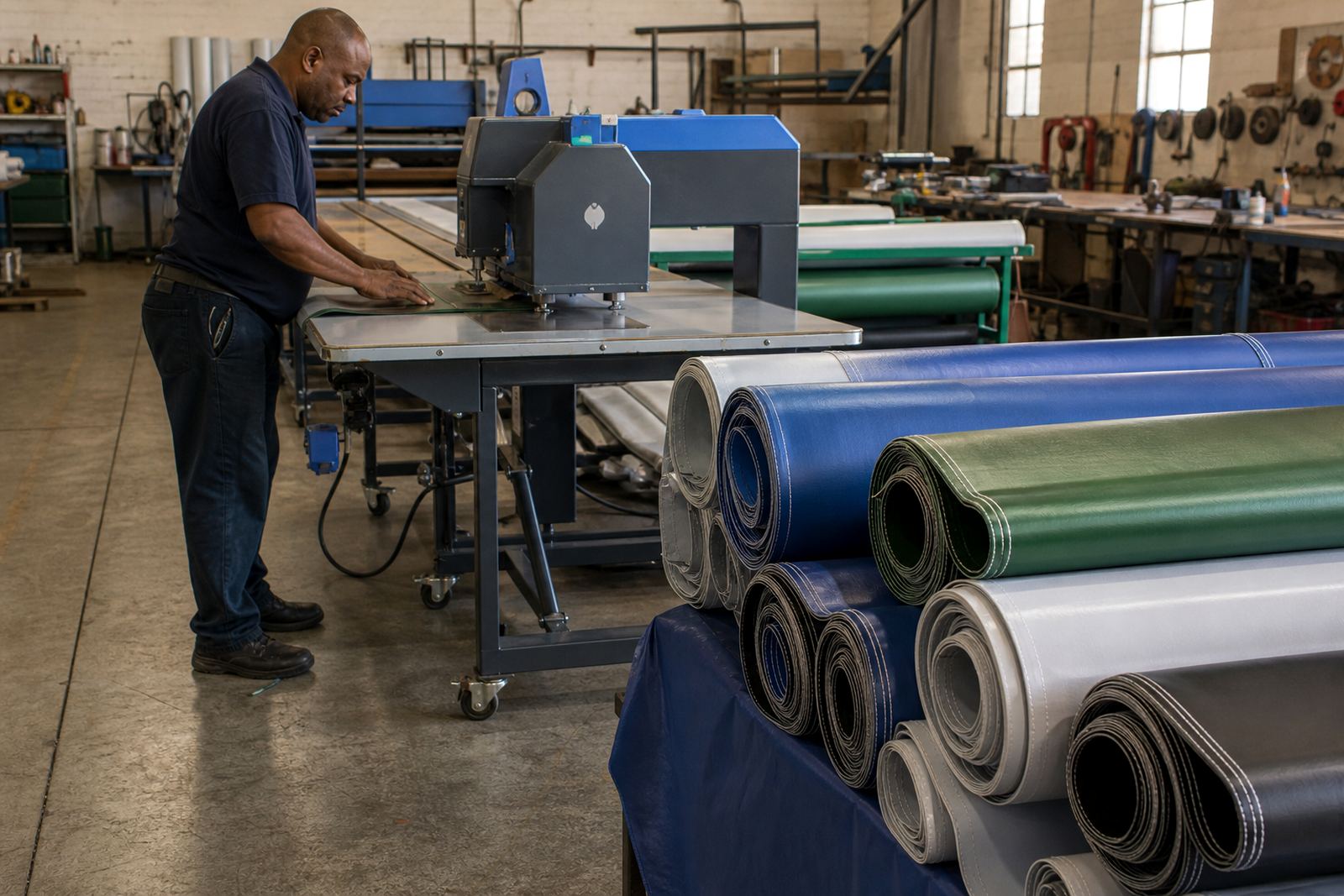
We worked with PVC-coated fabric selected for protective sheet use, with enough body to hang properly yet still fold without excessive stiffness. For this type of work, the main concern is seam strength and edge stability. If the border is weak, eyelets can pull out or the sheet starts fraying at the fold line. That is where careful high-frequency welding makes a real difference.
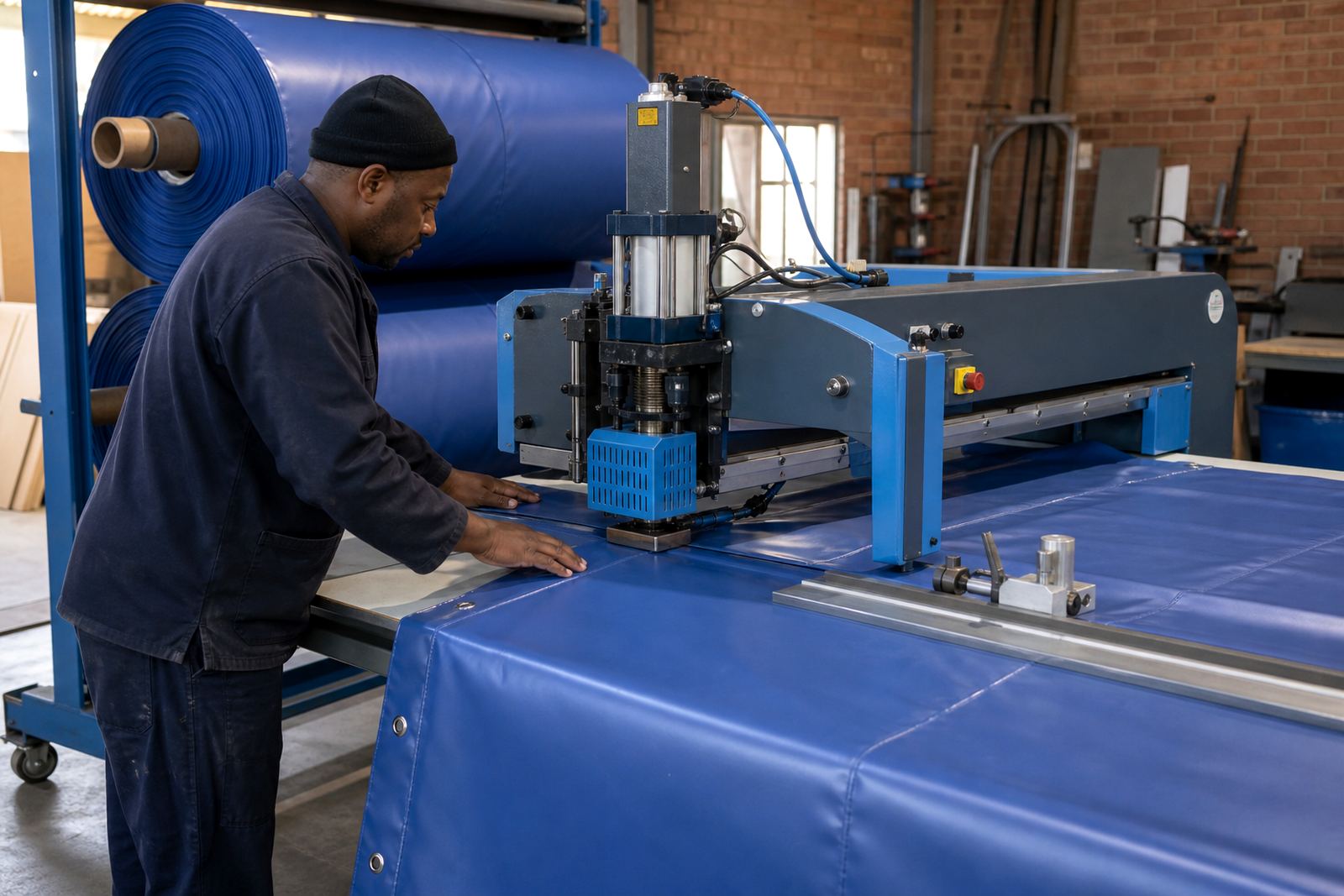
The panels were welded with reinforced border strips to give a stronger fixing zone around the perimeter. The seam layout used a plain overlap on the main joins, then a double folded edge at the outer border where the eyelets would go. That gives a neater finish and a better pull area when the sheet is under tension.
On jobs like this, the welding method is chosen to suit the material and the final use. High-frequency welding is useful for neat, controlled seams on PVC-coated fabric, while hot-air or hot-wedge welding is often used for longer runs and certain shapes. The aim here was a practical combination of accuracy and speed, not overcomplicating the build.
- Approximate finished size range: mixed panels made to order for workshop and site use
- Border reinforcement: extra welded strip at all eyelet-ready edges
- Join type: overlap seams with folded perimeter finish
- Finish requirement: smooth edges with no sharp cut fibres exposed
How the sheets were made in the workshop
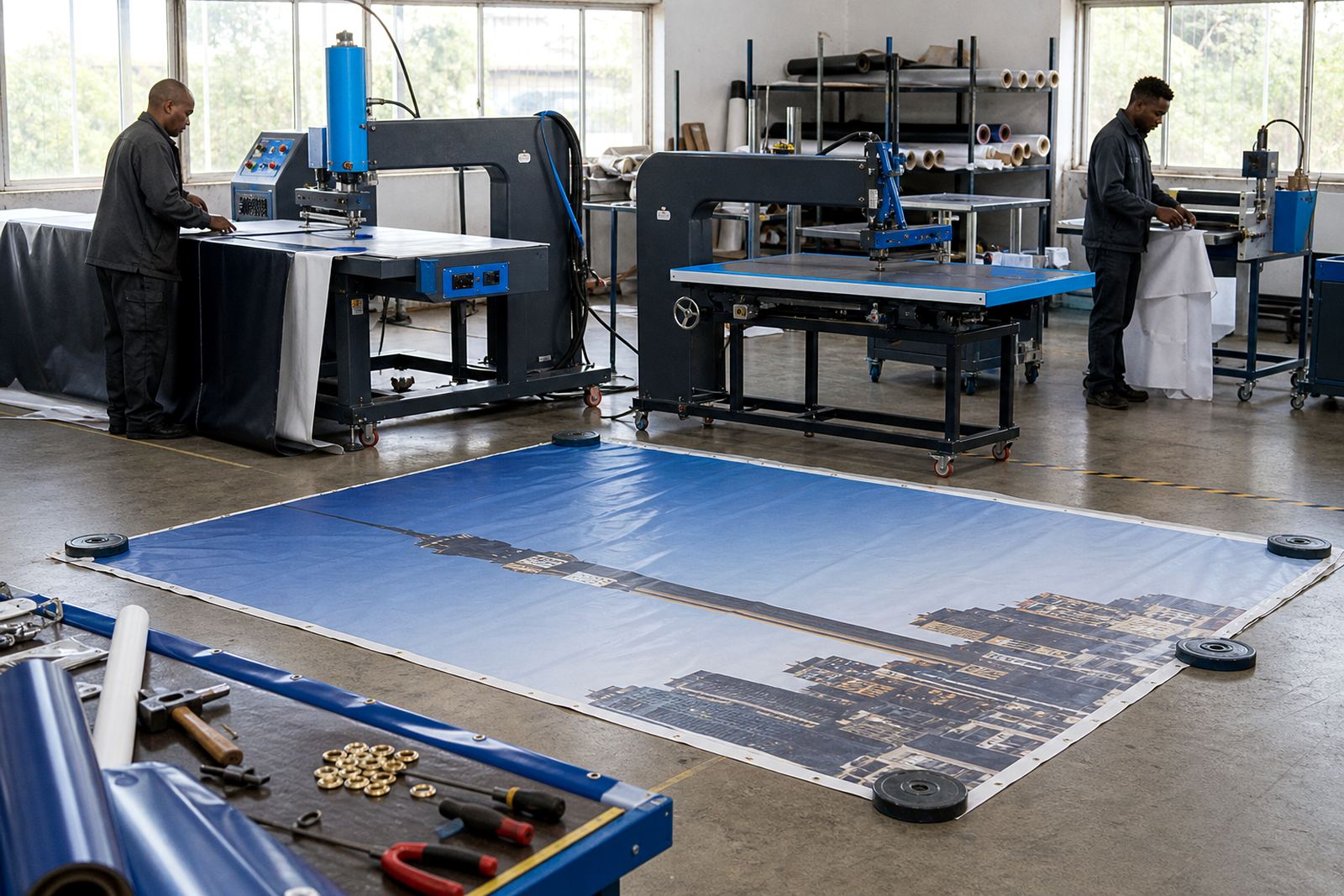
The work was completed over two weeks from approval to final checks. In the first week we prepared the panels, marked the seam lines and welded the main sections. The second week covered border reinforcement, eyelet spacing, inspection and pack-off for collection.
Before any eyelets were punched, the border areas were tested for even weld bonding and flatness. That matters because if a border ripples, the eyelets do not sit evenly and the sheet can pull unevenly when tied down. We also checked the corners carefully, since corners take the most abuse when sheets are dragged, folded or tensioned in a hurry.
Each panel was handled to suit the worksite use pattern. Some sheets needed broad hems for strength, while others needed a tighter fold to keep the finished size close to the brief. The result was a set of drop sheets that looked neat in the rack and held shape when used on site.
- Week 1: cutting, layout, main welding and seam checks
- Week 2: border reinforcement, eyelet-ready finishing and final inspection
- Quality checks: seam alignment, edge flatness and corner reinforcement
Eyelet-ready borders for hard site handling
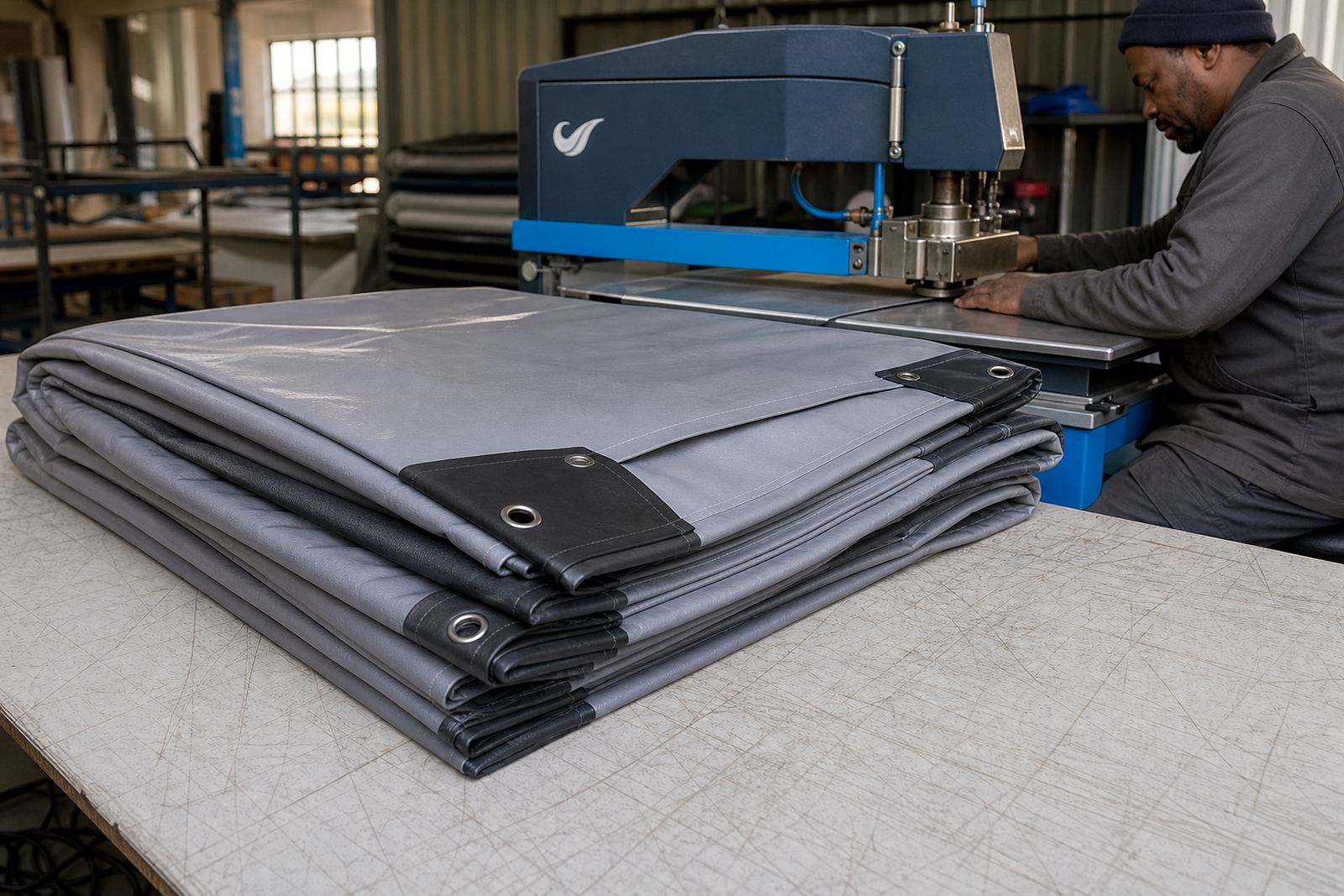
The eyelet-ready border was the main part of this job. The fabricator wanted sheets that could be fixed down quickly without wasting time on loose corners or added tie cords. We built the perimeter to take standard eyelet spacing and left enough reinforced margin so the fixing points would not creep toward the edge after repeated use.
That approach is useful for protective sheets that are moved often. On a busy floor, the sheet may be laid out, folded back, tied to a frame, then packed away and used again somewhere else. A weak border becomes the first failure point. With a properly reinforced edge, the sheet keeps its shape for much longer and the eyelets stay usable.
We also kept the finish plain and practical. The client did not need decorative work, just a dependable product that could handle dust, handling marks and the odd rough pull. In a town like Bloemfontein, where workshops often work with open yard space and shifting weather, that kind of sheet has to be built for day-to-day use, not just first delivery.
Results on the floor and in the yard
Once the sheets were fitted into the fabricator’s routine, the main benefit was consistency. The reinforced borders held the eyelets properly, the seams stayed flat and the panels folded neatly after use. That made them easier to store and quicker to deploy on the next job.
The client also had less edge damage from rough handling. Instead of frayed corners and stretched tie points, the sheets kept a cleaner outline and a more professional look after regular use. For a general fabricator handling different work daily, that matters because the same sheet might be used for protection in the morning and tied over stock in the afternoon.
The project showed the value of matching the weld style to the job. High-frequency welding gave control on the joins, while the reinforced border added strength where it was needed most. Nothing was overbuilt, but nothing was left thin either.
- Cleaner storage after use because the sheets fold back evenly
- Better eyelet performance under repeat tie-down
- Less edge wear from dragging and repositioning
- More suitable for repeated workshop and site handling
What we would do on the next batch
If we were producing the same type of protective sheets again, we would keep the same border reinforcement method and seam layout, because it suits this use well. We would also keep the spacing plan for eyelets closely tied to the intended tie-down pattern, as that reduces stress on the corners and gives a better finish in the field.
For any larger batch, we would first check the final folding and storage method at the client’s side. That helps with choosing border width, fold direction and the best weld sequence. It is a small detail, but it makes a difference when sheets are used daily and loaded into a vehicle or stored on a rack with limited space.
For fabricators in Bloemfontein and other South African centres, the same approach works well for drop sheets, tarpaulin panels, banner supports and tent components that need clean seams, practical edges and dependable eyelet zones.
Key facts
| Project location | Bloemfontein, Free State |
|---|---|
| Client type | General fabricator |
| Product | Protective drop sheets |
| Material | PVC-coated fabric |
| Construction | Welded seams with reinforced border |
| Lead time | 2 weeks |
| Use case | Workshop protection and tie-down handling |