A Pretoria brief with tight edges and long runs
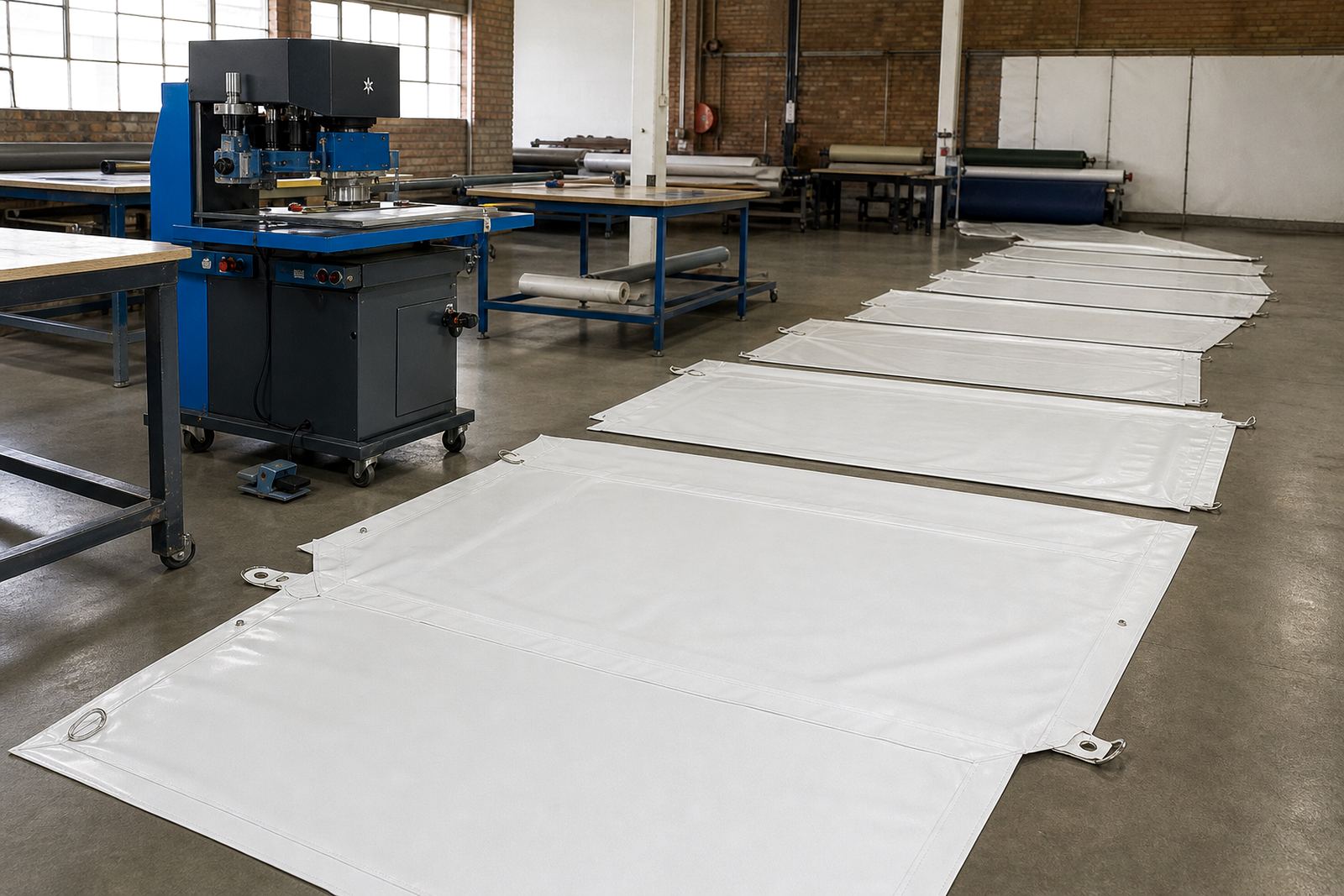
The client was a pool cover fabricator working in Pretoria, handling PVC-coated fabric panels that had to roll neatly, track evenly and sit cleanly across repeated seams. Their main issue was panel alignment during production, especially where long lengths were being welded for rolled assemblies and the finished edges needed to stay square from end to end.
The brief was practical. Improve alignment, reduce drift on long seams, keep the welds tidy on visible faces, and make the process easier for operators who were running several cover sizes in a day. The work had to suit local conditions too, with dusty workshop floors and changing afternoon heat affecting handling and feed control.
What was causing the misalignment
On PVC-coated fabrics, small feed errors can grow quickly over a long panel. If the guide line is not holding, or the pressure and heat are not balanced across the weld, the fabric can pull slightly to one side. That shows up later in rolled pool cover assemblies as a curl, a wandering edge, or a hem that does not sit flat.
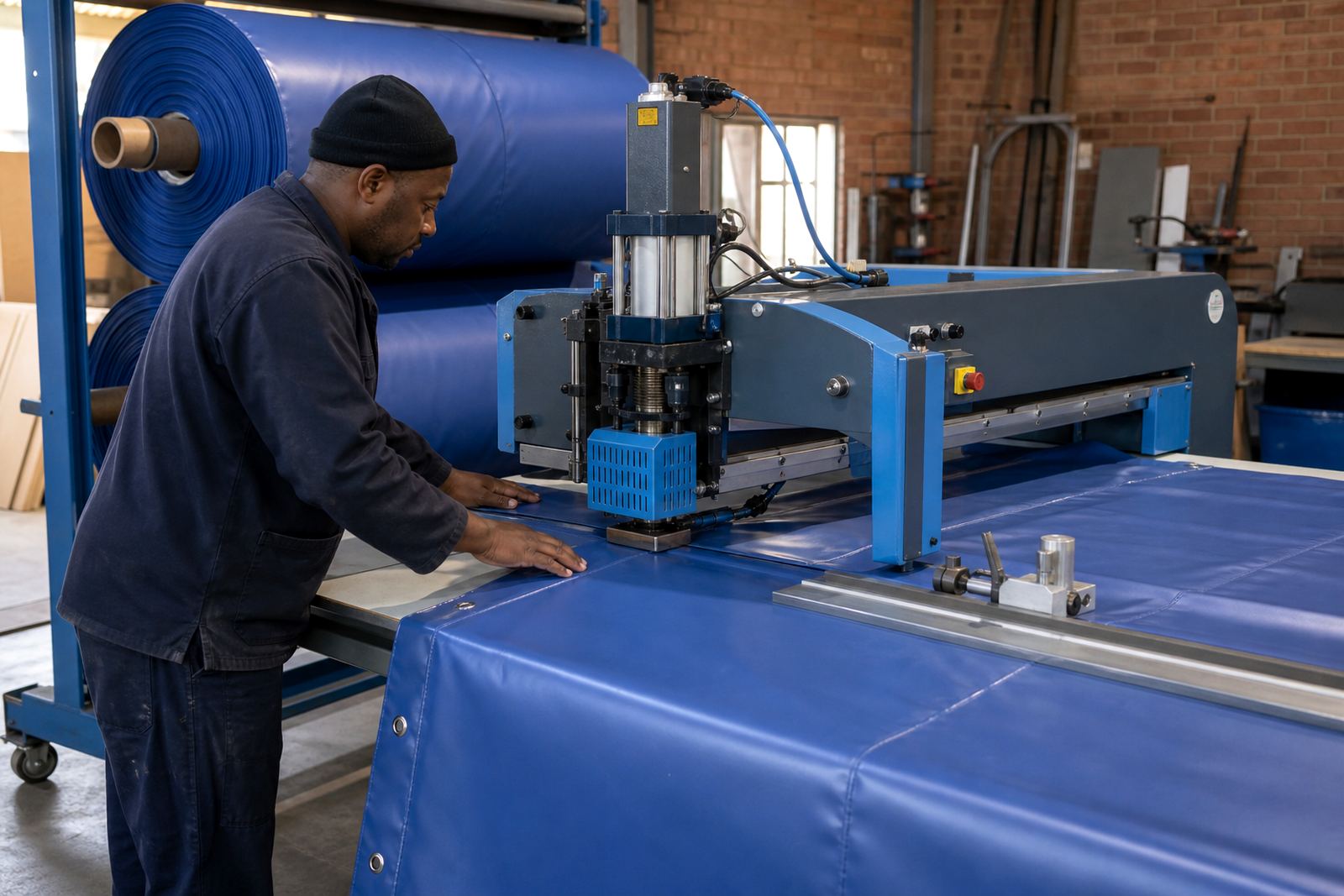
We looked at the full chain of the work, not only the weld itself. That included the table setup, operator stance, roller condition, guide marking, and how the material was being cut before it reached the welding stage. In this case the machine was functioning, but the setup was not helping the operator keep a straight feed on repeated lengths.
- Long panels were creeping out of line at the point of entry.
- Heat spread was uneven on wider seams.
- The finished roll edge was tighter on one side than the other.
- Repeated panels were not matching as closely as they should.
Equipment and seam work we put in place
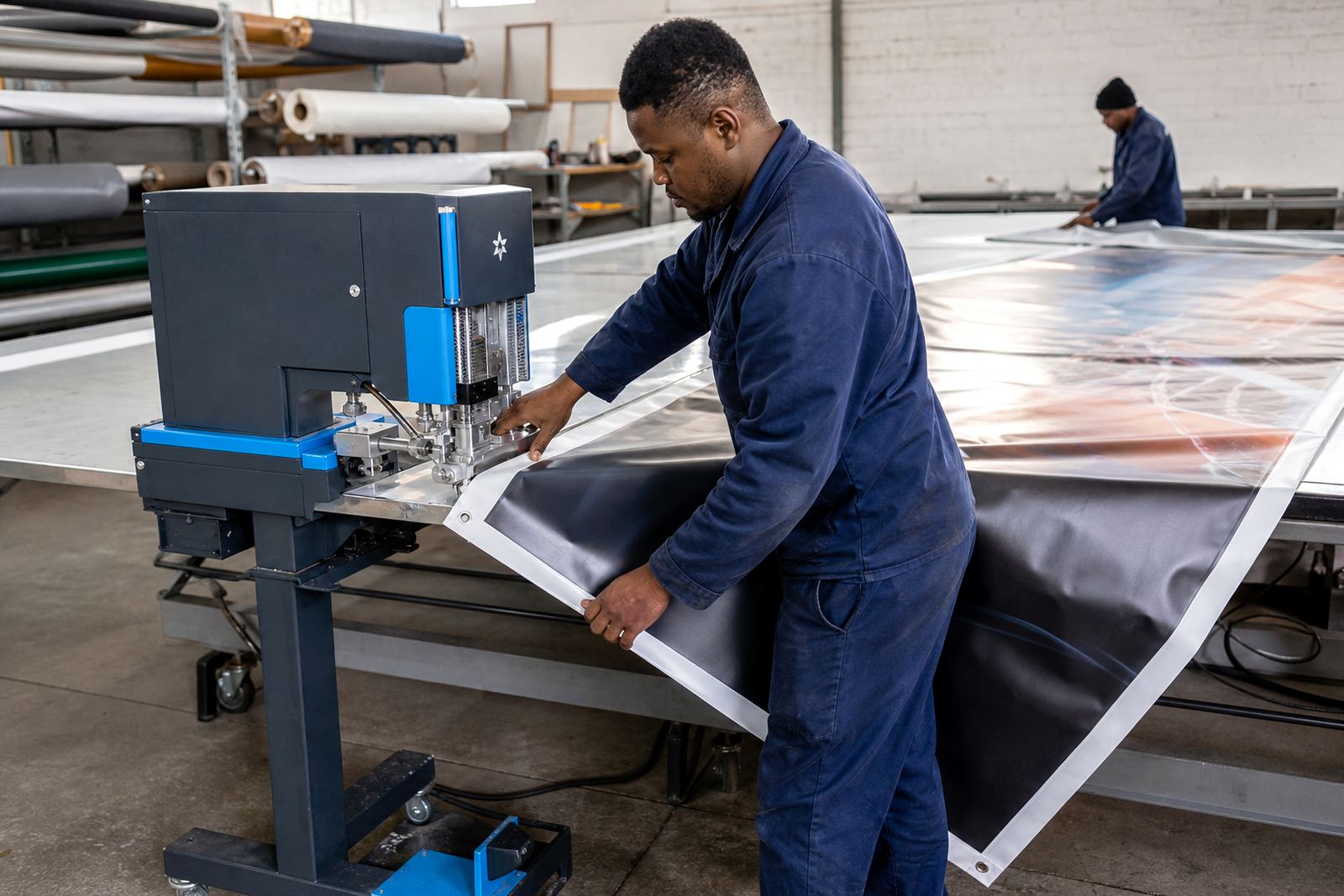
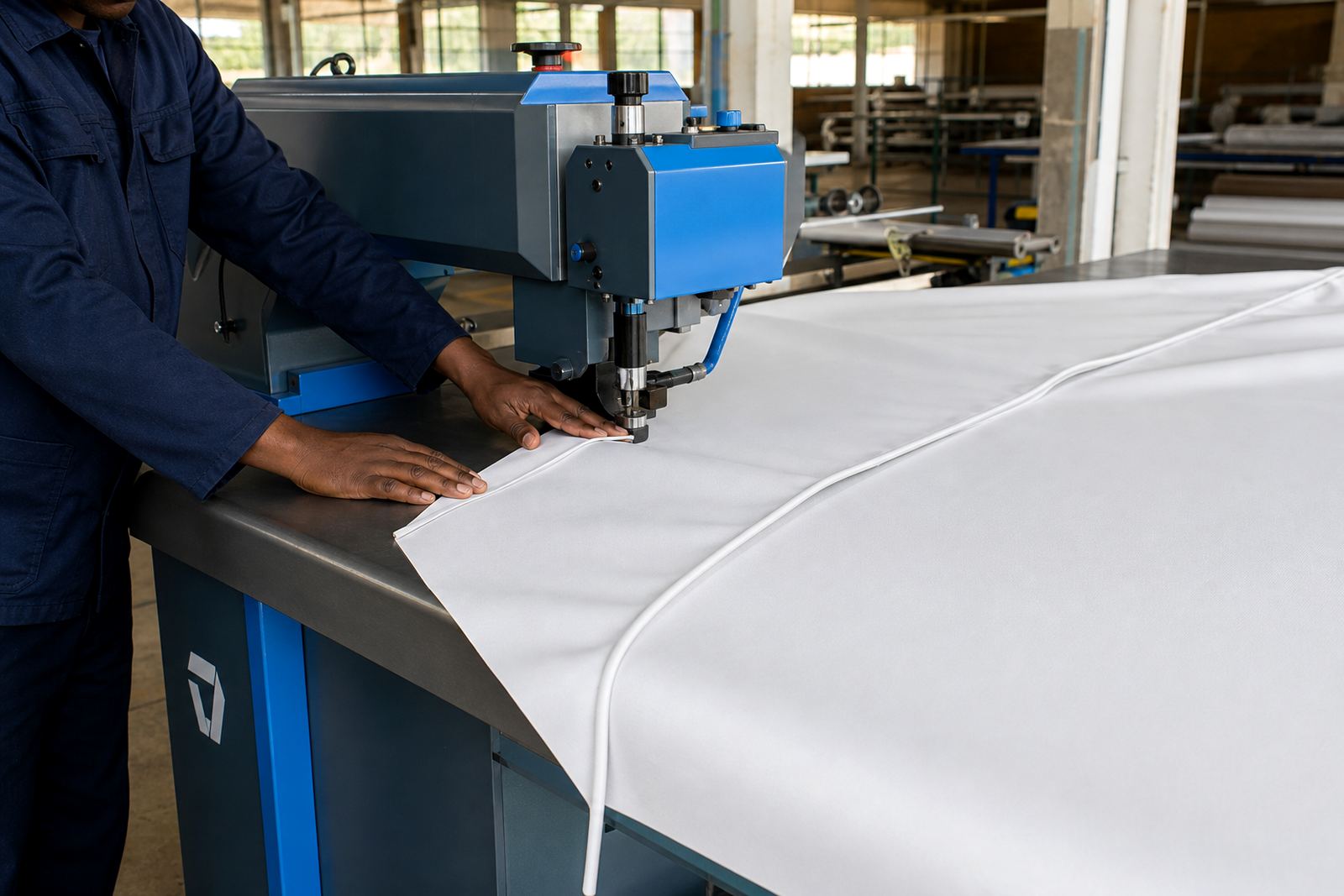
We supplied and set up welding support suited to PVC-coated fabric work, with a focus on high-frequency welding for clean, controlled seams and hot-air support where detail work was needed. The cover maker was producing rolled pool cover assemblies, so the weld schedule had to suit straight runs, reinforced hems, and attachment points that needed repeatable positioning.
Where the build called for it, we worked on seam types that are common in this trade: lap seams for strength, folded hems for edge control, and keder-ready edges where the profile had to feed smoothly into a rail or channel. We also checked eyelet work and spacing so fixings did not distort the panel line after welding.
- High-frequency weld setup for straight, repeatable seams.
- Hot-air finishing for detailed edge work and local adjustments.
- Hem control for rolled assemblies and edge reinforcement.
- Keder alignment checks for clean feed into tracks.
- Eyelet spacing review to keep tension even.
How we handled the workshop constraints
The workshop had to keep moving while the changes were made, so the work was phased across the production flow rather than shutting everything down. We first checked tooling alignment, then adjusted guide points and pressure settings, and after that we ran test lengths on the same fabric weight the client uses in normal production. That let us see how the seam behaved before handing the line back for full output.
Because pool cover work in Pretoria can involve broad daylight handling and fairly wide sheets, the operator training was kept practical. We showed the team how to feed the material with less side pull, how to spot early drift, and how to check seam consistency before the panel moved on to the next stage. A small shift in operator rhythm made a real difference to the final line.
- Guide points were reset for straighter feed.
- Pressure and heat balance was checked on test lengths.
- Operator handling was adjusted for wider panels.
- Finished pieces were checked before moving to trimming.
Timeline and delivery in weeks
The job moved through three weeks from first inspection to handover. Week one covered assessment, alignment checks and discussion of panel sizes and the production sequence. Week two dealt with setup changes, tooling adjustment and seam testing on the client’s own PVC-coated fabric. In week three we finished operator guidance, final checks and support on the first production runs after the changes.
That timing suited the client because it allowed them to keep taking orders while the process was being refined. There was no need for a full stop in production, and the workshop could keep working through normal cover jobs while the weld quality was improved in stages.
What changed on the finished pool covers
After the adjustment work, the panel alignment improved noticeably on the rolled assemblies. The edges tracked straighter, the hems sat flatter, and the repeated sections were matching better from one cover to the next. For a product that gets rolled, handled and tensioned often, that kind of control matters because small faults show up quickly once the cover is installed.
The client also found the weld process easier to manage on longer lengths. Operators had a clearer reference for feed direction, the seam line was more stable, and the finished work looked more consistent on the visible faces. That helped with both production flow and the presentation of the final cover.
- Straighter alignment across long panel lengths.
- Cleaner hems and fewer edge corrections.
- Better repeatability across similar cover sizes.
- Less rework after seam inspection.
What we’d repeat on another keder graphics job
We would tackle a similar Pretoria pool cover project in this order: inspect the current weld path, correct the alignment points first, then tune the seam settings to the fabric weight and panel size. That sequence makes it easier to isolate the cause of drift instead of trying to fix every issue at once.
We would also keep the operator training hands-on and short, with test lengths using the actual production material. For a fabricator working with rolled pool cover assemblies, that is usually the quickest way to get stable panel control, neater hems and a better fitting finished product.
Key facts
| Project town | Pretoria |
|---|---|
| Client type | Pool cover fabricator |
| Main issue | Panel alignment drift on rolled assemblies |
| Welding methods | High-frequency and hot-air PVC welding |
| Key work | Seam testing, tooling alignment, operator training |
| Project timeline | 3 weeks |