Alberton Brief For Repeated Outdoor Hanging
The job came from an event supplier in Alberton that produces banners for outdoor activations, road-facing promotions and short-run displays. Their main need was not just a neat finish, but a banner edge that could be folded, welded and punched for eyelets without opening up after a few uses. They also wanted the work to stay consistent across different panel sizes, from smaller directional banners to longer format runs used around venues and fence lines.
The brief was clear: keep the seams straight, make the hems strong, and prepare the banner edges so the fixing points would hold under wind and handling. The material used was PVC-coated fabric suitable for sign and display work, and the finishing had to suit repeated rolling, transport and re-hanging between events.
- Client type: event supplier in Alberton
- Material type: PVC-coated banner fabric
- Finish required: hemmed edges with eyelet-ready borders
- Use case: repeated outdoor display and event branding
What The Material Needed To Survive
Outdoor banners in Gauteng can spend long hours in sun and dust, then get packed wet or dusty after a show. That means the weld has to bond evenly, especially on folded hems where stress builds around the eyelets. We also had to keep the surface flat enough for printing and easy handling, because a distorted edge can throw out the line of the whole banner.
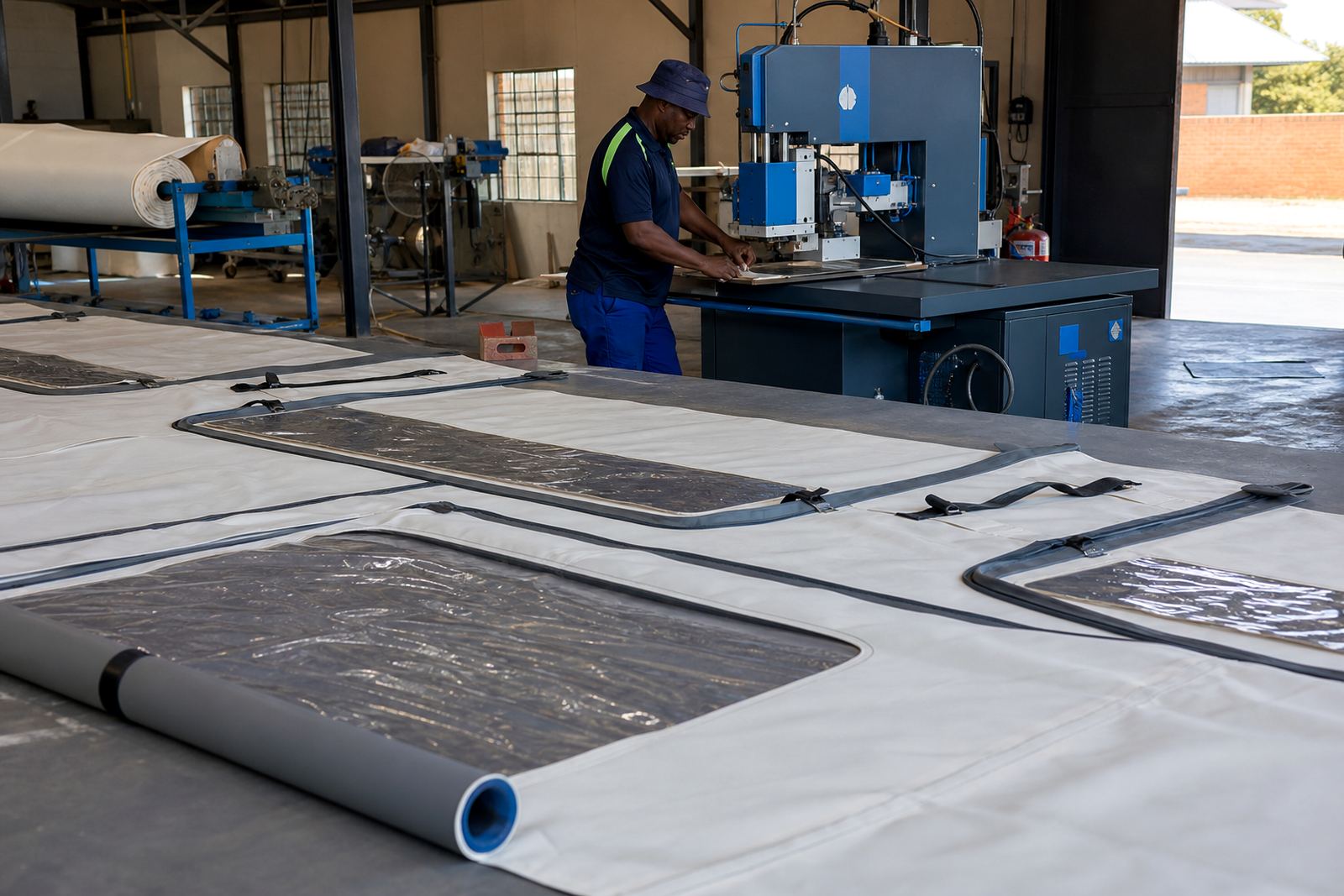
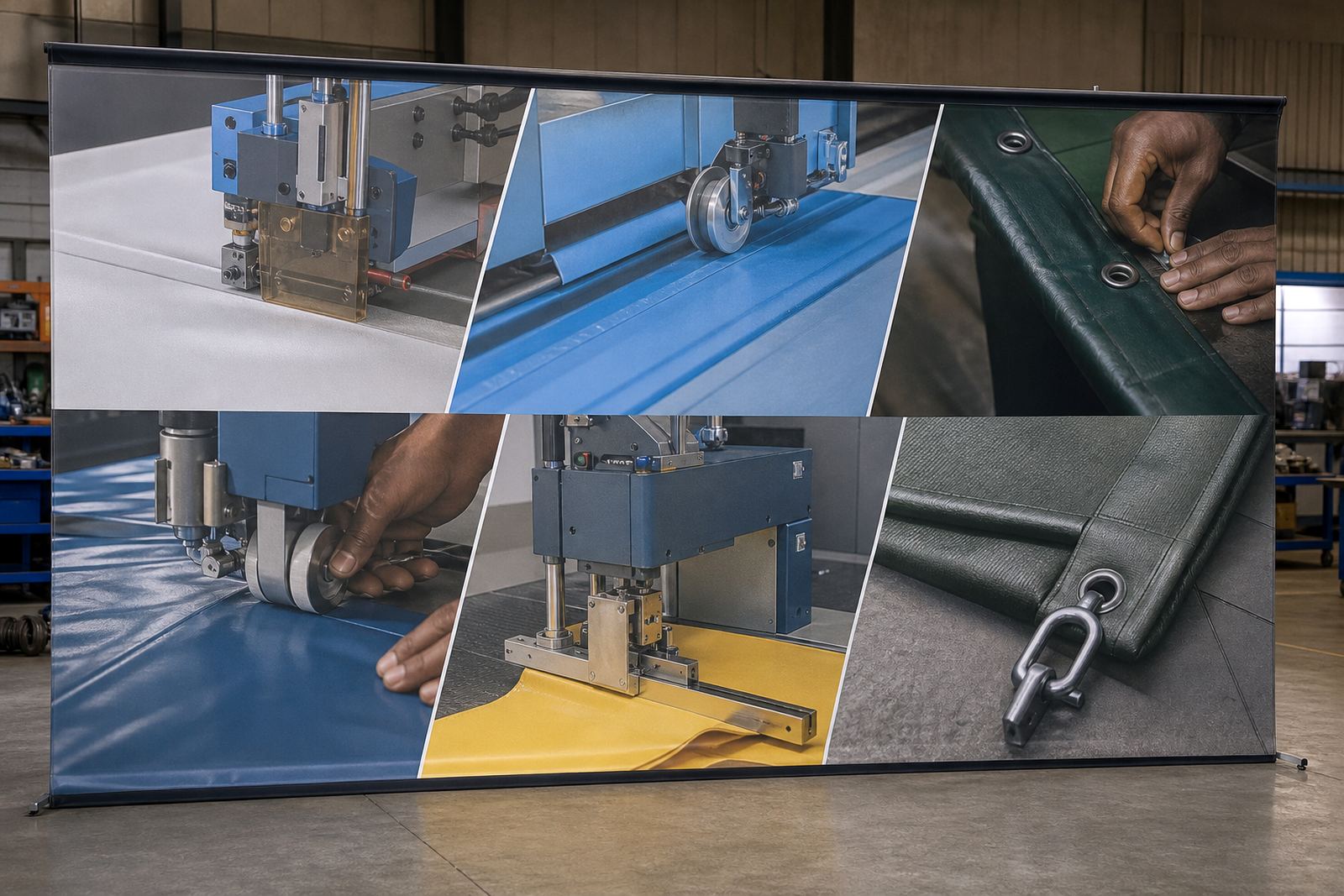
For this project we treated seam control as the main job. High-frequency welding was used where a clean, pressure controlled bond was needed on compatible PVC-coated sections, while hot-air welding supported areas where linear joins and fold preparation needed careful heat control. In the same workflow, the finishing team checked for edge alignment, corner squareness and enough material allowance for the fixing points.
- Edge strength needed for wind load and repeated handling
- Flat weld lines for a clean printed finish
- Consistent fold width for hems and reinforcement
- Space left for eyelet placement and corner stress points
Seams, Hems And Fixing Points We Set Up
We supplied and supported a finishing flow that covered the common banner details used in event work. That included straight hems, double-fold edges, welded overlaps and prepared strips for eyelet setting. Where the client needed a cleaner edge for roll-up storage, we kept the seam line even and reduced bulky corners that tend to catch during packing.
The weld pattern was matched to the part of the banner being made. Long straight edges were handled differently from corners or hanging points, and that made a difference to the final look. For larger banners, a tidy hem can save time on site because the fixing points land where they should and the banner hangs level without fighting the frame or fence.
- Hemmed edges for repeated outdoor use
- Eyelet-ready borders for rope, cable ties or hooks
- Corner reinforcement where stress is highest
- Prepared sections for keder where the job called for track fitting
Workshop Setup And Operator Training
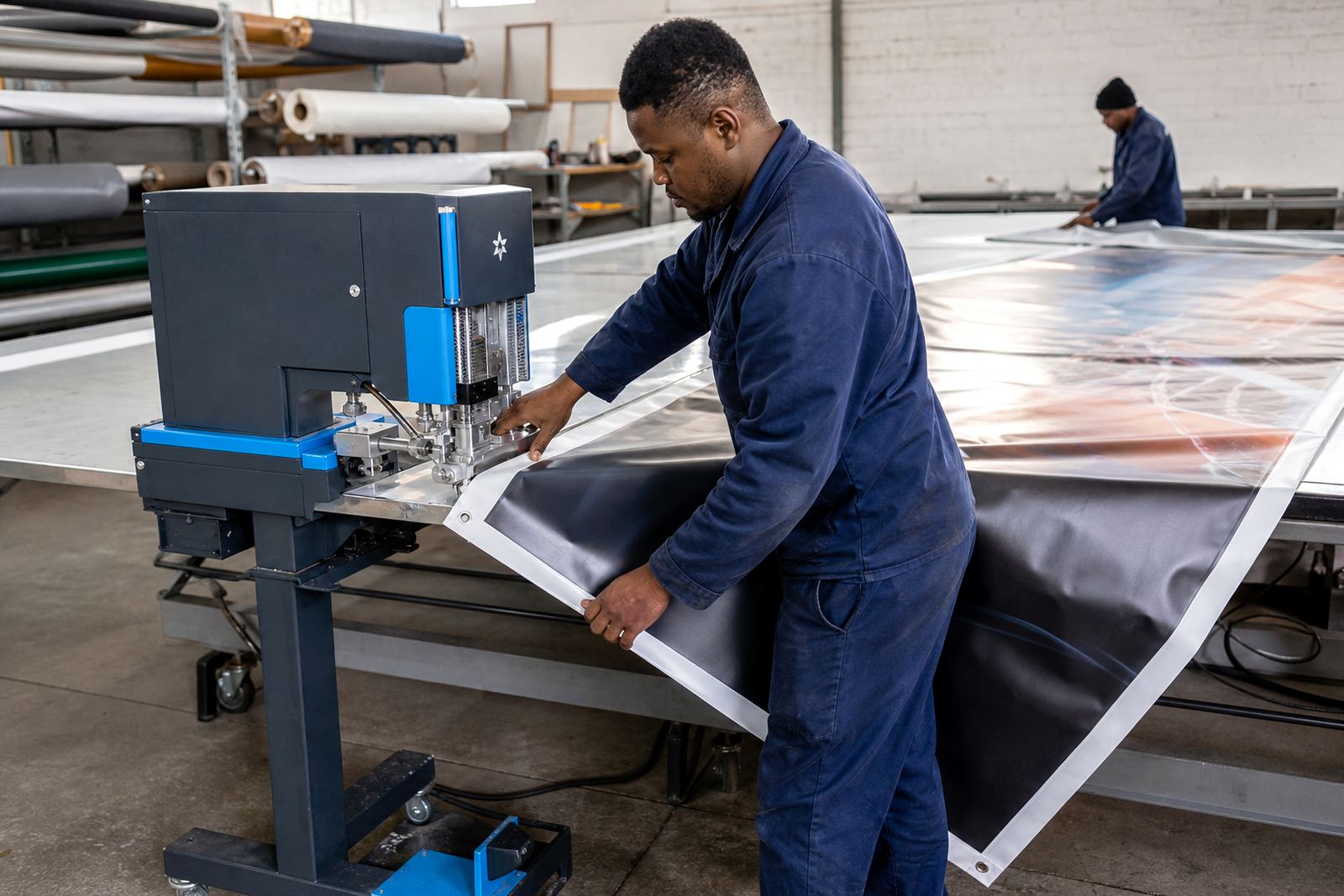
We assisted with machine installation and operator training so the team could run the equipment safely and keep output steady. That covered temperature and pressure control, material feeding, alignment of the welding head and the correct handling of PVC-coated fabrics before and after the weld. A good operator can spot when the sheet is sitting a few millimetres out, and that small correction saves a lot of waste later on.
Safety was part of the training from the start. The team were shown how to keep hands clear of hot tooling, manage moving rollers and maintain a clean work area around the machine. We also covered practical workshop habits that matter in a busy banner environment, like checking cables, keeping dust off the guide surfaces and not forcing warped material through the weld path.
- Machine installation and commissioning
- Operator training on feed, heat and pressure settings
- Safe handling around hot tooling and moving rollers
- Basic daily checks before a production run
Support For Eyelets, Keder And Fast Turnaround
The client asked for a finish that could be adapted across different event jobs, so we kept the setup flexible. Some banners needed simple eyelet spacing along the perimeter, while others needed heavier edges for frequent rehanging. Where track fitting was required, we discussed keder preparation and the edge dimensions needed for a neat slide-in fit. That way the same production line could handle more than one banner style without constant rework.
We also looked at the parts of the process that tend to slow a busy shop down. Tooling alignment, roller condition and electrode wear all affect the consistency of the weld. When those items are checked regularly, the crew can keep moving from one banner size to the next without fighting bad seams or crooked edges.
- Eyelet spacing set for practical site installation
- Keder-ready edge options for track mounted displays
- Tooling alignment to keep seam width even
- Preventive servicing to reduce stoppages in peak periods
Result On Site And What Held Up Best
After the finishing process was settled, the banners left the workshop with stronger edges and cleaner hanging points. The client could pack, transport and re-use the banners for multiple outdoor jobs with less edge damage and fewer failed eyelet points. The finished panels also sat better on site, which matters when an event team is working with wind, uneven fixing points and a tight set-up window.
The result was not flashy, just practical and dependable, which is what matters in event work. The banner edges held their shape, the weld lines stayed tidy and the repeated-use requirement was met without adding awkward bulk to the hems. For the client, that meant less patching and fewer last minute repairs between installations.
- Cleaner perimeter finish for repeated hanging
- Reduced fraying at folded edges
- More dependable eyelet points under outdoor stress
- Better handling during packing and storage
What We Would Do On The Next Banner Run
If the same Alberton team asked for another batch, we would keep the same practical sequence and adjust only where the job size or fixing method changed. That means checking the sheet dimensions first, confirming the eyelet pattern, matching the hem allowance to the final hanging method and doing a quick seam test before full production starts. Small checks at the front save wasted material later on.
We would also keep servicing in step with the production load. For banner workshops, that usually means preventive checks on the weld heads, rollers, alignment points and consumable parts before the machine starts slipping on a batch. In a busy season, that kind of care keeps the line moving and helps the team hold the same finish from the first banner to the last.
- Confirm panel sizes and hanging method first
- Set the hem allowance to suit the fixing points
- Run a seam test before the main batch
- Check tooling and rollers before peak production periods
Key facts
| Project location | Alberton, Ekurhuleni |
|---|---|
| Client type | Event supplier handling outdoor banners |
| Material | PVC-coated banner fabric |
| Finish | Hemmed edges with eyelet-ready borders |
| Welding methods | High-frequency and hot-air welding |
| Delivery window | Completed over 2 weeks |