Working the seams, hems and hang points
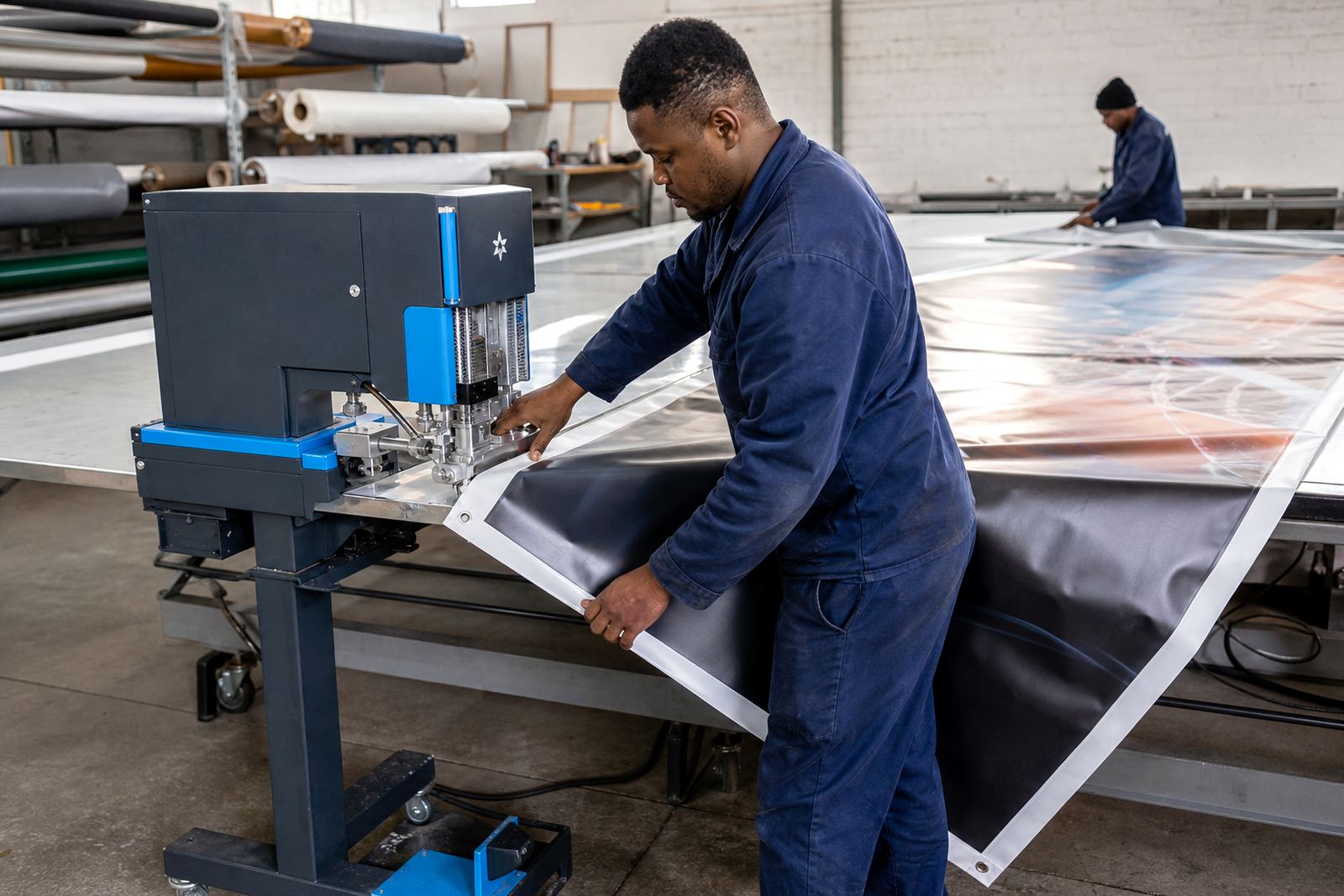
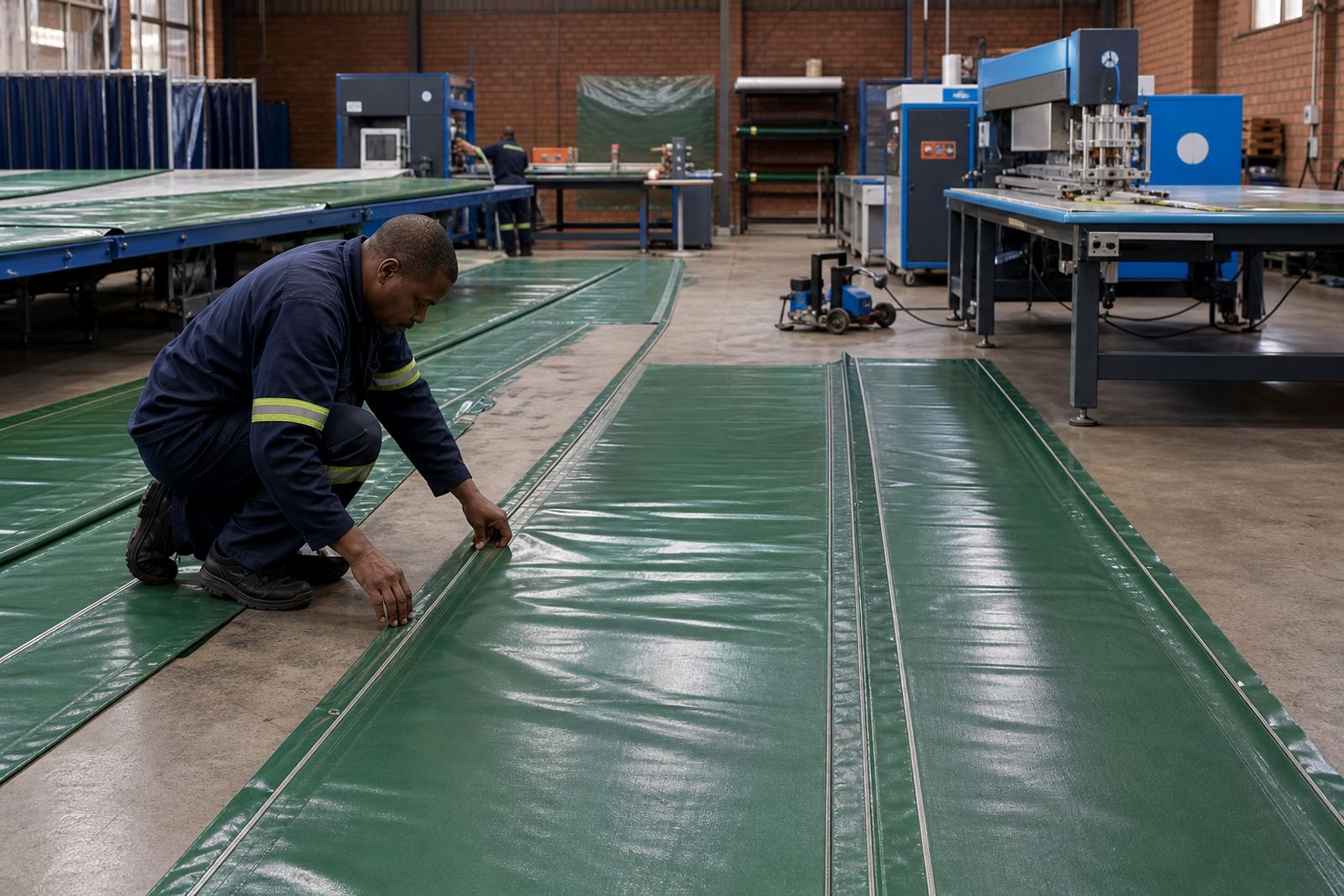
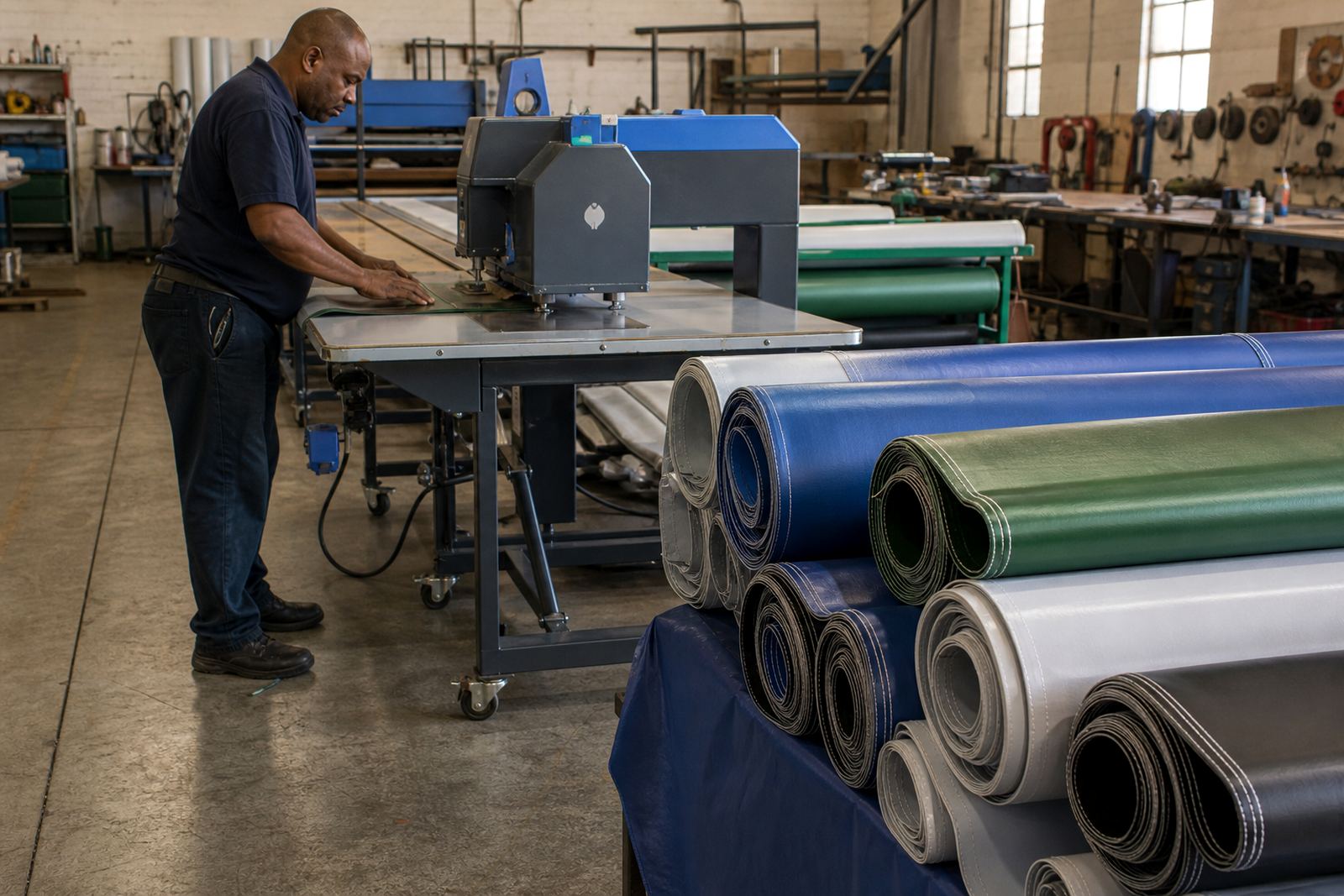
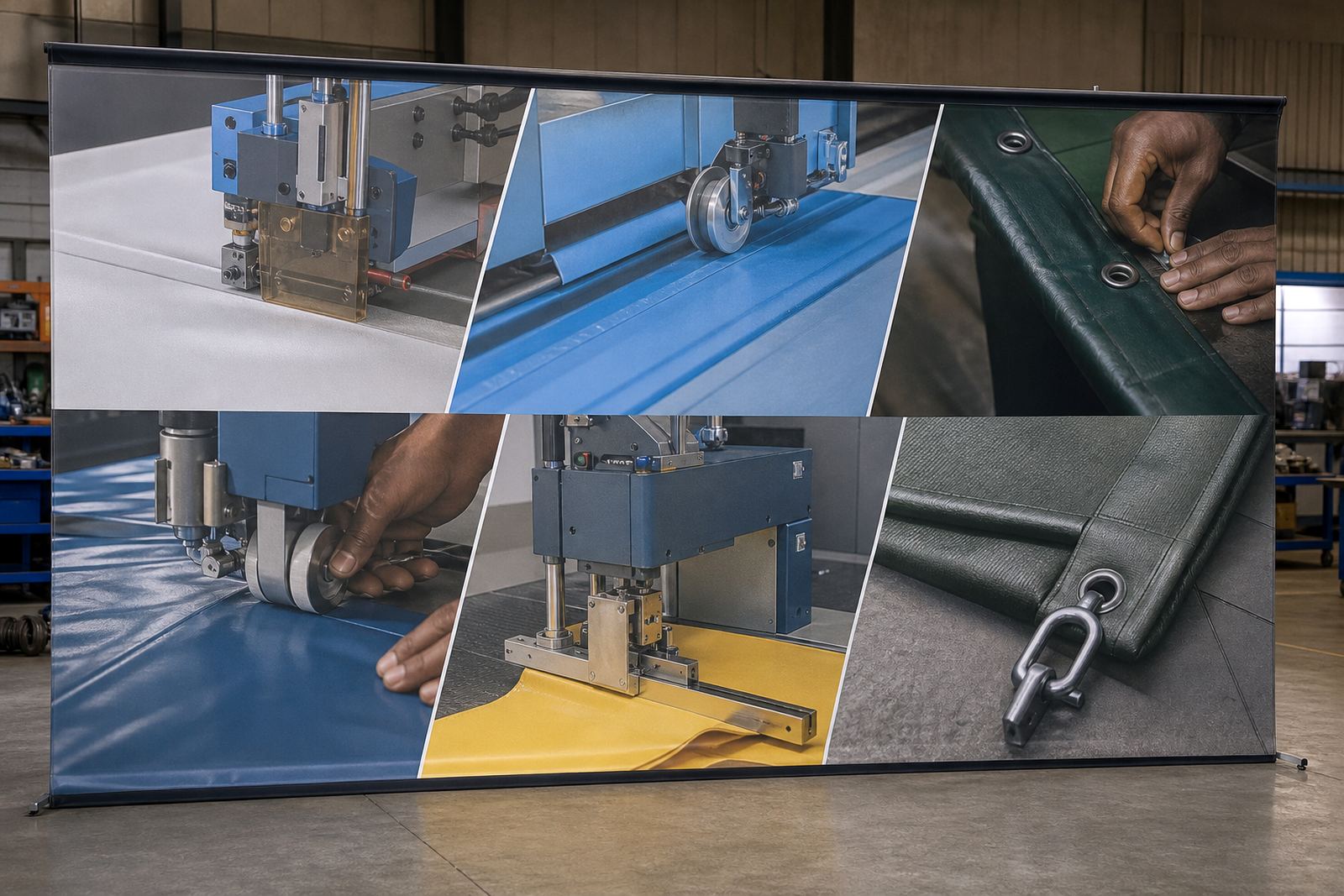
We fabricated the backdrops with welded construction rather than stitched joins, which gives a cleaner edge on PVC-coated material and avoids needle holes along the seam lines. High-frequency welding was used where a crisp, sealed join was needed and hot-air welding was used for sections that suited a more controlled heat application. That combination gave the crew a practical finish for a stage product that needed to look tidy from the audience side and hold together through normal event handling.
The top pockets were sized for the hanging method the team used on site, while the side hems were turned and welded to keep the edges flat. We added extra attention to the stress points so the fabric would not pucker where the backdrop is lifted or tensioned. On this type of work, the details matter. A small uneven seam or loose pocket can show under stage lighting and spoil the front face, especially on darker fabrics or printed sections.
- Top pockets made for straightforward hanging
- Side hems welded flat to control edge curl
- Stress points strengthened for repeated rigging
- Seam layout kept clean for a stage-facing finish
Constraints from the venue side
The venue side brought a few limits into the job. The backdrops had to pass through tight access points, so we kept the panel sizes practical for moving in and out without scuffing the fabric. The client also needed a finish that would not collect dust too easily, because event gear in storage often picks up dirt from transport and handling. With stage work, even a small mark can be visible once the lights come up.
Soweto event spaces can vary a lot, from school halls to community venues and larger function setups. That means the backdrop must work in spaces with different rigging heights and fixing points. We built the panels with enough tolerance for site adjustments, but not so much that the drop would look loose or uneven. The result was a set of backdrops that could be adapted on site without losing its shape or presentation.
- Panel sizes kept manageable for transport and handling
- Fabric chosen to reduce visible edge distortion
- Built to suit changing rig points at different venues
- Finished panels stayed tidy under stage lighting
What we supplied and set up
The supply included welded backdrop panels with top pockets, side hems and reinforced hanging areas. We also checked the seam alignment, pocket depth and edge finish before dispatch, because those are the points that determine whether a backdrop hangs straight on the day. For a live events team, a backdrop is only useful if it goes up cleanly and sits right the first time, without constant reworking on site.
Along with the fabrication, we handled the practical machine and production side around the job. High-frequency welding suits straight seam work on PVC-coated fabrics, while hot-air and hot-wedge methods are useful where the panel shape or edge detail calls for a different heat pattern. Where eyelets are used on event products, they need proper spacing and alignment, but for this order the hanging method was based on pockets and hems rather than eyelet suspension. That kept the front face simpler and better suited to the stage use case.
- Welded backdrop panels supplied ready for rigging
- Top pocket depth checked for the hanging method used
- Seam alignment verified before the job left the workshop
- Method chosen to keep the visible side neat and uncluttered
Timeline and handover in weeks
The project ran over a short, workable production window of two weeks. The first stage covered measurements, material selection and confirming the hanging details. The second stage covered cutting, welding, finishing and checking the final panel fit. Because stage work can move quickly, the team needed the backdrops delivered in a condition that reduced last minute site adjustments, and that shaped how we handled the finishing.
At handover, the panels were reviewed for seam straightness, pocket consistency and edge finish. We also checked that the welded hems sat flat and that the panels folded without creating hard creases at the main stress points. A backdrop that is well made in the workshop saves a lot of time at venue level, especially when a crew is working under pressure with lighting, sound and stage dressings all moving at once.
- Project duration: 2 weeks
- Stage 1: measurement and finish confirmation
- Stage 2: cutting, welding and final checking
- Handover focused on fit and handling readiness
What changed for the events team
The finished backdrops gave the Soweto crew a cleaner stage line and less trouble with edge lifting. The top pockets made hanging quicker, while the side hems helped the panels fall properly instead of twisting at the corners. The event team also had a better result when packing and unpacking, because the welded construction held its shape better than a lightly stitched alternative would have done on this type of material.
For live events, the value is often in the repeatability. If a backdrop can be used at one venue, folded, moved and used again with the same neat appearance, it saves time and keeps the stage looking planned rather than patched together. That was the main outcome here, along with a finish that suited the front-of-house view and the practical demands of live event work in and around Soweto.
- Cleaner presentation on stage
- Faster hanging with pocketed tops
- Better shape retention after folding and transport
- More consistent results across different venues
Key facts
| Project | Soweto stage backdrops |
|---|---|
| Client type | Live events team |
| Location | Soweto, Gauteng |
| Product format | PVC-coated fabric backdrop panels |
| Finish | Top pockets and side hems |
| Timeline | 2 weeks |