Centurion shop floor, mixed sizes, one finishing standard
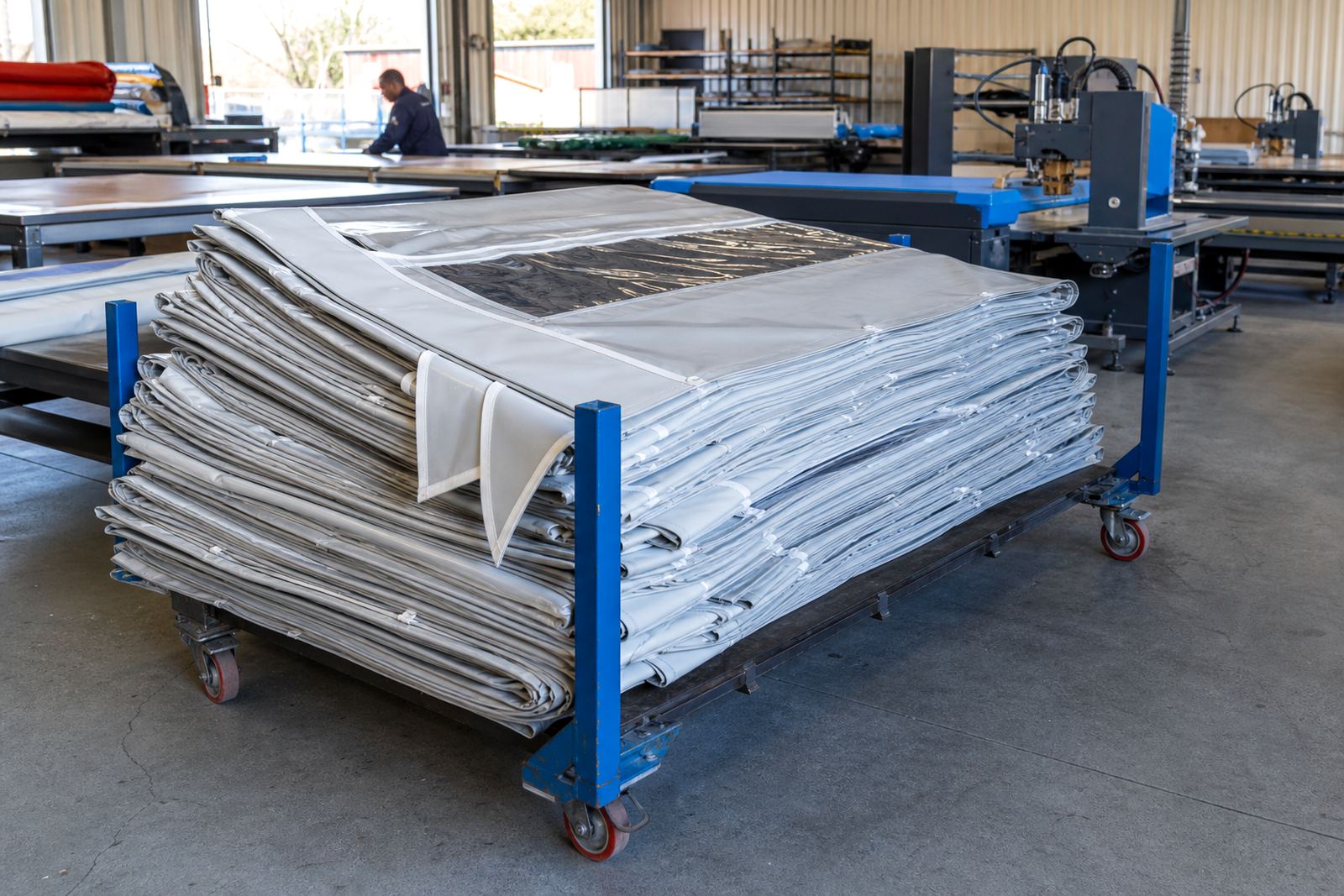
The client was a print finishing shop in Centurion handling banners for retail fronts, events and site notices. Their issue was not the print side, it was the edge work. Some jobs were finished with stitched hems, some with loose folds and some had minor lift at the corners after handling. In a busy finishing room that meant inconsistent fitting and extra time spent checking each piece before dispatch.
The brief was to standardise welded hems across a range of PVC-coated banner materials and keep the finish neat enough for close viewing. They also needed a process that could cope with different widths, repeated handling and the damp mornings that are common in Gauteng when material sits in the store room for too long. The shop wanted a practical setup, not a complicated one.
What was supplied for the hem line
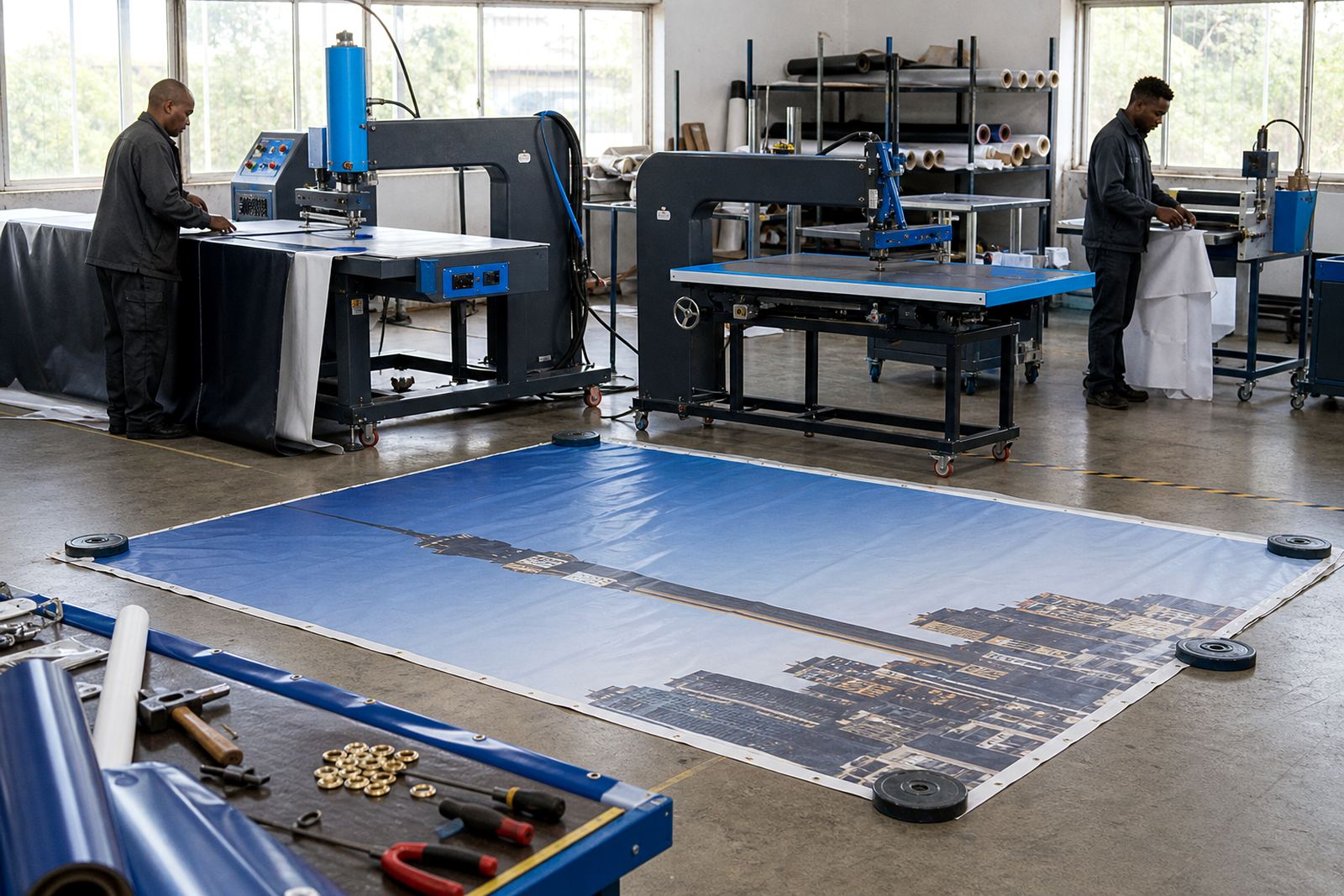
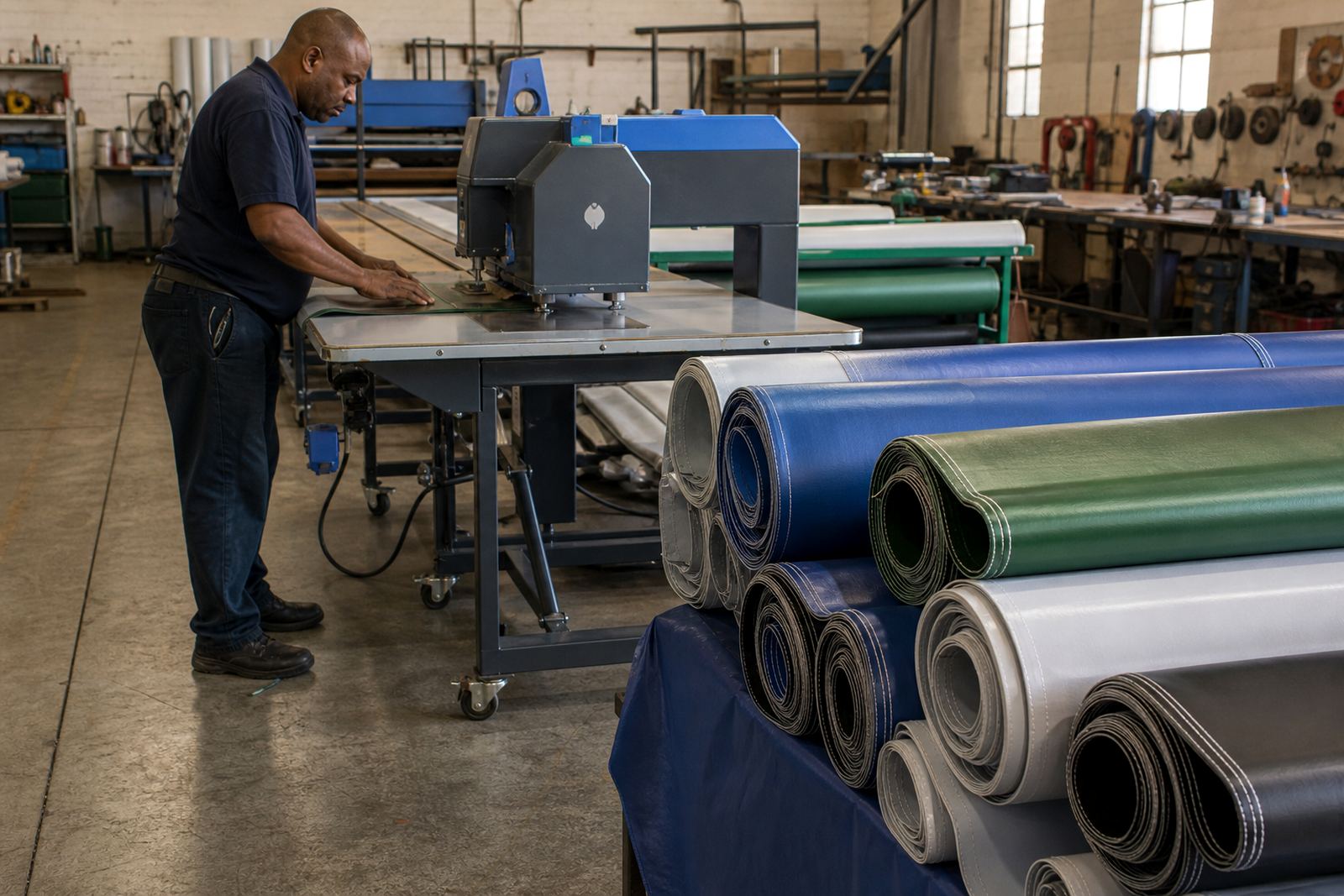
We supplied and set up a high-frequency welding approach for PVC-coated fabrics where the material and seam design suited radio frequency heat. For sections where the material build-up or panel shape called for it, hot-air and hot-wedge methods were also discussed for hems, overlays and repair work. The job focused on repeatable edge finishing, with clean folded hems, corner shaping and attachment points for eyelets and keder where needed.
The core work covered the following:
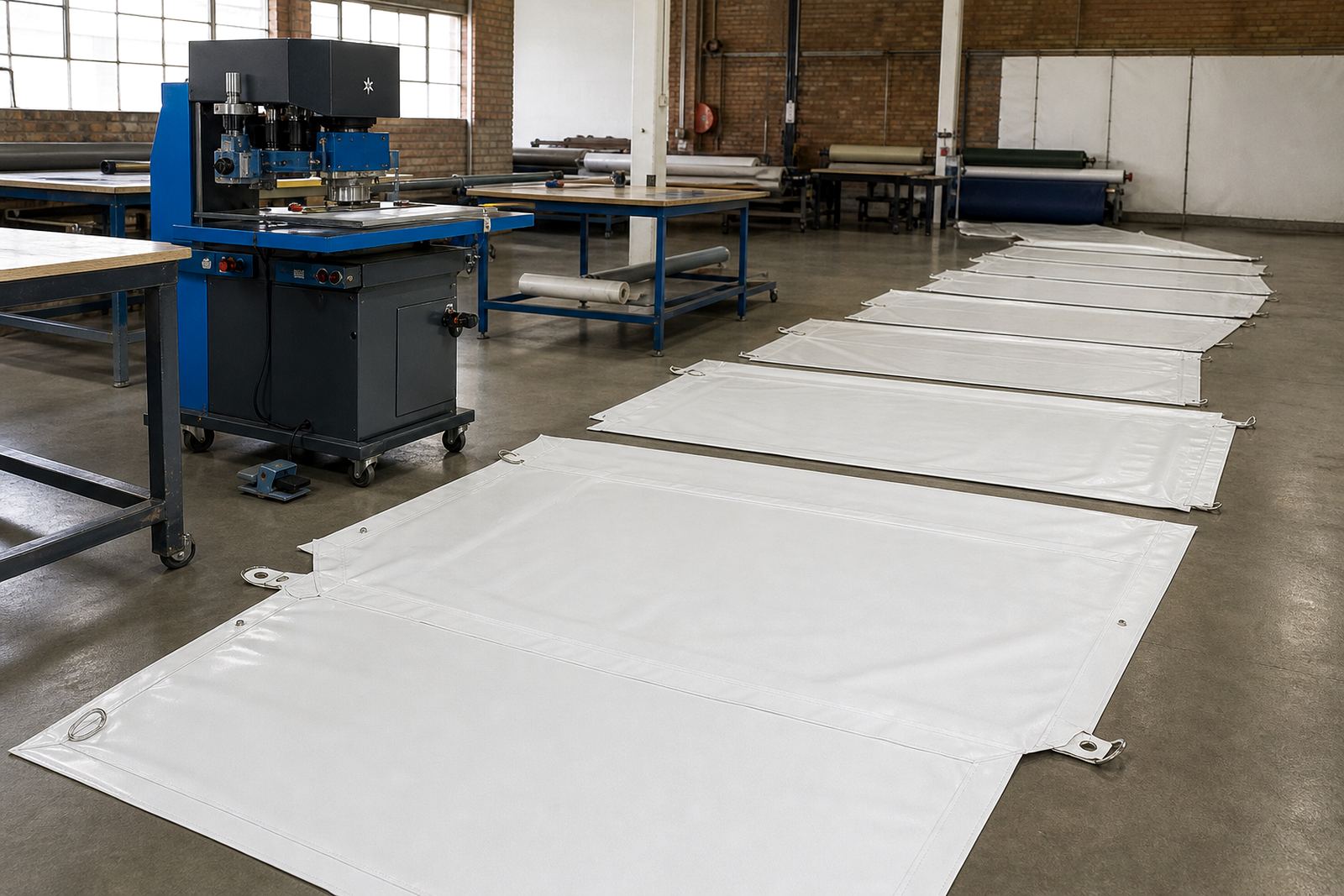
- Welded hems on mixed banner sizes, including small point-of-sale pieces and larger display banners
- Seam layouts for straight edges, mitred corners and reinforced stress points
- Keder preparation on selected panels for track-fed hanging systems
- Eyelet work where mechanical fixing was still needed at mounting points
- Operator setup for consistent fold width and alignment during production
The machine setting had to suit both light and heavier PVC-coated stock. Too much heat can mark the surface, too little leaves a weak seam. The finishing team needed the weld to hold properly without distorting the banner face, especially on jobs where the print carried close to the edge.
Constraints from a busy finishing room
Centurion print rooms often work with changing job sizes, and this one was no different. The team had to move from narrow strips to wide panels without spending half the day resetting guides. The floor space was also tight, so the welding station had to fit into the existing flow between trimming, eyeleting and packing. Dust from cutting and offcuts was another issue, because it can affect surface contact and seam quality if housekeeping slips.
There was also a practical safety concern. High-frequency welding needs controlled handling around the electrode area, clear guarding and proper operator positioning. For hot-air and hot-wedge work, the crew needed to watch heat exposure, material movement and the condition of nozzles, wedges and rollers. The aim was a finishing line that stayed steady even when the room was under pressure.
- Mixed job sizes with frequent changeovers
- Limited floor space between trim and packing stations
- Need for repeatable hem widths on printed material
- Clean handling around eyelets, keder and corner reinforcements
- Operator safety and simple day-to-day control
Setting the welds, folding the hems
We worked with the finishing team over a three week period. The first week was spent checking material samples, setting the fold width and confirming which jobs suited high-frequency welding and which were better handled with hot-air or hot-wedge equipment. The second week was used to dial in the seam pressure, trial corner shapes and check how the printed surface responded to heat near the edge. The third week was for final adjustments, operator handover and testing on live production sizes.
The result was a more even hem line across the board. Panels sat flatter when hung, the edge finish looked more deliberate and the shop spent less time reworking curled corners or loose folds. Eyelets landed more consistently relative to the hem, which helped with tension when banners were installed. On the keder jobs, the feed was cleaner and the attachment line stayed straight enough for track use without constant correction.
Seam testing, servicing and the small things that matter
A welding setup is only as dependable as its maintenance. We checked the electrode condition, alignment, pressure points and roller wear before and after the initial run. Where the shop saw uneven heat transfer, we adjusted tooling alignment and reviewed contact surfaces. On the hot-air side, the practical checks were nozzle condition, air control and roller movement. For hot-wedge work, surface tracking and wedge condition needed attention so the fold did not wander.
From a servicing point of view, the important habits were simple: keep dust off the work area, inspect seam edges before full runs, and test the first pieces from each batch rather than assuming yesterday's settings will suit today's material. The Centurion team now had a more repeatable process, especially on jobs where banners were produced in different widths on the same shift.
- Electrode and tooling alignment checked for repeatable seam width
- Corner and hem samples tested before full production
- Wear items monitored for signs of uneven pressure or heat transfer
- Cleaning routine added around the welding station and trimming area
What changed on the finished banners
The most useful result was consistency. Hems no longer looked improvised from one job to the next, and the finishing team could move from small banners to larger panels without changing the whole process. The shop reported fewer edge faults during packing and less time spent sorting pieces before dispatch. For a print finishing business in Centurion, that matters because the last step is often the one that creates delays if it is not controlled properly.
The finished work was better suited to South African conditions as well. Banners that go out to job sites in Johannesburg, Pretoria or further afield can be handled a few times before hanging, and a clean welded hem gives more margin for that rough treatment. On coastal work heading to Durban or Cape Town, a neat welded finish also helps when the material sits in humid storage before installation.
Useful notes for similar banner hem work
For finishing shops working with welded hems, the best results usually come from matching the welding method to the material and the job shape. High-frequency welding suits many PVC-coated fabrics when the seam area needs a strong, even bond. Hot-air and hot-wedge methods are useful where panel geometry, repair work or site adjustments call for a different approach. Eyelets and keder should be planned into the finishing sequence, not left to the end as an afterthought.
If a similar job landed on the bench again, we would follow the same steps: sample first, set the fold width to the print layout, test the seam on actual stock, then keep an eye on tooling wear during the first production run. That is the part that saves time later and keeps the banners looking proper when they leave the shop.
Key facts
| Project type | Banner hem welding for a print finishing shop |
|---|---|
| Town | Centurion, Gauteng |
| Materials | PVC-coated banner fabrics in mixed sizes |
| Methods used | High-frequency welding, hot-air welding and hot-wedge finishing |
| Key outputs | Welded hems, corner reinforcement, keder, eyelet work |
| Project duration | 3 weeks |