A workshop brief with tight repeatability
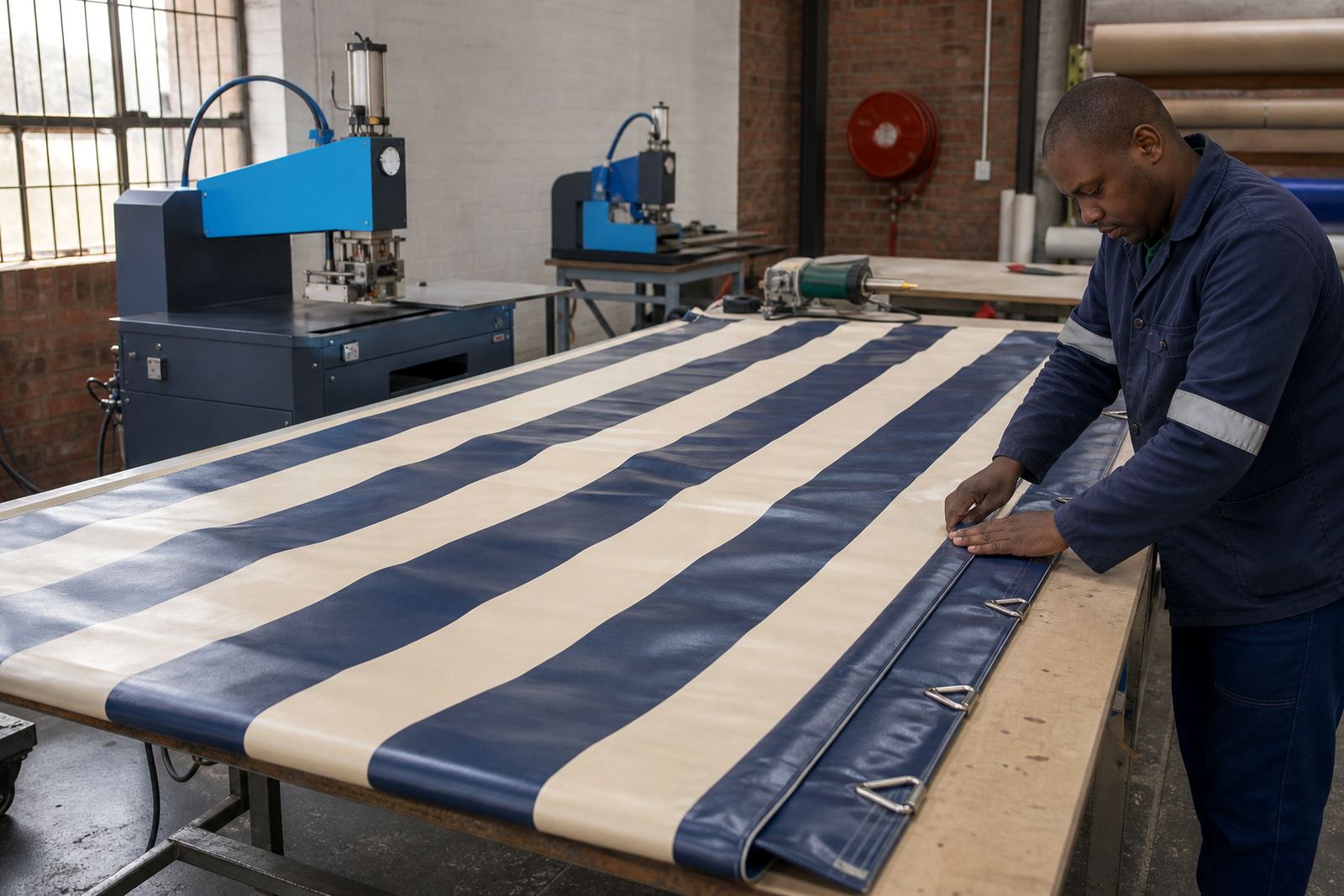
The client in Randburg makes awning skins for domestic and light commercial use, so the brief was practical rather than decorative. They wanted striped PVC-coated fabric panels with repeatable edge finishing, straight weld lines and a layout that made it easier for the team to run multiple skins without drifting off size. The work had to suit a busy workshop environment where one operator might be welding hems while another is preparing keder or punching eyelets.
The main challenge was consistency. Striped material shows every small movement, so if the feed slips or the heat wanders, the line becomes obvious. The workshop also needed a method that would cope with different panel widths, folded hems, reinforcement patches and the occasional return edge for a cleaner face on the finished skin.
- Work type: striped awning skins for workshop production
- Material: PVC-coated fabric used for exterior shade work
- Finish required: repeatable hems, straight seams and tidy corners
- Use case: awning skins for local fitment and replacement jobs
What we supplied for the line
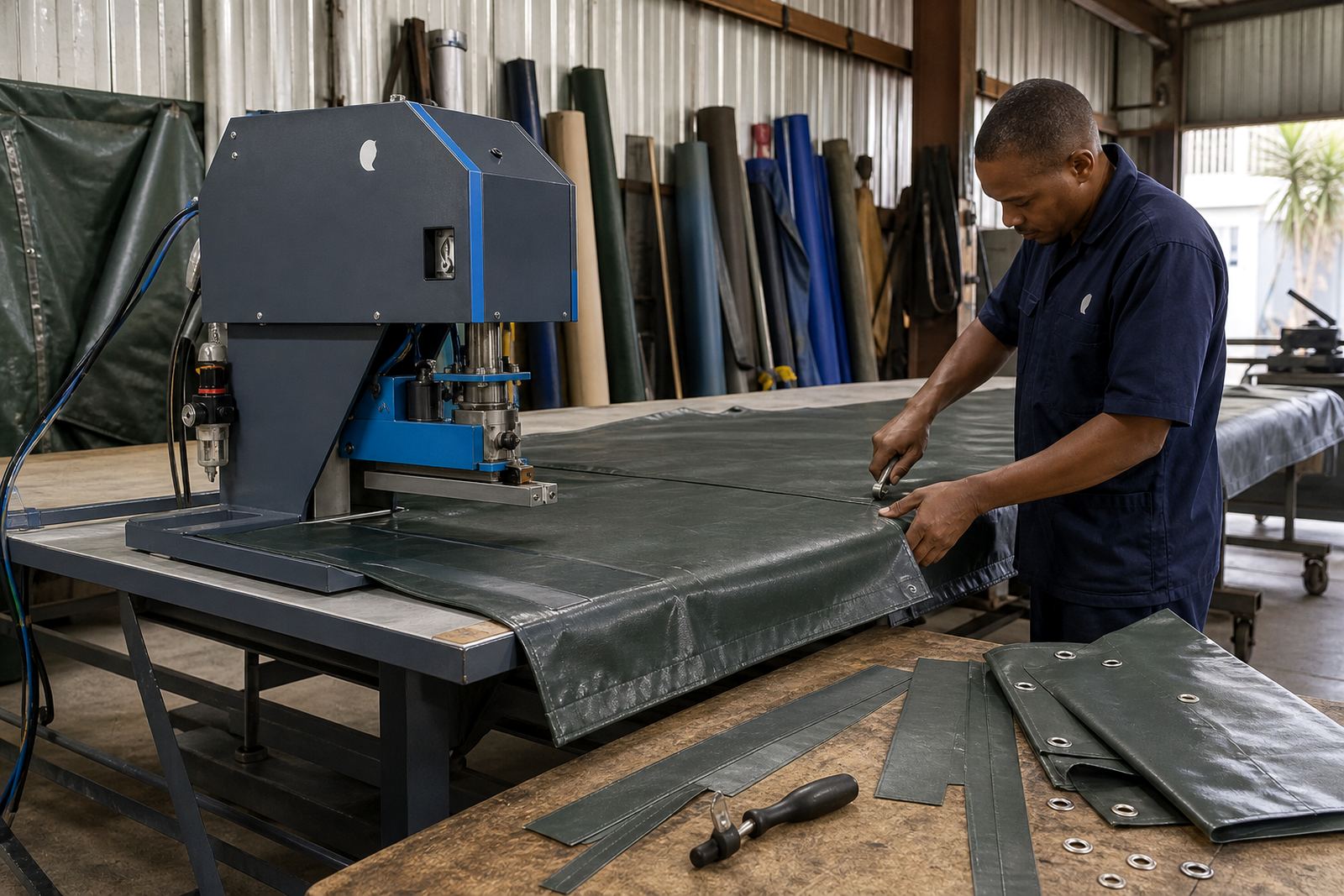
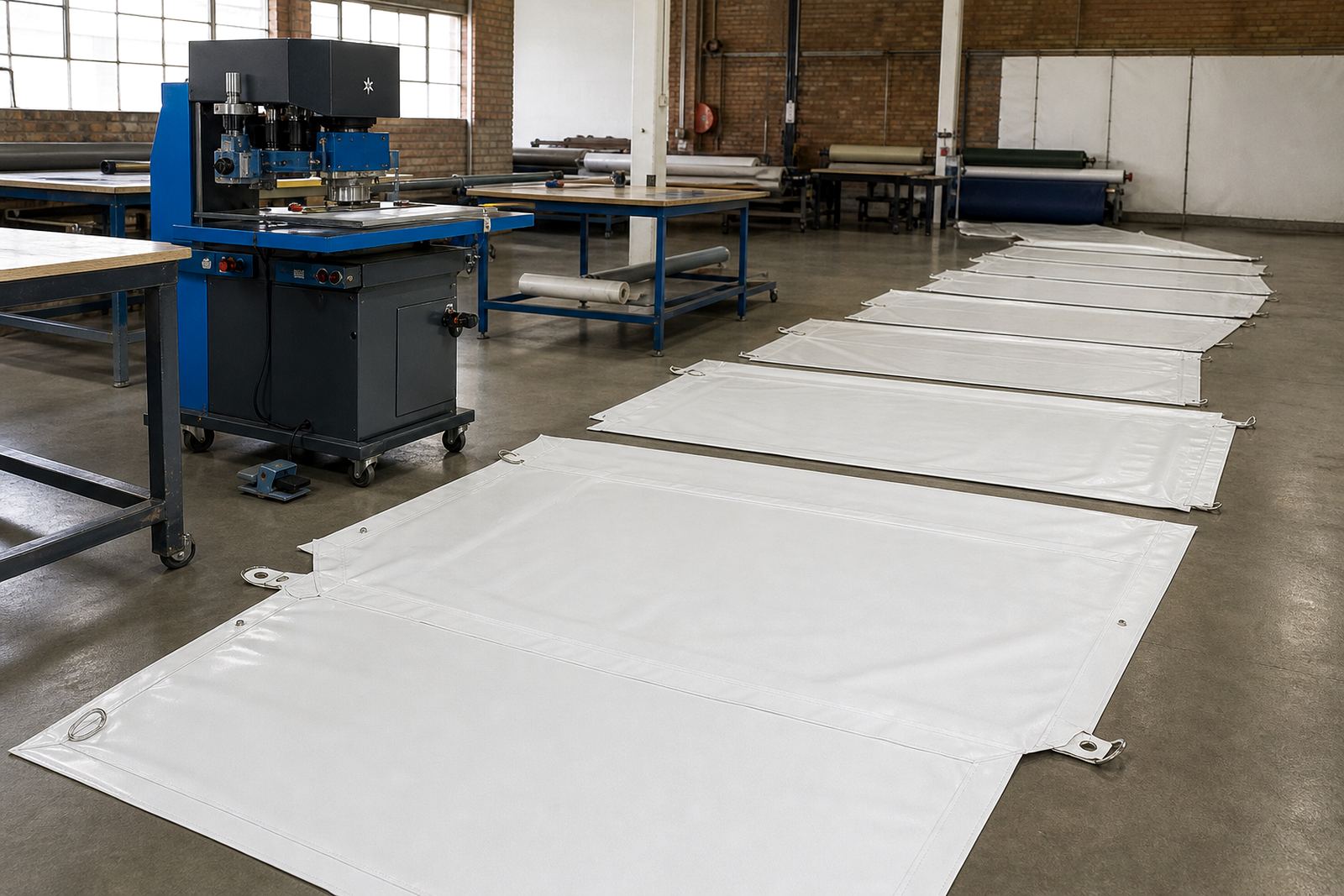
We supplied a high-frequency welding solution suited to PVC-coated fabrics, along with hot-air and hot-wedge methods for jobs where the fabric build-up or panel shape needed a different approach. For this kind of awning work, the machine choice has to match the seam type. Flat lap seams are one part of the job, but hems, keder pockets and reinforcement areas often need a different setting or a different tool head.
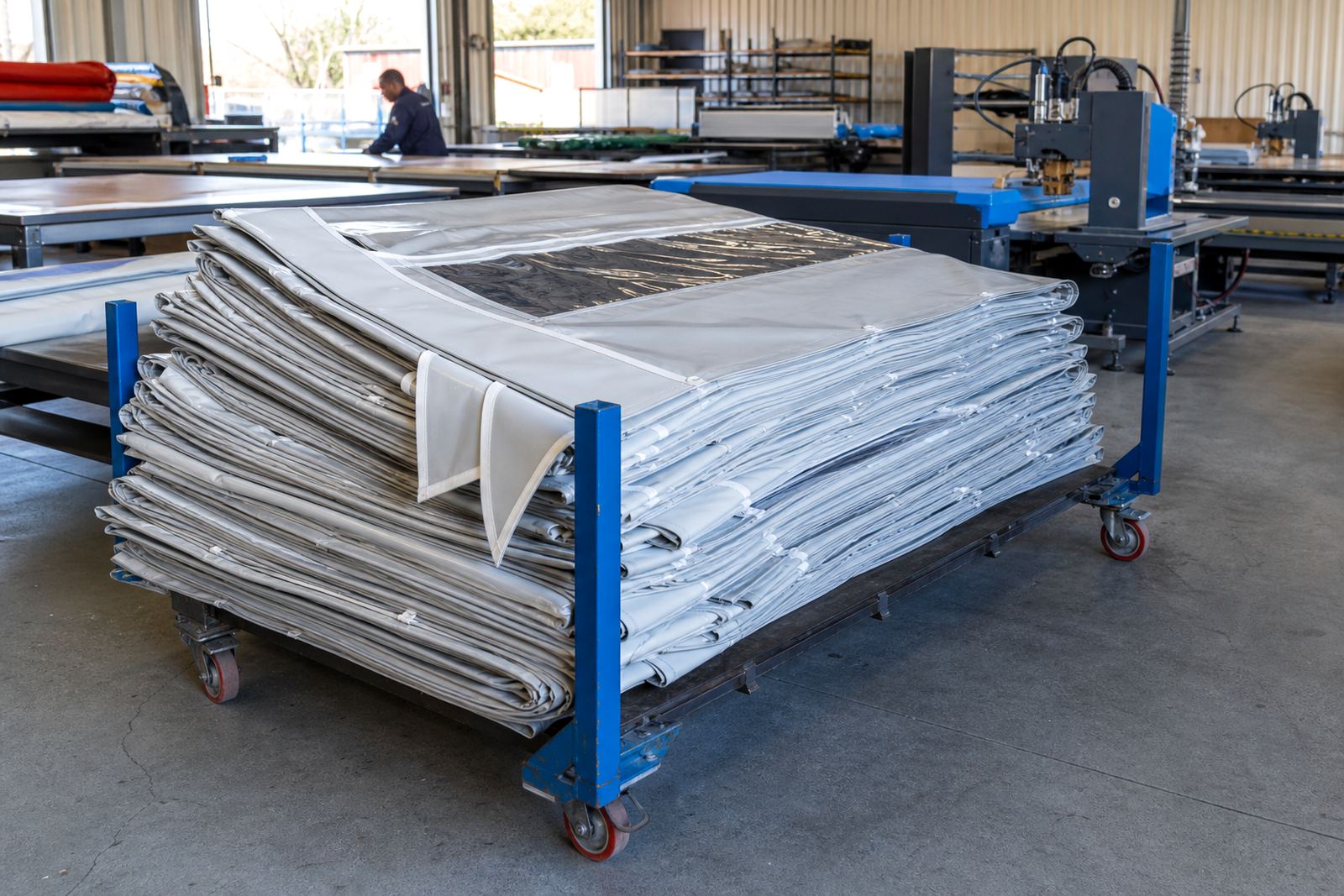
The setup was specified for workshop handling rather than rough site use. That meant stable alignment, clear control of heat and dwell, and tooling that supported tidy edge work on striped sheets. We also included parts and support items that keep production moving, such as electrode maintenance items, rollers, alignment components and basic seam testing checks. In a humid coastal season or on dusty inland days, the workshop still needs the same straight result on each panel.
- HF welding for PVC-coated seams and overlap joints
- Hot-air or hot-wedge work for hems and formed edges
- Tooling for keder insertion and edge reinforcement
- Eyelet and fixing point preparation for awning skins
Edge finishing that holds its shape
The finish standard on this job was the real point. The workshop wanted hems that sat flat, corners that did not pucker, and seam lines that looked even from one skin to the next. We set the machine and tooling to support repeatable edge folding so the operator could run long sections without having to keep correcting the material by hand. That matters when the striped face has to line up with architectural features or shopfront proportions.
We also worked through seam type options with the team. A standard lap seam was used where the panel layout allowed it, while hems were formed on exposed edges. Keder work was included where the awning profile needed a clean channel fit, and the eyelet positions were checked so the fixing points landed in the same place on each skin. The result was a cleaner production flow and fewer small adjustments at the end of the table.
- Lap seams set for clean, even overlap
- Hems formed to keep the edge flat under tension
- Keder pockets aligned for consistent profile fit
- Eyelet points spaced to suit awning fixing layout
Four weeks from setup to first production run
The project ran over four weeks. The first stage was machine placement and commissioning in the Randburg workshop, followed by operator training on seam setting, feed control and safe handling around heated tooling. After that, the team completed sample welds and seam testing on offcuts before moving into the first production pieces. This avoided wasting striped material on early trial runs.
During the later weeks we carried out tooling alignment checks, roller adjustment and a review of the edge sequence used for each skin. The workshop team picked up a stable routine quickly once the seam order was fixed, because the panels followed the same cut, weld and finish steps. That kind of discipline matters when a workshop is producing replacement skins, odd widths and matching pairs for the same site.
- Week 1: installation and commissioning
- Week 2: operator training and seam setting
- Week 3: sample welds and seam testing
- Week 4: production run and fine adjustment
Operator safety and machine care on busy shifts
Awning workshops can move fast, so safety and servicing have to be built into the daily routine. Heated tools, moving rollers and feed points need proper guarding and clear handling habits. The team was shown how to keep hands clear during seam travel, check alignment before starting a long weld, and watch for material drag that can pull a striped panel out of square. Small habits save fabric and prevent a messy edge.
We also covered preventive servicing. On a PVC welding line, dust, adhesive residue and wear on rollers will affect finish quality long before a full breakdown happens. Regular checks on electrodes, contact surfaces and pressure settings help maintain seam quality, while simple inspection of belts, guides and support rollers keeps the machine working at the same standard. In a South African workshop that must deliver to Johannesburg, Durban, Cape Town, Pretoria and Bloemfontein, steady output is worth more than a rushed repair.
What the Randburg team took away
The completed awning skins had cleaner edges, more even seam lines and better repeatability from one panel to the next. The workshop could now move through striped PVC jobs with less rework at the corners and fewer adjustments around hems and keder sections. That kind of consistency helps when a client wants matching skins for a row of awnings or replacement panels that must sit with an existing frame.
If we were to handle a similar job again, we would keep the same approach: set the weld method to the seam, test the stripe alignment on the first pieces, and lock in the edge sequence before the main run starts. That gives the workshop a predictable method for everyday awning production, and it keeps the finish steady even when the material batch changes slightly.
- Cleaner hems and more even edge finish
- Repeatable seam quality across multiple skins
- Better control on striped panel alignment
- Less rework on corners and fixing points
Key facts
| Project | Randburg awning skins |
|---|---|
| Client type | Awning workshop |
| Location | Randburg, Gauteng |
| Material | Striped PVC-coated fabric |
| Work performed | High-frequency welding, hot-air and hot-wedge edge finishing |
| Timeline | 4 weeks |