What the Kempton Park brief called for
The job came from an exhibition and display supplier in Kempton Park that needed barrier covers for branded crowd-control units used at shows, product launches and mall activations. The covers had to fit over standard queue barriers without sagging, with a straight front face for branding and enough strength at the top and bottom edges to hold up under constant handling.
The brief was practical: keep the seams tidy, keep the sleeve opening consistent across every cover and make sure the finished pieces could be fitted quickly on site. The client also wanted a finish that would hold up in Gauteng conditions, where dust, sun and frequent transport can mark fabric fast if the welds are not even.
How the sleeve sections were built
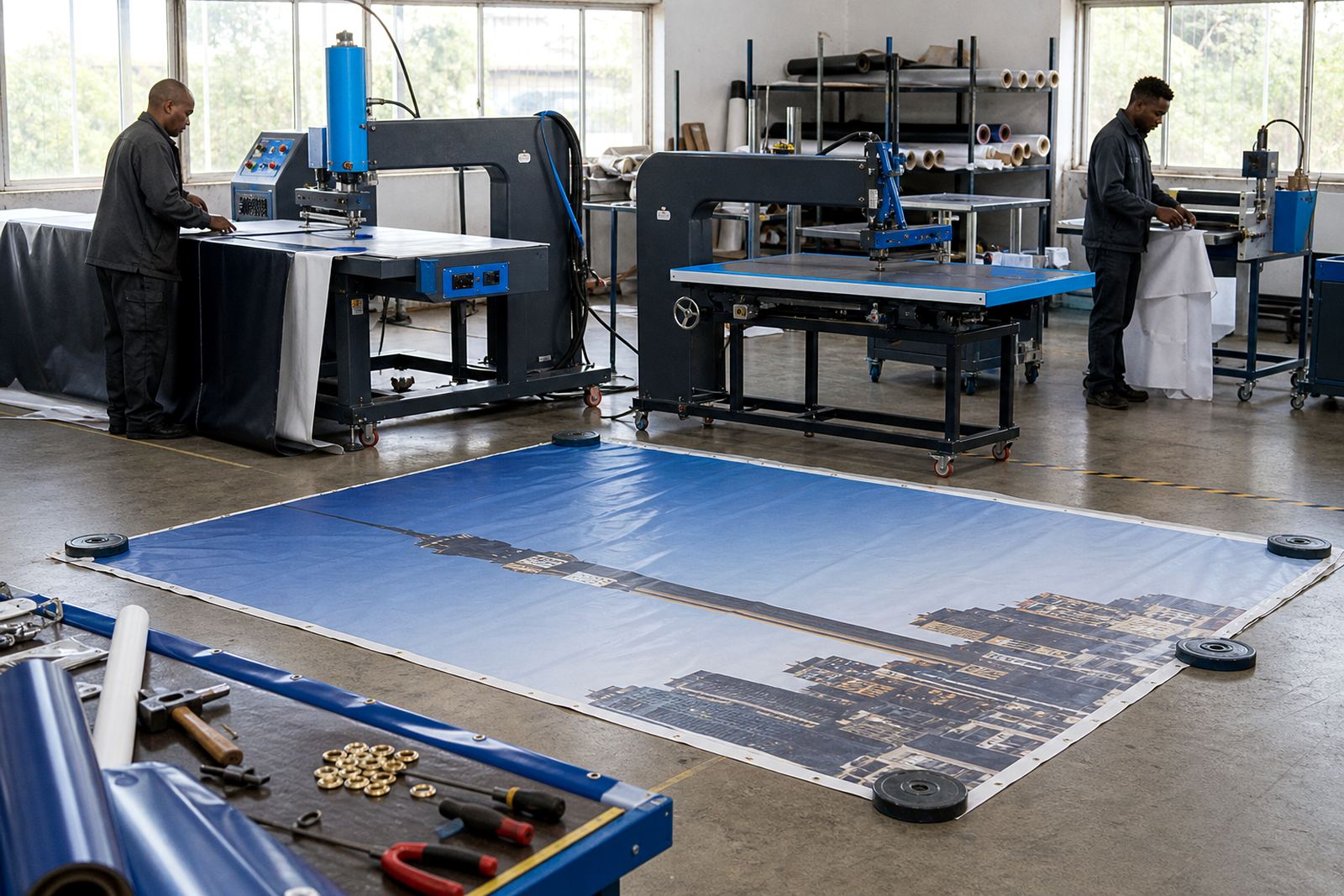
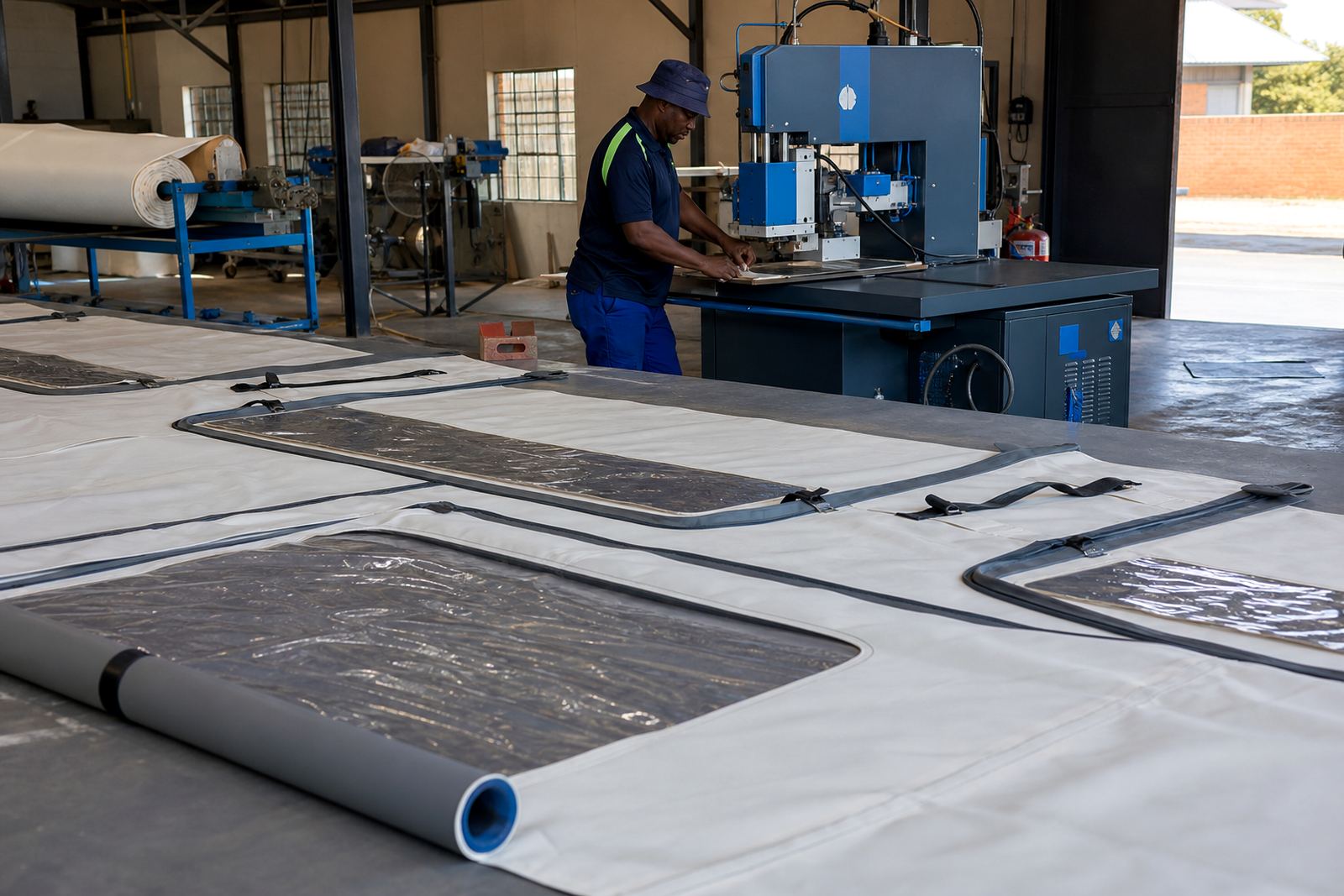
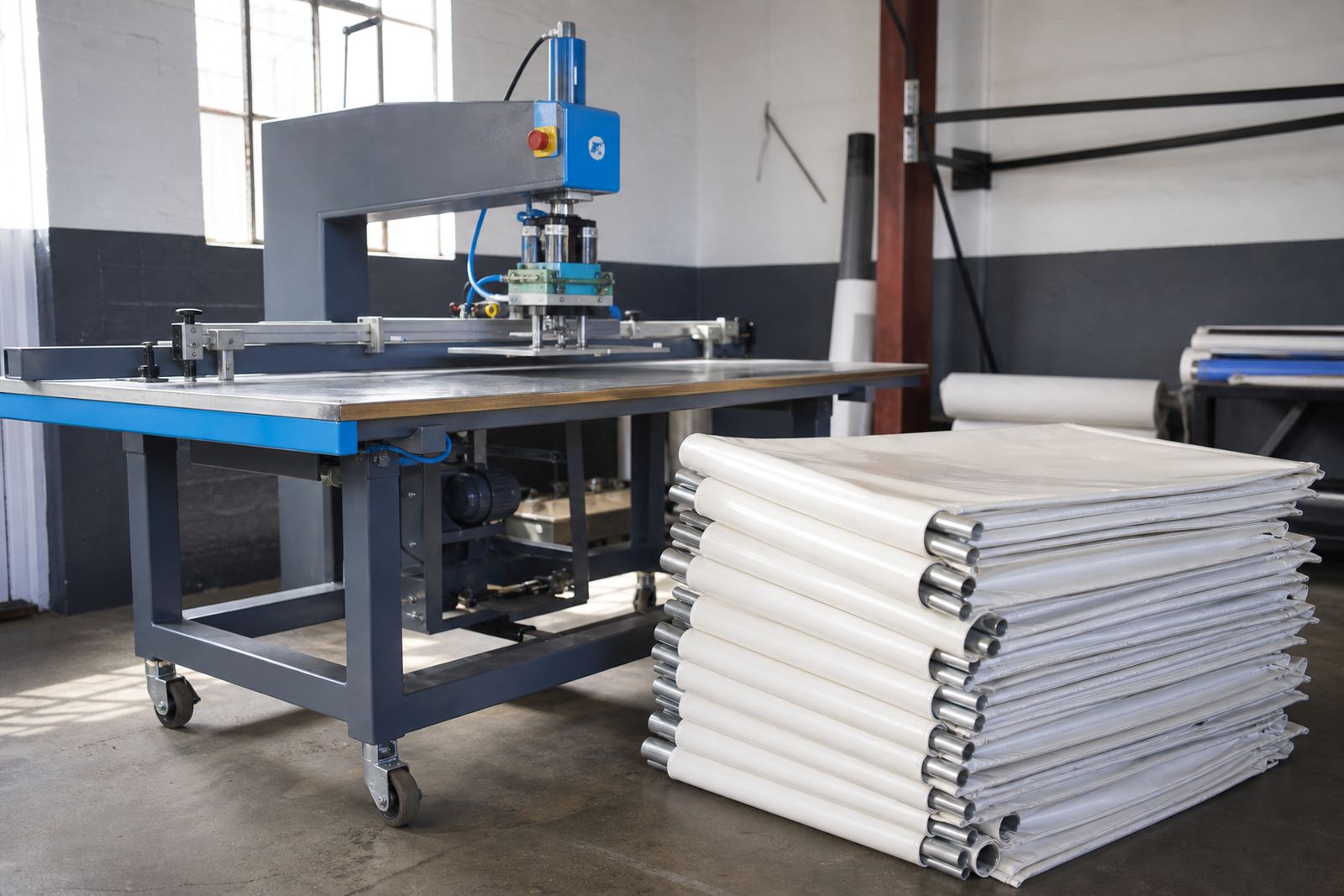
We used PVC-coated fabric suitable for frequent use on display equipment and welded the sleeve sections with high-frequency equipment for the main joins. Where the shape needed a softer fold and easier wrap around the barrier body, hot-air finishing was used on selected details. The aim was to keep the material flat, avoid puckering and keep the seam line straight along the visible face.
Each cover was made as a fitted sleeve with reinforced hems, clear openings for the barrier posts and a layout that suited printed branding panels. The welds were set to give a neat seal without adding unnecessary bulk, so the covers would sit properly on the barrier frame and not twist when moved between venues.
- High-frequency welds for straight sleeve joins
- Hot-air finishing on selected fold and edge details
- Reinforced hems at stress points
- Consistent sleeve width for repeat fitting
- Clean front face for printed branding
Key facts on the barrier cover spec
The covers were set up for barrier units used in exhibition halls and retail promotions. The main requirement was a clean presentation piece that could be removed and refitted without fraying or stretching at the seams. We worked to a layout that supported repeat production, so the supplier could use the same pattern across multiple events.
We also paid attention to the little things that affect fit: seam allowance, edge squareness, and the position of openings for posts and fixings. On barrier covers, a few millimetres out can show immediately once the sleeve is pulled over the frame and the branding panel is under tension.
- Material type: PVC-coated fabric for display use
- Construction: sleeve format with welded side joins
- Edge finish: reinforced hems for handling
- Use case: branded queue barriers for exhibitions and activations
- Fit: repeated installation and removal
- Finish: flat front panel for graphics
Constraints on site and in production
Queue barrier covers may look straightforward, but they bring a few awkward details. The frames vary slightly from one supplier to another, and if the sleeve is too tight it slows installation, while a loose cover can look untidy from the first hour of an event. The client needed a balance between a firm fit and quick fitting, with no sharp internal points rubbing through the fabric.
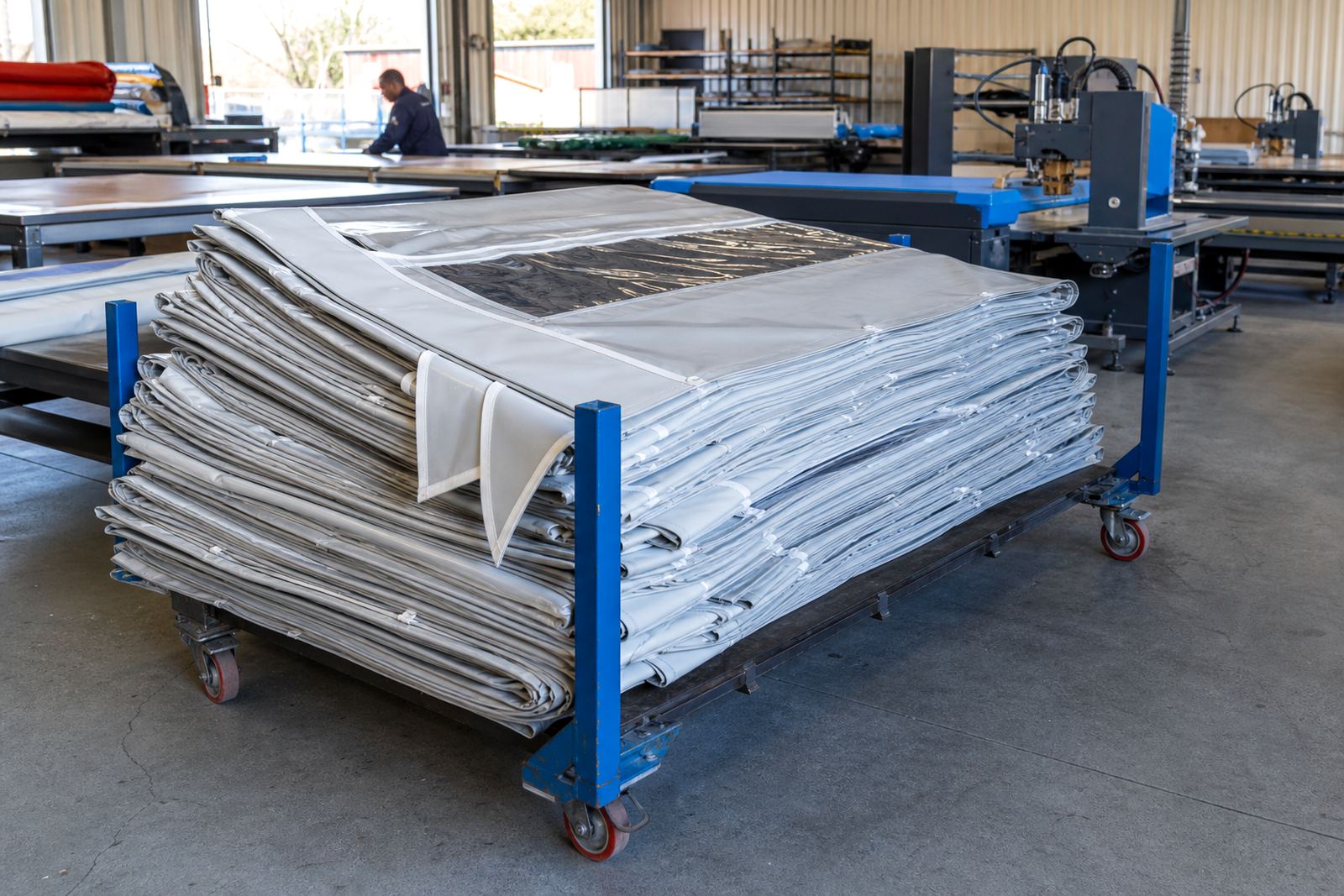
We also had to work around the normal pressures of exhibition work: short lead times, multiple pieces in one run and the need for a neat repeatable finish. The barrier covers had to stack and pack cleanly for transport, so the weld layout had to stay flat and avoid heavy overlaps. In this kind of job, a small mistake in the seam or hem can affect every piece in the batch.
What we supplied and completed
We supplied the welding, fitting support and final seam checking for the covers. That included sleeve formation, hem work, edge finishing and eyelet placement where required for the client’s handling method. The work was done to suit branded display use, where the front face must stay smooth and the edges must not curl after repeated use.
The project was completed over two weeks from pattern confirmation to finished covers. Week one covered measurement checks, cutting layout and test welding on sample sections. Week two covered the full run, seam inspection and final adjustments before handover. That schedule gave the client enough time to review fit on the actual barrier units without holding up their event work.
- Project period: 2 weeks
- Pattern check and sample welding
- Full production run
- Final seam inspection and fit checks
- Ready for exhibition and promo use
Result on the floor
The finished barrier covers sat neatly over the queue barrier frames and gave the supplier a cleaner branded finish for event hire and display work. The sleeve sections held their shape, the hems stayed straight and the eyelet work lined up as planned. That made fitting quicker for the crew and gave the covers a more professional look once installed in Kempton Park and at venues beyond.
For this type of product, the result is measured in use, not just appearance. If the cover can be pulled on without snagging, stays tidy under daily handling and still looks even after transport, the welding has done its job. The supplier now has a repeatable format that can be produced for future barrier runs with the same fit and edge finish.
What we would carry over next time
We would keep the same approach on the next barrier cover batch: confirm the frame measurements first, test the sleeve tension on one sample and keep the weld sequence consistent across the run. That keeps the fit predictable and reduces trimming at the end.
For exhibition covers, the best results usually come from steady preparation and a clean welding plan. On this job, that meant paying attention to seam line position, hem depth and the opening allowances for quick installation. It is a straightforward product once the detail is right, but the detail matters every time.
Key facts
| Project location | Kempton Park, Ekurhuleni |
|---|---|
| Client type | Exhibition and display supplier |
| Product | Branded queue barrier covers |
| Construction method | High-frequency welding with hot-air finishing on selected details |
| Key features | Welded sleeve sections, reinforced hems, eyelet work |
| Timeline | 2 weeks from sample check to handover |