Why long seams start to wander
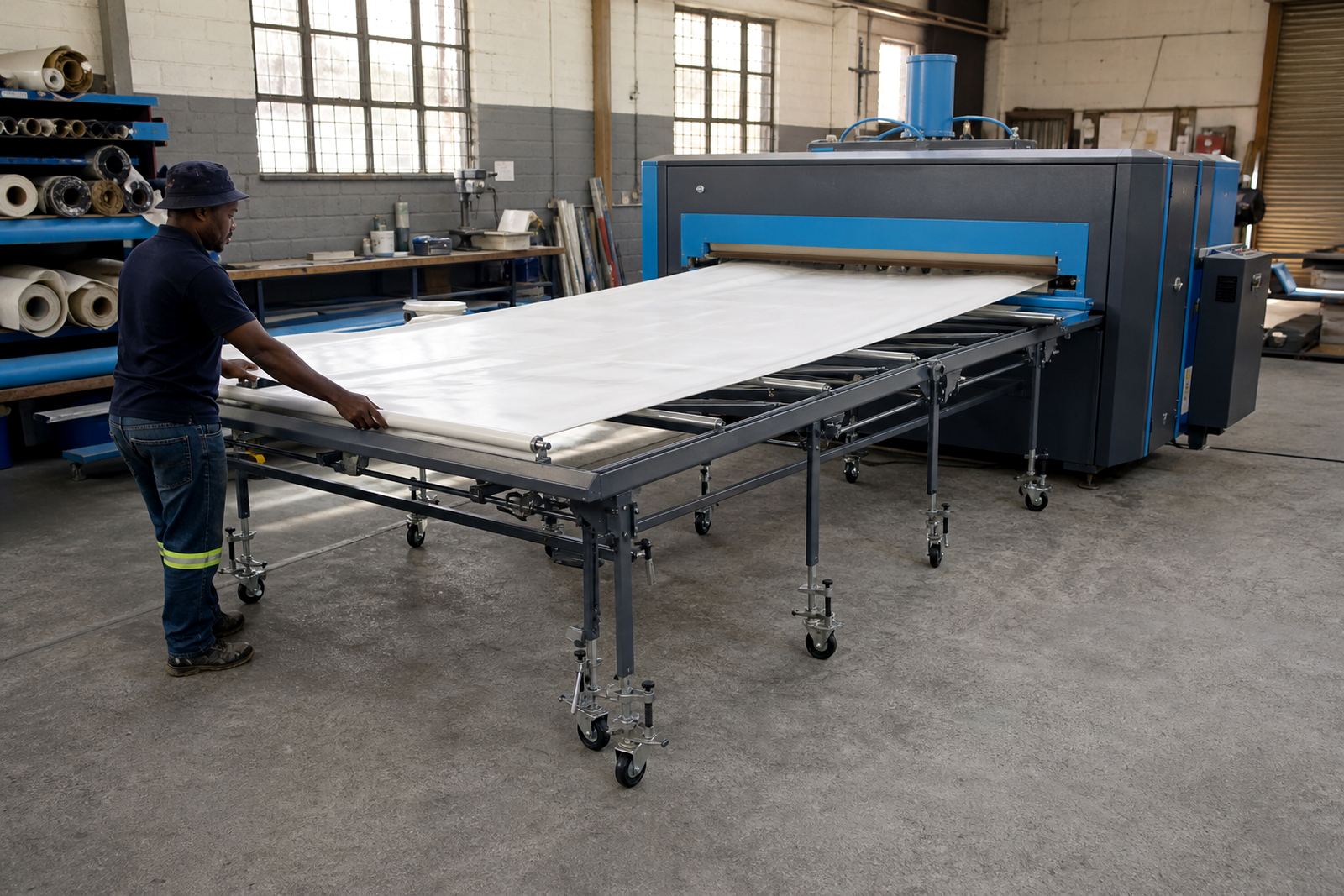
On short runs, an operator can correct the material by hand with little effort. On long runs, especially with wide PVC-coated fabric, the weight of the sheet starts to work against the weld path. That is where a support table or roller stand makes a real difference. It carries part of the load, keeps the panel flat and helps the edge move at the same speed as the welding head. Less drag means less strain on the operator and a cleaner seam line.
In Germiston and the wider Ekurhuleni area, many tarpaulin shops work with large panels for truck covers, shade structures and event walls. A roll of heavy-coated material may look manageable at the start, then pull hard once several metres are on the table. If the operator is also trying to line up a hem, a keder strip or an overlap seam, even a small tug can shift the edge. The result is a seam that snakes instead of staying straight.
- Support tables spread the panel weight across a wider surface
- Roller stands reduce friction as the material feeds forward
- Better support helps the operator keep the weld path centred
- Longer panels stay flatter, which helps on hems and overlaps
How support tables and roller stands help the weld stay true
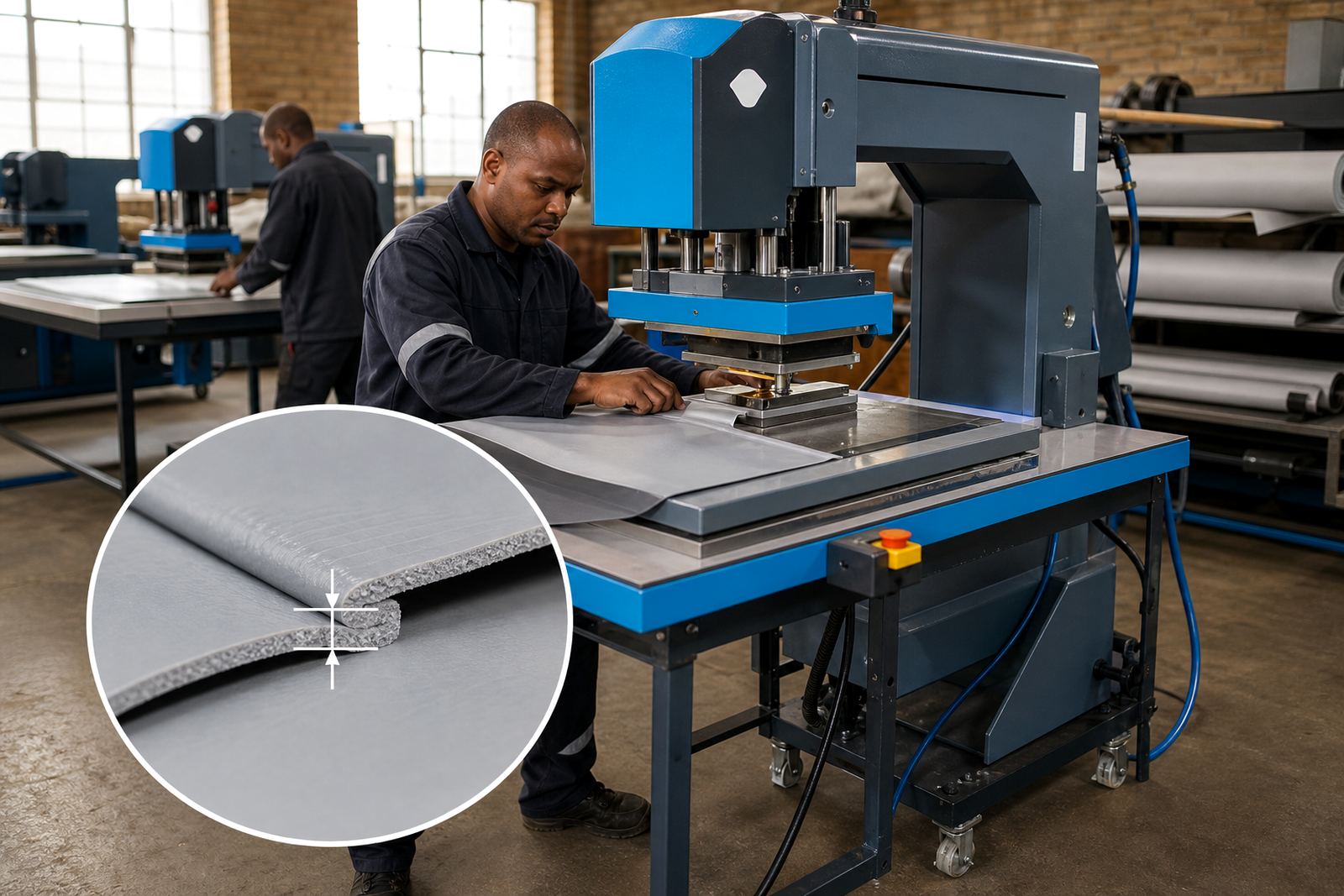
A good support setup is not only about comfort. It is part of seam control. When the fabric stays level, the welding head can maintain a steadier gap and the pressure on the seam stays more even. That matters on high-frequency welding, where the electrodes must meet the material cleanly, and it matters on hot-air or hot-wedge work where the feed speed and pressure need to stay consistent from start to finish.
Support tables are useful for broad banner panels, roof sheets and tent sections that need repeatable runs. Roller stands work well where the material must move freely over a longer distance, especially when the panel is wide and the seam line runs for metres at a time. In practice, many workshops use both. The table carries the sheet near the weld point, while the roller stand takes the weight further out. That combination reduces drag and makes the material easier to guide.
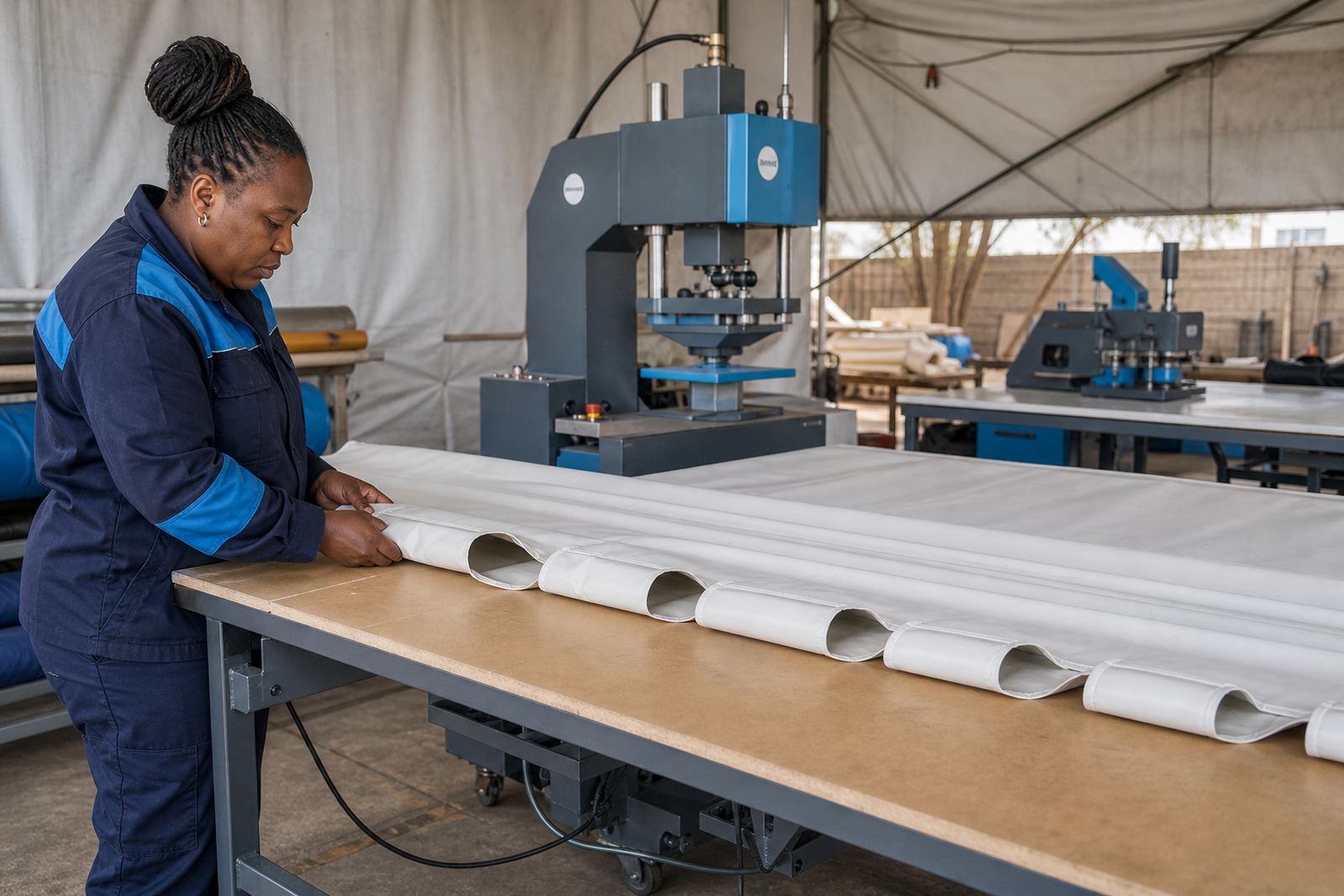
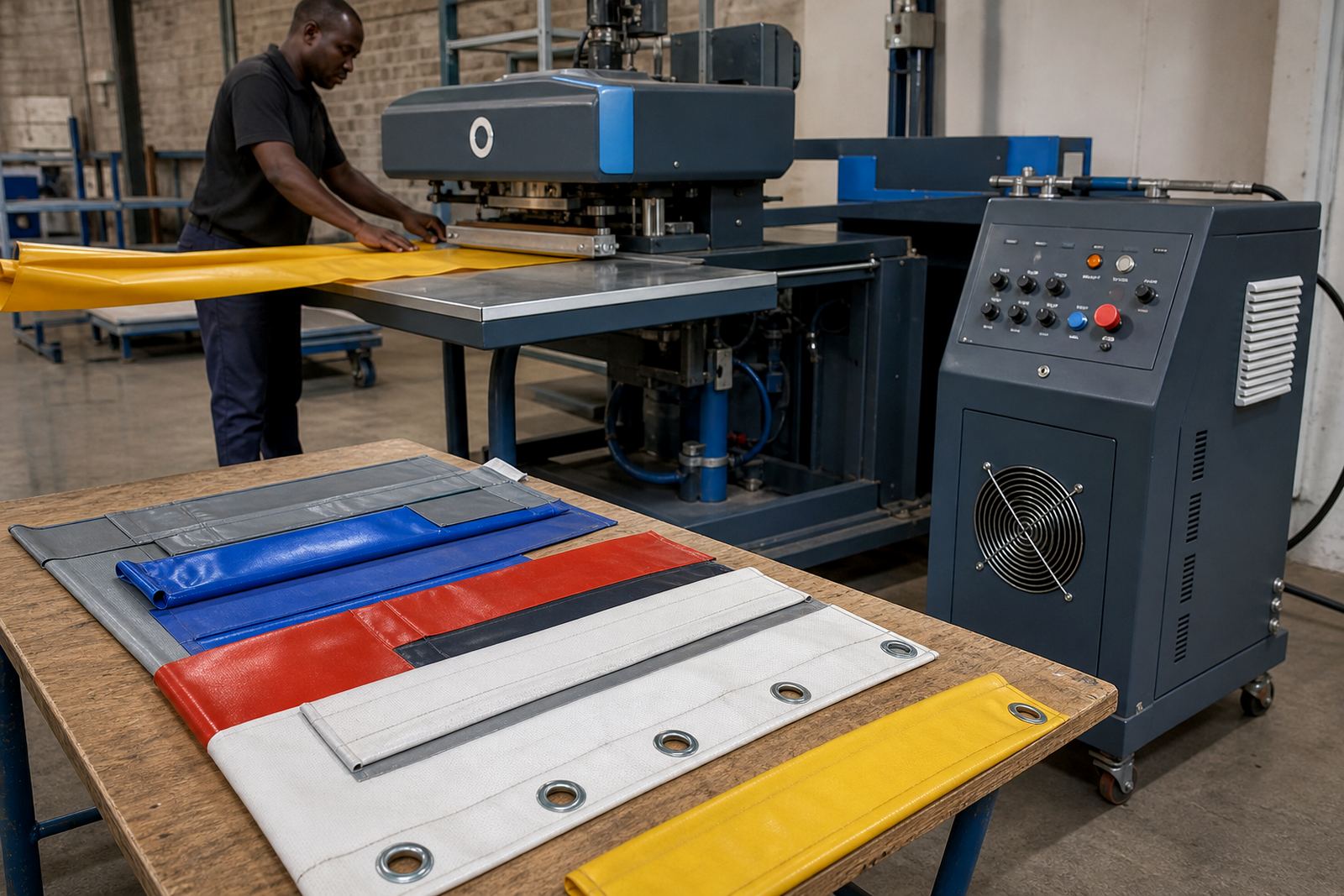
For long hems, the benefit is even clearer. A hem that starts straight and then drifts inwards can cause fitting problems later. On keder work, where the strip must sit evenly along the edge, a dragged panel can twist and create uneven feed. Eyelet positions can also be thrown off if the sheet creeps while the seam is being made. Support equipment keeps those details more predictable.
- Steadier feed helps when welding PVC-coated fabrics over long distances
- Even support reduces edge curl on banner material
- Better tracking improves overlap seams, hems and keder insertion
- Less manual lifting lowers operator fatigue during longer jobs
Practical setup checks before a long weld
Before starting a long seam, the operator should check that the table height, roller position and path of travel all match the job. If the sheet has to climb or drop as it moves, drag will increase. That is often where tracking starts to fail. The feed path should be straight, the fabric should sit square on the table, and the seam line should be easy to see from the operator position.
A workshop in Pretoria recently had repeated wandering on long side seams for tent wall panels. The issue was not the welding machine itself. The material was feeding from one side of the stand, then twisting slightly as it crossed the table. Once the support was centred and the panel was allowed to run flatter, the seam held its line much better. That kind of fault finding saves time because it treats the full setup, not only the welding head.
- Check that the panel feeds without a sideways pull
- Keep the material edge visible at the point of contact
- Set roller stands so the sheet stays level, not hanging down
- Make sure the operator has enough working space for longer panels
High-frequency and hot-air work need different support habits
High-frequency welding and hot-air or hot-wedge welding behave differently, so the support method must suit the process. In high-frequency work, the seam forms under pressure between electrodes, so the sheet must be steady and properly aligned. If the fabric shifts, the weld can pinch off line or leave an uneven edge. On hot-air and hot-wedge machines, the heated zone is more sensitive to feed speed. A draggy panel can slow the run, which changes the seam appearance and may leave a weak section.
That is why long seam support is not a one-size-fits-all matter. Some jobs need a wider table for flat handling, while others need roller stands placed further out from the machine. On banners, the goal is often to keep the printed face clean while the seam runs. On tarpaulins, the concern is often strength and fit, especially where the panel will be tensioned later. Either way, the sheet must travel smoothly.
Where keder, hems and eyelet work are part of the same job, support becomes even more important. The operator may be moving from one seam type to another on the same panel, so the layout must let the fabric rest between operations and then move again without snagging. A badly placed roller or a table edge that catches the material can spoil a good weld in seconds.
Operator safety and machine care on long runs
Long seam work creates a steady rhythm, which can make small faults harder to notice. Operators should keep hands clear of the weld zone, watch finger placement near pinch points and use the machine guards that are fitted for the job. A support table also helps safety because it reduces the need to hold up heavy sheets by hand for long periods. Less lifting means less strain on shoulders and wrists.
Machine servicing matters as much as the support setup. Rollers that are worn, bearings that feel rough or tooling that is out of line can all show up first on long seams. Electrode faces, pressure rollers and guide parts should be checked regularly, especially on machines used daily for tarpaulins and tent panels. If a seam starts drifting only after several metres, the problem may be in the feed path or alignment, not the weld settings alone.
- Keep rollers turning freely and replace worn parts before they mark the material
- Check tooling alignment after heavy use or after moving the machine
- Clean welded residue from contact points so feed remains even
- Use service plans for workshops with regular long seam production
A Germiston example that shows the difference
A banner and tarpaulin workshop in Germiston was running long side seams for large event walls and truck covers. The welds looked fine at the start, but the last section of each panel often drifted off line. The team had tried adjusting speed and pressure, but the problem kept returning. Once the job was set up with a better support table position and roller stands placed to carry the outer edge of the panel, the material moved more freely and the seam tracking improved. The operator could keep the line steadier and the finished panels needed less trimming.
That is the main value of long seam support. It does not replace good welding technique, it supports it. When the material travels in a controlled way, the weld head can do its work properly and the finished product fits better on site. For shops handling long tarpaulin seams, banner joins and tent sections across South Africa, the right support setup is often the difference between constant correction and a steady production run.
PVCWelder supplies and services high-frequency and hot-air PVC welders from Germiston, with installation, operator training, fault finding, tooling alignment, preventive servicing and parts support for workshops in Johannesburg, Durban, Cape Town, Pretoria and Bloemfontein.