What a pole pocket must do on the job
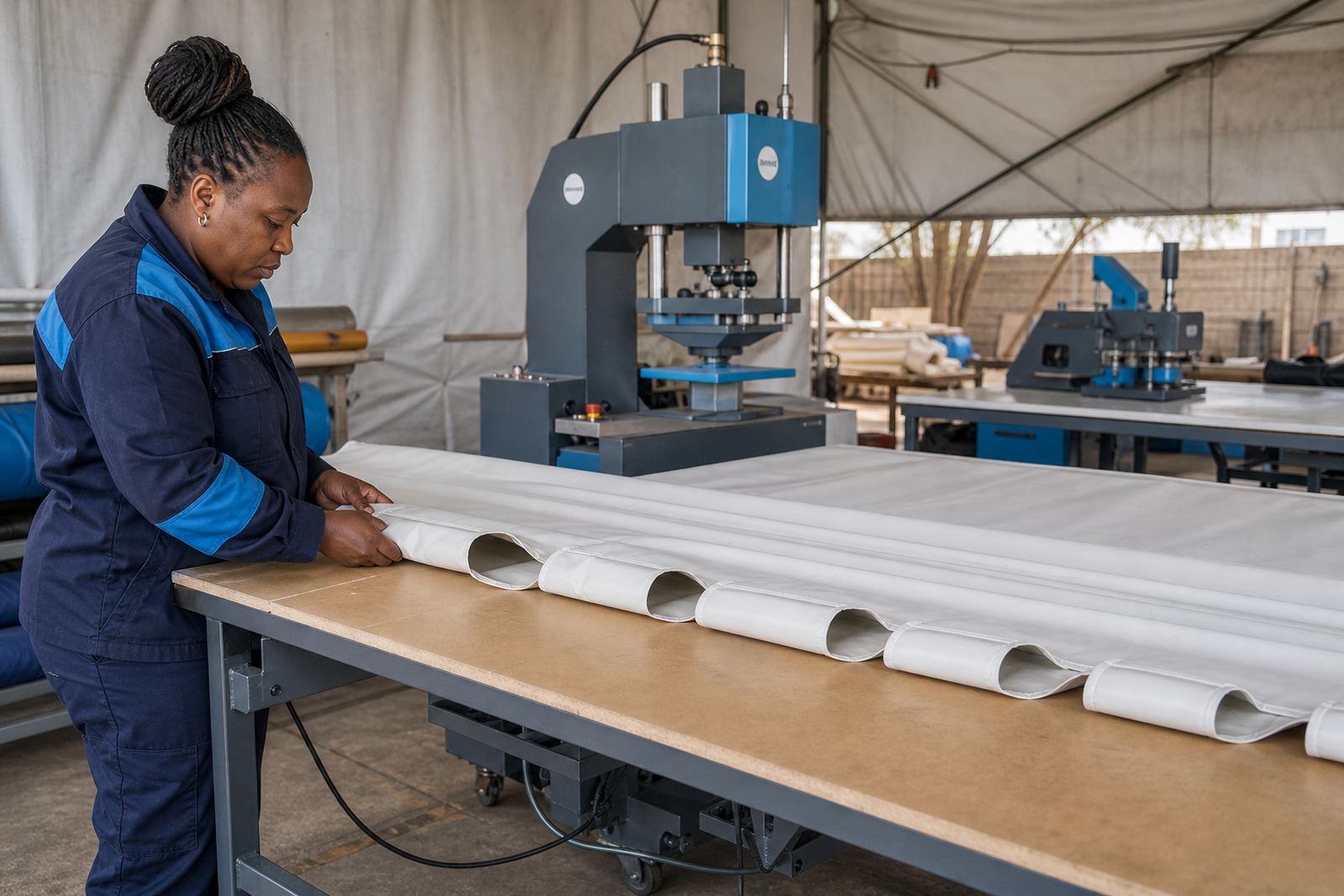
A pole pocket is a welded sleeve along the edge of a banner, sail or display panel that takes a pipe, pole or bar. On PVC-coated fabric, the pocket has to sit flat, keep its shape and carry the load without pulling the face out of line. If the sleeve is too narrow, the pole jams. If it is too loose, the banner sags and the top line looks untidy.
For tarpaulins and printed banners, the pocket is often used where the product must hang from a frame, sit on a roadside structure, or stay neat over a long span. In Durban the extra humidity can soften storage conditions and make handling trickier, while in Johannesburg and Pretoria the bigger issue is often dust and repeated handling on busy sites. The weld has to hold up in both cases.
Good pocket work starts with the right allowance for the pipe diameter, the seam style and the way the banner will be tensioned. A pocket for a light promotional banner is not the same as one used on a large tent panel or a wind-exposed street banner.
How pocket welding is usually set out
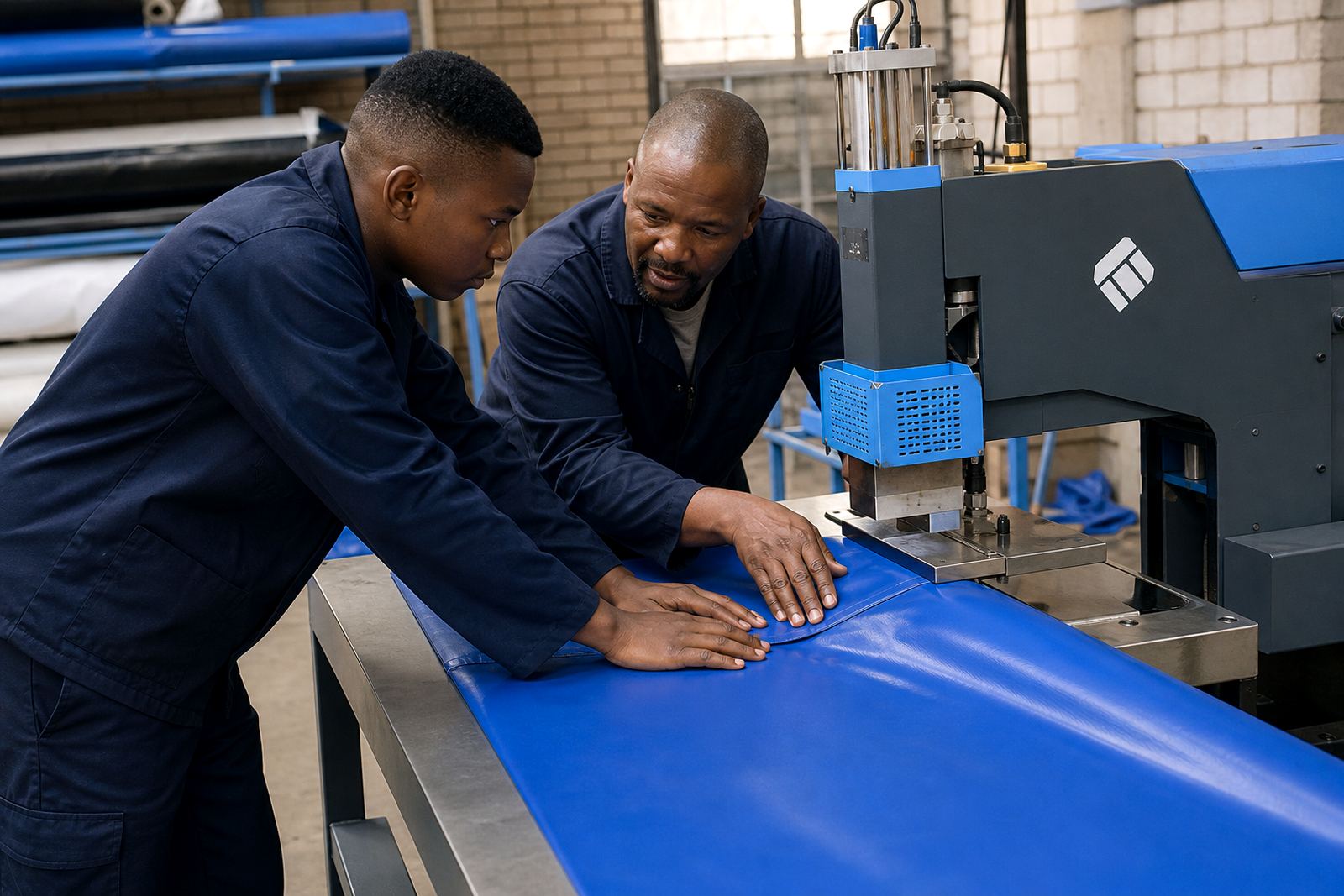
In PVC welding, pockets are formed by folding the fabric back on itself and joining the overlap by high-frequency welding or hot-air and hot-wedge welding. The choice depends on the fabric grade, the thickness of the coated layer and the finish needed. High-frequency welding is useful on compatible PVC-coated materials where a clean, consistent weld is required. Hot-air and hot-wedge methods are often used for longer seams, hems and larger sheet work.
The weld path needs to be straight, with even pressure across the full length. If the machine is not aligned properly, the sleeve can drift and the pole will catch at one end. That is why tooling alignment matters, as does checking the roller condition and the electrode face before a run. A pocket that starts true and finishes crooked will give trouble on site every time.
- Measure the pipe or bar before cutting the sleeve allowance.
- Allow for insertion space so the pole can slide in without forcing.
- Keep the weld line parallel to the banner edge for an even hang.
- Test a short sample before committing to the full run.
Hems, hanging loops and pocket combinations
Pole pockets are often used together with hems, hanging loops or eyelets. A hem can stiffen the top edge before the sleeve is formed. Hanging loops are useful where the banner must be tied or clipped in sections. Eyelets are sometimes added where the installer needs extra fixing points at the corners or along the sides.
The order of the work matters. On some jobs the hem is welded first, then the pocket is added. On others the pocket is built into the edge finish from the start. If the pocket is too close to an eyelet line, the hardware can distort the sleeve and put uneven stress into the seam. A practical layout keeps the fixing points clear of the load path.
For event graphics and short-term signage, a lighter pocket may be enough. For outdoor retail banners in places like Cape Town, where wind and coastal air can work on the fabric, a broader pocket with a clean weld gives better control and a neater face. The aim is a sleeve that supports the bar and still allows the banner to hang square.
- Use reinforced corners when the banner carries side tension.
- Keep loops evenly spaced so the load is shared.
- Do not place eyelets too close to the sleeve fold.
- Check that the finished edge does not curl after welding.
Choosing the right seam for the material
Not every seam works the same way on PVC-coated fabric. A lap seam gives a neat overlap and is common on sleeves and hems. A double weld can add strength where the pocket will be handled often. On heavier tarpaulin work, a wider seam area can help prevent peel at the edge. The key is matching the seam width to the weight of the fabric and the force it will carry.
Hot-air welding can suit longer straight runs where the operator needs steady travel and controlled heat. Hot-wedge welding is often chosen for repeatable seams on broader sheets and on workshop lines where the weld path can be guided cleanly. High-frequency welding is valued for consistent bond quality on suitable PVC material, especially where the seam must stay tidy on a visible banner face.
When the pocket is part of a display product, the seam finish is not only structural. It also affects how the banner reads from a distance. A crooked weld line shows up quickly on a shopfront banner or stadium hoarding, so seam control is as important as strength.
Safety around heated welders and moving parts
Pocket welding brings heat, pressure and moving tooling into one work area, so operator safety matters. Hands must stay clear of the weld zone, especially when feeding folded material into the machine. Guards, stops and correct handling tools reduce the chance of burns or pinched fingers. The operator should know how to set temperature, pressure and dwell time before production starts.
High-frequency equipment also needs proper screening and correct use of the work area. Cables, earth points and foot controls should be kept in order, and any unusual sparking or burning smell must be checked before the next run. Clean floors matter too. Offcuts, dust and loose scrap can interfere with feeding and make the workshop unsafe.
- Wear suitable gloves when handling fresh welds and hot material.
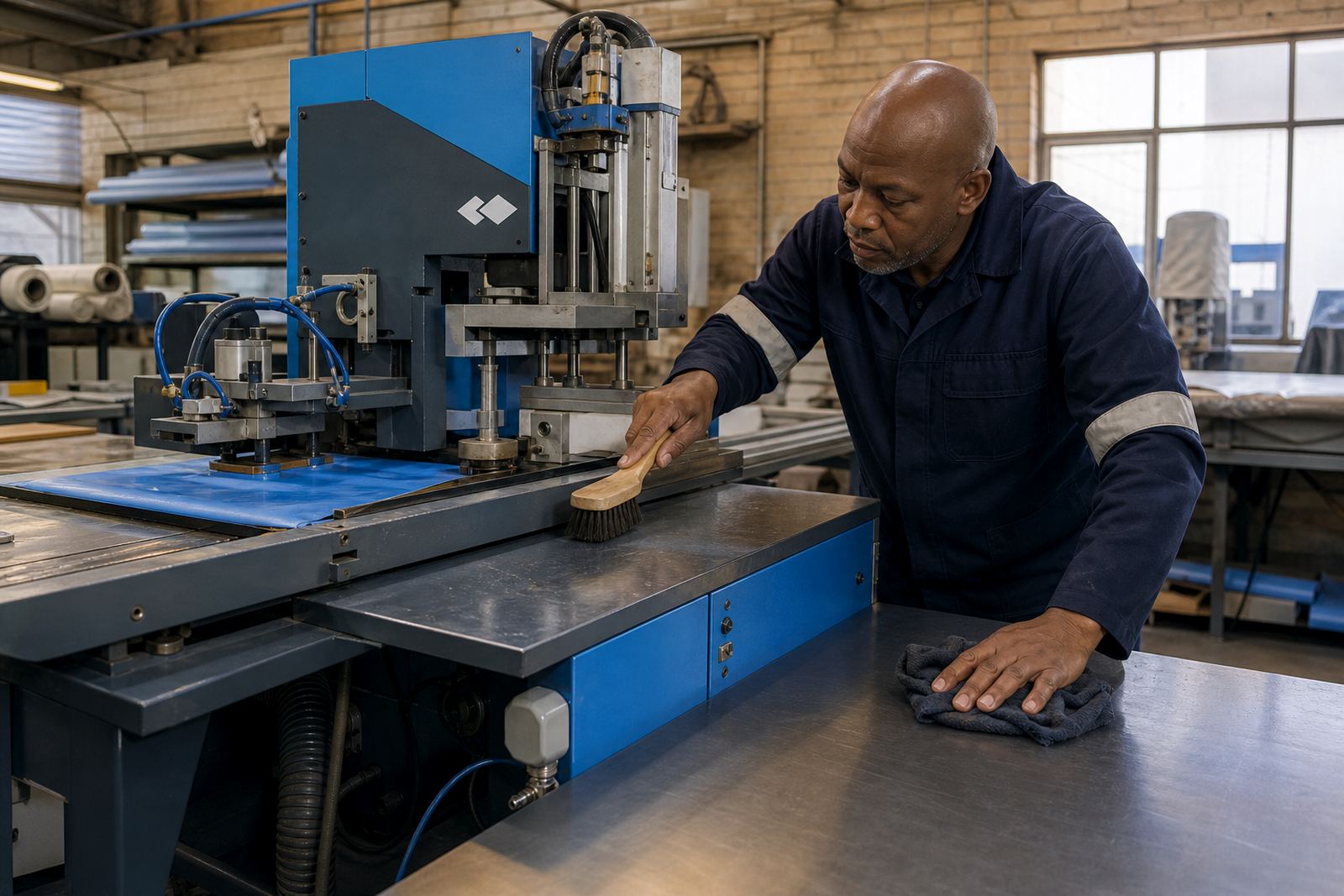
- Keep the worktable clean so the sleeve folds evenly.
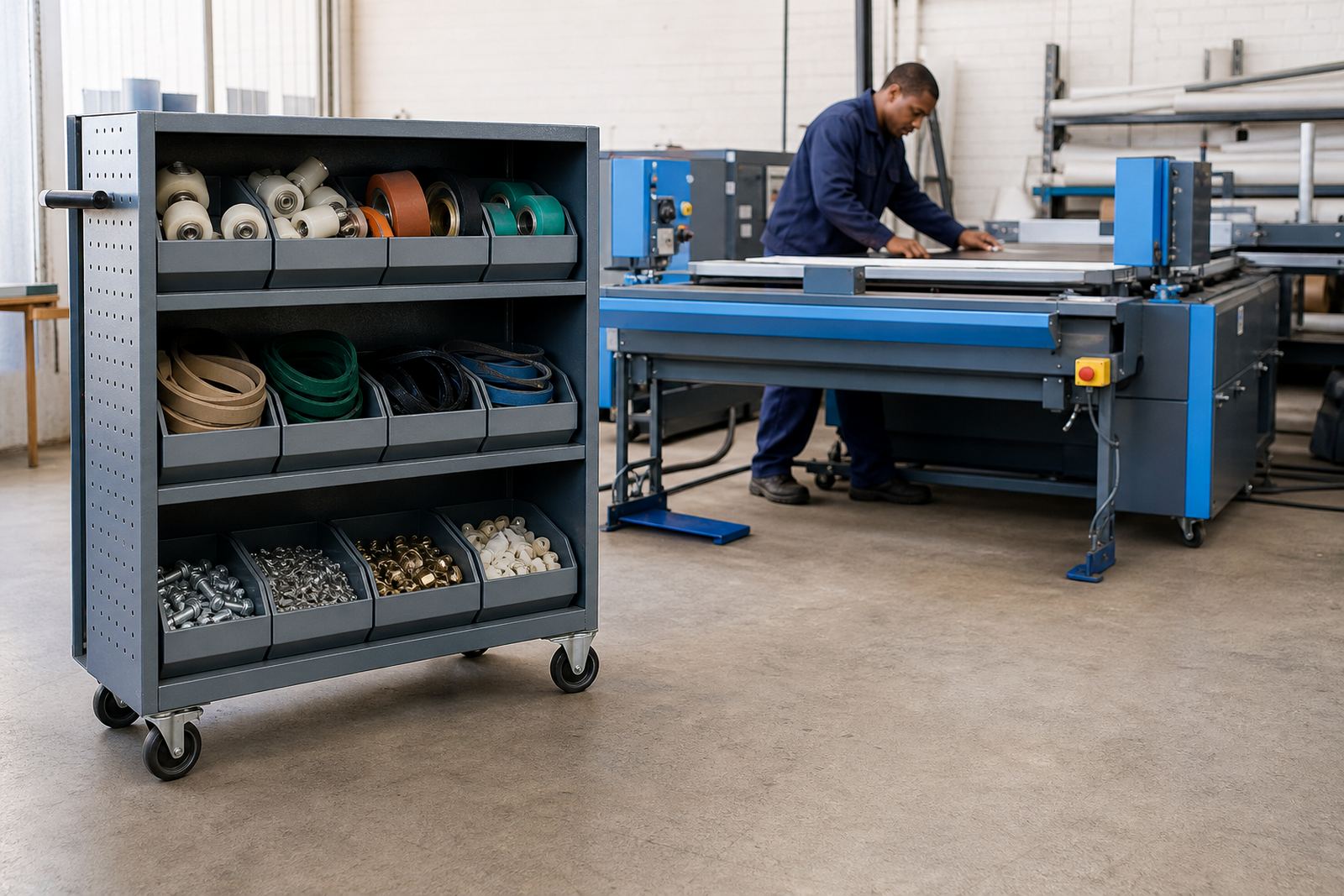
- Check roller travel before starting a long pocket seam.
- Stop and inspect any weld that looks thin, dark or uneven.
A Germiston workshop example and what servicing protects
A banner maker in Germiston preparing roadside sleeves for a Pretoria campaign will often need repeatable pocket widths, straight hems and reliable insertion space across several lengths. If the machine drifts by even a little, the poles bind at installation and the crew wastes time trimming or reworking the edge. That is where preventive servicing helps. Clean electrodes, sound rollers and accurate tooling keep the pocket line true from the first panel to the last.
Machine servicing for pocket work normally includes fault finding, electrode refurbishment, roller replacement, tooling alignment and seam testing. On hot-air and hot-wedge welders, the heated elements and guides need regular inspection. On high-frequency equipment, the weld surface, pressure system and alignment points must stay in order. If the unit is used daily on tarpaulins, banners or tent panels, a service plan can reduce stoppages and keep the output consistent.
Pocket welding is not only about forming a sleeve. It is about making sure the banner fits the hardware on site without forcing, twisting or sagging. When the seam is planned properly, the whole job goes up cleaner and the finished piece looks right from the pavement or the roadside.