Why end-of-shift wipe downs matter
High-frequency and hot-air or hot-wedge welding both depend on clean contact points, steady feed and even pressure. Dust, PVC offcut crumbs, adhesive residue and ink transfer can build up on the table, under the guides and around the rollers, then start affecting seam alignment and edge finish.
In Germiston and across Ekurhuleni, many workshops deal with fine metal dust from nearby fabrication areas and normal factory grime. Add coastal moisture in Durban or salty air in Cape Town and surfaces can pick up dirt faster than expected, so a daily clean-down becomes part of the working rhythm rather than an extra task.
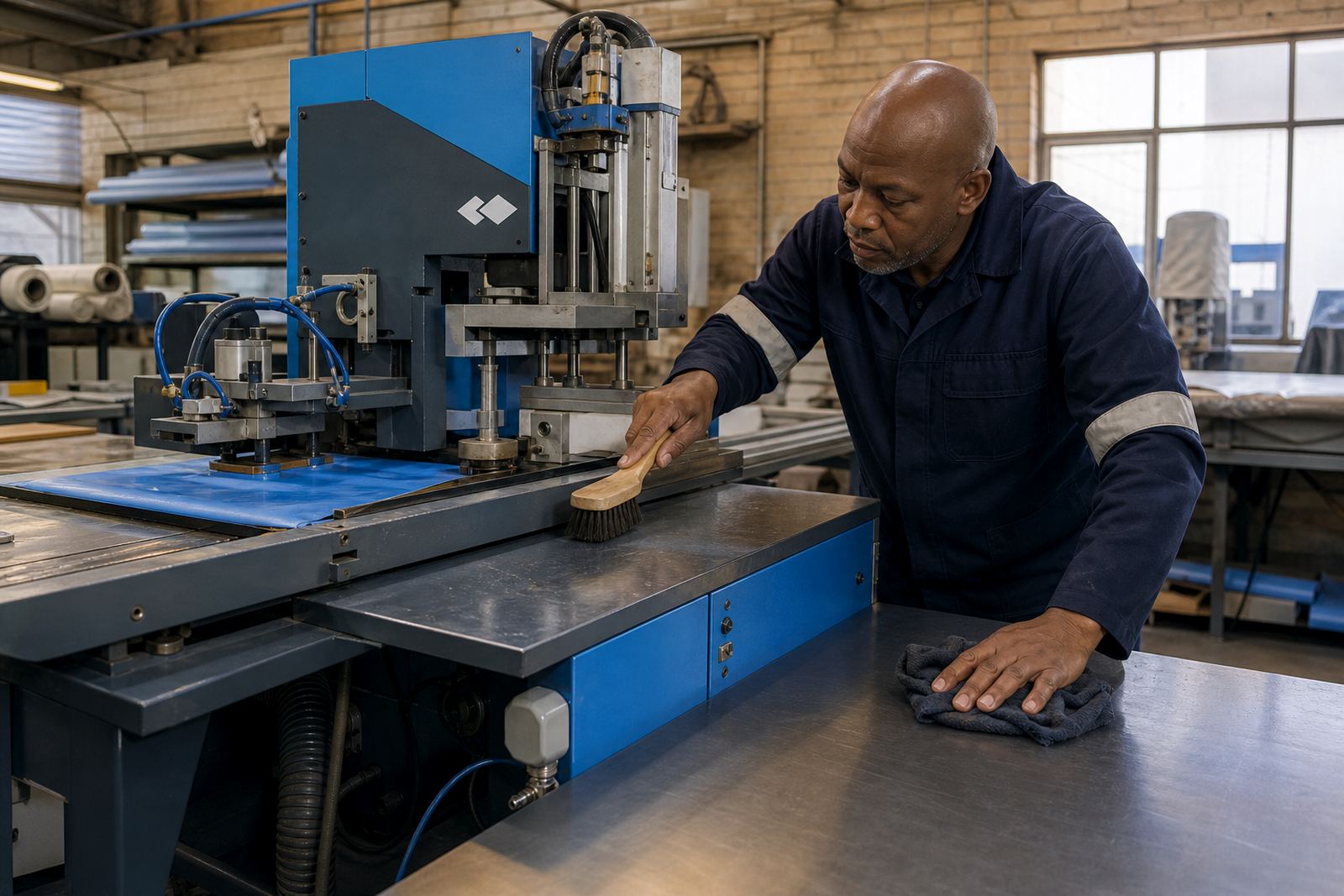
- Wipe down the machine bed and surrounding table after the last job.
- Remove loose scraps before they drag into rollers or feed paths.
- Check that cuttings, tape and dust are not sitting near moving parts.
What to clean before the lights go off
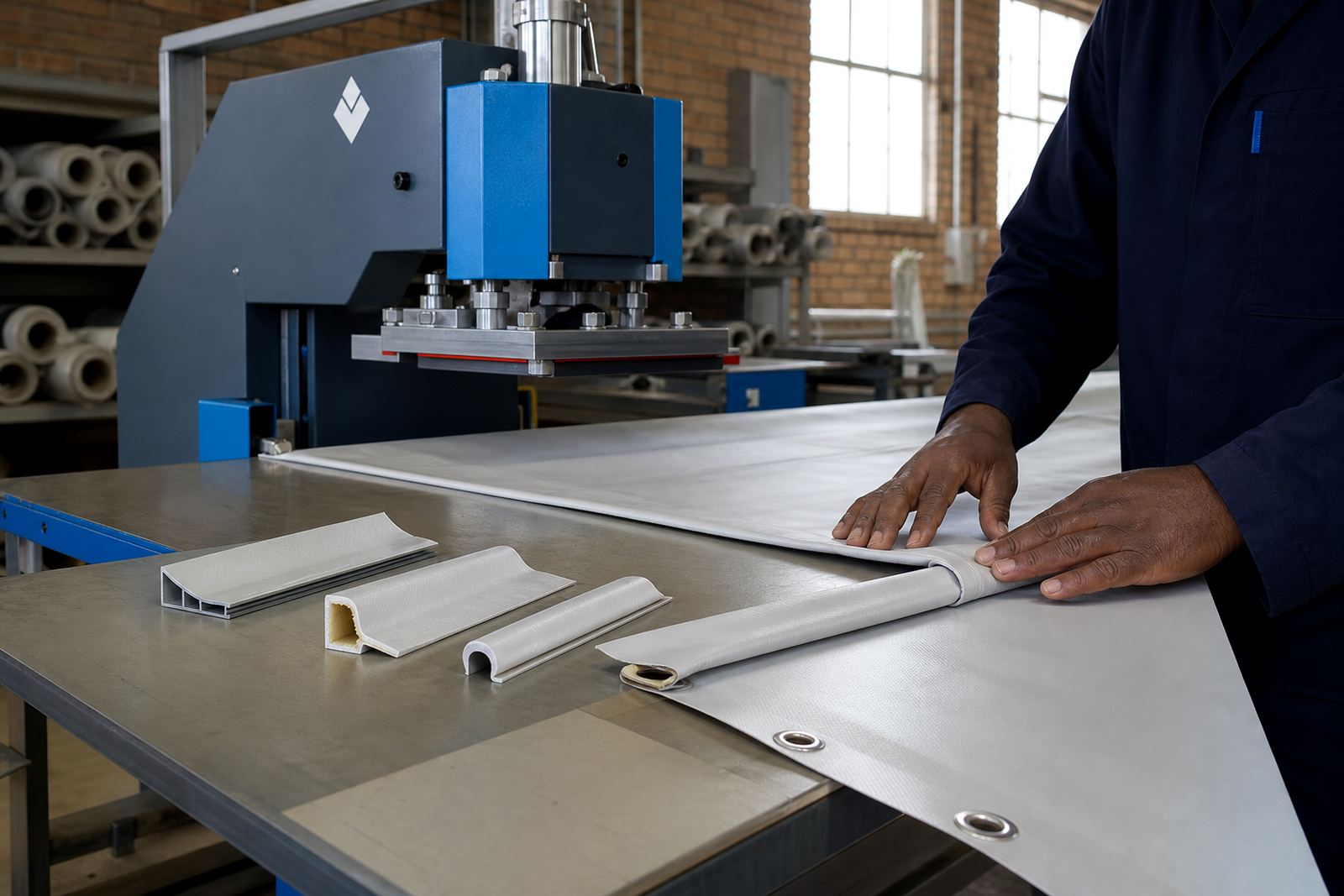
A proper clean-down focuses on the points that touch material first. That means the rollers, guides, pressure faces, seam path and any table surface where PVC-coated fabric slides during hemming, keder work or eyelet preparation. A soft cloth, approved cleaning fluid and a non-scratch scraper are usually enough for most daily residue.
Do not leave wet cleaner sitting on control panels, wiring covers or heated areas. If the machine has just been in use, let the hot parts cool to a safe touch temperature before wiping nearby surfaces. A quick visual check is useful too, because a small burr on a guide or a nick on a roller can mark the next banner edge or tent panel.
- Clean the rollers evenly, not only the visible top side.
- Wipe guides and rails so they do not drag material off line.
- Clear off the table where welded hems and stacked for the next step.
- Inspect for adhesive film, scorch marks or dust around the weld path.
Keep the seam path steady
Small bits of dirt can do more harm than they look. In radio frequency welding, contamination on the contact area can affect consistency at the seam edge. In hot-air and hot-wedge work, grime can interfere with airflow, heat transfer and the smooth run of the wedge or nozzle along the material.
For tarpaulin makers handling large panels in Johannesburg or Pretoria, a tidy seam path also helps when moving heavy sheets across the machine. Less snagging means fewer stops and less chance of a panel shifting before the weld is complete. That matters on hems, lap seams, pocket seams and keder edge work where line control is important.
- Brush away grit before the next panel is loaded.
- Check that the seam line is clear of tape ends and cut thread.
- Keep offcuts away from the feed route so they do not catch under the material.
A cleaner table makes handling easier
Table condition affects how easily large banners and tent panels move during set-out. When the surface is dusty or sticky, operators often pull harder than needed and that can skew a panel, especially on long hems or when setting eyelet positions along a reinforced edge.
A dry, flat table also makes it easier to spot marks, folds and measurement points before welding starts. In Durban, where humidity can make PVC-coated fabric feel tacky, even a light dust layer can hold onto the sheet and make repositioning awkward. A fast wipe with the right cloth helps the material slide without building up static and grime.
- Keep measuring tools off the dirty side of the bench.
- Do not let wet cleaner pool under the stack area.
- Store marked panels separately so the work surface stays clear for the next job.
Safety checks that belong in the same routine
Daily cleaning is also the right moment to notice safety issues. Loose covers, damaged guards, frayed leads and worn foot controls should not be left for later, especially where operators work near heat, pressure and moving rollers. A quick look before shutdown can stop a small fault becoming a larger service call.
Training matters here as well. A new operator may focus on the weld and forget that build-up around the tool head can affect reach and handling. Good habits are simple: isolate the machine before deeper cleaning, keep hands clear of pinch points, and never use sharp items that can damage polished faces or the table top.
- Check guards, covers and warning labels for damage.
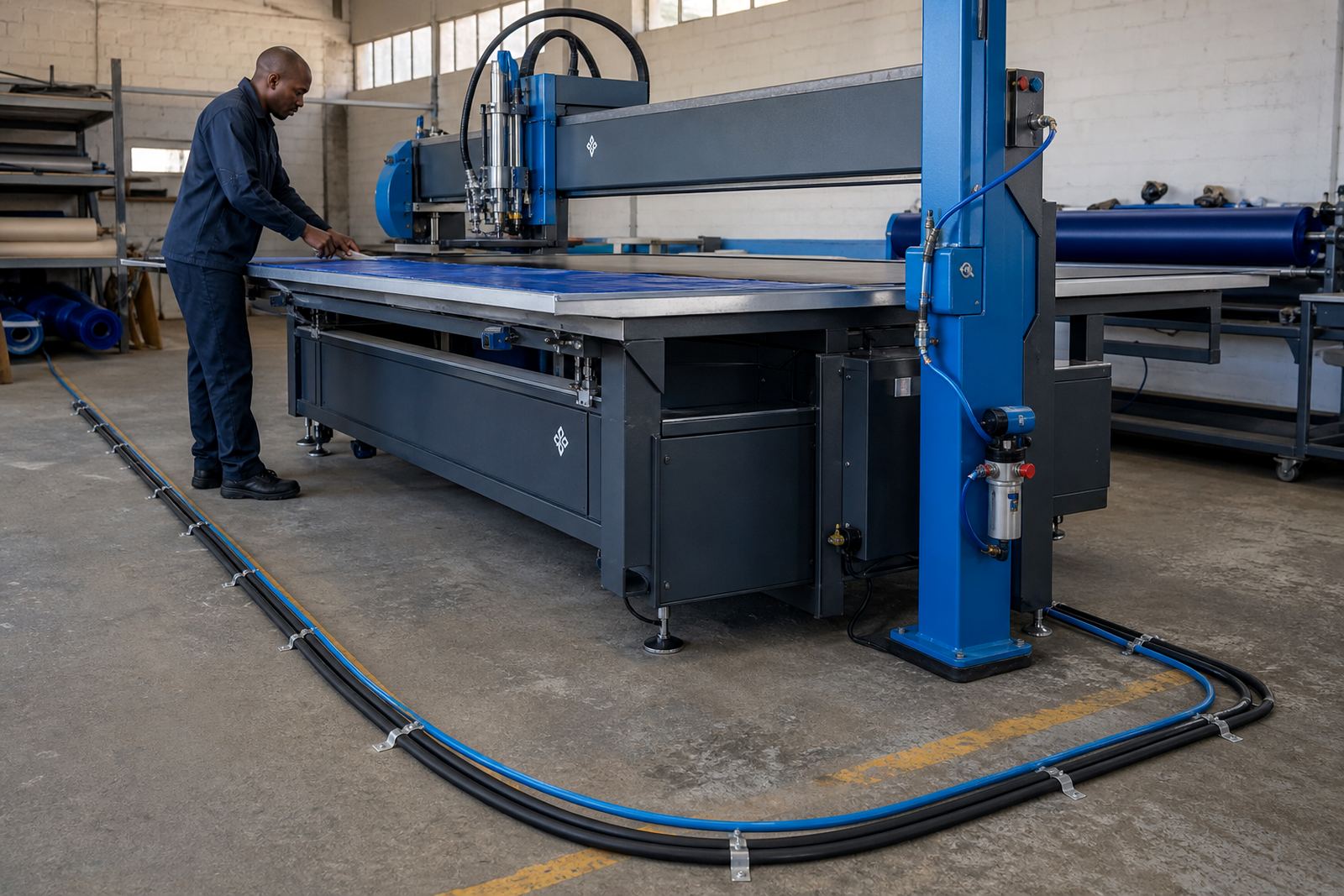
- Look at the cable paths and foot controls for wear.
- Keep a dry area around the machine so slips are less likely.
How a Germiston workshop can set the habit
In a busy Germiston shop, the clean-down works best when it is done in the same order every day. One operator clears scraps, another wipes the guides and rollers, and the last person checks the table and seam path before the lights go off. That approach keeps the routine short and helps the next shift start with less cleaning and fewer adjustments.
For workshops serving tarpaulin, banner and tent work across South Africa, this habit protects output in practical ways. Less dirt means better seam alignment, more even hemming and fewer marks on visible display pieces. It also gives service technicians a cleaner machine to inspect when preventive servicing, fault finding or electrode refurbishment is needed. A daily clean-down is not a major task, but it pays its way through steadier work and fewer avoidable interruptions.