What keder does on a fabric edge
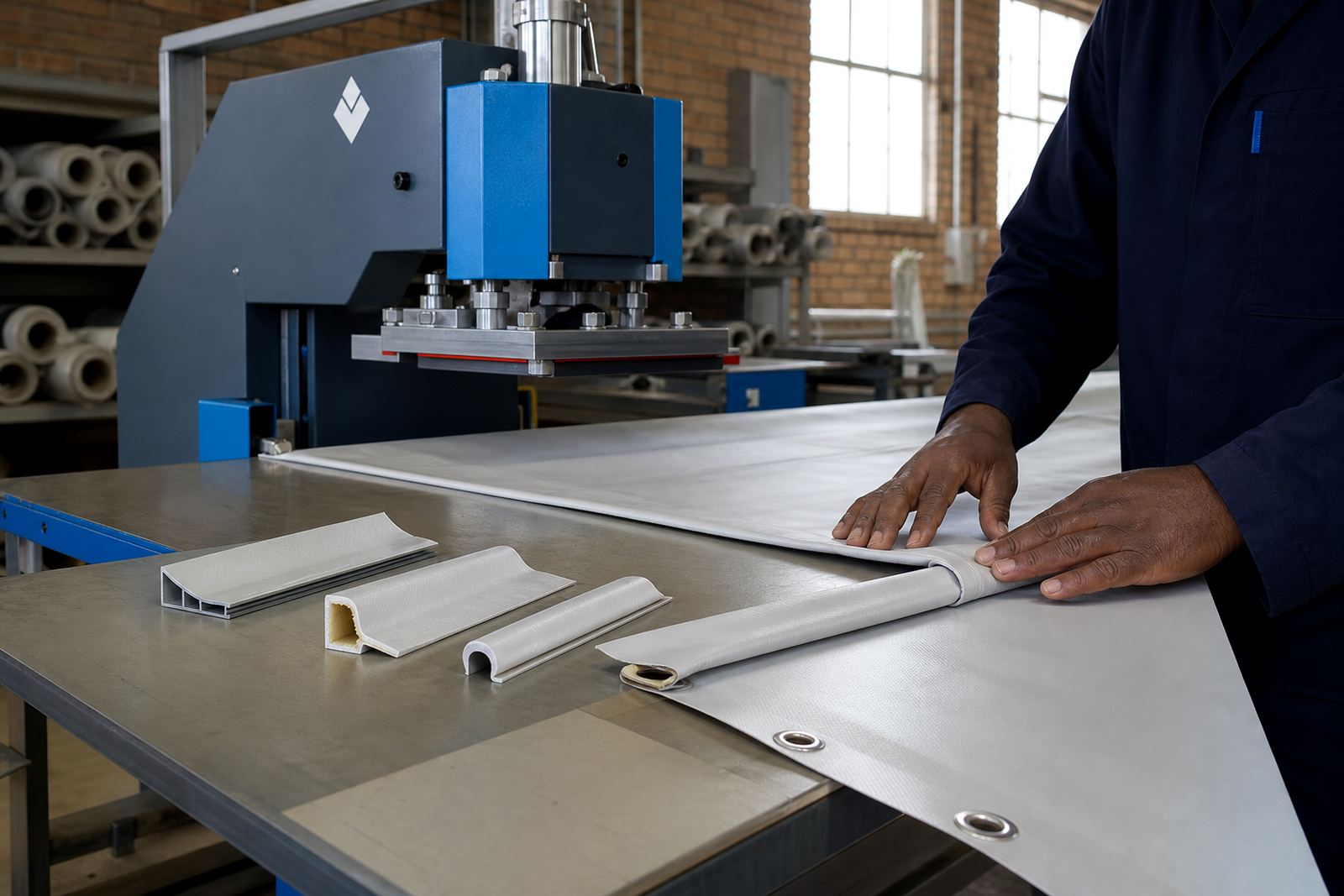
Keder is a welded or stitched-in bead that runs along the edge of PVC-coated fabric so the panel can slide into an aluminium or steel track. On tension graphics, marquee walls, awnings and other track-mounted products, it gives the fabric a firm hold and keeps the face flat under pull. The cord itself is usually round or teardrop-shaped, and the welded pocket must match the profile closely for a proper fit.
In practice, the edge has to do more than hold. It must take repeated insertion, removal and tension without tearing at the mouth of the pocket. That is why the weld line, the hem width and the corner treatment matter just as much as the cord diameter.
How the welding method changes the result
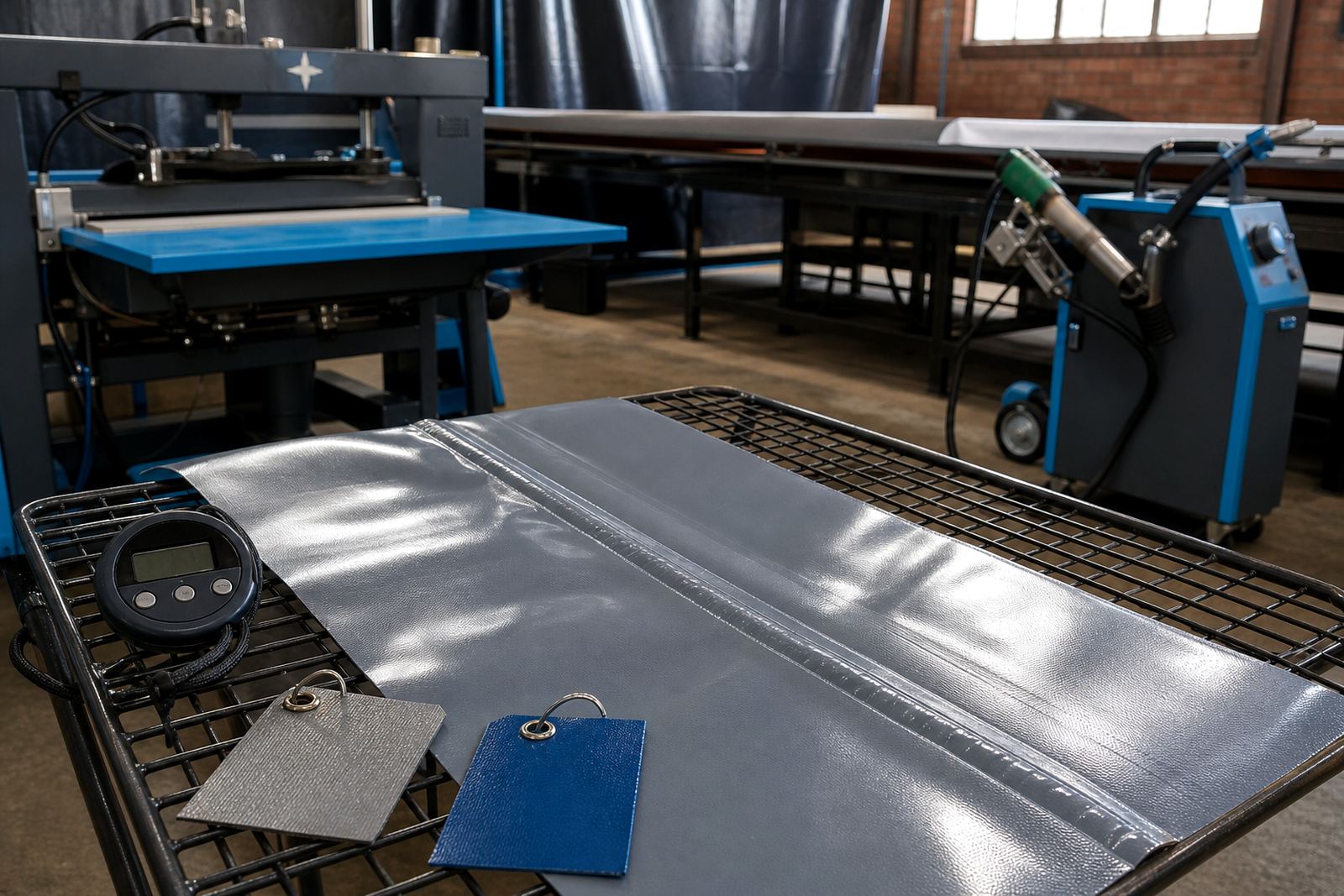
For PVC-coated fabrics, keder pockets are normally made with high-frequency welding or hot-air and hot-wedge equipment, depending on the material thickness, the seam layout and the workshop setup. High-frequency welding suits many PVC applications because it produces a consistent bond over a wide contact area. Hot-air and hot-wedge methods are useful where the operator needs to form hems, overlap seams or work on longer runs with more manual control.
The important part is matching the process to the fabric. A pocket that is too tight can chew the cord during installation. A pocket that is too loose can creep in the track, leave waves on the face, or pull unevenly at corners and joins.
- Check the cord size against the track before cutting the panel.
- Keep the weld path straight so the pocket feeds evenly.
- Allow for corner relief where the fabric must turn cleanly.
Seam choices that suit tension graphics and tents
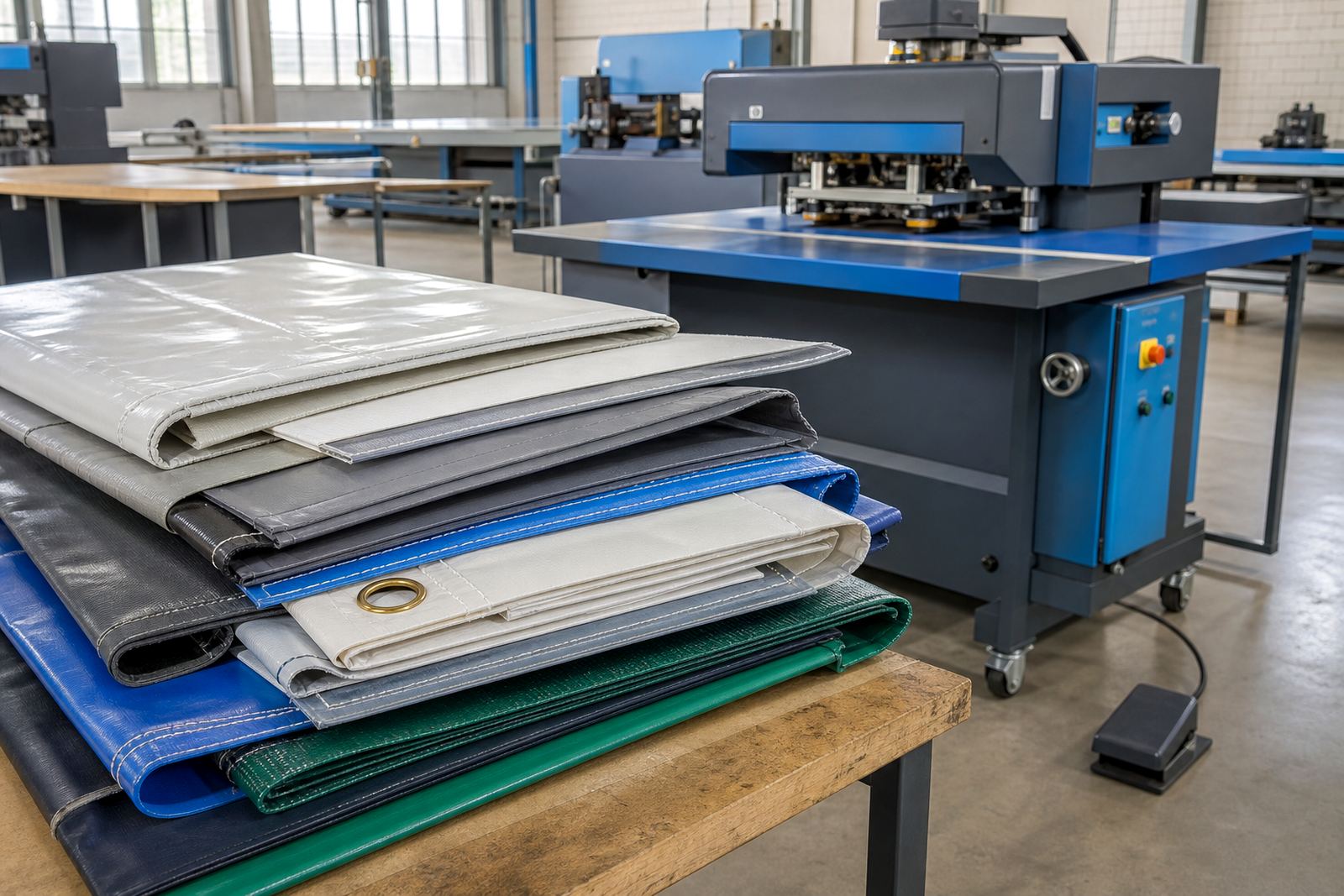
Keder is only one part of the edge build. The body of the panel may need overlap seams, butt seams with reinforcement, or folded hems before the cord is added. On large signage panels, the print field often needs a stable border so the visible face stays flat. On tents and fitted side walls, the seam line must handle pull from wind, frame movement and daily handling.
A practical workshop will think about how the item is used, not just how it looks on the table. A display wall for an event hall in Sandton will not be handled the same way as a tent wall used near the coast in Durban, where humidity and frequent packing can affect the fabric behaviour. The edge spec should suit the real job, not a guess.
- Use reinforced corners where the load pulls hardest.
- Keep seam overlaps consistent to avoid visible ridges.
- Plan join locations away from the most visible face where possible.
Hems, keder pockets and corner handling
A neat hem gives the keder pocket its strength. For lighter banner work, the hem can be narrow but still needs enough body to stop the cord from cutting through. For heavier tent fabric, the hem may be broader to spread the strain across a larger area. The pocket opening should be clean, with no burnt edges, weak spots or waviness that could affect feeding into the track.
Corners need extra care. If the pocket is simply forced around a sharp angle, the fabric can pucker or the cord can bind. A better result comes from easing the corner, trimming where needed and checking that the finished edge still sits square. Small errors here are the ones that show up later on site.
Eyelets, access points and finishing details
Some keder jobs still need eyelets, tie points or reinforced openings for practical use. That can include extra fixings at access flaps, drainage points or temporary retention while the panel is being installed. The eyelet work must not interfere with the track fit, and the reinforcement patch should be large enough to spread the pull without distorting the edge.
Good finishing also means trimming stray threads, cleaning weld residue and checking that the pocket runs free over the full length. A banner with a tidy keder edge is quicker to fit and less likely to need site corrections. On a tent wall, that same care helps the panel seat properly the first time.
- Place eyelets where they will not crush the cord path.
- Use reinforcement patches that suit the pull direction.
- Test the edge movement before final packing.
Operator safety and machine servicing in the workshop
Whether the team is using radio frequency welding or hot-air and hot-wedge equipment, safe setup matters. Guards, correct hand position and tidy cable management help prevent avoidable injury. Operators should also know how to set pressure, dwell and alignment for the material at hand, because too much heat or pressure can mark the fabric and too little can leave a weak seam.
Machine servicing keeps the work consistent. Electrodes, rollers, guides and alignment parts wear in daily use, especially where there is heavy production of tarpaulins and banner systems. Preventive servicing, tooling alignment and seam testing are worth doing before faults show up on a client job. In Germiston, where many workshops run a steady mix of short and long orders, one worn roller can throw off several panels before anyone notices.
A Germiston example from a working shop floor
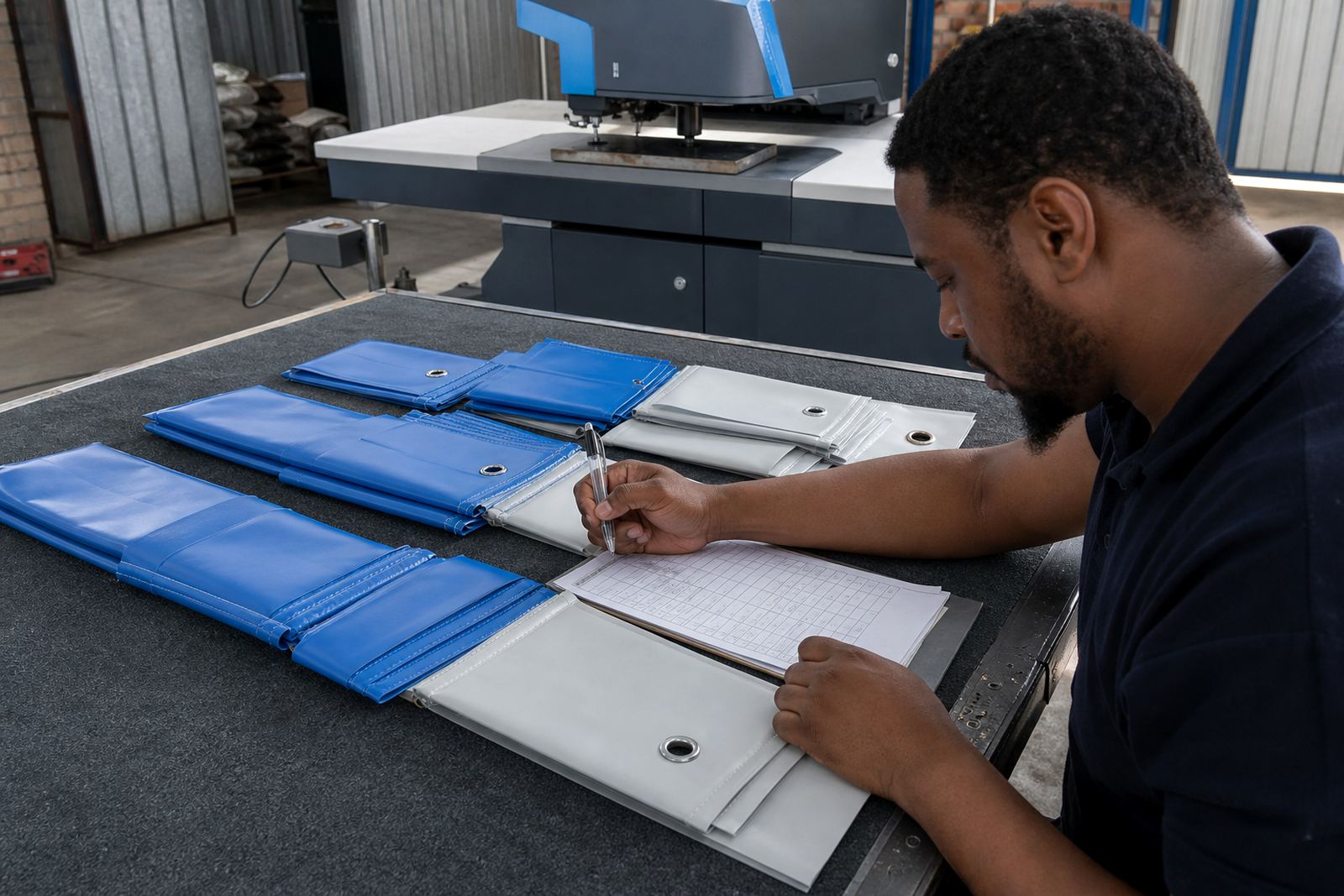
Picture a Pretoria signage team making a stretch banner for a shopfront and a set of tent walls for a weekend event in Bloemfontein. The banner needs a slim keder pocket for an aluminium track, while the tent walls need a wider hem and stronger corner build. If the cord size is wrong on either item, the crew spends time forcing the fit on site, and the finish suffers.
The better approach is to confirm the track profile, choose the keder to suit, weld the pocket cleanly and then test the edge before dispatch. That is the kind of practical work that saves time later. For fabric makers across South Africa, from Johannesburg to Cape Town, the detail at the edge is what keeps the product working long after delivery.
When the weld, hem and cord all work together, the panel slides cleanly, sits straight and holds its shape under use. That is the real value of keder basics: a small edge detail that carries the load of the whole job.