Why heavier coated fabric needs a different weld
Thick PVC-coated fabric holds more heat and resists flow, so the operator has to work with the material instead of forcing it. On radio frequency welders, that means checking the electrode contact, pressure and dwell time before running full sheets. On hot-air and hot-wedge machines, the weld zone needs enough heat to soften the coating without scorching the face or distorting the textile base.
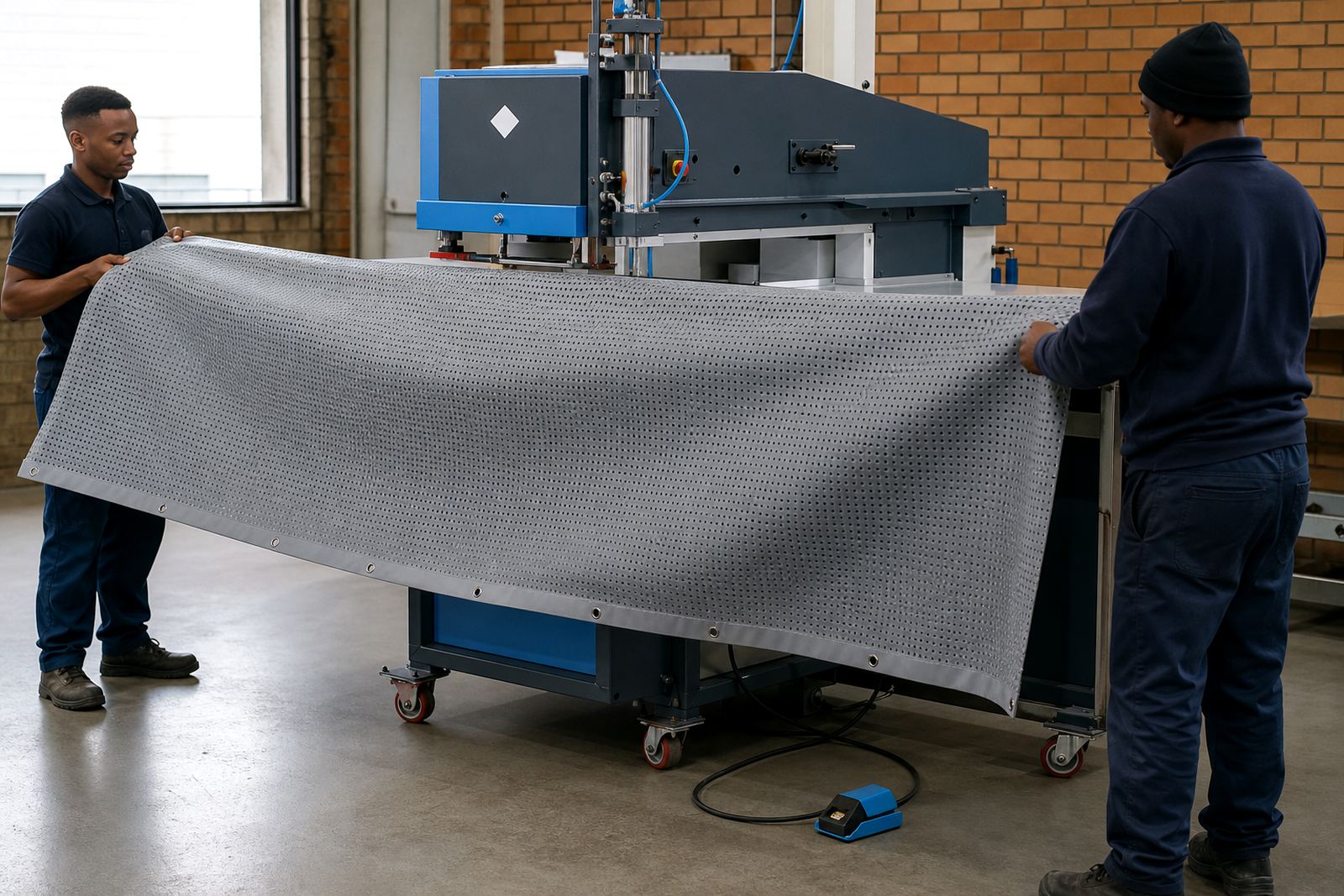
In practice, the first signs of trouble are easy to spot: a seam that looks shiny but lifts at the edge, a wavy line where the material has shifted, or a join that seals in one place and stays open in another. Heavy tarpaulin for trucks, shelters and industrial covers often needs a slower setup than light banner work, especially when the fabric has a stiff weave or a thicker coating on both sides.
For shops working in Johannesburg or Durban, humidity can also change how the sheet handles on the table. The fabric may feel tackier in summer, which makes alignment harder, while cooler mornings in Pretoria or Bloemfontein can leave the material less flexible. That is why a good seam starts with the material checked flat, clean and measured before any heat is applied.
Choosing the seam style before the machine is switched on
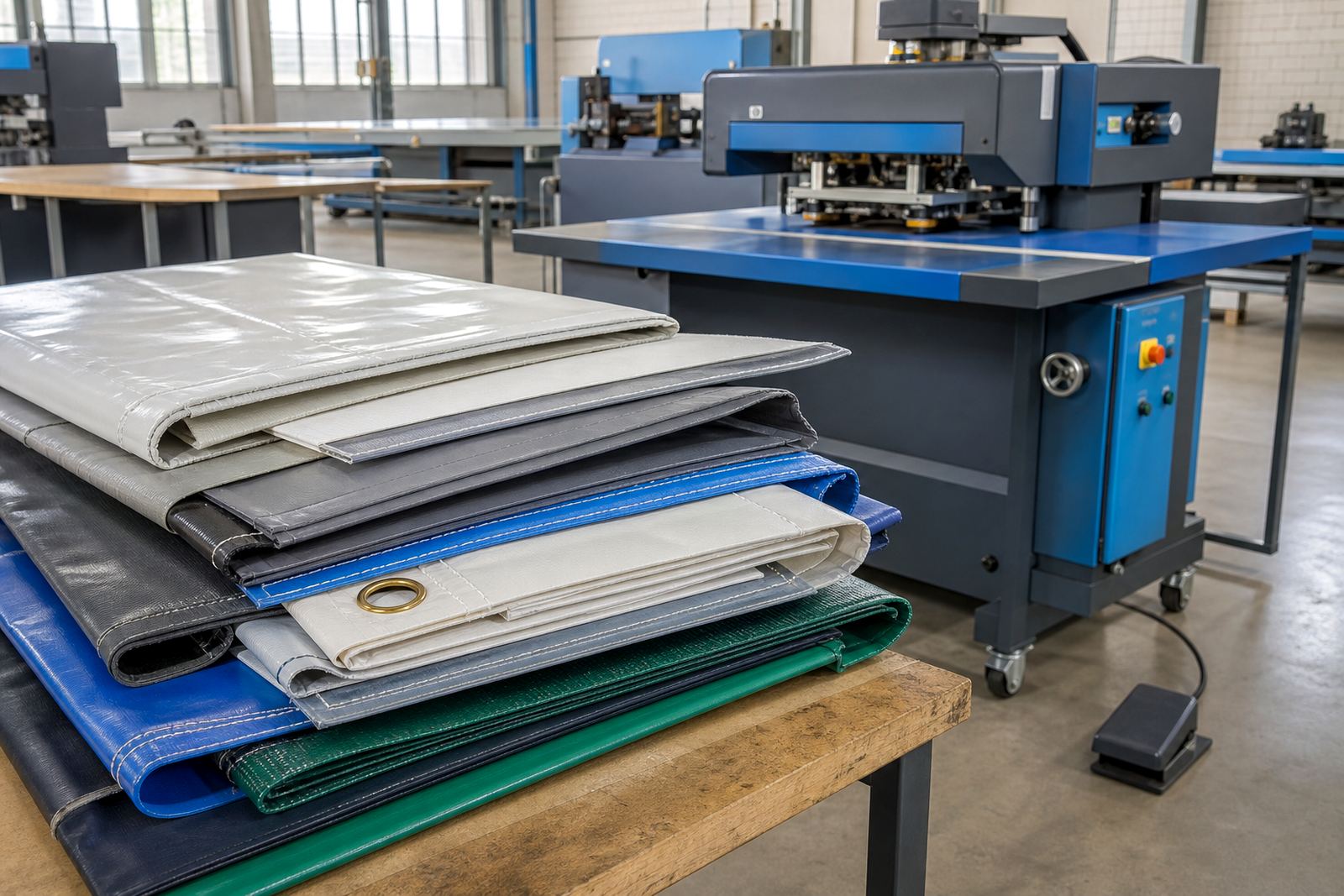
The right seam type depends on what the item must do after it leaves the workroom. A simple overlap joint works well on many tarpaulin panels, but a double weld or reinforced lap may be better where the sheet carries load or sees repeated folding. Hems need enough return to hold an inserted rope, batten or reinforcement strip. Keder work needs a consistent pocket size, while eyelet areas often need extra patching or doubled layers so the pull is spread out.
- Overlap seams for general joining of coated panels
- Double seams where extra strength is needed along long runs
- Folded hems for ropes, stiffeners or edge finishing
- Keder pockets for curtain tracks, frames and fitted covers
- Reinforced eyelet patches for tie-down points and tensioning
Good seam planning saves time later. If the job is a banner for a windy site in Cape Town, the edge finish may need more allowance than a sheltered indoor display. A tent wall in Ekurhuleni may need a clean seam line and a neat hem so it feeds properly through hardware, without snagging or pulling out of line.
Radio frequency welding on thick PVC-coated fabric
High-frequency welding, also called radio frequency welding, is suited to PVC-coated fabrics because the material responds to the electrical field and builds heat in the weld zone. For thick fabric seams, the operator has to keep pressure even across the full contact area. Too little pressure and the seam does not bond properly; too much and the material can stretch, mark or buckle at the edge.
Electrode shape matters as well. A clean, well-aligned tool gives a sharper seam line and helps keep repeats consistent across a batch. On thicker material, the machine may need a slower cycle and a careful test strip before production starts. Seams should be checked after cooling, because a fresh weld can look complete while still being soft inside.
- Check electrode alignment before every run
- Keep the fabric edges square and free of dust
- Allow the weld to cool before stressing it
- Test a short sample when changing material thickness
Where a workshop in Germiston is running long sheets for truck curtains or market covers, small changes at the start can save an entire roll. A slight offset in the first metre may carry through the full length, so operators need to stay alert from the first cycle rather than trying to correct it at the end.
Hot-air and hot-wedge work on long seams and site covers
Hot-air and hot-wedge welding are often preferred for long straight seams, hems and site work where the operator needs steady travel and good visual control. With thicker coated fabrics, the machine speed usually needs to come down so the heat can reach the bonding zone without damaging the top layer. The pressure rollers must stay firm and true, otherwise the seam can wander or leave a weak edge.
These machines are useful on tarpaulins, tents and large banner assemblies where the seam runs for metres at a time. A straight edge guide helps with repeat work, but the operator still has to watch the feed, the overlap width and the finish at the end of each run. If the fabric is stiff or has memory from storage, pre-lay it flat and let it settle before welding.
In coastal Durban and Cape Town, salt in the air and moisture on stored material can affect the handling of coated fabric. Keeping rolls dry and clean matters. In inland towns, dust is just as troublesome, especially on eyelet work and hem folds where grit can sit in the seam path and spoil the bond.
Eyelets, keder and reinforced edges need tidy preparation
Thick fabric seams are only part of the job. The edge finish matters just as much when the product has to be tensioned, hung or tied down. Eyelet panels need reinforcement so the force does not rip the hole through the coating. Keder inserts need a pocket that is even along the full length, otherwise the material jams when fitted to a track or frame. Hems must fold cleanly, with enough allowance to keep the edge from curling or opening under load.
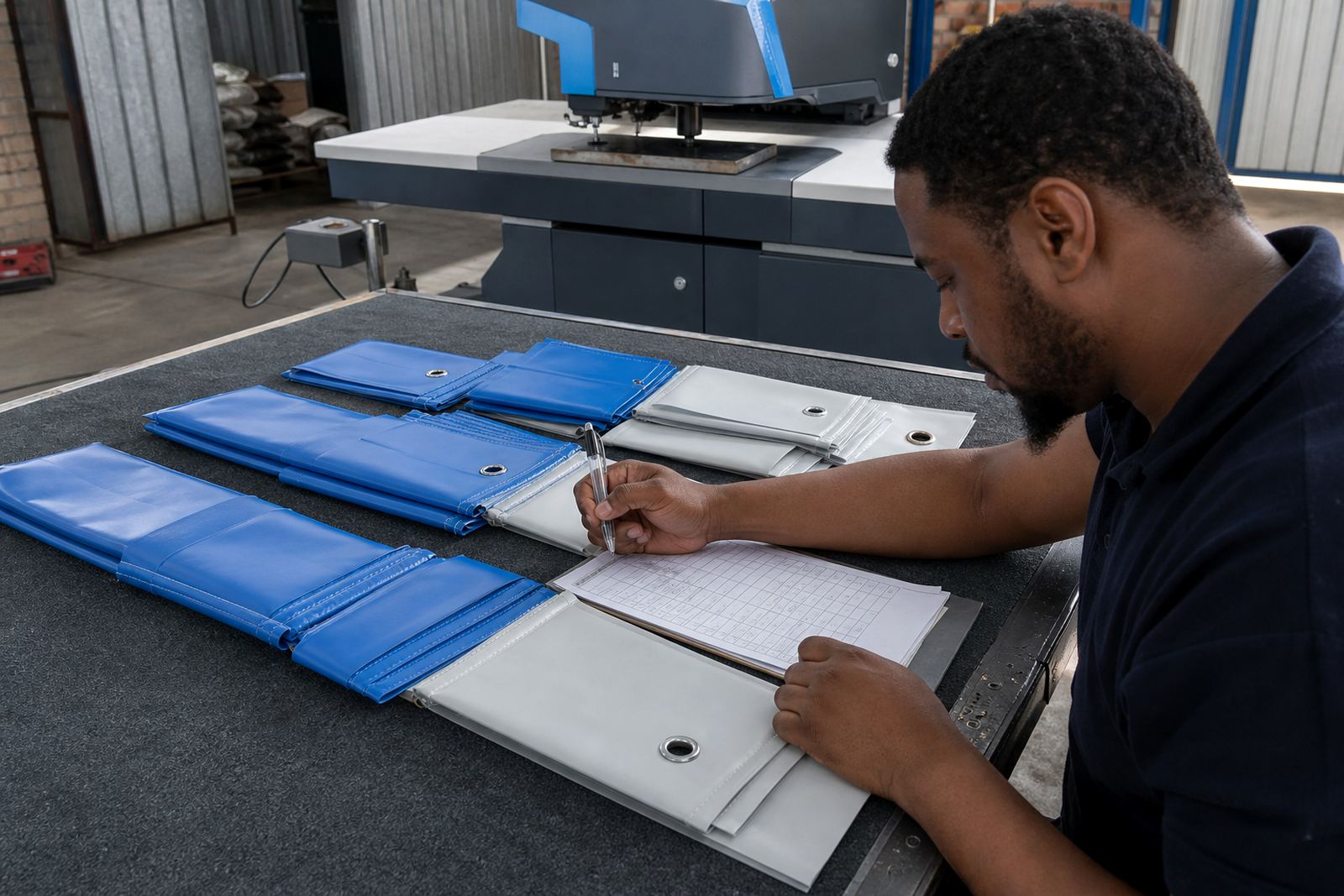
Practical finishing work often includes marking, clamping and checking the fold before welding. A small twist in the hem can create a problem later when the panel is installed on site. For event structures and display work, this is where accurate measuring pays off. For industrial covers, it is where strength and neatness meet.
- Keep eyelet spacing consistent for even tension
- Use reinforcement patches where pull is concentrated
- Check keder pocket width before sealing the full length
- Trim frayed edges before the final weld
Keeping machines safe and steady in daily production
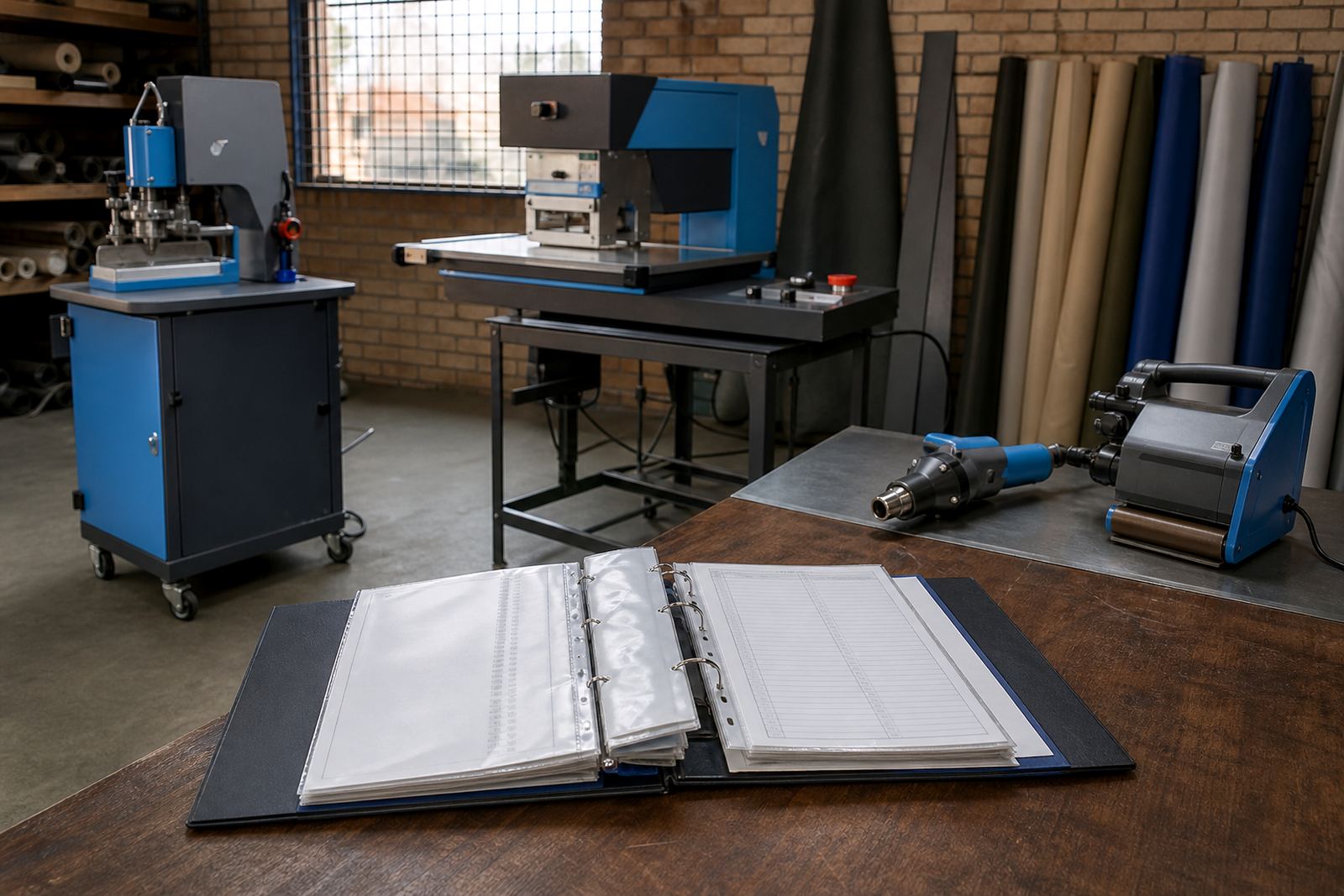
Heavy seam work puts more strain on the welding machine, the tooling and the operator. Guards, foot controls, cooling systems and pressure parts should be checked regularly. If the electrode or roller is worn, the weld quality drops long before the fault becomes obvious. Service work often includes alignment checks, roller replacement, electrode refurbishment, fault finding and seam testing so the machine keeps producing usable joins.
Operator safety matters as much as output. Hands should stay clear of the weld zone, the work surface must be kept tidy, and the machine should be isolated before any cleaning or adjustment. Training helps operators read the material properly, judge pressure and recognise when a seam is not forming as it should. In a busy shop, that kind of judgement saves time and prevents scrap.
For fabricators across Johannesburg, Pretoria, Bloemfontein and the coast, a preventive servicing plan is often easier to manage than waiting for a breakdown. When thick work is common, the machine is not just making a seam, it is handling repeated stress. That is why alignment, pressure consistency and regular checks matter on every shift.