The paper trail that keeps a welder honest
A PVC welding machine can run for years, but only if the small details are kept in order. Service records give you a clear view of what was adjusted, replaced, tested or cleaned, and that matters when a tarpaulin seam opens at the corner or a banner hem starts drifting off line. Without a proper record, the same fault gets guessed at twice and the machine loses more time than it should.
For shops working with PVC-coated fabrics, service notes should cover the machine type, the welding method used, the material thickness, the seam style and any setting changes. That makes it easier to see patterns. If a hot-air welder is struggling on heavier PVC or a radio frequency unit is leaving uneven seams on certain jobs, the record will show whether the issue sits with tooling, operator setup, or wear on key parts.
What belongs in a useful service record
A good record does not need fancy language. It needs facts a technician or operator can use next time. In Germiston workshops and at customer sites in Durban, Cape Town, Pretoria and Bloemfontein, the best files are the ones that show exactly what happened on the day, not a vague note that something was checked.
- Machine make, model and serial number
- Date of service, callout or installation
- Type of material welded, including PVC-coated fabric weight or thickness
- Seam type used, such as overlap, hem, pocket, keder or edge weld
- Electrode, roller or nozzle changes
- Temperature, pressure, dwell time or frequency settings where relevant
- Fault found, corrective work done and parts fitted
- Operator name or shift, if the same issue keeps returning
That level of detail helps when a machine is being used for tarpaulins, signage panels or tent sections and the finished work has to hold up in weather and handling.
Recurring faults show up faster with proper notes
Most welding faults do not arrive out of nowhere. A weak seam, scorched edge or uneven weld usually starts with something small, like poor alignment, worn tooling, a dirty contact area or a setting that has drifted. When service records are kept properly, those warning signs are easier to spot before they turn into scrap material and lost production.
For example, a signage shop in Johannesburg may keep seeing lift on banner hems after a period of heavy work. If the notes show that the same roller was serviced twice, and the same operator setting keeps being adjusted, the cause becomes easier to trace. In coastal areas such as Durban and Cape Town, humidity can also affect handling and storage of PVC-coated fabric, so records should note material condition where that is relevant.
- Repeated fault on the same seam edge
- Frequent replacement of one roller or electrode
- Hot spots or cold spots on the weld path
- Material distortion on certain widths or batch types
- Operator adjustments that keep needing correction
Planned servicing works better when the history is complete
Preventive servicing only works well when there is a clear history behind it. If a high-frequency machine has been running long shifts on banner joins, the service record should show how often it was cleaned, checked and recalibrated. If a hot-wedge machine is making tent seams with keder attachment, the record should show wear on the wedge, pressure rollers and guides.
That is useful for service plans too. Parts supply becomes more accurate when the technician can see which components are wearing fastest. Electrode refurbishment, roller replacement and tooling alignment are easier to plan when the service book shows the same part being touched repeatedly. It also helps the workshop decide whether a machine needs a light adjustment or a more detailed strip-down. In practice, that keeps the line moving and avoids last minute surprises when an order is already on the table.
Training the operator to record the right details
Service records are only as good as the people filling them in. A trained operator should know what to note after a shift, after a fault and after a test weld. That habit is especially useful where several people use the same machine, because one operator may notice a small change that the next one misses. In busy tarpaulin and tent shops, that can be the difference between catching wear early and discovering it after a job has already gone out.
Training should cover safe machine handling, clean-up, seam checks and basic fault reporting. A proper entry should be short but specific, for example: poor weld on left side of hem, roller pressure adjusted, test strip passed on second run. That kind of note helps the service technician and gives the next operator a clean starting point. It also supports safer work because repeated faults often point to machine behaviour that needs attention before someone is tempted to work around it.
- Write down what changed, not just that a problem happened
- Use the same terms for seam types and parts every time
- Record test results after any adjustment
- Note any unusual noise, smell or vibration
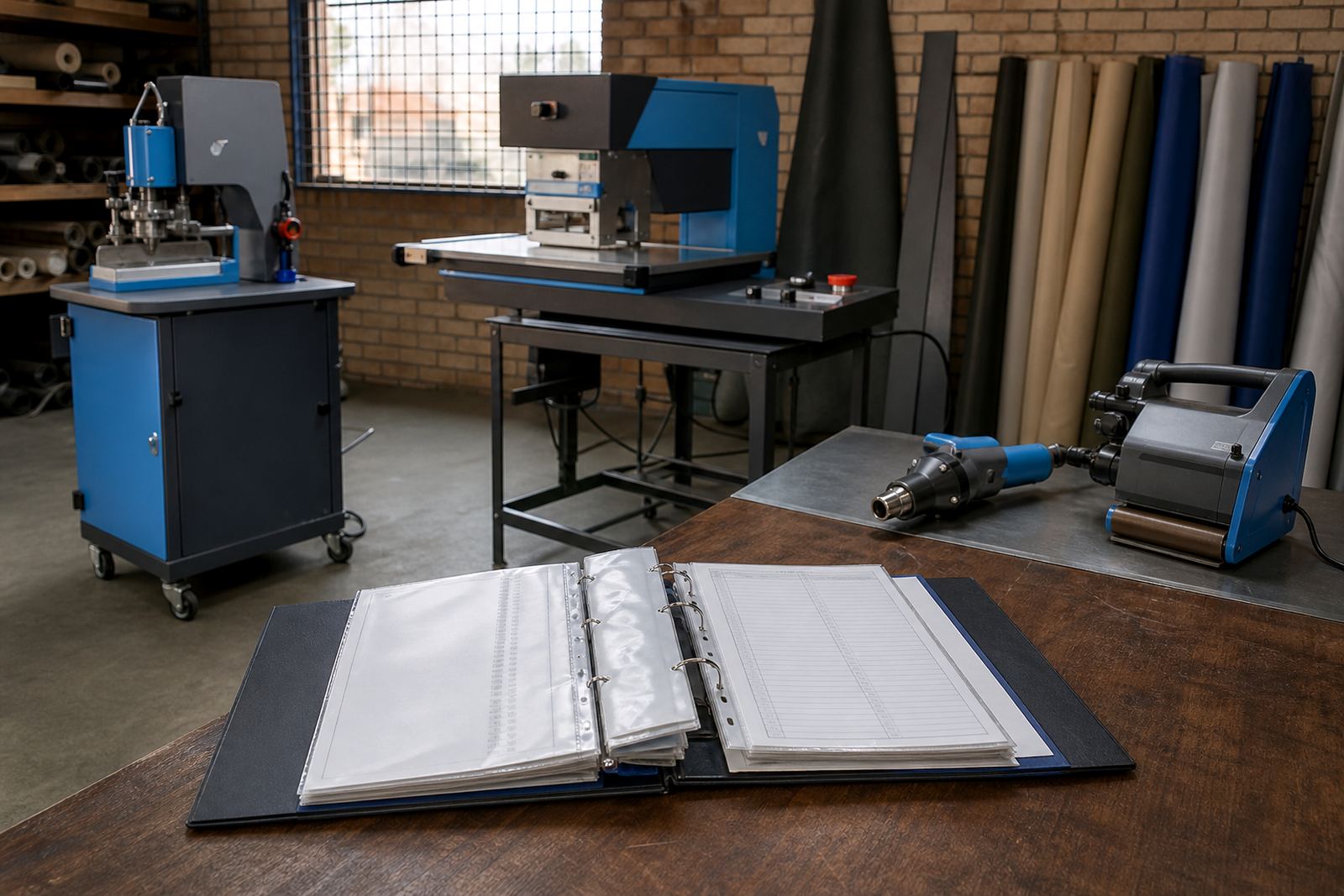
- Keep service sheets with the machine history, not in a separate pile
A Germiston example: one record, fewer repeat callouts
Picture a Germiston workshop making PVC banners for dispatch to Pretoria, with a few tarpaulins queued for a Durban customer and tent panels waiting for Bloemfontein. The machine starts leaving one side of the seam slightly uneven. If no record is kept, the team may blame the fabric, then the operator, then the machine. With proper notes, the story is clearer: the same roller showed wear last month, the pressure had already been adjusted twice, and the seam test failed on heavier material only.
That record gives the service technician a place to start. Instead of wasting time on guesswork, the callout can focus on roller replacement, tooling alignment and a full seam test. The result is a cleaner repair, less scrap and a machine that is easier to monitor afterwards. For businesses in Ekurhuleni and beyond, that is the practical value of a good service trail: less repetition, better planning and a clearer view of what the machine is really doing.
At PVCWelder, service records are part of the same working routine as installation, commissioning, fault finding and operator training. When the history is kept properly, the next repair or service visit starts with facts, not assumptions.