Why the job runs better in stages
Tarpaulin makers work with heavy PVC-coated fabric, and that material behaves differently from light textile offcuts. If the cutting line, welding table, hemming path and eyelet station are treated as one flow, the team keeps the grain, overlap and heat zone under control from the first mark to the last fix. That matters on truck covers, shade walls, event banners and tent panels where a twisted seam or uneven hem shows up fast once the sheet is tensioned.
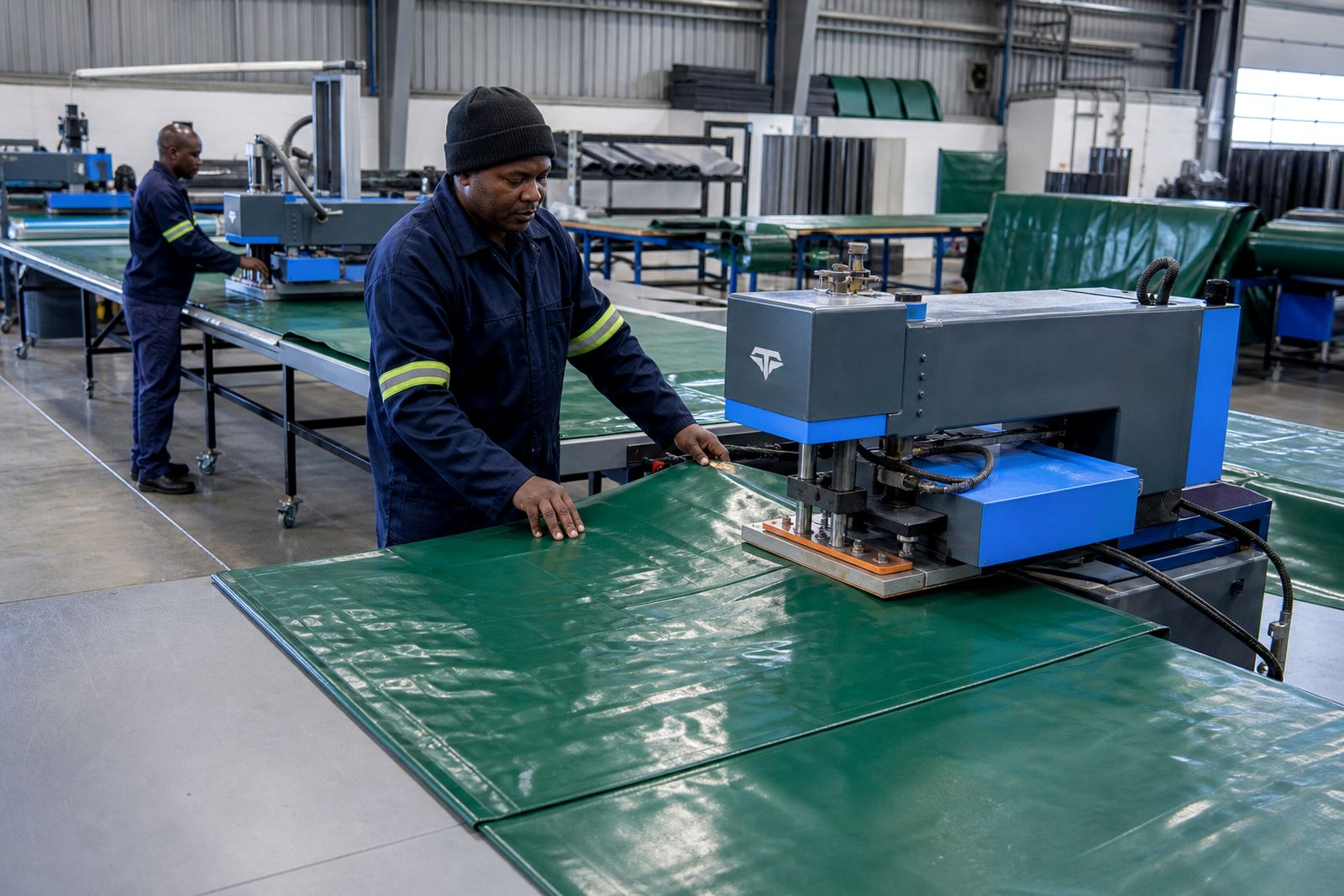
In Germiston and the wider Ekurhuleni industrial area, many workshops handle a mix of short runs and matching jobs. A planned flow lets the cutter prepare the next panel while the welder finishes a seam, and the eyelet station can work off finished lengths without waiting on rework. It also helps the service side, because a machine that is kept in line with the job tends to remain in better condition.
Cutting that sets the weld up properly
Accurate cutting is the first control point. For tarpaulins and banners, the allowance for weld overlap, hems and reinforcement patches must be set before any sheet is laid out. If the cut edge wanders, the weld line follows it and the finished panel looks hurried even when the weld itself is sound.
- Mark the sheet with enough allowance for the seam type being used, whether lap weld, channel hem or folded edge.
- Keep direction consistent so matching panels sit square when joined.
- Separate clean cut pieces from offcuts immediately to avoid mix-ups on busy benches.
- Check panel lengths against the final fit, especially on side curtains, truck tarps and branded event walls.
A practical shop in Johannesburg may cut on one side of the room and weld on the other, but the paperwork and label system must still follow each panel. Without that, a small length error can turn into a lopsided banner or a curtain that pulls under strain.
Choosing the seam for the job
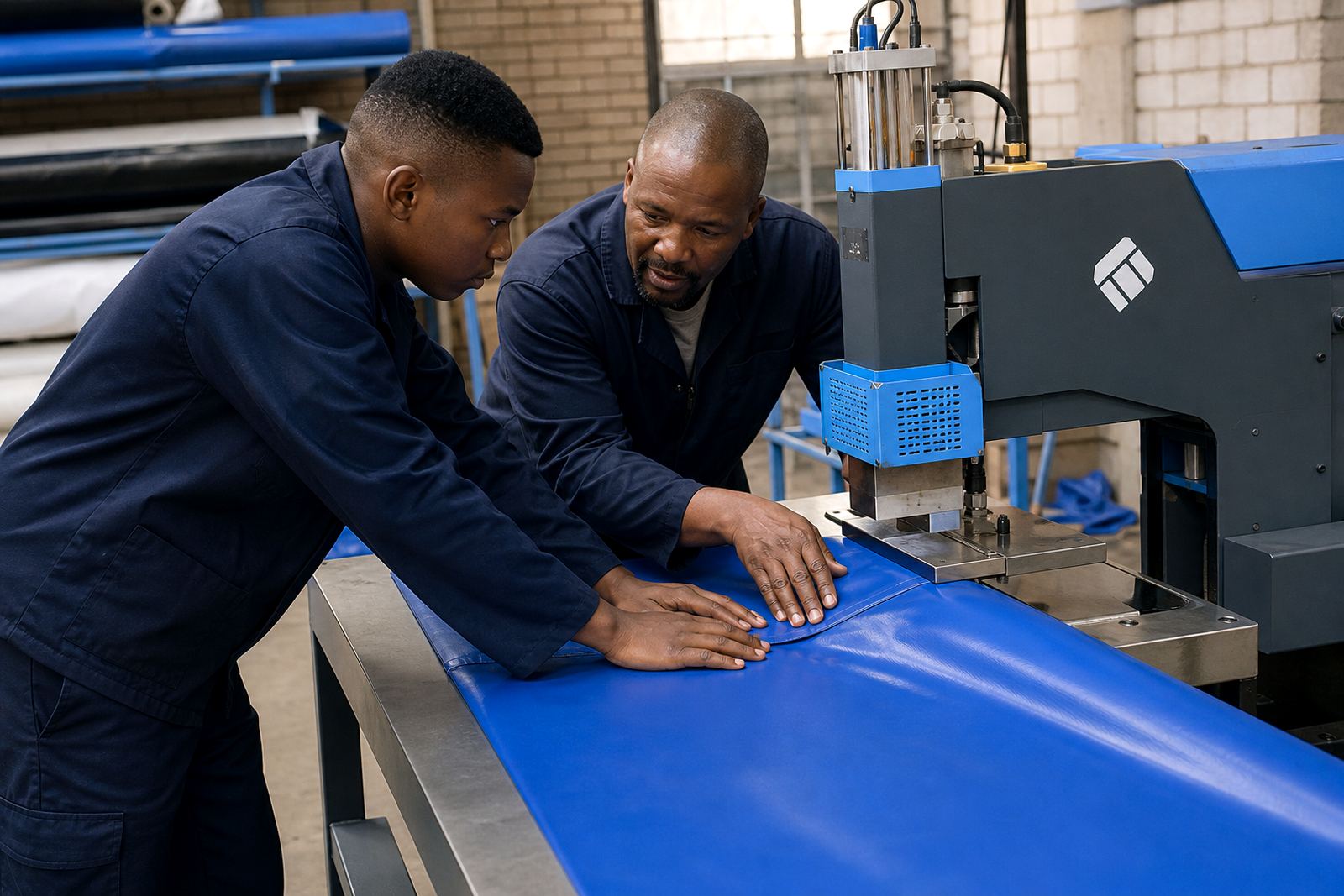
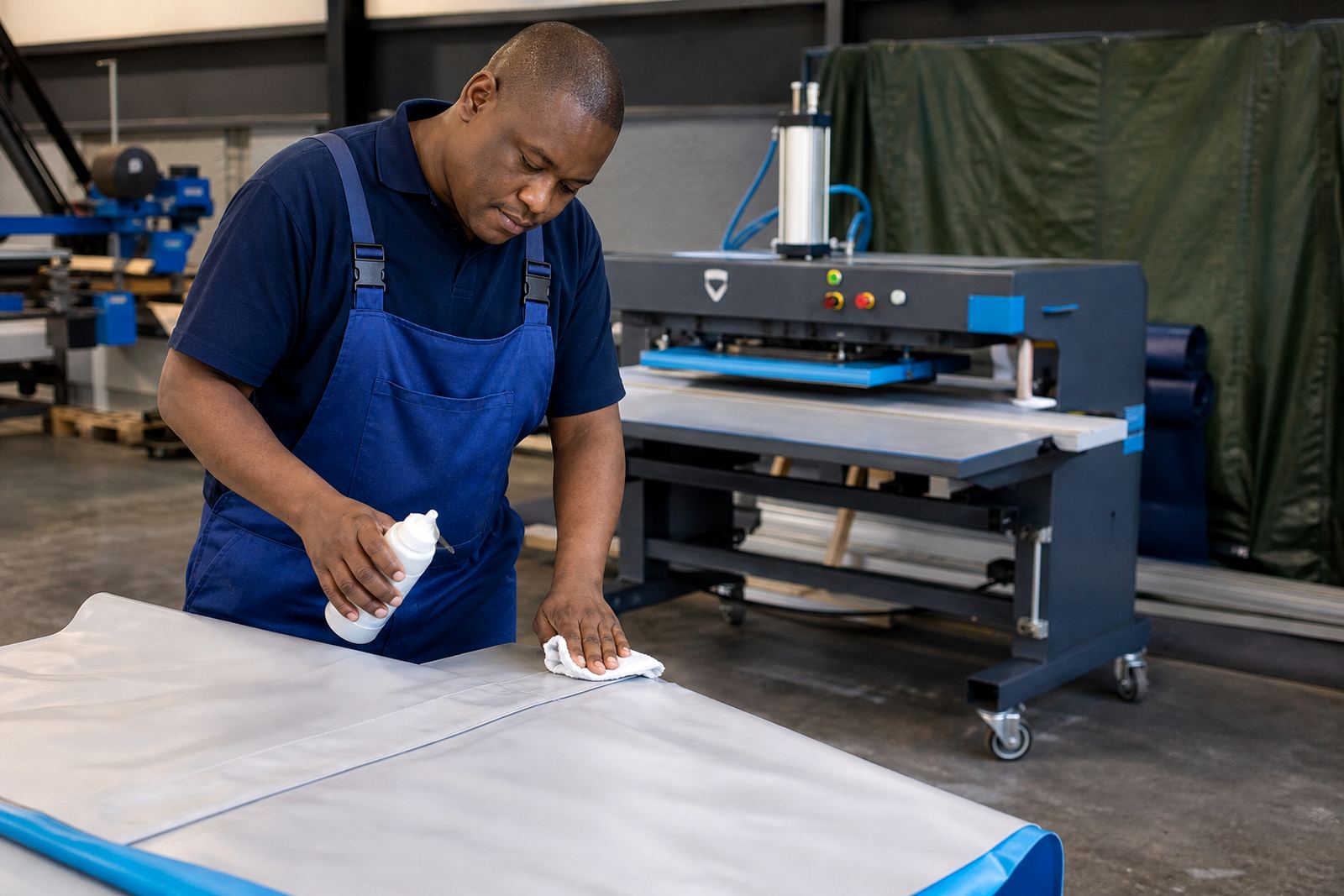
High-frequency welding, also called radio frequency welding, is well suited to PVC-coated fabrics where a clean, repeatable seam is needed. The weld uses pressure and radio frequency energy to bond the material evenly along the seam area. Hot-air and hot-wedge welding are also common for PVC work, especially where long straight runs, hems or site-built assemblies call for controlled heat along a moving line.
The right seam depends on the use. A banner edge may only need a folded hem with a pocket or rope line, while a tarpaulin cover may call for a lap seam with reinforcement at stress points. Keder strips, webbing, corner patches and eyelet bands all change the way heat, pressure and dwell time are set. Good operators know that the material thickness, coating and finish matter just as much as the machine itself.
- Use RF welding where a clean, matched seam is needed on suitable PVC-coated fabric.
- Use hot-air or hot-wedge systems for long seams, hems and field assembly work.
- Match the seam to the load, whether it is decorative, weather-facing or tensioned.
- Test a sample before committing a full run, especially on new material batches.
Hems, keder and eyelets need order
Hems are not only a neat edge, they help the sheet hold shape and take fittings. A consistent fold keeps the edge straight and reduces puckering after welding. Keder work needs even feed and accurate pocket width so the cord slides cleanly into track systems without snagging. Eyelets need a reinforced zone, the right spacing and a clean punch, otherwise the fabric starts tearing when the sheet is loaded in wind.
In Cape Town, where coastal humidity can affect storage and handling, workshops often keep finished tarps off the floor and away from damp corners so the coating does not mark before finishing. In Durban the same care helps where heat and moisture can make the shop feel heavy during the day. A clean sequence from hem to reinforcement to eyelet setting keeps the edge stable and easier to fit on site.
- Press hems evenly so the edge does not bunch or curl.
- Keep keder insertion channels straight and free from heat distortion.
- Set eyelets only after the reinforcement has cooled and settled.
- Space fixings to suit the actual pull on the job, not just a standard pattern.
Safety that belongs on the shop floor
Welding PVC-coated fabrics is practical work, but it still calls for attention. Heat, moving rollers, pinch points and hot tools can catch a tired operator. Clear guarding, dry floors, tidy leads and proper material handling all reduce risk. So does training that covers more than the machine buttons, because an operator who understands material behaviour can spot trouble before it becomes a bad seam or a burn mark.
Thandi Mokoka often sees that the smallest habits make the biggest difference. Correct glove use for handling hot material, clear eye protection during trimming, and a clean path from cutting to welding all help keep the workshop steady. On larger sites in Pretoria or Bloemfontein, where crews may work under pressure to meet dispatch times, it is worth setting out one-way movement for sheets and scrap so people are not stepping over each other.
- Keep hands clear of heated zones and rotating or clamping parts.
- Allow welds to cool before stacking or folding.
- Use ventilation suitable for the material and process in the room.
- Teach new operators the material path, not only the machine controls.
Servicing keeps the line moving
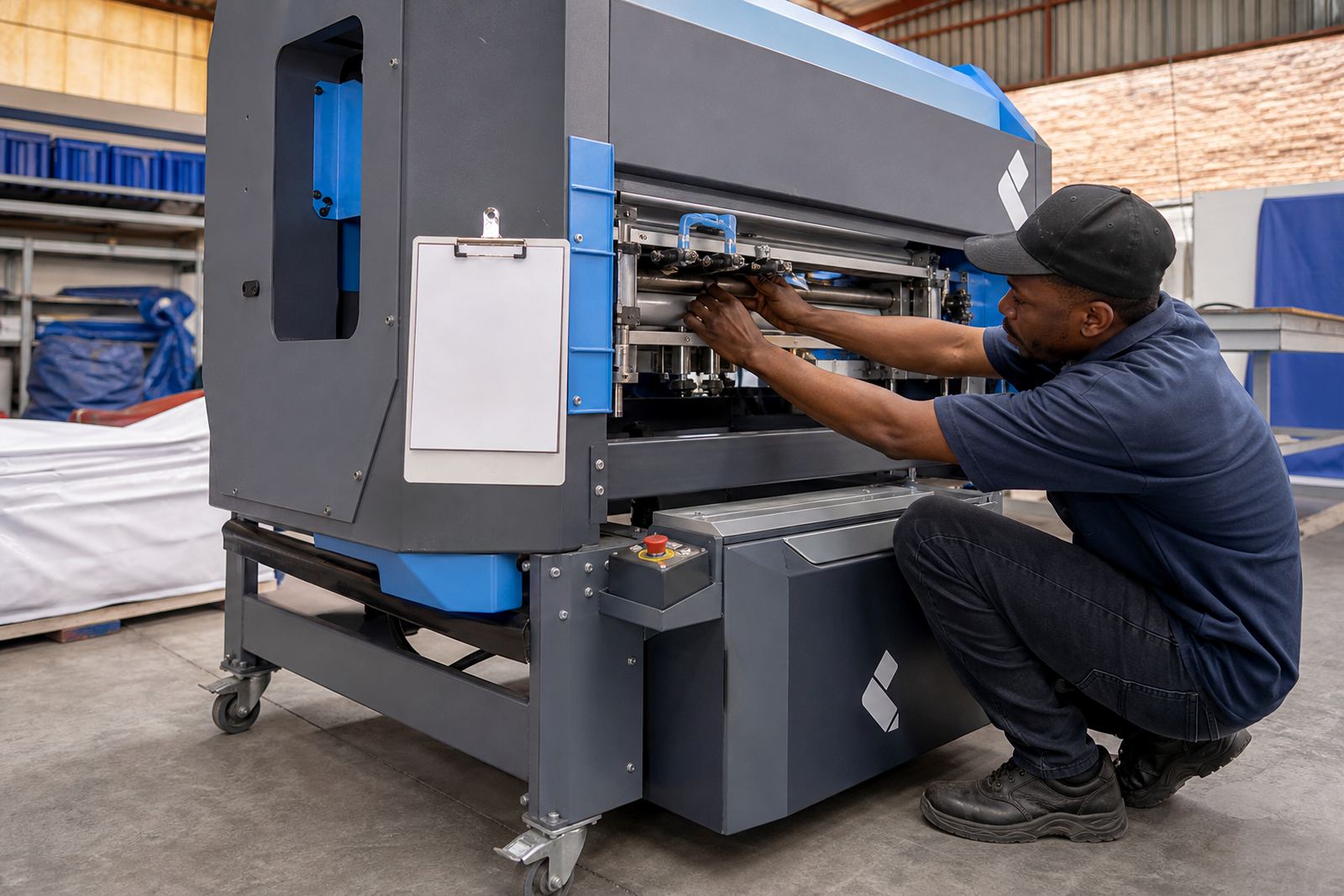
Machine care is part of production, not an extra task. Electrode surfaces, rollers, alignment, pressure settings and feed consistency all affect seam quality. If a weld starts to show weak edges, uneven marks or a glossy burn line, the machine may need servicing rather than more heat from the operator. Preventive servicing also helps cut down on scrap, which matters in a shop where every metre of coated fabric has a cost attached to it.
PVCWelder in Germiston supports tarpaulin, banner and tent makers across South Africa with installation, commissioning, operator training, preventive servicing, fault finding, tooling alignment, electrode refurbishment, roller replacement, parts supply, seam testing, site callouts and service plans. Sibusiso Abrahams handles fault finding, Johan Mkhabela takes care of installation work, and Lebo Motsepe keeps parts and support moving for workshops in Johannesburg, Pretoria, Durban, Cape Town and Bloemfontein as well as Boksburg and Benoni. Mandla Mnisi oversees the operation with Alicia van der Merwe on sales support and Thandi Mokoka on training coordination.
A Germiston example that shows the flow
A small tarpaulin shop near Germiston might take on a batch of truck side curtains, a run of event banners and a few repair jobs in the same week. If the team cuts all panels first, marks the weld allowances, joins the long runs, then moves to hemming, keder and eyelets, the work stays organised even when urgent repairs land on the bench. The operator can check seam quality at each stage, and the supervisor can spot where time is being lost.
That approach also helps the customer side. A properly staged job looks cleaner, fits better and is easier to install on site. It is the difference between a cover that is fixed once and a cover that keeps needing edge repairs after the first stretch. For shops serving the high traffic areas around Gauteng, this order saves labour and keeps the finish consistent from one batch to the next.
Whether the work is for a roadside banner in Pretoria, a weather cover in Durban, or a tent panel headed for the Western Cape, the same rule holds: cut with the weld in mind, weld with the finish in mind, and finish with the fitting in mind.