First shifts on the welding bench
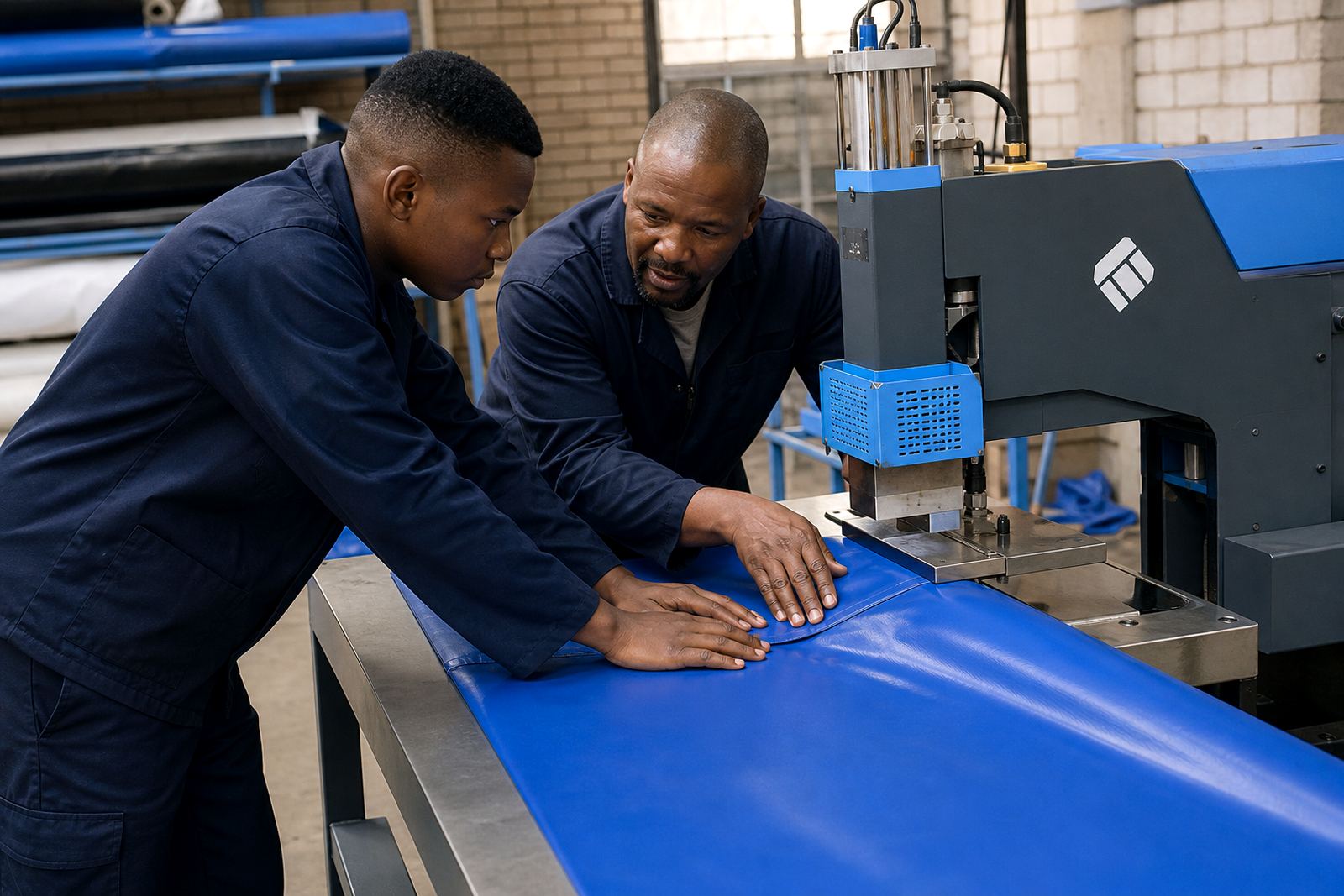
A new operator usually needs a steady start more than a long lecture. In the welding room, the first few shifts should cover machine controls, warm-up checks, material feed, and the way PVC-coated fabric behaves when heat, pressure and speed change together. A banner hem does not behave like a tent seam, and a keder strip needs different handling from an eyelet strip.
Good training also shows what normal looks like. The operator should know the sound of a stable high-frequency cycle, how a hot-air or hot-wedge unit tracks along a straight seam, and what a clean finish looks like at the edge of a hem. Once those basics are clear, work moves with less waste and fewer reworks.
Seam checks that prevent costly rework
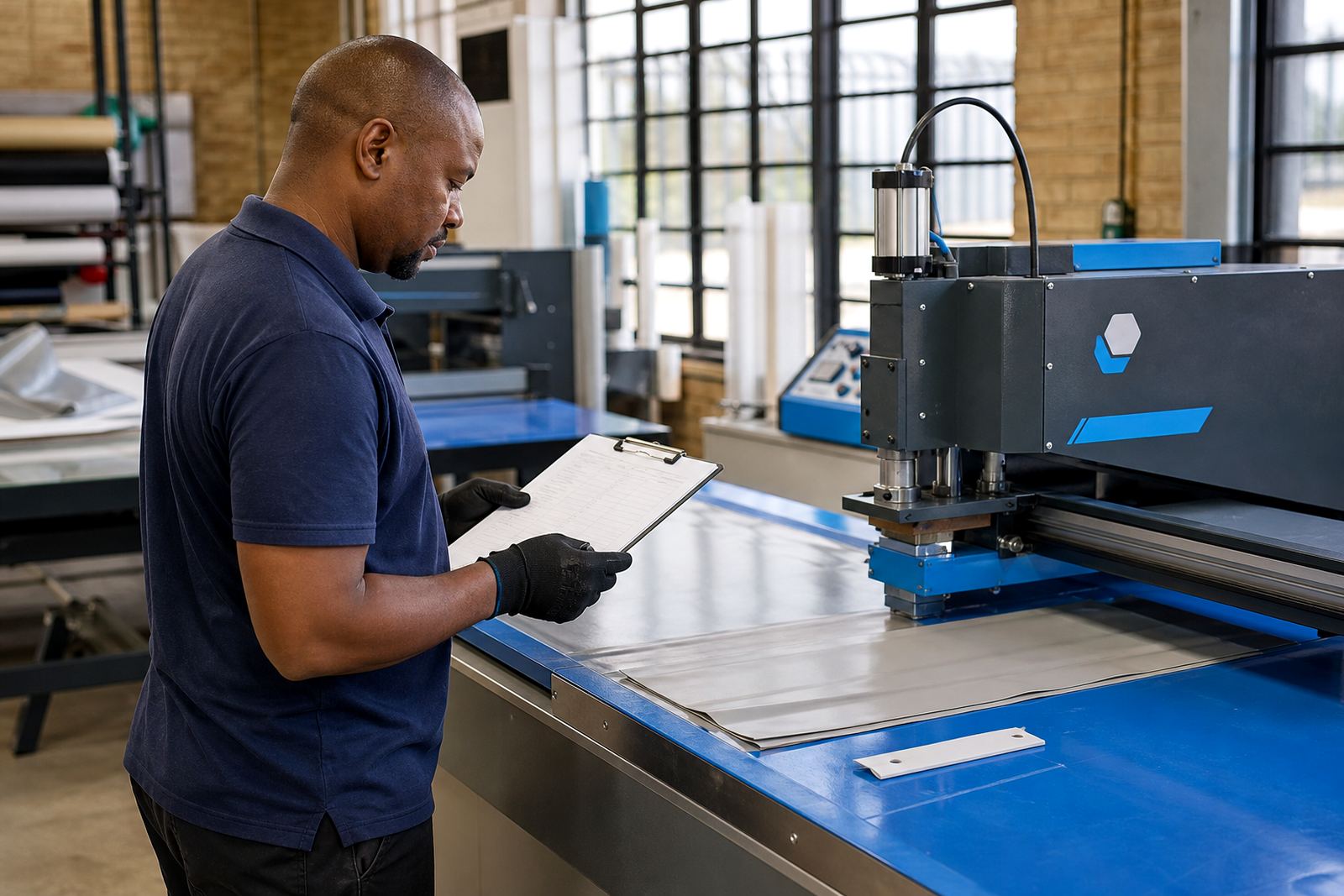
Training is not only about pressing buttons. It must teach the operator how to inspect the seam as it comes off the machine. That includes checking bond width, edge alignment, scorch marks, bubbling, and any pinholes that may show up after cooling. A short check at the bench can save a finished tarpaulin from failing on site in windy weather.
- Check overlap before welding so the seam line stays even.
- Watch the edge for lift, curl or shiny overheating.
- Test pull strength at the start of each run, then again after any setting change.
- Look closely at hems, corners and reinforcement patches where stress gathers.
On larger jobs, especially in humid Durban conditions or on cold winter mornings in Pretoria, operators also learn how ambient conditions affect the material. A setting that works at midday may need a small adjustment after lunch.
Machine routines that keep work steady
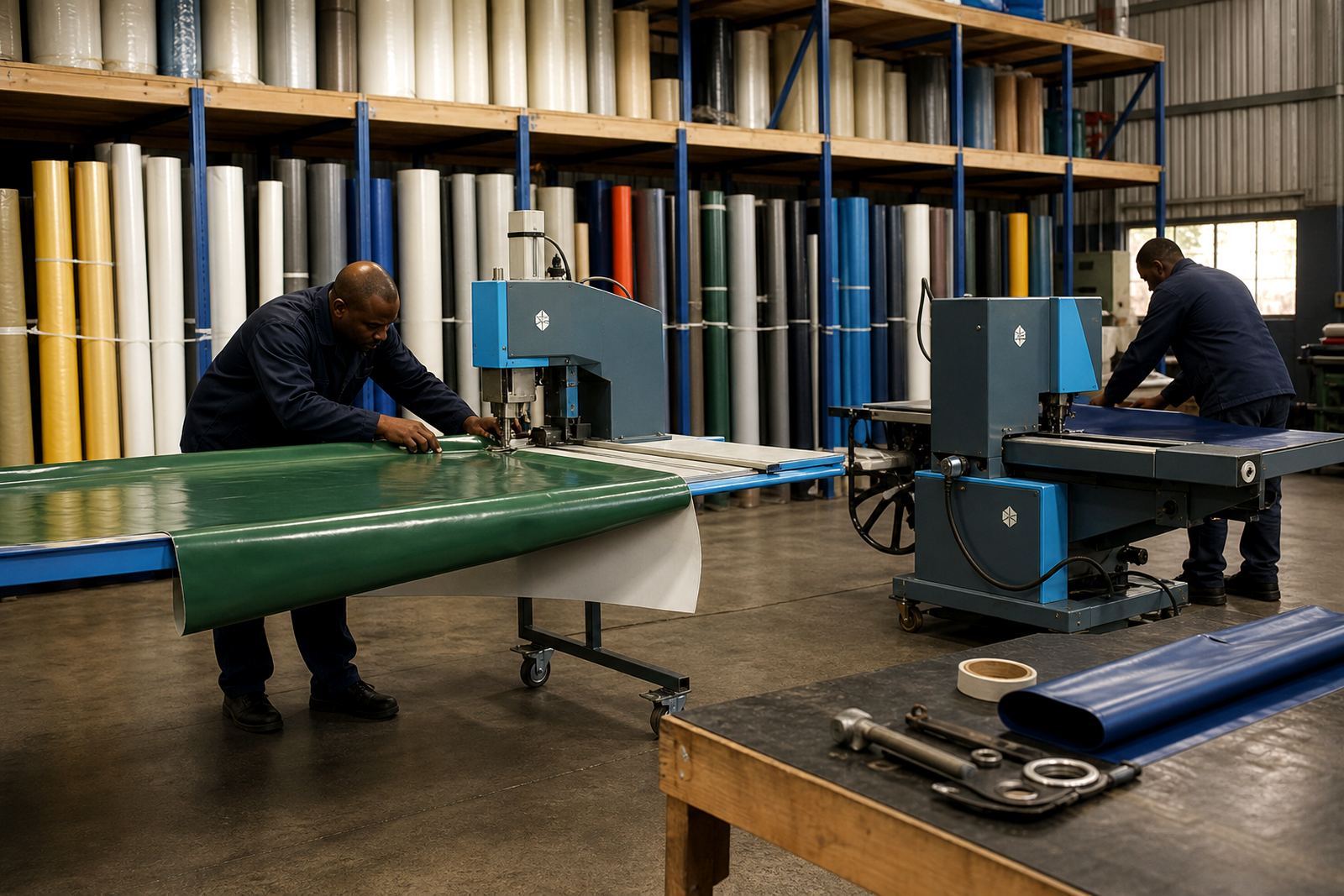
Every weld station works better when the routine is the same each day. New operators should learn the start-up sequence, the shutdown sequence, and the checks that happen between rolls or batches. That covers cleaning contact surfaces, keeping rollers free of residue, checking electrodes or heating elements, and making sure the guides track true.
For firms handling tarpaulins, banners and tent panels across Germiston, Johannesburg and Cape Town, this discipline keeps production moving. A machine that is only partly cleaned or badly aligned can still run, but the seam quality slips and the operator spends more time correcting faults than making product.
- Inspect rollers and guides before the first weld.
- Keep scrap off the working area so seams do not snag.
- Record any setting that gives a clean result on a specific fabric weight.
- Report unusual vibration, heat variation or uneven pressure early.
Handling hems, keder and eyelet work
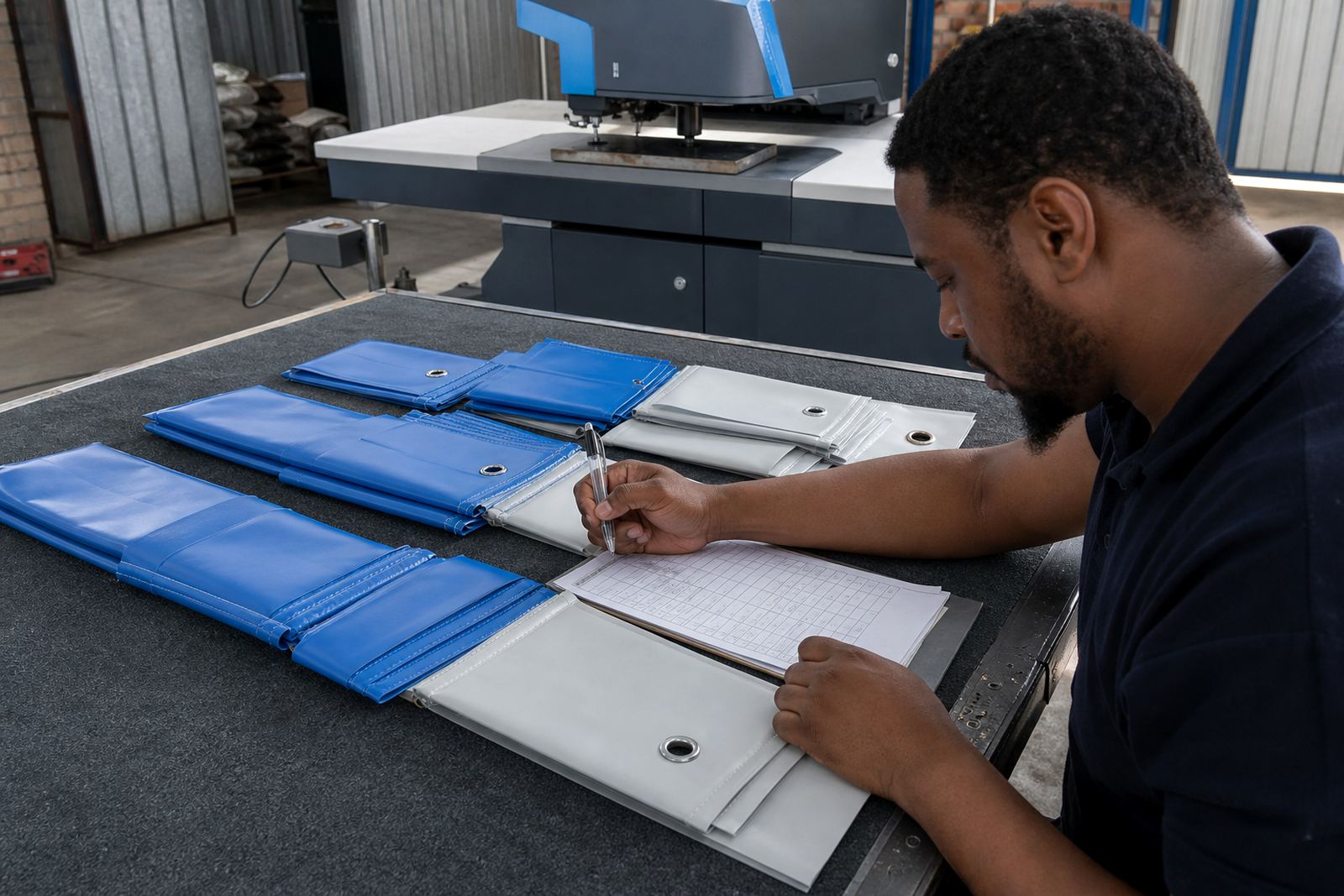
Training should show the operator how different finishing jobs are built up. Hems need even folding and consistent heat. Keder work needs accurate placement so the strip seats properly in the track. Eyelet areas need reinforcement and spacing that suits the load on the finished banner or tarp. A mistake at this stage is often more visible than a seam fault, because the edge finish is the first thing a client notices.
For event and signage work, speed matters but so does edge consistency. An operator who understands the order of each step can keep the panel square, avoid distortion and stop the fabric from wandering as it moves through the machine. That matters on long runs and on short urgent jobs too.
Safety habits that belong in the lesson
New staff should learn safety as part of the welding process, not as an extra topic at the end. High-frequency equipment, heated tools and moving rollers all need respect. The right lesson covers safe hand position, correct clothing, clean cable routing and the habit of switching off before clearing a jam or making an adjustment.
Operators also need to know the signs of tiredness and inattention. A rushed lift of the material, a hand too close to the heat zone, or a skipped check can turn into a damaged seam or an injury. In a busy Germiston workshop, that kind of slip can slow the whole line for the rest of the shift.
- Keep fingers clear of heated jaws, rollers and pinch points.
- Use supports when moving wide sheets or long welded panels.
- Do not bypass guards or work with loose clothing near moving parts.
- Stop and isolate the machine before cleaning or fault finding.
A Germiston training day with a clear outcome
In a practical training session at a Germiston site, the first run may be a simple banner hem on PVC-coated fabric, followed by a keder strip and then a reinforced corner. That gives the operator three different tasks without changing the material family. The trainer can then watch how the operator sets speed, checks alignment and handles each seam finish.
By the end of the day, the aim is not perfection, it is steady repeatable work. The operator should know where to check for fault marks, how to reset after a poor weld and when to ask for service support before a small issue becomes a machine stop. That is the kind of training that helps a new hand settle in faster and keeps production cleaner on the floor.
PVCWelder supports training, commissioning, servicing and parts supply for workshops in Johannesburg, Pretoria, Durban, Cape Town and Bloemfontein, with service coverage across Ekurhuleni and nearby industrial areas. For teams taking on new staff, the value is in a structured start that links machine routine to the actual seams being made.