Set the machine before the first sheet goes in
Before any PVC-coated fabric reaches the table, check that the machine is set for the work in hand. High-frequency welding for coated fabrics needs the right pressure, electrode condition and dwell settings for the material thickness. Hot-air and hot-wedge units need clean airflow, correct temperature and a steady feed path. If the setting is too light, the seam can open under load. If it is too hot, the coating can deform or the fabric can scorch at the edge.
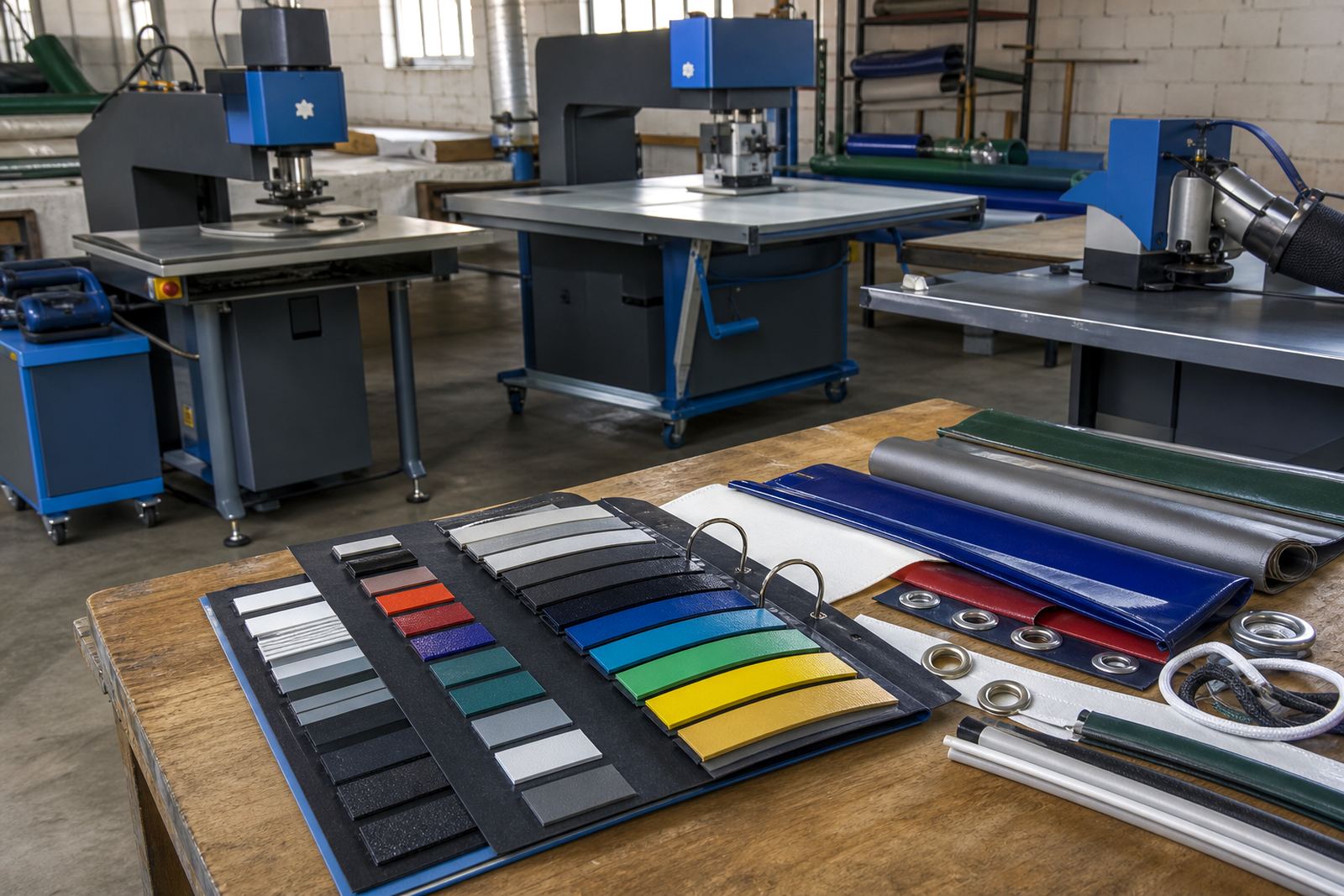
Start with the job sheet and confirm the seam type. A straight lap seam for banners does not need the same setup as a folded hem with rope pocket, keder edge or eyelet strip. Where the shift begins with mixed work, label each batch clearly so the operator is not guessing halfway through the run. On busy mornings in Germiston, that small step keeps the first roll from being cut twice because somebody changed the spec too soon.
- Check the material width and mark the seam line clearly
- Confirm temperature, pressure and speed for the specific fabric thickness
- Inspect electrodes, rollers or wedges for wear and build-up
- Test a short sample strip before the main run starts
Read the fabric, not only the order
PVC-coated fabrics can look similar at a glance, yet they behave differently once heat and pressure are applied. A colder roll taken off a truck in winter may need time to settle before welding. A damp sheet from a coastal store room can trap moisture and affect seam quality. In Durban and Cape Town especially, humidity can change how the material feeds and how clean the weld line looks by the end of the first pass.
Check for dirt, creases, dust and oil marks. The edge to be welded must be flat and even. If the fabric has been rolled badly overnight, unroll enough length to ease the curl before feeding it through. For banner work, make sure print margins, reinforcement positions and eyelet spacing are measured before the machine is started. A quick visual scan can prevent a crooked hem that only shows up after the full length is welded.
- Wipe off loose dust and grit from the weld path
- Allow cold or wet fabric to stabilise before welding
- Check print marks, cut lines and reinforcement positions
- Look for creases, pinholes or damaged coating at the edge
Safety checks that protect hands and eyes
Shift start should always include a proper safety check. High-frequency units, hot-air guns and hot-wedge heads can cause burns and pinch injuries if guards are loose or if the operator rushes the feed. Loose clothing, jewellery and untied hair can catch in moving parts. The area around the machine must stay clear so the operator can guide the fabric without reaching over heated parts.
Make sure emergency stops are reachable and that the operator knows where they are before the first job begins. Cables should be tidy, foot controls should sit flat and any damaged insulation must be reported before use. In workshops where multiple people share one bay, keep the floor dry and free of offcuts. A slippery patch near the machine is enough to throw off a straight seam, and it only takes one stumble to damage a roller or weld head.
- Test emergency stops and main isolators
- Keep guards in place and free from damage
- Remove offcuts, tape and loose tools from the floor
- Wear suitable protective gloves and eye protection where needed
Tooling and seam parts need a quick inspection
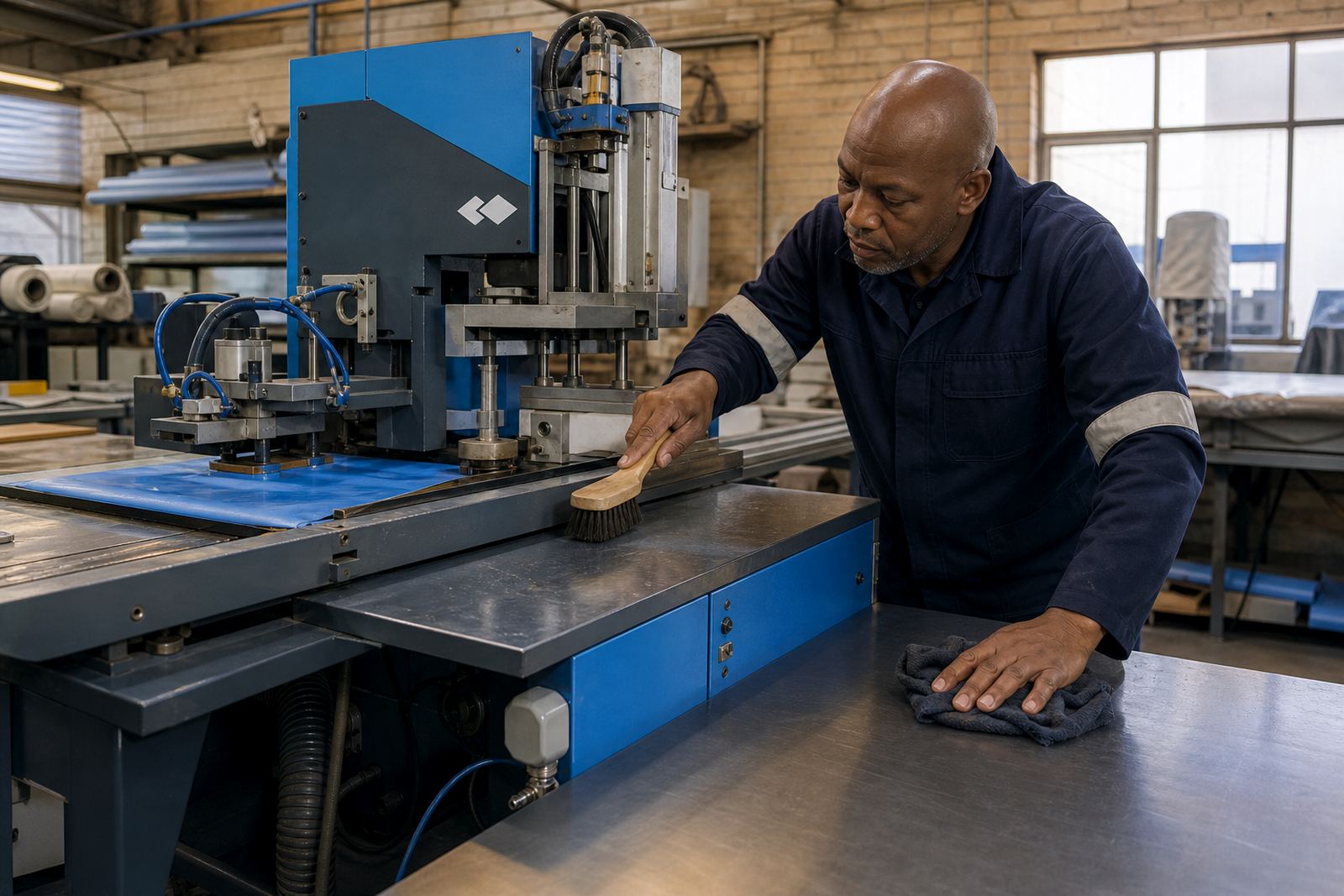
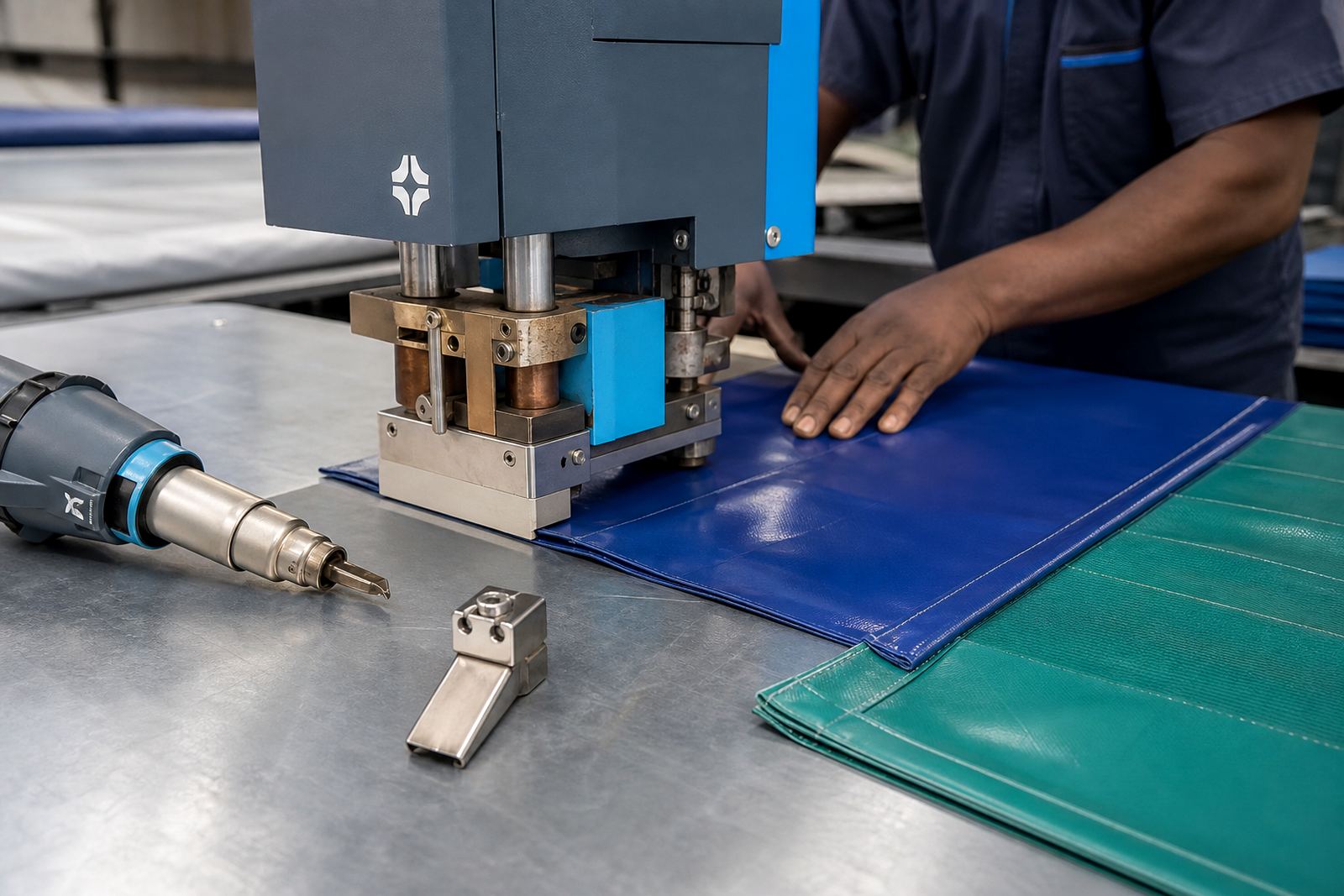
Good seams depend on good tooling. Electrodes, pressure bars, wedges, rollers and guide attachments should be checked before production starts. A worn roller can leave a wavering seam line. A dirty electrode can mark the coating and create weak spots. If the job calls for keder, hems or eyelets, confirm that the attachment set matches the required profile and that nothing is loose on the carriage.
It helps to run the hand over the tooling when the machine is off and cool, then inspect again under light. Look for grooves, flat spots and build-up from previous runs. For site work or a busy fabrication room in Pretoria or Johannesburg, a short inspection at the start of the shift often catches the fault that would have stopped the machine later in the day.
- Inspect rollers, wedges, bars and guides for wear
- Clean residue from contact surfaces before use
- Confirm the correct attachment for hem, keder or eyelet work
- Check that fixings are tight and aligned
Test the seam on a short offcut first
A small test piece tells you a great deal. Use the same fabric, the same coating and, where possible, the same colour batch as the main job. Weld a short seam, then inspect the bond by hand and look at the finish from both sides. The edge should be even, with no scorching, bubbles or incomplete fusion. If the seam is being used for load-bearing tarpaulins or tent panels, the test becomes even more important because the finished product will take wind, tension and repeated handling.
For banner makers in Bloemfontein or Boksburg, where jobs often move quickly from design to finishing, this test is the easiest way to avoid a batch of weak hems. It is better to stop for five minutes at the start than to discover a whole roll needs rework later. Once the sample is right, note the settings so the next operator can repeat them without starting from zero.
Keep records that the next shift can actually use
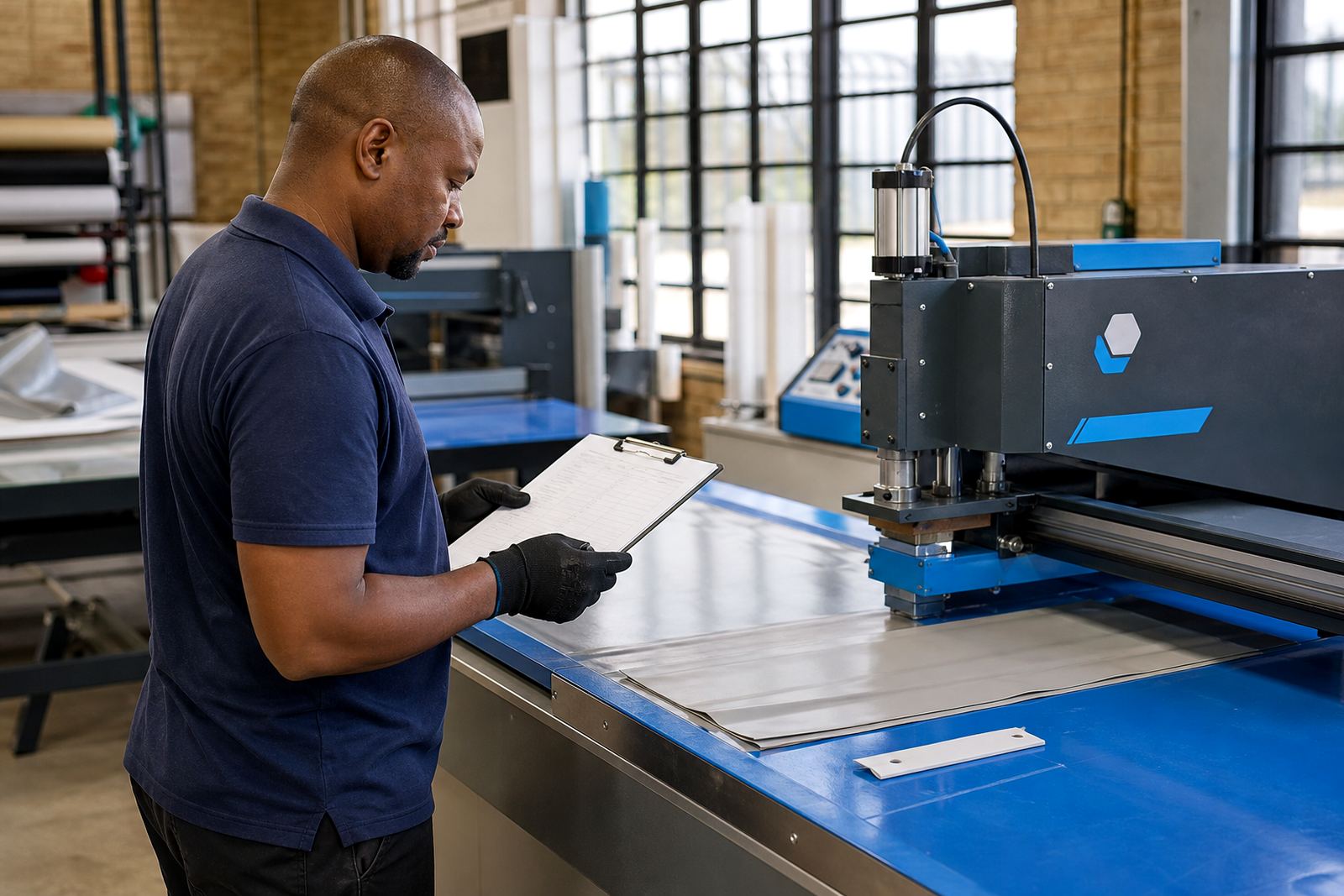
Shift start checks only help when the results are written down in a useful way. Record the material type, seam type, machine settings and any adjustments made during the sample run. If an operator changed pressure to suit a thicker hem or adjusted heat for a coated banner, that note should be clear enough for the next person to follow. Good records save time on handovers and reduce arguments about what setting was used.
Include servicing notes too. If the machine started with a slow warm-up, a noisy roller or a loose guide, log it for the service technician. Small changes often point to something that needs attention before it becomes a breakdown. In a workshop that depends on daily output, that bit of discipline keeps preventive servicing useful instead of just being paperwork.
- Write down the fabric type and job reference
- Record temperature, pressure, speed and dwell settings
- Note any adjustment made during the first test seam
- List faults, wear points or unusual noise for follow-up
A Germiston morning before a Durban delivery
Picture a Monday start in Germiston. A tarpaulin maker has a mixed run waiting: one batch of banner hems, another of welded seams for truck covers and a smaller set of reinforced panels with eyelets. The operator checks the machine, wipes the guide surfaces, tests a short strip and confirms the hem folder is square. The first banner goes through cleanly because the edge was straight and the coating was dry, while the truck-cover batch needed a slight pressure change for the thicker material. Nothing dramatic, just a careful start.
That sort of routine matters when the finished goods are heading out to Johannesburg, Durban, Cape Town, Pretoria or Bloemfontein. A good shift start does not make noise, but it shows in the seams, the edges and the way the machine runs all day. If the start is orderly, the rest of the shift tends to follow that same pattern.