Why a seam library earns its place on the shop floor
A good seam sample library is not just a pile of offcuts. It is a working record of what holds, what looks neat and what stays stable after handling, rolling and outdoor use. For tarpaulin, banner and tent makers, that record saves time when the material changes, the gauge shifts or a new operator takes over a machine.
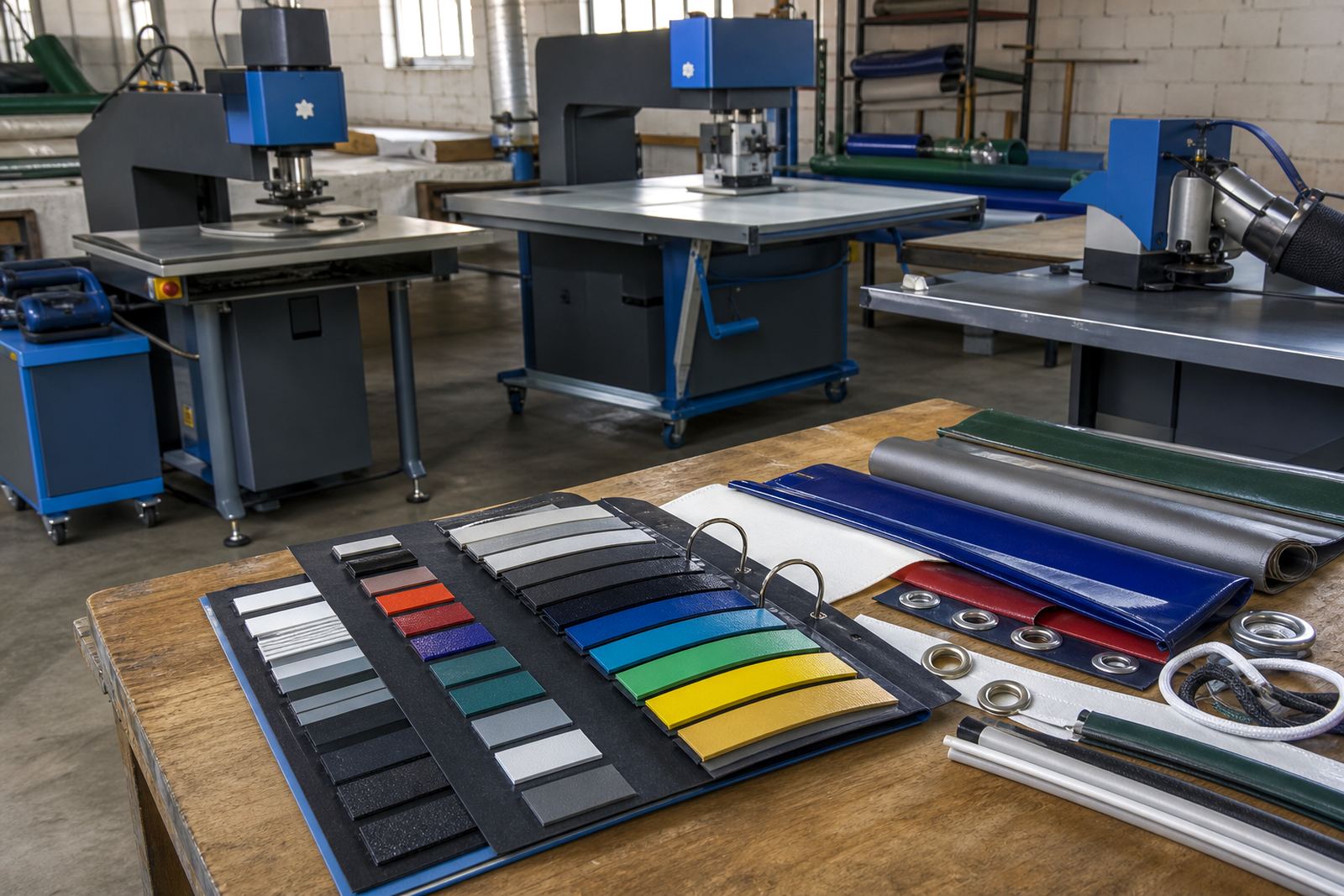
In Germiston and other busy industrial areas, many workshops run mixed jobs in the same week. A library helps the team match the right setup to PVC-coated fabric, clear PVC, reinforced banner stock or coated mesh. It also gives a practical standard for edge sealing, lap seams and decorative welds where appearance matters as much as strength.
- Stores proven settings for different fabric weights
- Shows the seam width and finish that worked on the last job
- Helps new operators avoid trial and error on live orders
- Supports repeat work for tarpaulins, blinds, tents and banners
What belongs in a proper sample book
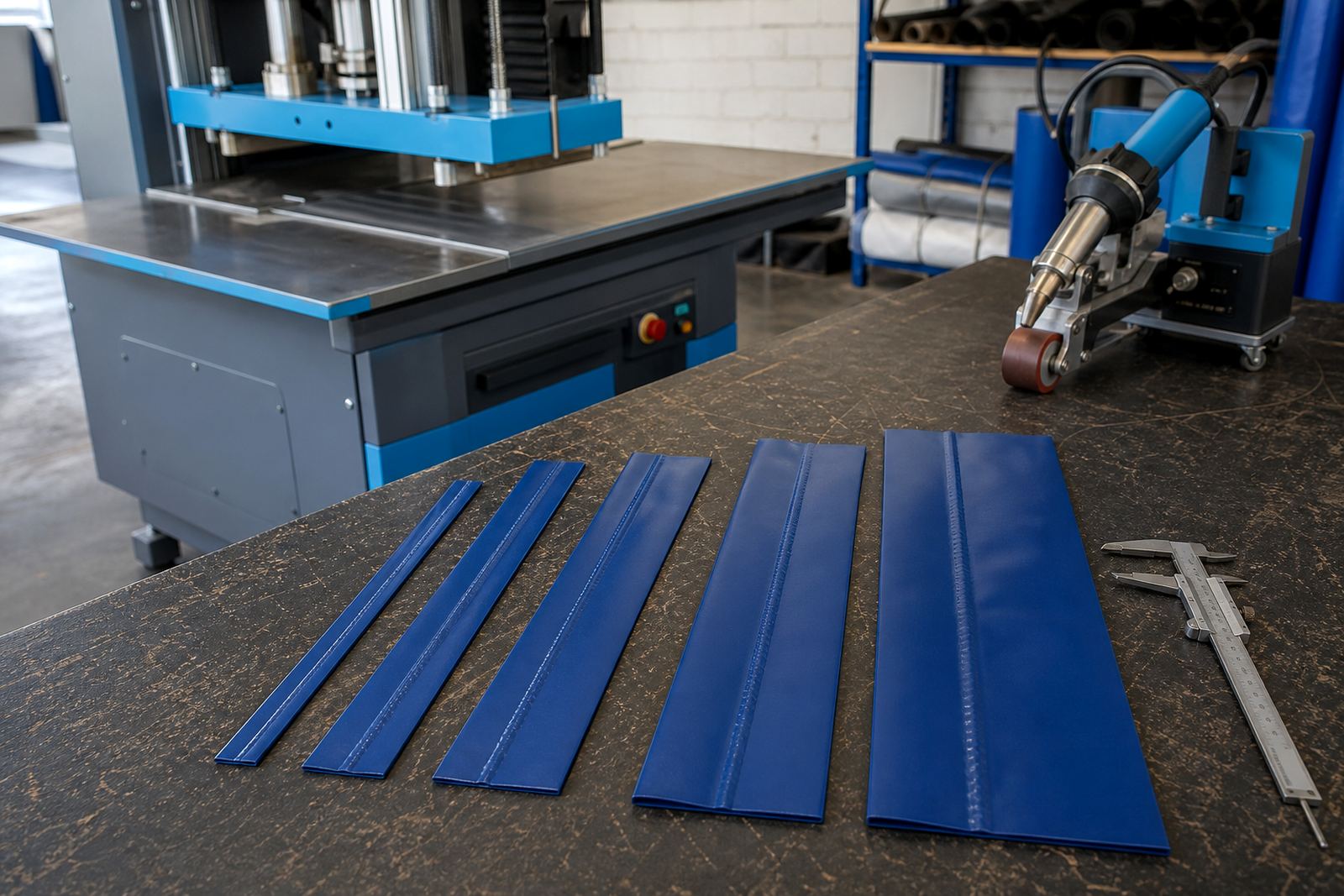
A useful sample library should show the full weld, not only a trimmed sample. Keep enough detail for someone at the machine to read it quickly. Mark each piece with the material type, seam style, machine used, date and any notes about speed, heat or roller pressure. That record matters when the job is revisited after a few weeks or months.
Include both neat samples and failed tests. A burned edge, a weak lift or a crooked overlap teaches just as much as the good piece. If a workshop works through humid Durban conditions or dusty inland days in Pretoria, the sample can also show whether the fabric behaved differently on that shift.
- Flat lap seams for banners and tarpaulins
- Double fold hems for edge strength
- Keder weld samples for track-fed installations
- Eyelet reinforcement patches and spacing checks
- Hot-air and high-frequency test pieces for comparison
Reading the seam before the job goes long
The point of the library is not only storage, it is reading. Operators should be able to compare a fresh weld with a known good sample by looking at edge smoothness, bond line, shrinkage and any signs of scorching. A seam that looks tidy but lifts on pull test is not a good reference, and neither is a wide weld with trapped wrinkles.
For high-frequency welding, the sample should show the clean bond typical of radio frequency energy on compatible PVC-coated fabrics. For hot-air or hot-wedge work, the sample should show even fusion without hardening the fabric edge. Different tools create different finishes, so the library must keep those examples separate.
- Look for even width across the full seam
- Check that the weld sits flat with no waves
- Confirm the material has not turned brittle at the edge
- Test the sample by hand before approving a full batch
Seams, hems, keder and eyelets need their own samples
One sample does not cover every task. A tarp side seam, a banner hem and a keder edge all need different treatment. Keder welding needs a consistent round profile so the rope feeds cleanly into the rail. Eyelet work needs reinforcement around the punched area so the pull is spread instead of tearing through the fabric.
A library should show the seam type next to the hardware or finish it supports. That way the machine operator and the cutter do not guess at fold depth, overlap or reinforcement size. In a busy Johannesburg workshop, that kind of reference can prevent a full roll being cut the wrong way and wasting material.
- Single lap seam for general joining
- Double lap seam where extra hold is needed
- Hem with insert for cord or batten use
- Keder edge sample for track fitting
- Eyelet panel sample with reinforcement patch
How servicing and alignment show up in sample quality
If samples begin to drift in width or look uneven from one side to the other, the problem is often in the machine rather than the material. Electrode wear, roller wear, poor alignment or a loose guide can all leave a mark on the sample. That is why the library should sit beside regular servicing notes. The two records work together.
During preventive servicing, a technician can compare a current weld with a stored reference and spot a change early. A machine that once produced a crisp 40 mm seam but now leaves a narrow, patchy bond is telling the workshop something. The sample library helps pin down whether the issue is heat control, tooling alignment or a worn roller.
- Record the machine setting used for each sample
- Keep one reference piece after each service visit
- Note any changes in pressure, speed or seam appearance
- Replace worn tools before the sample quality starts slipping
Local example from a Germiston tarpaulin shop
A Germiston workshop making truck tarpaulins for Gauteng and beyond may run high-frequency welds for side curtains, then switch to hot-air work for repairs and small custom covers. Without a sample library, the team can spend time resetting the machine for every job and still miss the look they want. With samples, the operator can lift the correct reference from the rack and match the setup much faster.
In the same week, the shop may need banner hems for an event in Durban, keder for a frame in Cape Town and reinforced eyelet strips for a tent order in Bloemfontein. A library keeps those patterns in one place, so the team does not rely on memory alone. That makes work steadier, especially when several people share the same equipment.
Safety and training that the sample wall supports
Sample libraries also help with operator safety. A clean, approved sample reduces the need for rushed testing on live stock, and that means fewer hands near hot tooling or moving rollers than necessary. It also gives trainers a clear visual standard when showing new staff how a correct weld should look.
Training should cover heat awareness, careful handling of electrodes, correct guarding, eye protection where needed and safe handling of cut fabric edges. The sample wall is most useful when every operator knows which piece to copy and which faults to report. That shared reference supports better workmanship and fewer mistakes on the floor.
- Use approved samples during operator training
- Keep the library tidy and labelled by process
- Separate hot-air, hot-wedge and high-frequency examples
- Remove damaged or outdated samples from the main reference set