Why seam width matters on PVC-coated fabric
On PVC-coated fabrics, seam width sets the working area for the weld or stitched assembly. A narrow seam may look neat, but if the product is pulled hard, folded often or exposed to wind on a roadside banner frame in Germiston or a tent wall on the coast, the joint can be the first point to fail. A wider seam gives more bonding area and better distribution of stress.
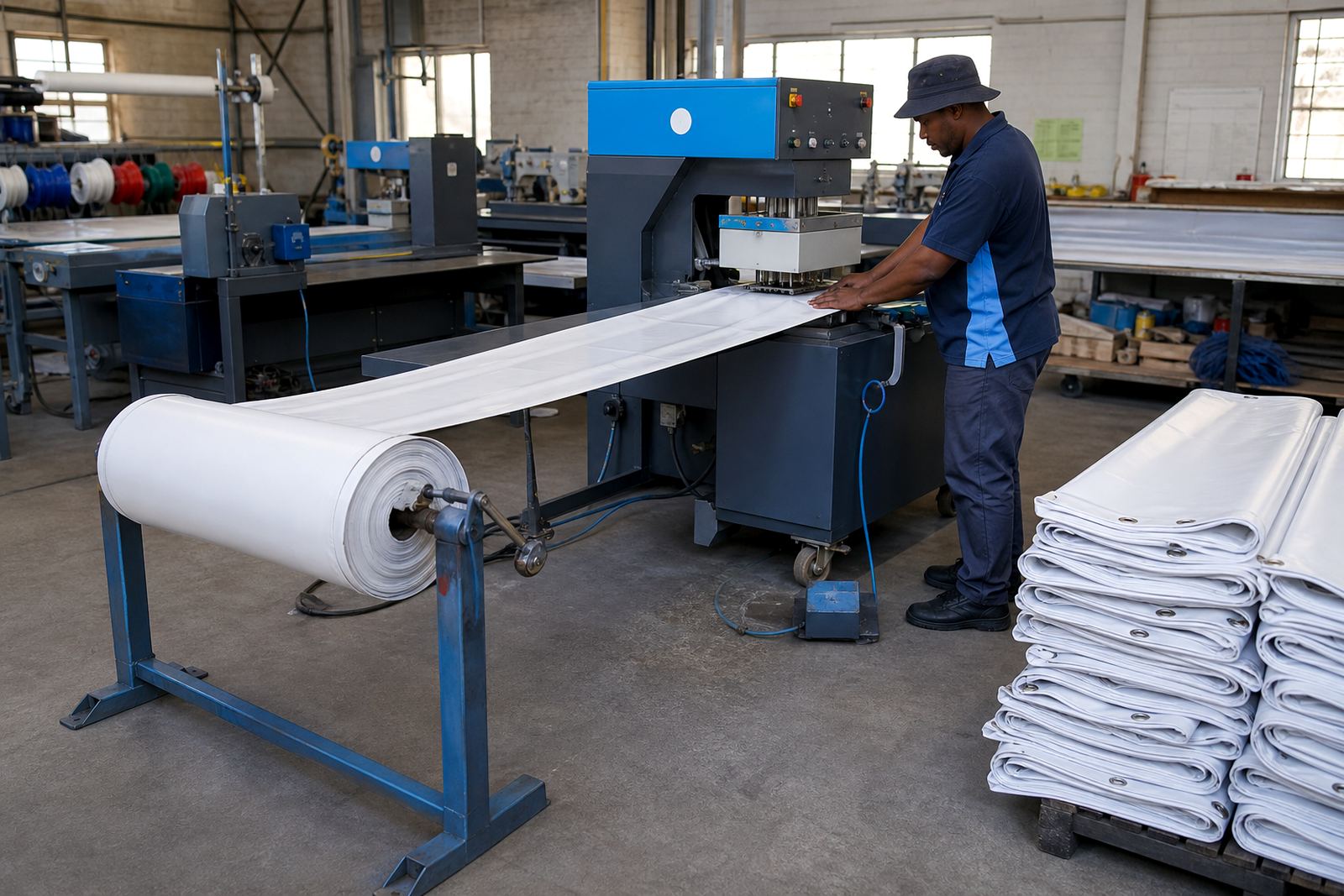
High-frequency welding is often used for clean, repeatable seams on compatible PVC materials. Hot-air and hot-wedge welding are also common where the fabric thickness, shape or production method calls for them. In all three cases, the seam width has to suit the job, not just the machine setting.
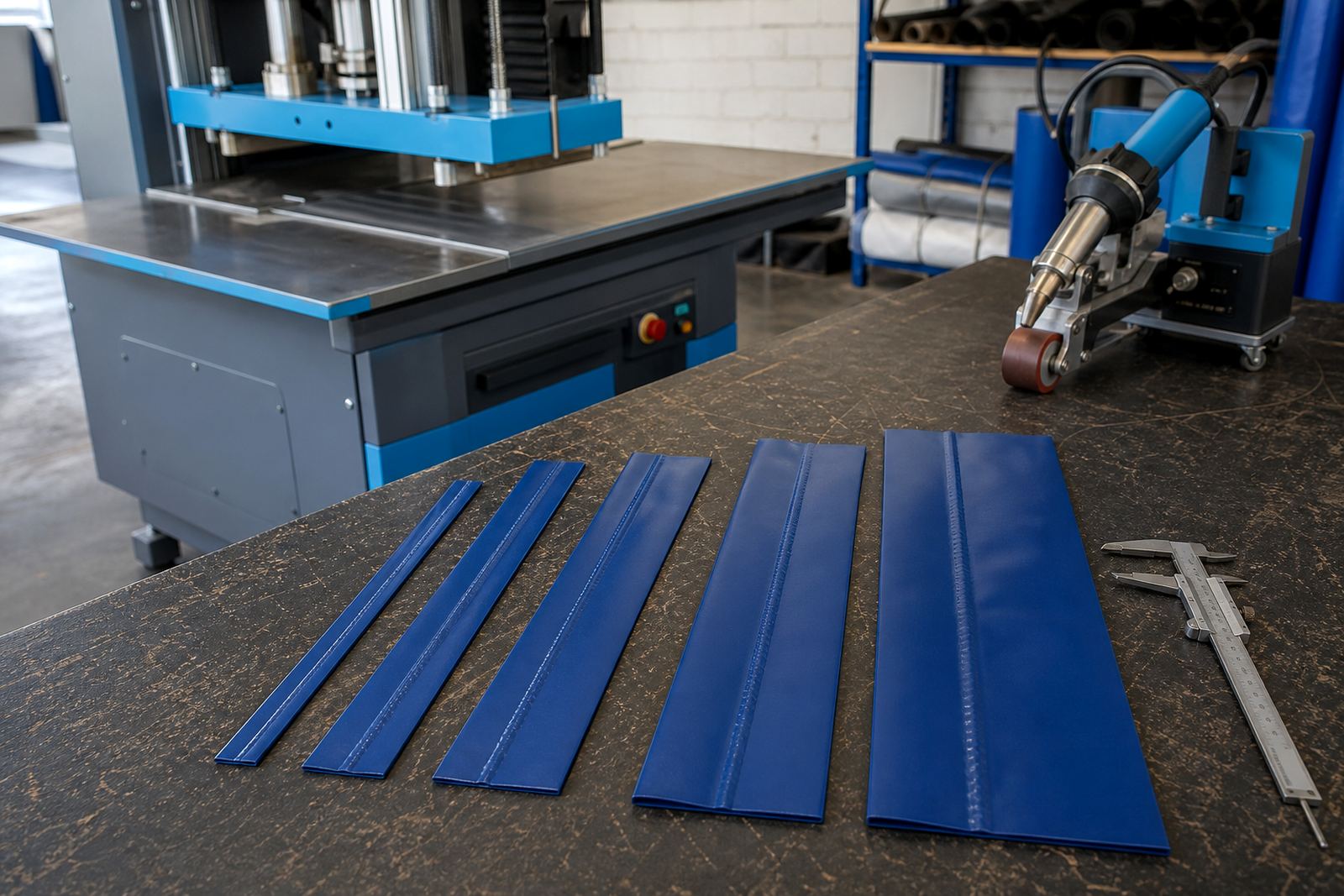
- Narrow seams suit light-duty banners and neat finishing work.
- Medium seams are often used on general tarpaulins and side curtains.
- Wider seams suit higher loads, hems, anchor points and repeated handling.
Match the seam to the product, not the pattern
Different products ask for different seam widths. A promotional banner hanging indoors does not need the same allowance as a truck tarp crossing Gauteng every week or a tent panel that has to take tension at every corner. The product design should guide the seam width from the start, especially where hems, pockets, keder strips or eyelet bands are part of the layout.
For many workshops the mistake is to use one standard width for everything. That can make some products heavier than needed and others underbuilt. A proper setup keeps the finished item tidy while leaving enough material for a strong weld and any later trimming.
- Banners often use narrower seams where appearance matters and wind load is low.
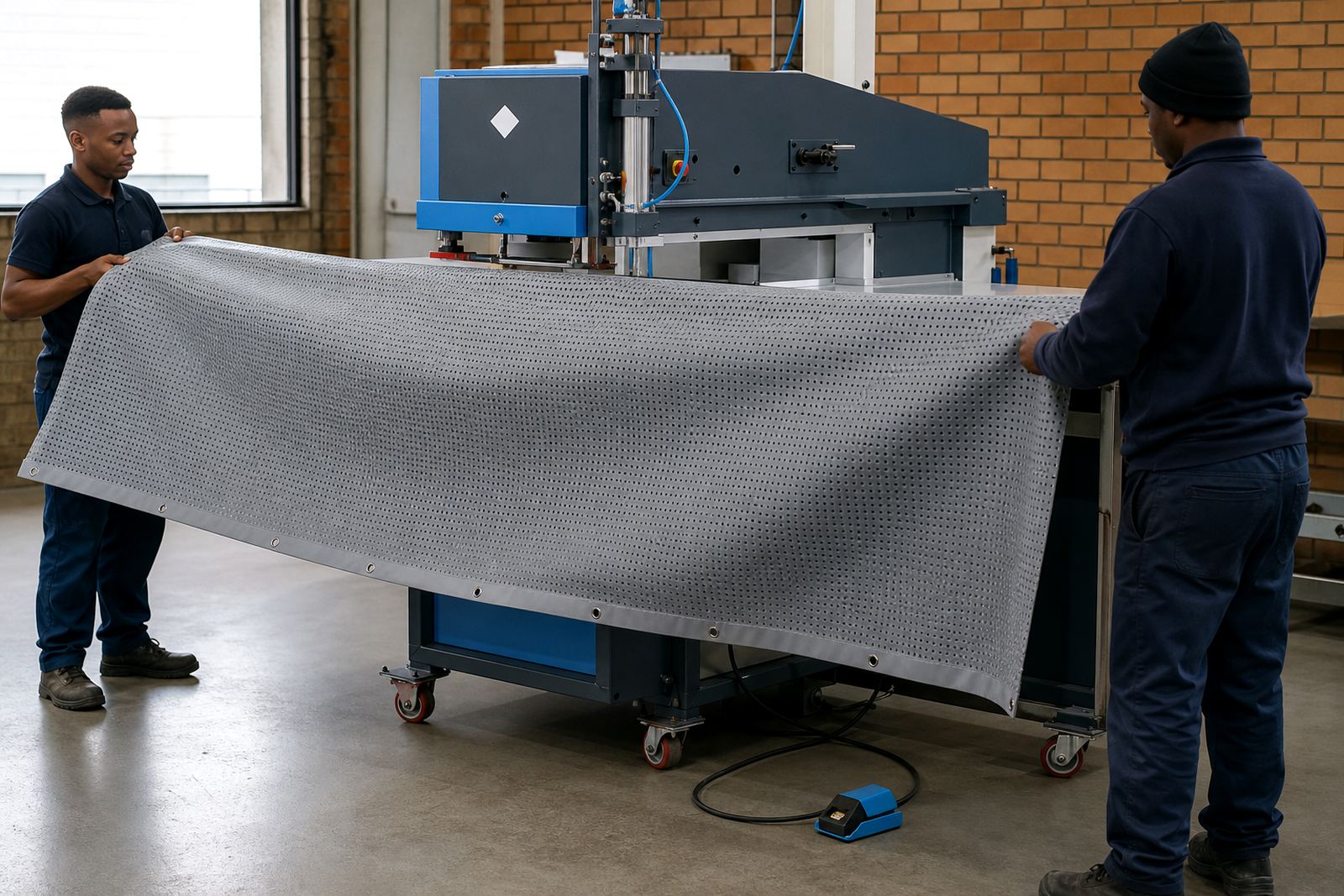
- Tarpaulins usually need wider welded edges, especially around tie-down zones.
- Tent panels often need extra width at joins, corners and stress points.
- Keder work needs even feed and enough width to keep the cord secure in the pocket.
Load, wind and handling change the answer
Seam width should increase when the finished product will be lifted, strapped down, rolled, folded or exposed to wind. A banner fitted to a roadside frame in Johannesburg may flap far more than one used inside a retail hall. A tarp on a flatbed trailer may see sharp tension changes every time the load is checked. In Durban, coastal humidity can also affect handling and storage, so the joint needs to stay stable after repeated use and cleaning.
Where loads are higher, wider seams help spread force away from the edge of the fabric. That is especially important on PVC-coated materials, where the coating and base cloth must work together. If the seam is too narrow, the edge can peel or distort before the rest of the sheet wears out.
- Higher wind exposure calls for wider seams and better edge finishing.
- Frequent rolling and unrolling needs a seam that will not crack or curl.
- Heavy tie-downs and corner stress points need extra seam allowance.
Hems, pockets, keder and eyelets need different allowances
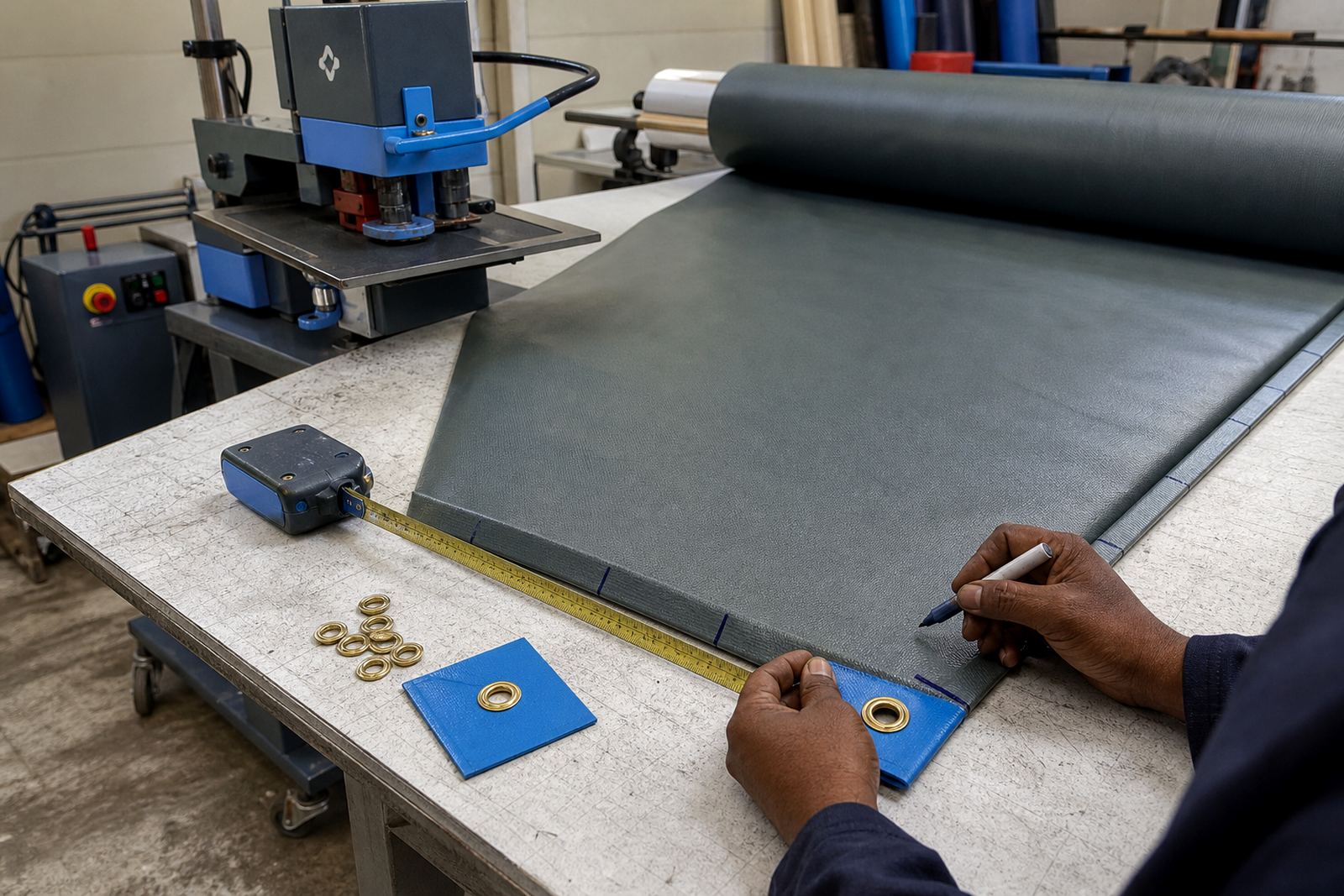
Not every seam is the same kind of joint. A hem on a banner, a pole pocket on a sign, a keder edge for track fitting and an eyelet band on a tarp all call for different seam widths. The operator has to leave enough material for the weld, the fold and the hardware, while keeping the finished edge straight and neat.
Hot-air and hot-wedge systems are often used where a long, consistent lap is needed. High-frequency welding is useful for controlled, sealed joints on matching PVC components. If the seam width is set too small, there may not be enough material for a strong hem or a secure eyelet strip. If it is too wide, the edge can become bulky and hard to finish.
- Hems: need enough material for folding and a full bond through the layers.
- Keder: needs a pocket size that keeps the cord running true without tight spots.
- Eyelets: need reinforced bands so the fabric does not tear around the hole.
- Pockets: must stay open enough for poles, but still seal cleanly at the edges.
Machine settings and operator control shape the finish
Even with the right seam width on paper, the final result depends on machine setup and operator control. Pressure, speed, temperature and alignment all affect how the seam behaves. On high-frequency welders, electrode condition and tooling alignment matter a great deal. On hot-air and hot-wedge machines, the heat path and feed pressure must stay even across the full width of the seam.
A well trained operator checks whether the seam is laying flat, whether the edges are fusing evenly and whether there are signs of scorch, ripple or weak bonding. That is where preventive servicing helps. A worn roller, poor alignment or dirty tooling can make a correct seam width perform badly.
- Check seam edges for gaps, bubbles or thin spots.
- Watch for distortion where the fabric changes direction.
- Keep rollers, electrodes and guides clean and aligned.
- Test sample seams before full production runs.
A practical Germiston workshop example
A tarpaulin maker in Germiston working for transport operators may need one seam width for side curtains, another for loose covers and a stronger band at the tie-down points. The same workshop may also produce PVC banners for events in Pretoria and Cape Town, where a lighter seam can be more suitable on printed panels. The point is not to use the widest possible seam, but the most sensible one for the job.
That approach saves material, improves handling and reduces rework. It also makes site fitting easier, because the finished product behaves more predictably when tensioned. In practice, the best seam width is the one that matches the fabric weight, the weld method and the end use without adding unnecessary bulk.
Before production starts, it helps to settle the seam width alongside the hem size, corner reinforcement and any eyelet spacing. That way the whole item works as one unit instead of a set of separate parts.
What to settle before the first weld
Once the product type is known, the seam width can be chosen with fewer surprises on the machine floor. A short test run on offcuts usually shows whether the lap is too narrow, too wide or just right for the material and load. That is especially useful when switching between banner work, heavy tarpaulins and tent panels.
Keep the decision practical. Choose the width that gives enough bonding area, leaves room for finishing and suits the way the item will be used in South African conditions from inland heat to coastal moisture. For many workshops, that one step makes the difference between a tidy job and one that needs patching later.
- Confirm fabric weight and coating thickness.
- Set the seam width to suit the load and fitting method.
- Test the seam with the same handling the finished product will face.
- Review the result before moving into full production.