Start with the output path, not the last weld
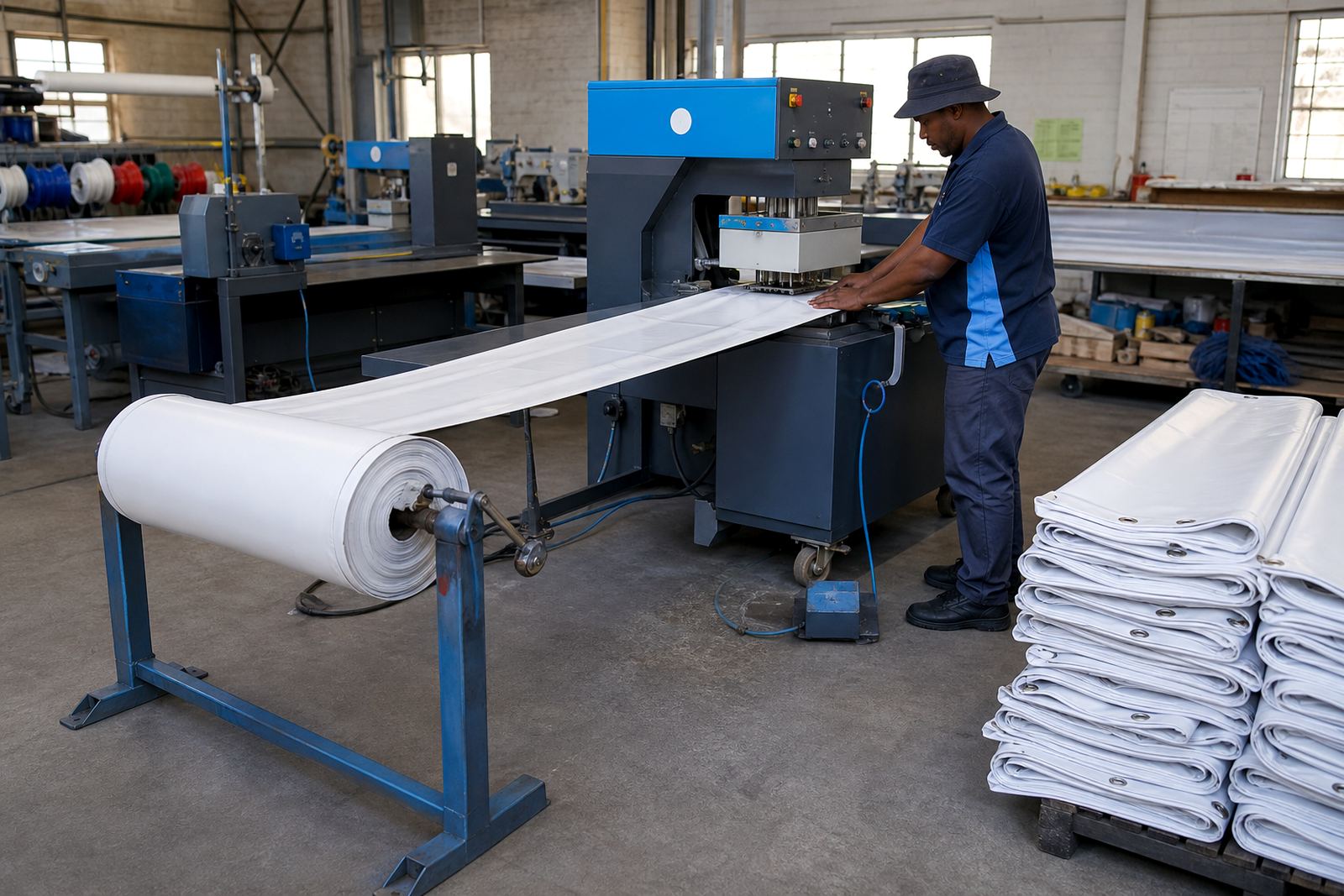
In many workshops the trouble starts before the first seam is made. Panels are cut, stacked, moved, checked, then moved again while the operator waits for the next part. A better banner flow is planned around the order of welding, trimming and finishing, so each panel passes through once and leaves the bench ready for the next stage.
For PVC-coated fabrics this matters because heat, pressure and alignment all affect the final result. High-frequency welding is well suited to straight, repeatable seams on compatible PVC material, while hot-air and hot-wedge methods are often used for longer hems, repairs and site work. The correct flow keeps each method in the right place, instead of forcing one machine to do every job.
- Keep cut panels grouped by job, size and finish type.
- Mark hem allowance, keder pockets and eyelet positions before welding starts.
- Separate banner work from tarpaulin work so the machine settings do not get mixed up.
Pick the seam that suits the job
Banner production is not only about joining two edges. The seam type must suit the load, the appearance and the way the finished item will be hung or clamped. On a retail banner you may want a neat folded hem with reinforced corners and eyelets. On a tent valance or truck curtain, the seam may need to carry more tension and keep water out over a longer edge.
Radio frequency welding gives a clean, even bond on many PVC-coated fabrics, especially where repeatable panel joints are needed. Hot-air and hot-wedge welders are more common where flexibility, repairs or long runs are involved. In both cases, the operator needs stable feed, correct pressure and a clean path through the machine. A small tracking error at the start can show up as a crooked hem by the time the panel reaches the end.
- Flat seams suit panel joins and graphic work.
- Folded hems give a tidy edge and help with hanging.
- Double hems can add strength where the banner sees wind or handling.
- Reinforced corners reduce tear-out around eyelets.
Build hems, keder and eyelets into one line
The quickest workshops do not treat finishing as separate jobs. Hems, keder pockets and eyelet work can be arranged in one continuous line so the banner moves from one step to the next with less lifting. That reduces scuffing on printed surfaces and helps the operator hold consistent measurements.
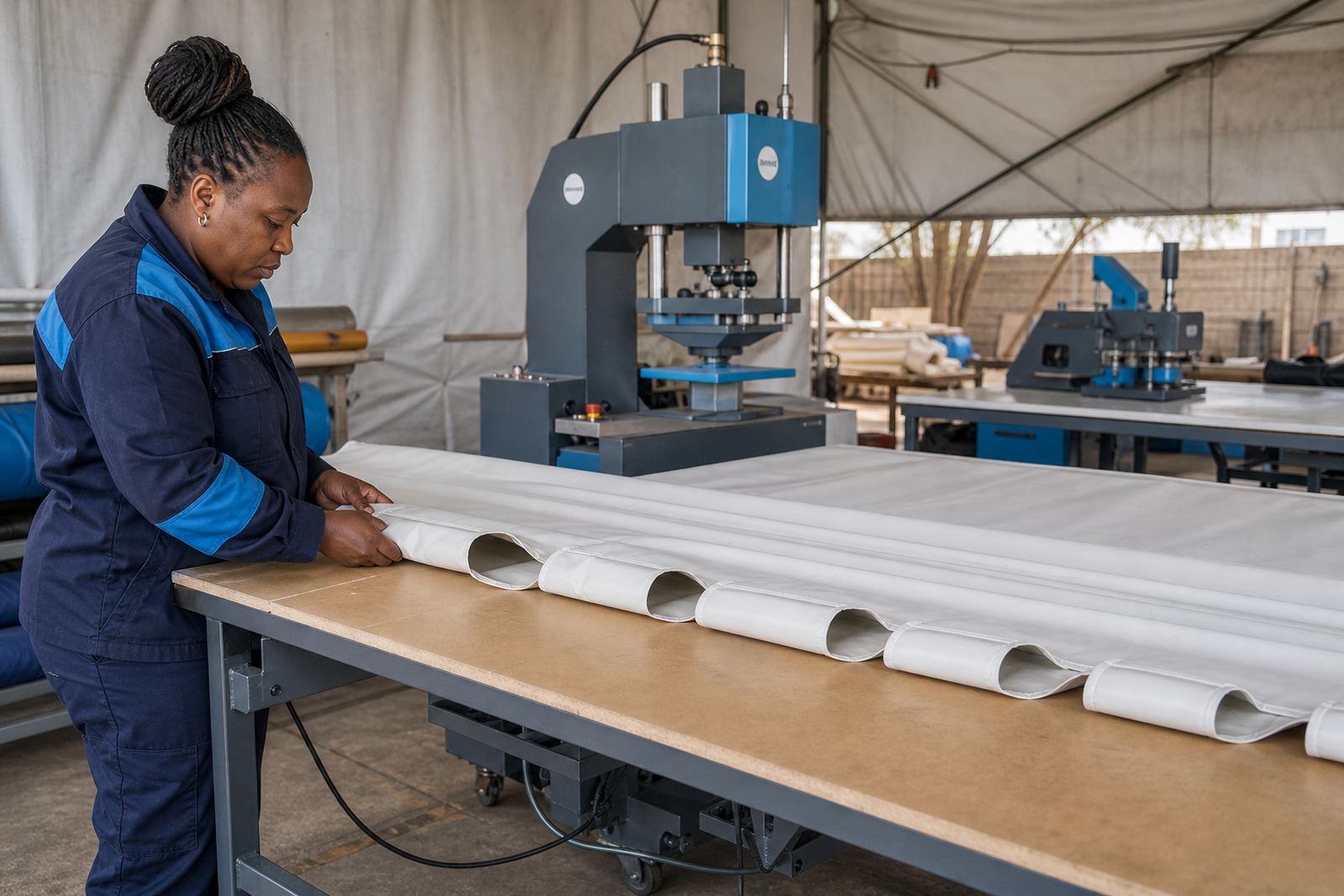
Keder work needs particular care because the pocket must stay straight and open enough for easy insertion. If the weld is too narrow, the cord can pinch. Too loose and the edge loses shape. Eyelet areas also need enough reinforcement to stop the material pulling when the banner is tensioned on a frame or tied down at an event site. A simple flow from hem to reinforcement to punching saves time and keeps the final piece neat.
- Use a fixed reference line for hem width.
- Check keder feed tension before a long run.
- Space eyelets evenly, with extra support at corners and high-stress points.
- Trim loose strands or excess material before final punching.
Keep the machine setting matched to the material
PVC-coated fabrics can behave differently even when they look similar. Temperature, thickness, surface finish and printed ink all influence the weld. A banner flow works best when the machine is set for the material before the run starts, not adjusted on the fly from one panel to the next. That saves waste and reduces the risk of weak seams or marked surfaces.
In Germiston, a busy workshop might be finishing banner runs in the morning and tarpaulin panels in the afternoon. The changeover must be handled carefully. Electrode condition, roller alignment and guide spacing all affect the result on high-frequency welders. On hot-air and hot-wedge units, nozzle condition, wedge cleanliness and feed stability matter just as much. If the same machine is used for varied work, preventive servicing becomes part of the production flow, not something handled only after a fault.
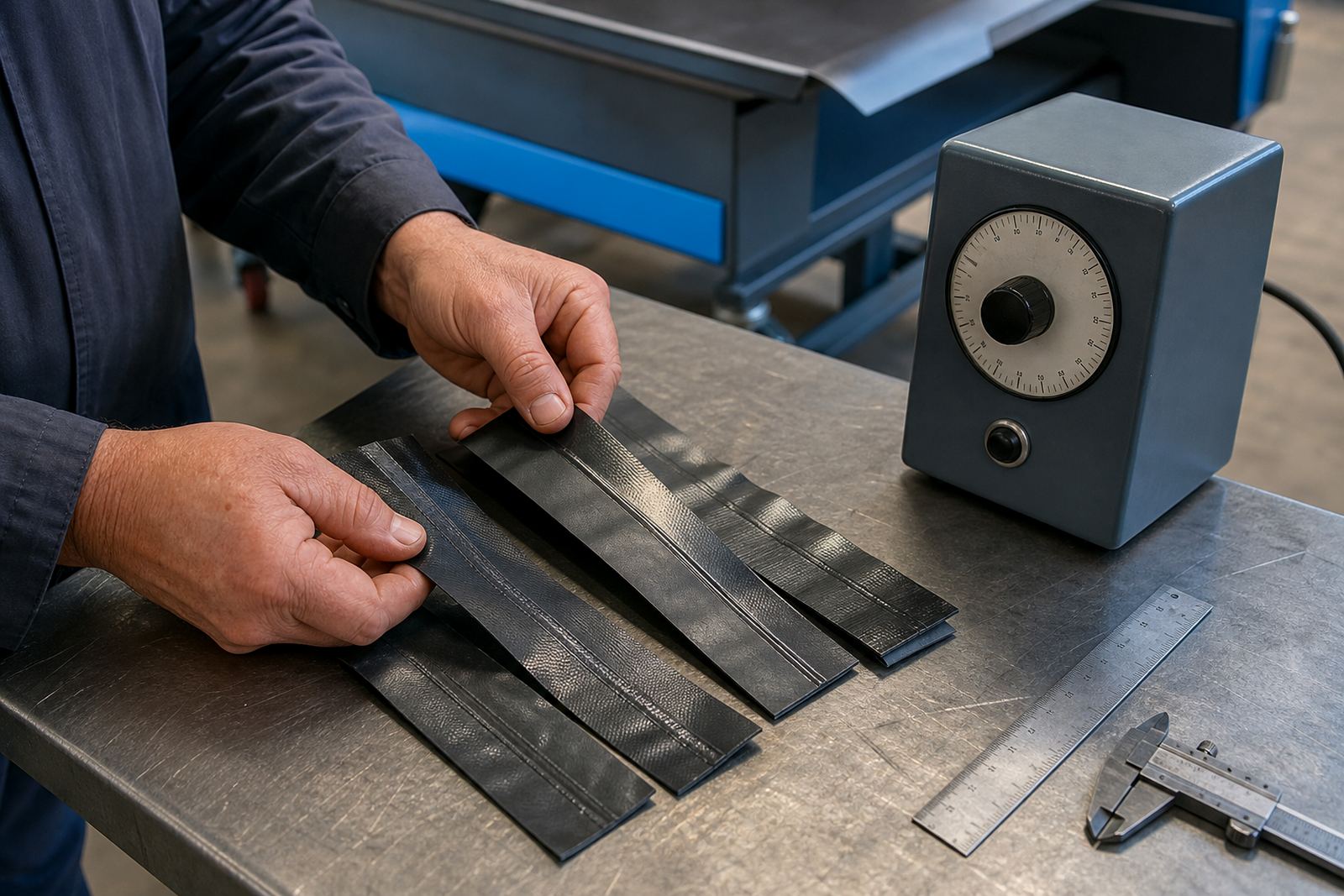
- Test the seam on offcut material before full production.
- Check rollers, guides and pressure points at the start of a shift.
- Clean welding surfaces so residue does not mark the fabric.
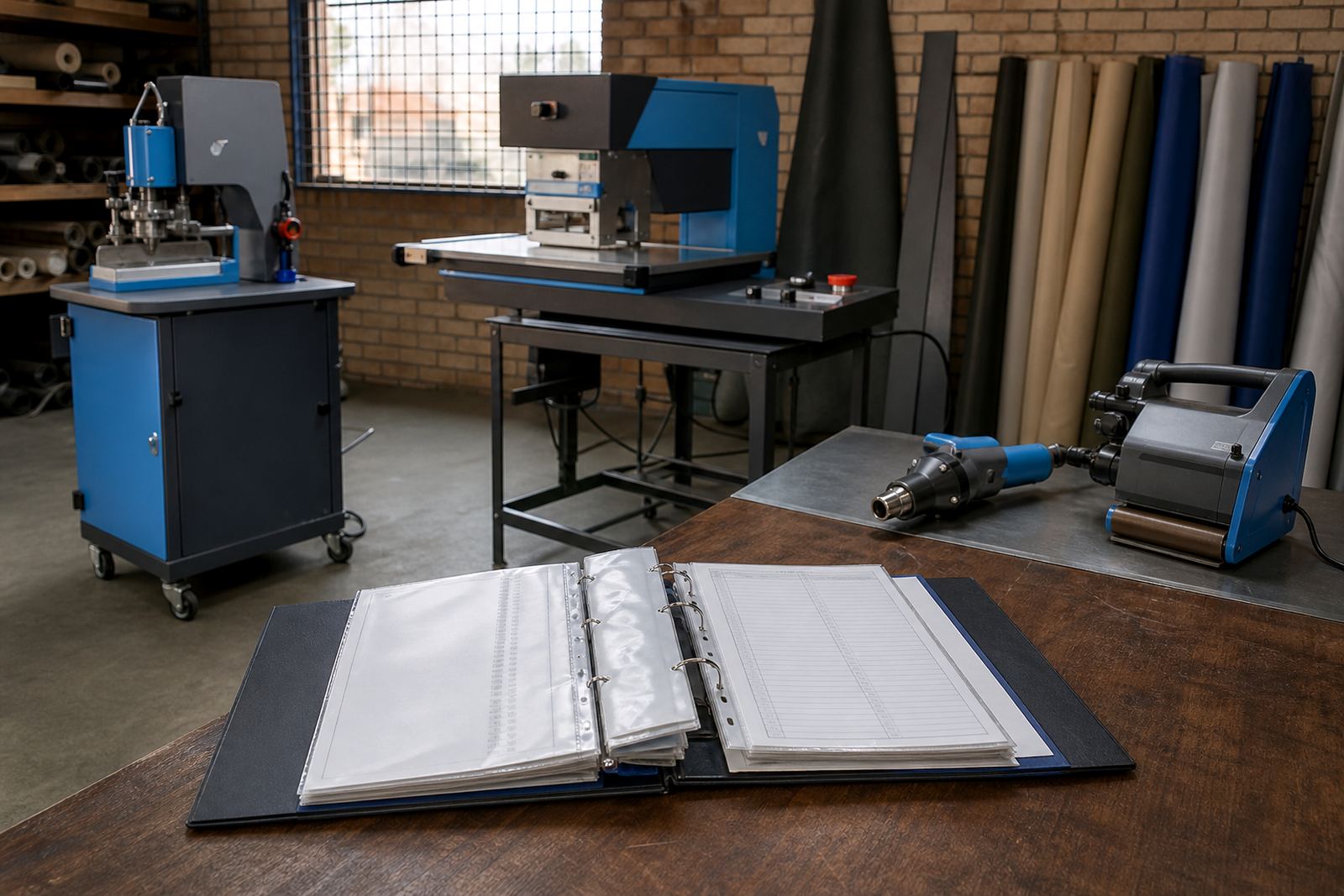
- Keep a record of settings for common banner sizes and fabric weights.
Safety and handling on a moving line
Banner welding sounds repetitive, but the risks build up when operators are rushing. Heat, moving parts and large flexible sheets can catch sleeves, hands or loose material. A safer flow is one where the operator can feed the material without overreaching and where the next panel is always within easy reach. That also helps reduce wrinkles and skew.
Good lighting, clear floor space and sensible stacking all support steadier work. Where a machine uses radio frequency or heated tooling, the operator should know the stop points, guards and cooling periods. On long runs the material can become hot near the weld, so handling should be planned to avoid burns or accidental stretching. Service checks should also include switches, cables, earthing and the condition of mechanical parts that move under load.
- Store rolls and cut panels so they do not slide or curl into the feed path.
- Keep hands clear of heated sections until the weld has settled.
- Use only trained operators on the machine controls.
- Stop and inspect if the seam starts drifting or lifting.
A Durban banner run that stayed on schedule
A useful local example is a banner shop in Durban working for coastal event sites where humidity and salt air often affect storage and handling. The shop was producing long PVC banner panels with hems, corner reinforcement and eyelet rows for repeated hanging. Instead of finishing each panel in a separate station, the team set up one fixed line: weld the hem, add reinforcement, punch the eyelets, then stack the finished piece by size.
That small change cut unnecessary handling and made the output easier to count and check before dispatch. It also reduced the chance of dirt showing on the printed face, which is a common issue when large sheets are passed from hand to hand. For coastal jobs, they kept spare tooling clean and inspected the machine more often because moisture and fine grit can affect feeding and seam quality. The result was not flashy, just steadier work and fewer reworks.
For shops across Johannesburg, Pretoria, Cape Town, Bloemfontein and Ekurhuleni, the lesson is the same. A banner flow does not need to be complicated. It needs to be ordered, repeatable and matched to the kind of PVC work leaving the floor.
Where support fits into the finishing line
When a welding line is working well, the benefits show up in the small things: fewer misfeeds, straighter hems, cleaner keder pockets and less time spent correcting the same fault. That is where installation, operator training and preventive servicing make a difference. A machine that is aligned properly on site and serviced on a schedule is easier to keep in step with the rest of the workshop.
PVCWelder supports banner, tarpaulin and tent makers from Germiston across South Africa with machine installation, commissioning, operator training, preventive servicing, fault finding, tooling alignment, electrode refurbishment, roller replacement, parts supply, seam testing, site callouts and service plans. For businesses dealing with high-volume finishing, that support helps keep the welding line practical, ordered and ready for the next batch.