What Dwell Time Does to a PVC Seam
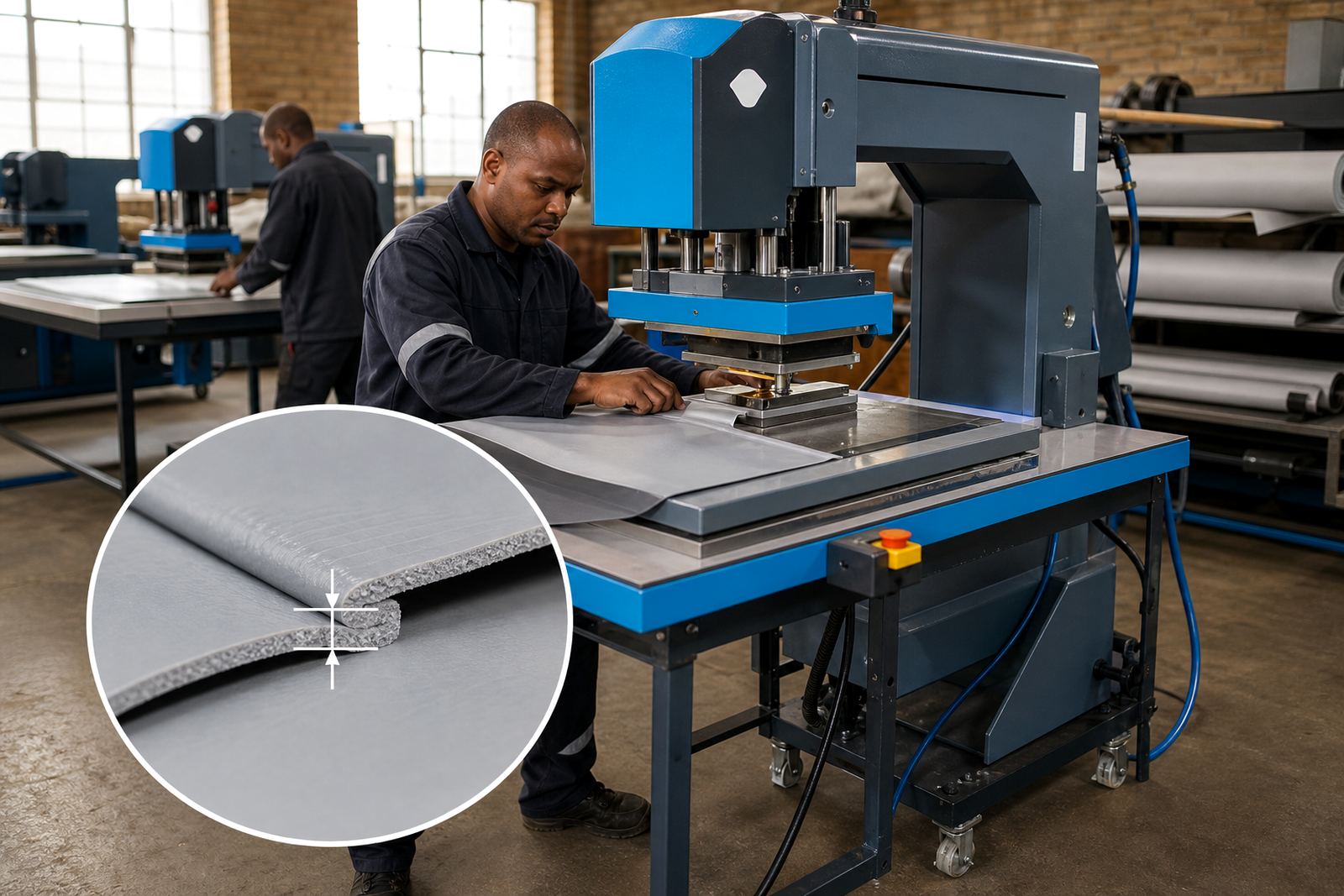
In high-frequency welding, dwell time is the period the machine keeps energy, pressure and alignment on the material before the seam is released. In hot-air or hot-wedge work, the idea is much the same, the operator controls how long the coating and base cloth stay under heat before the weld is set. Too short, and the bond may look fine but open under strain. Too long, and the PVC can distort, gloss over or shrink at the edge.
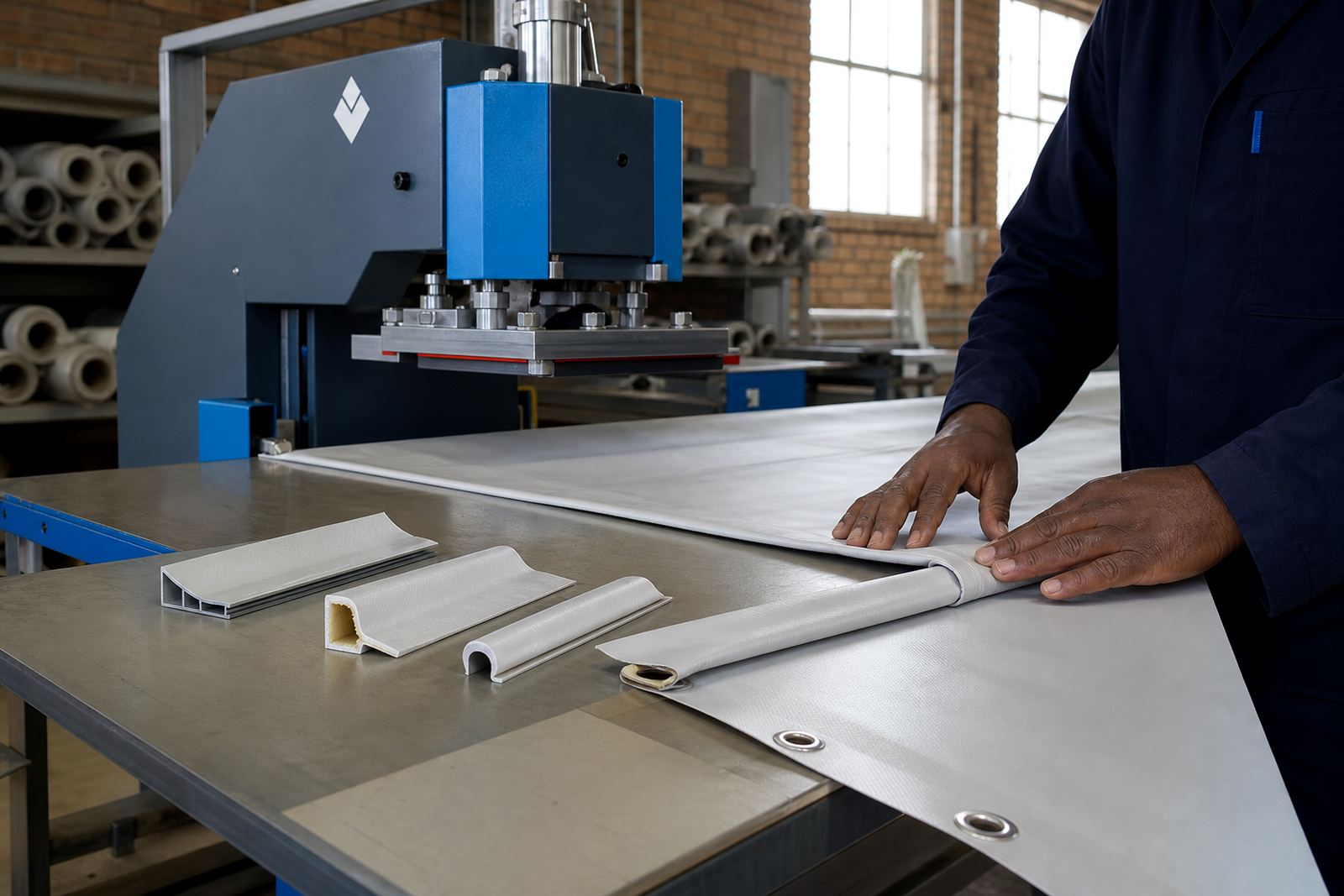
That timing matters on hems, lap seams, pocket seams, keder work and eyelet reinforcement strips. A banner hem that is under-welded can curl in the wind. A tarpaulin seam with too much dwell can become brittle at the fold or leave a hard ridge that catches during rolling. In tent fabrication, dwell time also affects how square the panels stay after welding, which is important where multiple panels meet at corners and ridge lines.
For shops in Germiston, Johannesburg or Boksburg working on mixed runs, dwell time is not set once and forgotten. It changes with fabric thickness, coating weight, workshop temperature and even the amount of dust on the worktable. A neat seam on a light banner material will not always translate to a heavy truck cover or a coated tent panel.
Matching Dwell to Seam Type and Material Weight
Different seam types need different timing. A straight lap seam on a banner is usually more forgiving than a folded hem with webbing inside it. A keder strip needs a consistent bond along the full length so the rope edge feeds smoothly into the rail. Eyelet strips need enough heat for the reinforcement layer to sit flat without burning the face side or shrinking the hole spacing.
With radio frequency welding, dwell time works together with electrode shape, pressure and material thickness. With hot-air or hot-wedge systems, dwell also links to travel speed, nozzle temperature or wedge temperature, and roller pressure. The operator has to watch the molten edge, not just the clock. If the PVC starts to shine too early or the fabric puckers at the feed, the timing is already off.
- Light banner stock usually needs shorter dwell and gentler pressure.
- Heavy tarpaulin fabric often needs a longer hold to bring the coating fully together.
- Double hems can need extra dwell where the fold is thickest.
- Keder welds need a steady hold so the bead sits straight and feeds well in use.
- Eyelet reinforcement should stay flat, without distortion around the punched hole.
On a job in Pretoria, a workshop might switch from a narrow exhibition banner to a thick side curtain in the same morning. The machine settings should not follow the old job by habit. The right dwell time is the one that suits the current fabric, not the last one that happened to run well.
Signs the Weld Needs More or Less Time
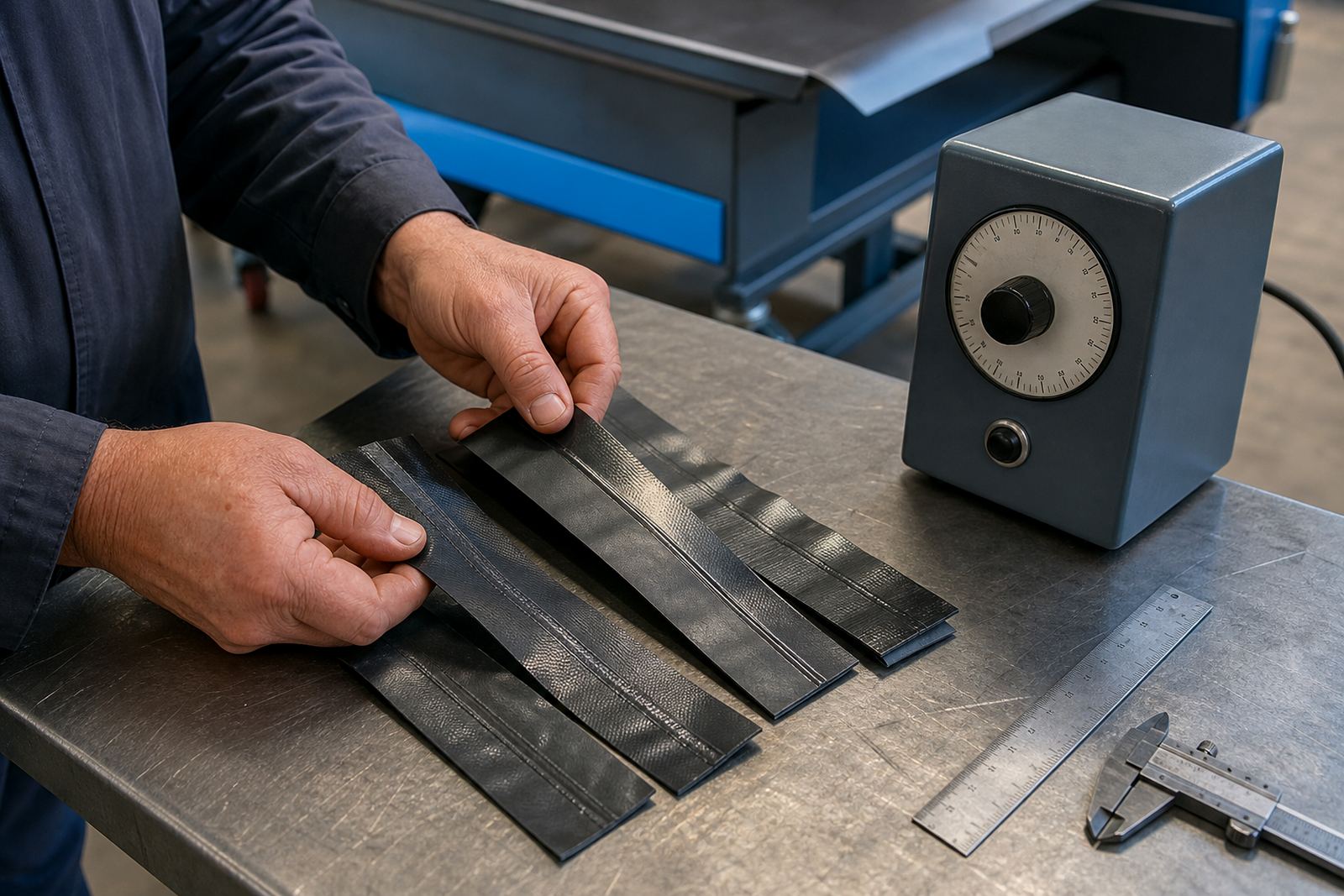
Most seam faults show themselves early if the operator knows what to look for. A seam that peels apart at the edge, especially after cooling, usually points to too little dwell or not enough heat transfer. A seam that looks flattened, stiff or lightly scorched often means the dwell was too long, or the pressure stayed on after the coating had already flowed.
There are other clues as well. If the weld line changes from one end to the other, the table may not be level, the feed may be uneven or the operator may be moving too fast on the pass. If the weld is strong in the middle but lifts at the ends, the machine may be reaching full heat too late, or the start and finish timing may not be matched.
- Peeling at the edge points to under-welded overlap.
- Glossy, hard or crisp seams often point to over-welding.
- Wrinkles near the seam show uneven pressure or feed.
- Small bubbles can mean trapped air or contaminated material.
- Variable seam width can point to poor alignment or hand speed changes.
Durban workshops often deal with moisture in the air and salty coastal conditions, and that can change how a machine behaves over the course of a shift. A seam that looked perfect in the morning may need a slight adjustment by afternoon if the fabric has picked up humidity. It is a small change, but in welding work small changes matter.
A Germiston Workshop Example
A practical example helps. A tarpaulin maker in Germiston may be producing side curtains for long-distance transport, plus a batch of PVC banners for an event company. The curtains need long, straight lap seams with eyelet strip reinforcement, while the banners need clean hems and corner patches that stay tidy when rolled and unrolled. If the same dwell setting is used for both, one of them will suffer.
For the heavier curtain material, the operator might hold the weld a little longer and slow the feed so the coating fully bonds through the overlap. For the lighter banner, the same hold would be too much and may leave a shiny, uneven edge. Good production work is not just about speed, it is about matching the dwell to the job in front of the machine.
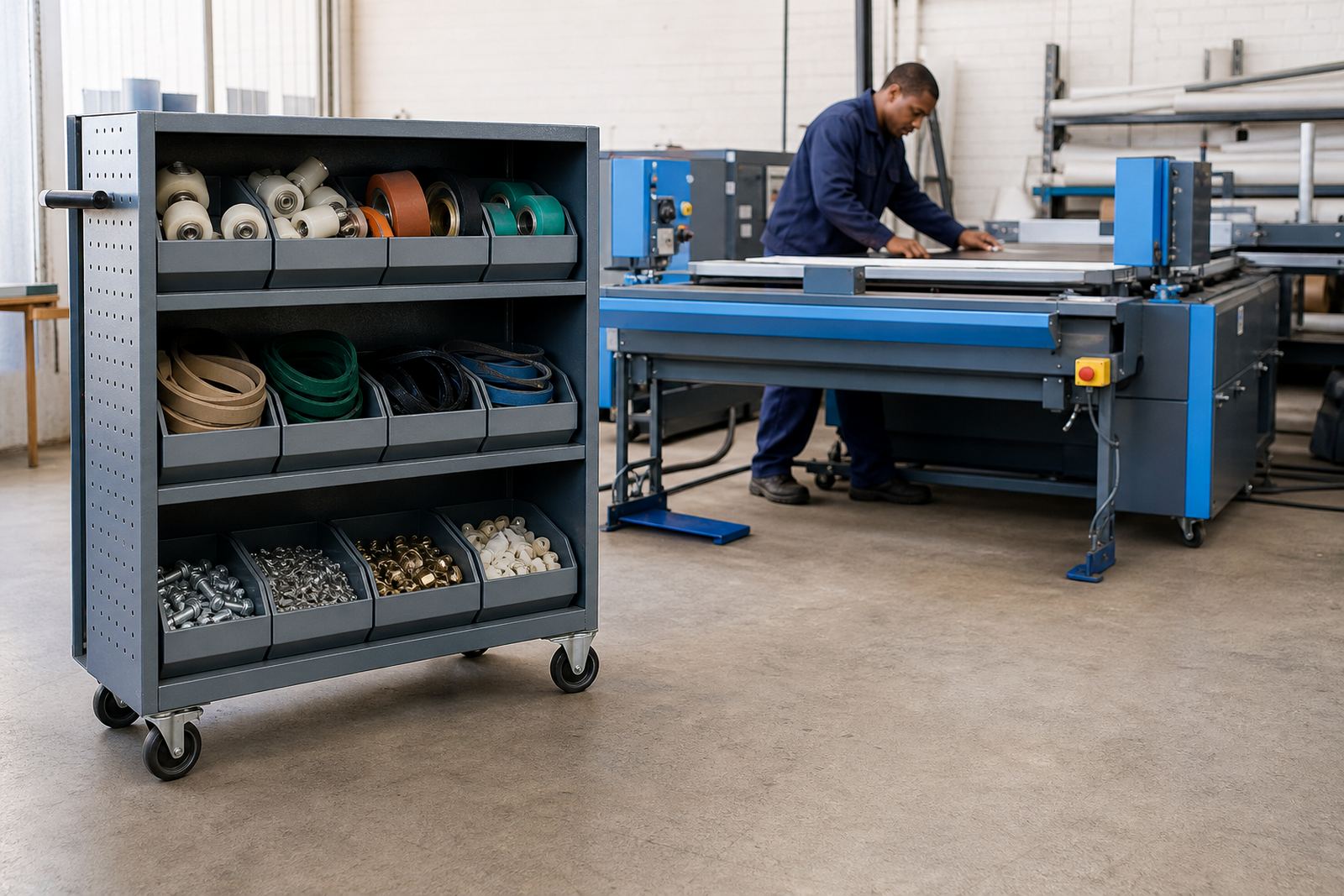
This is where machine servicing helps. Worn rollers, poor electrode alignment, dirty guides or a loose wedge assembly can make dwell time feel wrong even when the setting looks right on paper. If the pressure is uneven across the seam, the weld may be strong on one side and weak on the other. A service check should include the contact surfaces, moving parts, safety controls and the general condition of the tooling.
Training Operators to Read the Material
The best welders are often the ones who learn to read the fabric before they press the pedal or start the feed. Training should cover not only machine controls but also seam inspection, material handling and safe working around heat and moving parts. Operators need to know how to spot contamination, how to keep panels square and how to stop when a seam is not forming properly.
Safety matters just as much as output. Hot-air and hot-wedge machines can create burn risk, and high-frequency systems need careful handling around the tooling and controls. Guards, correct hand placement, dry floors and clear table space all help. A tidy bench also makes dwell adjustment easier because the operator can see the seam line properly and keep the fabric tracking straight.
- Check the first weld of every new roll or batch.
- Record the setting that gave the best finish for each material type.
- Keep tooling clean so heat transfers evenly.
- Inspect cables, rollers and moving parts during planned servicing.
- Retest seam strength after any adjustment to dwell, pressure or feed speed.
In Pretoria or Bloemfontein, where workshops may run a mix of signage and fabric jobs, that habit saves time. A short test strip at the start of a shift can prevent a full batch of poor seams later on.
Setting a Dwell Routine That Holds Up
Dwell time works best when it is treated as part of a routine, not a guess. Start with a known setting for each material, then adjust in small steps until the seam finishes cleanly and tests properly. Keep notes on lap width, hem depth, keder size, electrode condition and any change in workshop conditions. The more consistent the record, the easier it is to repeat good work on the next run.
For businesses across South Africa, from Cape Town to Johannesburg and across to Durban, that routine supports better output on tarpaulins, banners and tents alike. The right dwell gives a flatter hem, a cleaner eyelet strip and a seam that holds its shape under load. The wrong dwell may still pass the eye test, but it often shows itself later in the field when wind, tension or repeated folding puts the seam under stress.
At PVCWelder in Germiston, dwell time sits in the same conversation as installation, commissioning, training, preventive servicing and seam testing. That is where the practical value lies: the machine must suit the work, and the operator must know how to set it for the fabric in front of them.